
Can rental stage lighting dimmer systems meet production needs?
|
- 1) How do cold inrush currents from tungsten and high‑wattage fixtures influence breaker sizing and dimmer protection when using a rented dimmer rack?
- 2) Can rented dimmer racks reliably control mixed LED fixtures and legacy incandescent loads without visible flicker or damage?
- 3) What DMX/RDM and network configuration checks should I require from a rental house to avoid address conflicts, latency, and lost control signals in a live production?
- 4) What preventive inspection and certification should I demand from a rental supplier to ensure a dimmer system is safe, code‑compliant, and reliable on arrival?
- 5) How should I size and design temporary power distribution and phase balancing for a rented dimmer rack to avoid nuisance tripping and voltage imbalance in a venue?
- 6) For short runs or one‑off productions, when is renting dimmer systems more practical than purchasing, and what red flags indicate you should buy instead?
- Concluding summary: Advantages of rental stage lighting dimmer systems
Can Rental Stage Lighting Dimmer Systems Meet Production Needs? Detailed Answers for Buyers
When you evaluate stage lighting dimmer systems for a production—whether buying or renting—you need pragmatic, code-aware answers about dimmer racks, DMX512/RDM integration, inrush management, LED compatibility, patching, and redundancy. Below are six specific long‑tail questions commonly asked by beginners and production techs that often have incomplete or outdated answers online, followed by in-depth, actionable responses referencing industry standards and operational best practices.
1) How do cold inrush currents from tungsten and high‑wattage fixtures influence breaker sizing and dimmer protection when using a rented dimmer rack?
Why this matters: Large cold filaments (tungsten or tungsten‑halogen) can draw many times their steady‑state current at switch‑on. If you don’t account for that, upstream breakers or the dimmer’s internal protection may trip during power‑up or patching, disrupting a cue stack.
Key points and practical steps:
- Nature of inrush: Cold filament lamps typically show an inrush multiples of steady current—commonly in the range of 6–12× depending on lamp type and filament geometry. This is why sequential soft‑starts and controlled ramping matter. For LED fixtures, inrush is generally different (driven by driver capacitors) and can still be significant but of shorter duration.
- Breaker and feeder selection: Design feeders and breakers for the worst realistic scenario in your venue. For rental use, insist the rental house provide measured inrush test data for their dimmer rack (or a manufacturer spec). If that’s not available, plan for conservative breaker coordination and use upstream coordination devices (time‑delayed breakers or inrush limiting transformers) where possible.
- Dimmer rack protection features: Modern dimmer racks commonly include soft‑start sequencing, ramp limits, and individual channel current limiting. Ask whether the rental units have time‑staggered mains application to reduce simultaneous inrush. If the rental dimmer lacks sequencing, bring or request a mains sequencer or advise the venue electrician to stagger circuit application.
- Operational mitigation: Patch high‑inrush loads to staggered channels; power up racks with empty or low loads first; use controlled slow fade‑ups (1–3 seconds) in the console until all fixtures warm up. For critical shows, use cold‑lamp inrush meters during tech to validate protective device settings.
Standards and references: This practice is consistent with NEC guidance that requires coordination between overcurrent devices and expected loads (see NEC Article 520 for theaters and similar venues) and with vendor datasheets that publish inrush/current‑limiting behaviors.
2) Can rented dimmer racks reliably control mixed LED fixtures and legacy incandescent loads without visible flicker or damage?
Why this matters: Many productions mix LED fixtures and legacy tungsten instruments. LED drivers behave differently under dimming waveforms; leading‑edge SCR/triac dimmers interact poorly with some electronic drivers, creating flicker or damaging the driver.
Assessment and recommended checks:
- Know the dimmer technology: Leading‑edge (TRIAC/thyristor) dimmers chop the mains at the start of each half cycle and are historically used for incandescent loads. Trailing‑edge or electronic dimmers (IGBT/MOSFET based) are often friendlier to many LED drivers because they produce a smoother output waveform and lower inrush. Rental racks can be one or the other, or offer selectable modes; ask explicitly.
- Manufacturer compatibility lists: Request the rental house provide the dimmer manufacturer’s LED compatibility list and/or the rental company’s in‑house test results. Many LED fixture manufacturers publish a list of compatible dimmers and minimum load recommendations. Use those lists rather than anecdotal reports.
- Minimum load and flicker: Some LED drivers need a minimum load or specific dimming curve to remain flicker‑free at low levels. Where possible, use dedicated LED dimmers or universal dimmers with an LED mode. Alternatively, move LED fixtures off the mains dimmer and control them via their DMX/RDM/Art‑Net input if they have onboard dimming or via a compatible LED driver pack or relay pack.
- Practical test: Before load‑in, require the rental company to perform a mixed‑load smoke test: run a programmed patch at typical intensity curves (including 0–10% slow fades and chases) to reveal flicker, strobing, or driver heat issues. Capture this on video as part of acceptance testing.
Operational note: When mixing legacy and LED loads, the safest approach is segregating circuits—incandescent channels for tungsten instruments and dedicated LED dimmers or switched circuits for LED fixtures—then control them appropriately from the console or a lighting controller. This reduces the risk of driver stress and unexpected behavior during cues.
3) What DMX/RDM and network configuration checks should I require from a rental house to avoid address conflicts, latency, and lost control signals in a live production?
Why this matters: DMX512 addressing and network integrity are critical. Misaddressed channels, unmanaged RDM traffic, or congested Art‑Net/sACN networks can cause failures that are hard to troubleshoot under show pressure.
Minimum checklist to request and verify:
- Protocol support: Confirm the dimmer rack supports DMX512 compatible control (ANSI E1.11 / DMX512‑A). If the rack supports sACN (ANSI E1.31) or Art‑Net, ensure you understand the priority and universe mapping. For remote device configuration, check RDM (ANSI E1.20) availability to discover and manage devices safely.
- Addressing and patch documentation: Ask the rental house to provide the assembled DMX channel map and any RDM device identities before load‑in. For rented multi‑universe setups, require explicit universe numbering and physical port labelling on both the rack and network switches.
- Network hygiene: Use managed gigabit switches with IGMP snooping for sACN and Art‑Net to minimize broadcast storm risk. Avoid long runs of hubs or unmanaged switches in complex shows. Verify the rental provides isolated data cabling with proper termination and that DMX lines use 120Ω termination when required.
- Latency and refresh: For large universes, confirm console and dimmer rack refresh rates and any internal filtering that may introduce latency. RDM discovery can take additional time—plan device discovery prior to final focus to avoid disrupting live shows.
- Testing: Perform a full patch test and a stress test (rapid look changes, multi‑channel chases, simultaneous cue triggers) during tech. Use a handheld DMX tester or RDM utility to confirm signal integrity and to detect checksum errors or collisions.
Reference: DMX and RDM standards (ANSI E1.11 and E1.20) and sACN (ANSI E1.31) describe expected behaviors and compatibility; modern rental houses should be able to demonstrate compliance with these protocols.
4) What preventive inspection and certification should I demand from a rental supplier to ensure a dimmer system is safe, code‑compliant, and reliable on arrival?
Why this matters: Equipment can appear functional but have degraded wiring, failing cooling fans, bad neutral bonding, or firmware issues that only show up under load. Accepting units without documentation transfers risk to your production and safety team.
Documentation and tests to require:
- Safety certifications and listing: For North America, confirm UL/ETL listing for the dimmer cabinet and its components where applicable. For Europe, request CE marking and applicable EN/IEC compliance. Also confirm compliance with local AHJ requirements at the venue.
- Recent maintenance log: Request a maintenance checklist showing date of last full functional test, fan replacement, firmware updates, and any repairs. A one‑page acceptance sheet signed by the technician is useful.
- Electrical testing: Ask for insulation resistance (megger) and earth bonding checks within the last 12 months, and for breaker trip tests at rated current to confirm coordination. For critical shows, ask the rental house to run a 100% load bank test for a specified duration (e.g., 30–60 minutes) and provide results.
- Thermal and visual checks: Confirm the rental company performs thermal scans on dimmer modules and power distribution components after a load test to reveal hot spots or failing connections.
- Firmware and software: Get the rack’s firmware version and known issues list. Some dimmer behavior (e.g., LED modes, DMX handling) is firmware dependent; ensure you have the version that supports the features you need.
- Insurance and warranty: Verify the rental house’s equipment insurance and the terms of liability for on‑site failures—this matters if an equipment problem causes show loss or damage.
Operational tip: Include acceptance criteria in the rental contract (e.g., functional test on arrival, documentation delivery) so the rental supplier is contractually obliged to meet your safety and reliability standards.
5) How should I size and design temporary power distribution and phase balancing for a rented dimmer rack to avoid nuisance tripping and voltage imbalance in a venue?
Why this matters: Dimmer racks draw significant balanced and unbalanced loads across three phases. Poor phase balancing causes neutral overloading, nuisance trips, and sometimes reduced lamp life or flicker.
Sizing and phasing best practices:
- Power feed planning: Treat the dimmer rack as a large, dynamic load. Use vendor documentation for maximum steady current per phase. Factor in inrush and incidental loads (followspots, HVAC) when negotiating feeder capacity with the venue electrician.
- Phase balancing: Produce a pre‑load phase balancing plan based on your patch. Spread high‑wattage instruments across phases and physically across dimmer modules to reduce harmonic and neutral stress. For tours or complex events, use a power distribution unit (PDU) that lets you reassign circuits quickly to maintain balance as the patch changes.
- Neutral sizing and grounding: Ensure the neutral conductor and grounding system are sized and bonded correctly. Many problems arise when neutrals are undersized or incorrectly paralleled. Verify the venue’s temporary power installs meet NEC or relevant local code requirements and are signed off by the AHJ.
- Temporary distribution gear: Use distribution boxes with proper breaker coordination, phase monitors, and visible labeling. Consider using soft‑start or inrush limiting devices on large motor or lamp banks to reduce simultaneous stress on the supply.
- Monitoring: Deploy real‑time power meters during tech to measure per‑phase current and THD. If available, monitor total harmonic distortion and investigate corrective measures (filters, re‑patching) if THD approaches thresholds that can affect sensitive equipment (reference IEEE 519 for harmonic guidance).
Note: Local code (NEC in the U.S., IEC in many other jurisdictions) and the venue’s AHJ have final say. Always coordinate with the venue’s head electrician to ensure temporary distribution is permitted and inspected.
6) For short runs or one‑off productions, when is renting dimmer systems more practical than purchasing, and what red flags indicate you should buy instead?
Why this matters: The cost calculus between renting and buying isn’t just rental price vs purchase price; it includes installation time, technical support, transport, maintenance, and compatibility with your permanent inventory.
- When renting usually wins:
- Short‑term events, one‑off single runs, or when a venue’s existing infrastructure is insufficient—renting avoids large capital outlay and storage/maintenance costs.
- When you need temporary capacity spikes (e.g., a festival weekend) that exceed your inventory; renting lets you scale for a single project and return excess equipment.
- When you need specialized dimmer features (high channel counts, networked control, specific LED modes) for one production only and don’t want to upgrade your permanent fleet.
- When buying may be better:
- If you run frequent weekly shows where consistent behavior, patch permanence, and staff familiarity reduce tech time and risk, owning consistent hardware decreases reconfiguration overhead.
- If you require strict compatibility with your fixtures and need a guaranteed hardware/software baseline that a rental house may not always supply.
- If transport, assembly, and teardown costs over a season exceed the capital cost of a purchase, owning becomes more economical. Include maintenance, spare parts, and depreciation in your calculations.
Red flags when renting:
- The rental house cannot provide up‑to‑date maintenance logs, load testing data, or firmware versions.
- They lack concrete DMX/RDM and power distribution documentation or refuse on‑site functional tests.
- On a technical level, there’s persistent incompatibility between their dimmers and your LED fixtures or control protocols.
Financial and operational note: For either route, model Total Cost of Ownership (TCO) including transport, crew hours for patching, required spares, and insurance. For purchase, you’ll also want a spare parts and maintenance plan; for rentals, negotiate service‑level agreements (SLA) that include on‑site swaps and technical support.
Concluding summary: Advantages of rental stage lighting dimmer systems
Renting stage lighting dimmer systems offers flexibility, access to current dimmer racks (with modern DMX/RDM, LED modes, and sequencing), and the ability to scale capacity without capital investment. For short productions, festivals, or when specialized features are required, rental reduces storage, maintenance, and obsolescence risk. However, rentals must be contractually supported with test documentation, compatibility verification, and clear service agreements to avoid operational risk. When ownership is justified—frequent shows, the need for standardized behavior, or long‑term cost benefits—purchasing gives you absolute control over patching, spares, and firmware baselines.
For a tailored quote, system spec, or to discuss a rental vs purchase analysis for your next production, contact us at www.rgbsystem.com or info@rgbsystem.com.
Latest News
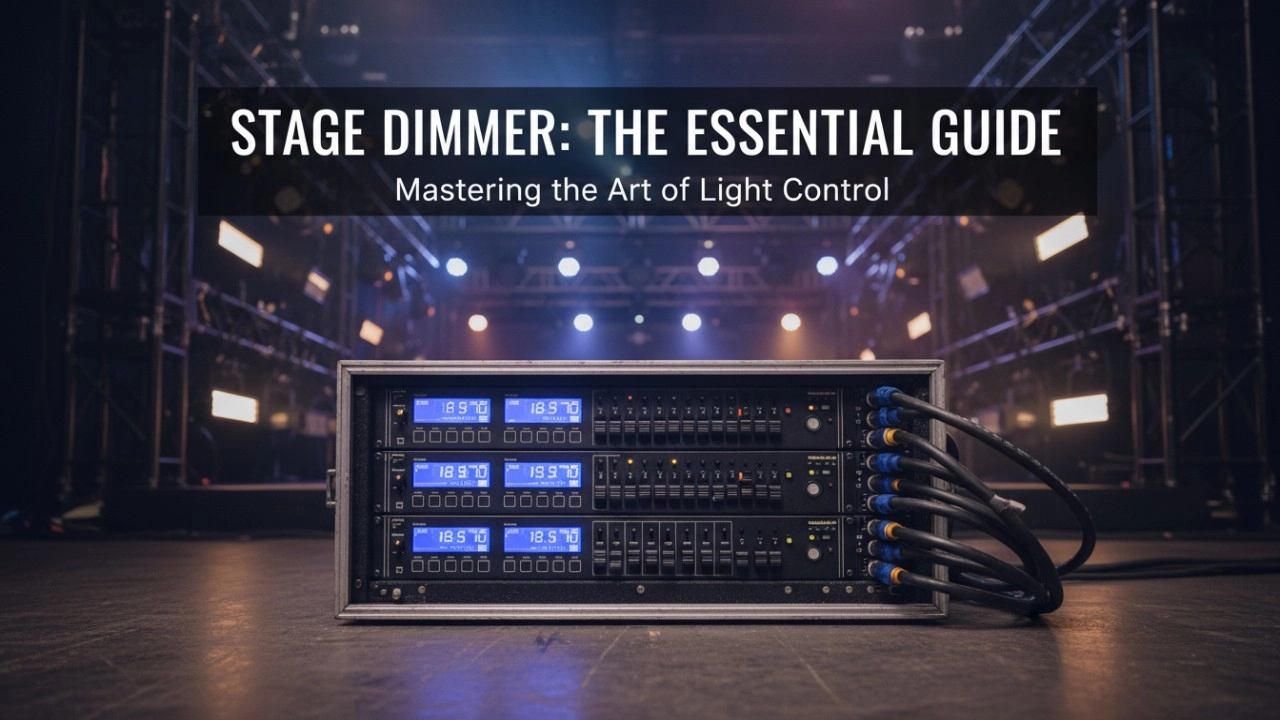
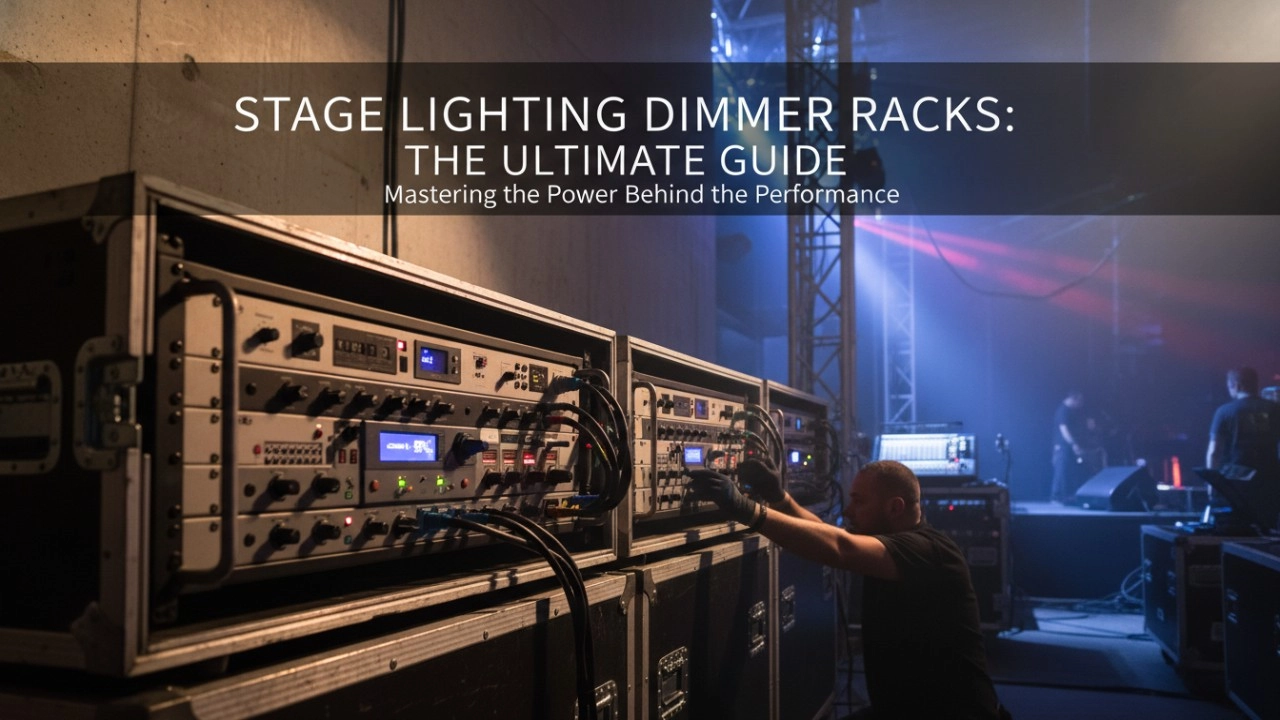
A comprehensive 2026 guide to selecting high-performance stage lighting dimmer racks. We review top hybrid systems, explore SCR vs sine wave technology, and analyze essential features like ThruPower for modern venues.
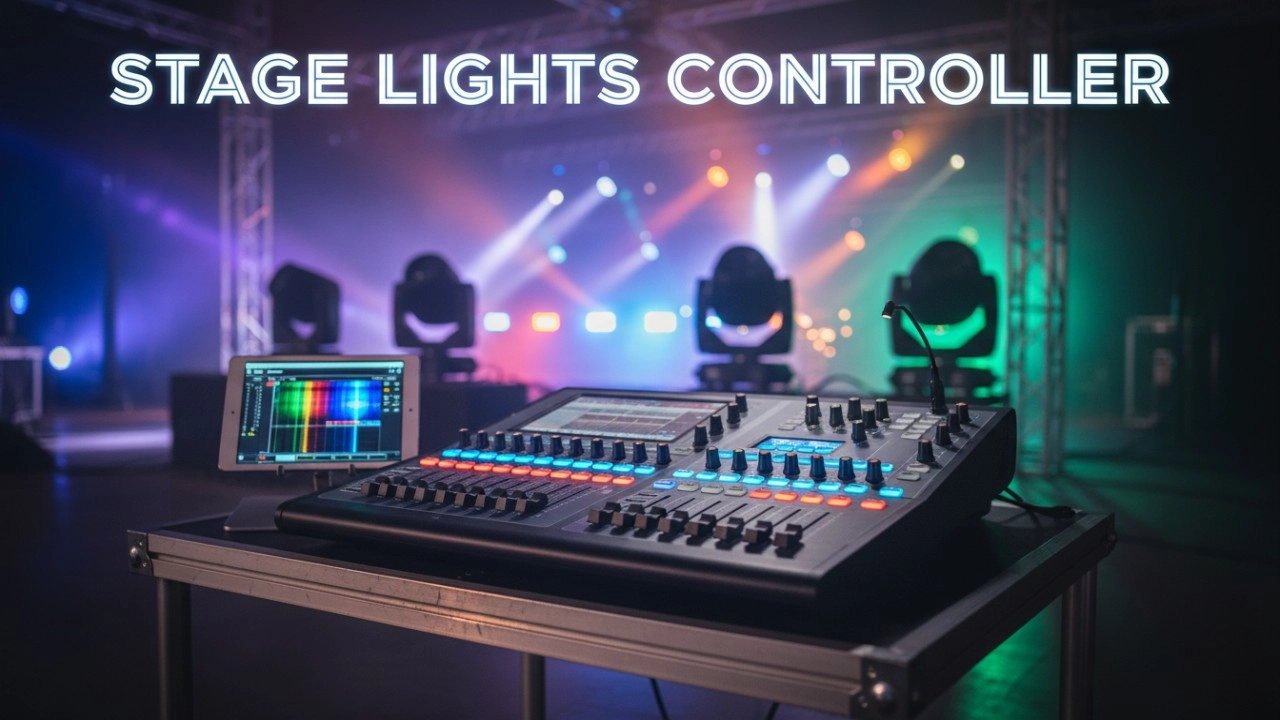
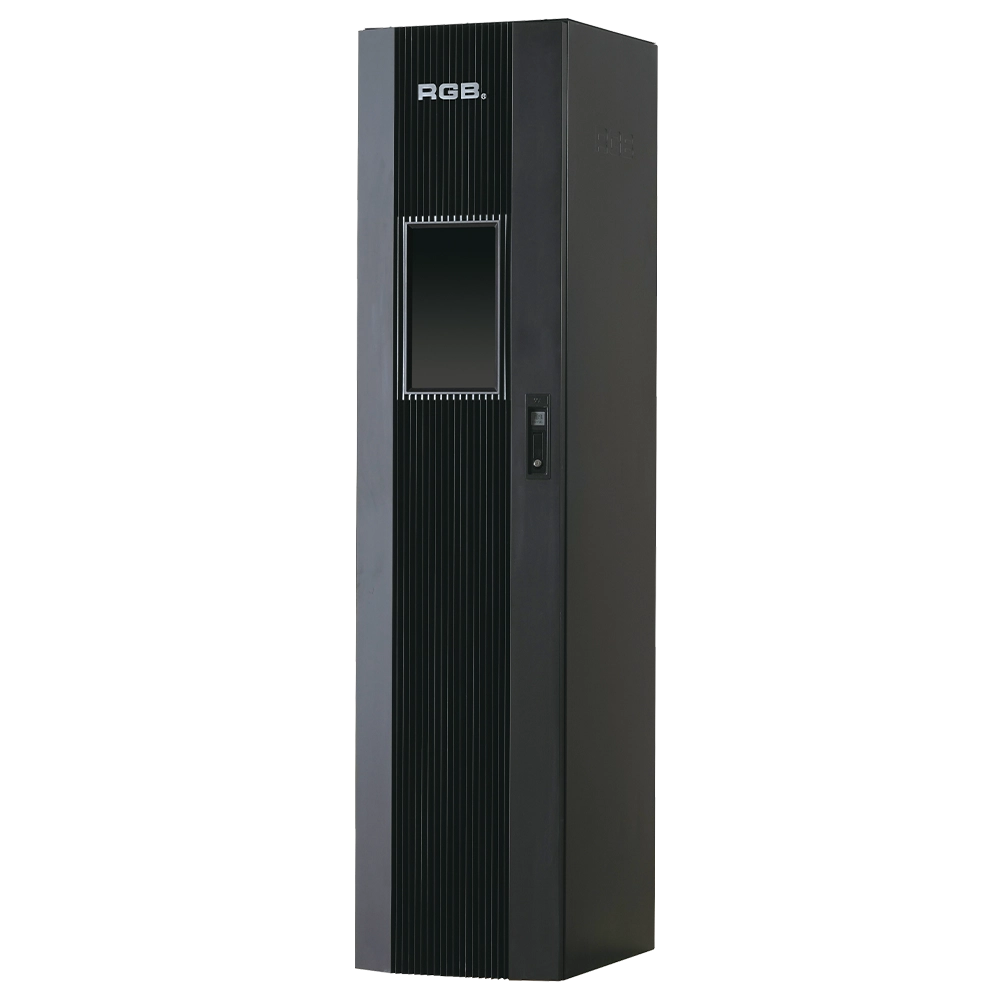
9i intelligent network Dimmer/Relay Racks
9i is an artificial intelligence dimming racks independently developed by RGB, which has completely independent core technology and obtained software Copyrights, all digital electrodeless trigger and multi-backup independent CPU central processor technology. It has a variety of output configurations such as sine wave, thyR, relay and dimming relay mix, and supports visual lighting control system and visually displays the online and offline status of dimming racks. Realize remote monitoring, editing and setting of relevant parameters.
It is suitable for the lighting control needs of different places such as high standard grand theater, TV station, gymnasium and environmental intelligent lighting.
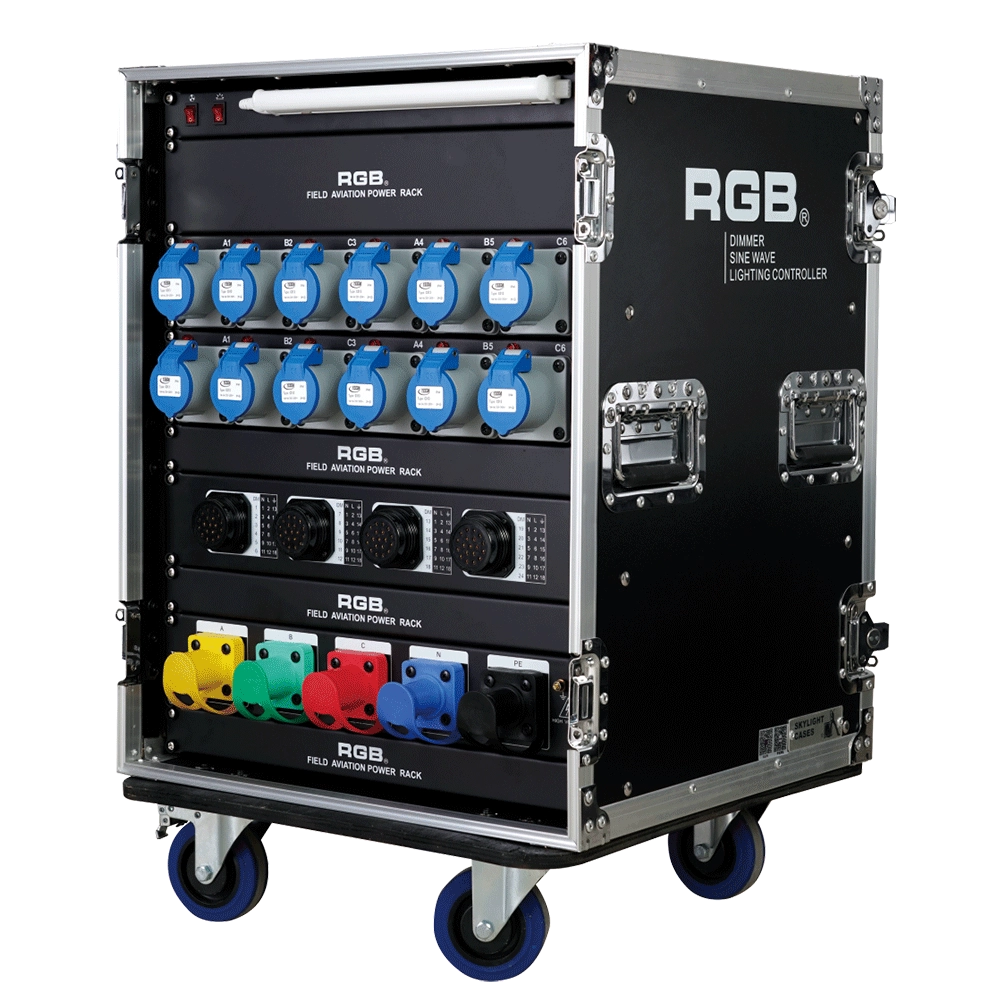
ZT2419+1216 Distribution Box
ZT2419+1216 features dual protection functions and is a power distribution product specifically designed for overcurrent and short circuits in electrical equipment. It is the best choice for mobile performance and is suitable for use in computer lamps, conventional lamps, and other equipment.
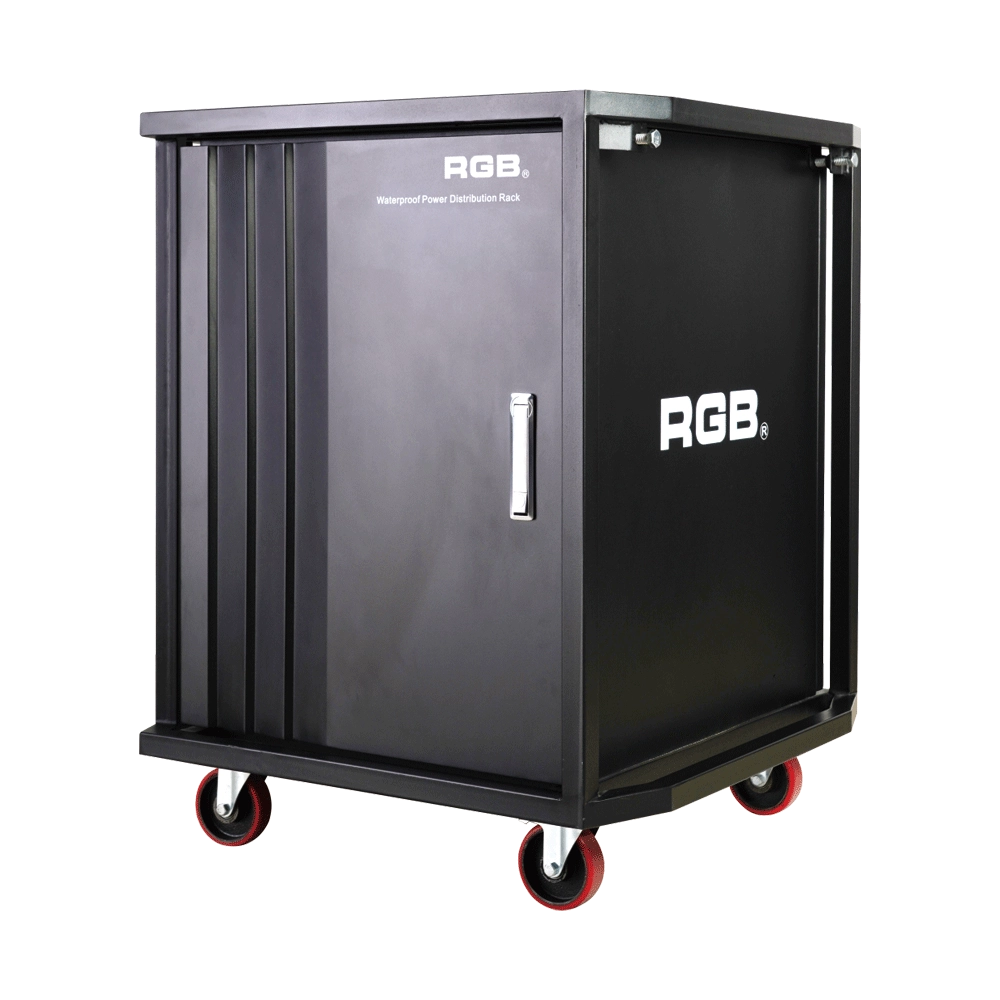
Multifunction Waterproofing Racks Of RGB-W Series
With the continuous development of flow performance, the requirement for performance is more demanding. In order to facilitate the transportation and make it easier to carry for all the equipment used in the performance, the stage light and sound equipment will be installed into a cabinet, for example, the power supply system. During the transportation process, it is inevitable for a collision or crash to take place. If the cabinet material is not strong enough, it may lead to deformation and even damage the equipment inside. Moreover, most of the existing cabinets are not waterproof. It will be very dangerous for the flow performance, as it is normal and inevitable to encounter rainy days. As the equipment inside the cabinets is electriferous, it might cause damage to the electronic equipment at least and even cause casualties at worst. Meanwhile, most of the existing cabinets can only be installed with one kind of equipment with a single variety.
In order to overcome the above-mentioned technical flaw, the RGB company has developed a new type of waterproofing multifunction cabinet of the W series. The waterproofing cabinet of the W series meets the need for the installation of dimming and tone-tuning devices, transportation, and utilization.
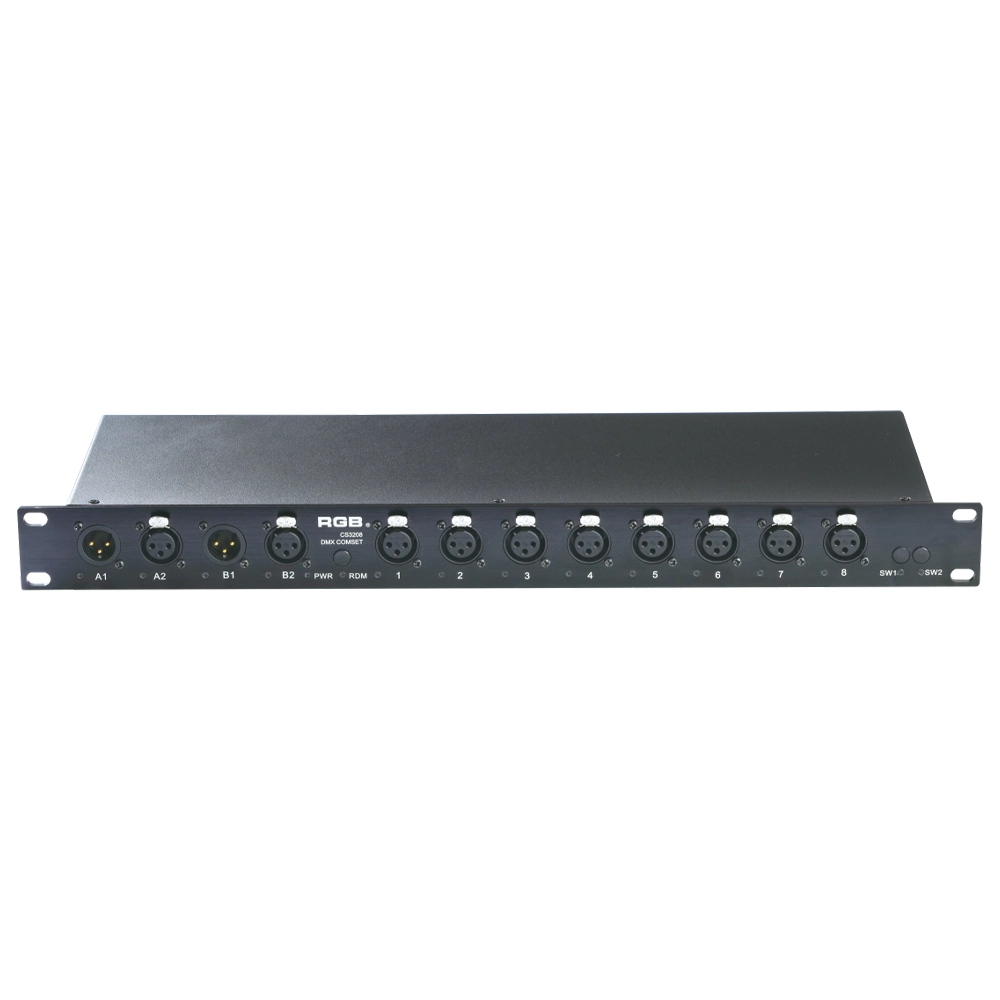
Multifunctional signal supercharger
The rack-mounted DMX signal amplifier complies with the DMX-512 standard protocol, improving DMX-512 signal transmission quality and ensuring reliable system control. It helps prevent issues such as AC high-voltage backflow into lighting control systems, lightning-induced surges, and signal interference caused by short circuits, thereby enhancing overall system stability.
Expert Support
Interested in learning more or need expert guidance related to this article? Fill in your details, and our team will provide tailored support.
Intelligent Control. Brilliant Performance.
RGB specializes in stage lighting control systems, delivering intelligent, reliable, and high-performance solutions for theaters and performance spaces worldwide.
Contact
Email:
Tel:
+86 20 3928 0245
+86 20 3928 0247
Address:
No.3, Huashan Road, Shilou Town, Panyu, Guangzhou, China.
Whatsapp: +8615975520131