
How to compare stage lighting dimmer systems for touring rigs?
|
- 1. How do I size dimmer channels, breakers and distro for a touring rig that mixes incandescent fixtures and LED fixtures without nuisance breaker trips?
- 2. How can I guarantee flicker-free dimming with LED fixtures when using legacy dimmer racks on the road?
- 3. For touring, should I choose centralized rack-based dimmer packs or distributed remote dimmer nodes (remote dimmer modules)? Which is lighter, faster to patch, and more reliable?
- 4. How do DMX512, RDM, Art-Net and sACN differ for touring rigs, and which should I prioritize when comparing dimmer systems?
- 5. What serviceability and redundancy features should I require in a dimmer system purchase to minimize downtime on a multi-city tour?
- 6. How do I estimate total DMX universes and channel counts for a modern LED- and moving-light-heavy rig and plan for future expansion?
- Concluding summary: Advantages of modern stage lighting dimmer systems for touring rigs
How to Compare Stage Lighting Dimmer Systems for Touring Rigs
As touring production engineers and lighting technicians increasingly mix LED fixtures, moving heads and legacy incandescent fixtures, selecting the right stage lighting dimmer systems requires more than basic specs. Below are six frequently asked, pain-point-oriented long-tail questions beginners (and many buyers) ask but rarely find in-depth, up-to-date answers for. Answers rely on industry standards (DMX512 E1.11, RDM E1.20, sACN E1.31), real-world device limits and touring best practice.
1. How do I size dimmer channels, breakers and distro for a touring rig that mixes incandescent fixtures and LED fixtures without nuisance breaker trips?
What to check and calculate:
- Inventory: list each fixture type, wattage or rated current at nominal voltage (VAC). For LED fixtures list driver input current or VA if provided.
- Per-channel rating: theatrical dimmer modules are commonly 2.4 kW (≈10 A @230V, ≈20 A @115V) or 3.5 kW modules in some systems—confirm manufacturer spec. Do not assume every channel is identical—some racks provide mixed-channel ratings.
- Load diversity vs. coincidence: on tour, assume low diversity. Treat worst-case scenarios for mains sizing unless you control exact patch. For channel breakers, size according to continuous load: US NEC requires breaker ≥125% of continuous load for continuous (>3 hours) use.
- Inrush and startup: LED drivers and moving fixtures have high inrush/peak currents. Sum steady-state currents for continuous rating but plan breakers and mains protection to tolerate inrush. Use soft-starts, inrush limiters (NTC or electronic), or staggered power-up to avoid nuisance trips.
- Three-phase balancing: distribute loads across phases (A/B/C) to balance current. For touring distro, provide a clear phase map in flight cases; use 32 A/63 A multicore distro with Socapex/Cam-Lok as needed.
- Fusing and per-channel protection: prefer individual fuses or electronic protection per channel (fused outputs, thermal protection). This prevents a single short from taking down multiple channels.
Concrete steps to size your system:
- Calculate total steady-state amperage = sum(all fixture currents). Add 10–25% headroom for measurement inaccuracies and control changes.
- Calculate per-circuit expected load and compare with dimmer channel amp rating. If fixture wattage exceeds channel rating, assign dedicated circuits or use non-dimming feeds for that fixture.
- Model inrush: if you cannot get actual driver inrush numbers, plan conservatively and use inrush-limited feeders or staggered mains switches at the distro or console level.
Why this matters: under-sizing circuits or ignoring inrush causes nuisance breaker trips and heat issues. On tour, that equals downtime and costly delays.
2. How can I guarantee flicker-free dimming with LED fixtures when using legacy dimmer racks on the road?
Why flicker happens: LEDs use electronic drivers; dimming method compatibility is critical. Incandescent dimmers modulate line voltage and expect resistive loads—resulting PWM or triac switching at rates and phase angles that can produce visible flicker when the LED driver is incompatible or sampling rate mismatches camera shutter speeds.
What to check and implement:
- LED compatibility: buy LED-compatible dimmers or specifically LED-rated dimmer modules. Manufacturers label modules as LED/ELV/Trailing-Edge compatible. If using an existing dimmer rack, check the vendor’s LED compatibility list.
- Dimming curve & frequency: modern high-end dimmers offer high-frequency switching and adjustable dim curves (linear, square-law, S-curve). Square-law historically matches human perception for incandescent; for LEDs, an S-curve or controllable curve often works better. Higher internal switching frequencies (>2 kHz or higher) reduce visible flicker and camera artifacts.
- Driver compatibility: if fixtures have internal drivers that support 0–10 V, DALI or DMX dimming, prefer those interfaces over trying to dim with an AC dimmer. Constant-current LED fixtures with DMX input avoid AC dimming problems.
- Testing protocol: on load-in, run a flicker test using a camera at multiple shutter speeds (e.g., 1/48, 1/1000) and critical playback content. Use a light meter or oscilloscope if available to measure PWM frequency and ripple.
- Mitigations: use LED dimmer modules or convert dimming method (use DMX/Art-Net driven LED decoders, use dedicated LED drivers, or replace legacy dimmer channels with switched mains plus onboard fixture dimming where appropriate).
Practical note: many touring suppliers now recommend segregating LED loads to dedicated LED-compatible dimmer modules or to feed them as non-dim mains and use fixture-native dimming for better consistency and to avoid flicker across consoles and cameras.
3. For touring, should I choose centralized rack-based dimmer packs or distributed remote dimmer nodes (remote dimmer modules)? Which is lighter, faster to patch, and more reliable?
Comparison summary:
- Centralized rack-based dimmers (large dimmer racks): easier to service in a single flightcase, convenient hot-swap modules on some vendors’ products, and simple cable runs to patch panels. They often require large, heavy flightcases and concentrated cooling.
- Distributed remote dimmer nodes (rackmountable but installed near load or across the venue): reduce long multicore power runs (less copper weight), reduce truss weight, and can localize heat. They add network complexity and multiple small flightcases but can dramatically reduce physical cabling effort.
Touring considerations:
- Weight and packing: distributed nodes let you place power close to the rig and minimize heavy multicore looms. But they increase the number of road-cases and power connectors to manage.
- Patching speed: centralized racks with a good patching panel are faster for patch changes during quick turnarounds. Remote nodes require network provisioning and clear labeling but can be pre-patched and physically faster during rigging.
- Redundancy and failure modes: distributed systems isolate failures (one node failure affects a subset); centralized systems may have single-point-of-failure unless redundant chassis/modules are available. Look for hot-swappable modules, dual PSUs, and per-module fusing as features.
- Network vs. hard-wired control: distributed nodes leverage Ethernet-based protocols (Art-Net/sACN) and often support RDM—enable remote diagnostics but need managed network hardware and IGMP for multicast handling on tour.
Recommendation: For multi-venue tours with varying rig footprints, a hybrid approach often works best: a centralized dimmer rack in a central flight-case for core circuits with distributed LED/LED-pixel nodes placed near large truss clusters. Ensure all nodes support the same control protocols and RDM for remote management.
4. How do DMX512, RDM, Art-Net and sACN differ for touring rigs, and which should I prioritize when comparing dimmer systems?
Standards and their roles (industry references): DMX512-A is ANSI E1.11 (512 channels per universe). RDM is E1.20 and adds bidirectional device management. sACN is E1.31 for streaming ACN (Ethernet-based). Art-Net is a widely used Ethernet protocol from Artistic Licence for transporting DMX over IP networks.
How to compare:
- Scale: a single DMX512 universe = 512 channels. Large LED/video/pixel rigs require many universes. sACN and Art-Net allow easy transport of multiple universes over Ethernet.
- Device configuration: compare RDM support. RDM (E1.20) lets you remotely address, discover and configure devices—critical for quick troubleshooting on tour.
- Network reliability: prefer devices that support both Art-Net and sACN, and offer multicast/unicast control. On managed switches, enable IGMP snooping to handle multicast efficiently. Use redundancy in network design—dual NICs, dual-link options and clear IP scheme documentation.
- Merge and priorities: sACN includes priority mechanisms useful when two sources might send different data. Art-Net implementations vary; ensure the vendor documents merge behavior and priority handling.
- Tools and console compatibility: ensure control console supports the chosen transport (most consoles support DMX512 over USB/DMX, Art-Net and sACN). Confirm firmware interoperability with target consoles and confirm topology for universes mapping (soft patching ease).
Practical advice: for touring, prioritize dimmer systems that support DMX512 plus RDM for device management and at least one Ethernet transport (sACN preferred for larger multi-universe setups) with clear documentation on multicast/unicast and network recommendations.
5. What serviceability and redundancy features should I require in a dimmer system purchase to minimize downtime on a multi-city tour?
Essential features to request from vendors or evaluate when purchasing:
- Hot-swappable modules: ability to replace a dimmer module quickly without removing the whole rack reduces downtime. Check how many U are needed to extract a module and whether front access is possible in a flightcase.
- Dual/redundant power supplies: if a PSU fails, a redundant PSU can keep the rig operating until the faulty unit is swapped.
- Per-channel fusing and circuit breakers: localized faults should be limited to the affected channel, not the entire rack.
- Remote diagnostics and RDM/SNMP: remote health reporting, current monitoring, temperature warnings, and error logs let you diagnose and often fix issues without module removal. RDM-capable devices can be discovered and readdressed remotely.
- Firmware management & rollback: touring life demands reliable firmware. Ask vendors about firmware rollback and staged update best practices to avoid bricking devices mid-tour.
- Physical design for touring: IP rating for dust/condensation tolerance, robust connectors (PowerCON, Socapex), locking handles, vibration-resistant fasteners, and flightcase cutouts for cooling and rack straps.
On-tour spares strategy: budget for a small set of spares—one or two common dimmer modules, a spare PSU, and a replacement network node. Confirm vendor cross-shipping SLA and whether the product line has worldwide service centers.
6. How do I estimate total DMX universes and channel counts for a modern LED- and moving-light-heavy rig and plan for future expansion?
Step-by-step practical calculation:
- Make an inventory: for every fixture record DMX channel footprint (e.g., a moving head might be 16–32 channels; a 4x RGBAW LED wash 6–12 channels; pixel-mapped LED panels often consume dozens to hundreds per fixture).
- Sum channels: totalChannels = sum(all fixture channel counts).
- Apply headroom factor: add 20–30% spare capacity for unforeseen devices, debugging, or patch changes. For long tours or growth plans, consider 50% headroom or plan modular expansion capability.
- Calculate universes: universesNeeded = ceil(totalChannelsWithHeadroom / 512). Example: 1,200 channels with 30% headroom = 1,560 → 4 universes (512x3=1536 insufficient) so 4 universes.
- Plan topology: divide universes across physical network nodes for distribution efficiency; keep pixel-heavy and moving-head universes separate where possible to simplify troubleshooting.
Future-proofing tips:
- Choose dimmer nodes and consoles that support sACN/Art-Net and offer more universes than initially required or that can accept license upgrades.
- Prefer systems with scalable architecture—add expansion shelves or networked nodes rather than ripping and replacing chassis.
- Document soft patching rules and maintain a clear universe map as the rig evolves to keep set-up time consistent across venues.
Why this matters: underestimating universes leads to awkward workarounds (e.g., combining unrelated fixtures on the same universe), which increases move-in time and error rates on tour.
Concluding summary: Advantages of modern stage lighting dimmer systems for touring rigs
Modern dimmer systems designed for touring deliver several concrete advantages: LED-compatible dimmers and LED-native drivers eliminate flicker and camera artifacts; Ethernet transports (sACN/Art-Net) and RDM enable remote configuration and fast diagnostics; modular, hot-swappable hardware and redundant PSUs minimize downtime; distributed nodes reduce cable weight and heat concentration; and clear universe planning prevents control bottlenecks. The right system optimizes weight, power distribution, serviceability and control interoperability—saving rigging time and reducing on-tour risk.
If you’d like help choosing a dimmer system, preparing an equipment list, or getting a quote for a touring setup, contact us for a custom solution and quote at www.rgbsystem.com or email info@rgbsystem.com.
Latest News
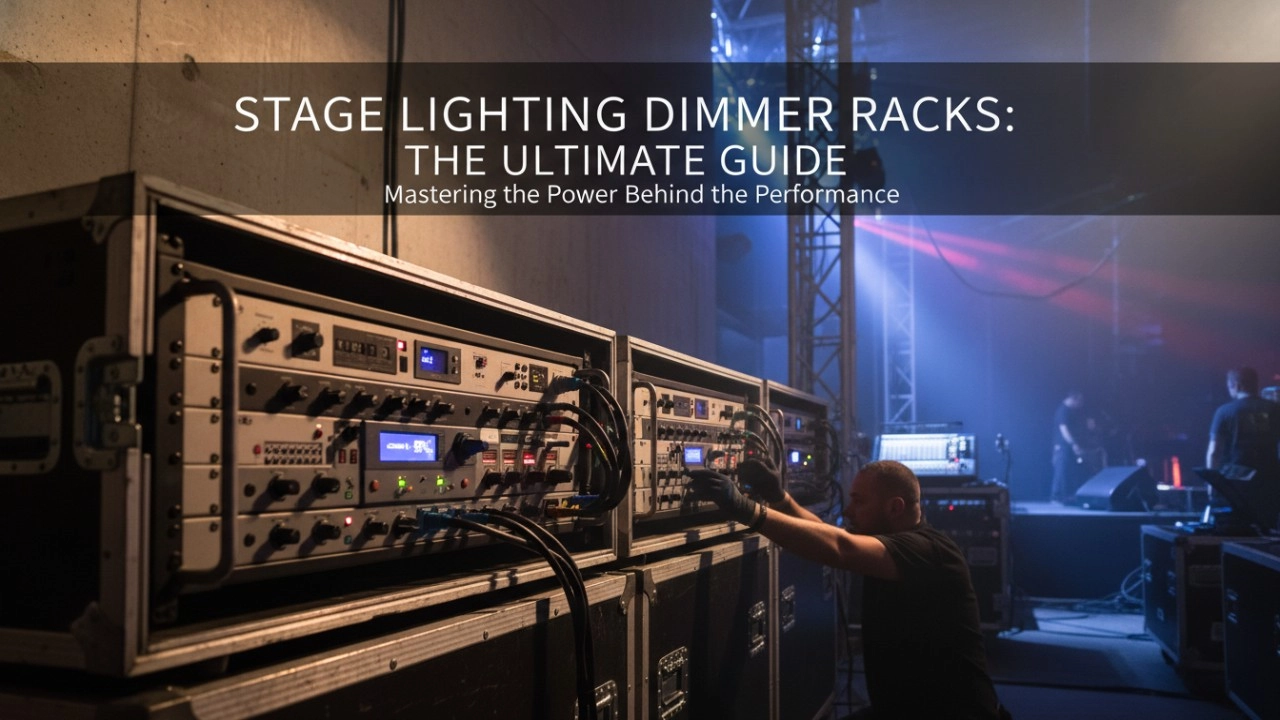
A comprehensive 2026 guide to selecting high-performance stage lighting dimmer racks. We review top hybrid systems, explore SCR vs sine wave technology, and analyze essential features like ThruPower for modern venues.
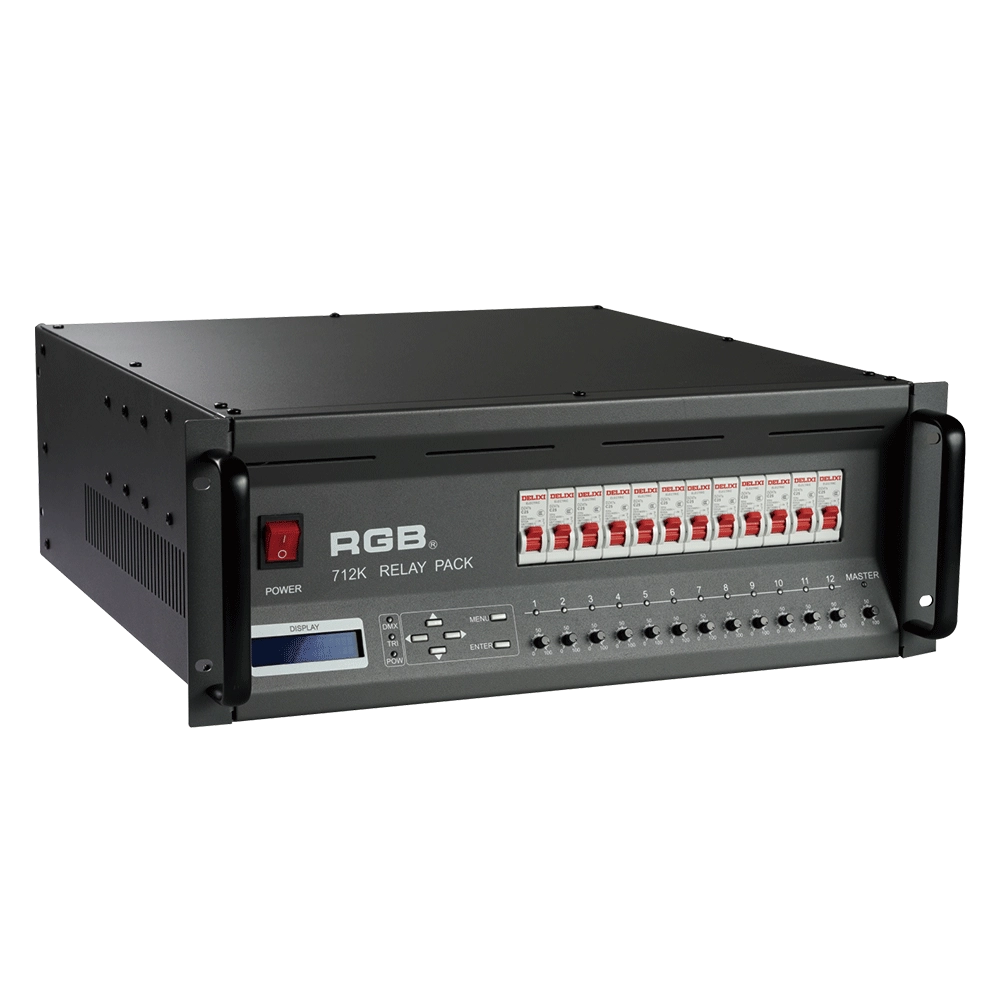
Alloy Relay Packs
High-performance DMX512 relay dimming unit with 512 addressable circuits, phase-loss protection, dual-signal amplification, 20A output per channel, and robust design for reliable stage and mobile lighting applications.
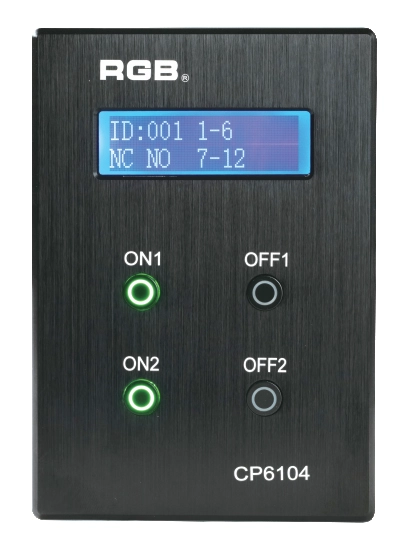
Site Light Controller CP6104
The CP6104 lighting control panel is a lighting control device for theater stage lights, work lights, environmental lighting, commercial art lighting, sports venue lighting and other places. By connecting to the dedicated lighting control host CP6100, it realizes the central control of the lighting system, supports a visual lighting control system, and intuitively displays the online and offline status of CP6104. Realize remote monitoring, editing and setting of corresponding parameters.
It is widely applicable to theaters, cinemas, auditoriums, stadiums, museums, exhibition halls, cultural tourism performances, commercial art lighting and other places.
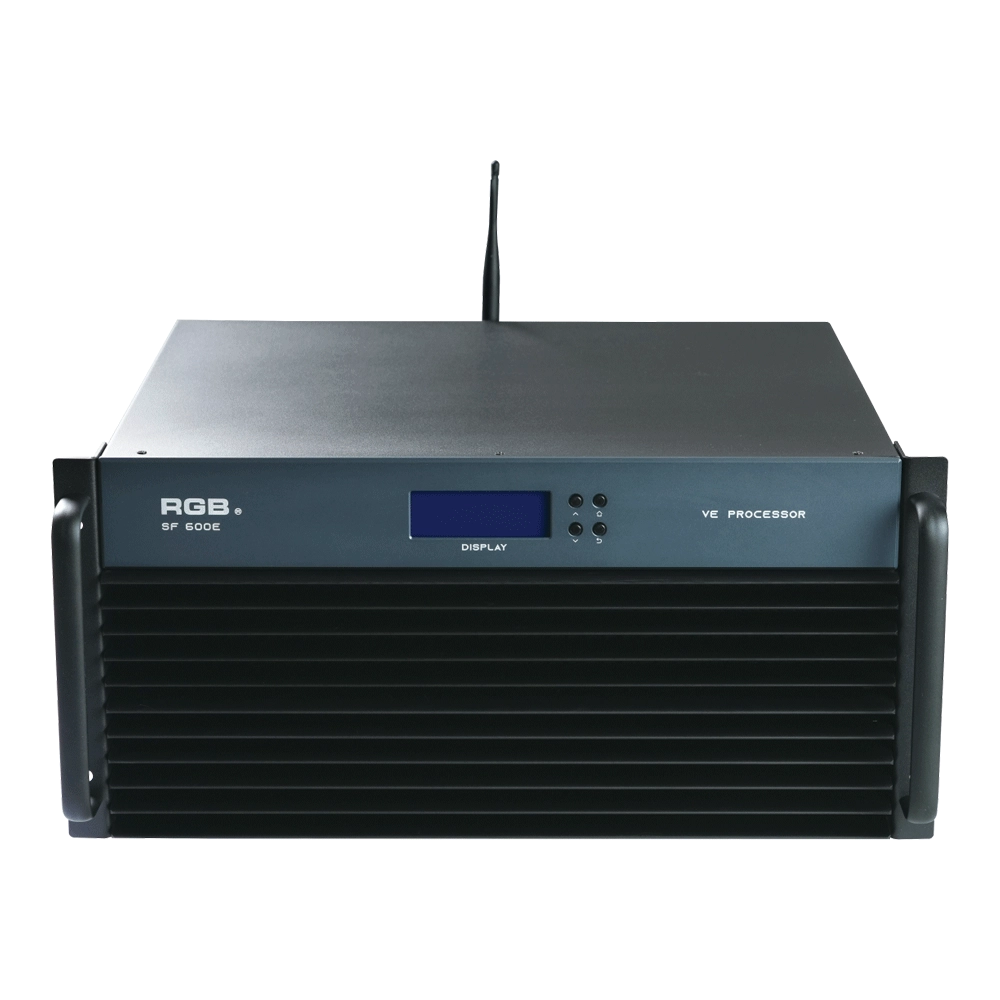
SF600E Visual R-net environment processor
The SF600E Visual R-net environment processor by RGB delivers advanced performance for visual systems. As a leading visual systems manufacturer, RGB ensures seamless integration and high reliability, making SF600E ideal for complex visual processing needs in diverse environments.
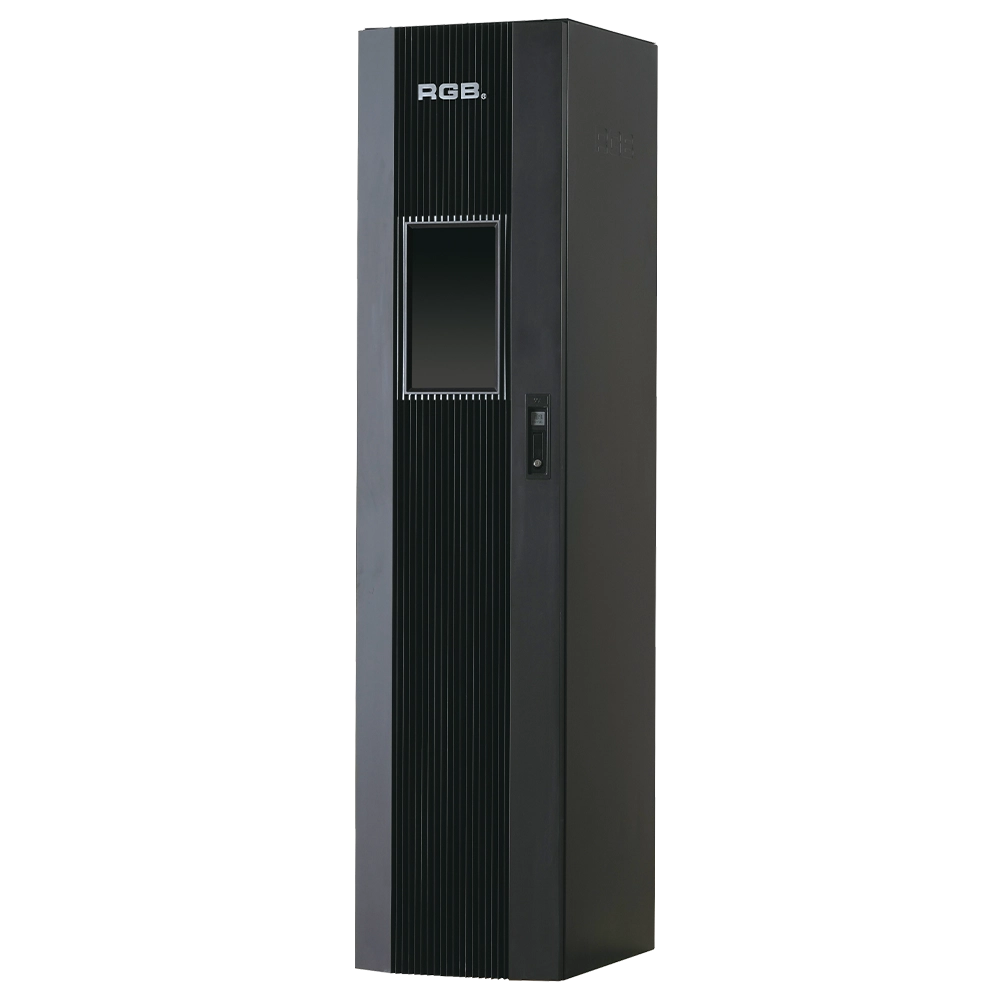
9i intelligent network Dimmer/Relay Racks
9i is an artificial intelligence dimming racks independently developed by RGB, which has completely independent core technology and obtained software Copyrights, all digital electrodeless trigger and multi-backup independent CPU central processor technology. It has a variety of output configurations such as sine wave, thyR, relay and dimming relay mix, and supports visual lighting control system and visually displays the online and offline status of dimming racks. Realize remote monitoring, editing and setting of relevant parameters.
It is suitable for the lighting control needs of different places such as high standard grand theater, TV station, gymnasium and environmental intelligent lighting.
Expert Support
Interested in learning more or need expert guidance related to this article? Fill in your details, and our team will provide tailored support.
Intelligent Control. Brilliant Performance.
RGB specializes in stage lighting control systems, delivering intelligent, reliable, and high-performance solutions for theaters and performance spaces worldwide.
Contact
Email:
Tel:
+86 20 3928 0245
+86 20 3928 0247
Address:
No.3, Huashan Road, Shilou Town, Panyu, Guangzhou, China.
Whatsapp: +8615975520131