
The Ultimate Guide to Stage Lighting Dimmer Racks: Professional Tech & Maintenance Trends for 2026
|
- What is a Stage Lighting Dimmer Rack?
- The "Muscles" of the System
- Core Components
- Key Takeaways: Quick Summary for Production Managers
- Why This Matters Now
- The Evolution of Dimming: From Saltwater to Smart Racks
- The SCR Revolution
- The Digital Transition
- Centralized vs. Distributed Dimming: 2026 Efficiency Analysis
- The Efficiency Equation
- Professional Maintenance: Protecting Your High-Voltage Investment
- The Hidden Enemy: Dust
- Essential Maintenance Checklist
- Expert Tips: Common Mistakes in Dimmer Specification
- 1. Underestimating Headroom
- 2. Ignoring Rise Time
- 3. Neglecting Airflow
- FAQ: Common Questions from Production Managers
- What is the primary difference between a dimmer rack and a dimmer pack?
- Can I use LED stage lights with a standard dimmer rack?
- How much power does a professional 48-way dimmer rack require?
- Why is my dimmer rack making a loud buzzing or humming noise?
- What is the lifespan of a modern theatrical dimmer rack?
- How often should I clean the air filters on my dimmer system?
- What is Sine Wave dimming, and is it better than SCR?
- Is it worth repairing a 15-year-old dimmer rack?
- References
Introduction
Behind every breathtaking theatrical moment—from a subtle sunset fade to a blinding concert strobe—lies the unsung hero of the production rig: the Stage Lighting Dimmer Rack. While moving heads and LED arrays often steal the spotlight, the power distribution system ensures the show actually goes on. With the industry shifting toward hybrid infrastructures in 2026, understanding the backbone of your lighting system is more critical than ever.

Drawing on over three decades of manufacturing experience from Guangzhou RGB Lighting Equipment Co.,Ltd. (RGB Lighting), this guide breaks down the technical evolution, modern efficiency standards, and maintenance protocols required to keep your venue running seamlessly.
What is a Stage Lighting Dimmer Rack?
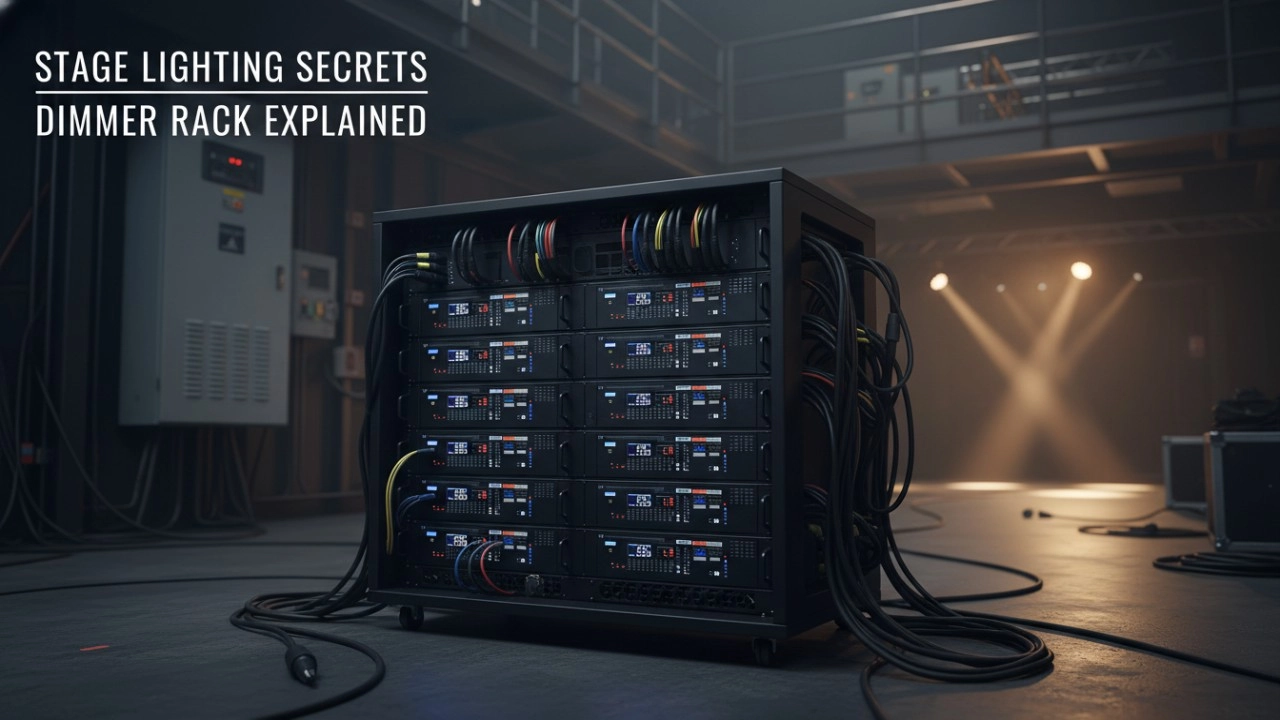
A Stage Lighting Dimmer Rack is a high-density, centralized power enclosure containing multiple electronic modules that regulate the voltage supplied to theatrical fixtures to control their intensity. It acts as the translator between low-voltage control signals and high-voltage electrical circuits.
The "Muscles" of the System
Think of the lighting console as the "brain" of the operation. It sends digital instructions via DMX-512 control protocols. The dimmer rack functions as the "muscles," receiving those commands and physically manipulating the electricity sent to the lamps. Without this conversion, a lighting desk is just a computer sending data into the void.
For professional manufacturers like RGB Lighting, whose systems powered the Beijing Olympics and Shanghai World Expo, the focus is on stability. A robust rack must handle massive electrical loads without fluctuating, ensuring that a 50% dim command looks exactly the same on Channel 1 as it does on Channel 48.
Core Components
To understand the system, you must identify its parts:
- Chassis: The metal frame housing the busbars and cooling infrastructure.
- Power Modules: Swappable units containing the SCR (Silicon Controlled Rectifier) or IGBT components.
- Control Processor: The digital brain that decodes DMX/sACN signals.
- Cooling System: High-velocity fans essential for preventing thermal shutdown.
Key Takeaways: Quick Summary for Production Managers
Centralized power distribution remains the gold standard for permanent venues requiring high-circuit density, though 2026 trends favor hybrid systems that support both dimmable and constant power.
Why This Matters Now
As venues transition to LED, the role of the dimmer rack is evolving, not disappearing. Modern productions require racks that can switch individual circuits from "dimming" (for tungsten) to "relay" (for LEDs) modes.
- Hybrid Versatility: New standards prioritize racks that handle mixed rigs (incandescent + LED).
- Lifespan ROI: Routine maintenance can extend hardware life by 25-40%.
- Market Growth: The global stage lighting market is projected to reach approximately $690 million in 2025, driven by these smart infrastructure upgrades.
The Evolution of Dimming: From Saltwater to Smart Racks
SCR vs Sine Wave dimming represents the technological leap from basic voltage chopping to silent, harmonic-free power control. While SCR is the industry workhorse, Sine Wave technology is the premium choice for acoustically sensitive venues.
The SCR Revolution
Historically, dimming was dangerous and inefficient, utilizing saltwater resistance or massive manual rheostats. The introduction of the Silicon Controlled Rectifier (SCR) changed everything. SCRs work by rapidly switching the power on and off (phase-cutting) 120 times per second. This "chopping" of the waveform reduces the total energy reaching the bulb, dimming the light.
Guangzhou RGB Lighting Equipment Co.,Ltd. has refined this technology since 1996, developing intelligent network dimming solutions that minimize the electrical noise (filament hum) often associated with SCRs.
The Digital Transition
The industry has moved beyond simple analog 0-10V control. Modern racks now rely on advanced protocols:
- DMX-512: The standard for local control.
- Art-Net & sACN: Ethernet-based protocols allowing thousands of channels over a single network cable.
- RDM (Remote Device Management): Allows the rack to report temperature and fault data back to the console.
Centralized vs. Distributed Dimming: 2026 Efficiency Analysis
High-density modular dimming (Centralized) offers superior cable management for permanent installs, while distributed dimming provides flexibility for touring and LED-heavy rigs.
The Efficiency Equation
In 2026, the choice between these topologies depends on your fixture inventory.
Centralized Power Distribution (Rack-Based):
- Best For: Theaters and Opera Houses with extensive tungsten rigs.
- Pros: All sensitive electronics are in one climate-controlled room; easier to maintain.
- Cons: Requires massive amounts of copper wire to run individual circuits to the stage.
Distributed Dimming:
- Best For: Modern TV studios and touring concerts.
- Pros: Power and data are run to the pipe; dimmers are located at the light fixture. Reduces copper cabling costs.
- Cons: If a dimmer fails on a truss, you have to bring the truss down to fix it.
According to recent energy reports, venues switching to LED-heavy distributed systems have seen energy consumption drops of 40-75% compared to traditional incandescent rigs. However, for reliability in large fixed venues, the centralized rack remains king.
Professional Maintenance: Protecting Your High-Voltage Investment
Theatrical lighting maintenance is not just about cleaning; it is a critical safety protocol that can prevent catastrophic failure and fire hazards. Data suggests that proper maintenance extends electronic equipment life by up to 40%.
The Hidden Enemy: Dust
Dimmer racks are essentially large vacuum cleaners. Their cooling fans pull in massive amounts of air—and with it, stage dust, fog fluid residue, and lint. This buildup insulates the heat sinks, causing SCR modules to overheat and fail.
Essential Maintenance Checklist
To maintain the reliability standards seen in RGB Lighting's certified installations, follow this bi-annual schedule:
- Power Down: Completely disconnect the main power feed. High voltage kills.
- Vacuum, Don't Blow: Use an ESD-safe vacuum to remove dust. Compressed air can push conductive dust deeper into circuit boards.
- Check Terminals: Thermal expansion causes screw terminals to loosen over time. Torque them to spec to prevent arcing.
- Air Filters: Replace foam filters every 6 months. A clogged filter is the #1 cause of rack failure.
Warning: Always adhere to NFPA 70E or local electrical safety standards. If you are not a certified electrician, do not open the busbar chamber.
Expert Tips: Common Mistakes in Dimmer Specification
When specifying a system, failing to account for "Inrush Current" and Harmonic Distortion can lead to breaker trips and audible noise interference.
1. Underestimating Headroom
Never load a dimmer to 100% capacity. A 2.4kW dimmer should rarely drive more than 1.9kW continuous load. This 20% headroom protects the electronics from thermal stress during long cues.
2. Ignoring Rise Time
The "Rise Time" of a dimmer choke determines how quiet the filament sings.
- Standard: 350 microseconds (Audible buzz).
- Professional: 500-800 microseconds (Quiet).
- High-End: Sine Wave (Silent).
3. Neglecting Airflow
Racks generate heat. A 96-way rack running at full load can generate as much heat as a small furnace. Ensure your dimmer room has dedicated HVAC, or the system will shut down mid-show.
FAQ: Common Questions from Production Managers
What is the primary difference between a dimmer rack and a dimmer pack?
A dimmer rack is a permanent, high-density installation (often 48+ channels) for large venues, while a dimmer pack is a smaller, portable unit (4-12 channels) designed for mobile productions or small installs.
Can I use LED stage lights with a standard dimmer rack?
Only if the rack features "Thru-Power" or "Relay" modules. Standard SCR dimming chops the voltage, which can damage the power supplies of non-dimmable LED fixtures.
How much power does a professional 48-way dimmer rack require?
A typical 48-way rack (2.4kW per channel) generally requires a 400A to 800A three-phase power service, depending on the total calculated load and diversity factor.
Why is my dimmer rack making a loud buzzing or humming noise?
This is usually caused by "lamp sing" or mechanical vibration in the rack's large copper inductors (chokes) during the phase-cut process. Higher quality chokes reduce this noise.
What is the lifespan of a modern theatrical dimmer rack?
With proper maintenance and regular filter cleaning, a professional-grade rack from a reputable manufacturer like RGB Lighting can last 20 to 30 years.
How often should I clean the air filters on my dimmer system?
In high-use theaters, filters should be inspected monthly. At a minimum, they must be cleaned or replaced every six months to prevent thermal shutdown.
What is Sine Wave dimming, and is it better than SCR?
Sine Wave dimming eliminates electrical noise and harmonic distortion by varying voltage amplitude without chopping the waveform. It is "better" for silence but significantly more expensive than SCR.
Is it worth repairing a 15-year-old dimmer rack?
Yes, if the chassis is modular. Replacing individual control cards or SCR cubes is often far more cost-effective than a full system overhaul, provided parts are available.
References
Latest News
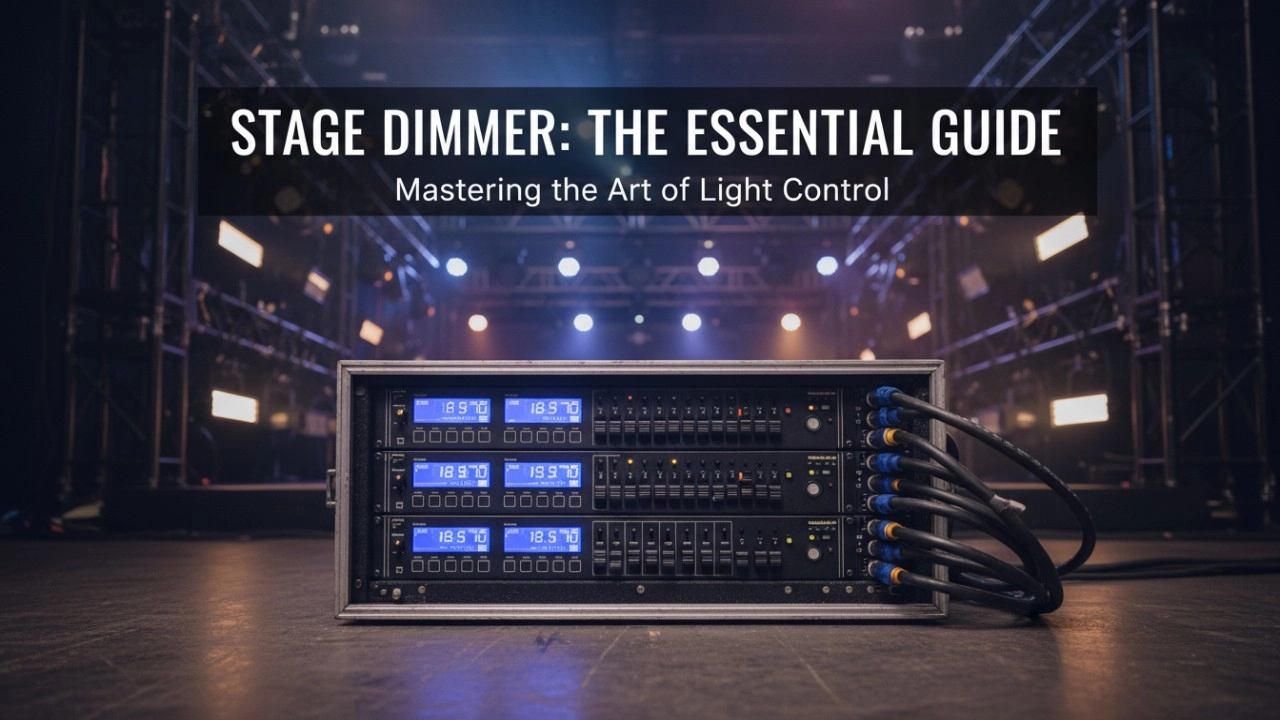
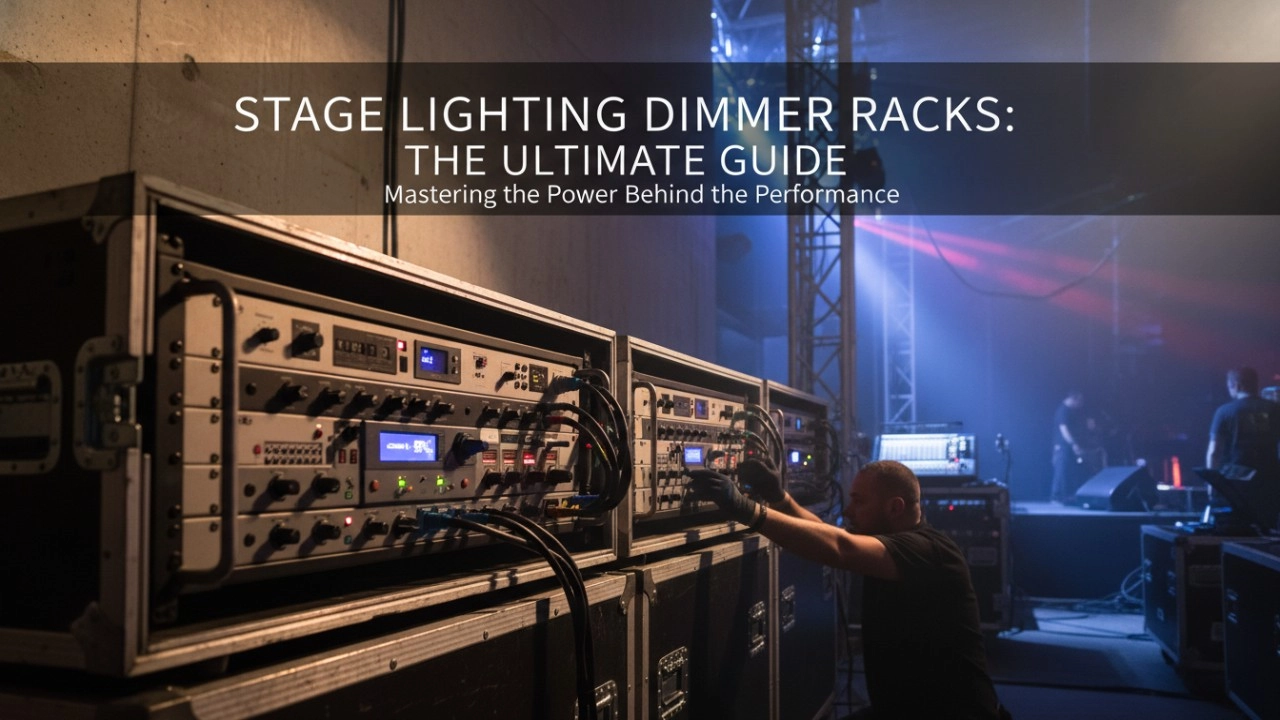
A comprehensive 2026 guide to selecting high-performance stage lighting dimmer racks. We review top hybrid systems, explore SCR vs sine wave technology, and analyze essential features like ThruPower for modern venues.
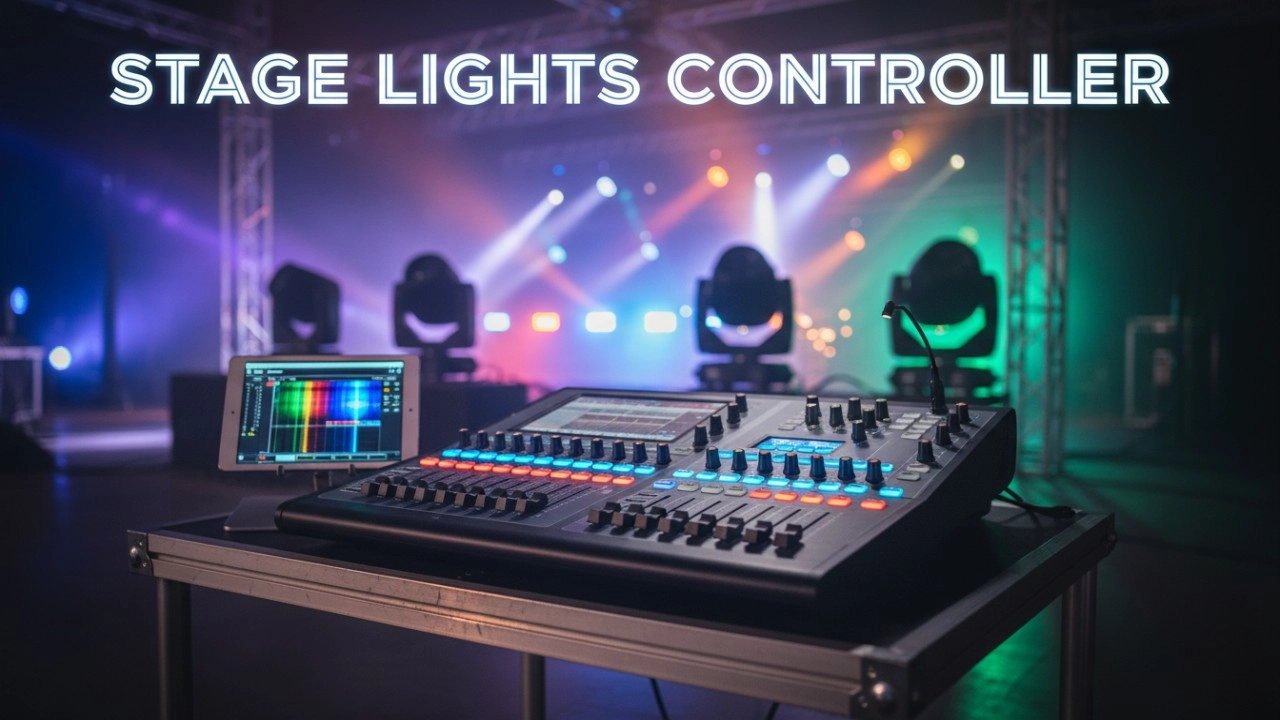
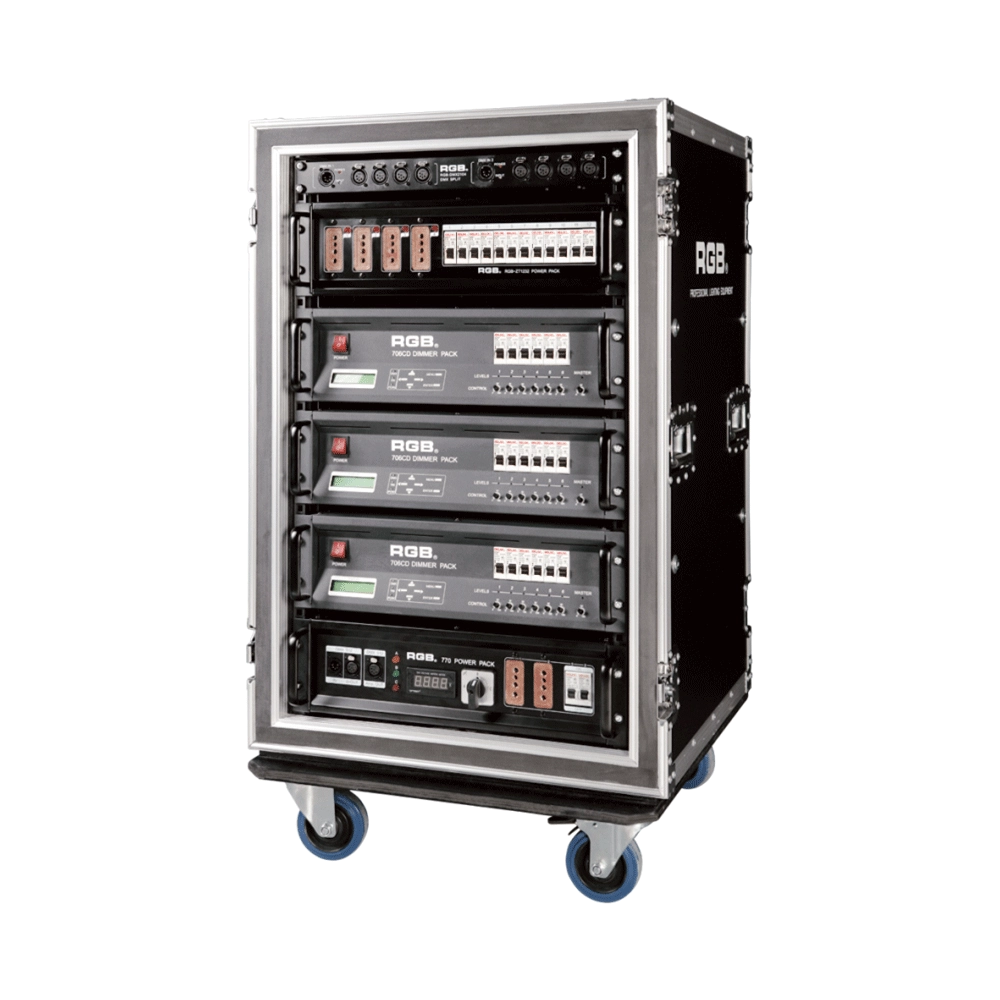
7 Series Digital Touring Dimmer Racks
7 Series digital touring dimmer racks can be assembled into many types of dimmer by taking the 7 Series dimmer as the unit. They are widely used in the entertainment industry for their convenience and practicability.
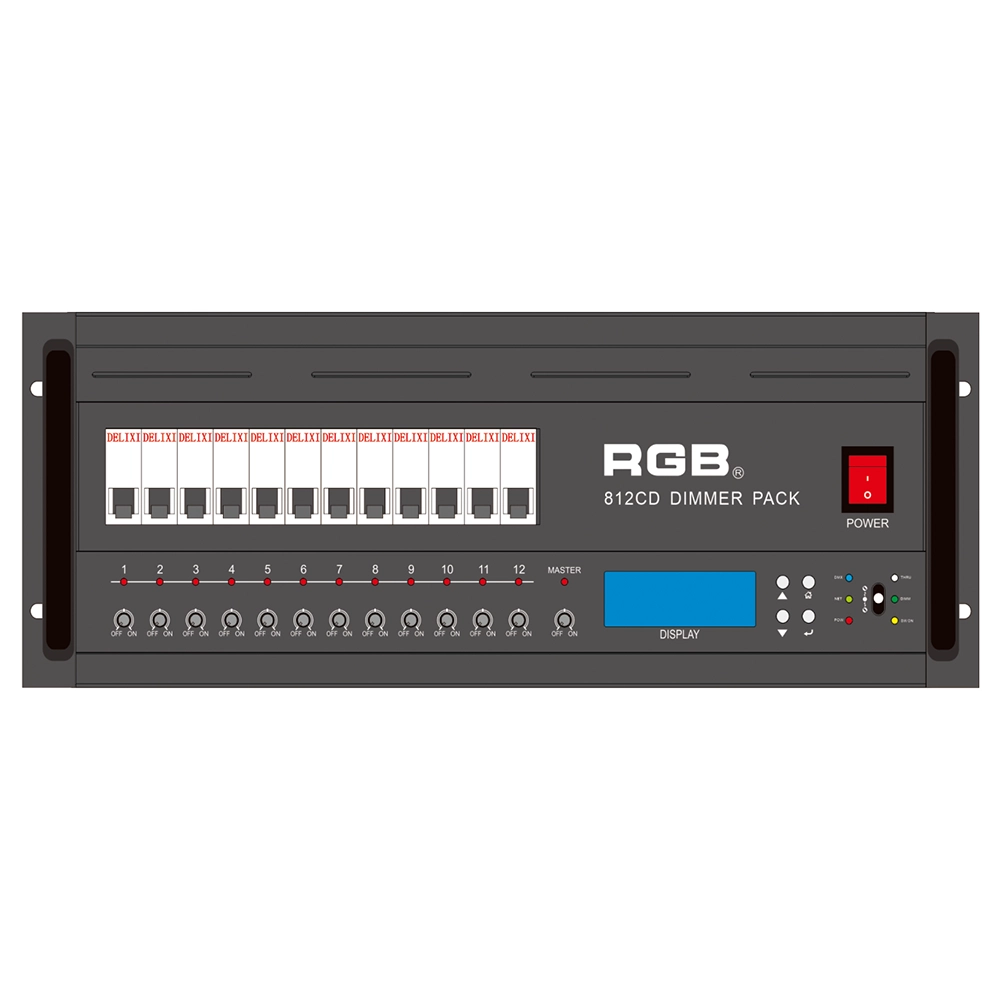
8 Series Intellight Dimmer/Relay Packs
RGB is the latest development and production of all digital, intelligent, and network dimming through the hybrid silicon box. It comes with six channels (806 silicon box), twelve channels (812 silicon box) with analog knob dimming, 49 DMX field recordings and replays (field backup function), and self-programming and recording field. RGB-8 silicon box with DMX512 digital signal input and RJ45 network input interface, with various types of dimming stations at home and abroad used. It is a powerful, stable performance and reliable work of a new generation of intelligent digital dimming through a hybrid silicon box.
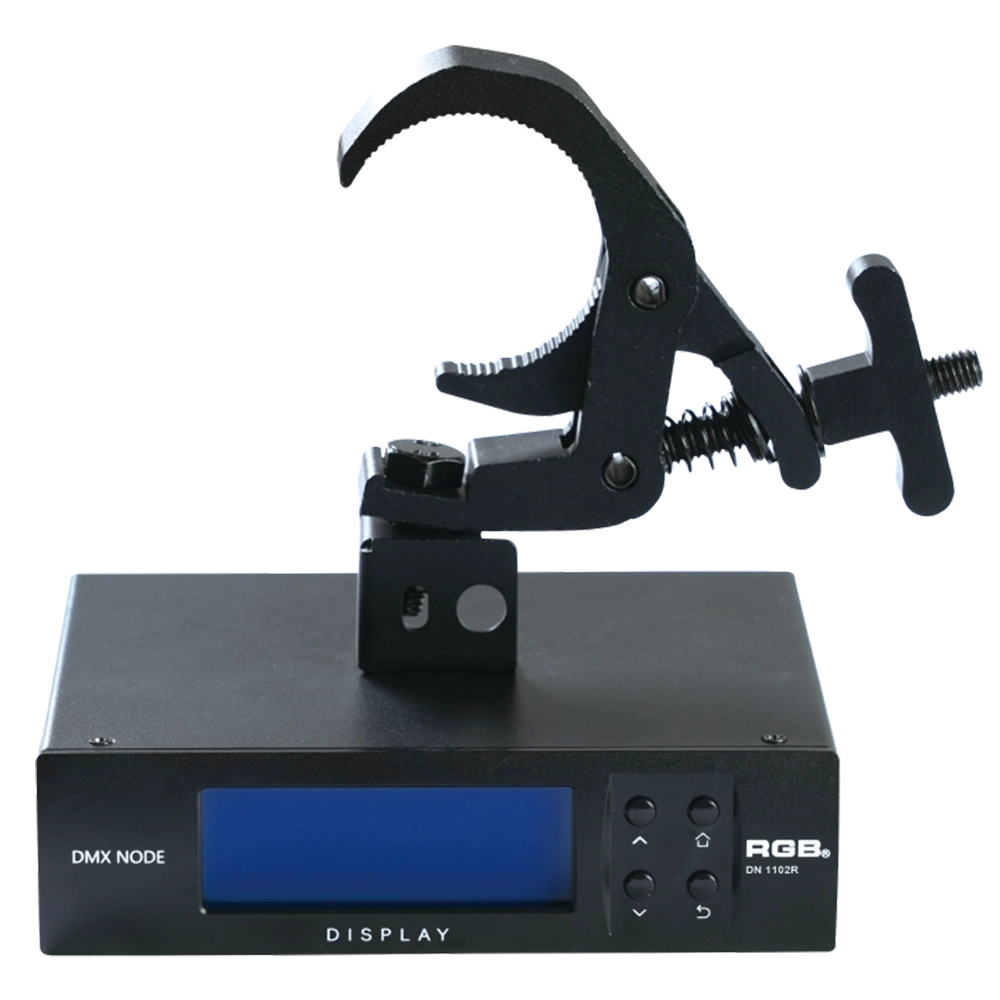
RDM Nodes
The DN series network decoder is a product of the lighting control system independently developed by RGB, featuring completely independent core technology and obtaining software copyrights. It seamlessly connects and decodes the sACN and Art-Net network protocols based on TCP/IP with the DMX-512 and RDM communication protocols. Supports a visual lighting control system, intuitively displaying the online and offline status of the DN series network decoders, and enabling remote monitoring, editing, and setting of corresponding parameters.
It is widely applied in theaters, concert halls, multi-functional halls, cultural and tourism performances, TV stations, gymnasiums, auditoriums, commercial art lighting, and other performance and cultural venues.
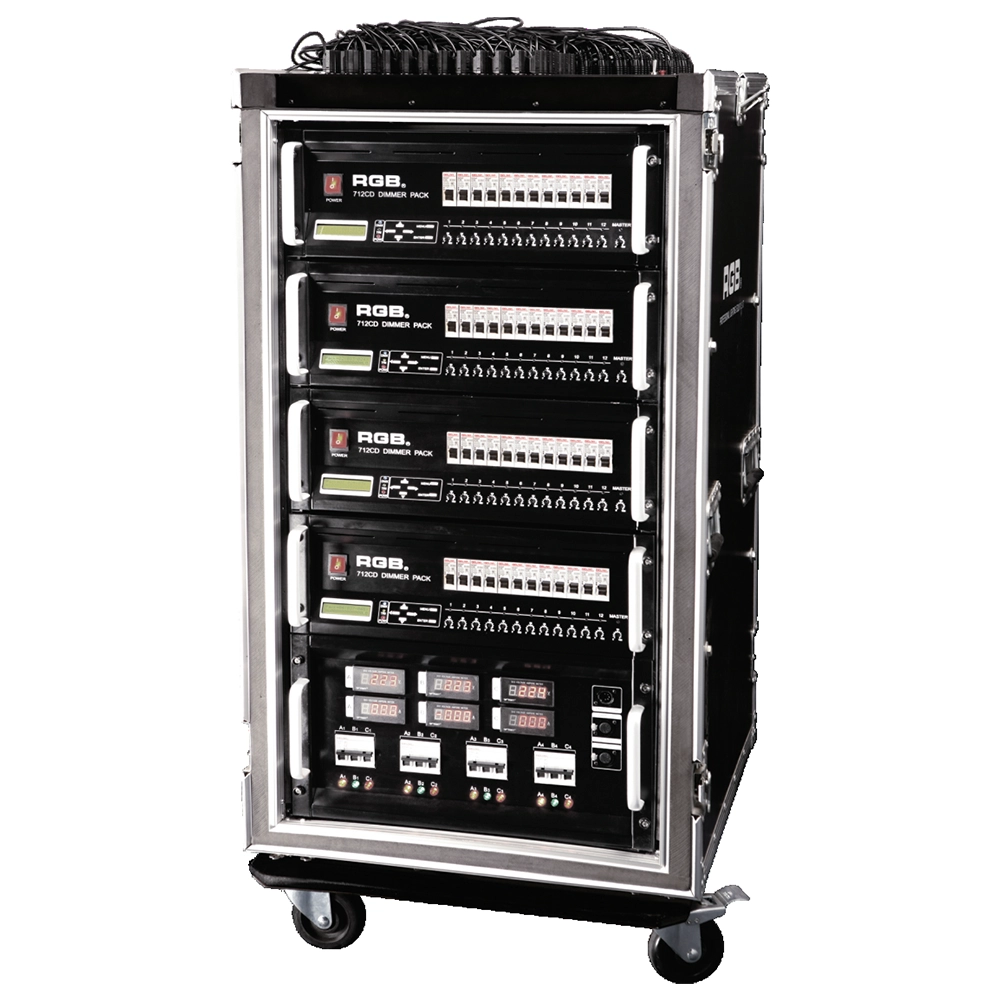
Intelligent Network Touring Dimmer Racks
RGB intelligent network touring dimmer racks can be assembledinto many types of dimmer racks by taking 7 series dimmer
packs as the unit. They are widely used in the entertainment fortheir convenience and practicabillity,
Expert Support
Interested in learning more or need expert guidance related to this article? Fill in your details, and our team will provide tailored support.
Intelligent Control. Brilliant Performance.
RGB specializes in stage lighting control systems, delivering intelligent, reliable, and high-performance solutions for theaters and performance spaces worldwide.
Contact
Email:
Tel:
+86 20 3928 0245
+86 20 3928 0247
Address:
No.3, Huashan Road, Shilou Town, Panyu, Guangzhou, China.
Whatsapp: +8615975520131