
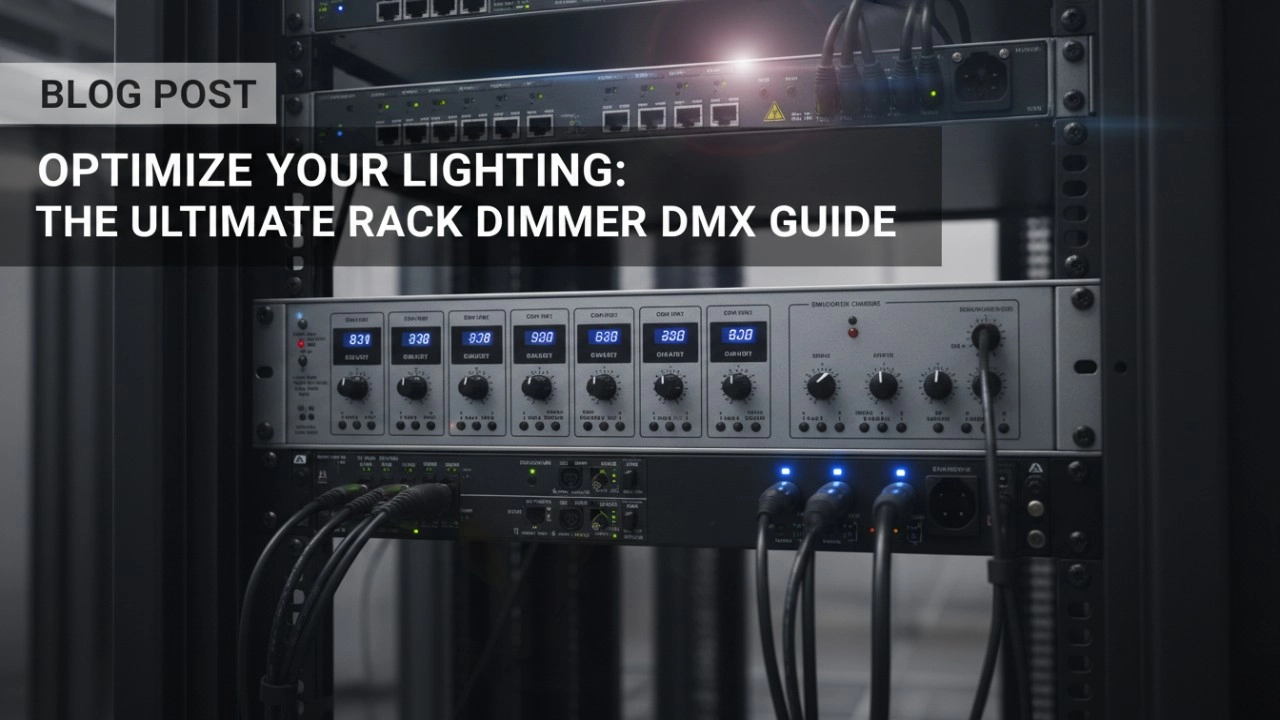
The Ultimate Guide to Rack Dimmer DMX Systems: 2026 Professional Edition
|
- Quick Summary: Essential Takeaways for Rack Dimmer DMX
- What is a Rack Dimmer DMX and How Does it Work?
- How It Functions in the Signal Chain
- The Anatomy of Professional DMX Rack Systems
- Key Components Breakdown
- Expert Setup: Addressing and Signal Integrity
- Critical Installation Rules
- Common Mistakes and Professional Troubleshooting
- Troubleshooting Checklist
- 2026 Trends: The Shift to Hybrid Power Distribution
- Future-Proofing Your Venue
- FAQ: Mastering Your Rack Dimmer DMX Setup
- How many channels does a standard DMX dimmer rack have?
- Can I use LED fixtures on a traditional DMX dimmer rack?
- What is the difference between a DMX dimmer pack and a dimmer rack?
- Do I need a DMX terminator for my rack setup?
- How do I address a DMX rack with DIP switches?
- What is RDM and why is it important for rack dimmers?
- How often should a dimmer rack be cleaned?
- What cable is best for connecting a DMX controller to a rack?
- References
In the high-stakes world of live performance, lighting failures are not an option. From the Beijing Olympics to local black box theaters, the Rack Dimmer DMX system remains the silent heartbeat of stage production. While founded in 1996, Guangzhou RGB Lighting Equipment Co., Ltd. has witnessed the industry evolve from basic analog control to today’s intelligent, networked ecosystems. As we approach 2026, understanding the convergence of legacy voltage control and modern digital infrastructure is critical for every lighting technician.

Quick Summary: Essential Takeaways for Rack Dimmer DMX
Rack dimmers act as the central "muscle" of lighting systems, converting DMX data into high-voltage power adjustments.
Unlike portable packs, these are high-density, centralized units designed for permanent or large-scale touring applications. When specifying a system for 2026, keep these core factors in mind:
- Hybrid Capability: Modern racks must handle both Phase-Cut Dimming Technology (for tungsten) and constant power relays (for LEDs).
- Intelligent Feedback: Systems utilizing Remote Device Management (RDM) allow you to monitor temperature and faults remotely, preventing mid-show failures.
- Infrastructure Shift: There is a rapid transition from "dimmer-only" rooms to distributed Theatrical Power Distribution networks.
What is a Rack Dimmer DMX and How Does it Work?
A Rack Dimmer DMX is a centralized power control system mounted in standard 19-inch equipment racks that uses the DMX512-A Protocol to regulate the intensity of multiple lighting fixtures.
It functions as the translator between your creative intent and the physical voltage hitting the lamp. When you slide a fader on your console, a digital signal travels to the rack, where it is processed and converted into electrical output.
How It Functions in the Signal Chain
- Input: The console sends a digital data packet via the DMX512-A Protocol containing intensity values (0-255) for up to 512 channels.
- Processing: The rack's control module (the brain) decodes this signal.
- Output: Power modules using Thyristors or SCRs (Silicon Controlled Rectifiers) "chop" the AC sine wave to reduce voltage (dimming) or switch power on/off (relay).
The Anatomy of Professional DMX Rack Systems
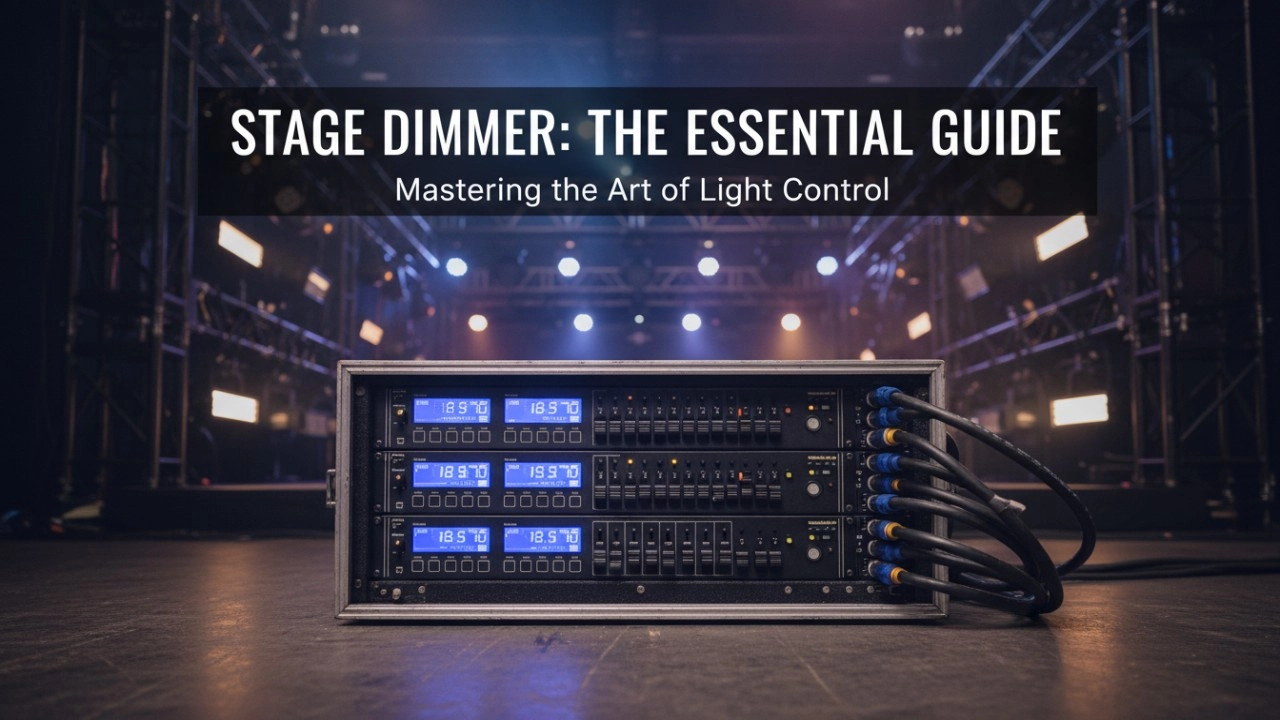
Professional DMX racks are engineered as Modular Dimmer Racks, allowing technicians to swap individual power modules without replacing the entire unit.
This modularity is vital for maintaining uptime. At RGB Lighting, our engineering teams design these systems with specific industrial-grade components to ensure they survive the rigors of touring and 24/7 installation.
Key Components Breakdown
- Control Modules: The digital interface that handles DMX addressing and curve selection (Linear, Square Law, or Non-Dim).
- Power Modules: The swappable units containing the chokes and SCRs. High-quality chokes are essential to reduce "lamp sing" (filament buzz) caused by Phase-Cut Dimming Technology.
- Cooling Systems: High-velocity fans are critical. Heat is the enemy of electronics; clogged filters can cause thermal shutdowns.
- Protection Hardware: Circuit breakers and RCDs protect against surges. In our experience at RGB Lighting, ensuring robust isolation between the low-voltage control side and high-voltage power side is the #1 safety requirement.
Expert Setup: Addressing and Signal Integrity
Setting up a rack requires precise DMX addressing and strict adherence to cabling standards to prevent "ghosting" or signal reflection.
While modern racks use digital LCDs, legacy equipment still relies on binary DIP switches. Regardless of the interface, the physical connection determines stability.
Critical Installation Rules
- Termination is Non-Negotiable: You must place a 120-ohm resistor (terminator) at the end of the DMX chain. Without it, the signal bounces back, causing lights to flicker.
- Cable Selection:
- Installation: For permanent venue wiring, Cat6 cable (using RJ45 connectors) is increasingly standard and cost-effective for DMX512-A Protocol transmission.
- Touring: Shielded 5-pin XLR cable (110-ohm impedance) remains the gold standard for durability.
- Avoid Audio Cable: Never use standard 3-pin microphone cable. It has the wrong impedance (approx. 75 ohms vs. 110 ohms) and will cause data dropouts.
Common Mistakes and Professional Troubleshooting
The most frequent failure in rack systems is not component breakdown, but improper configuration of Remote Device Management (RDM) and thermal management.
Technicians often overlook that modern racks are bi-directional communication devices, not just listeners.
Troubleshooting Checklist
- The "Ghosting" Effect: If lights flicker when the console is off, check for a missing terminator or a ground loop in the DMX line.
- Overheating: If a rack shuts down mid-show, check the air filters. Accumulated dust insulates the SCRs. RGB Lighting recommends a quarterly vacuum schedule for all Modular Dimmer Racks.
- Phase Imbalance: Overloading one phase of a 3-phase supply can trip the main venue breaker. Always balance your patch plan.
- LED Flicker: Using a standard dimmer curve on an LED fixture can damage its power supply. Ensure the module is swapped to a "Relay" or "Non-Dim" module, or the curve is set to "Switched" via the control module.
2026 Trends: The Shift to Hybrid Power Distribution
The industry is moving away from centralized dimming toward decentralized Theatrical Power Distribution, where intelligent power is delivered closer to the fixture.
According to recent market analysis, the global stage lighting market is projected to reach over $3.7 billion by 2025, driven largely by the transition to LED. This shift renders massive banks of 96-channel dimmers less necessary than before.
Future-Proofing Your Venue
- Hybrid Racks: New installations utilize racks that can switch any circuit between "Dimmer" (for legacy tungsten) and "Constant Power" (for LEDs/Moving Lights) via software. This is a core focus of RGB Lighting's current R&D.
- Eco-Design Compliance: EU Ecodesign regulations are pushing for higher efficiency. Modern racks now feature "Sleep Modes" that drastically reduce standby power consumption.
- IoT & Cloud Monitoring: 2026 systems integrate with cloud dashboards, allowing facility managers to track energy usage and module health in real-time.
FAQ: Mastering Your Rack Dimmer DMX Setup
How many channels does a standard DMX dimmer rack have?
Most professional racks come in configurations of 6, 12, 24, or 48 channels. High-density touring racks can exceed 96 channels per unit to maximize truck space.
Can I use LED fixtures on a traditional DMX dimmer rack?
Only if the rack supports "switched" or "non-dim" modes to provide constant power. Using Phase-Cut Dimming Technology on a non-dimmable LED can destroy the fixture's electronic driver.
What is the difference between a DMX dimmer pack and a dimmer rack?
Packs are typically portable, low-channel count (4-way), and designed for light duty. Modular Dimmer Racks are permanent, high-capacity installations with advanced cooling and integrated circuit protection.
Do I need a DMX terminator for my rack setup?
Yes, always place a 120-ohm terminator at the end of the DMX chain to ensure signal stability. This prevents signal reflection that causes flickering.
How do I address a DMX rack with DIP switches?
DIP switches use a binary system where each switch represents a value (1, 2, 4, 8, 16, 32, 64, 128, 256). The start address is the sum of the switches flipped to the "On" position.
What is RDM and why is it important for rack dimmers?
Remote Device Management (RDM) allows bi-directional communication over the DMX cable. It enables technicians to change addresses, check temperatures, and monitor fault status from the lighting console without climbing to the rack room.
How often should a dimmer rack be cleaned?
Air filters should be checked every 3 months in high-use environments. Vacuuming the internal modules annually prevents heat buildup from dust accumulation, which is the leading cause of component failure.
What cable is best for connecting a DMX controller to a rack?
Use shielded twisted-pair cable specifically rated for DMX (RS-485) with 110-ohm impedance. Avoid using standard microphone cables, as their lower impedance causes signal degradation.
References
Latest News
EB1202 Series Wall-Mounted DMX Dimmer & Relay Units
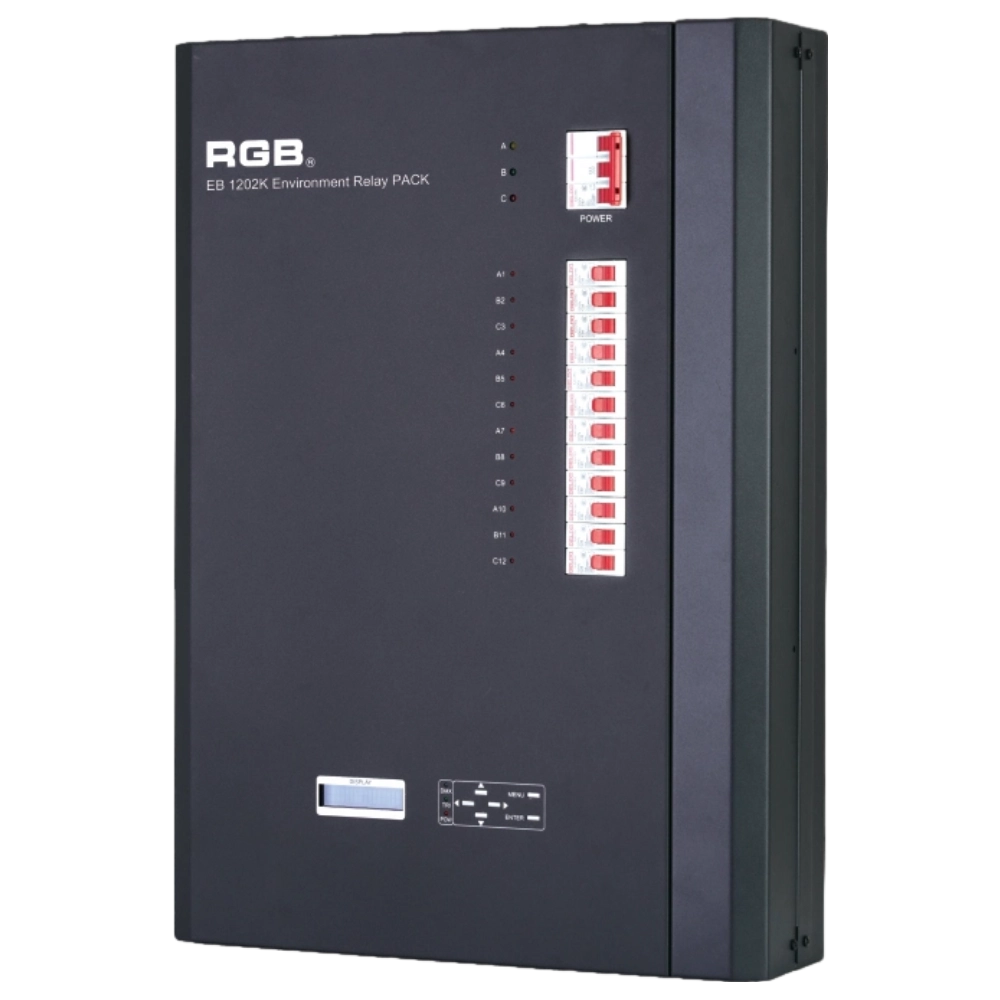
RGB EB1202 series wall-mounted stage lighting power-control units include an EB1202 12-channel dimmer configuration and an EB1202K 12-channel relay/pass-through configuration in the published technical data. EB2402 and EB2402K are also shown in the existing dimensions table, but their output ratings require separate confirmation. The series supports DMX512-based control and on-unit settings for stage and venue installation.
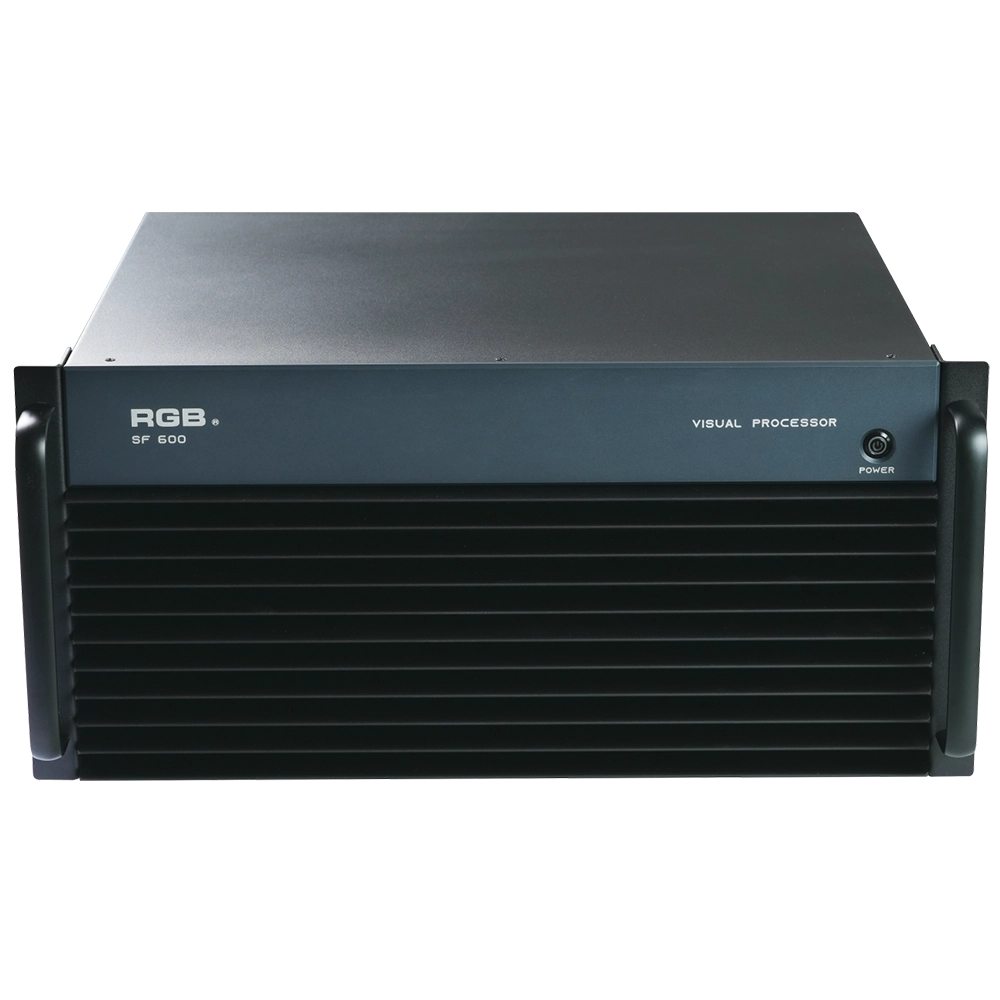
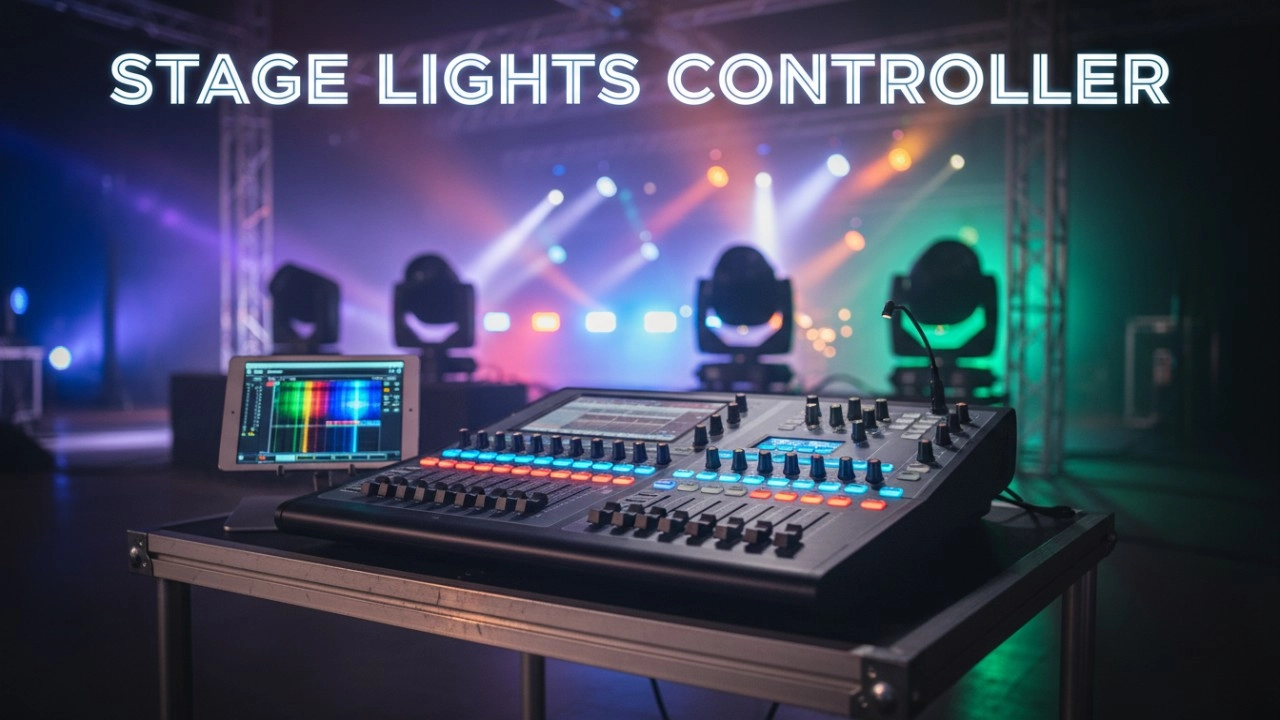
SF600 R-Net Visual Network Controller
RGB SF600 is an R-Net visual network controller for monitoring professional stage lighting systems. It displays connected Art-Net, sACN, RGB-Net and RDM devices in a network topology, with single- or dual-screen views for checking device status and parameters. Published interfaces include four Ethernet ports, dual fiber connections and four RDM interfaces, together with redundant power supply support. The SF600 is a system monitoring controller, not a generic corporate video processor.
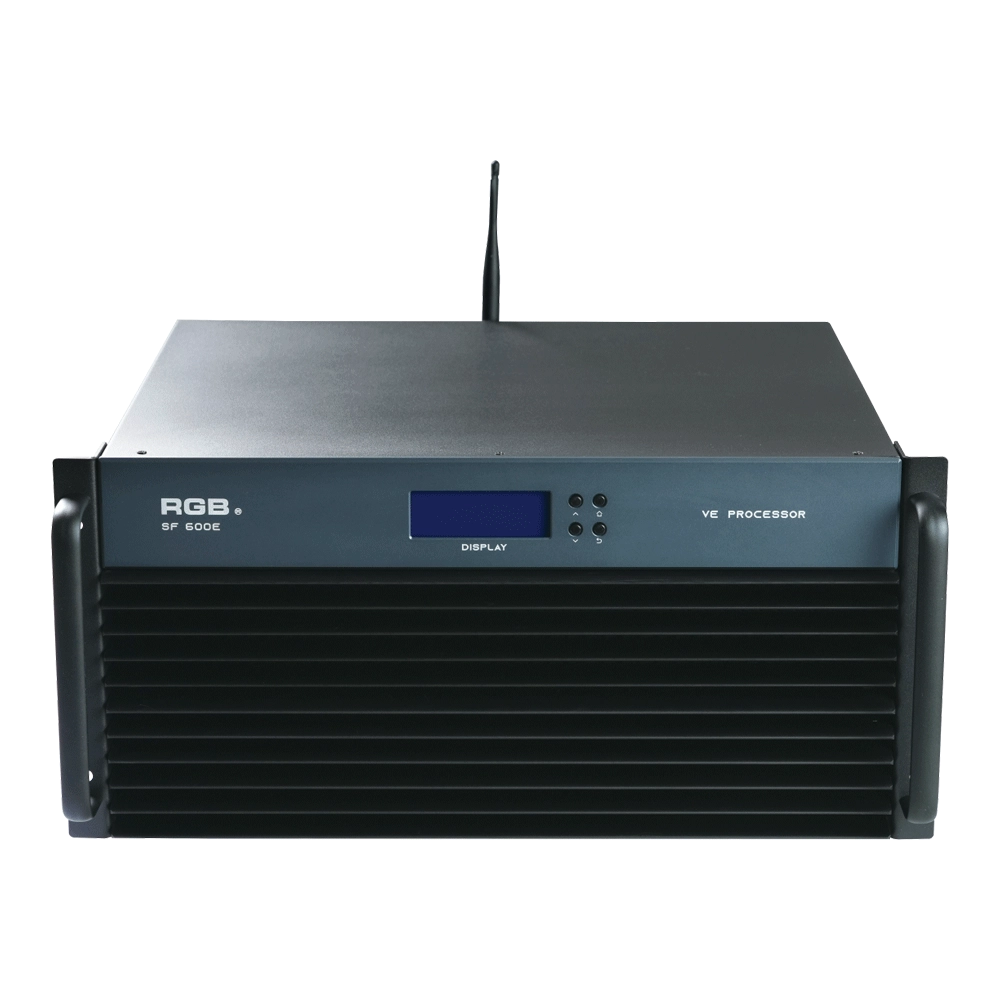
SF600E R-Net Environment Monitoring Processor
RGB SF600E is an R-Net environment and lighting-network monitoring processor for performance venues. Its published functions include four independent RDM interfaces, four universes, Art-Net and sACN network communication, device status monitoring and multi-point environmental readings. The listed environmental data types include temperature, humidity, PM2.5, carbon dioxide, ozone and formaldehyde. Confirm compatible field sensors and system configuration before specifying these monitoring functions.
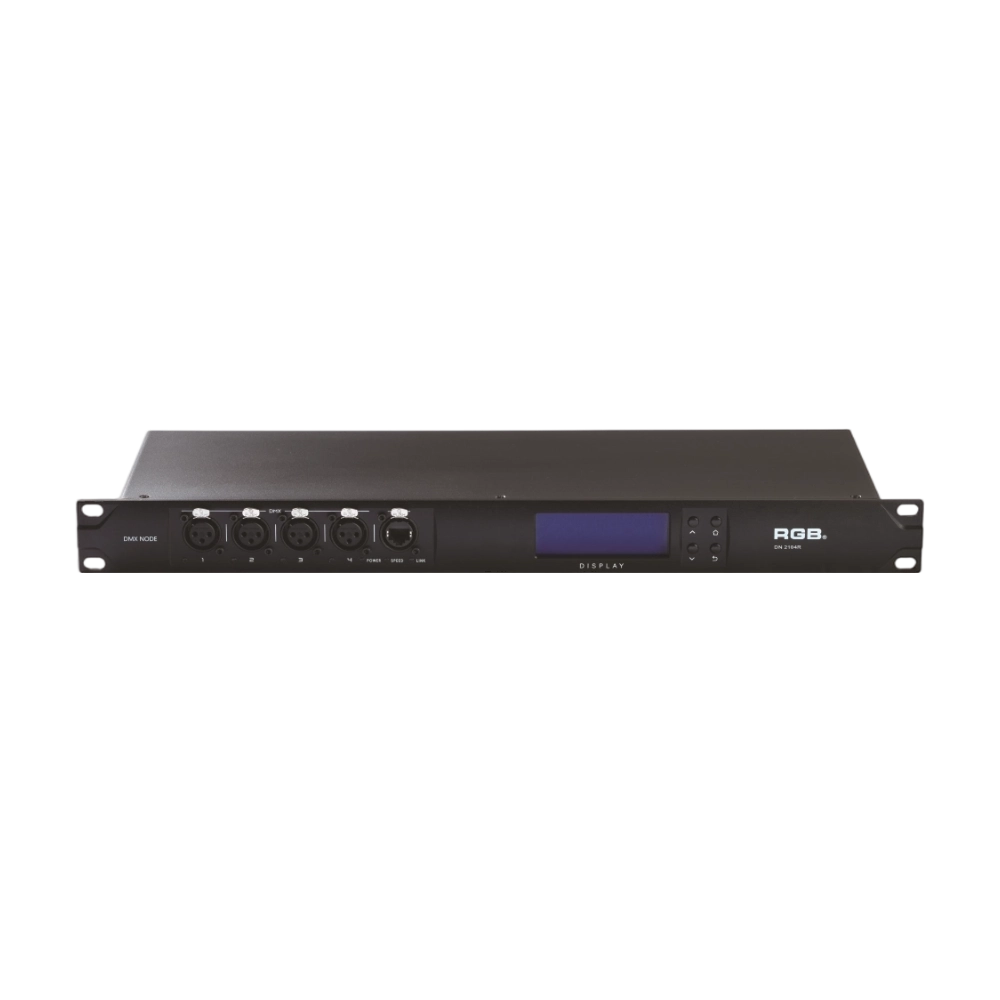
DN Series Art-Net/sACN DMX & RDM Nodes
RGB DN Series DMX and RDM nodes connect Ethernet lighting networks with DMX512/RDM equipment. The dual-network-port models listed on this page support Art-Net, sACN and RDM, with 2-, 4-, 8- or 12-universe configurations depending on the selected DN model. Ethernet interfaces, status indication and network parameter management help technicians plan control networks for theaters and touring systems. Check the model-specific port count, dimensions, mounting type and optional interfaces before ordering.
Expert Support
Interested in learning more or need expert guidance related to this article? Fill in your details, and our team will provide tailored support.
Intelligent Control. Brilliant Performance.
RGB specializes in stage lighting control systems, delivering intelligent, reliable, and high-performance solutions for theaters and performance spaces worldwide.
Contact
Email:
Tel:
+86 20 3928 0245
+86 20 3928 0247
Address:
No.3, Huashan Road, Shilou Town, Panyu, Guangzhou, China.
Whatsapp: +8615975520131