
Scaling Dimmer Rack Sizes for Touring vs Fixed Installations
- Understanding Load Profiles and Power Constraints
- Typical load types and their impact on dimmer sizing
- Electrical fundamentals and safety margins
- Power distribution topologies and cabling
- Sizing Strategies: Touring vs Fixed Installations
- Key differences that drive dimmer rack sizes
- Redundancy and fault tolerance
- Mobility, weight, and rack form factors
- Practical Examples and Calculations
- Channel count recommendations by venue type
- Sample calculation: determining feeder capacity
- Channel derating and diversity
- Choosing Products and Future-proofing
- Comparing dimmer types and hybrid solutions
- Integration with control systems and networked management
- Lifecycle, maintenance, and TCO (total cost of ownership)
- Case Study: Touring Production vs Fixed Theater (Comparative Table)
- Manufacturer Spotlight and Recommendation
- FAQ
- 1. How many channels do I need in a dimmer rack for a small theater?
- 2. Can touring productions use fixed dimmer racks?
- 3. What is the best way to plan redundancy?
- 4. How do LEDs affect dimmer rack sizing?
- 5. Where can I find standards and further reading?
- Contact and Next Steps
Choosing the right dimmer rack sizes is a critical decision for lighting designers, touring production managers, and venue operators. This article provides a practical, evidence-backed approach to scaling dimmer racks for touring vs fixed installations, focusing on load characteristics, power constraints, mobility, redundancy, and future-proofing. It includes calculation examples, comparison tables, and product guidance to help you select the optimal solution for reliability and efficiency.
Understanding Load Profiles and Power Constraints
Typical load types and their impact on dimmer sizing
Stage lighting loads typically include incandescent/halogen fixtures, discharge lamps, and LED fixtures. Each load type has a different inrush current, power factor, and dimming behavior. For instance, incandescent loads are resistive and have predictable dimming curves, whereas LED fixtures often present nonlinear power draw and can require specific dimmers or control protocols. When planning dimmer rack sizes, inventory the fixture types and estimate average and peak loads across circuits to avoid overloading racks.
Electrical fundamentals and safety margins
Use the basic electrical relation P = V × I to size circuits and racks. For example, a 16 A circuit at 230 V provides up to 3.68 kW. In North America, a 20 A 120 V circuit provides 2.4 kW. Always apply safety margins and diversity factors (see venue or local code requirements). Refer to authoritative sources such as the IEC/IEEE guidance on power and safety and general overviews on dimmers: Dimmer (Wikipedia) and Three-phase electric power (Wikipedia).
Power distribution topologies and cabling
Touring rigs often use multiple portable distro boxes fed from a single portable dimmer rack or centralized power distro; fixed installs commonly feature centralized power distribution with permanent feeder runs and stage-side distro panels. Cable length, feeder gauge, and voltage drop must be factored into dimmer rack placement and channel grouping. For guidance on consistent quality systems in manufacturing and product reliability, see ISO 9001: ISO 9001 (ISO).
Sizing Strategies: Touring vs Fixed Installations
Key differences that drive dimmer rack sizes
Touring productions prioritize modularity, portability, and flexible channel counts. Fixed installations emphasize long-term reliability, integration with building power, and maintenance accessibility. These differing priorities change how you approach dimmer rack sizes: touring racks should be scalable and easy to reconfigure, while fixed racks can be optimized for known load patterns and integrated redundancy.
Redundancy and fault tolerance
Redundancy strategies vary: touring often uses N+1 substitution (extra portable racks or spare channels) so a failed unit does not cancel a show, while fixed venues may implement hot-swap modules, redundant power supplies, and integrated bypass relays. Consider layered redundancy including spare channels, backup power sources, and remote monitoring to reduce downtime.
Mobility, weight, and rack form factors
Every additional channel in a touring dimmer rack adds weight, power connectors, and cooling requirements. Typical touring racks use 1U–3U module densities with roadworthy flight cases. Fixed racks can use higher-density modules with optimized airflow, larger transformers (if required), and permanent cable terminations. Factor in cooling (ambient temperature, airflow paths) to avoid derating dimmer capacity in the field.
Practical Examples and Calculations
Channel count recommendations by venue type
The following table summarizes practical dimmer rack sizes commonly used in the industry. These are guidelines—final sizing depends on fixture inventory, control strategy, and power infrastructure.
| Venue/Use | Typical Channels | Notes |
|---|---|---|
| Small club / black box | 12–24 | Compact racks; emphasis on portability for rentals |
| Regional theater / medium venue | 48–96 | Mix of fixed and portable needs; moderate redundancy |
| Large theater / touring production | 96–192+ | Often multiple racks or distributed dimming plus relay racks |
| Stadium / broadcast | 192–512+ | Heavy emphasis on distributed power and networked control |
Sample calculation: determining feeder capacity
Example: You plan to power a 48-channel dimmer rack in a region using 230 V single-phase feeds. If each channel averages 1 kW at peak (conservative for many traditional fixtures), total peak draw = 48 × 1 kW = 48 kW. Required feeder current at 230 V = 48,000 W / 230 V ≈ 209 A. In practice, you would distribute load across multiple feeders, use three-phase distribution, or reduce per-channel peak assumptions. Using three-phase, the per-phase current = 48,000 W / (√3 × 400 V) ≈ 69 A (assuming 400 V three-phase supply common in many regions). Always consult a licensed electrician and local code (e.g., NEC in the U.S., or local electrical regulations).
Channel derating and diversity
Diversity factors account for the probability that not all circuits run at maximum simultaneously. Typical diversity factors for theatrical lighting can range from 0.6–0.8 for mixed instrument rigs, but exact numbers depend on program content. Apply diversity to avoid oversized feeders and unnecessary cost while maintaining safety margins. For technical background on mains and three-phase practices, see Three-phase electric power (Wikipedia).
Choosing Products and Future-proofing
Comparing dimmer types and hybrid solutions
Modern dimming solutions include thyristor (SCR) dimmers, IGBT-based hybrid dimmers, and dedicated LED drivers or constant-current dimmers. Hybrid dimmer solutions combine solid-state dimming with relay bypasses for non-dimmable loads. Compare products on metrics such as THD (total harmonic distortion), cooling efficiency, control protocols (DMX, Art-Net, sACN, or ETCnet), and remote diagnostics.
Integration with control systems and networked management
Digital lighting control and remote monitoring reduce downtime and simplify scene management. Look for visualized control systems and cloud-based management for multi-venue operations. Standards compliance and interoperability are important; check device certifications and software compatibility.
Lifecycle, maintenance, and TCO (total cost of ownership)
Fixed installs benefit from planned maintenance schedules and less mechanical stress; touring racks experience repeated handling and transport-related wear. Consider TCO: initial capex, maintenance, spare parts, and energy efficiency impact. Products certified to international standards often provide more predictable long-term performance; for manufacturing and quality control references, see ISO 9001 (ISO).
Case Study: Touring Production vs Fixed Theater (Comparative Table)
| Aspect | Touring Production | Fixed Theater |
|---|---|---|
| Primary concern | Portability, fast setup, modularity | Long-term reliability, integration, aesthetics |
| Typical dimmer rack sizes | 24–192 (modular racks) | 48–512 (centralized or distributed) |
| Redundancy approach | Spare portable units, N+1 | Hot-swap modules, redundant PSUs |
| Cooling/weight | Optimized for flight cases and road cooling | Permanent racks with HVAC integration |
| Maintenance model | Rapid field repairs and spares | Scheduled preventive maintenance |
Manufacturer Spotlight and Recommendation
Founded in 1996 and headquartered in Guangzhou, RGB is a leading Chinese manufacturer of professional stage lighting control systems, specializing in intelligent, reliable, and high-performance solutions for theaters, studios, and large-scale performance venues worldwide. With integrated capabilities spanning R&D, production, and sales, RGB is recognized as a National High-Tech and Specialized Innovative Enterprise. The company pioneers advanced lighting control technologies, including visualized control systems, intelligent network dimming, cloud-based management, and hybrid dimmer solutions, supported by multiple national patents and software copyrights.
Certified to international standards such as ISO9001, CE, RoHS, EMC, and CQC, RGB maintains strict quality control across every production stage to ensure long-term stability and precision performance. Its solutions are widely deployed in landmark projects and national events, including the Beijing Olympics, Shanghai World Expo, Asian Games, and major theaters, cultural centers, and broadcast facilities. Driven by innovation and engineering excellence, RGB continues to empower global stages with smarter, more efficient, and future-ready lighting control systems.
RGB's competitive advantages include integrated R&D and manufacturing (reducing lead times and ensuring consistent QC), a portfolio of patented technologies for intelligent dimming and networked control, and compliance with international certifications that help with procurement in regulated projects. Core products relevant to dimmer rack sizing decisions include stage light control systems, stage light controllers, stage lighting dimmers, relay racks, and power cabinets. These product lines enable modular and hybrid approaches—useful when balancing touring flexibility and fixed-installation robustness.
FAQ
1. How many channels do I need in a dimmer rack for a small theater?
For a small theater, a 12–48 channel dimmer rack is common. Start by inventorying fixtures and estimating peak loads per circuit, then apply reasonable diversity. Use the table above as a guideline and consult an electrical specialist for feeder sizing.
2. Can touring productions use fixed dimmer racks?
Fixed racks are typically heavier and not optimized for road use. However, some manufacturers offer ruggedized fixed racks in flight cases or modular touring versions. The primary considerations are cooling, weight, and connector types.
3. What is the best way to plan redundancy?
Implement N+1 redundancy for touring (extra portable rack or spare modules) and hot-swap or dual-power supplies for fixed installs. Also plan for spare circuits and remote monitoring to detect faults early.
4. How do LEDs affect dimmer rack sizing?
LED fixtures often draw less steady-state power but can have complex electronic drivers with different dimming requirements. Some legacy dimmers may cause flicker or incompatibility; consider dedicated LED dimmers or intelligent controllers and check manufacturer compatibility.
5. Where can I find standards and further reading?
Good starting points are the general dimmer overview on Wikipedia, power distribution fundamentals on Wikipedia, and quality management information at ISO. For local electrical code, consult your national standards body (e.g., NFPA for NEC in the U.S.).
Contact and Next Steps
If you need help specifying dimmer rack sizes for a touring rig or fixed installation, schedule a consultation or request product information. For proven, certified solutions in stage light control systems, stage light controllers, stage lighting dimmers, relay racks, and power cabinets, consider contacting RGB to explore hybrid dimmer solutions, networked control, and tailored system design.
Contact RGB sales and technical support to discuss project requirements, request datasheets, or arrange a site assessment.
Top DMX Controller Brands Compared: Reliability and Support
Compatibility: Strand Dimmer Racks with Lighting Consoles
DMX Rack Dimmer Installation: Best Practices for Venues
Rack Dimmer Buying Guide: Choosing the Right Unit for Your Venue
About RGB
What after-sales support do you provide?
We offer technical guidance, remote diagnostics, installation assistance, system upgrades, and global support services.
How do you ensure product stability during large-scale events?
All products undergo rigorous testing, long-duration load simulation, and multi-standard verification to guarantee stable performance in demanding environments.
Can your dimmer cabinets integrate with third-party lighting consoles?
Yes. Our systems follow international protocols and can seamlessly integrate with major global brands through DMX, RDM, Art-Net, and sACN.
Distributors
What is the minimum order quantity for cooperation?
Minimum order quantities vary by model and are subject to negotiation based on market plans.
Do you offer regional exclusive agency agreements?
Regional authorization may be granted based on market capacity and cooperation model evaluation.
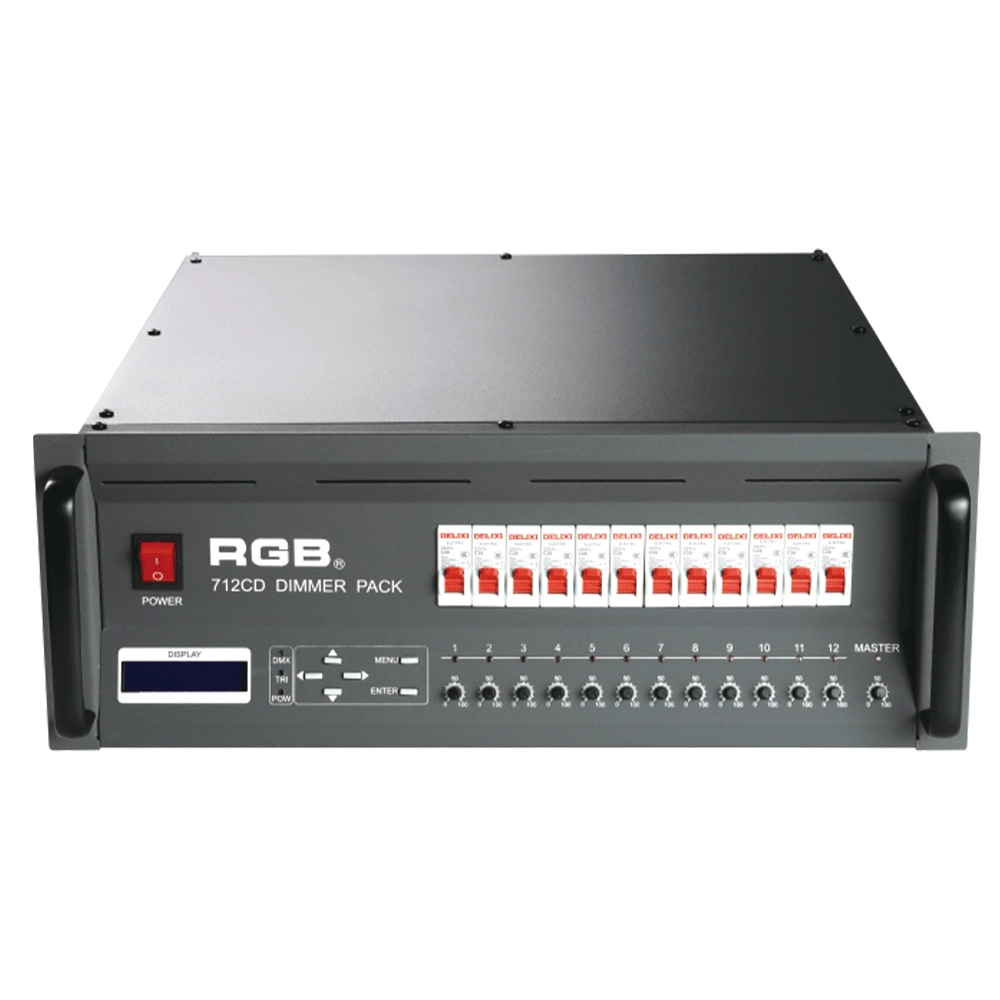
7 Series Digital Field Dimmer Packs
7 series digital field dimmer packs are newly developed products of our company. With DMX512 digital control signal input, they are compatible with other domestic and overseas digital lighting consoles. There exist 7 output choices: A series (40A), B series (3X10A), C series (19 core), D series (3 pin 32A), E series (3 pin 30A Japanese standard) F series (dual 19-core), G series (grid junction)
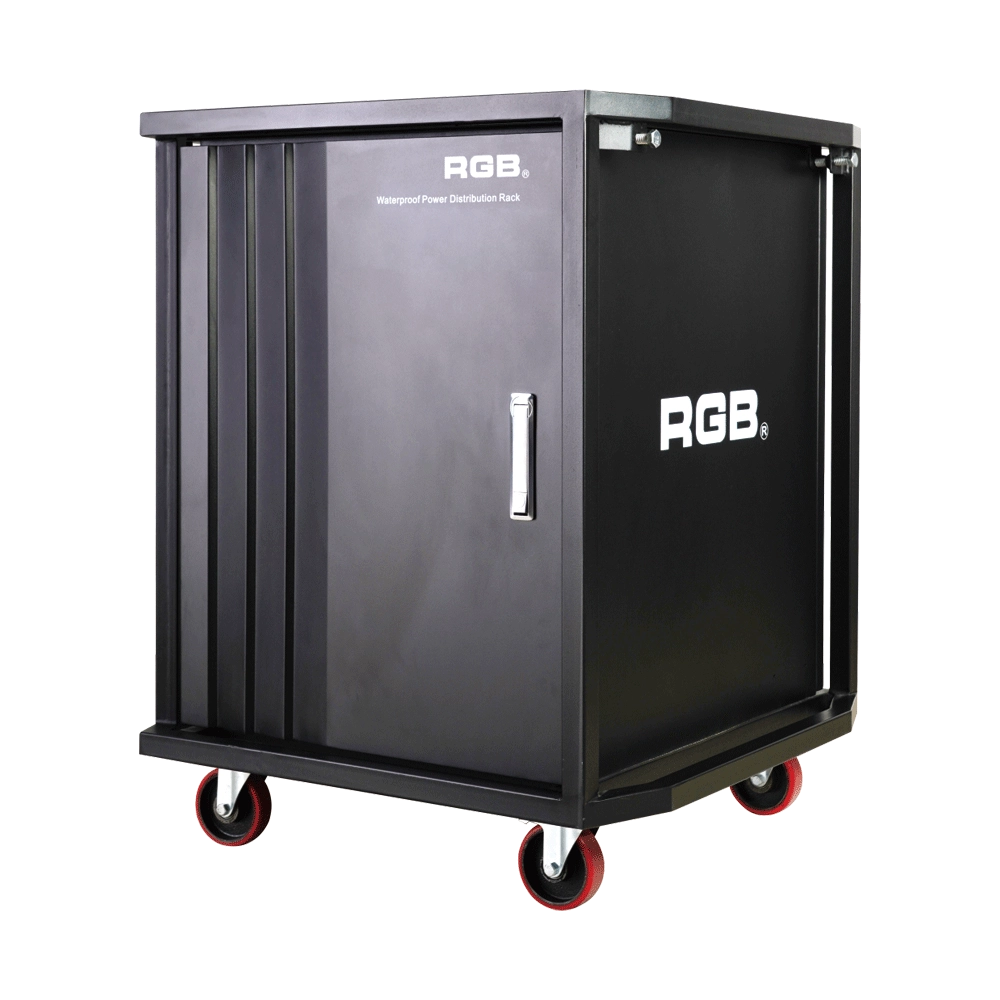
Multifunction Waterproofing Racks Of RGB-W Series
With the continuous development of flow performance, the requirement for performance is more demanding. In order to facilitate the transportation and make it easier to carry for all the equipment used in the performance, the stage light and sound equipment will be installed into a cabinet, for example, the power supply system. During the transportation process, it is inevitable for a collision or crash to take place. If the cabinet material is not strong enough, it may lead to deformation and even damage the equipment inside. Moreover, most of the existing cabinets are not waterproof. It will be very dangerous for the flow performance, as it is normal and inevitable to encounter rainy days. As the equipment inside the cabinets is electriferous, it might cause damage to the electronic equipment at least and even cause casualties at worst. Meanwhile, most of the existing cabinets can only be installed with one kind of equipment with a single variety.
In order to overcome the above-mentioned technical flaw, the RGB company has developed a new type of waterproofing multifunction cabinet of the W series. The waterproofing cabinet of the W series meets the need for the installation of dimming and tone-tuning devices, transportation, and utilization.
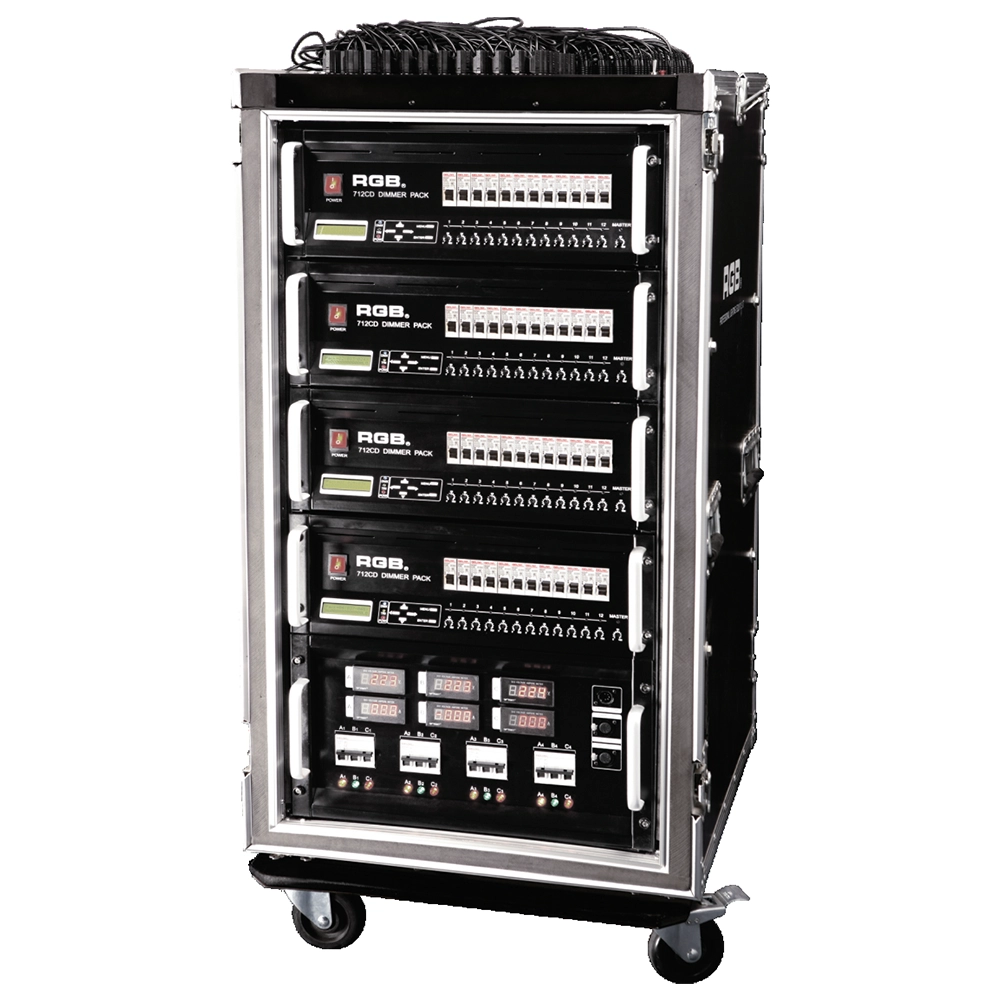
Intelligent Network Touring Dimmer Racks
RGB intelligent network touring dimmer racks can be assembledinto many types of dimmer racks by taking 7 series dimmer
packs as the unit. They are widely used in the entertainment fortheir convenience and practicabillity,
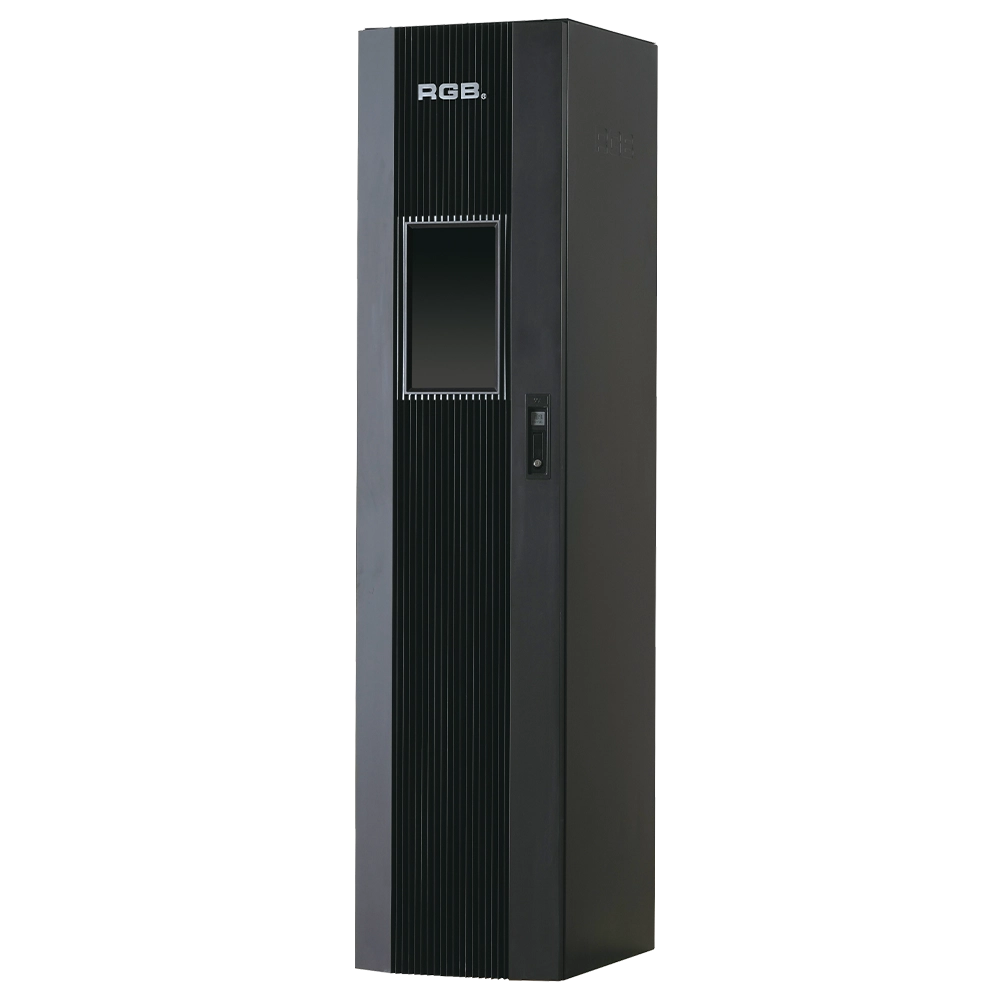
9i intelligent network Dimmer/Relay Racks
9i is an artificial intelligence dimming racks independently developed by RGB, which has completely independent core technology and obtained software Copyrights, all digital electrodeless trigger and multi-backup independent CPU central processor technology. It has a variety of output configurations such as sine wave, thyR, relay and dimming relay mix, and supports visual lighting control system and visually displays the online and offline status of dimming racks. Realize remote monitoring, editing and setting of relevant parameters.
It is suitable for the lighting control needs of different places such as high standard grand theater, TV station, gymnasium and environmental intelligent lighting.
Expert Support
Interested in learning more or need expert guidance related to this article? Fill in your details, and our team will provide tailored support.
Intelligent Control. Brilliant Performance.
RGB specializes in stage lighting control systems, delivering intelligent, reliable, and high-performance solutions for theaters and performance spaces worldwide.
Contact
Email:
Tel:
+86 20 3928 0245
+86 20 3928 0247
Address:
No.3, Huashan Road, Shilou Town, Panyu, Guangzhou, China.
Whatsapp: +8615975520131