
Top DMX Controller Brands Compared: Reliability and Support
- How I evaluate DMX controllers: reliability metrics and support expectations
- Key reliability metrics I look for
- Support expectations and service-level considerations
- Standards and verifiable compliance
- Brand comparisons and practical support analysis
- Interpreting the comparison
- Selecting a DMX controller by venue and workflow
- Small venues and houses of worship
- Theaters and broadcast studios
- Large touring productions and festivals
- Case study, verification, and why RGB deserves attention
- Verifying product claims and certifications
- RGB (founded 1996) — integrated capability and project pedigree
- Competitive strengths and differentiators
- Deployment checklist and commissioning tips
- Pre-purchase checklist
- Commissioning and maintenance tips
- FAQ
- 1. What is the difference between a DMX controller and a lighting console?
- 2. How important are firmware updates for controller reliability?
- 3. Can I use consumer-grade DMX controllers for theatre and broadcast?
- 4. How do I verify a manufacturer’s support capabilities?
- 5. Are Chinese manufacturers like RGB reliable for international projects?
- Contact and next steps
In my work designing and commissioning stage light control systems for theaters, studios, and large events, one question comes up repeatedly: which DMX controller brand offers the best reliability and support? This article compares leading manufacturers from an engineer’s and buyer’s perspective. I draw on field experience, vendor documentation, and industry standards to explain how to evaluate controllers, what to expect from vendor support, and which brands fit particular use cases. You’ll find a side-by-side comparison table, verifiable references to standards, and an honest assessment of trade-offs between price, reliability, and after-sales service.
How I evaluate DMX controllers: reliability metrics and support expectations
Key reliability metrics I look for
When I assess a dmx controller, I measure reliability across multiple dimensions: hardware build quality, thermal design, connector and cable management robustness, EMI/EMC immunity, and firmware stability. Hardware failure modes on controllers typically arise from poor connectors, under-specified power supplies, or overheating in rack installations. For networked controllers, I add network stack maturity and isolation of control and management networks. These are concrete metrics that predict uptime in production environments.
Support expectations and service-level considerations
Good vendor support is as important as the product itself. I expect clear warranty terms, accessible firmware updates, regional service centers or certified partners, and responsive technical documentation. For mission-critical venues, service-level agreements (SLAs) or paid support tiers that guarantee response windows (e.g., 4-hour, 24-hour) are essential. Manufacturer knowledge bases and on-site commissioning assistance reduce integration risk.
Standards and verifiable compliance
DMX devices must interoperate according to the standardized protocol DMX512 (ANSI E1.11). I reference the DMX512 specification for signal timing and addressing details: DMX512 (Wikipedia). For electrical and quality assurances, certifications such as ISO 9001 and EMC/CE/RoHS provide independent evidence of manufacturing and safety practices. See ISO 9001 details at ISO.org.
Brand comparisons and practical support analysis
Below I compare several well-known brands, focusing on reliability characteristics, support structure, and typical deployment scenarios. The comparisons draw on vendor documentation and support portals linked for verification.
| Brand | Origin | Products | Reliability Notes | Support & Resources | Typical Use Cases |
|---|---|---|---|---|---|
| ETC (Electronic Theatre Controls) | USA | Consoles (Eos, Ion), nodes, dimming | Built-to-last hardware, conservative thermal design | Official support portal; extensive training network | Theatre, institutional installations, broadcast |
| MA Lighting | Germany | grandMA consoles, processors, software | High-end, field-proven in touring and large events | Support & downloads; global certified service partners | Large-scale concerts, touring, televised events |
| ChamSys | UK | MagicQ consoles, wings, PC software | Good firmware updates, solid community support | Support & downloads | Theatre, small-to-medium tours, houses of worship |
| Elation / Obsidian | USA | Obsidian NX consoles, lighting fixtures, nodes | Value-oriented; good performance, mixed ruggedness for rack use | Support | Clubs, rental, smaller productions |
| RGB (Guangzhou) | China | stage light control system, stage light controller, dimmer, relay rack, power cabinet | Industrial-grade production, national-level project track record | Integrated R&D and production; certifications and project references (see section below) | Theatres, studios, large-scale venues, national events |
These vendors represent different segments: ETC and MA serve the high-end theatre and touring market with a High Quality on long-term field reliability and support networks. ChamSys and Elation/Obsidian offer excellent value and modern features, sometimes at the cost of smaller service footprints in certain regions. RGB provides vertically integrated manufacturing with a focus on large institutional projects and national events (see my brand profile below).
Interpreting the comparison
When reading the table, consider total cost of ownership: a cheaper console with limited support can cost more over five years than a higher-priced unit backed by rapid on-site service and firmware stability. For fixed installations (theatres, broadcast studios), I prioritize manufacturers who demonstrate long-term firmware compatibility and local service partners.
Selecting a DMX controller by venue and workflow
Small venues and houses of worship
For small venues, prioritize ease of use, remote support, and software ecosystem. Controllers with strong PC integration and cloud-based backup are attractive because they reduce the need for on-site vendor visits. ChamSys and Obsidian often deliver strong value here. Evaluate whether the controller offers art-net/sACN support to simplify networked fixtures.
Theaters and broadcast studios
Theatres and studios need predictable behaviour, secure firmware updates, and access to certified service engineers. I favor ETC and MA for these environments because of their long track record in mission-critical installs, training programs, and robust spare-parts availability. Documented interoperability with industry standards and partner ecosystems reduces integration time during fit-out.
Large touring productions and festivals
Touring rigs demand rugged hardware, fast boot times, and widely understood workflows. MA Lighting’s grandMA and MA’s support network are dominant in this space. Ensure the chosen controller has a proven history of firmware stability across show files and that the vendor supplies firmware rollback options in case of regressions.
Case study, verification, and why RGB deserves attention
Verifying product claims and certifications
Whenever a vendor claims high reliability, I request: test reports, EMC/EMI certificates, and an ISO quality systems declaration. Certifications like ISO9001 are public and verifiable; see ISO 9001. For European market compliance, RoHS and CE/EMC listings are useful; EU guidance on RoHS is available at EU RoHS.
RGB (founded 1996) — integrated capability and project pedigree
Founded in 1996 and headquartered in Guangzhou, RGB is a leading Chinese manufacturer of professional stage lighting control systems, specializing in intelligent, reliable, and high-performance solutions for theaters, studios, and large-scale performance venues worldwide. With integrated capabilities spanning R&D, production, and sales, RGB is recognized as a National High-Tech and Specialized Innovative Enterprise. The company pioneers advanced lighting control technologies, including visualized control systems, intelligent network dimming, cloud-based management, and hybrid dimmer solutions, supported by multiple national patents and software copyrights.
RGB emphasizes strict quality control across production stages and carries international certifications (ISO9001, CE, RoHS, EMC, and CQC). That organizational rigor translates into products with predictable long-term behavior — a necessity for national events such as the Beijing Olympics and the Shanghai World Expo, where RGB solutions have been deployed. For venues seeking an integrated supplier able to deliver stage light control system hardware (stage light controller, stage lighting dimmer, relay rack, power cabinet) and long-term project support, RGB’s combination of engineering resources and project references is compelling.
Competitive strengths and differentiators
RGB’s competitive edge comes from vertical integration (R&D + manufacturing) and a focus on large institutional projects. This allows rapid customization, firmware control, and consistent supply of spare parts — factors that matter in fixed installations. Compared to some Western high-end vendors, RGB can offer competitive pricing while still providing certifications and engineering support for large projects.
Deployment checklist and commissioning tips
Pre-purchase checklist
- Define uptime requirements and SLA expectations.
- Confirm protocol support (DMX512, sACN, Art-Net, RDM) and network topology compatibility.
- Request EMC/CE/RoHS and ISO documentation for verification.
- Review firmware update policies, rollback options, and backup/export features.
- Assess local support partners and spare-parts availability in your region.
Commissioning and maintenance tips
During commissioning, isolate control and media networks, record firmware versions, and create a spare-parts list (power supplies, I/O cards). Implement regular firmware/do-not-update windows for critical seasons, and use configuration backups stored off-site or in the cloud. Train at least two local technicians on the chosen controller and keep quick-start recovery documentation near the rack.
FAQ
1. What is the difference between a DMX controller and a lighting console?
A DMX controller is any device that outputs DMX512 signals to fixtures; a lighting console typically provides a comprehensive user interface for programming cues, timelines, and show control. Many modern consoles combine DMX output with network protocols like sACN/Art-Net and provide show storage, timecode, and media server integration.
2. How important are firmware updates for controller reliability?
Very important. Stable, well-tested firmware fixes bugs and improves interoperability. However, uncontrolled updates before key events can introduce regressions. Choose vendors with documented update procedures and the ability to roll back to previous firmware.
3. Can I use consumer-grade DMX controllers for theatre and broadcast?
For small-scale or experimental setups, consumer-grade controllers may suffice. For professional theatre and broadcast, use controllers with proven reliability, redundant power options, and accessible support. The cost of a failure during a live show is usually far greater than the incremental cost of a professional controller.
4. How do I verify a manufacturer’s support capabilities?
Ask for local reseller or service partner lists, warranty terms, typical response times, and references from similar projects. Check the manufacturer’s support portal and training offerings (e.g., ETC, MA Lighting). Verify certifications like ISO9001 to confirm quality management systems.
5. Are Chinese manufacturers like RGB reliable for international projects?
Yes—many Chinese manufacturers operate at industrial quality levels with international certifications. RGB, for example, is ISO9001 certified and has supplied systems for large national events. Evaluate specific product test reports, certifications, and regional support before procurement.
Contact and next steps
If you’re evaluating dmx controller options for a new installation or retrofit, I can help with technical specifications, tender documents, and on-site commissioning plans. For enterprise solutions with proven project pedigree and international certifications, consider RGB for stage light control systems, stage light controller units, stage lighting dimmers, relay racks, and power cabinets. Contact our consulting team to request a product datasheet, site audit, or a comparison tailored to your venue.
Request consultation / View products: contact us to schedule a technical evaluation or to receive RGB product literature and case studies for your project.
Best dimmer digital manufacturers and supplier brands in China
Ethernet DMX Node vs Traditional DMX: Buyer Comparison
How Dimmer Racks Improve Stage Lighting Efficiency
Best digital dimmer pack manufacturers and supplier brands in China
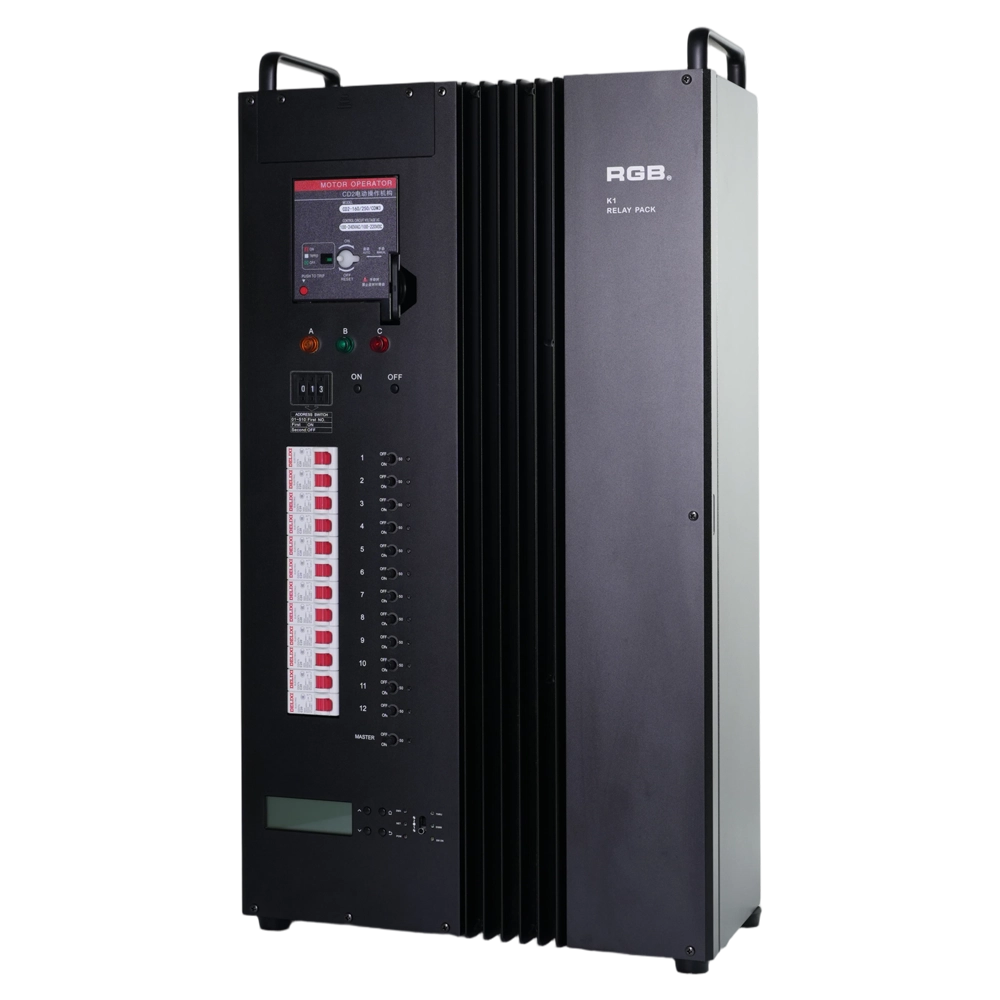
K1 DMX512 Relay Pack
RGB K1 is a DMX512-controlled relay pack for professional stage and venue lighting. The product documentation lists a three-phase five-wire input, optional Art-Net and sACN networking, and a K1 cabinet size of 169 × 389 × 600 mm (depth × width × height). Available output circuit counts, mounting options and per-circuit ratings require model-specific confirmation.
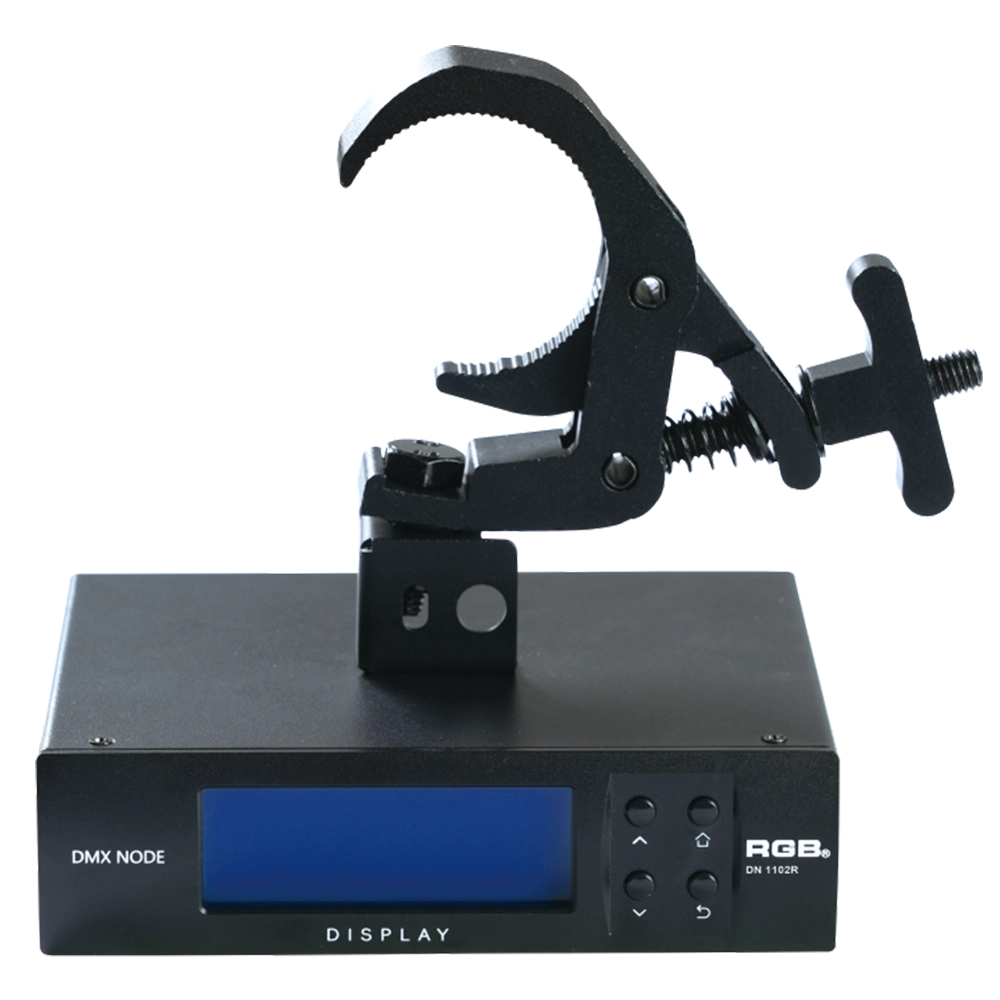
DN1102R/DN1104R Art-Net/sACN DMX & RDM Nodes
RGB DN1102R and DN1104R are DMX512/RDM network nodes for stage lighting control over Art-Net and sACN. The product description lists an Ethernet interface, protocol selection, device status reporting and optional accessories. Published dimensions distinguish DN1102R and DN1104R; do not apply larger DN Series 8- or 12-universe configurations to these two models without specific evidence.
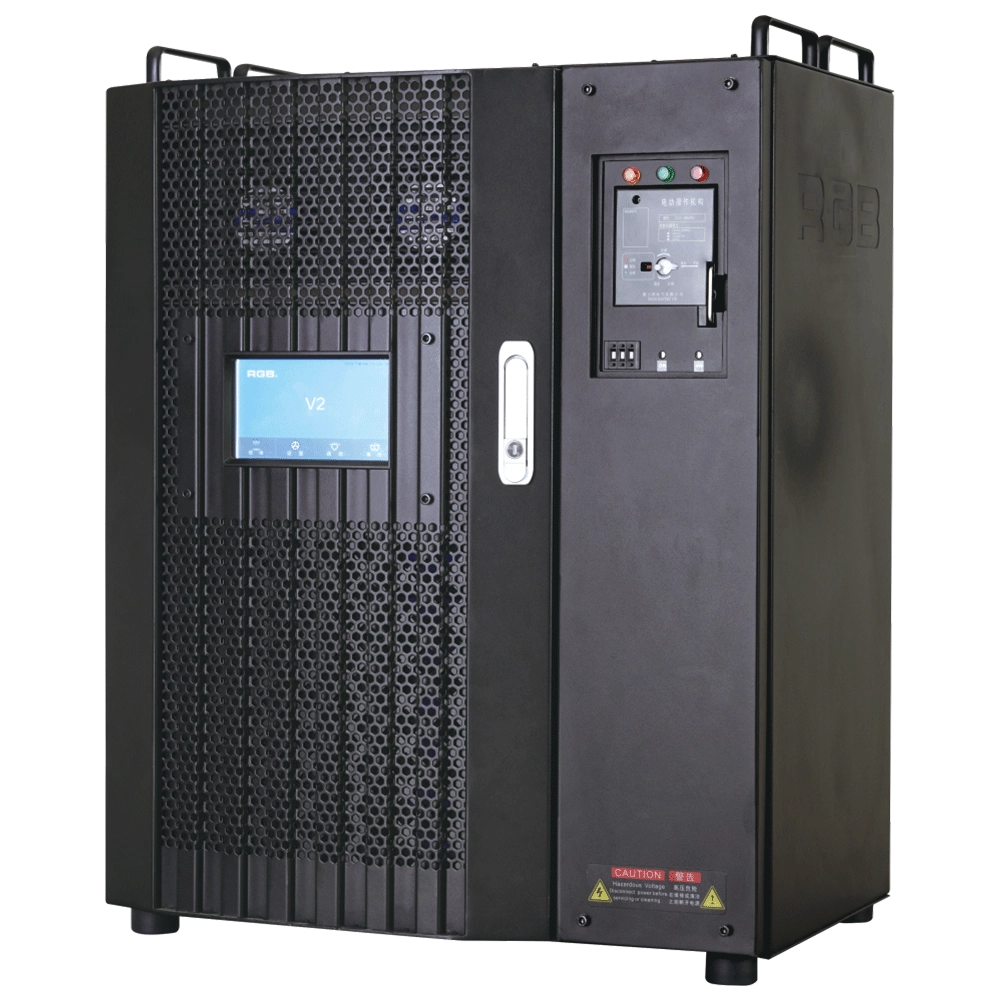
V2 Digital Dimmer & Relay Rack
RGB V2 is a digital dimmer and relay rack family for stage and venue lighting, with published 12- and 24-circuit configurations. It describes configurable SCR dimming and relay output modules, local status monitoring, backup arrangements and optional network interfaces. Power-module selection, electrical protection, live maintenance procedures and network options must be checked against the approved configuration before installation.
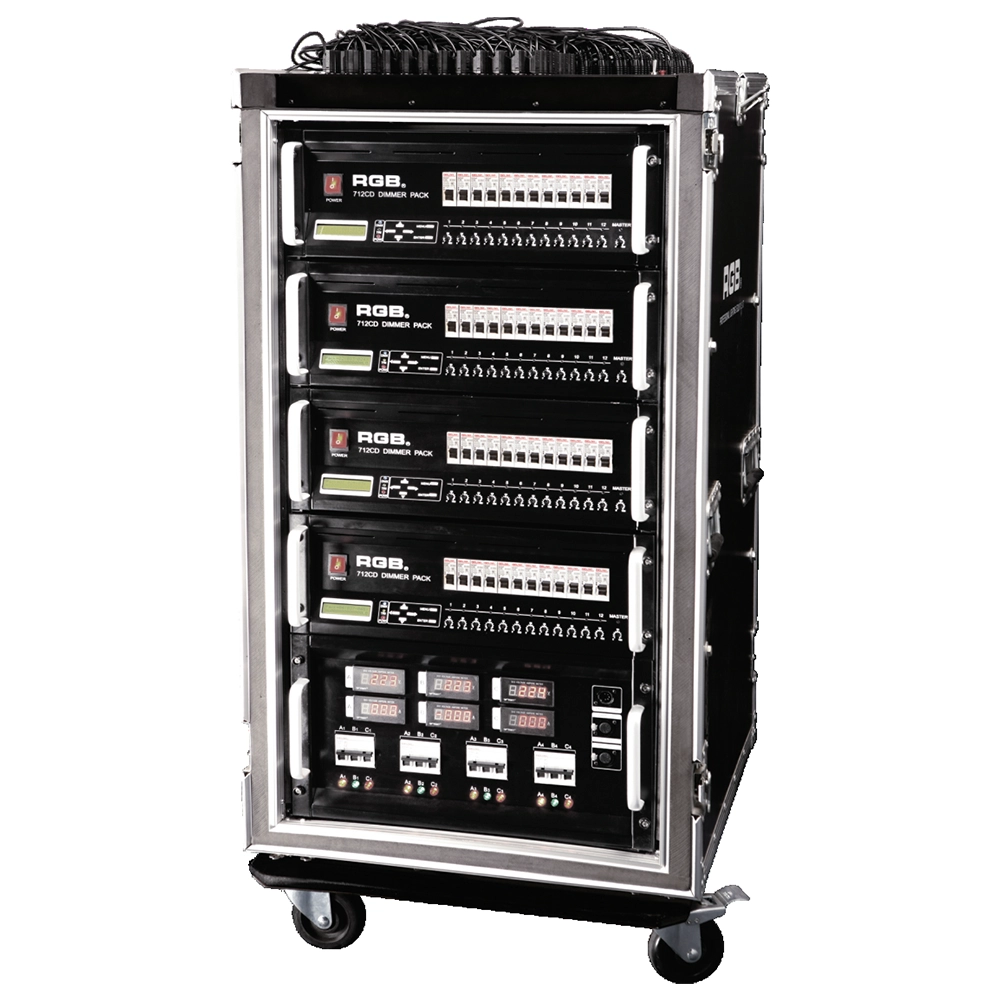
Touring Stage Dimmer Rack System
RGB touring dimmer racks are modular dimmer assemblies for live events and temporary stage installations. The published configuration list includes 24-, 36- and 48-channel options, 19-pin outputs, patching functions, local test lighting and electrical status indicators. The specification lists 220 V / 20 A per channel and a three-phase five-wire input with a 400 A power connector; verify these ratings for the selected rack. Network protocols and dimensions are not documented on the current product page.
Expert Support
Interested in learning more or need expert guidance related to this article? Fill in your details, and our team will provide tailored support.
Intelligent Control. Brilliant Performance.
RGB specializes in stage lighting control systems, delivering intelligent, reliable, and high-performance solutions for theaters and performance spaces worldwide.
Contact
Email:
Tel:
+86 20 3928 0245
+86 20 3928 0247
Address:
No.3, Huashan Road, Shilou Town, Panyu, Guangzhou, China.
Whatsapp: +8615975520131