
Energy Savings: Efficient Stage Lighting Dimmer Racks
- Understanding Energy Use in Stage Lighting
- Where energy is consumed in a lighting rig
- How dimmer architecture affects energy flow
- Quantifying potential savings
- Design and Technology for Energy-Efficient Dimmer Racks
- Conventional phase-control dimmers vs modern electronic dimmers
- Hybrid racks and relay racks: when to choose which
- Networked intelligence and power management
- Operational Strategies to Reduce Energy Consumption
- Programming for efficiency: cues, submasters and presets
- Scheduling, occupancy and daylight integration
- Maintenance and thermal management
- Choosing and Implementing Efficient Dimmer Racks
- Assessing your existing inventory
- Retrofitting vs full replacement: a decision table
- Measuring success: KPIs and metering
- Case Studies, Standards and Procurement Guidance
- Standards and certifications to verify quality and safety
- Procurement checklist for energy-efficient dimmer racks
- Simple ROI model (example)
- Why Manufacturer & System Choice Matters — RGB Example
- Frequently Asked Questions (FAQ)
- 1. What energy savings can I realistically expect by upgrading dimmer racks?
- 2. Are relay racks more energy-efficient than dimmers?
- 3. How do I ensure LED fixtures are compatible with my dimmer rack?
- 4. What role does networked control play in energy savings?
- 5. How should I budget for a retrofit project?
- 6. Do standards and certifications matter when selecting dimmer racks?
I write from years of designing and commissioning stage light control projects for theaters, broadcast studios and large performance venues. In this article I explain how efficient stage lighting dimmer racks and associated control systems can deliver measurable energy savings without compromising creative intent. I'll cover technology choices (analog vs. digital dimmers, hybrid dimmers, relay racks), control strategies (network dimming, occupancy and scene-driven control), retrofit considerations, and how to quantify savings for budgeting and sustainability reporting. Wherever possible I cite authoritative sources so venue managers and technical directors can verify assumptions and plan upgrades with confidence.
Understanding Energy Use in Stage Lighting
Where energy is consumed in a lighting rig
The bulk of energy consumption in most performance venues is in the luminaires (fixtures) themselves — traditionally incandescent and discharge sources, more recently LEDs. However, supporting equipment such as stage lighting dimmer racks, power cabinets, and distribution systems also contribute to losses through heat dissipation, transformers, and inefficient switching. A clear map of losses helps prioritize interventions: fixture source, dimming electronics, distribution losses, and control inefficiency.
How dimmer architecture affects energy flow
Phase-control dimmers (SCR/triac) modulate voltage to the lamp by chopping AC waveform; losses and undesirable harmonics can occur, and many control racks dissipate heat that requires ventilation. In contrast, modern intelligent dimmers and hybrid dimmer racks using on/off relay segments, electronic dimming modules, or network-enabled smart switching can reduce losses and better match current fixture technologies. For an overview of dimmer types and principles see the Wikipedia entry on Dimmer and on Lighting control systems.
Quantifying potential savings
Energy savings are a product of reduced fixture power draw (e.g., LED retrofits), reduced wasted losses in dimmer racks, and smarter operational behaviours. The U.S. Department of Energy documents large efficiency gains when facilities move from incandescent/halogen to LED sources and adopt controls: solid-state lighting plus controls can reduce lighting energy use by 50% or more depending on baseline conditions (U.S. DOE SSL Program).
Design and Technology for Energy-Efficient Dimmer Racks
Conventional phase-control dimmers vs modern electronic dimmers
Traditional rack dimmers using SCR or triac phase-control were designed for resistive and inductive loads; they are robust for incandescent fixtures but not ideal for many LED or electronic loads. Electronic dimmers and intelligent modules designed for LEDs and moving lights reduce power losses, manage inrush currents, and minimize harmonic distortion. Where compatibility is a concern, hybrid dimmer racks combine phase-control channels with switched (relay) channels to handle mixed inventories.
Hybrid racks and relay racks: when to choose which
Hybrid dimmer racks offer the flexibility to assign channels as dimming (smooth fades) or switched (on/off) depending on fixture type. Relay racks (on/off switching) have near-zero dimming losses and can be more energy-efficient for non-dimmable LED fixtures or dedicated house lighting circuits. Selection depends on programming needs: use relay switching for static house or wash circuits and intelligent dimming for theatrical cues.
Networked intelligence and power management
Modern stage light control systems integrate network dimming (DMX512/RDM, Art-Net, sACN) with power monitoring and visualized control systems so technicians can see per-circuit current, power factor, and energy over time. These telemetry capabilities enable load balancing, automated shutdown of unused circuits, and cloud-based scheduling for dark hours. Industry standards like DMX512 remain central to control, but the addition of IP-based protocols and visualized control interfaces improves operational efficiency and fault diagnosis (DMX512 standard (ESTA)).
Operational Strategies to Reduce Energy Consumption
Programming for efficiency: cues, submasters and presets
Efficient programming can shave significant energy use. I recommend using submasters and presets for non-essential circuits (e.g., audience wash, backstage) and automating fade-outs between scenes instead of holding high-intensity levels. Additionally, use pixel-mapped or zone-level control for LED fixtures so entire banks don't remain at high output unnecessarily.
Scheduling, occupancy and daylight integration
Integrate occupancy sensors and schedule-based automation for rehearsal rooms, lobbies, and support spaces. Where theatrical daylight is present (rehearsal studios with windows), daylight harvesting strategies managed by the lighting control system can dim or switch circuits dynamically. These techniques mirror commercial lighting control best practices recommended by agencies such as the U.S. DOE (DOE Lighting Controls).
Maintenance and thermal management
Dimmer racks that run hot are less efficient and fail earlier. Regular preventive maintenance (cleaning, fan replacement, verifying ventilation) improves efficiency and reduces downtime. Proper ventilation and placement of power cabinets keeps components within rated temperatures, maintaining performance and longevity.
Choosing and Implementing Efficient Dimmer Racks
Assessing your existing inventory
Conduct a lighting inventory: fixture type, wattage, dimmability, connector and control protocol. Identify circuits that are candidates for immediate savings (e.g., incandescent fixtures consuming large power) and those that will require hardware changes or LED-compatible dimming modules.
Retrofitting vs full replacement: a decision table
| Approach | Typical CapEx | Typical Energy Benefit | Best Use Case |
|---|---|---|---|
| LED retrofit (keep existing dimmer rack) | Low–Medium | High (fixture-level savings) but dependent on dimmer compatibility | When fixtures are primary energy hogs and dimmer channels can be updated |
| Upgrade to LED-compatible electronic dimmer modules | Medium | Medium–High (reduced dimmer losses, better control) | Mixed fixture inventories with need for smooth fades and control |
| Install hybrid dimmer/relay racks & intelligent controllers | Medium–High | High (operational flexibility + telemetry) | Large venues with mixed uses and complex programming |
| Replace full distribution with smart power cabinet + network dimming | High | High (long-term savings, predictive maintenance) | New builds or major refurbishments requiring future-proofing |
These ranges are indicative; accurate ROI requires measured baseline consumption and an equipment-level proposal.
Measuring success: KPIs and metering
Key performance indicators should include kWh reduced, peak demand reduction (kW), and operational hours saved. Use per-circuit metering in power cabinets or smart dimmer modules to capture baseline and post-installation data for a verifiable savings claim. For best practices on measurement and verification see guidance from energy agencies and standards bodies such as the U.S. Department of Energy.
Case Studies, Standards and Procurement Guidance
Standards and certifications to verify quality and safety
Choose dimmer racks and control systems from manufacturers certified to international standards. Relevant standards and certifications include ISO 9001 for quality management, CE marking and RoHS compliance in the EU (CE, RoHS), and EMC directives for electromagnetic compatibility (EMC).
Procurement checklist for energy-efficient dimmer racks
- Verify LED compatibility and manufacturer guidance for specific fixture types.
- Confirm support for network protocols (Art-Net, sACN, RDM) and telemetry.
- Request efficiency data, heat dissipation ratings, and MTBF figures.
- Insist on per-channel current monitoring or integrated power meters.
- Check certifications (ISO9001, CE, RoHS, EMC) and warranty terms.
Simple ROI model (example)
An auditorium replacing 1000W incandescent fixtures with 200W LED equivalents and improving dimmer losses can reduce lighting energy by 70–80% on run-time loads. Combined with scheduling and occupancy control, payback on fixtures plus modest dimmer upgrades is often within 3–6 years depending on usage hours and local electricity costs. For conservative project planning, gather baseline kWh over several representative weeks and model scenarios using measured data.
Why Manufacturer & System Choice Matters — RGB Example
Founded in 1996 and headquartered in Guangzhou, RGB is a leading Chinese manufacturer of professional stage lighting control systems, specializing in intelligent, reliable, and high-performance solutions for theaters, studios, and large-scale performance venues worldwide. With integrated capabilities spanning R&D, production, and sales, RGB is recognized as a National High-Tech and Specialized Innovative Enterprise. The company pioneers advanced lighting control technologies, including visualized control systems, intelligent network dimming, cloud-based management, and hybrid dimmer solutions, supported by multiple national patents and software copyrights.
Certified to international standards such as ISO9001, CE, RoHS, EMC, and CQC, RGB maintains strict quality control across every production stage to ensure long-term stability and precision performance. Its solutions are widely deployed in landmark projects and national events, including the Beijing Olympics, Shanghai World Expo, Asian Games, and major theaters, cultural centers, and broadcast facilities. Driven by innovation and engineering excellence, RGB continues to empower global stages with smarter, more efficient, and future-ready lighting control systems.
RGB's core product lines relevant to energy savings include stage light control system, stage light controller, stage lighting dimmer, relay rack, and power cabinet. What differentiates RGB is integrated R&D (which shortens feedback loops between field issues and firmware/hardware fixes), hybrid dimmer architectures that support mixed inventories, and embedded telemetry for cloud-based energy management—factors that materially reduce lifecycle cost and operational energy use in professional venues.
Frequently Asked Questions (FAQ)
1. What energy savings can I realistically expect by upgrading dimmer racks?
Savings depend on baseline fixtures and usage patterns. If your venue currently uses incandescent lighting and phase-control dimmers, migrating to LEDs and LED-compatible dimmer modules or hybrid racks can reduce lighting energy by 50–80%. Additional operational strategies (scheduling, occupancy control) further increase savings. Use measured baseline kWh to predict site-specific benefits; reference guidance from the U.S. DOE for LED retrofit impacts.
2. Are relay racks more energy-efficient than dimmers?
Relay racks (on/off switching) avoid the continuous power dissipation of some dimming electronics and are efficient for non-dimmable LED circuits or static house circuits. However, they do not provide smooth fades required for theatrical cues. Hybrid racks that mix relay and dimming channels can deliver both performance and efficiency.
3. How do I ensure LED fixtures are compatible with my dimmer rack?
Check manufacturer compatibility lists, test representative fixtures on-site, and prefer dimmer modules or controllers that advertise explicit LED support and flicker mitigation. RDM and per-channel current monitoring help diagnose mismatch and inrush behavior during commissioning.
4. What role does networked control play in energy savings?
Networked control enables scheduling, telemetry, and centralized scene management. By monitoring per-circuit energy and automating off-hours, networked systems transform behavioral savings into repeatable, auditable reductions. Adopt IP-based protocols and integrate with building management where possible.
5. How should I budget for a retrofit project?
Start with an energy audit to capture baseline kWh and peak demand. Prepare scenarios: LED retrofit only; LED + dimmer module upgrades; full hybrid rack replacement. Include installation, commissioning, and training costs. Expect payback windows typically between 2–6 years depending on usage hours and local costs. Require suppliers to provide measured performance data and warranty commitments.
6. Do standards and certifications matter when selecting dimmer racks?
Yes. Certifications such as ISO9001, CE, RoHS, and EMC ensure manufacturing quality, environmental compliance, and electromagnetic safety. They reduce project risk and simplify procurement for projects with strict regulatory requirements.
If you would like a site-specific assessment, equipment datasheets, or a proposal for retrofitting or specifying efficient stage lighting dimmer racks, contact our team to schedule an energy audit or product demo. View our product range and request technical documentation or on-site quoting.
Contact/Request: Email sales@rgb-lighting.com or visit our product pages to view stage light control system solutions, stage light controllers, stage lighting dimmers, relay racks, and power cabinets.
DMX Controller Compatibility: Art-Net, sACN and Protocols Explained
Modular Theatre Dimmer Racks: Scalability for Growing Venues
Energy Efficiency and Power Ratings of Rack Mount Dimmers
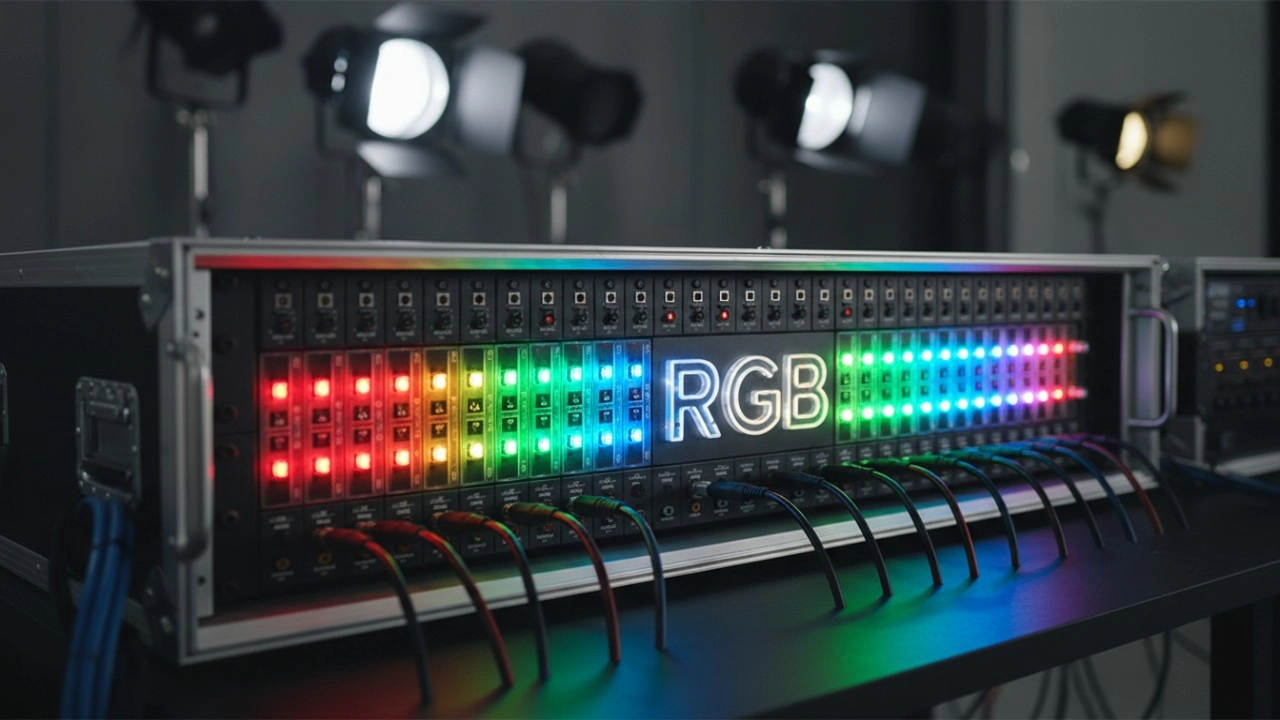
The Ultimate Guide to Custom Dimmer Racks in 2026 [Expert Insights]
About RGB
Can your dimmer cabinets integrate with third-party lighting consoles?
Yes. Our systems follow international protocols and can seamlessly integrate with major global brands through DMX, RDM, Art-Net, and sACN.
What types of lighting control systems do you support?
We support sine-wave dimming, SCR dimming, relay control, hybrid dimmer systems, and intelligent network control solutions for theaters, studios, events, and architectural lighting.
Do you offer customized solutions for specific projects?
Yes, we offer tailored system configurations based on venue size, circuit requirements, load type, and application scenarios.
Distributors
Do you offer regional exclusive agency agreements?
Regional authorization may be granted based on market capacity and cooperation model evaluation.
Does RGB provide installation or commissioning services?
No. RGB only supplies dimming cabinets and technical documentation. On-site installation is handled by local integrators.
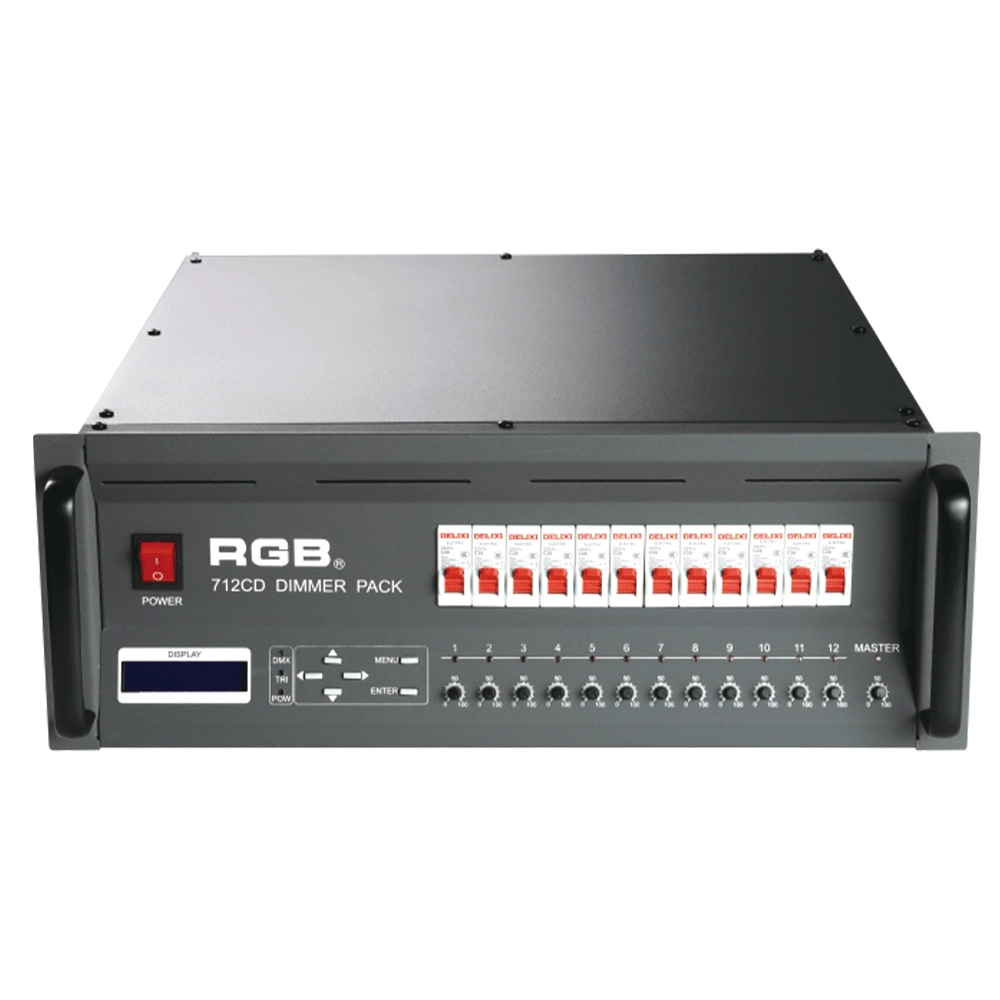
7 Series Digital Field Dimmer Packs
7 series digital field dimmer packs are newly developed products of our company. With DMX512 digital control signal input, they are compatible with other domestic and overseas digital lighting consoles. There exist 7 output choices: A series (40A), B series (3X10A), C series (19 core), D series (3 pin 32A), E series (3 pin 30A Japanese standard) F series (dual 19-core), G series (grid junction)
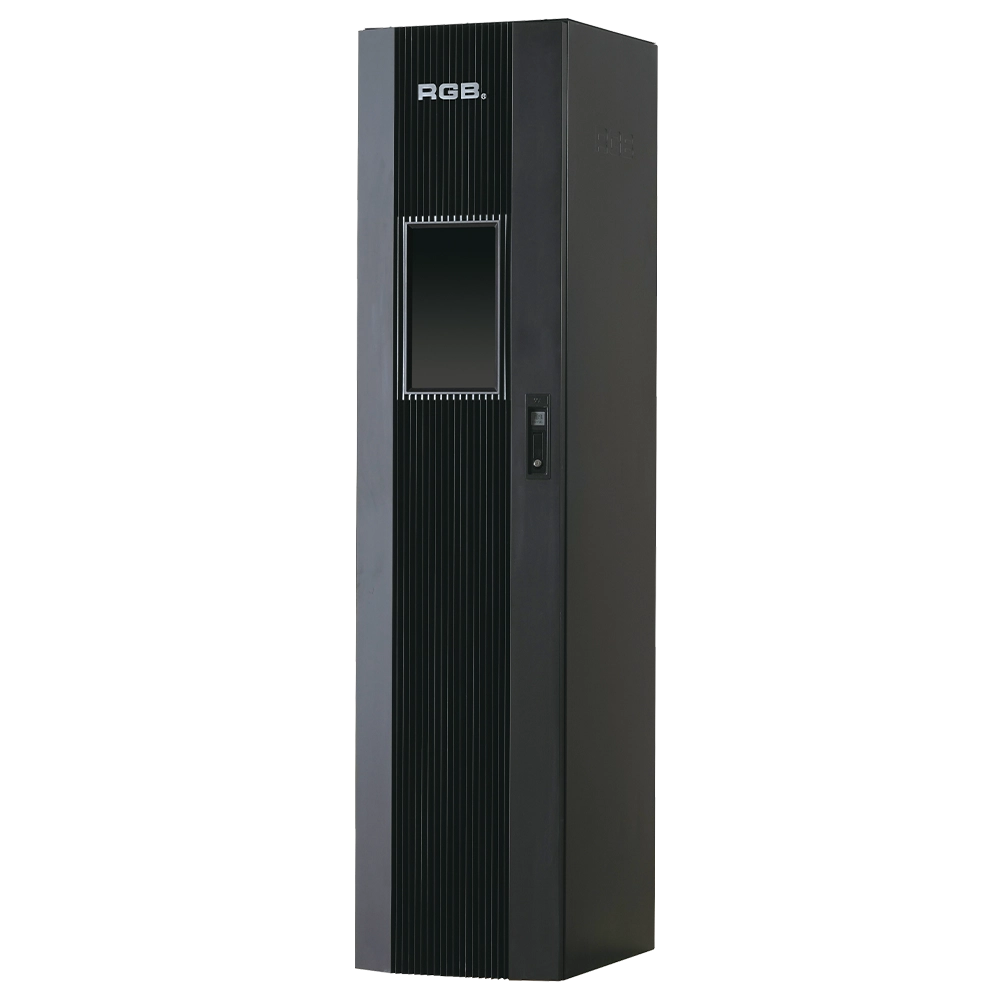
9i intelligent network Dimmer/Relay Racks
9i is an artificial intelligence dimming racks independently developed by RGB, which has completely independent core technology and obtained software Copyrights, all digital electrodeless trigger and multi-backup independent CPU central processor technology. It has a variety of output configurations such as sine wave, thyR, relay and dimming relay mix, and supports visual lighting control system and visually displays the online and offline status of dimming racks. Realize remote monitoring, editing and setting of relevant parameters.
It is suitable for the lighting control needs of different places such as high standard grand theater, TV station, gymnasium and environmental intelligent lighting.
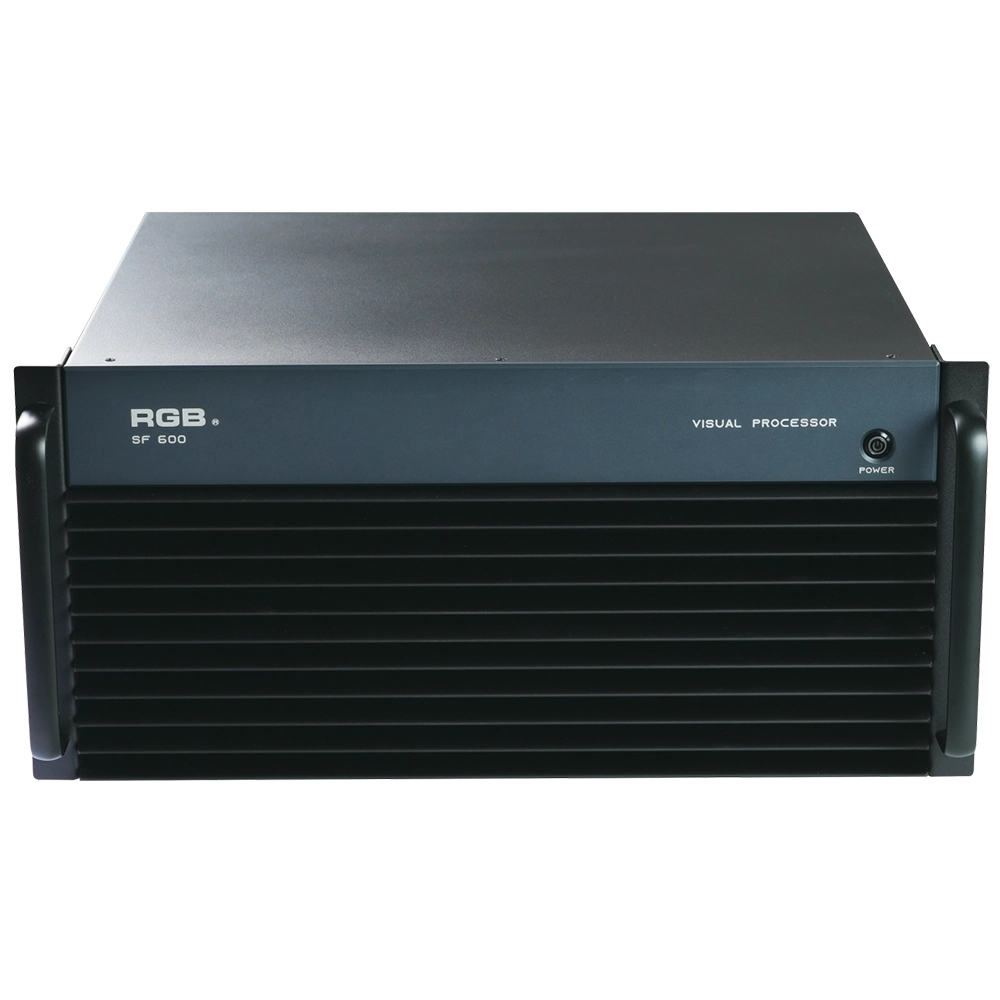
SF600 Visual R-net central processing processor
The SF600 Visual R-net central processing processor by RGB delivers advanced visual systems performance with high-speed processing and seamless integration. Designed for efficiency and reliability, it’s ideal for enhancing your visual system applications in corporate environments.
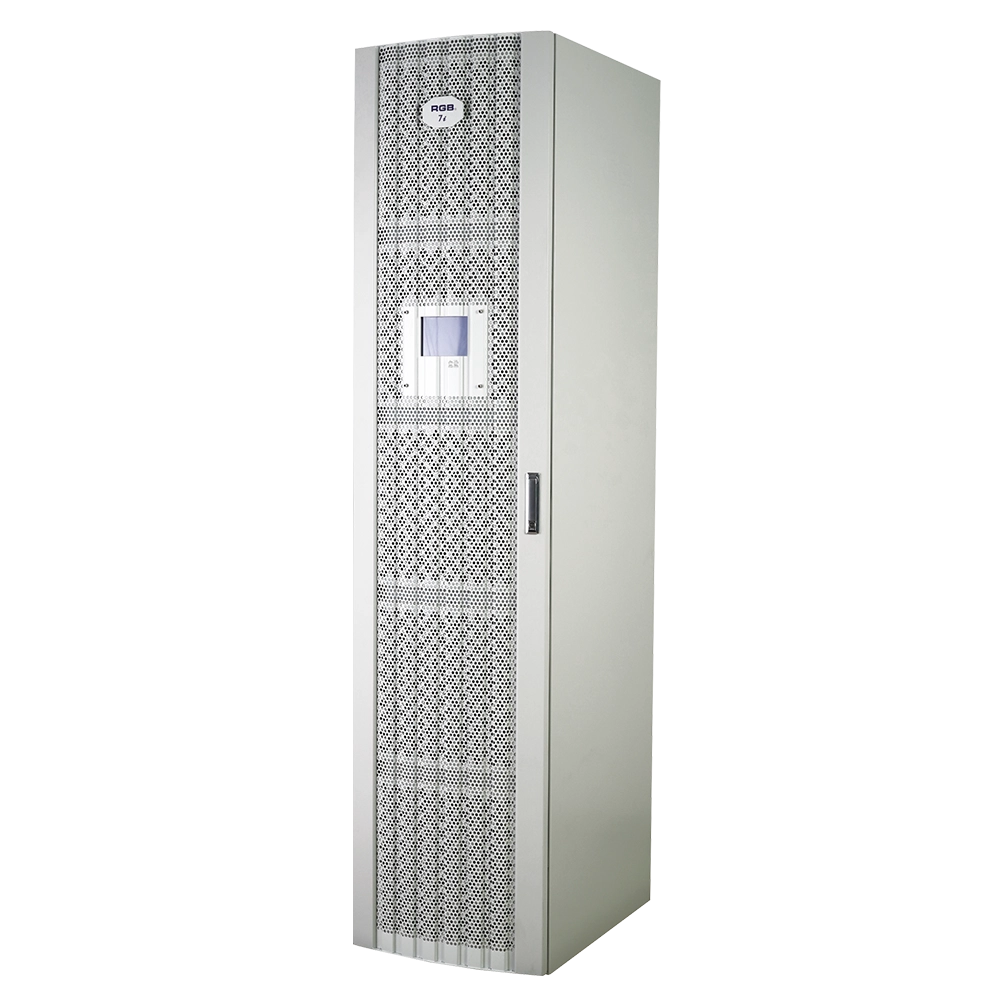
7i Dimmer/Relay Racks
7i is RGB independent research and development, with completely independent core technology, full digital decoding technology dimming racks, using a dual system, double decoding, double trigger, and duplex dual backup central decoding processor, with thyristor, relay, dimming relay mixed and other output configurations, supporting a visual lighting control system, intuitive display of dimming racks' online and offline status, and remote monitoring.
It is widely used in performing arts and cultural venues such as theaters, concert halls, multi-function halls, cultural travel and performing arts, TV stations, gymnasiums, auditoriums, commercial art lighting and so on.
Expert Support
Interested in learning more or need expert guidance related to this article? Fill in your details, and our team will provide tailored support.
Intelligent Control. Brilliant Performance.
RGB specializes in stage lighting control systems, delivering intelligent, reliable, and high-performance solutions for theaters and performance spaces worldwide.
Contact
Email:
Tel:
+86 20 3928 0245
+86 20 3928 0247
Address:
No.3, Huashan Road, Shilou Town, Panyu, Guangzhou, China.
Whatsapp: +8615975520131