
The Ultimate Guide to Custom Dimmer Racks in 2026 [Expert Insights]
- What Are Custom Dimmer Racks and Why Do They Matter?
- Quick Summary: Key Takeaways for Lighting Professionals
- Touring vs. Permanent Installation: Choosing the Right Configuration
- Touring Dimmer Patch Bays
- Permanent Stage Lighting Dimmer Systems
- The Evolution of Dimming: 2026 Trends and Hybrid Power Systems
- Expert Tips for Specifying a Custom Power Cabinet
- Industry-Leading Solutions: How Guangzhou RGB Pioneers Intelligent Dimming
- Evaluating Cost vs. ROI for Custom Built Enclosures
- Conclusion
- FAQs About custom dimmer racks
- How much does a custom dimmer rack typically cost?
- What is the difference between a dimmer rack and a relay rack?
- Can custom dimmer racks support both incandescent and LED fixtures?
- What safety certifications are required for stage lighting power cabinets?
- How do you maintain and cool high-density dimming systems?
- What are ThruPower modules in modern dimmer racks?
- How do cloud-based management systems work with lighting dimmers?
- Where can I buy custom power distribution and dimming racks?
What Are Custom Dimmer Racks and Why Do They Matter?
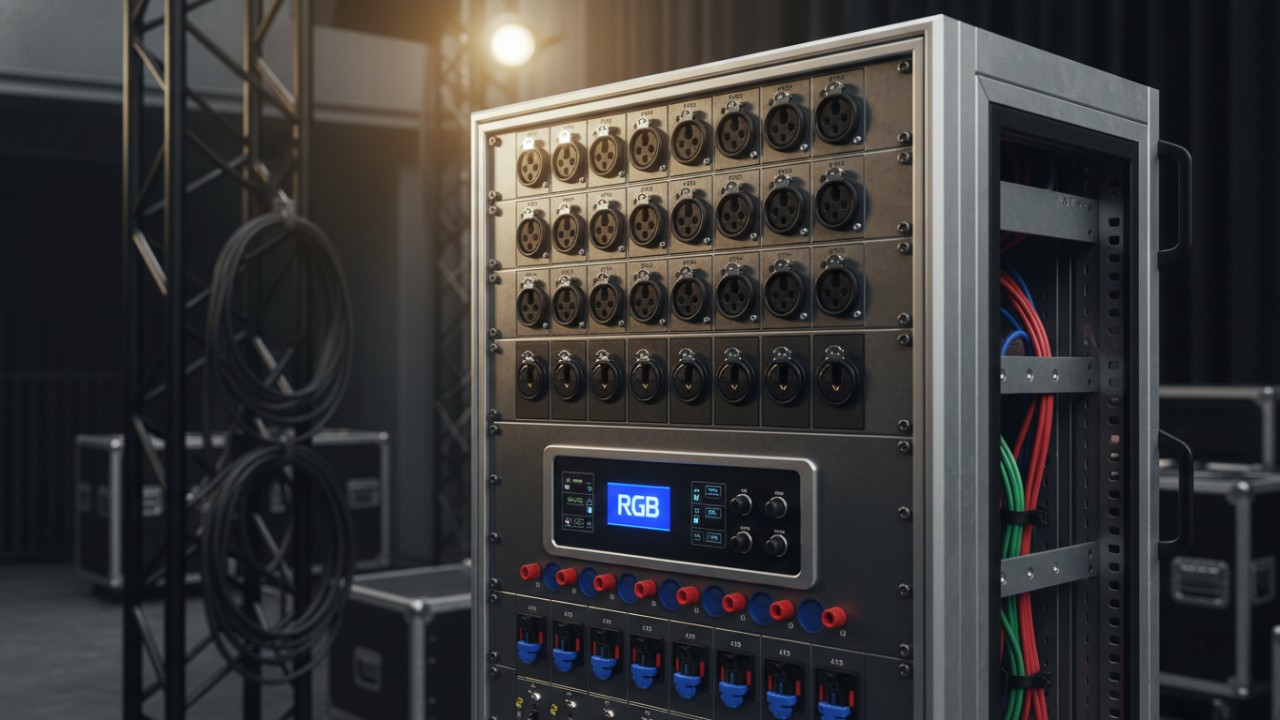
Custom dimmer racks are engineered-to-order power distribution and lighting control cabinets designed specifically for stage, studio, or architectural environments. They matter because they bridge the critical gap between traditional incandescent power requirements and modern intelligent LED lighting infrastructure.
In today's complex live production environments, standard off-the-shelf equipment rarely satisfies the unique electrical demands of every modern venue. The implementation of custom dimmer racks allows technical directors to specify the exact power parameters required to run a massive performance flawlessly.
By prioritizing tailored engineering, performance facilities can achieve the following operational benefits:
- Precise Circuit Counts: Customizing the exact number of dimming or relay channels to strictly match the venue’s lighting plot and fixture inventory.
- Specific Connector Types: Integrating tailored power outputs, such as Socapex, stage pin, or PowerCON connectors, directly into the chassis.
- Advanced Network Integration: Seamlessly embedding modern control protocols like DMX, RDM, or sACN to establish a highly reliable intelligent network dimming ecosystem.
This high level of customization empowers venues to handle diverse, large-scale operational demands, ensuring that power distribution is safe, highly efficient, and perfectly aligned with their technical and creative visions. Facilities must integrate customized solutions that prevent voltage drops, protect sensitive digital equipment from power surges, and ensure strict compliance with regional electrical codes.
Quick Summary: Key Takeaways for Lighting Professionals
The most critical takeaway for 2026 is that lighting professionals must adopt hybrid power distribution racks to seamlessly manage both legacy tungsten and modern LED fixtures. Prioritizing electrical safety, global compliance, and intelligent network monitoring is strictly non-negotiable.
If you are upgrading an aging venue or designing a brand new stage lighting dimmer system, keep these foundational industry trends top of mind:
- The Shift to Hybrid Systems: Pure analog dimming is fading rapidly. The live production industry now universally demands versatile hybrid modules that can output both dimmed power for tungsten and constant switched relay power for LEDs.
- Strict Safety Compliance: Custom-built enclosures must adhere to rigorous international safety standards. Certifications such as CE, RoHS, and CQC are absolutely mandatory to prevent catastrophic electrical failures mid-show.
- Cloud-Based Management: Forward-looking infrastructure in 2026 requires real-time, visualized control systems. The ability to monitor voltage, phase balance, and thermal data remotely is now a standard requirement for major installations.
Touring vs. Permanent Installation: Choosing the Right Configuration
Choosing between touring and permanent installations depends entirely on the venue's mobility requirements. Touring racks are ruggedized, shock-mounted portable systems for the road, whereas permanent installations are high-density, hard-wired cabinets designed for fixed theaters and broadcast studios.
When designing a custom power cabinet, the physical environment dictates the structural engineering and electrical layout of the system.
Touring Dimmer Patch Bays
Touring setups require immense physical durability to survive constant loading, unloading, and cross-country transport.
- Flight Cases: Systems are built into heavy-duty, shock-mounted road cases to protect sensitive processor electronics from intense vibrations.
- Quick Connectivity: Utilizing multipin connectors (like Socapex) allows stagehands to rapidly deploy multi-circuit power out to moving stage trusses.
- Portability: Designed as modular, roll-around units specifically for temporary arena concerts, outdoor festivals, and corporate events.
Permanent Stage Lighting Dimmer Systems
Permanent installations prioritize maximum space efficiency and seamless architectural integration within a building's electrical room.
- High-Density Cabinets: Floor-standing or wall-mounted chassis that maximize channel counts within tight electrical closets.
- Direct Hard-Wiring: Utilizing secure, high-amperage terminal block layouts for permanent power distribution instead of portable quick-disconnects.
- Environmental Control: Often directly integrated into the building's HVAC system to maintain optimal operating temperatures for the high-capacity relay rack.
Configuration Comparison Table:
| Feature | Touring Dimmer Racks | Permanent Installations |
|---|---|---|
| Mobility | High (Shock-mounted flight cases) | Low (Fixed wall/floor cabinets) |
| Output Connections | Multipin (Socapex), portable distros | Direct hard-wired terminal blocks |
| Patching Workflow | Touring dimmer patch bays | Integrated architectural patching |
| Durability Focus | Vibration and impact resistance | Long-term thermal stability |
The Evolution of Dimming: 2026 Trends and Hybrid Power Systems
The evolution of dimming in 2026 is defined by the transition from traditional analog control to advanced intelligent network dimming and hybrid relay systems. This shift accommodates the power demands of modern intelligent fixtures and massive LED video walls.
Historically, a standard dimmer was primarily utilized to lower the brightness of traditional incandescent or halogen bulbs, acting as a voltage regulator, as reported by Wikipedia. However, the modern stage rig is predominantly populated by intelligent LED fixtures, moving head profiles, and laser effects that require constant, un-dimmed ("hot") power to function. Applying a dimmed sine wave to an LED power supply can quickly lead to catastrophic hardware failure.
To solve this, the industry has rapidly adopted hybrid power distribution racks. These systems utilize ThruPower modules and smart relays, which dynamically adapt to the connected load.
- Dynamic Switching: A single circuit channel can be programmed via software to act as a traditional forward-phase dimmer for a tungsten source or a hard mechanical relay for an LED fixture.
- Network-Centric Infrastructure: The integration of real-time diagnostic protocols is essential. Modern controllers rely heavily on standards managed by the entertainment technology industry, as reported by ESTA, to ensure flawless bidirectional communication. Modern IP standards like sACN and Art-Net now run directly into the power cabinet's central processor.
- Enhanced Data Routing: Utilizing RDM Nodes within the rack allows technicians to remotely configure and monitor every connected intelligent fixture directly from the lighting console, vastly streamlining the troubleshooting process.
Expert Tips for Specifying a Custom Power Cabinet
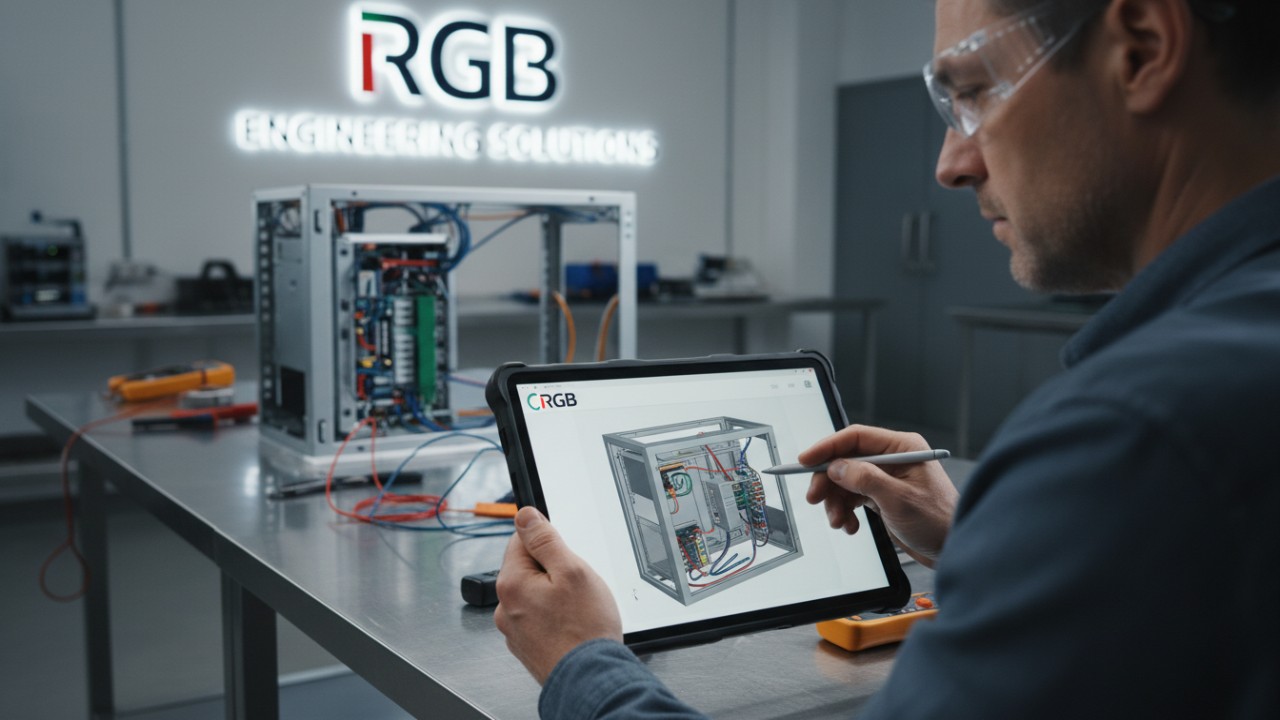
When specifying a custom power cabinet, you must over-engineer main breaker capacities and phase load distribution to support future LED expansions. Furthermore, prioritizing active thermal management and demanding strict ISO9001 certifications guarantees uninterrupted mid-show reliability.
Navigating the deep technical specifications of a bespoke dimmer rack requires foresight and a solid understanding of modern electrical engineering principles. Follow these expert recommendations to ensure your major investment remains future-proof:
- Over-Spec Power Capacity: Always calculate your total current draw and add a 20-30% overhead margin. As technical productions continuously incorporate more automated lighting and giant LED screens, base power demands will inevitably increase.
- Advanced Thermal Management: High-density dimming generates significant ambient heat, especially when running heavy tungsten loads alongside massive LED video walls. Insist on sophisticated ventilation, active variable-speed cooling fans, and integrated thermal sensors to prevent overheating and thermal throttling during a critical performance.
- Demand Quality Certifications: Avoid unverified DIY builds or poorly engineered budget options. A professional stage lighting dimmer system must carry EMC, CE, RoHS, and ISO9001 certifications. This ensures interference-free data transmission and protects the venue from severe liability issues related to electrical fires or sudden blackouts.
- Prioritize Modularity: Select a rack chassis that supports hot-swappable circuit modules, allowing technicians to safely replace a faulty dimmer card mid-show without powering down the entire electrical network.
Industry-Leading Solutions: How Guangzhou RGB Pioneers Intelligent Dimming
Guangzhou RGB Lighting Equipment Co.,Ltd. pioneers intelligent dimming by manufacturing reliable, high-performance stage light control systems tailored for global venues. Since 1996, the company has delivered future-ready, customized power solutions trusted by major international events and landmark projects.
Building a world-class performance venue requires partnering with a manufacturer that possesses deep enterprise-level experience and an uncompromised commitment to safety. As a recognized National High-Tech and Specialized Innovative Enterprise, RGB has established itself as an absolute authority in intelligent network dimming and specialized custom fabrication.
- Proven Enterprise Reliability: RGB's advanced lighting control systems and custom power cabinets have successfully powered iconic global stages, including the Beijing Olympics, the Shanghai World Expo, and the Asian Games.
- Comprehensive Product Ecosystem: The brand offers a fully integrated suite of solutions, from the main stage light controller down to the downstream power cabinet and relay rack, ensuring seamless data compatibility across the entire lighting network.
- Advanced Innovation: Backed by multiple national patents and software copyrights, RGB integrates sophisticated cloud-based management and visualized control systems into their dimmer racks. This empowers technical directors with real-time operational oversight, ensuring long-term stability and absolute performance precision.
Evaluating Cost vs. ROI for Custom Built Enclosures
The cost of custom-built enclosures is determined by total channel counts, module sophistication, and networking capabilities, but yields a high ROI. Investing in premium intelligent systems reduces technical downtime, lowers maintenance costs, and extends the lifespan of expensive lighting fixtures.
While a tailored custom power cabinet understandably commands a higher initial capital expenditure compared to generic off-the-shelf alternatives, the long-term Return on Investment (ROI) is substantial for professional performance venues.
Key physical factors influencing the initial manufacturing cost include:
- Total Channel Capacity: A massive 96-way rack will naturally cost significantly more to wire and assemble than a smaller 24-way system.
- Module Technology: Advanced hybrid ThruPower modules carry a premium over standard legacy SCR dimmers.
- Custom Fabrication: Tailored front/back panel layouts, custom metal engraving, and specialized touring dimmer patch bays add directly to the specialized manufacturing expense.
However, the ultimate ROI is realized quickly through massive operational efficiency. Intelligent cloud-based power monitoring prevents phantom energy waste and protects highly expensive LED fixtures from damaging dirty power. Furthermore, utilizing a globally certified manufacturer like Guangzhou RGB minimizes the risk of catastrophic show failures, ultimately saving venues from costly audience refunds and severe reputational damage.
Conclusion
Custom dimmer racks remain the indispensable heartbeat of professional stage lighting, successfully evolving into intelligent, hybrid power cabinets for 2026 and beyond. Selecting a rigorously engineered system ensures absolute safety, future-proof scalability, and flawless performances for any modern venue. From integrating cloud-based diagnostics to utilizing hybrid relay modules, investing in bespoke power distribution guarantees that your technical infrastructure can seamlessly handle the demanding power requirements of tomorrow's most ambitious productions. Contact us today to optimize your custom dimmer racks strategy.
FAQs About custom dimmer racks
How much does a custom dimmer rack typically cost?
Costs vary widely based on total channel count, networking capabilities, and enclosure requirements, typically ranging from a few thousand to tens of thousands of dollars for enterprise solutions.
What is the difference between a dimmer rack and a relay rack?
A dimmer rack regulates voltage to control the brightness of conventional incandescent fixtures, whereas a relay rack provides clean, un-dimmed switched power essential for modern LED and moving lights.
Can custom dimmer racks support both incandescent and LED fixtures?
Yes, modern custom racks often feature hybrid or ThruPower modules that can dynamically switch between traditional dimming and constant relay power depending on the connected fixture.
What safety certifications are required for stage lighting power cabinets?
Professional custom racks should carry recognized certifications such as CE, RoHS, EMC, CQC, and adhere to ISO9001 quality management standards to ensure maximum safety and compliance.
How do you maintain and cool high-density dimming systems?
High-density systems require regular dust removal, routine inspection of terminal connections, and rely on integrated active cooling fans and thermal sensors to prevent overheating during operation.
What are ThruPower modules in modern dimmer racks?
ThruPower modules are advanced circuit components that can function as a standard dimmer, a relay switch, or provide constant hot power, allowing ultimate flexibility without physically swapping modules.
How do cloud-based management systems work with lighting dimmers?
Cloud-based systems connect the dimmer rack's processor to an online network, allowing technicians to remotely monitor voltage, phase balance, temperature, and troubleshoot faults in real-time.
Where can I buy custom power distribution and dimming racks?
You can purchase engineered-to-order systems from specialized high-tech manufacturers like Guangzhou RGB Lighting Equipment Co.,Ltd., who design and build racks to exact venue specifications.
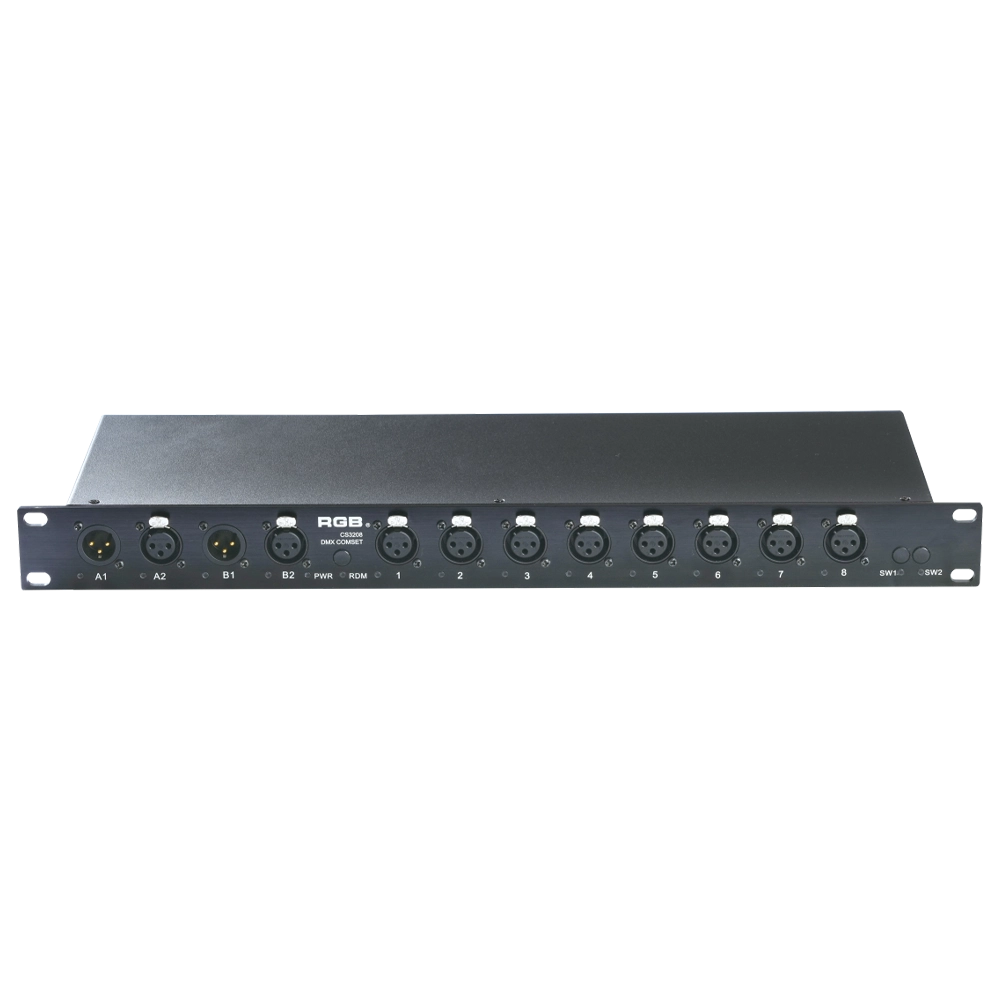
Multifunctional Signal Supercharger for Stage Light Control Systems
Strand dimmer rack compatibility with lighting consoles
Energy Savings with Modern Dimmer & Relay Rack Systems
Ethernet DMX Node vs Traditional DMX: Buyer Comparison
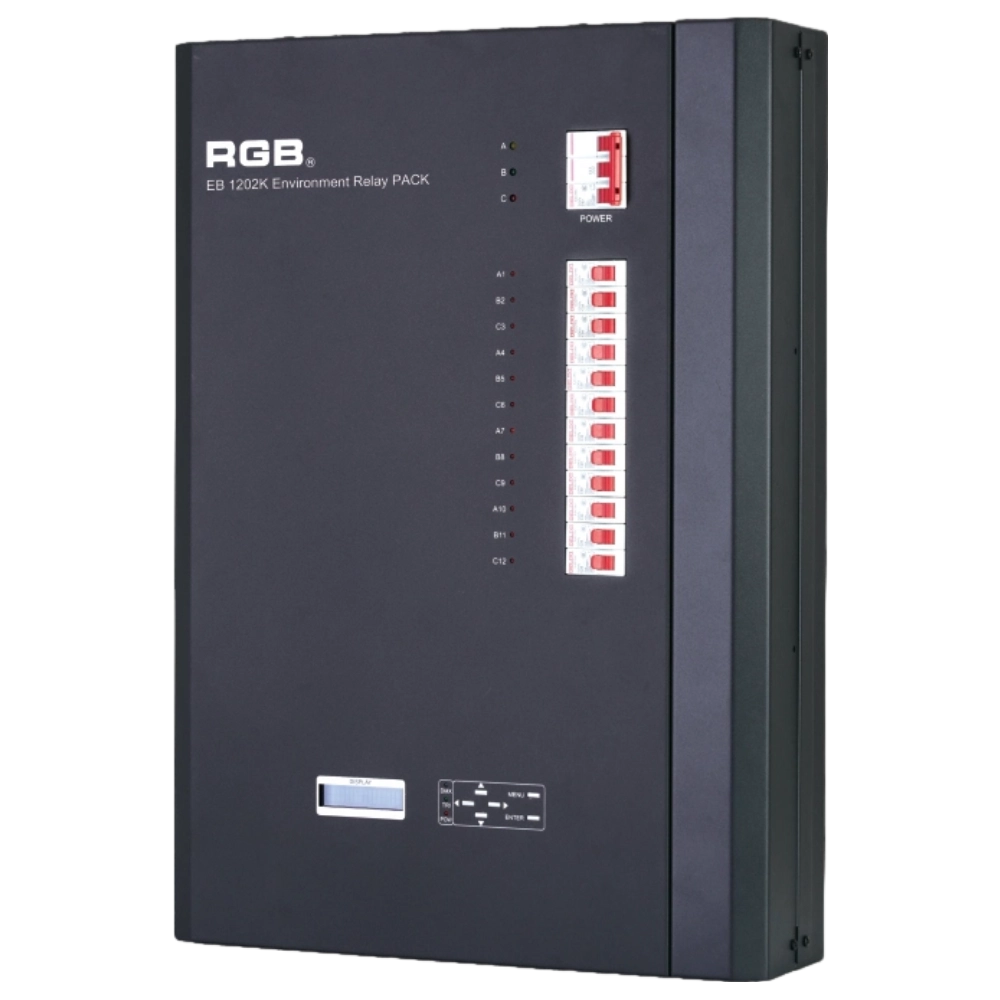
EB1202 Series Wall-Mounted DMX Dimmer & Relay Units
RGB EB1202 series wall-mounted stage lighting power-control units include an EB1202 12-channel dimmer configuration and an EB1202K 12-channel relay/pass-through configuration in the published technical data. EB2402 and EB2402K are also shown in the existing dimensions table, but their output ratings require separate confirmation. The series supports DMX512-based control and on-unit settings for stage and venue installation.
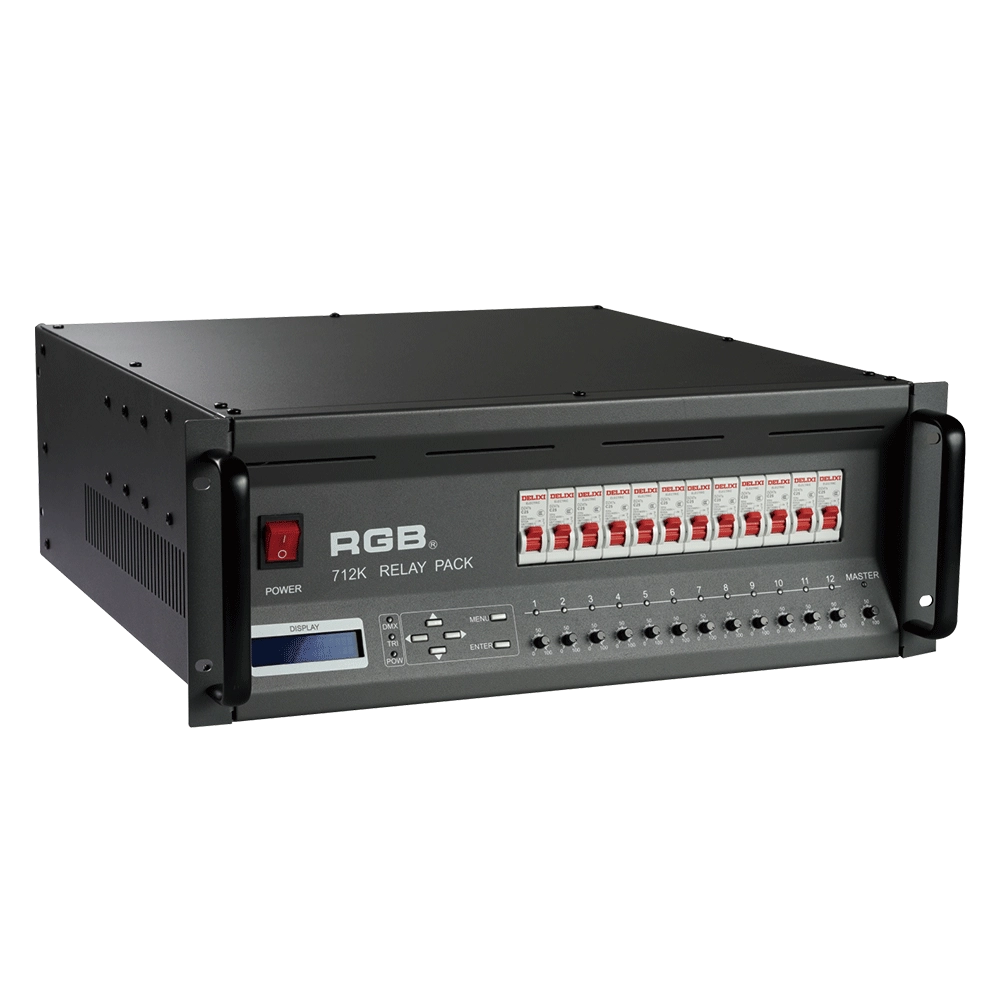
Alloy Relay Packs
RGB Alloy Relay Packs are DMX512-controlled relay switching units for stage and mobile lighting. The published feature list describes a 12-output configuration, a per-output electrical rating of 220 V / 20 A, decimal-switch addressing, phase-loss protection and overcurrent protection. DMX512 addressing does not mean 512 separate physical outputs. The page lists 612K and 712K models; confirm each model's output count and electrical ratings against its approved datasheet.
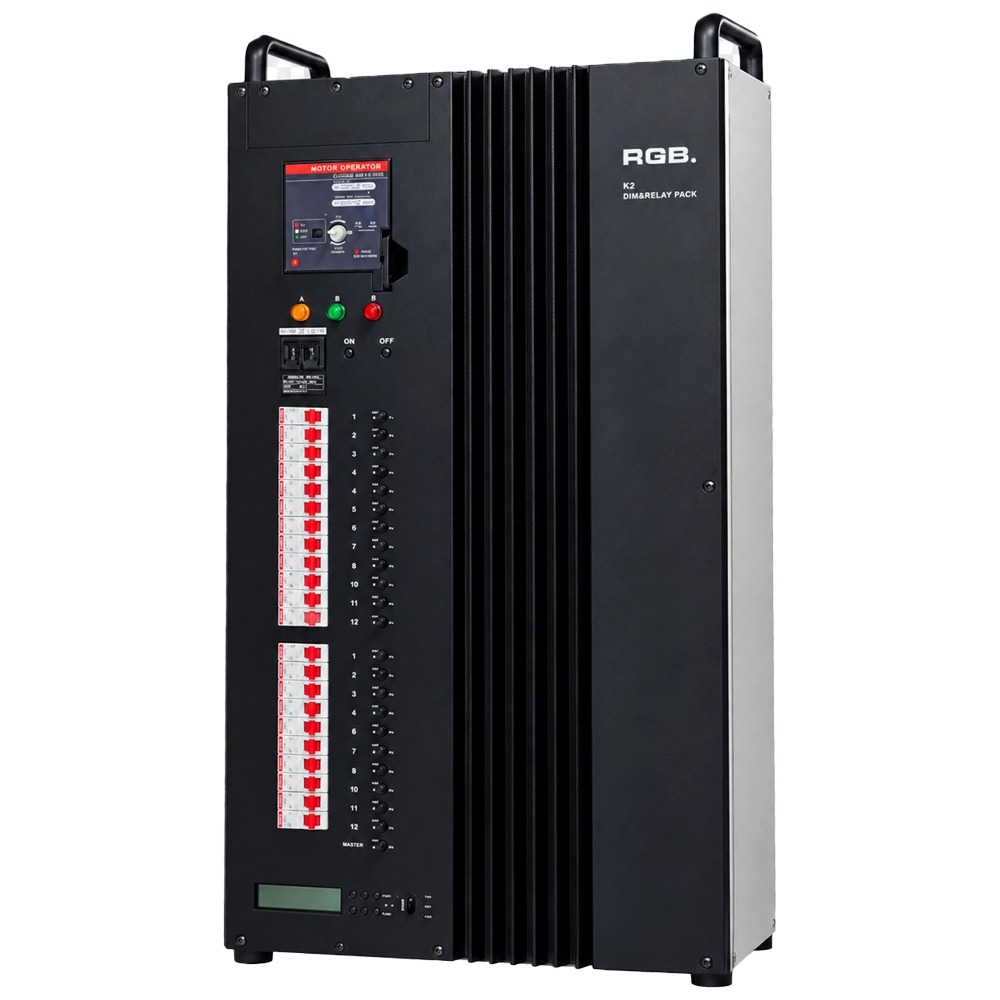
K2 Intelligent Network Relay Racks
RGB K2 is an intelligent network relay rack designed for stage and venue lighting power switching. The K series provides dual DMX512 control with optional Art-Net and sACN networking, 24-, 48- and 60-circuit configurations, and wall-mounted or cabinet installation options. K2 is the standard variant; KW2 is the separately described waterproof variant. Select the circuit count, power input and network options to match the venue's electrical design.
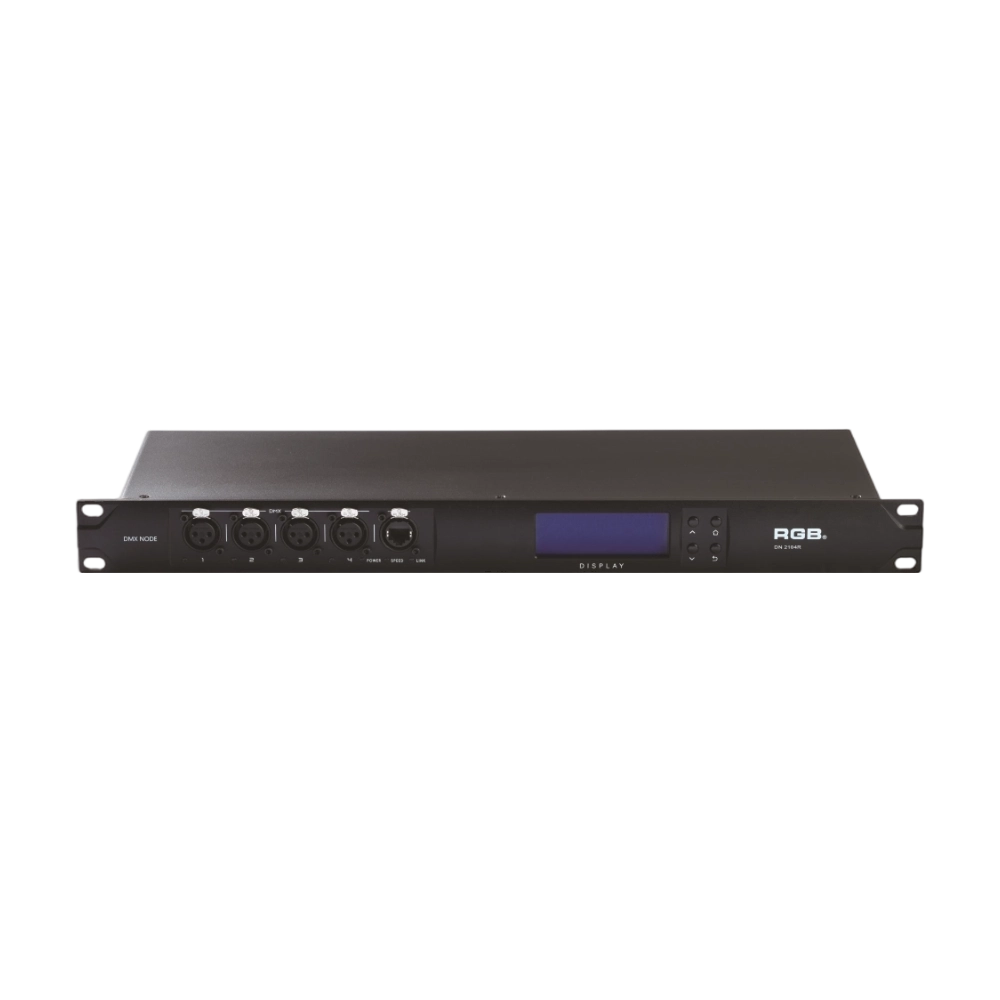
DN Series Art-Net/sACN DMX & RDM Nodes
RGB DN Series DMX and RDM nodes connect Ethernet lighting networks with DMX512/RDM equipment. The dual-network-port models listed on this page support Art-Net, sACN and RDM, with 2-, 4-, 8- or 12-universe configurations depending on the selected DN model. Ethernet interfaces, status indication and network parameter management help technicians plan control networks for theaters and touring systems. Check the model-specific port count, dimensions, mounting type and optional interfaces before ordering.
Expert Support
Interested in learning more or need expert guidance related to this article? Fill in your details, and our team will provide tailored support.
Intelligent Control. Brilliant Performance.
RGB specializes in stage lighting control systems, delivering intelligent, reliable, and high-performance solutions for theaters and performance spaces worldwide.
Contact
Email:
Tel:
+86 20 3928 0245
+86 20 3928 0247
Address:
No.3, Huashan Road, Shilou Town, Panyu, Guangzhou, China.
Whatsapp: +8615975520131