
Stage Lighting LED Dimmer Rack Guide: 2026 Technical Standards and Power Supply Solutions
|
- What is a Stage Lighting LED Dimmer Rack?
- Core Functions of Modern Racks
- Why LED Dimmers Are Crucial for Modern Stage Lighting
- Operational Benefits
- Key Takeaways for Technical Directors: Understanding LED Dimmers in 2026
- 2026 Technical Priorities
- The 2026 Evolution: Dimmers, Distribution, and the Future of Stage Electrics
- Future-Proofing Features
- Preventing Flicker and Hardware Damage: Best Practices for Stage Lighting Systems
- Anti-Flicker Checklist
- Power Supply Solutions: Ensuring Reliability and Efficiency for LED Systems
- Power Integrity Features
- Integrating Advanced Solutions: Guangzhou RGB Intelligent Systems
- RGB System Advantages
- Conclusion: Preparing for the Future of Stage Lighting in 2026 and Beyond
- Final Recommendations
- FAQ
- Can I use a traditional dimmer rack for LED stage lights?
- What is the difference between a dimmer and a power distribution unit (PDU)?
- What is a hybrid dimmer module?
- Why do my LED lights flicker when connected to a dimmer rack?
- How many DMX channels does a standard dimmer rack require?
- What is 'ThruPower' in stage lighting?
- Is 3-phase power necessary for a stage dimmer rack?
- What are the benefits of RDM-enabled dimmer racks?
- References
What is a Stage Lighting LED Dimmer Rack?
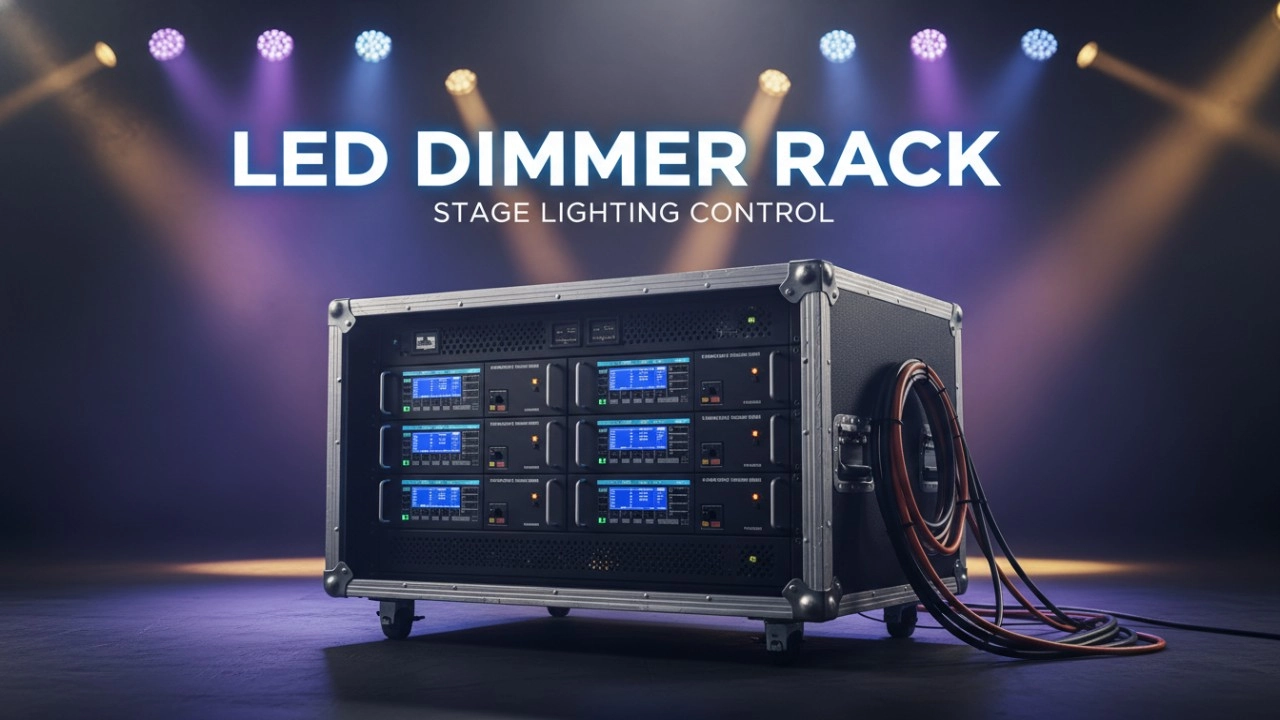
A stage lighting LED dimmer rack is a centralized power distribution unit designed to provide both regulated dimmable voltage for legacy tungsten fixtures and constant 'hard' power for modern intelligent LED lights. Unlike older racks that only chopped the electrical sine wave, 2026-standard racks utilize hybrid modules that can instantly switch between Dimmer, Relay, and Constant Power modes.
The transition to intelligent stage lighting systems has fundamentally changed how venues distribute electricity. In the past, a 'dimmer' simply lowered voltage. Today, plugging an LED fixture into a standard SCR (Silicon Controlled Rectifier) dimmer without a bypass mode can destroy the fixture's internal driver. Modern racks, like those developed by Guangzhou RGB Lighting Equipment Co.,Ltd., act as the 'brain' of the electrical system, using advanced processors to translate DMX512 and sACN signals into the precise power mode required for each circuit.
Core Functions of Modern Racks
- Hybrid Power Switching: Automatically toggles between dimming and relay modes based on the fixture type.
- Voltage Regulation: Protects sensitive LED stage lighting dimmer rack electronics from dirty power.
- Protocol Integration: Native support for DMX512, sACN, and Art-Net.
- Safety Bypasses: 'ThruPower' options to route direct current to intelligent moving heads.
Why LED Dimmers Are Crucial for Modern Stage Lighting
Specialized stage lighting dimmer systems for LEDs are crucial because they prevent the 'chopped' AC waveform of traditional dimming from damaging the delicate electronic drivers inside LED fixtures. While tungsten bulbs rely on heating a filament (which is insensitive to dirty power), LEDs require a clean, constant voltage to operate their internal computers and cooling fans effectively.
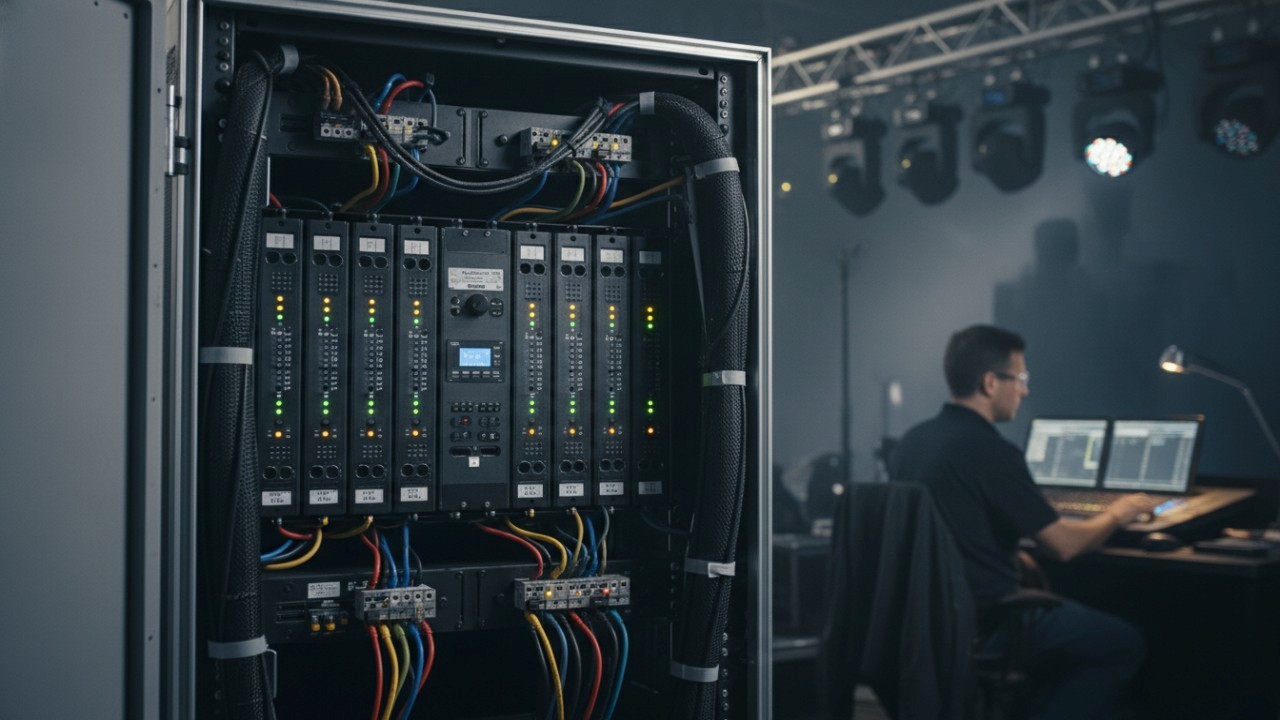
From an efficiency standpoint, the data is clear. According to recent industry reports, LED lighting systems consume up to 80% less power than traditional tungsten equivalents. However, this efficiency is lost if the power distribution system is outdated. A modern rack ensures that the energy savings are not negated by heat loss in the distribution lines or phantom power draws when the system is idle. Furthermore, using a dedicated LED-compatible rack ensures that the dimming curve—the rate at which light fades in and out—is smooth and linear, avoiding the 'pop-on' effect common with mismatched systems.
Operational Benefits
- Extended Fixture Life: Prevents premature failure of LED power supply units (PSUs).
- Thermal Management: significantly reduces heat emission in the dimmer room.
- Granular Control: Offers 16-bit dimming resolution for stepless fades.
- Sustainability: Aligns with 2026 green energy standards for performance venues.
Key Takeaways for Technical Directors: Understanding LED Dimmers in 2026
The most critical update for 2026 is the adoption of Intelligent Power Control, which moves beyond simple electricity distribution to active data management and bi-directional communication. Technical directors must now prioritize racks that support the newly updated ANSI E1.20 - 2025 (RDM) standards, allowing the dimmer rack to report fault status, temperature, and load errors back to the lighting console.
When specifying a system, the focus has shifted from 'watts per channel' to 'versatility per module.' Manufacturers like RGB (Guangzhou RGB Lighting Equipment Co.,Ltd.) have championed this shift by producing racks that allow a single slot to handle a 5kW tungsten load for a drama production one day, and a switched power relay for a rock concert's LED wall the next. This flexibility is vital for maximizing the ROI of venue infrastructure.
2026 Technical Priorities
- RDM Capability: Real-time monitoring of voltage and temperature per circuit.
- Network Redundancy: Dual Ethernet ports for seamless sACN/Art-Net failover.
- Load Sensing: Automatic alerts if a circuit is underloaded or overloaded.
- Hybrid Architecture: The ability to mix legacy dimmers and air-gap relays in one cabinet.
The 2026 Evolution: Dimmers, Distribution, and the Future of Stage Electrics
The future of stage electrics is defined by the transition from centralized 'dimmer rooms' to decentralized, intelligent networked power distribution. By 2026, the market for stage lighting systems is projected to exceed $3 billion, driven largely by the retrofit of older venues to these smart standards. The trend is moving toward 'Smart PDUs'—systems that distribute constant power but retain the ability to remotely cut power to specific fixtures (hard reset) via DMX commands.
This evolution helps solve the complexity of modern rigs. With the rise of pixel-mapped fixtures and moving lights, the sheer volume of data and power cabling has increased. Intelligent stage lighting systems now integrate the data network directly into the power infrastructure, reducing cabling clutter and simplifying troubleshooting.
Future-Proofing Features
- Predictive Maintenance: AI algorithms that predict module failure before it happens.
- Modular Scalability: Expansion slots for additional universes of DMX.
- Green Compliance: Automated power-down sequences to meet energy codes.
- Wireless Monitoring: iPad/Tablet integration for riggers to check circuits from the catwalk.
Preventing Flicker and Hardware Damage: Best Practices for Stage Lighting Systems
Preventing flicker in LED lighting is the most common challenge when mixing new fixtures with old infrastructure, and it is almost always caused by Pulse Width Modulation (PWM) mismatches or 'ghost voltage' leakage from SCR dimmers. Even when a traditional dimmer is set to 'full,' it may still introduce a small amount of inductance that confuses the LED's power supply, causing it to strobing or flash intermittently.
To eliminate this, you must use a 'True Sine Wave' dimming module or a mechanical relay bypass. If you are forced to use an older rack, a 'dummy load' (a small incandescent lamp on the same circuit) can sometimes stabilize the voltage, but this is a temporary fix. The professional solution is to deploy racks with dedicated 'LED Curves' that adjust the firing angle of the current to match the electronic requirements of the diode.
Anti-Flicker Checklist
- Check Minimum Loads: Ensure the LED fixture meets the dimmer's minimum wattage requirement.
- Use Relay Mode: Switch the circuit to 'Non-Dim' or 'Relay' for all intelligent fixtures.
- Adjust PWM Frequency: Increase the refresh rate on the fixture if supported.
- Install Opto-Isolators: Prevent data noise from inducing flicker.
Power Supply Solutions: Ensuring Reliability and Efficiency for LED Systems
Reliability in 2026 demands redundant 3-phase power solutions that can handle the high inrush currents typical of LED lighting rigs. While LEDs consume less power overall, they often have a high 'Inrush Current'—a massive spike in draw when they are first turned on. A standard breaker might trip under this load. High-quality power cabinets, such as those manufactured by RGB, are engineered with high-magnetic trip breakers designed specifically to absorb these startup spikes without failure.
Furthermore, 'Power Factor Correction' (PFC) has become a standard requirement. Poor power factor in cheap LED drivers can put strain on the venue's electrical transformer. Professional racks now include active monitoring to ensure the power factor remains near 1.0, maximizing efficiency and safety.
Power Integrity Features
- High-Inrush Breakers: Designed for the startup load of LED video walls and moving heads.
- Surge Protection: Industrial-grade suppression for lightning and grid spikes.
- Phase Balancing: Visual indicators to ensure load is spread evenly across 3 phases.
- Emergency Integration: Seamless transfer to generator or battery backup systems.
Integrating Advanced Solutions: Guangzhou RGB Intelligent Systems
When it comes to high-stakes environments, off-the-shelf solutions often fall short. This is where the experience of Guangzhou RGB Lighting Equipment Co.,Ltd. (RGB) becomes invaluable. Founded in 1996, RGB has spent decades refining stage lighting dimmer systems for massive global events, including the Beijing Olympics and the Shanghai World Expo. Their approach combines robust hardware with 'visualized control systems,' allowing operators to see the real-time status of every circuit on a digital map.
For example, RGB's intelligent network dimming cabinets are not just power strips; they are sophisticated data processors. They integrate cloud-based management, allowing a technical director to monitor multiple venues from a single dashboard. This level of integration—spanning R&D, production, and software—is why RGB is recognized as a National High-Tech Enterprise. Their hybrid dimmer solutions specifically address the 'mixed rig' problem, offering seamless control over both 20-year-old tungsten fresnels and brand-new LED profiles in the same rack.
RGB System Advantages
- Proven Reliability: Certified for use in critical national broadcasts and international summits.
- Custom Configuration: Tailored relay and dimming counts for specific theater needs.
- Comprehensive Certification: ISO9001, CE, and CQC certified for global safety compliance.
- End-to-End Control: From the main console to the power cabinet and final fixture.
Conclusion: Preparing for the Future of Stage Lighting in 2026 and Beyond
As we approach 2026, the LED stage lighting dimmer rack has evolved from a simple voltage regulator into the intelligent heart of the performance venue. The days of 'set it and forget it' are gone; today's systems require active management, network integration, and a deep understanding of power protocols. By investing in hybrid technologies and partnering with experienced manufacturers like Guangzhou RGB Lighting Equipment Co.,Ltd., venues can ensure their systems are not only efficient and sustainable but also ready for the next generation of creative lighting design.
Final Recommendations
- Audit Your Rig: Identify which circuits need true dimming vs. constant power.
- Upgrade to RDM: Ensure your infrastructure supports bi-directional feedback.
- Prioritize Safety: Never power intelligent fixtures from a standard dimmer curve.
- Plan for Data: Run fresh CAT6 or fiber lines alongside your power distribution.
FAQ
Can I use a traditional dimmer rack for LED stage lights?
- Only if the rack features a 'relay' or 'non-dim' mode to provide constant power.
- Using standard phase-cut dimming on an LED can lead to permanent driver damage.
What is the difference between a dimmer and a power distribution unit (PDU)?
- A dimmer varies the voltage to control brightness, while a PDU distributes constant power.
- Modern LED racks often function as 'Smart PDUs' with optional dimming modules.
What is a hybrid dimmer module?
- A module that can switch between a standard dimmer, a mechanical relay, or a constant circuit.
- Essential for modern theaters using a mix of moving heads, LEDs, and traditional lamps.
Why do my LED lights flicker when connected to a dimmer rack?
- This is often caused by incompatible dimming curves or low-wattage instability.
- Check if the rack is set to 'Inductive' or 'Capacitive' mode and ensure a minimum load is met.
How many DMX channels does a standard dimmer rack require?
- Typically one DMX address per physical circuit or channel (e.g., a 24-way rack uses 24 addresses).
- Advanced racks use additional addresses for monitoring and diagnostics.
What is 'ThruPower' in stage lighting?
- A feature allowing the user to bypass the dimming electronics entirely to provide direct power to a fixture.
- This is the safest way to power intelligent LED fixtures from a central rack.
Is 3-phase power necessary for a stage dimmer rack?
- Yes, most professional racks require 3-phase power to balance the heavy electrical load of a full lighting rig.
- Smaller portable packs may operate on single-phase but with significantly limited capacity.
What are the benefits of RDM-enabled dimmer racks?
- Allows technicians to remotely change rack settings, check temperatures, and monitor current draw.
- Reduces the need for physical access to the dimmer room during a production.
References
Latest News
A comprehensive 2026 guide to selecting high-performance stage lighting dimmer racks. We review top hybrid systems, explore SCR vs sine wave technology, and analyze essential features like ThruPower for modern venues.
CP6100 Light Control System
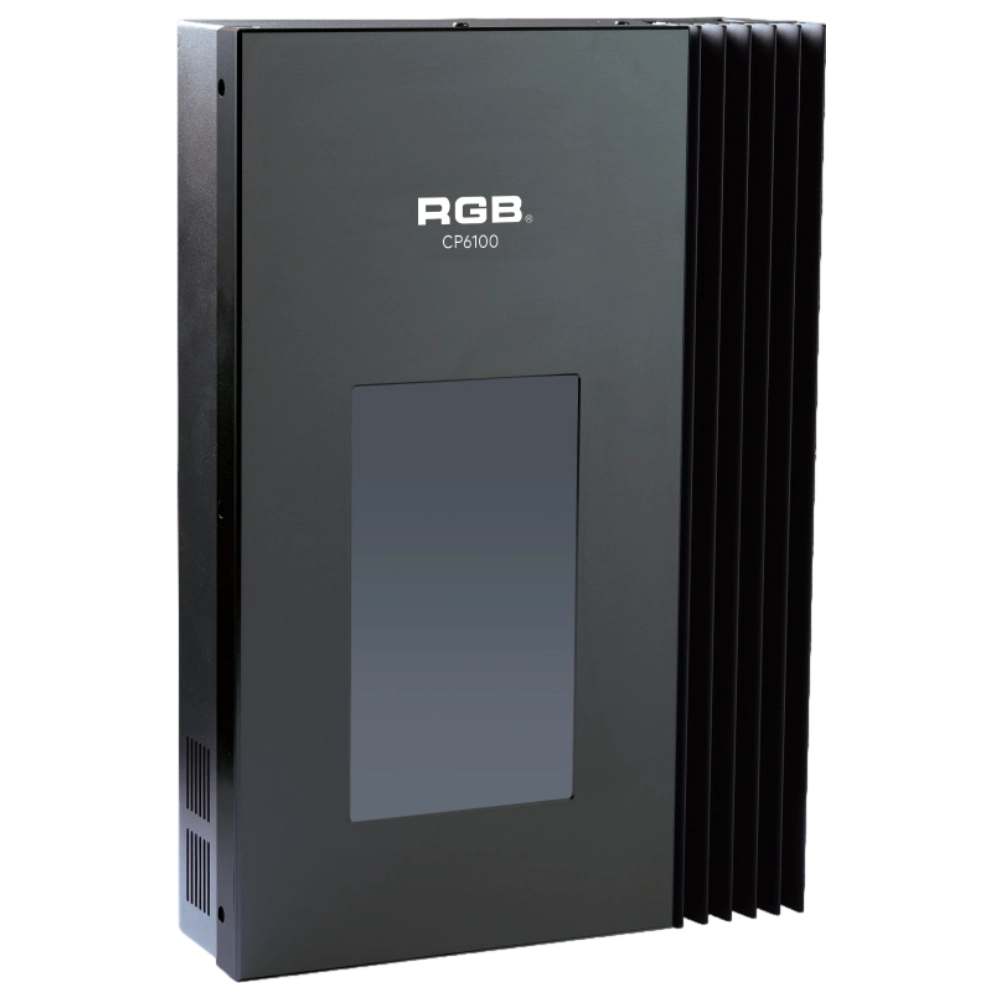
The lighting control host is the main control device for theater stage lights, work lights, environmental lighting, commercial art lighting, sports venue lighting, and other places. By connecting the dedicated lighting control panels CP6104 and CP6108, it realizes the central control of the lighting system, supports a visual lighting control system, and intuitively displays the online and offline status of CP6100. Realize remote monitoring, editing, and setting of corresponding parameters.
It is widely applicable to theaters, cinemas, auditoriums, stadiums, museums, exhibition halls, cultural tourism performances, commercial art lighting, and other places.
Alloy Relay Packs
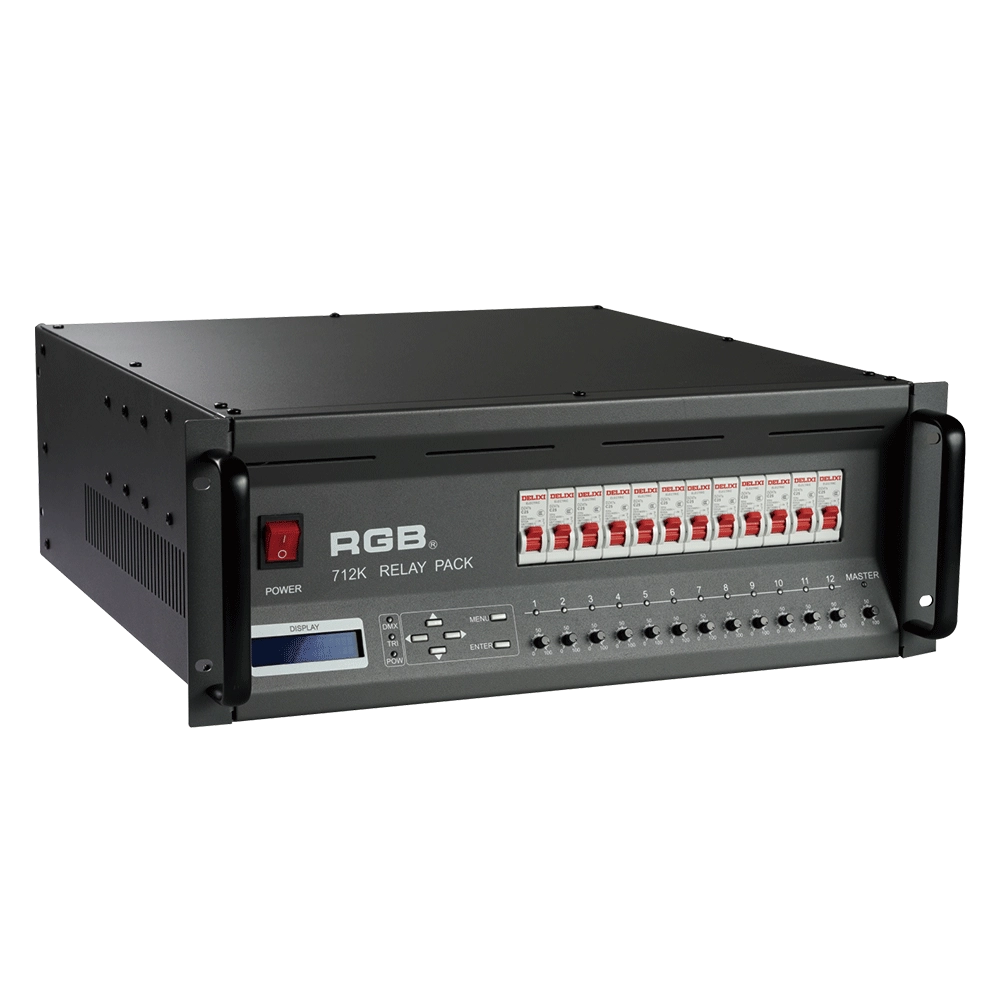
High-performance DMX512 relay dimming unit with 512 addressable circuits, phase-loss protection, dual-signal amplification, 20A output per channel, and robust design for reliable stage and mobile lighting applications.
RDM Nodes
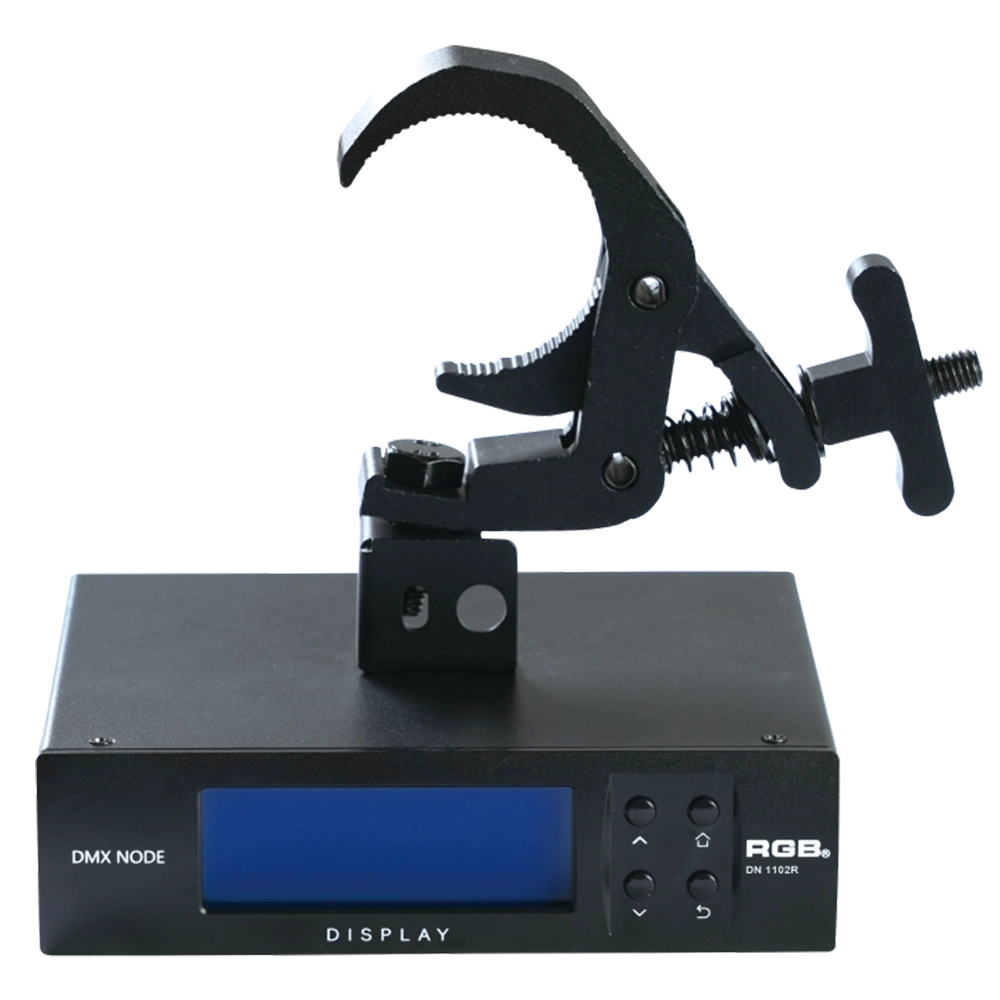
The DN series network decoder is a product of the lighting control system independently developed by RGB, featuring completely independent core technology and obtaining software copyrights. It seamlessly connects and decodes the sACN and Art-Net network protocols based on TCP/IP with the DMX-512 and RDM communication protocols. Supports a visual lighting control system, intuitively displaying the online and offline status of the DN series network decoders, and enabling remote monitoring, editing, and setting of corresponding parameters.
It is widely applied in theaters, concert halls, multi-functional halls, cultural and tourism performances, TV stations, gymnasiums, auditoriums, commercial art lighting, and other performance and cultural venues.
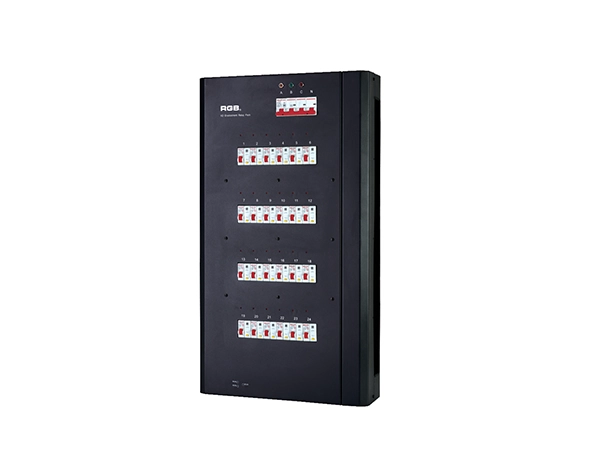
K2 Intelligent Network Relay Racks
K series is the newly developed and produced product of all-weather smart network relay cabinet. It has two major indoor and outdoor waterproof series and has multiple network control modes, such as double DMX512, sACN, ART-net, etc, which can control any equipment like resistive, inductive and capacitive and so on
K series has two major series from the perspective of function, namely, K2 ordinary type and KW2 waterproof type. It has two modes of installation, one is hanging on the wall, and the other is cabinet. It has three specifications of output circuit, namely, 24, 48 and 60 respectively.
K series applies to different performance places, such as, outdoor cultural tourism, TV station, theater, stadium and ambient intelligence lighting and so on.
Expert Support
Interested in learning more or need expert guidance related to this article? Fill in your details, and our team will provide tailored support.
Intelligent Control. Brilliant Performance.
RGB specializes in stage lighting control systems, delivering intelligent, reliable, and high-performance solutions for theaters and performance spaces worldwide.
Contact
Email:
Tel:
+86 20 3928 0245
+86 20 3928 0247
Address:
No.3, Huashan Road, Shilou Town, Panyu, Guangzhou, China.
Whatsapp: +8615975520131