
Why a Stage Lighting Dimmer Is Essential for Shows
|
- What is a Stage Lighting Dimmer?
- Why Every Theater Needs a Stage Lighting Dimmer
- Stage Lighting Dimmers vs. Fixed Lighting: Which is Better for Your Show?
- How to Select the Right Stage Dimmer for Your Venue
- Analyzing Stage Dimmer Types: Choosing the Most Suitable Model
- Common Mistakes to Avoid When Using Stage Lighting Dimmers
- Future Trends in Stage Dimmers: Innovative Technologies Worth Watching
- References
What is a Stage Lighting Dimmer?

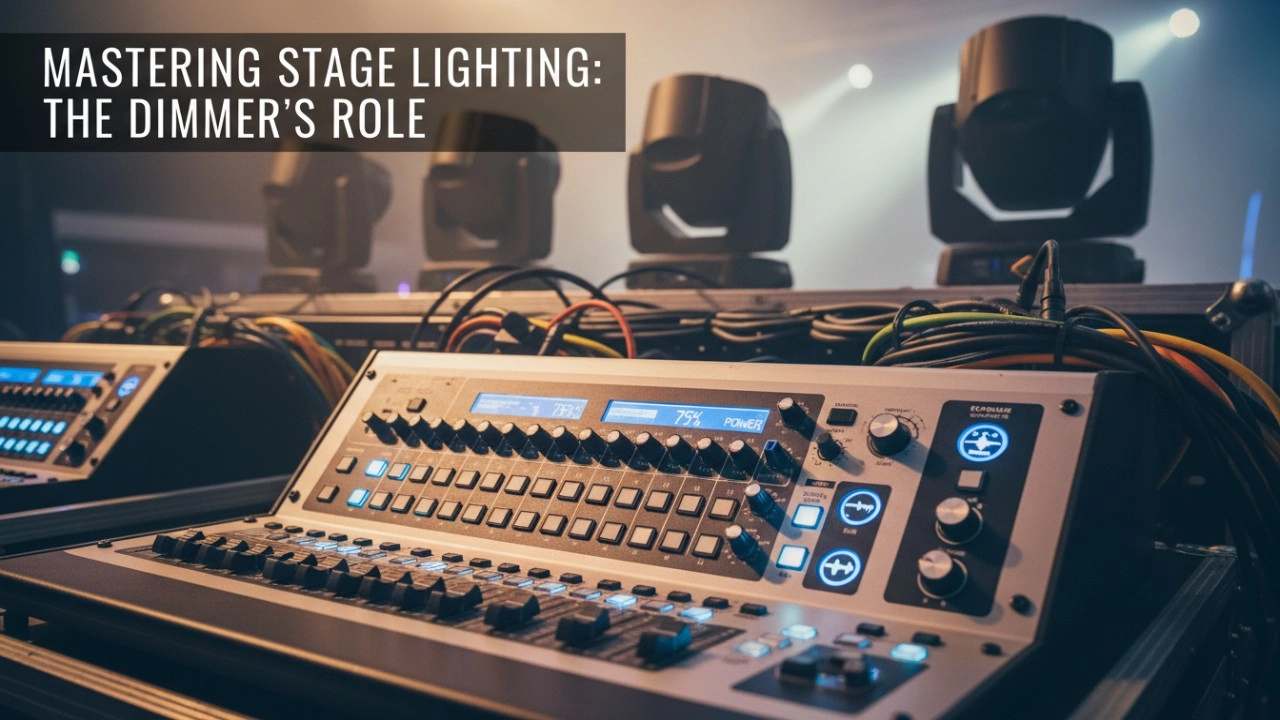
A stage lighting dimmer is a specialized voltage regulating device that controls the intensity of light output by manipulating the electrical current or pulse frequency sent to a fixture. It acts as the central nervous system of a stage lighting equipment setup, translating digital signals from a console into visible brightness changes.
While a standard switch offers binary control (on/off), a dimmer provides a gradient of intensity, allowing for the subtle fades and dramatic blackouts that define professional theater. In modern setups, this technology is split into two primary categories: Phase-Cut (SCR) for incandescent tungsten lamps and Pulse Width Modulation (PWM) for LED dimmer systems.
At Guangzhou RGB Lighting Equipment Co.,Ltd., our R&D team emphasizes that the core function of a dimmer is not just brightness reduction, but precision energy management. A high-quality lighting control system ensures that voltage drops are smooth, preventing the "stepped" look visible in cheaper units.
- Voltage Regulation: Direct manipulation of sine waves for analog fixtures.
- Signal Translation: Converts DMX512 data into power output.
- Load Balancing: Distributes electrical load to prevent circuit overloads.
Why Every Theater Needs a Stage Lighting Dimmer
A dedicated stage lighting dimmer is essential because it transforms static illumination into a dynamic storytelling tool while ensuring the electrical safety of the venue's infrastructure. Without dimming capabilities, a production is limited to abrupt changes that break audience immersion.
Beyond aesthetics, the practical benefits are measurable. According to a 2024 report by the U.S. Department of Energy, integrating modern dimming technology with LED fixtures can reduce energy consumption by up to 80% compared to traditional incandescent static rigs. This efficiency is critical for venues looking to lower operational costs while maintaining high production values.
- Operational Safety: Prevents inrush current spikes that can trip main breakers.
- Visual Dynamics: Allows for "invisible" scene changes through slow cross-fades.
- Extended Bulb Life: Soft-starting lamps (gradually increasing voltage) reduces filament shock.
- Energy Efficiency: Reduces power draw significantly when running lights below 100%.
Stage Lighting Dimmers vs. Fixed Lighting: Which is Better for Your Show?
Stage lighting dimmers offer superior adaptability and artistic control compared to fixed lighting, which restricts a production to a single intensity level throughout a performance. While fixed lighting is simpler, it lacks the emotive capacity required for narrative storytelling.
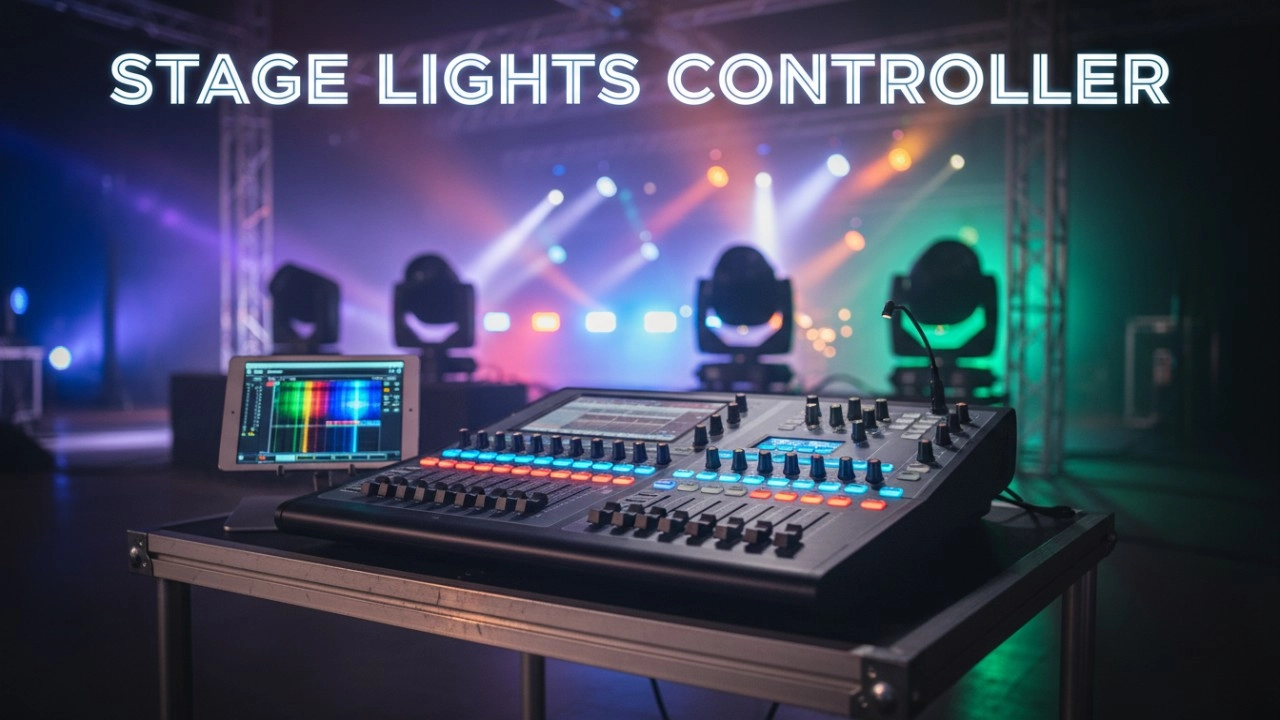
The difference lies in the "intent" of the light. Fixed lighting serves a utilitarian purpose—visibility—whereas dimmable lighting serves an artistic one. For example, a stage lighting controller paired with a dimmer pack can shift a scene from a sunny afternoon to a somber evening in seconds, a feat impossible with fixed circuits.
- Flexibility: Dimmers allow one rig to serve multiple scene types; fixed lighting requires physical re-gelling or re-aiming.
- Flicker Control: High-quality dimmers manage voltage to prevent strobing; fixed lights may flicker if voltage fluctuates.
- Atmosphere: Dimmers create depth and focus; fixed lighting flattens the stage visuals.
- Investment: Dimmers have a higher initial cost but lower long-term costs due to versatility.
How to Select the Right Stage Dimmer for Your Venue
Selecting the right dimmer requires calculating your total wattage load and ensuring your lighting control system protocol matches your fixture types. The most critical metric is the "Headroom Rule," which dictates that you should never load a dimmer channel past 80% of its rated capacity.
Drawing from our manufacturing data at RGB Lighting, we recommend verifying the "rise time" of the dimmer's inductors. A longer rise time (e.g., 350µs) reduces the audible "lamp sing" or filament buzz that can distract audiences during quiet scenes. Additionally, modern venues must distinguish between "dimmable" and "non-dimmable" loads to avoid damaging intelligent fixtures.
- Calculate Load: Multiply fixture count by wattage (e.g., 4 x 575W = 2300W). Ensure the dimmer channel handles this amperage.
- Verify Protocol: Ensure the dimmer accepts standard DMX512 or sACN/Art-Net for networked systems.
- Check Compatibility: Use Sine Wave or SCR dimmers for tungsten; use PWM-based modules for LEDs.
- Assess Form Factor: Choose portable packs for touring or wall-mount relay racks for permanent installs.
Analyzing Stage Dimmer Types: Choosing the Most Suitable Model
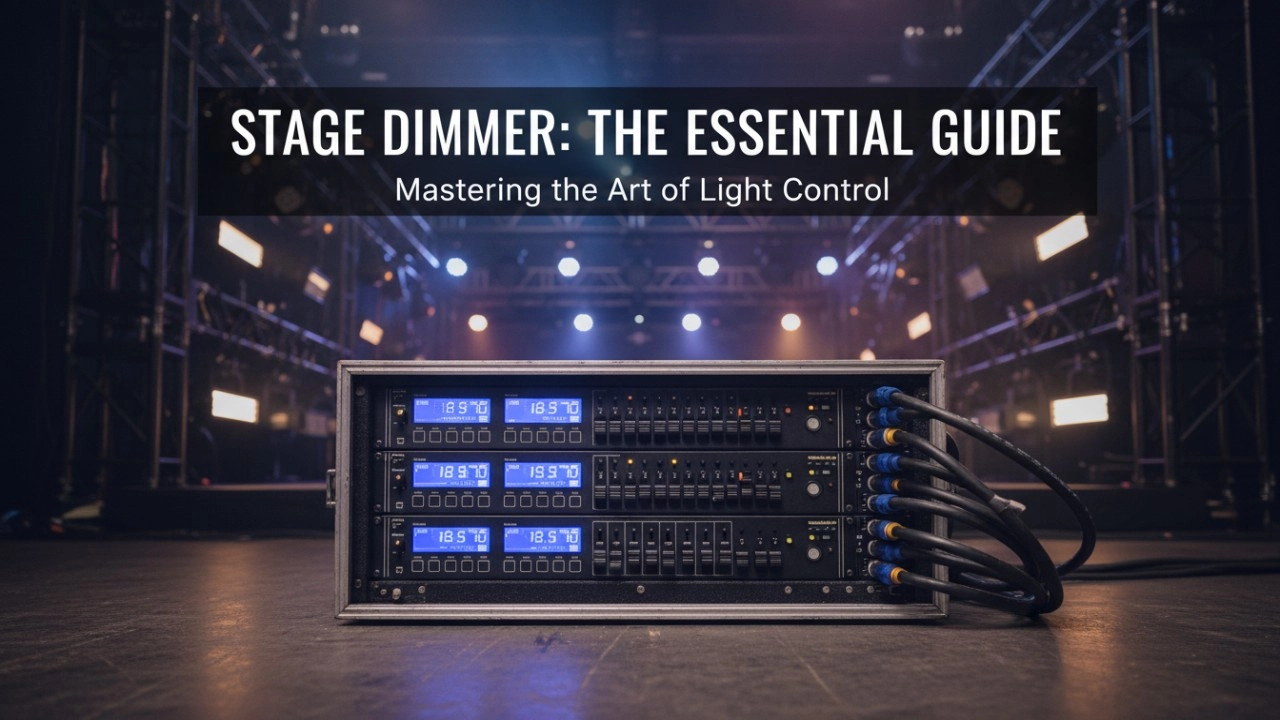
The most suitable dimmer model depends on your specific infrastructure, ranging from simple Manual Dimmers for schools to complex SCR or IGBT racks for professional opera houses. Understanding the architecture of these devices is key to building a reliable stage lighting equipment ecosystem.
For instance, Guangzhou RGB Lighting Equipment Co.,Ltd. has developed hybrid dimmer solutions that combine relay switching (for moving lights) and dimming (for conventional lights) in a single cabinet. This versatility is crucial as venues transition from analog to digital rigs.
- Manual Dimmers: Simple slide-control units. Best for small school plays or basic podium lighting.
- Digital Dimmers: DMX-controlled packs. Essential for synchronized light shows and complex cue stacks.
- Distributed Dimmers: Small dimmer bars attached directly to lighting pipes, reducing heavy cable runs.
- Sine Wave Dimmers: Premium silent dimming technology that eliminates filament noise and harmonic distortion.
Common Mistakes to Avoid When Using Stage Lighting Dimmers
The most frequent mistake is connecting non-dimmable LED dimmer fixtures or motorized intelligent lights to a standard voltage-regulating dimmer channel. This mismatch can destroy the fixture's power supply or cause the dimmer's TRIAC to fail catastrophically.
Another critical issue is "Camera Flicker." Recent data from 2025 indicates that as 8K cameras with high shutter speeds (120fps+) become standard, standard PWM dimmers running at low frequencies (below 25kHz) cause visible banding on video. To avoid this, technicians must ensure their stage lighting controller and dimmers are set to "High-Frequency Mode."
- Overloading Channels: Exceeding the amperage rating causes fuses to blow mid-show.
- Ghosting: Low-voltage leakage causing LEDs to glow faintly even when the console is set to zero.
- Improper Addressing: Overlapping DMX addresses results in multiple lights responding chaotically to the same fader.
- Ignoring Minimum Load: Some older dimmers require a "ghost load" to function correctly with low-wattage LED bulbs.
Future Trends in Stage Dimmers: Innovative Technologies Worth Watching
By 2026, dimming technology will evolve from manual cueing to AI-driven "Intent Recognition," where systems analyze performer movement and audio sentiment to adjust lighting intensity automatically. The static dimmer rack is becoming an intelligent processing node.
Industry projections suggest that by 2026, "Global Sync" technology will be standard, allowing dimmers to synchronize their PWM cycles with camera shutters automatically. At RGB Lighting, we are already integrating cloud-based management into our power cabinets, allowing technicians to monitor thermal loads and power consumption remotely via mobile apps.
- AI-Adaptive Dimming: Real-time adjustments based on ambient light sensors and crowd density.
- Wireless Mesh Networks: Eliminating DMX cables in favor of robust, self-healing wireless control protocols.
- Green Power Management: Dimmers that automatically cut phantom power to idle fixtures to meet new 2026 eco-design directives.
- Holographic Integration: Dimmers capable of managing the high-speed modulation required for 3D projection mapping.
References
Latest News
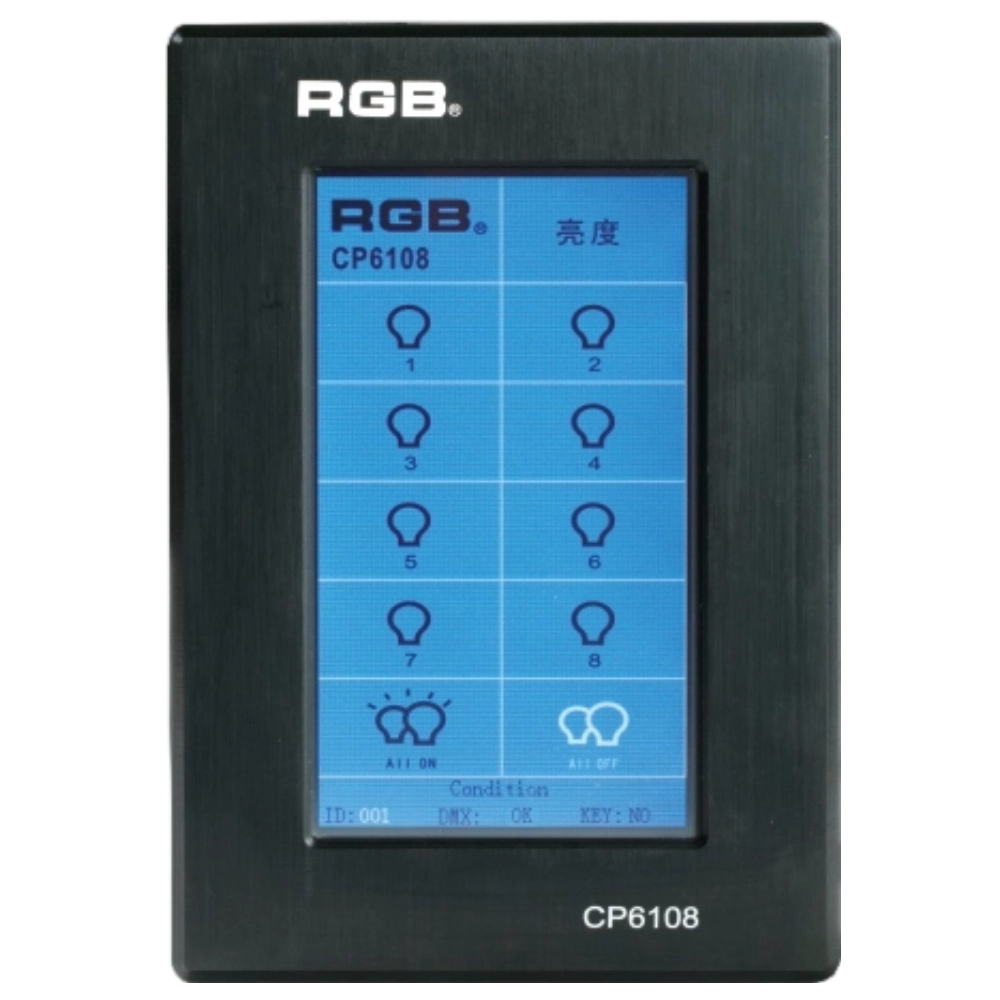
CP6108 Stage Lighting Scene Control Panel
RGB CP6108 is a stage and venue lighting scene-control panel used with the CP6100 lighting control host. The published panel family offers selectable button layouts, local status indication and scene-related controls over an RJ45 connection. Panel-specific keys and the number of supported scenes depend on the ordered configuration and connected host. The panel itself should not be described as an independent 2,048-circuit controller.
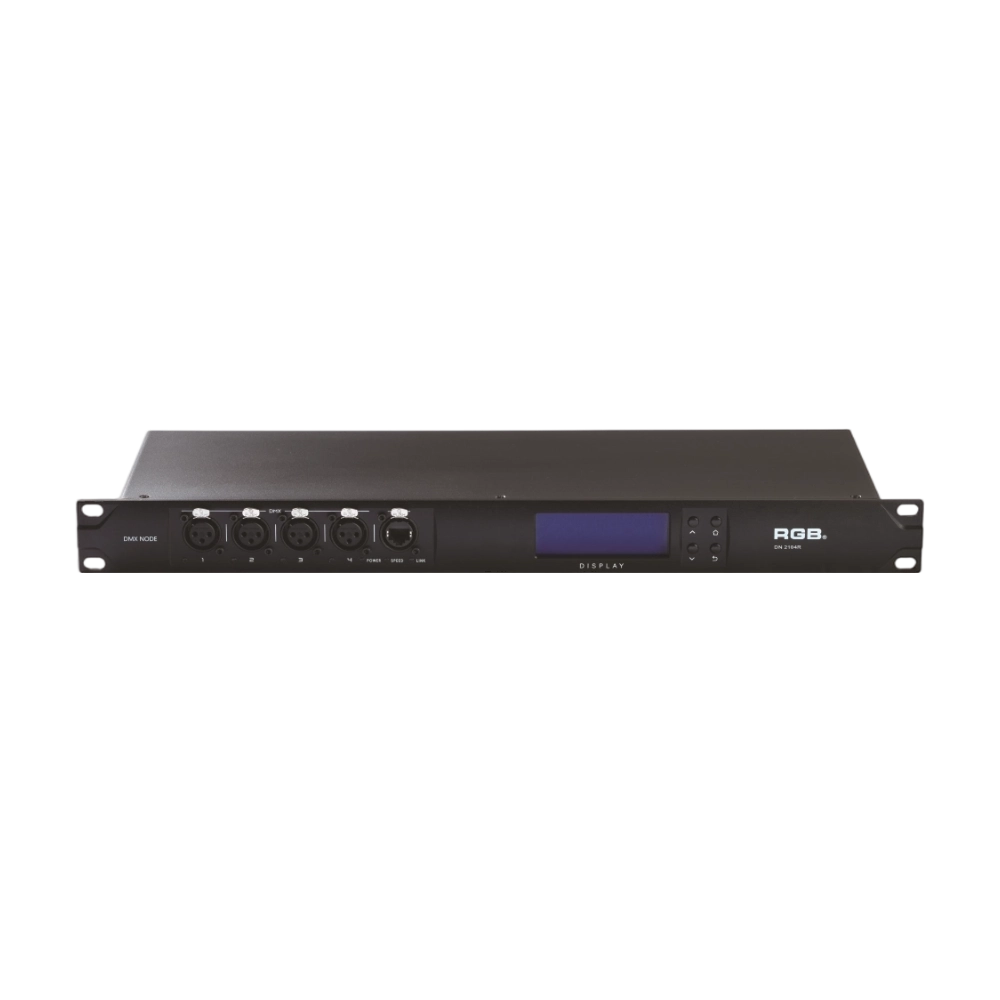
DN Series Art-Net/sACN DMX & RDM Nodes
RGB DN Series DMX and RDM nodes connect Ethernet lighting networks with DMX512/RDM equipment. The dual-network-port models listed on this page support Art-Net, sACN and RDM, with 2-, 4-, 8- or 12-universe configurations depending on the selected DN model. Ethernet interfaces, status indication and network parameter management help technicians plan control networks for theaters and touring systems. Check the model-specific port count, dimensions, mounting type and optional interfaces before ordering.
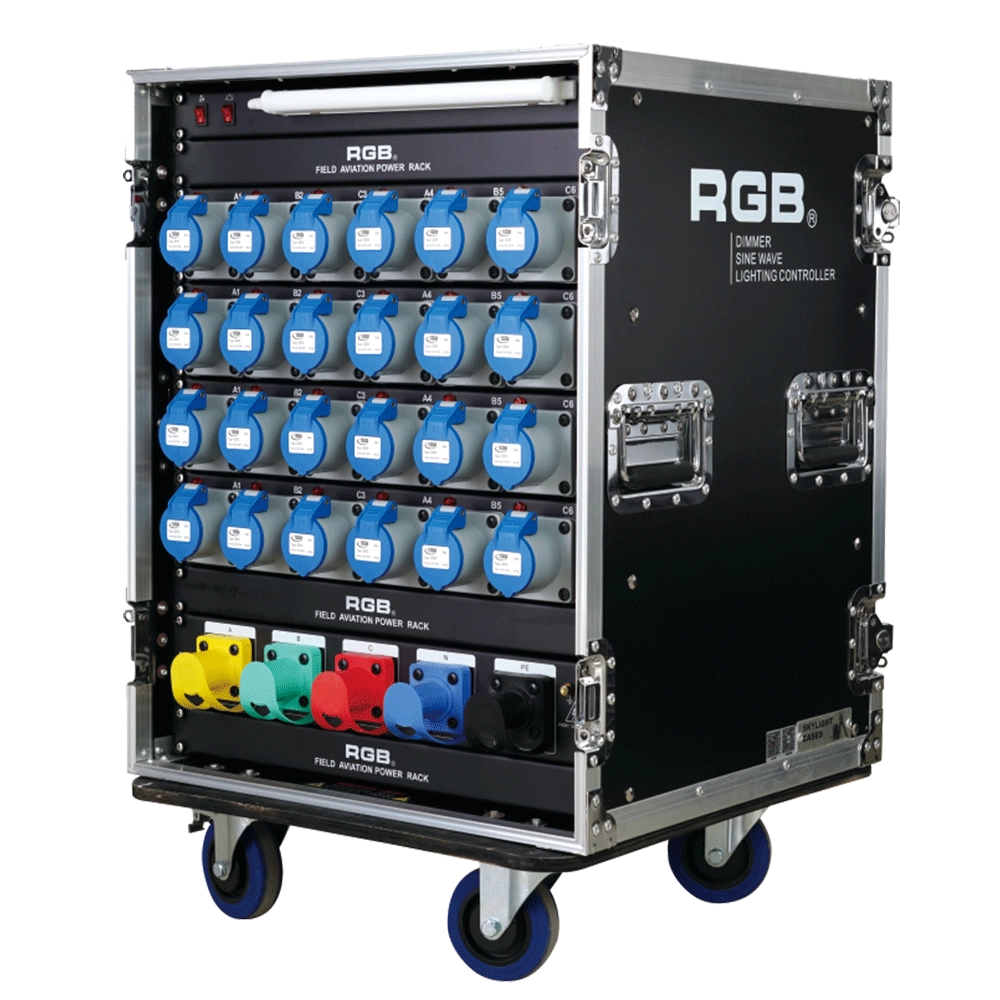
ZT Series Stage Power Distribution Boxes
RGB ZT Series mobile stage power distribution boxes are designed for temporary event and performance lighting systems. The published range offers configurable three-phase main circuit breakers, individual output protection, and different 16 A, 32 A and multipin connector arrangements. Series options include 12-, 24-, 36- and 48-circuit configurations. Confirm the exact ZT model, circuit schedule, connector ratings and enclosure size before specification.
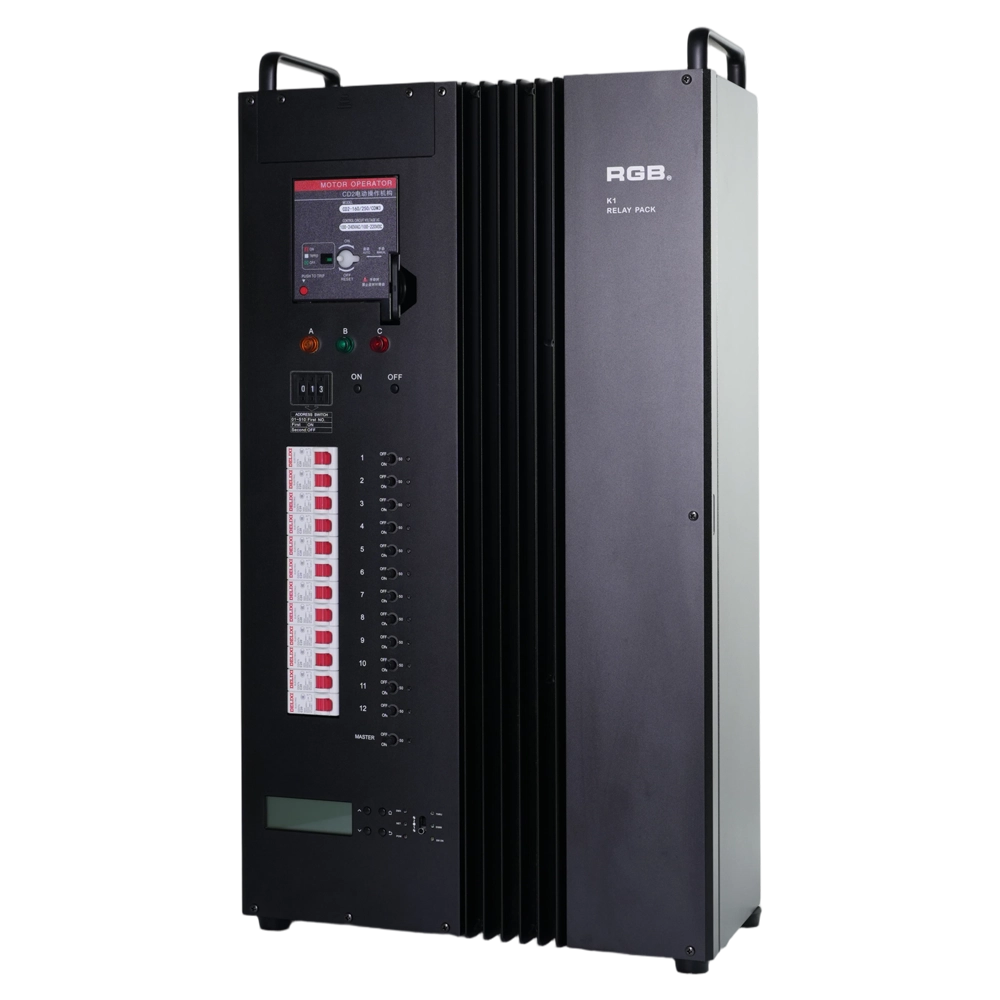
K1 DMX512 Relay Pack
RGB K1 is a DMX512-controlled relay pack for professional stage and venue lighting. The product documentation lists a three-phase five-wire input, optional Art-Net and sACN networking, and a K1 cabinet size of 169 × 389 × 600 mm (depth × width × height). Available output circuit counts, mounting options and per-circuit ratings require model-specific confirmation.
Expert Support
Interested in learning more or need expert guidance related to this article? Fill in your details, and our team will provide tailored support.
Intelligent Control. Brilliant Performance.
RGB specializes in stage lighting control systems, delivering intelligent, reliable, and high-performance solutions for theaters and performance spaces worldwide.
Contact
Email:
Tel:
+86 20 3928 0245
+86 20 3928 0247
Address:
No.3, Huashan Road, Shilou Town, Panyu, Guangzhou, China.
Whatsapp: +8615975520131