
Can wireless DMX controllers replace wired systems reliably?
|
- 1. What are the key differences between wired and wireless DMX stage lighting controllers?
- 2. How do I ensure compatibility between my DMX controller and various lighting fixtures?
- 3. What are the limitations of wireless DMX systems in large-scale lighting setups?
- 4. Can wireless DMX controllers replace wired systems reliably in all scenarios?
- 5. How do I mitigate potential interference when using wireless DMX systems?
- 6. What are the best practices for integrating wireless DMX into existing wired systems?
1. What are the key differences between wired and wireless DMX stage lighting controllers?
Wired DMX controllers utilize physical cables to transmit control signals to lighting fixtures, offering a stable and interference-free connection. This setup is ideal for permanent installations where reliability is paramount. In contrast, wireless DMX controllers transmit control signals over radio frequencies, providing flexibility and ease of setup, especially in temporary or complex layouts. However, wireless systems are susceptible to interference and signal loss, which can impact performance.
2. How do I ensure compatibility between my DMX controller and various lighting fixtures?
Ensuring compatibility involves several factors:
Channel Count and Addressing: Verify that the DMX controller supports the number of channels required by your lighting fixtures and that it can assign appropriate DMX addresses to each fixture.
Connector Types: DMX controllers typically use 3-pin or 5-pin XLR connectors. Ensure that your fixtures match the connector type of your controller or use appropriate adapters.
Protocol Support: Some advanced lighting fixtures may support additional protocols like RDM (Remote Device Management) for bidirectional communication. Confirm that your controller is compatible with these protocols to fully utilize the features of your fixtures.
3. What are the limitations of wireless DMX systems in large-scale lighting setups?
Wireless DMX systems offer convenience but have limitations in extensive setups:
Signal Range and Interference: Wireless signals can be obstructed by physical barriers and are susceptible to interference from other wireless devices, leading to potential signal degradation or loss.
Latency and Reliability: Wireless systems may introduce latency and are generally less reliable than wired systems, which can be critical for synchronized lighting effects in large-scale productions.
Power Dependency: Wireless receivers require a stable power source, adding complexity to the setup and maintenance.
4. Can wireless DMX controllers replace wired systems reliably in all scenarios?
While wireless DMX controllers offer flexibility, they may not fully replace wired systems in all scenarios:
Critical Applications: For mission-critical cues and installations where reliability is paramount, wired DMX systems are preferred due to their stability and low latency.
Hybrid Solutions: Combining wired and wireless systems can provide a balance between reliability and flexibility, allowing for redundancy and adaptability in various environments.
5. How do I mitigate potential interference when using wireless DMX systems?
To minimize interference in wireless DMX systems:
Frequency Planning: Choose wireless DMX systems that operate on less congested frequencies, such as 5.8 GHz, to reduce interference from common devices like Wi-Fi routers and Bluetooth devices.
Antenna Placement: Position antennas with a clear line of sight to minimize obstructions and potential interference sources.
Redundancy: Implement redundant wireless links or hybrid wired-wireless setups to ensure continuous operation in case of signal degradation.
6. What are the best practices for integrating wireless DMX into existing wired systems?
Integrating wireless DMX into existing wired systems involves:
System Assessment: Evaluate the current wired setup to identify areas where wireless integration can enhance flexibility without compromising reliability.
Device Compatibility: Ensure that wireless DMX transmitters and receivers are compatible with the existing wired DMX infrastructure.
Signal Management: Use DMX splitters and isolators to manage signal distribution and prevent potential issues between wired and wireless components.
In conclusion, understanding the nuances of DMX stage lighting controllers and the considerations for wireless DMX systems is crucial for making informed decisions in stage lighting control. By carefully evaluating your specific requirements and the characteristics of both wired and wireless systems, you can achieve optimal performance and reliability in your lighting setups.
For personalized advice and solutions tailored to your needs, please contact us at info@rgbsystem.com or visit our website at www.rgbsystem.com.
Latest News
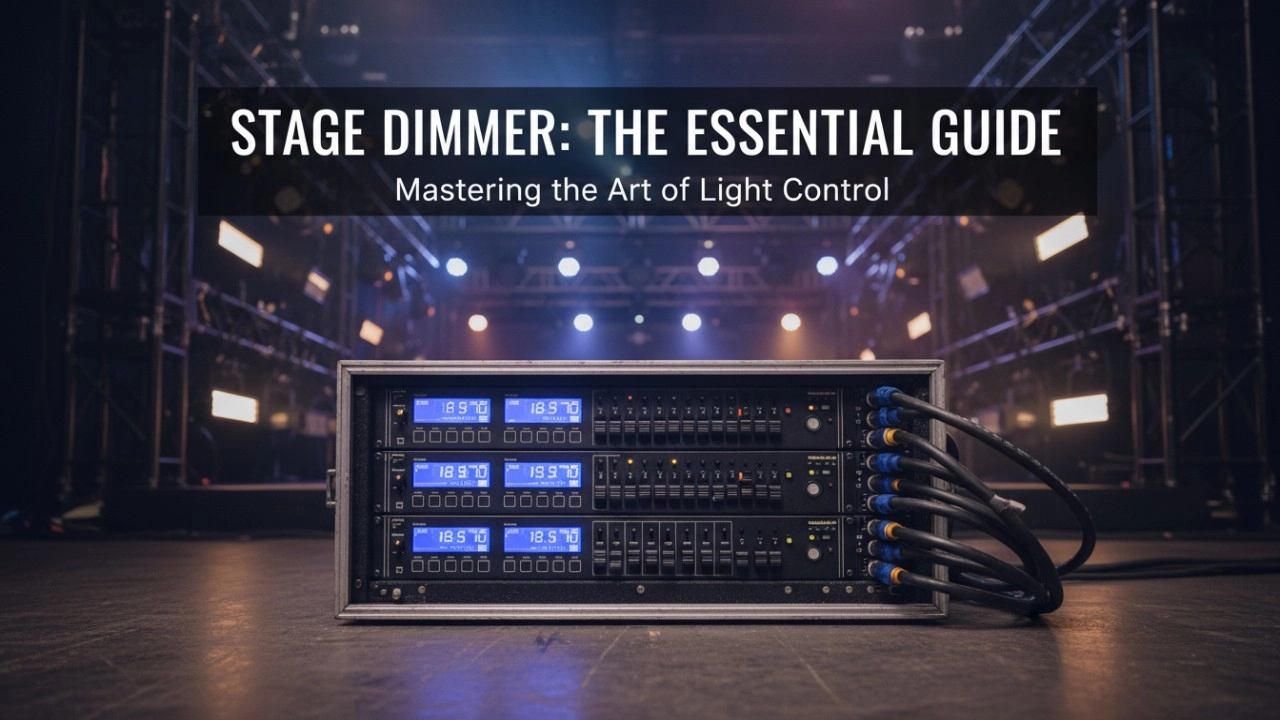
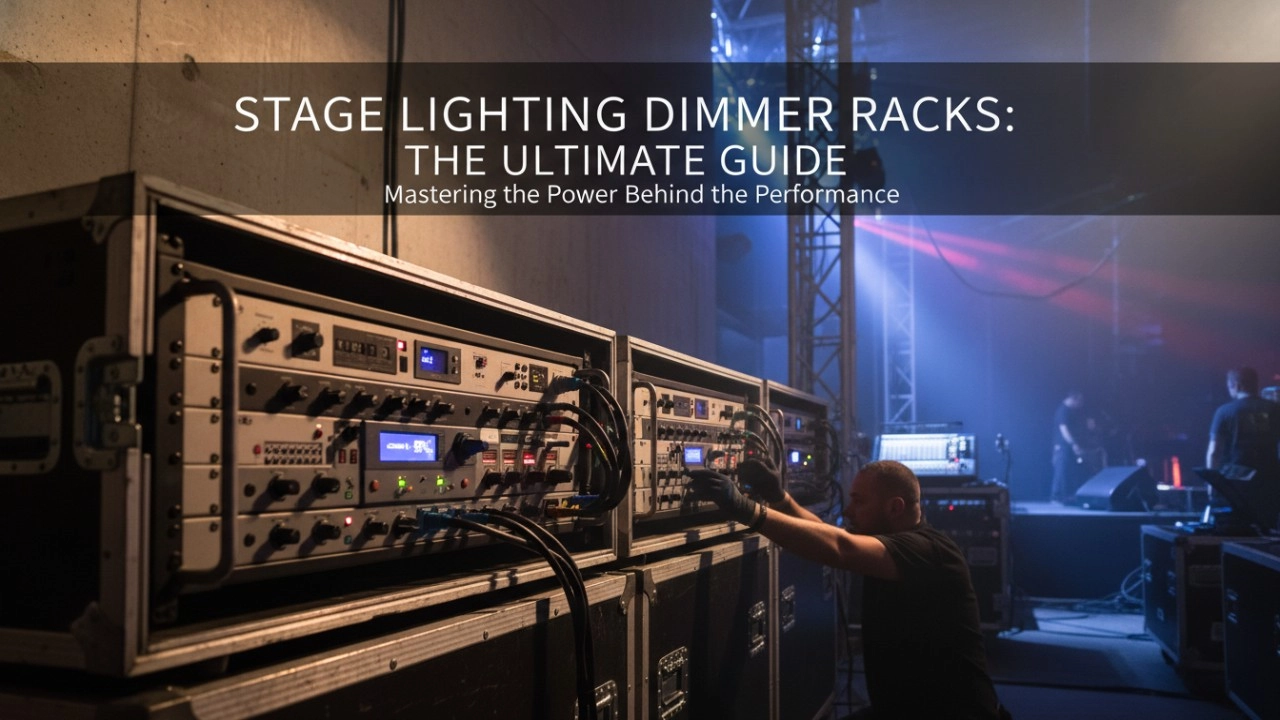
A comprehensive 2026 guide to selecting high-performance stage lighting dimmer racks. We review top hybrid systems, explore SCR vs sine wave technology, and analyze essential features like ThruPower for modern venues.
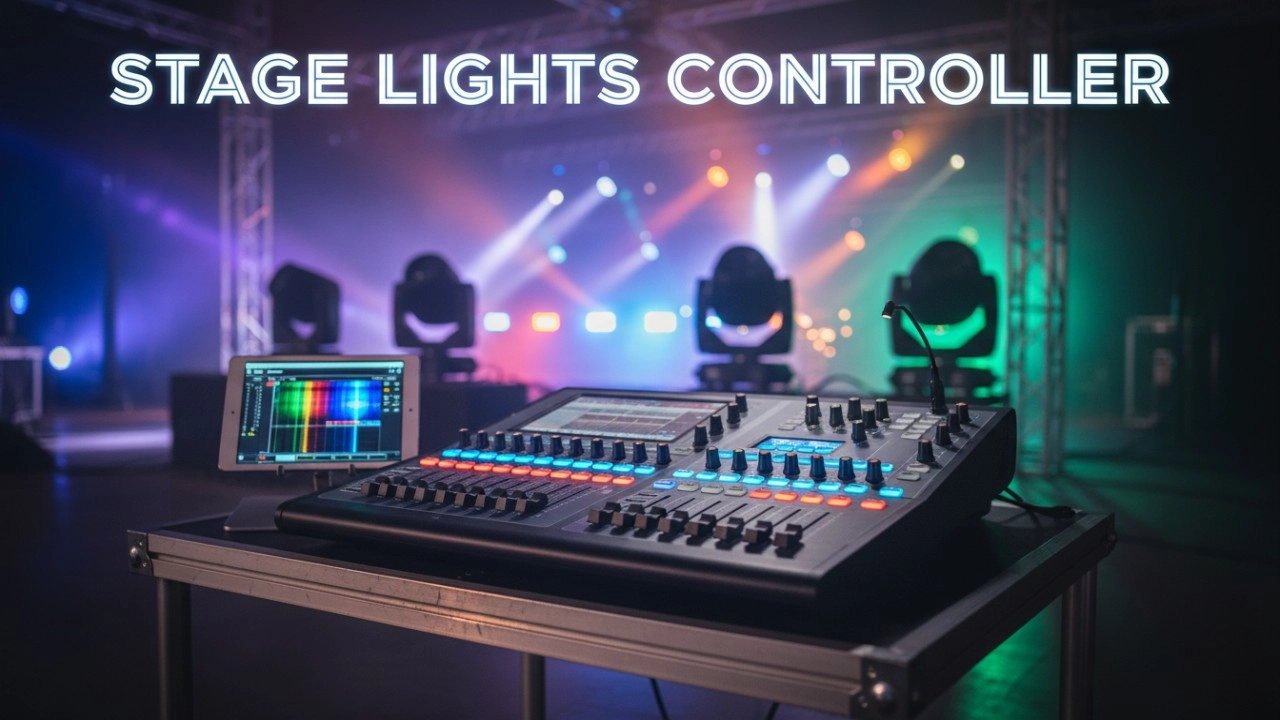
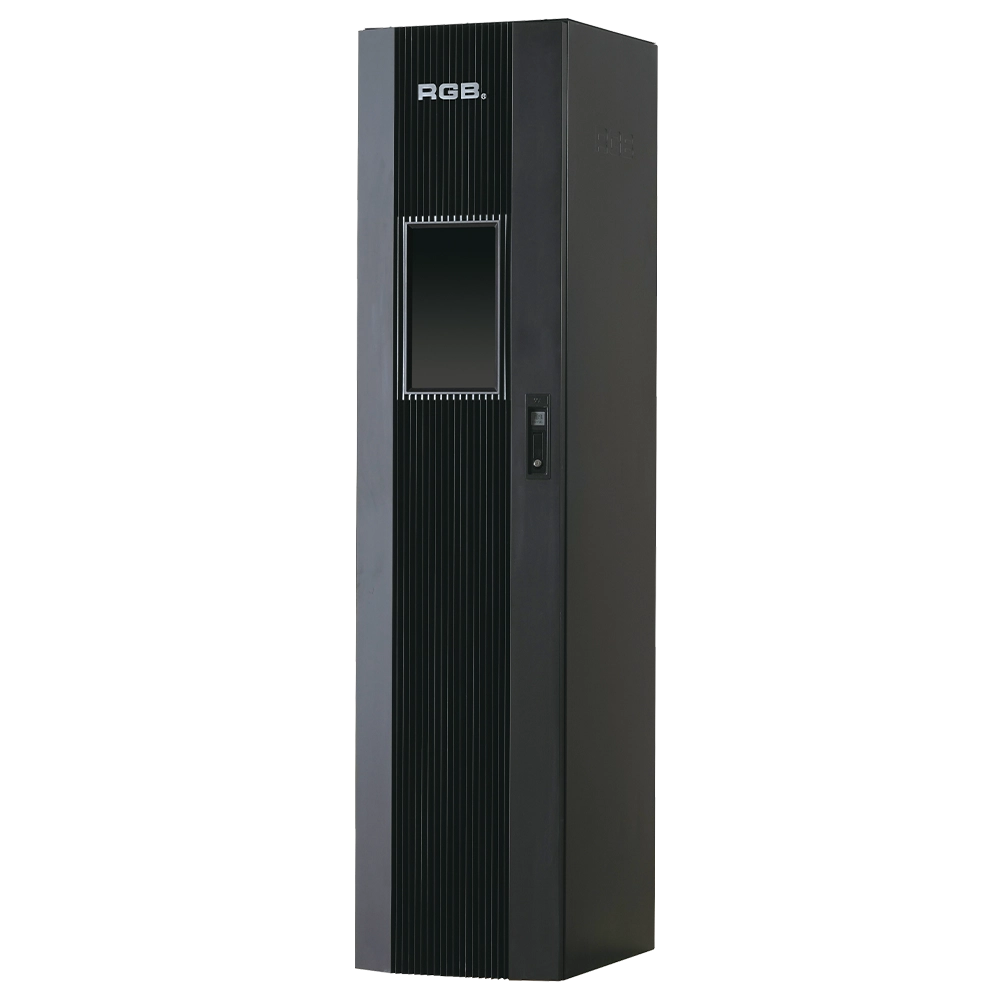
9i intelligent network Dimmer/Relay Racks
9i is an artificial intelligence dimming racks independently developed by RGB, which has completely independent core technology and obtained software Copyrights, all digital electrodeless trigger and multi-backup independent CPU central processor technology. It has a variety of output configurations such as sine wave, thyR, relay and dimming relay mix, and supports visual lighting control system and visually displays the online and offline status of dimming racks. Realize remote monitoring, editing and setting of relevant parameters.
It is suitable for the lighting control needs of different places such as high standard grand theater, TV station, gymnasium and environmental intelligent lighting.
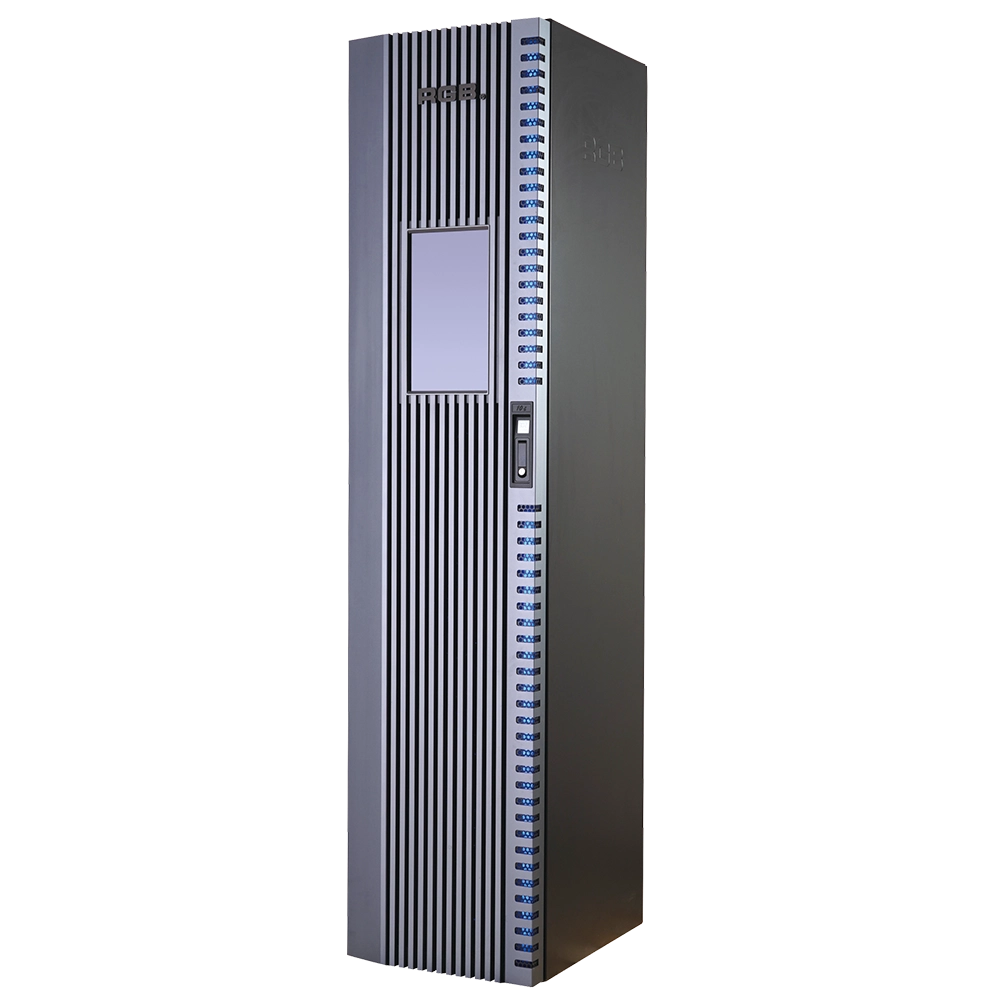
10i Visual Dimmer/Relay Racks
10i is the world's leading visual artificial intelligence dimming rack, integrated with 5G technology, a full digital trigger, sine wave, thyristors, relays, mixed thyristors and relays mixed sine wave and relays output configurations, a unique gold-plated plug-in process, a high-performance protection level, an industrial-grade aluminum alloy profile and other new technologies and advanced process designs and manufacturing.
It is suitable for the lighting control needs of different places such as high-standard grand theaters, TV stations, gymnasium and environmental intelligent lighting.
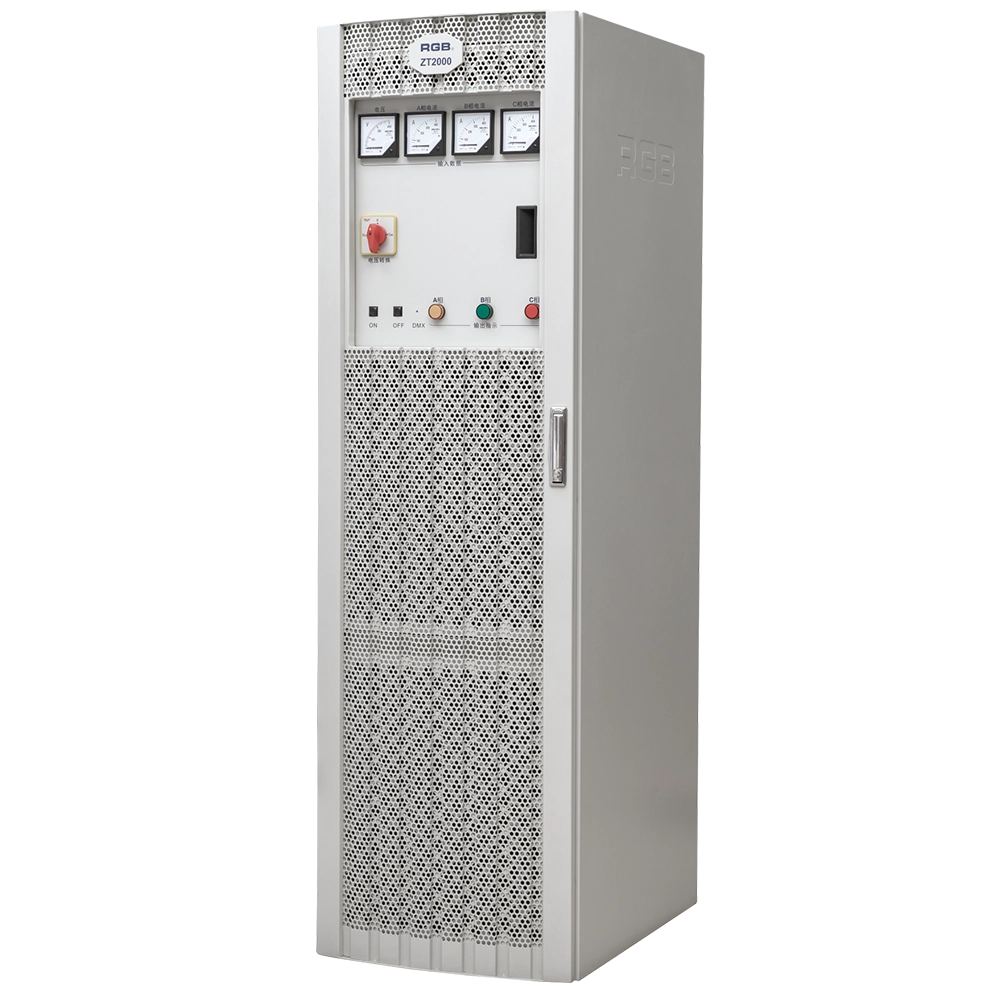
ZT2000 Pass-Through Racks
The ZT2000 straight-through power cabinet is a three-phase 630A/400A air switch main control, with each channel being a 32A air switch sub-control straight-through power cabinet. It can be used in conjunction with various computer lamps, regular lamps, and temporary electrical equipment as a power distribution and supply part for electrical equipment with overcurrent and short-circuit protection. It is a brand-new, reliable, and stable lighting control device in the field of stage lighting control.
It is widely applied in theaters, concert halls, multi-functional halls, cultural and tourism performances, TV stations, gymnasiums, auditoriums, commercial art lighting, and other performance and cultural venues.
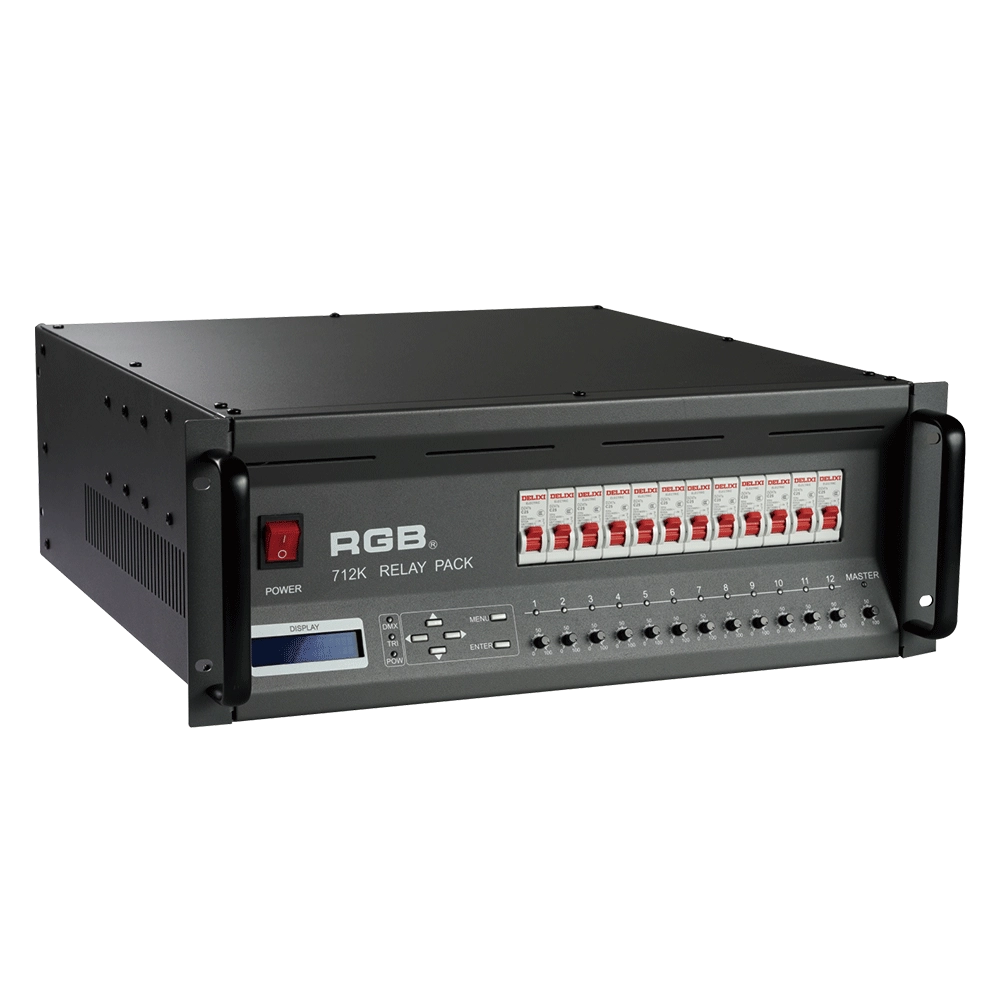
Alloy Relay Packs
High-performance DMX512 relay dimming unit with 512 addressable circuits, phase-loss protection, dual-signal amplification, 20A output per channel, and robust design for reliable stage and mobile lighting applications.
Expert Support
Interested in learning more or need expert guidance related to this article? Fill in your details, and our team will provide tailored support.
Intelligent Control. Brilliant Performance.
RGB specializes in stage lighting control systems, delivering intelligent, reliable, and high-performance solutions for theaters and performance spaces worldwide.
Contact
Email:
Tel:
+86 20 3928 0245
+86 20 3928 0247
Address:
No.3, Huashan Road, Shilou Town, Panyu, Guangzhou, China.
Whatsapp: +8615975520131