
Stage Lighting Dimmer Racks: The Ultimate 2026 Guide to Performance & Control
|
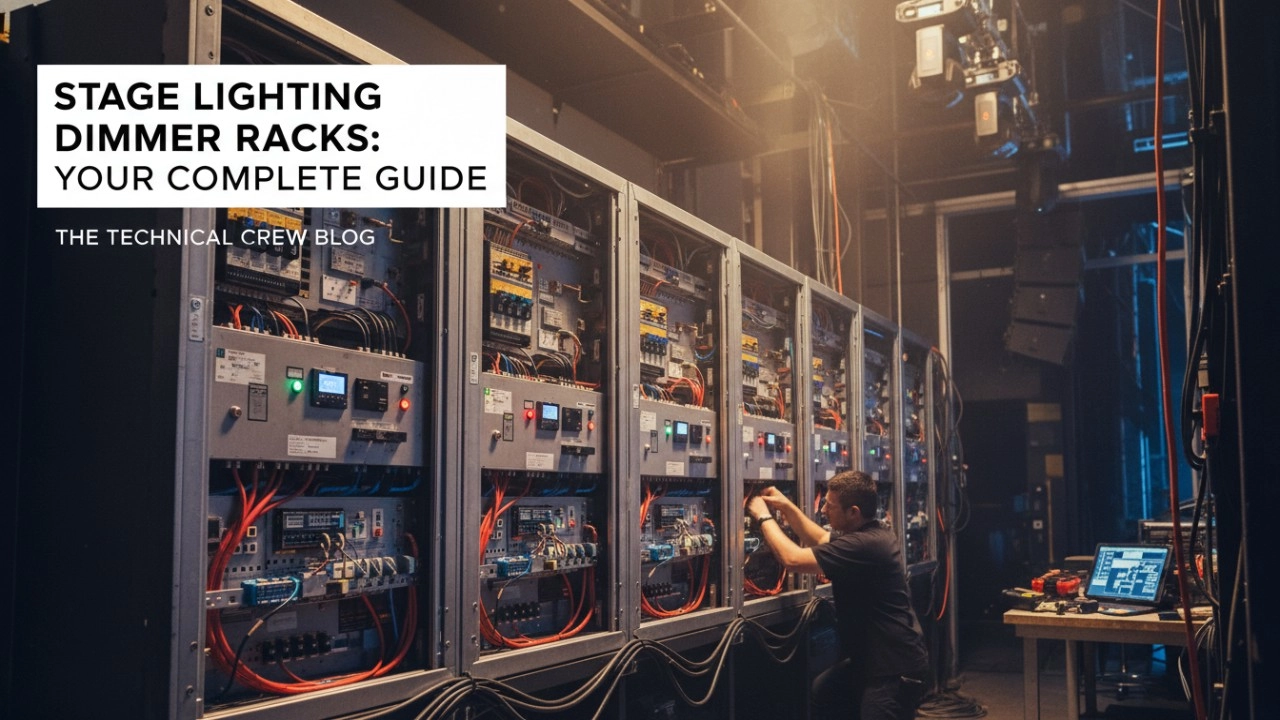
- Key Takeaways: The Future of Dimming Control
- What is a Stage Lighting Dimmer Rack?
- Key Characteristics
- Core Components: Inside the 'Muscle' of the Theatre
- Critical Module Components
- The 2026 Hybrid Shift: Managing LEDs and Tungsten Together
- Benefits of Hybrid Systems
- Expert Tips: Maintenance and Longevity Standards
- Maintenance Checklist
- Why Industry Leaders Choose Integrated Power Solutions
- The RGB Advantage
- FAQ: Common Questions About Dimmer Racks
- What is the difference between a dimmer rack and a dimmer pack?
- Can I use LED lights with a standard SCR dimmer rack?
- How long do professional stage dimmer racks typically last?
- What is RDM and why does my dimmer rack need it?
- Why are SCR dimmers still the industry standard?
- References
Key Takeaways: The Future of Dimming Control
A stage lighting dimmer rack is the central nervous system of theatrical power, responsible for regulating voltage to lighting fixtures. In 2026, these systems have evolved from simple power throttling devices into intelligent, hybrid hubs capable of managing both high-voltage tungsten loads and delicate data-driven LED arrays simultaneously.
Modern venues can no longer rely on single-purpose technology. As energy regulations tighten and productions become more complex, the role of the dimmer rack has shifted from brute-force power distribution to precision Automation Systems management.
- Hybrid Capability: Modern racks must support both legacy tungsten dimming (SCR) and direct "thru-power" relays for LEDs.
- Intelligent Monitoring: Remote Device Management (RDM) allows technicians to monitor temperature and load status from the console.
- Energy Efficiency: New processors reduce "parasitic" power draw, aligning with 2026 sustainability goals.
- Safety First: Regular maintenance of air filters and torque connections is critical to prevent arc flash hazards.

What is a Stage Lighting Dimmer Rack?
A stage lighting dimmer rack is a centralized, high-density electrical enclosure housing multiple modules that control the intensity of lighting fixtures by varying the voltage supplied to them. Unlike portable dimmer packs used for small bands or mobile DJ setups, these racks are permanent theatrical power distribution units designed to handle hundreds of channels and massive amperage loads (often 800A+) in professional venues.
In the past, dimmer racks were simple banks of rheostats. Today, they are sophisticated digital processors. The rack receives digital signals (DMX512 or sACN) from the lighting console and converts them into electrical output. For a tungsten light, it "chops" the AC waveform to dim the bulb. For an intelligent moving light or LED, it provides constant, clean power while passing data signals.
Key Characteristics
- Centralization: Consolidates all power circuits into one location, usually a dedicated dimmer room.
- Modularity: Features swappable modules (e.g., dual 2.4kW dimmers) for easy repair without shutting down the whole system.
- High Density: A single standard rack can often hold 48 to 96 dimmer modules, controlling up to 192 individual circuits.
Core Components: Inside the 'Muscle' of the Theatre
The core component of most dimmer racks is the Silicon Controlled Rectifier (SCR), a solid-state switching device that rapidly turns power on and off to simulate lower voltage. While newer technologies exist, SCR remains the industry workhorse due to its durability and ability to handle high inrush currents from cold tungsten filaments.
However, the SCR is just one part of the equation. To function in a professional environment without causing interference, the module requires supporting components. High-quality high-density dimmer modules are engineered to balance thermal management with noise suppression.
Critical Module Components
- SCR (Silicon Controlled Rectifier): The "switch" that performs the phase-cut dimming. It slices the AC sine wave to reduce power.
- Inductive Chokes: Heavy copper coils that smooth out the current rise time. This prevents the lamp filament from physically vibrating (singing) and reduces electrical noise (EMI) that could buzz in the audio system.
- Circuit Breakers: protect the wire and the load from overcurrent. In 2026, hydraulic-magnetic breakers are preferred over thermal ones for their consistent performance across temperature ranges.
- Control Electronics: A firing card or processor that translates the digital dimmer control signal (DMX) into precise gate pulses for the SCRs.
The 2026 Hybrid Shift: Managing LEDs and Tungsten Together
A hybrid lighting control system is a rack architecture that integrates both dimmable power circuits and constant power relays within the same enclosure. This shift is driven by the massive adoption of LED technology; recent industry data suggests that LEDs will represent nearly 87% of global lighting installations by 2030, rendering pure-dimmer racks obsolete.
Lighting directors in 2026 rarely work with rigs that are 100% tungsten. They mix high-CRI incandescent sources for skin tones with energy-efficient LEDs for color washes. Plugging an LED fixture into a standard SCR dimmer can damage the fixture's power supply due to "leakage voltage" even when the dimmer is at zero. Hybrid racks solve this by allowing modules to be switched between "Dim" (for tungsten) and "Relay" (for LEDs) modes.
Benefits of Hybrid Systems
- Thru-Power Modules: A single module can act as a dimmer or a straight air-gap relay, selectable via software.
- Infrastructure Savings: Venues do not need to rewire their building to add separate "hard power" lines for LEDs; they simply swap the module functionality.
- Future Proofing: As the transition to 100% LED continues, the rack adapts without total replacement.
Experience in Action: At Guangzhou RGB Lighting Equipment Co.,Ltd., we anticipated this shift early. Our latest R&D in hybrid dimmer solutions allows venues to mix legacy SCR modules with modern relay units in the same chassis. This technology was crucial in our support of large-scale projects like the Shanghai World Expo, where diverse lighting loads required a unified control infrastructure.
Expert Tips: Maintenance and Longevity Standards
The primary cause of dimmer rack failure is overheating due to clogged airflow, necessitating a strict maintenance schedule of cleaning filters every 90 days. Dimmer racks generate significant heat. A 96-channel rack running at full load can produce as much heat as a small furnace. If the cooling fans cannot pull air through the filters, the SCRs will overheat and fail, potentially tripping the main breaker mid-show.
Beyond airflow, electrical connections loosen over time due to thermal expansion and contraction. This "cold flow" can lead to resistance, heat buildup, and eventually, dangerous arc faults. According to 2025 safety standards, inspecting high-voltage terminations is a mandatory annual procedure.
Maintenance Checklist
- Vacuum, Don't Blow: Always use an anti-static vacuum to remove dust from modules. Blowing compressed air pushes conductive dust deep into the electronics, causing short circuits.
- Torque Checks: Annually retorque all feeder and load wire lugs to manufacturer specifications.
- Fan Inspection: Check that all cooling fans are operational. If a rack has redundant cooling, ensure the backup triggers correctly.
- Load Testing: Periodically test circuits at full load to identify "tired" breakers that trip below their rated capacity.
Why Industry Leaders Choose Integrated Power Solutions
Integrated power solutions combine dimming, relay control, and network data distribution into a single system to maximize reliability and minimize latency. In the high-stakes world of live performance, a split-second delay or a single circuit failure can ruin a cue. Professional venues demand equipment that is backed by proven engineering and rigorous quality control.
With over two decades of experience, RGB Lighting has established itself as a leader in this space. Founded in 1996, our National High-Tech Enterprise status is built on delivering stability. From the Beijing Olympics to national broadcast centers, our systems are designed to withstand the rigors of 24/7 operation. We utilize ISO9001-certified production processes to ensure every power cabinet and relay rack meets international CE and CQC standards.
The RGB Advantage
- Hot-Swap Technology: Our modules can be replaced safely while the rack is live, ensuring zero downtime during a performance.
- Visualized Control: Our proprietary software allows facility managers to see real-time power draw and rack status across the entire venue.
- Global Compliance: We adhere to EMC standards to ensure our racks do not interfere with sensitive audio or video equipment.
FAQ: Common Questions About Dimmer Racks
What is the difference between a dimmer rack and a dimmer pack?
A dimmer rack is a large, permanent installation, while a dimmer pack is a portable unit. Racks are hard-wired into the building's 3-phase supply and handle high-density loads for theaters. Packs are typically lower amperage, plug into standard outlets, and are used for touring bands or temporary events.
Can I use LED lights with a standard SCR dimmer rack?
No, unless the LED is specifically rated as "mains dimmable." Most professional LEDs require constant power (non-dimmed). Connecting them to a standard SCR dimmer can damage the LED driver. You must use a "relay" module or set the dimmer to "switched" mode if supported.
How long do professional stage dimmer racks typically last?
High-quality dimmer racks are designed to last 20 to 30 years. However, the control processor (the "brain") often requires upgrading every 10-15 years to keep up with new protocols like sACN or RDM. The power components (SCRs, chokes) are incredibly durable.
What is RDM and why does my dimmer rack need it?
RDM (Remote Device Management) is a protocol that allows 2-way communication between the console and the rack. Instead of just sending a "dim" command, the rack can talk back, reporting fan failures, over-temperature warnings, or burnt-out lamps to the lighting operator.
Why are SCR dimmers still the industry standard?
SCRs are the standard because they are robust, cost-effective, and handle high inrush currents better than transistors. While Sine Wave dimming is quieter, it is significantly more expensive. SCR remains the best balance of performance and cost for tungsten loads.
References
Latest News
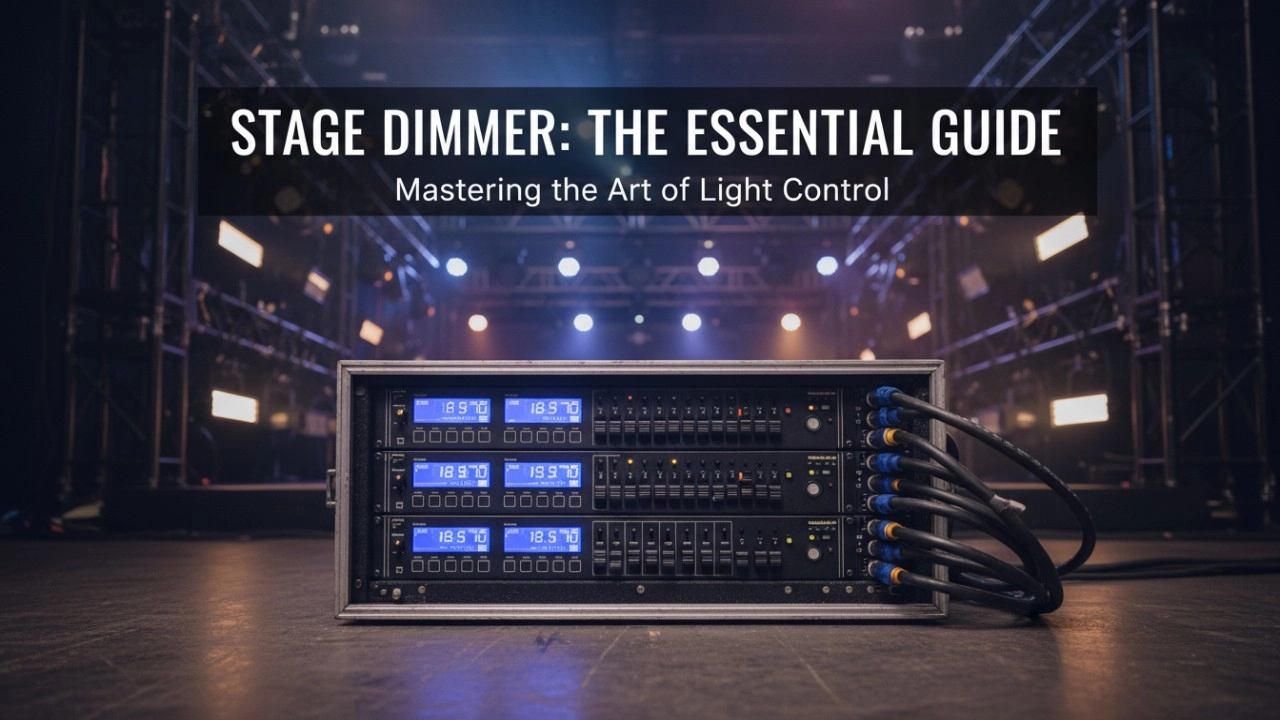
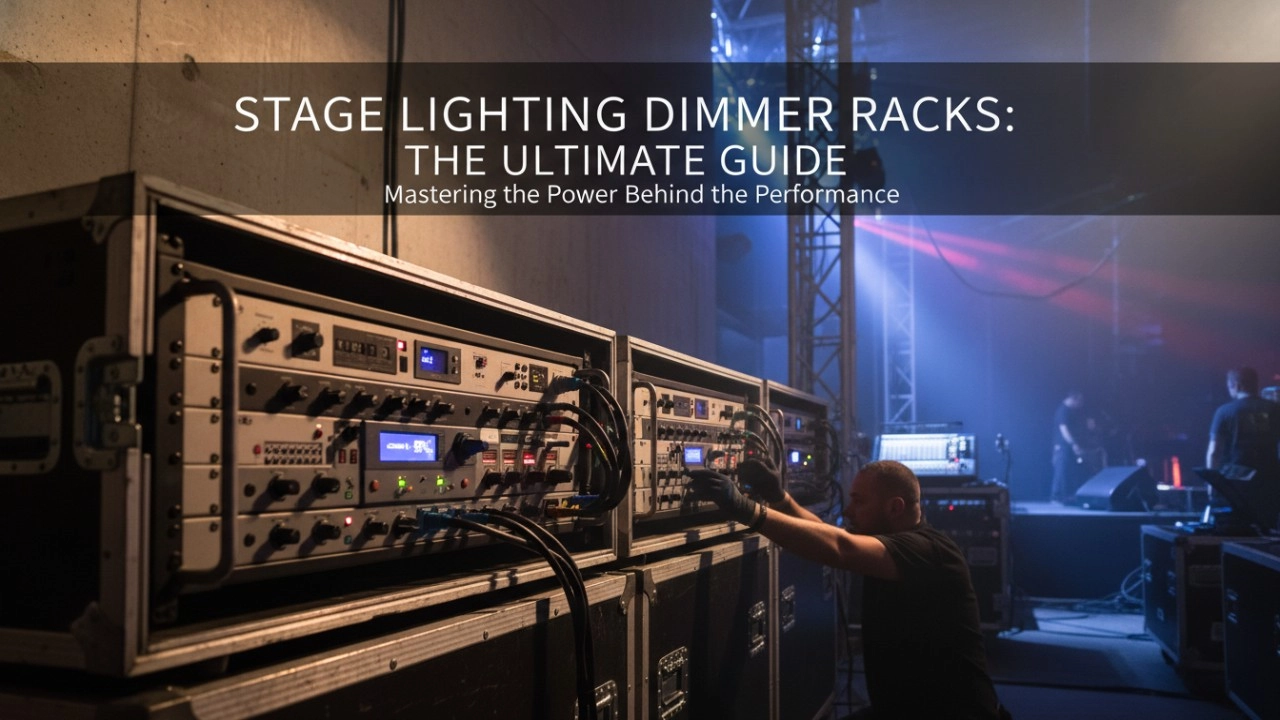
A comprehensive 2026 guide to selecting high-performance stage lighting dimmer racks. We review top hybrid systems, explore SCR vs sine wave technology, and analyze essential features like ThruPower for modern venues.
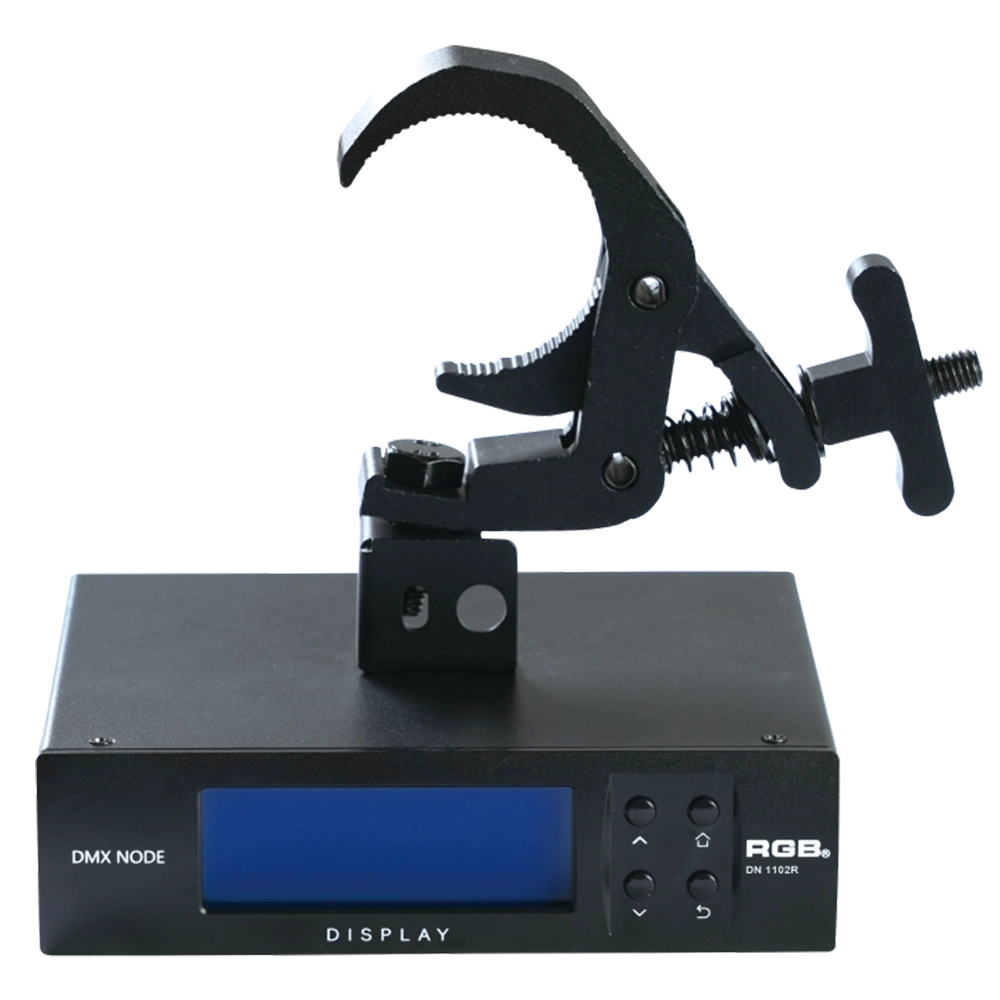
RDM Nodes
The DN series network decoder is a product of the lighting control system independently developed by RGB, featuring completely independent core technology and obtaining software copyrights. It seamlessly connects and decodes the sACN and Art-Net network protocols based on TCP/IP with the DMX-512 and RDM communication protocols. Supports a visual lighting control system, intuitively displaying the online and offline status of the DN series network decoders, and enabling remote monitoring, editing, and setting of corresponding parameters.
It is widely applied in theaters, concert halls, multi-functional halls, cultural and tourism performances, TV stations, gymnasiums, auditoriums, commercial art lighting, and other performance and cultural venues.
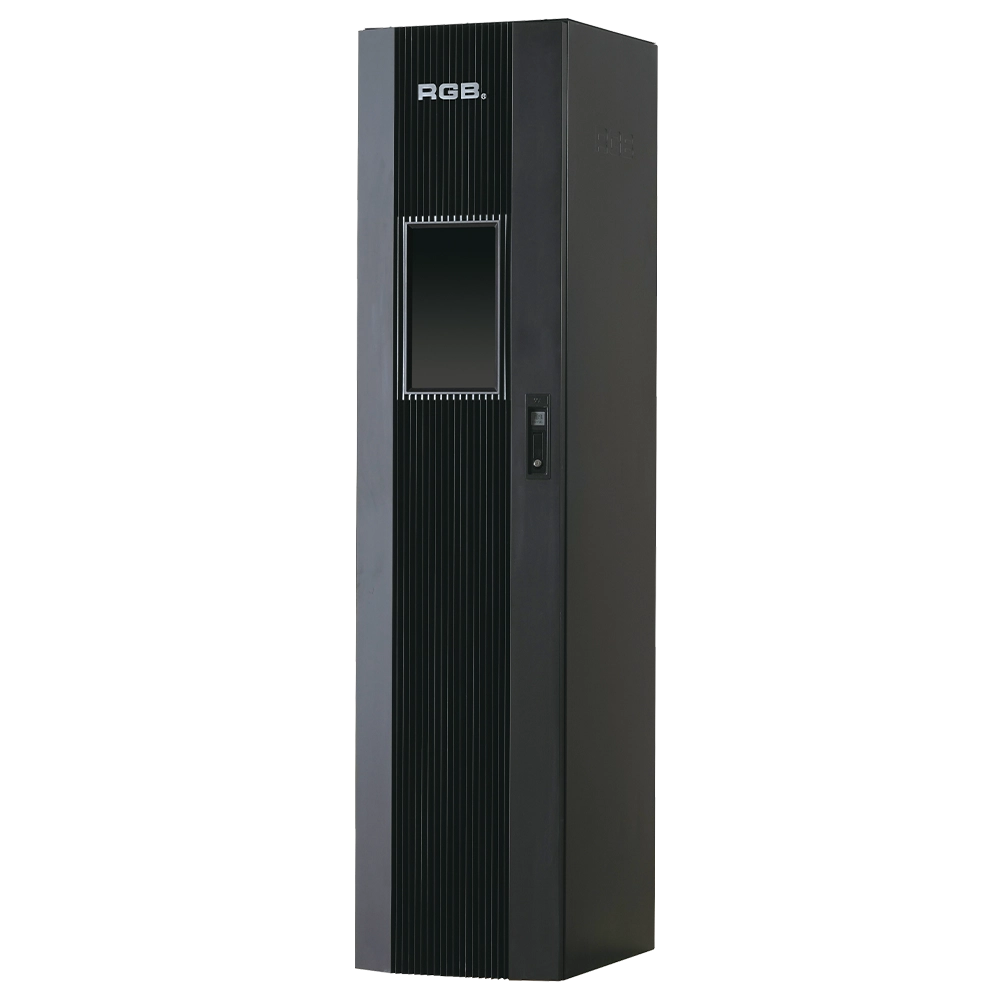
9i intelligent network Dimmer/Relay Racks
9i is an artificial intelligence dimming racks independently developed by RGB, which has completely independent core technology and obtained software Copyrights, all digital electrodeless trigger and multi-backup independent CPU central processor technology. It has a variety of output configurations such as sine wave, thyR, relay and dimming relay mix, and supports visual lighting control system and visually displays the online and offline status of dimming racks. Realize remote monitoring, editing and setting of relevant parameters.
It is suitable for the lighting control needs of different places such as high standard grand theater, TV station, gymnasium and environmental intelligent lighting.
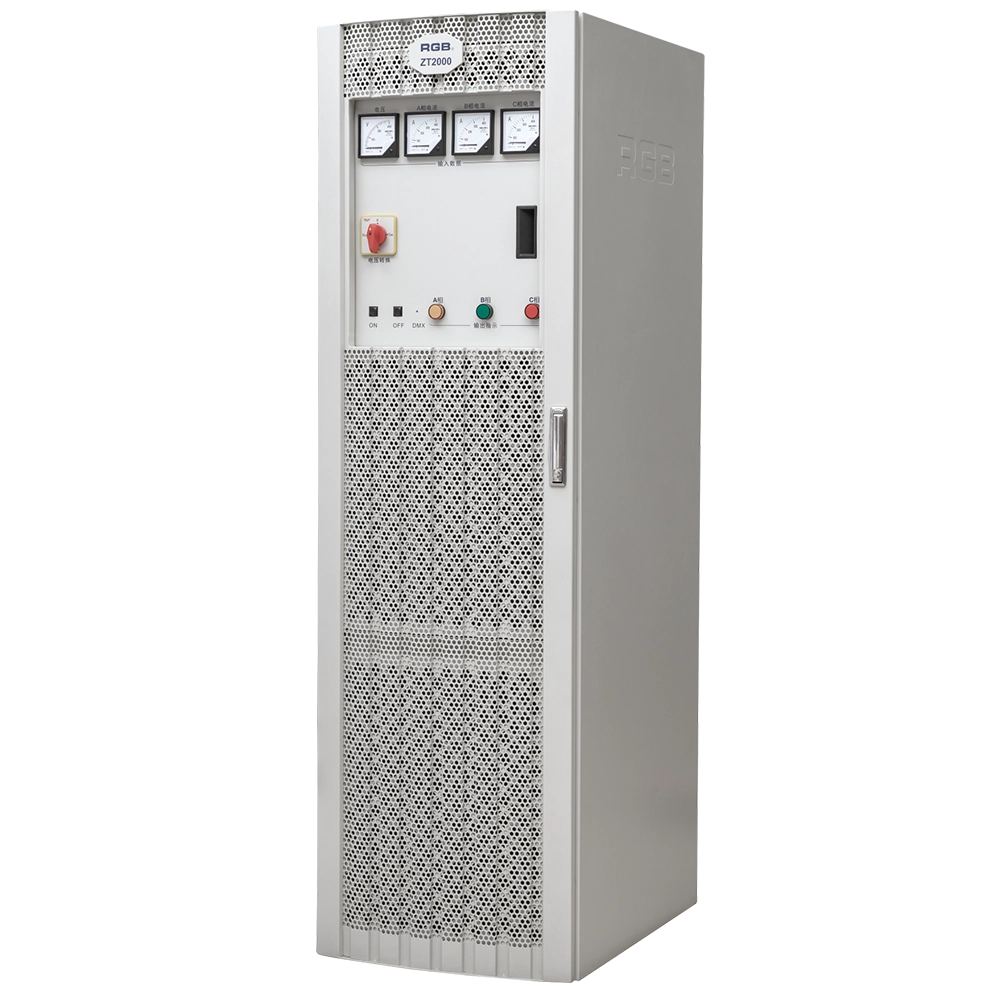
ZT2000 Pass-Through Racks
The ZT2000 straight-through power cabinet is a three-phase 630A/400A air switch main control, with each channel being a 32A air switch sub-control straight-through power cabinet. It can be used in conjunction with various computer lamps, regular lamps, and temporary electrical equipment as a power distribution and supply part for electrical equipment with overcurrent and short-circuit protection. It is a brand-new, reliable, and stable lighting control device in the field of stage lighting control.
It is widely applied in theaters, concert halls, multi-functional halls, cultural and tourism performances, TV stations, gymnasiums, auditoriums, commercial art lighting, and other performance and cultural venues.
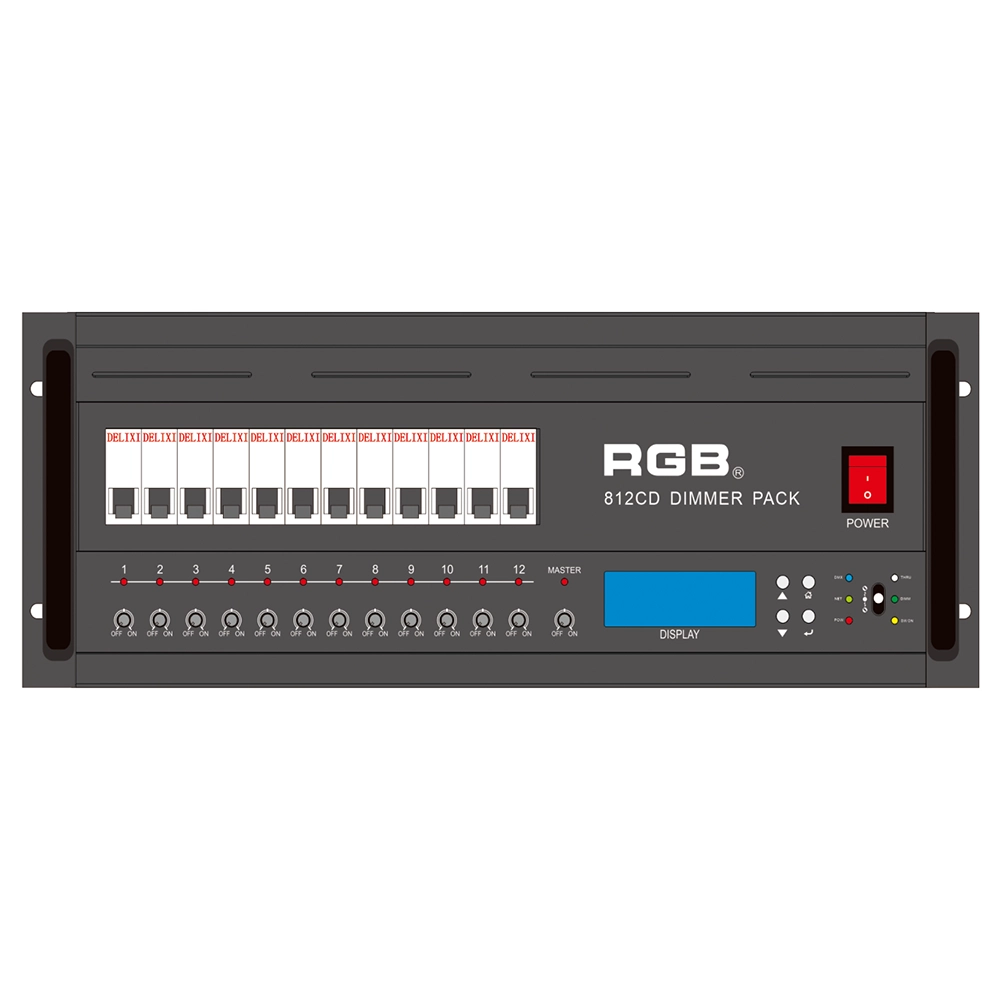
8 Series Intellight Dimmer/Relay Packs
RGB is the latest development and production of all digital, intelligent, and network dimming through the hybrid silicon box. It comes with six channels (806 silicon box), twelve channels (812 silicon box) with analog knob dimming, 49 DMX field recordings and replays (field backup function), and self-programming and recording field. RGB-8 silicon box with DMX512 digital signal input and RJ45 network input interface, with various types of dimming stations at home and abroad used. It is a powerful, stable performance and reliable work of a new generation of intelligent digital dimming through a hybrid silicon box.
Expert Support
Interested in learning more or need expert guidance related to this article? Fill in your details, and our team will provide tailored support.
Intelligent Control. Brilliant Performance.
RGB specializes in stage lighting control systems, delivering intelligent, reliable, and high-performance solutions for theaters and performance spaces worldwide.
Contact
Email:
Tel:
+86 20 3928 0245
+86 20 3928 0247
Address:
No.3, Huashan Road, Shilou Town, Panyu, Guangzhou, China.
Whatsapp: +8615975520131