
Linear Dimmer Rack Guide: Maintenance, Retrofit, and 2026 Technical Standards
|
- What is a Strand Dimmer Rack?
- The Engineering Behind the Rack
- The Evolution: SCR vs IGBT Dimming Technology
- Why the Shift Matters in 2026
- Theatrical Power Distribution Maintenance
- The "RGB" Standard for Longevity
- Retrofit vs. Replacement: The 2026 Cost Analysis
- Modernizing with LED-Compatible Dimming Modules
- Future-Proofing: DMX512 & Network Protocols
- Connecting to the Smart Grid
- FAQ: Expert Answers to Common Questions
- How do you troubleshoot a Strand CD80 rack?
- Can old Strand dimmer racks be converted to LED?
- What is the difference between SCR and IGBT dimming?
- How long do Strand dimmer racks typically last?
- What is the cost of retrofitting vs. replacing a dimmer rack?
- How do I patch a Strand rack to a modern lighting console?
- What are the safety requirements for theatre dimmer rack inspections?
- References
The dimmer rack is the silent heart of every theatrical production, yet it often receives the least attention until a critical failure occurs during a show. As the industry rapidly transitions toward full LED integration and stricter energy mandates, the management of legacy power distribution systems has never been more complex.
Drawing on over two decades of engineering experience from Guangzhou RGB Lighting Equipment Co., Ltd., this guide bridges the gap between rugged legacy hardware and the intelligent, data-driven demands of 2026.
What is a Strand Dimmer Rack?
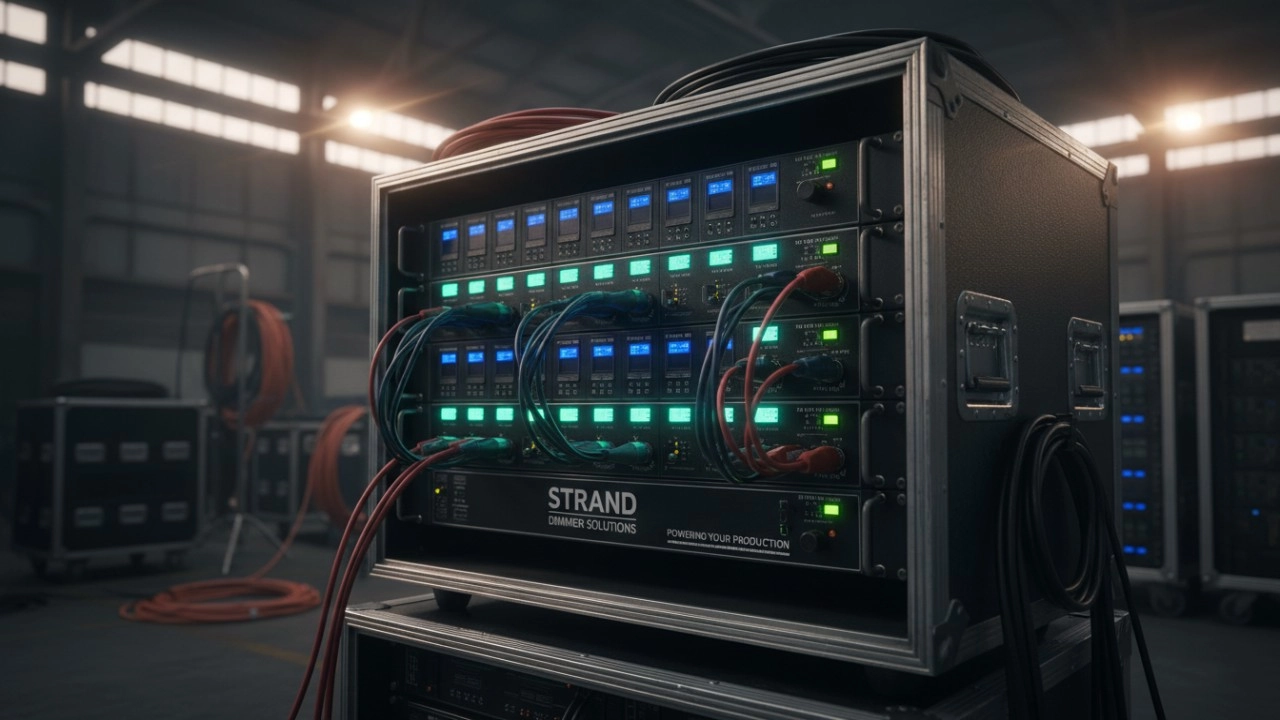
A Strand dimmer rack is a high-density power distribution unit that regulates voltage to theatrical lighting fixtures using modular control electronics. Unlike standard breaker panels, these racks provide dynamic control over light intensity, managing hundreds of kilowatts of power for stage productions.
The Engineering Behind the Rack
Historically, these systems (such as the CD80 or C21 series) were built to last decades. They function by taking a three-phase power feed and distributing it to individual modular slots. Each module contains the power switching components—either SCRs or IGBTs—that chop the AC waveform to dim the lights.
- Scalability: Systems range from 6-module wall packs to 96-module touring racks.
- Modularity: Failed circuits can be swapped in seconds without powering down the main bus.
- Control: They translate digital signals (DMX512) into analog voltage outputs.

The Evolution: SCR vs IGBT Dimming Technology
The primary difference is that SCRs chop the leading edge of the AC wave (causing coil noise), while IGBTs chop the trailing edge (silent operation). Understanding this distinction is critical when upgrading venues for modern acoustic standards.
Why the Shift Matters in 2026
For decades, SCR vs IGBT dimming technology has been a debate of cost versus performance. However, with the 2026 push for "silent stages" and LED compatibility, IGBT is becoming the standard for retrofits.
- SCR (Silicon Controlled Rectifier):
- Pros: Extremely rugged, handles massive inrush currents, cheaper.
- Cons: Requires large copper chokes to suppress noise (filament sing), creates electrical harmonics, struggles with low-wattage LEDs.
- IGBT (Insulated Gate Bipolar Transistor):
- Pros: "Reverse Phase" dimming eliminates filament noise, lighter weight (no chokes), short-circuit proof, better for LEDs.
- Cons: Higher initial cost, more sensitive to heat.
Industry Stat: Recent data suggests that replacing SCR modules with IGBT equivalents can improve acoustic ratings in concert halls by up to 15dB by eliminating "dimmer hum."
Theatrical Power Distribution Maintenance
The single most effective maintenance task is the annual replacement or cleaning of the rack's air filtration and cooling fans. Over 80% of rack failures are thermal-related, caused by dust clogging the heat sinks of power modules.
The "RGB" Standard for Longevity
At Guangzhou RGB Lighting Equipment Co., Ltd., our field engineers follow a strict protocol when servicing high-performance venues. We recommend the "12-Month Rule" for theatrical power distribution maintenance:
- Torque Checks: Copper "cold flows" over time. Annually tighten all busbar and feeder lugs to manufacturer specs to prevent arcing.
- Airflow Audit: Replace cooling fans every 5 years, even if they spin. A slow fan moves insufficient air to cool a fully loaded rack.
- Vacuum, Don't Blow: Use a non-conductive vacuum to remove dust. Compressed air often pushes conductive dust deeper into the control logic boards.
Retrofit vs. Replacement: The 2026 Cost Analysis
Retrofitting an existing dimmer rack with new processors and modules costs approximately 30-50% less than a full system replacement. This approach preserves the expensive conduit, wiring, and steel chassis while updating the "brain" of the system.
Modernizing with LED-Compatible Dimming Modules
As venues switch to LED, legacy racks often cause flickering or "ghosting" (where lights glow when off). The solution is not always a new rack; it is often LED-compatible dimming modules.
- The Ghost Load Problem: SCRs need a minimum load to latch open. LEDs draw too little power.
- The Retrofit Solution: Modern modules use "Dummy Load" circuitry or purely sinusoidal dimming to stabilize LED performance without external resistors.
Strategic Benefits of Retrofit:
- Reduced Downtime: No need to pull new wire or schedule major demolition.
- Sustainability: Keeps thousands of pounds of steel and copper out of landfills, aligning with 2026 Ecodesign and Title 24 energy standards.
- Hybrid Flexibility: You can mix "Relay Modules" (for switched power to moving lights) and Dimmer Modules in the same rack.
Future-Proofing: DMX512 & Network Protocols
While DMX512 remains the standard for local control, 2026 architectures rely on sACN and Art-Net for high-bandwidth, network-distributed lighting control. A modern Network Smart Dimmer acts as a node, accepting Ethernet directly rather than just DMX.
Connecting to the Smart Grid
Modern processors for legacy racks (like the EC21 upgrade or RGB's intelligent controllers) unlock features that old analog brains couldn't handle:
- Remote Feedback: The rack can email the facility manager if a module overheats or a phase drops.
- RDM (Remote Device Management): Change DMX addresses from the console without climbing a ladder.
- Energy Monitoring: precise tracking of power usage per circuit, essential for meeting new green building codes.
DMX512 control protocols are robust, but they lack the bandwidth for the thousands of parameters used in modern intelligent fixtures. Upgrading the rack's processor bridges this gap.
FAQ: Expert Answers to Common Questions
How do you troubleshoot a Strand CD80 rack?
- Check the Processor: Look for error codes on the control module screen.
- Verify Signal: Ensure DMX512 control protocols are terminated correctly at the end of the chain.
- Swap Strategy: Move a known-working module into the suspect slot. If the fault moves, it's the module; if it stays, it's the rack slot or control signal.
Can old Strand dimmer racks be converted to LED?
- Yes. You can install LED-compatible dimming modules that handle low loads and reverse-phase dimming.
- Alternatively, swap dimmer modules for "Relay Modules" to provide constant, switched power for intelligent LED fixtures.
What is the difference between SCR and IGBT dimming?
- SCR is the legacy standard: rugged, heavy, and electrically noisy.
- IGBT is the modern standard: silent, lightweight, and capable of extremely precise control for LEDs, though it requires better thermal management.
How long do Strand dimmer racks typically last?
- The steel chassis and busbars can last 30+ years.
- Electronics (processors and firing cards) typically need a retrofit or refresh every 15-20 years to maintain reliability.
What is the cost of retrofitting vs. replacing a dimmer rack?
- Retrofitting saves roughly 40% in capital costs by avoiding electrical demolition.
- Labor costs are significantly lower as the existing high-voltage feed wiring remains in place.
How do I patch a Strand rack to a modern lighting console?
- Determine the rack's starting DMX address.
- Patch a 1-to-1 ratio for standard dimmers.
- For a Network Smart Dimmer, ensure your console (e.g., MA3, Eos) is outputting sACN or Art-Net on the correct universe subnet.
What are the safety requirements for theatre dimmer rack inspections?
- LOTO (Lock-Out Tag-Out): Never open the busbar section without isolating the main feed.
- Visual Check: Look for heat discoloration on wires (signs of loose connections).
- Grounding: Annual earth continuity tests are mandatory to protect personnel from fault currents.
References
Latest News
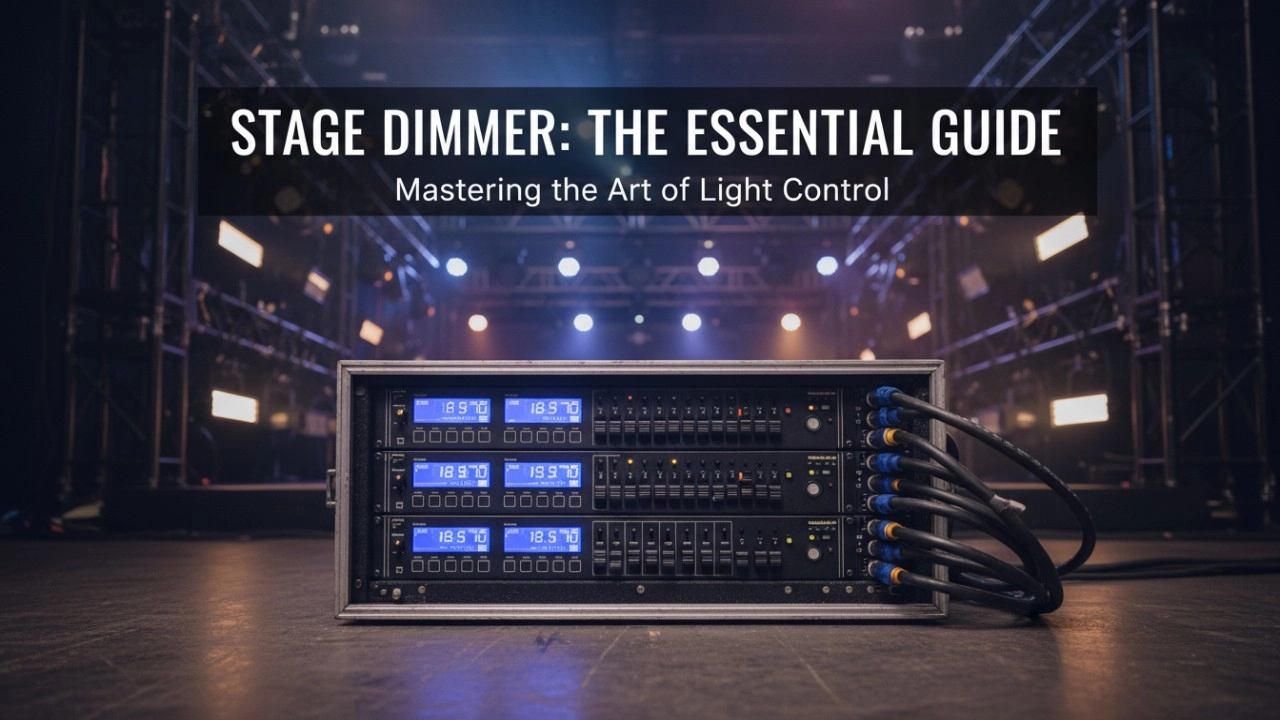
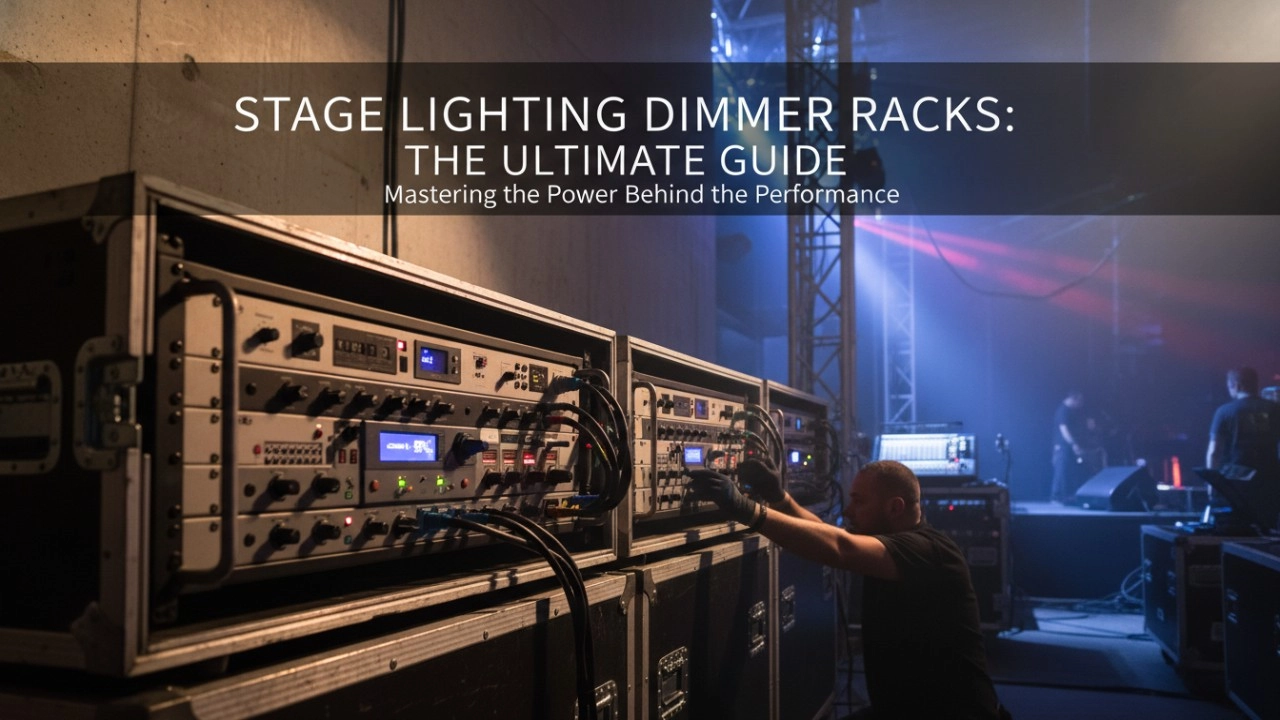
A comprehensive 2026 guide to selecting high-performance stage lighting dimmer racks. We review top hybrid systems, explore SCR vs sine wave technology, and analyze essential features like ThruPower for modern venues.
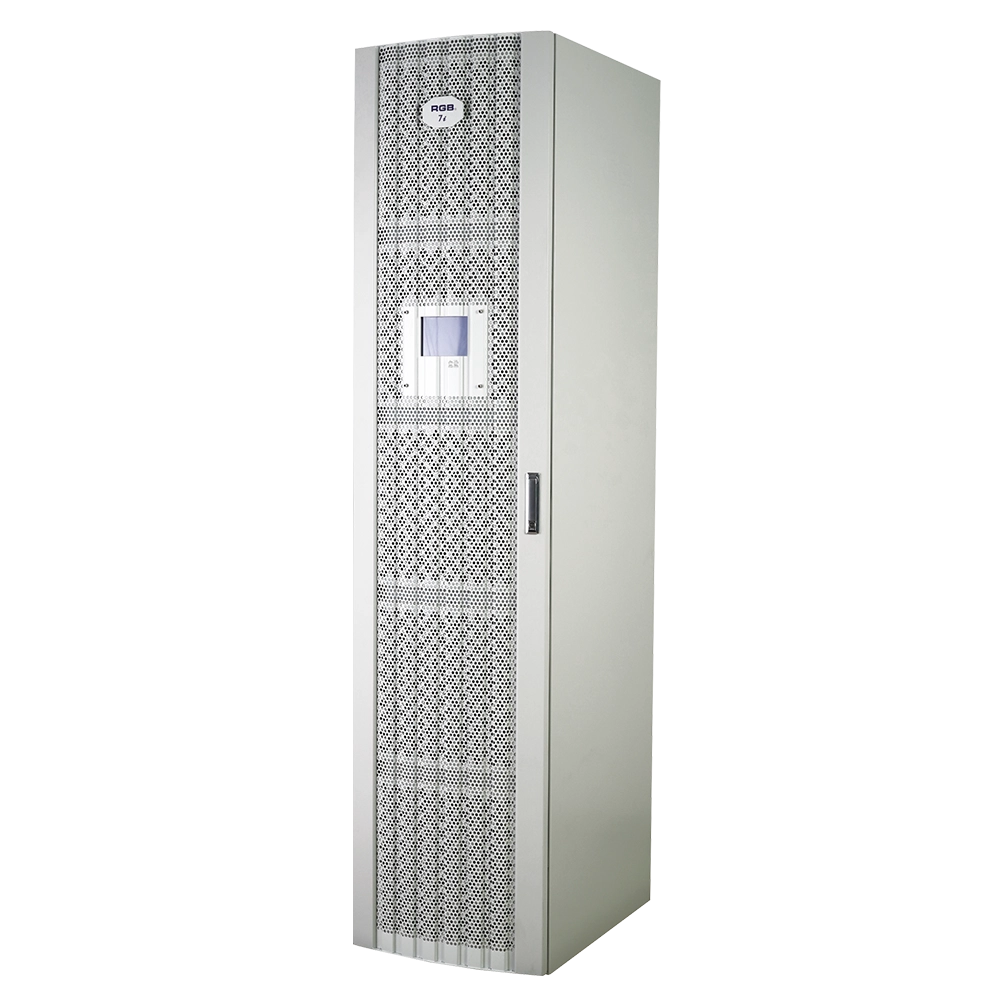
7i Dimmer/Relay Racks
7i is RGB independent research and development, with completely independent core technology, full digital decoding technology dimming racks, using a dual system, double decoding, double trigger, and duplex dual backup central decoding processor, with thyristor, relay, dimming relay mixed and other output configurations, supporting a visual lighting control system, intuitive display of dimming racks' online and offline status, and remote monitoring.
It is widely used in performing arts and cultural venues such as theaters, concert halls, multi-function halls, cultural travel and performing arts, TV stations, gymnasiums, auditoriums, commercial art lighting and so on.
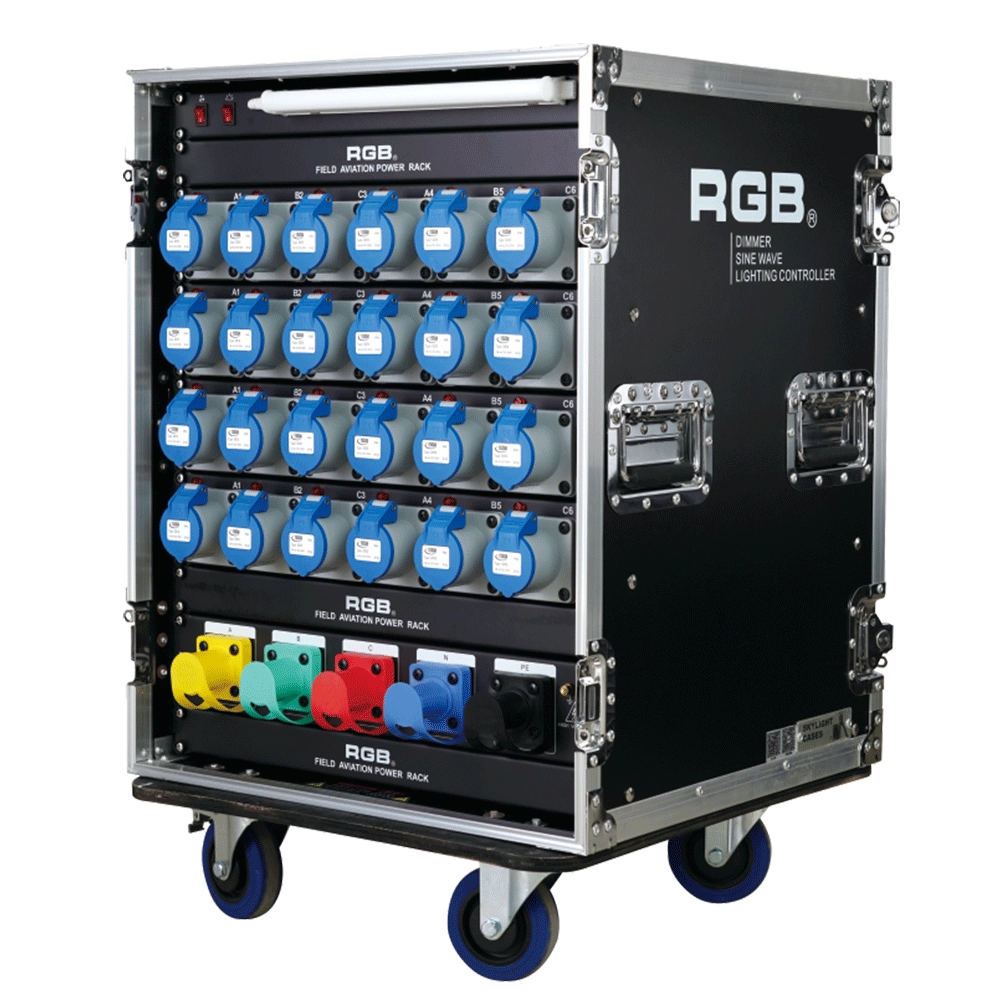
ZT Distribution Box
RGB-ZT2416 features dual protection functions and is a power distribution product specifically designed for overcurrent and short circuit of electrical equipment. It is the best choice for mobile performance and is suitable for use in computer lamps, conventional lamps, and other equipment.
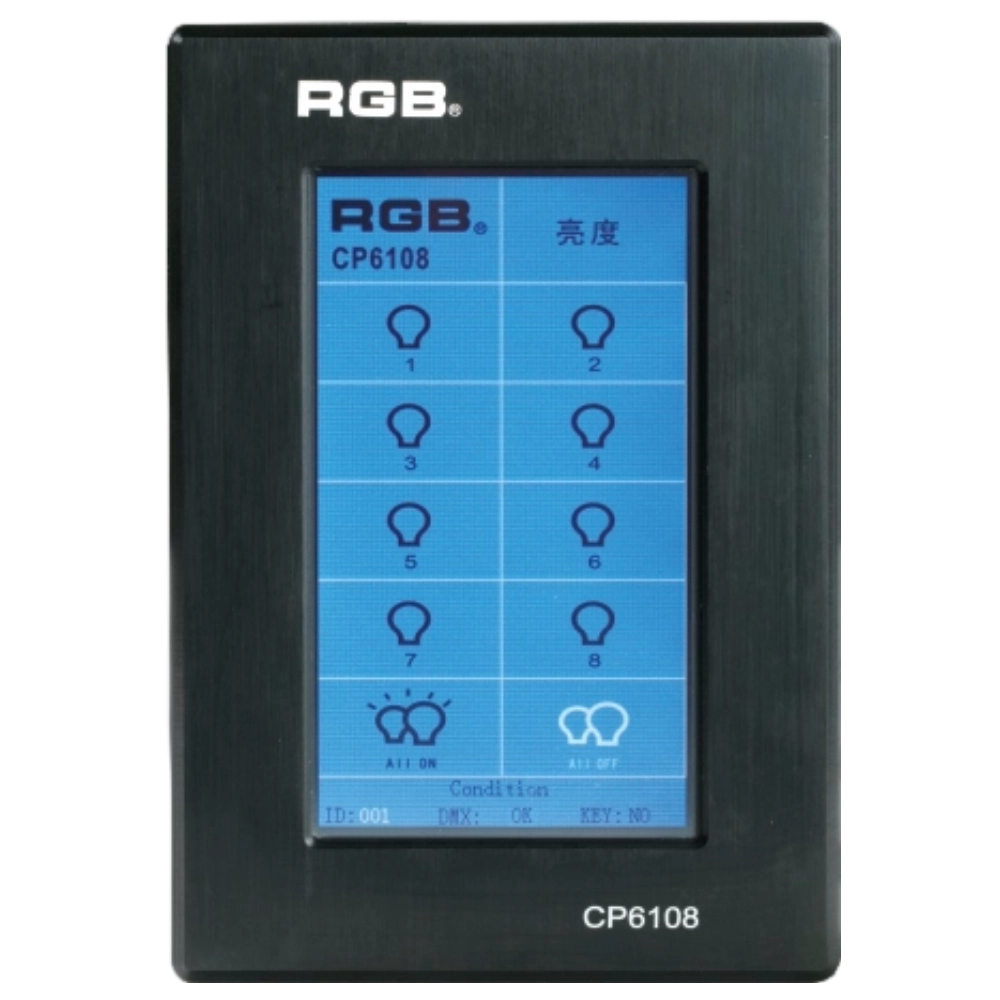
Site Light Controller CP6108
The CP6108 lighting control panel is a lighting control device for theater stage lights, work lights, environmental lighting, commercial art lighting, sports venue lighting, and other places. By connecting to the dedicated lighting control host CP6100, it realizes the central control of the lighting system, supports a visual lighting control system, and intuitively displays the online and offline status of CP6108. Realize remote monitoring, editing, and setting of corresponding parameters.
It is widely applicable to theaters, cinemas, auditoriums, stadiums, museums, exhibition halls, cultural tourism performances, commercial art lighting, and other places.
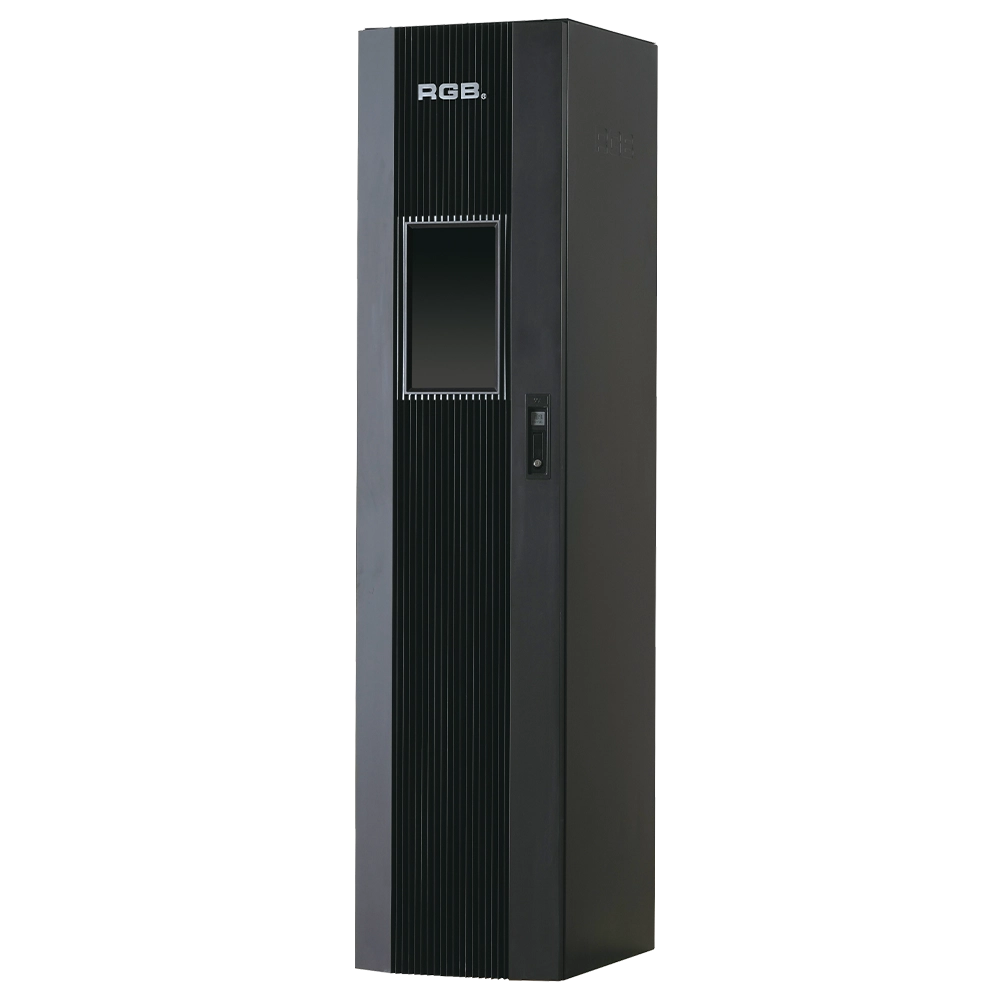
9i intelligent network Dimmer/Relay Racks
9i is an artificial intelligence dimming racks independently developed by RGB, which has completely independent core technology and obtained software Copyrights, all digital electrodeless trigger and multi-backup independent CPU central processor technology. It has a variety of output configurations such as sine wave, thyR, relay and dimming relay mix, and supports visual lighting control system and visually displays the online and offline status of dimming racks. Realize remote monitoring, editing and setting of relevant parameters.
It is suitable for the lighting control needs of different places such as high standard grand theater, TV station, gymnasium and environmental intelligent lighting.
Expert Support
Interested in learning more or need expert guidance related to this article? Fill in your details, and our team will provide tailored support.
Intelligent Control. Brilliant Performance.
RGB specializes in stage lighting control systems, delivering intelligent, reliable, and high-performance solutions for theaters and performance spaces worldwide.
Contact
Email:
Tel:
+86 20 3928 0245
+86 20 3928 0247
Address:
No.3, Huashan Road, Shilou Town, Panyu, Guangzhou, China.
Whatsapp: +8615975520131