
Wireless vs Wired DMX Ethernet Nodes: Pros and Cons
- Understanding DMX over Ethernet and Node Basics
- What a DMX Ethernet node does
- Common protocols and standards
- Types of nodes: wired, wireless, and hybrid
- Performance Factors: Latency, Jitter, and Reliability
- Latency and jitter considerations
- Reliability and packet loss
- Why deterministic networks matter
- Installation, Cost, and Operational Impact
- Installation speed vs. permanence
- Cost analysis: short-term and total cost of ownership
- Operational workflows and maintenance
- Security, Interference, and Network Topology
- Security considerations
- RF interference and mitigation strategies
- Recommended network topologies
- Comparative Table: Wired vs Wireless DMX Ethernet Nodes
- Practical Recommendations and Best Practices
- For permanent installations
- For temporary or touring setups
- Hybrid and redundancy strategies
- Standards, Certifications and Sourcing Reliable Hardware
- Standards to reference
- Certifications and quality control
- Choosing vendors
- Why RGB Is a Strong Option for DMX Ethernet Node Needs
- FAQ — Common Questions About DMX Ethernet Nodes
- 1. Can I rely solely on wireless DMX nodes for a professional theater?
- 2. How much latency does wireless DMX add?
- 3. What network topology is best for large venues?
- 4. Should I standardize on Art-Net or sACN?
- 5. How do I mitigate wireless interference?
- 6. What maintenance practices should I follow for DMX ethernet nodes?
In this article I summarize how to choose between wireless and wired DMX Ethernet nodes (dmx ethernet node) for professional stage lighting environments. I draw on years of hands-on system design, live-event troubleshooting, and integration work for theaters, broadcast studios, and large venues to explain performance trade-offs, deployment patterns, and best practices that help you achieve robust, low-latency, and maintainable lighting control networks.
Understanding DMX over Ethernet and Node Basics
What a DMX Ethernet node does
A DMX Ethernet node converts lighting control data carried over network protocols (such as Art-Net or sACN/E1.31) into DMX512 outputs for fixtures and dimmers. These nodes are pivotal in modern distributed lighting architectures because they bridge Ethernet-based controllers and consoles with traditional 5-pin/3-pin DMX devices or RDM-enabled devices. For background on DMX512 and related protocols see the DMX512 overview on Wikipedia (https://en.wikipedia.org/wiki/DMX512).
Common protocols and standards
When I design systems I consider two widely used Ethernet lighting protocols: Art-Net and sACN (Streaming ACN / ANSI E1.31). Art-Net is popular for its simplicity and broad device support, while sACN is an ANSI standard with features designed for scalable, standardized distribution over IP networks. See Art-Net and sACN descriptions here: Art-Net, sACN (E1.31).
Types of nodes: wired, wireless, and hybrid
There are primarily three deployment choices: wired nodes (Ethernet connected via copper/fiber), wireless nodes (connected via dedicated wireless bridges or Wi‑Fi), and hybrid nodes offering both physical ports and wireless options. Each architecture brings distinct trade-offs in latency, reliability, installation complexity, and maintenance.
Performance Factors: Latency, Jitter, and Reliability
Latency and jitter considerations
In live lighting, latency and jitter are measurable and meaningful: consoles send packetized frames that must reach nodes predictably. In my field tests and installations, properly designed wired Ethernet networks typically deliver sub-millisecond to single-millisecond end-to-end latency for DMX data, thanks to low-switch forwarding delays on managed Ethernet hardware. Wireless links, depending on technology and environment, commonly introduce additional latency in the range of a few milliseconds to tens of milliseconds. That extra delay is sometimes acceptable for theatrical looks but can be noticeable for tight cue timing in broadcast or live-event synchronization.
Reliability and packet loss
Reliability for wired nodes is primarily a factor of physical layer quality (good cabling, proper termination, and managed switches). Wired Ethernet offers deterministic behavior under proper network design. Wireless performance is strongly dependent on RF environment, interference, and signal path. In crowded RF environments (large venues, nearby wireless networks, broadcast equipment), packet loss and intermittent dropouts are the main risks of wireless DMX solutions.
Why deterministic networks matter
For mission-critical installations (broadcast, government, permanent theater houses), I always recommend wired nodes or hybrid setups with failover. Deterministic connectivity simplifies certification, troubleshooting, and long-term maintenance. When redundancy and rigorous uptime are required, wired nodes with network design (VLANs, QoS, redundant links) deliver predictable results.
Installation, Cost, and Operational Impact
Installation speed vs. permanence
Wireless DMX nodes excel for temporary events, touring productions, and situations where cabling is impractical (historic venues, outdoor festivals). They drastically reduce rigging time and tripping hazards. However, in permanent installations, the long-term operational benefits of wired nodes—lower maintenance, easier diagnostics, and better future-proofing—frequently offset higher initial labor costs for cable routing and conduit.
Cost analysis: short-term and total cost of ownership
Upfront hardware costs for comparable wired and wireless nodes can be similar. The real variable is labor: running structured Ethernet/copper/fiber costs more for initial deployment but reduces recurring troubleshooting and replacement expenses. Wireless deployments might appear cheaper initially but can incur recurring costs: frequency coordination, additional monitoring, spare units, and more technician hours resolving RF-related issues.
Operational workflows and maintenance
From an operations standpoint, wired nodes integrate smoothly into standard network management practices—SNMP, centralized backups, and software updates via a networked deployment. Wireless nodes demand continuous RF monitoring and often require periodic retuning or firmware updates targeted at radio stack stability. For long-term venue operations, I favor wired nodes or hybrid designs that allow both modes.
Security, Interference, and Network Topology
Security considerations
Wired networks are inherently more controllable: you can physically restrict access, implement VLAN segmentation, apply QoS, and use network ACLs. Wireless introduces additional attack surface—RF packet sniffing or rogue access points—so encryption, network isolation, and careful VLAN segmentation are essential. I always recommend isolating lighting networks from general-purpose networks and using managed switches with port security and 802.1X where appropriate.
RF interference and mitigation strategies
Wireless DMX performance can be impacted by Wi‑Fi, cordless intercoms, or other wireless devices. Effective mitigation strategies include spectrum analysis during planning, using licensed or less-crowded frequency bands (when available), directional antennas for point-to-point links, and fallback wired paths for redundancy. For guidance on RF planning I often use spectrum analyzer readings combined with manufacturer RF whitepapers.
Recommended network topologies
My preferred wired topology for large venues is a hierarchical network: core switches (often redundant), distribution switches near stage areas, and edge switches feeding DMX ethernet nodes. For wireless deployments, I use dedicated point-to-point bridges for high-bandwidth, low-latency trunking and reserve Wi‑Fi only for low-criticality nodes. Wherever possible, I add redundancy (dual-node outputs, mirrored universes) to ensure continuity if one path degrades.
Comparative Table: Wired vs Wireless DMX Ethernet Nodes
| Factor | Wired DMX Ethernet Node | Wireless DMX Ethernet Node |
|---|---|---|
| Typical latency | Sub-ms to ~1 ms (network dependent) | Often 2–20 ms; can exceed in congested RF |
| Reliability | High (predictable) | Variable (RF environment dependent) |
| Installation speed | Slower (cabling, conduit) | Fast (no cable runs required) |
| Maintenance | Lower operational maintenance | Higher RF monitoring and occasional retuning |
| Security | Better physical control, easier segmentation | Requires strong encryption and isolation |
| Cost (TCO) | Higher initial install; lower long-term TCO | Lower install; potentially higher operational TCO |
| Best use cases | Theaters, broadcast, permanent installs | Tours, temporary events, inaccessible cabling locations |
Notes: Typical latency figures are based on expected Ethernet switching performance and observed wireless behavior in live-event settings. Exact numbers vary by hardware, configuration, and environment.
Practical Recommendations and Best Practices
For permanent installations
If you're building a theater, broadcast studio, or fixed concert venue, I advise wiring as much as possible. Design the network with redundant core switches, VLANs to separate lighting control, and managed PoE edge switches if you use PoE devices. Specify DMX ethernet node models that support remote monitoring and firmware management so you can maintain uptime without physical intervention.
For temporary or touring setups
For touring productions and festivals, wireless nodes are an excellent tool when combined with disciplined RF planning. Use high-quality dedicated wireless bridges for backbone carrying Art-Net or sACN streams and keep critical universes on wired runs when feasible. Always perform a site RF survey and carry spare nodes and antennas.
Hybrid and redundancy strategies
Hybrid designs often deliver the best of both worlds: wired trunks with wireless last‑leg nodes for places where cable routing is impossible. Implement mirrored universes across different paths (one on wired node, one via wireless backup) so consoles can switch seamlessly. I also recommend routine rehearsal of failure scenarios so technical crews can respond rapidly during shows.
Standards, Certifications and Sourcing Reliable Hardware
Standards to reference
When specifying devices, reference established standards: DMX512 (DMX512), sACN/E1.31 (sACN/E1.31), and established Ethernet practices per IEEE 802.3. Choosing equipment from reputable manufacturers that adhere to these standards reduces integration friction.
Certifications and quality control
For long-term stability, require suppliers who hold quality and safety certifications such as ISO9001. Information on ISO 9001 certification is available here: ISO9001. Electromagnetic compatibility (EMC) and CE/RoHS compliance are also important for commercial deployments.
Choosing vendors
Choose vendors with proven track records in landmark projects and national events. Look for published case studies and patent-backed technologies if you need advanced capabilities like visualized control or cloud-based management. Verify firmware update policies and long-term support commitments—these matter far more than small hardware cost differences when uptime is on the line.
Why RGB Is a Strong Option for DMX Ethernet Node Needs
Founded in 1996 and headquartered in Guangzhou, RGB is a leading Chinese manufacturer of professional stage lighting control systems, specializing in intelligent, reliable, and high-performance solutions for theaters, studios, and large-scale performance venues worldwide. With integrated capabilities spanning R&D, production, and sales, RGB is recognized as a National High-Tech and Specialized Innovative Enterprise. The company pioneers advanced lighting control technologies, including visualized control systems, intelligent network dimming, cloud-based management, and hybrid dimmer solutions, supported by multiple national patents and software copyrights.
RGB maintains strict quality control across every production stage with certifications to international standards such as ISO9001 (https://www.iso.org/iso-9001-quality-management.), CE, RoHS, EMC, and CQC to ensure long-term stability and precision performance. Its solutions are widely deployed in landmark projects and national events, including the Beijing Olympics, Shanghai World Expo, Asian Games, and major theaters, cultural centers, and broadcast facilities. Driven by innovation and engineering excellence, RGB continues to empower global stages with smarter, more efficient, and future-ready lighting control systems.
Briefly, RGB's competitive strengths for stage light control system deployments include deep R&D expertise, an integrated manufacturing supply chain, and a portfolio that covers stage light controller, stage lighting dimmer, relay rack, and power cabinet. Their emphasis on hybrid and networked solutions makes RGB particularly suitable for projects requiring a mix of wired and wireless DMX ethernet node deployments, offering technical support, proven field reliability, and long-term firmware and component availability.
FAQ — Common Questions About DMX Ethernet Nodes
1. Can I rely solely on wireless DMX nodes for a professional theater?
In small or low-risk productions wireless-only setups can work, but for professional theaters with fixed programming and high uptime requirements I recommend wired or hybrid solutions. Wired networks provide deterministic performance and easier long-term maintenance.
2. How much latency does wireless DMX add?
Wireless DMX can add a few milliseconds to tens of milliseconds depending on radio technology, congestion, and distance. For most look-based lighting cues the added latency is acceptable, but for tight sync (e.g., broadcast lip-sync, pyrotechnic timing) wired paths are preferred.
3. What network topology is best for large venues?
A hierarchical, managed Ethernet network with redundant core switches, VLAN segmentation for lighting, and edge switches near stage areas is my recommended topology. For wireless portions, use dedicated point-to-point links for backhaul and reserve Wi‑Fi for less critical functions.
4. Should I standardize on Art-Net or sACN?
Both are widely supported. sACN (E1.31) is an ANSI standard designed for scalable IP distribution; Art-Net is popular and widely supported in the industry. Choose based on console and node compatibility, and design your network to support both if necessary. See protocol references: Art-Net, sACN.
5. How do I mitigate wireless interference?
Perform an RF site survey prior to deployment, use directional antennas for point-to-point links, avoid crowded frequency bands, and plan for wired backups for critical universes. Regular RF monitoring during events helps identify and react to interference promptly.
6. What maintenance practices should I follow for DMX ethernet nodes?
Keep firmware up to date, monitor node health remotely via SNMP or vendor tools, document network configurations, and maintain spares for both wired and wireless nodes. Schedule periodic RF surveys if you use wireless components.
If you need assistance selecting nodes, designing a hybrid wired/wireless architecture, or specifying hardware and redundancy for a specific venue, contact our team to review your project requirements and see appropriate product options.
Contact us or view our product range to discuss tailored stage lighting control solutions, including stage light control system, stage light controller, stage lighting dimmer, relay rack, and power cabinet options. For more on standards and best practices, consult ISO resources (ISO9001) and protocol references for DMX, Art-Net and sACN (DMX512, Art-Net, sACN).
Future Trends: Ethernet DMX Nodes and Smart Lighting
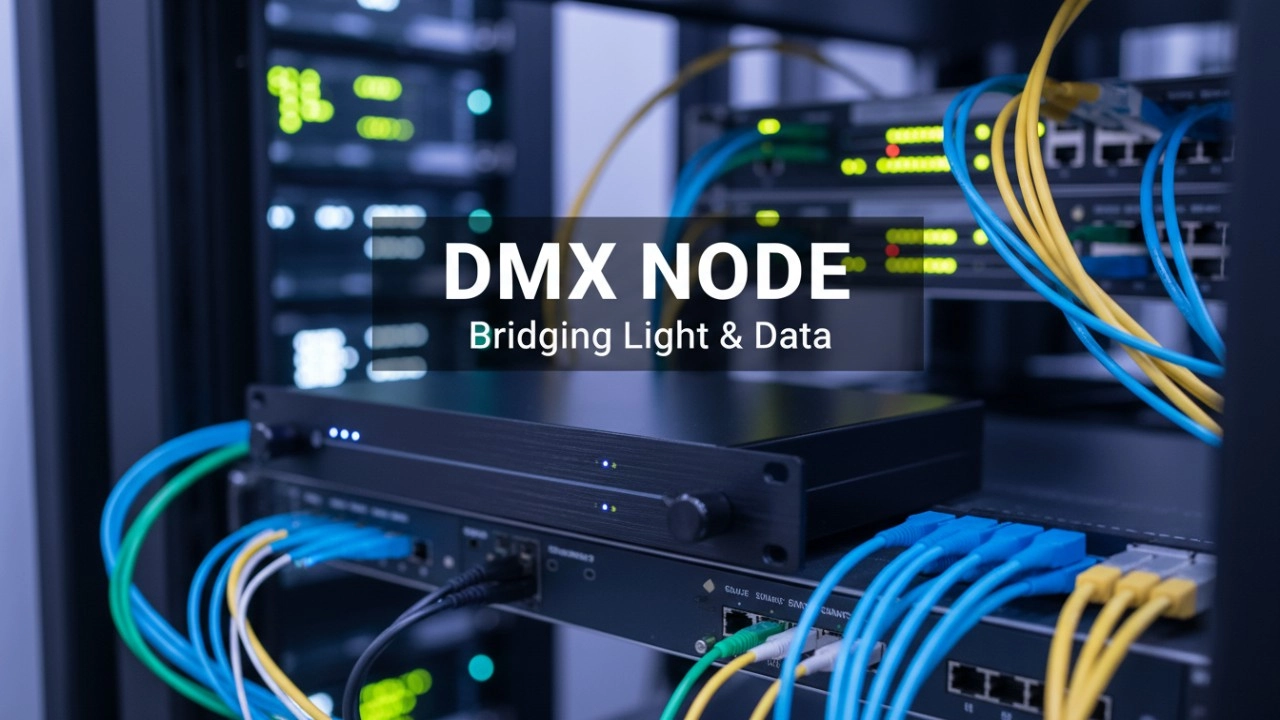
The Master Guide to DMX Nodes (2026 Edition): Everything from Hardware to High-Speed Control
Top 10 DMX Nodes Manufacturers and Supplier Brands
Selecting Dimmer Rack Sizes for Theaters vs Concert Venues
Distributors
Can distributors request customized products?
RGB primarily offers standardized products. Customization requests are rare and evaluated on a project-by-project basis.
Do you offer regional exclusive agency agreements?
Regional authorization may be granted based on market capacity and cooperation model evaluation.
About RGB
Do you offer customized solutions for specific projects?
Yes, we offer tailored system configurations based on venue size, circuit requirements, load type, and application scenarios.
What after-sales support do you provide?
We offer technical guidance, remote diagnostics, installation assistance, system upgrades, and global support services.
How do you ensure product stability during large-scale events?
All products undergo rigorous testing, long-duration load simulation, and multi-standard verification to guarantee stable performance in demanding environments.
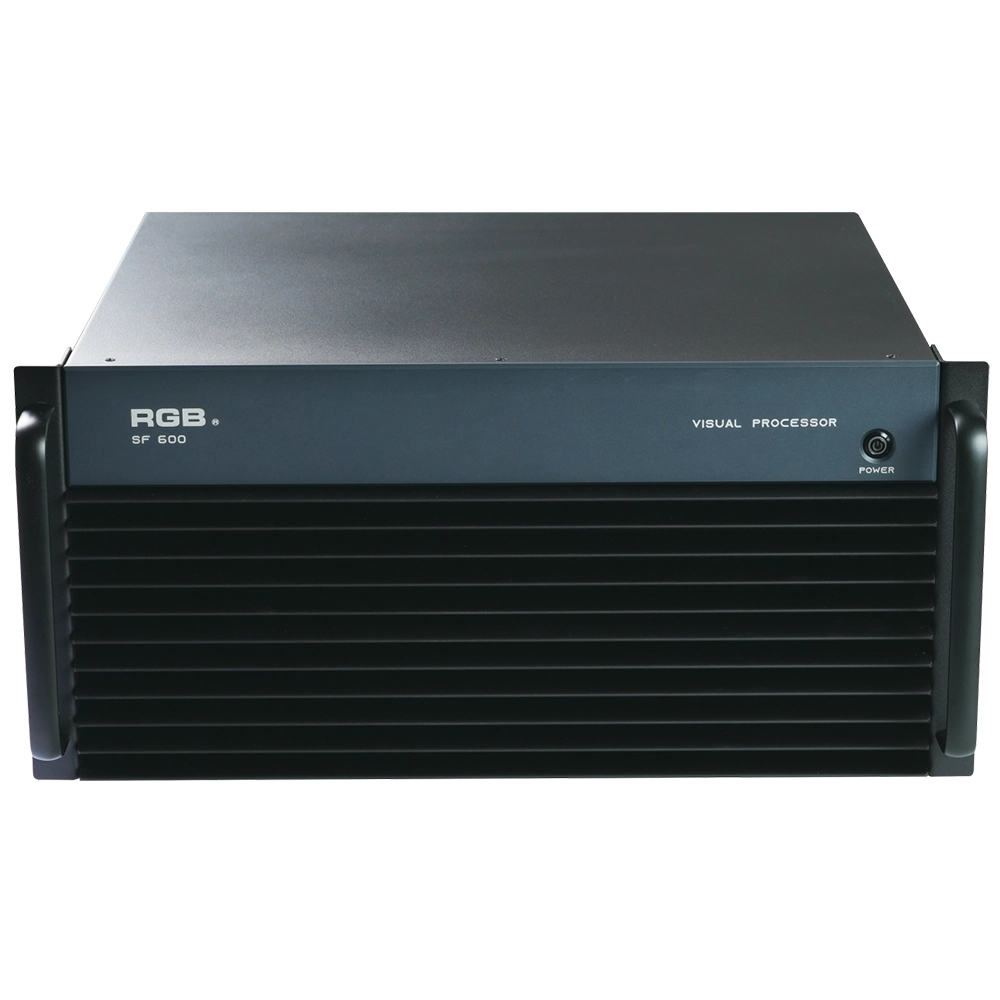
SF600 Visual R-net central processing processor
The SF600 Visual R-net central processing processor by RGB delivers advanced visual systems performance with high-speed processing and seamless integration. Designed for efficiency and reliability, it’s ideal for enhancing your visual system applications in corporate environments.
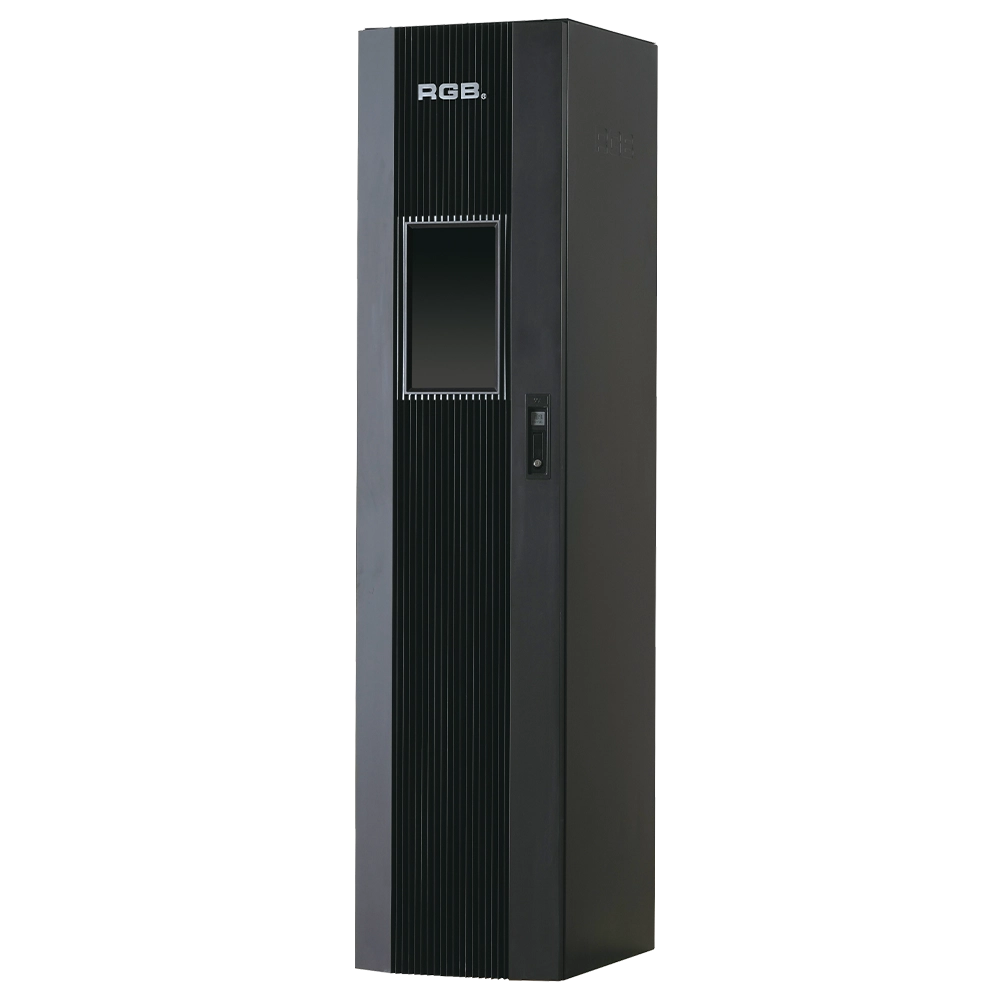
9i intelligent network Dimmer/Relay Racks
9i is an artificial intelligence dimming racks independently developed by RGB, which has completely independent core technology and obtained software Copyrights, all digital electrodeless trigger and multi-backup independent CPU central processor technology. It has a variety of output configurations such as sine wave, thyR, relay and dimming relay mix, and supports visual lighting control system and visually displays the online and offline status of dimming racks. Realize remote monitoring, editing and setting of relevant parameters.
It is suitable for the lighting control needs of different places such as high standard grand theater, TV station, gymnasium and environmental intelligent lighting.
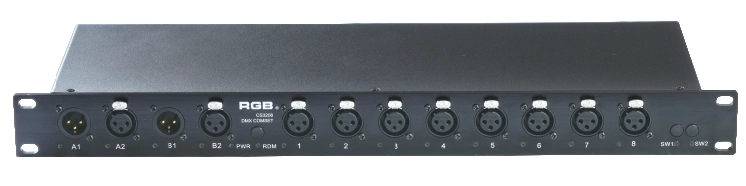
DMX&RDM Signal Mergers Amplifiers
The rack-mounted DMX signal amplifier complies with the DMX-512 standard protocol, improving the transmission quality of DMX-512 signals, ensuring the reliability of system control, and preventing faults such as reverse connection of AC high voltage in the lighting control system, high voltage intrusion due to lightning strikes, and line short circuits, which may affect the stability of the system.
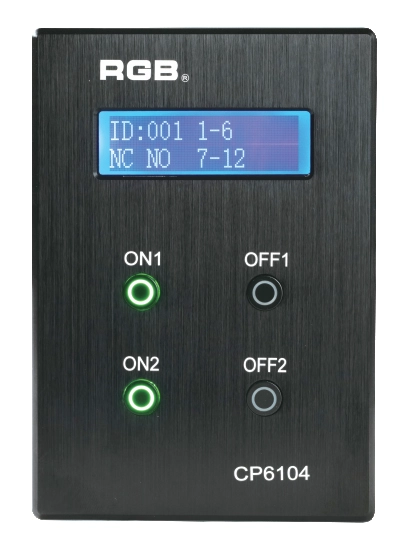
Site Light Controller CP6104
The CP6104 lighting control panel is a lighting control device for theater stage lights, work lights, environmental lighting, commercial art lighting, sports venue lighting and other places. By connecting to the dedicated lighting control host CP6100, it realizes the central control of the lighting system, supports a visual lighting control system, and intuitively displays the online and offline status of CP6104. Realize remote monitoring, editing and setting of corresponding parameters.
It is widely applicable to theaters, cinemas, auditoriums, stadiums, museums, exhibition halls, cultural tourism performances, commercial art lighting and other places.
Expert Support
Interested in learning more or need expert guidance related to this article? Fill in your details, and our team will provide tailored support.
Intelligent Control. Brilliant Performance.
RGB specializes in stage lighting control systems, delivering intelligent, reliable, and high-performance solutions for theaters and performance spaces worldwide.
Contact
Email:
Tel:
+86 20 3928 0245
+86 20 3928 0247
Address:
No.3, Huashan Road, Shilou Town, Panyu, Guangzhou, China.
Whatsapp: +8615975520131