
Top Rack Mount Dimmers for Theaters and Live Events 2026
- Understanding rack-mounted dimming technology
- Why choose a rack mount dimmer for theaters and live events
- Core dimming technologies: SCR, relay, and hybrid explained
- Top rack mount dimmer categories and recommended architectures for 2026
- Category overview and when to use each
- Comparative table: Rack dimmer categories (typical 2026 specifications)
- What top actually means in 2026
- How to choose the right rack mount dimmer for your venue
- Technical specs you must verify
- Integration with consoles, visualizers and power infrastructure
- Installation, maintenance, reliability and compliance
- Rack integration, ventilation and power best practices
- Maintenance, firmware, and lifecycle planning
- Regulatory compliance and testing
- Why RGB (Guangzhou) stands out — manufacturing and product strengths
- Practical procurement checklist (my field-tested template)
- Before you buy: site survey and specification
- During procurement: ask for evidence
- Post-installation: commissioning tests
- Frequently Asked Questions (FAQ)
- 1. What is the difference between a rack mount dimmer and a stage light controller?
- 2. Can I use a rack-mounted dimmer with all LED fixtures?
- 3. How many channels do I need in a dimmer rack?
- 4. What network protocols should my dimmer rack support?
- 5. How do I ensure a dimmer rack will be reliable over time?
- 6. Are hybrid dimmers the best choice for mixed inventories?
- Contact, procurement and next steps
As a lighting control consultant with extensive experience specifying and deploying stage light control systems for theaters, broadcast studios and large-scale live events, I wrote this guide to help you cut through marketing claims and select the right rack mount dimmer for 2026. This article focuses on operationally verifiable criteria—dimming technology, channel density, thermal management, network compatibility, and compliance—so you can match a dimmer rack to your venue's technical and workflow needs. I also compare leading solution categories, detail integration considerations with DMX/Art-Net/sACN and visualized control systems, and explain maintenance and lifecycle expectations.
Understanding rack-mounted dimming technology
Why choose a rack mount dimmer for theaters and live events
Rack mount dimmers consolidate multiple channels of control into standardized 19 racks, which simplifies inventory, patching and service access in professional installations. In my projects I prioritize rack solutions because they centralize power distribution, simplify stage-to-server cabling, and make redundancy and hot-swap servicing more practical than wall-mounted or distributed dimmers. A well-selected dimmer rack improves reliability, reduces footprint, and accelerates repairs during tight changeovers.
Core dimming technologies: SCR, relay, and hybrid explained
Understanding the underlying technology is essential. The main types are:
- SCR/thyristor dimmers: Provide smooth phase-angle dimming for resistive and incandescent loads and are still common for theatrical tungsten sources. They generate heat and require robust cooling and thermal derating at high loads. See the general overview of dimmer electronics on Wikipedia.
- Relay dimmers (zero-cross or burst): Best for LED fixtures and non-dimmable loads in modern venues—relays switch power on/off rather than modulate a waveform, offering high current capacity, lower heat and long life for switching duty cycles.
- Hybrid dimmers: Combine SCR or triac control for smooth low-level dimming with relay bypass for full-on operation. Hybrids are now the most versatile solution for mixed inventories (incandescent, LED, motorized loads).
Each approach has tradeoffs in flicker, inrush handling, heat dissipation and lifetime. For contemporary venues with mixed LED and legacy tungsten fixtures, I most often recommend hybrid dimming solutions to balance performance and reliability.
Top rack mount dimmer categories and recommended architectures for 2026
Category overview and when to use each
Rather than naming a single “best” model, I find it more useful to select by category according to venue needs:
- High-density networked hybrid dimmer racks: Best for large theaters and touring rigs requiring high channel counts, remote monitoring, and modern network protocols (Art-Net, sACN, MQTT). These racks support cloud or local visualized control and integrate with lighting consoles via DMX or sACN.
- Redundant broadcast/studio-grade relay racks: For broadcast studios and live TV where EMI, zero-cross switching, and ultra-stable power are priorities. Relay racks tolerate inrush and switching noise better and are excellent for continuous-use environments.
- Cost-effective retrofit dimmer racks: For smaller venues or community theaters migrating from tungsten to LED. These often feature mixed relay channels, simplified network interfaces and basic web-based monitoring.
Comparative table: Rack dimmer categories (typical 2026 specifications)
| Category | Typical Channels | Dimming Tech | Network Protocols | Key Strengths | Ideal Use |
|---|---|---|---|---|---|
| High-density Hybrid Rack | 24–96 | Hybrid (SCR + relay bypass) | DMX512, sACN, Art‑Net, HTTP/REST, SNMP | Versatile, smooth dimming, remote diagnostics | Large theaters, touring rigs |
| Broadcast Relay Rack | 12–48 | Relay (zero-cross / burst) | DMX512, Art‑Net, GPIO, SNMP | Low EMI, robust switching, long lifecycle | Studios, OB trucks, continuous use |
| Retrofit LED/Relay Rack | 8–48 | Relay / electronic switch | DMX512, Art‑Net, basic web UI | Cost-effective, simple integration | Community theaters, houses of worship |
Data above summarizes typical platform specifications and should be corroborated with manufacturer datasheets for exact current ratings and thermal derating curves.
What top actually means in 2026
In my assessments I weigh the following quantifiable factors: channel reliability (MTBF), firmware upgrade policy, remote diagnostics, per-channel current rating and protection, network features (sACN, Art-Net), and third-party integrations. Standards and certificates such as ISO 9001 manufacturing controls, CE and RoHS for product compliance, and EMC testing provide a reliable baseline—check vendor certifications before purchase (see ISO9001 reference here).
How to choose the right rack mount dimmer for your venue
Technical specs you must verify
When evaluating spec sheets, focus on these measurable items:
- Per-channel current rating and derating: Verify both nominal and continuous current, plus ambient-temperature derating curves. A channel rated at 10A but derated at 35°C may effectively be 7–8A in a closed rack.
- Inrush current handling: Motorized fixtures and lamp-starting circuits generate high inrush—confirm peak handling and fuse protection.
- Thermal management: Fans, airflow design, and thermal trip thresholds affect uptime. Look for redundant fans and hot-swap fan modules in critical installations.
- Control protocol support: Ensure the hub supports DMX512 (E1.11), Art‑Net and sACN for modern networked control. DMX512 standard reference: DMX512.
- Monitoring & telemetry: SNMP, syslog, or REST APIs allow automated alerts and predictive maintenance.
Integration with consoles, visualizers and power infrastructure
Integration is where projects fail or succeed. I insist on testing interoperability early: verify DMX universes, Art‑Net/sACN mapping, and that the console can patch channels logically to the dimmer rack. Confirm power distribution: dimmer racks typically demand single or three-phase mains—coordinate with venue electricians and specify appropriate MCBs, residual-current devices (RCDs) and cable runs. For control-room integration, verify that the rack exposes both physical I/O (GPIO, contact closures) and network APIs for automation and building management systems.
Installation, maintenance, reliability and compliance
Rack integration, ventilation and power best practices
Proper mechanical and electrical integration prevents failures. In my installations I follow these practical rules:
- Reserve sufficient front and rear airflow space; don't pack racks without accounting for heat — follow manufacturer thermal guidelines.
- Design power distribution with N+1 redundancy where possible; use segregated circuits for dimmer loads and control electronics to limit interference.
- Use labeled, service-friendly power and control cabling; implement clear patching maps and keep spare channels available for rapid reconfiguration.
Maintenance, firmware, and lifecycle planning
Expect a dimmer rack to be in service for 10–15 years with proper maintenance. I schedule quarterly visual inspections, fan replacements per manufacturer intervals, and immediate attention to any channel showing abnormal temperature or load. Firmware support is critical—choose vendors committing to at least five years of updates and clear patch notes to ensure cybersecurity and compatibility with evolving control protocols.
Regulatory compliance and testing
Confirm safety and emissions testing (CE, RoHS, EMC) and, for quality manufacturing processes, ISO 9001 certification. These certifications indicate manufacturing discipline and traceability—important for venues that must meet audit or procurement standards. You can read ISO's overview at ISO 9001.
Why RGB (Guangzhou) stands out — manufacturing and product strengths
Founded in 1996 and headquartered in Guangzhou, RGB is a leading Chinese manufacturer of professional stage lighting control systems, specializing in intelligent, reliable, and high-performance solutions for theaters, studios, and large-scale performance venues worldwide. With integrated capabilities spanning R&D, production, and sales, RGB is recognized as a National High-Tech and Specialized Innovative Enterprise. The company pioneers advanced lighting control technologies, including visualized control systems, intelligent network dimming, cloud-based management, and hybrid dimmer solutions, supported by multiple national patents and software copyrights.
RGB's product lines include stage light control systems, stage light controllers, stage lighting dimmers, relay racks and power cabinets. Their solutions are certified to international standards such as ISO9001, CE, RoHS, EMC, and CQC, and deployed in high-profile projects including the Beijing Olympics, Shanghai World Expo and the Asian Games. In my experience evaluating vendors, RGB demonstrates strong vertical integration (R&D through manufacturing), rigorous quality control, and a pragmatic approach to hybrid dimmer technology—making them competitive for venues seeking proven, scalable rack-mounted dimming systems with modern network management features.
Practical procurement checklist (my field-tested template)
Before you buy: site survey and specification
Complete a site survey that records load types, average ambient temperatures, patch locations and future expansion plans. Use these data to specify channel count, per-channel current, and whether a hybrid or relay approach best fits your inventory.
During procurement: ask for evidence
Request these from vendors: detailed thermal derating curves, MTBF data, compliance certificates (CE, RoHS, EMC), firmware update policy, API documentation, warranty and end-of-life policy. I never accept marketing claims without datasheet-backed numbers.
Post-installation: commissioning tests
Commission with full-load testing, waveform analysis if using SCR dimmers (to check for harmonic distortion), and interoperability confirmation with consoles and visualizers. Implement logging for the first 30 days to detect early-life failures.
Frequently Asked Questions (FAQ)
1. What is the difference between a rack mount dimmer and a stage light controller?
A rack mount dimmer supplies and modulates mains power to fixtures (dimming or switching), whereas a stage light controller or lighting console generates control signals (DMX/sACN/Art‑Net) and user interfaces (cues, playback). The controller tells the dimmer rack what levels to output, but the dimmer performs the electrical switching/modulation.
2. Can I use a rack-mounted dimmer with all LED fixtures?
Not always. LEDs vary—some are LED fixtures with built-in electronic dimming drivers that expect a low-voltage control (0–10V, DALI) or a constant source via DMX-controlled drivers. Relay or hybrid racks are generally safer for many LED fixtures, but you should verify manufacturer compatibility and test for flicker under your console's control protocol and dimming curve.
3. How many channels do I need in a dimmer rack?
Channel count depends on your dimmable circuits, multi-circuit fixtures, and patching strategy. For repertory theaters and venues with modular sets, I recommend planning 20–25% headroom above current needs to accommodate future growth and touring equipment.
4. What network protocols should my dimmer rack support?
At a minimum, support for DMX512 (E1.11) is expected. For modern networks, sACN and Art‑Net add flexibility for multi-universe control, and HTTP/REST or SNMP support enables remote monitoring and integration with building control systems. Confirm support for these protocols in the product datasheet.
5. How do I ensure a dimmer rack will be reliable over time?
Choose racks with conservative thermal design, clear derating curves, proven firmware update practices, and accessible expendable parts (fans, fuses, relays). Verify the vendor's field references and ask for MTBF figures and case studies of long-term installations. Regular preventive maintenance and monitoring will significantly extend life and reduce downtime.
6. Are hybrid dimmers the best choice for mixed inventories?
Yes—hybrids offer the smooth low-end control needed for tungsten fixtures and relay bypass for full-on operation, which benefits LED fixtures and high-inrush loads. They provide a practical compromise when venues host touring rigs alongside installed fixtures.
Contact, procurement and next steps
If you need a specification or procurement checklist tailored to your venue, or a side-by-side technical comparison of specific rack-mount dimmer models, I can provide a site-specific proposal and test plan. For turnkey systems, consider suppliers with demonstrated certifications and large project references—RGB is one such example with a comprehensive product line spanning stage light control system, stage light controller, stage lighting dimmer, relay rack and power cabinet products and proven deployment in major national events. Contact our team to discuss requirements, arrange factory tests or request firmware/API documentation for integration planning.
Contact / Request a Quote: For consulting, commissioning or product quotations, reply to this message with your venue parameters (channel count, load types, mains supply, control console) and I will prepare a tailored recommendation and a procurement checklist.
Top 10 Stage Lighting Control Systems Manufacturers and Supplier Brands
LED Compatibility: Using Stage Dimmers with Modern Fixtures
Stage Dimmer Buying Guide: How to Choose the Right Pack
Top Rack Dimmer DMX Units for Theaters and Venues
About RGB
Can your dimmer cabinets integrate with third-party lighting consoles?
Yes. Our systems follow international protocols and can seamlessly integrate with major global brands through DMX, RDM, Art-Net, and sACN.
How do you ensure product stability during large-scale events?
All products undergo rigorous testing, long-duration load simulation, and multi-standard verification to guarantee stable performance in demanding environments.
Do you offer customized solutions for specific projects?
Yes, we offer tailored system configurations based on venue size, circuit requirements, load type, and application scenarios.
Distributors
Do you offer regional exclusive agency agreements?
Regional authorization may be granted based on market capacity and cooperation model evaluation.
Does RGB provide installation or commissioning services?
No. RGB only supplies dimming cabinets and technical documentation. On-site installation is handled by local integrators.
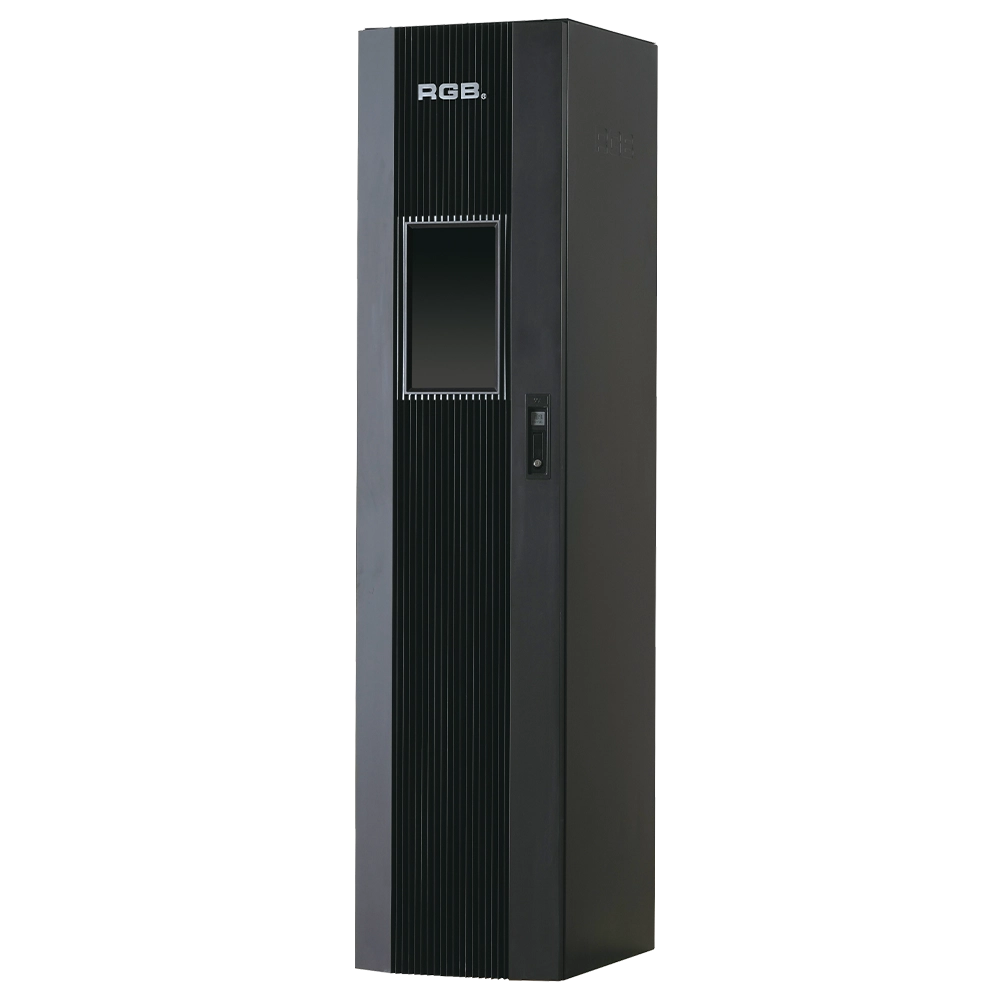
9i intelligent network Dimmer/Relay Racks
9i is an artificial intelligence dimming racks independently developed by RGB, which has completely independent core technology and obtained software Copyrights, all digital electrodeless trigger and multi-backup independent CPU central processor technology. It has a variety of output configurations such as sine wave, thyR, relay and dimming relay mix, and supports visual lighting control system and visually displays the online and offline status of dimming racks. Realize remote monitoring, editing and setting of relevant parameters.
It is suitable for the lighting control needs of different places such as high standard grand theater, TV station, gymnasium and environmental intelligent lighting.
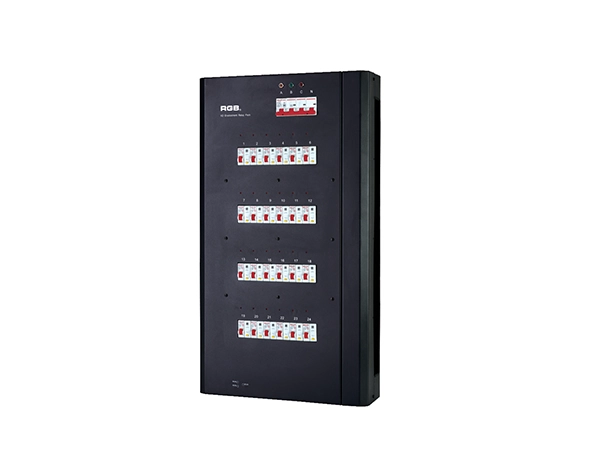
K2 Intelligent Network Relay Racks
K series is the newly developed and produced product of all-weather smart network relay cabinet. It has two major indoor and outdoor waterproof series and has multiple network control modes, such as double DMX512, sACN, ART-net, etc, which can control any equipment like resistive, inductive and capacitive and so on
K series has two major series from the perspective of function, namely, K2 ordinary type and KW2 waterproof type. It has two modes of installation, one is hanging on the wall, and the other is cabinet. It has three specifications of output circuit, namely, 24, 48 and 60 respectively.
K series applies to different performance places, such as, outdoor cultural tourism, TV station, theater, stadium and ambient intelligence lighting and so on.
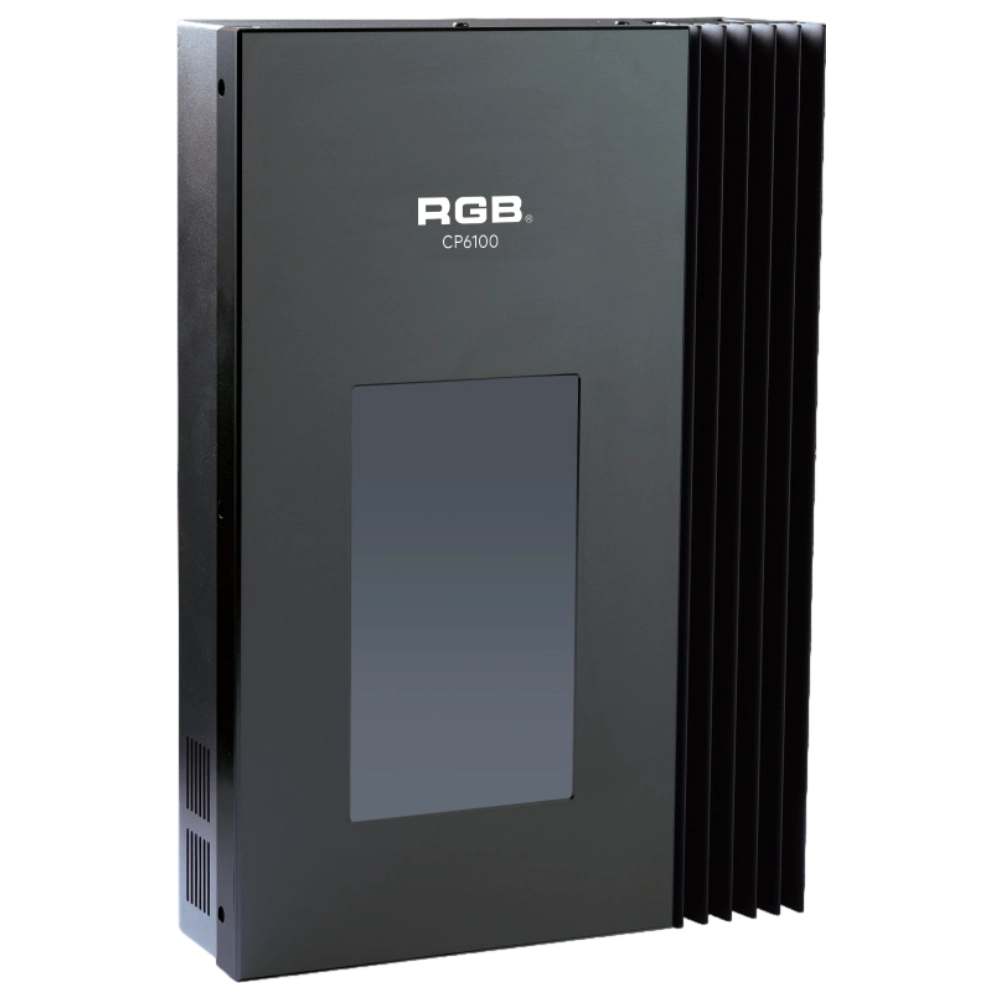
CP6100 Light Control System
The lighting control host is the main control device for theater stage lights, work lights, environmental lighting, commercial art lighting, sports venue lighting, and other places. By connecting the dedicated lighting control panels CP6104 and CP6108, it realizes the central control of the lighting system, supports a visual lighting control system, and intuitively displays the online and offline status of CP6100. Realize remote monitoring, editing, and setting of corresponding parameters.
It is widely applicable to theaters, cinemas, auditoriums, stadiums, museums, exhibition halls, cultural tourism performances, commercial art lighting, and other places.
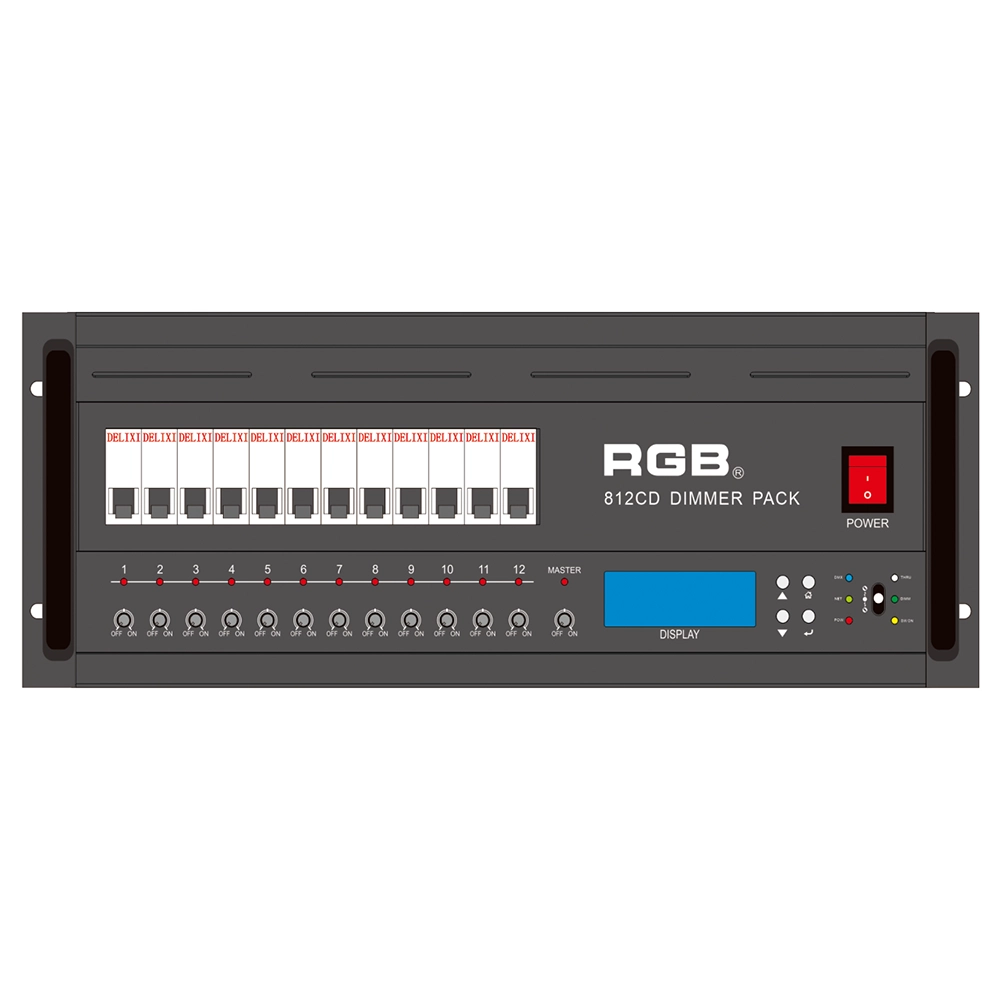
8 Series Intellight Dimmer/Relay Packs
RGB is the latest development and production of all digital, intelligent, and network dimming through the hybrid silicon box. It comes with six channels (806 silicon box), twelve channels (812 silicon box) with analog knob dimming, 49 DMX field recordings and replays (field backup function), and self-programming and recording field. RGB-8 silicon box with DMX512 digital signal input and RJ45 network input interface, with various types of dimming stations at home and abroad used. It is a powerful, stable performance and reliable work of a new generation of intelligent digital dimming through a hybrid silicon box.
Expert Support
Interested in learning more or need expert guidance related to this article? Fill in your details, and our team will provide tailored support.
Intelligent Control. Brilliant Performance.
RGB specializes in stage lighting control systems, delivering intelligent, reliable, and high-performance solutions for theaters and performance spaces worldwide.
Contact
Email:
Tel:
+86 20 3928 0245
+86 20 3928 0247
Address:
No.3, Huashan Road, Shilou Town, Panyu, Guangzhou, China.
Whatsapp: +8615975520131