
Top Rack Dimmer DMX Units for Theaters and Venues
- Understanding dimmer technology and control protocols
- What a rack dimmer DMX system does
- DMX512 vs networked lighting protocols (Art-Net, sACN)
- Key electrical and safety standards to check
- Choosing the right dimmer type for your venue
- SCR/Thyristor dimmers
- Relay and switched dimmers (non-continuous)
- Hybrid dimmers and LED-optimized racks
- Specification checklist — what to require in a rack dimmer DMX unit
- Technical specifications and performance criteria
- Maintainability, monitoring and safety
- Installation and thermal management
- Comparison table: rack dimmer DMX solution types
- Operational best practices and troubleshooting
- Addressing DMX and avoiding data errors
- Load testing and commissioning
- Common failure modes and quick remedies
- Why vendor selection matters — reliability, support and certifications
- Key vendor capabilities to evaluate
- Case for integrated system suppliers
- About RGB — a specialized manufacturer
- Procurement checklist and deployment timeline
- Simple procurement checklist
- Typical deployment timeline
- Frequently Asked Questions (FAQ)
- 1. What is the difference between a rack dimmer and a DMX dimmer?
- 2. Can I use a traditional SCR dimmer rack with modern LED fixtures?
- 3. How important is RDM (Remote Device Management)?
- 4. Should I convert DMX to Art‑Net/sACN in the console or at the rack?
- 5. What redundancy should I plan for in a theater dimming system?
- 6. How do I size dimmer breakers and main feeds?
- Contact and next steps
Rack dimmer DMX systems are the backbone of reliable stage lighting in theatres, concert halls, and multipurpose venues. This article summarizes the key technical differences between dimmer types, how DMX-based control integrates with modern networked lighting, and the selection criteria lighting designers, technicians, and venue managers should use when specifying rack-mounted dimmers. Practical recommendations, deployment best practices, and vendor considerations (including certifications and service expectations) are provided to help you choose a solution that balances performance, maintainability, and total cost of ownership.
Understanding dimmer technology and control protocols
What a rack dimmer DMX system does
At its core, a rack dimmer translates control signals into variable power levels for incandescent, LED, or other stage loads. Historically, dimmer racks used thyristor (SCR) or triac-based circuits for smooth RMS dimming. Modern rack dimmer DMX units often include hybrid or relay-based designs optimized for contemporary LED loads and high-density installations. The control path is typically DMX512 for real-time channel control, with many racks also supporting network protocols such as Art-Net or sACN for larger or distributed systems. For background on DMX512 see the DMX512 page at Wikipedia.
DMX512 vs networked lighting protocols (Art-Net, sACN)
DMX512 remains the universal, low-latency serial protocol for direct channel control. For installations requiring thousands of channels or distributed racks across venues, network protocols like Art‑Net (Art‑Net) and sACN (Streaming ACN) enable DMX data to be transported over Ethernet, offering simplified cabling and easier integration with visualized control systems. Best practice is to use DMX endpoints or media nodes at each dimmer rack to minimize cable runs and to use network redundancy where possible.
Key electrical and safety standards to check
When selecting a rack dimmer DMX unit, verify compliance with international and regional standards: quality management (ISO 9001 — ISO), product safety and electromagnetic compatibility (CE/EMC), and environmental directives such as RoHS. Certifications and factory quality control reduce long-term operational risk and simplify procurement for public venues.
Choosing the right dimmer type for your venue
SCR/Thyristor dimmers
Silicon-controlled rectifier (SCR) dimmers deliver smooth, continuous dimming and historically have been the standard for theatrical incandescent loads. They remain common in venues with legacy fixtures. Advantages include fine control and mature diagnostics. For LED loads, however, SCR dimming can produce flicker or excessive heat unless the dimmer is specifically designed or filtered for LED compatibility.
Relay and switched dimmers (non-continuous)
Relay-based racks (zero-cross or burst-fired switching) are ideal for simple on/off control of non-dimmable loads (floods, practicals, or high-inrush devices) and provide greater efficiency and survivability under heavy resistive loads. They cost-effectively handle large current loads and are well suited for modern LED panels or motor loads where dimming is not required.
Hybrid dimmers and LED-optimized racks
Hybrid dimmers combine solid-state dimming and relays, offering both smooth dimming and robust switching. They are optimized for mixed-load venues where some channels drive classic fixtures while others supply LED arrays. Hybrid designs frequently include active filtering, per-channel diagnostics, and configurable dim curves to reduce flicker with LED fixtures.
Specification checklist — what to require in a rack dimmer DMX unit
Technical specifications and performance criteria
Key specs to specify in procurement documents:
- Channel count per rack and modular scalability (typical: 12–48 channels per rack)
- Maximum current per channel and per-rack main breaker
- Dimming technology (SCR, relay, hybrid) and LED compatibility (flicker mitigation)
- Control interfaces: DMX512 in/out, Art‑Net/sACN support, RDM for remote device management
- Redundancy options: dual power inputs, hot-swap modules, backup DMX input or network failover
Maintainability, monitoring and safety
Look for per-channel fault reporting, temperature monitoring, remote firmware updates, and modular replaceability. Local and networked diagnostics reduce downtime during events. Ensure the unit provides proper overload protection and complies with venue electrical safety requirements.
Installation and thermal management
Rack dimmers generate heat — ensure adequate ventilation, use recommended rack airflow layouts, and allow service access for hot-swap modules. Consider acoustic criteria: large stage dimmer racks can produce fan noise, which matters in broadcast and acoustic music venues.
Comparison table: rack dimmer DMX solution types
| Solution Type | Typical Channel Count | Dimming Method | Best For | Pros | Cons |
|---|---|---|---|---|---|
| High-density SCR dimmer rack | 24–48 per 19 rack | SCR / Thyristor | Traditional theatres with many incandescent fixtures | Smooth dimming, mature control features | Less ideal for LED without filtering; heat dissipation |
| Relay / switched rack | 12–48 | Relay switching (zero-cross/phase) | LED arrays, non-dim loads, high-inrush devices | Robust, efficient, low heat | Not suitable for continuous smooth dimming |
| Hybrid / LED-optimised dimmer rack | 12–36 | Hybrid SCR + relay, active filtering | Mixed-load venues, retrofit projects | Flexible, LED-friendly, per-channel config | Higher initial cost |
| Distributed networked dimming (Ethernet nodes) | Modular nodes (8–24 per node) | Varies (relay or local solid-state) | Large-scale venues, touring rigs | Scalable, simplified cabling, redundancy | More complex network configuration |
Notes: Typical channel counts and behavior summarized above are representative ranges for common rack designs. For technical background on dimmer technologies see the Dimmer (lighting) https://en.wikipedia.org/wiki/Dimmer_(lighting).
Operational best practices and troubleshooting
Addressing DMX and avoiding data errors
Use proper DMX termination, avoid daisy-chaining excessively long runs, and prefer balanced DMX cables. For large systems, carry DMX to the rack via Art‑Net or sACN and convert to DMX locally to limit cable lengths and improve signal integrity. Implement RDM where supported for remote addressing and monitoring.
Load testing and commissioning
Before the first performance, perform a full load test at maximum expected simultaneous draw, test thermal behavior, and verify per-channel calibration with representative fixtures. Document per-channel dim curves when using mixed fixtures and maintain a log of firmware versions.
Common failure modes and quick remedies
- Channel flicker with LED fixtures — check dim curves, enable LED filtering/soft-start if available, or move those fixtures to relay-switched circuits.
- Unexpected tripping — verify inrush current and install appropriate inrush limiters or choose relay-rated channels.
- DMX dropouts — check cable integrity, ensure termination, and consider networked DMX with redundancy.
Why vendor selection matters — reliability, support and certifications
Key vendor capabilities to evaluate
Choose vendors who provide:
- Clear certification and testing documentation (ISO9001, CE, RoHS, EMC where applicable)
- On-site commissioning, spare parts, and rapid technical support
- Long-term firmware maintenance and compatibility roadmaps
Case for integrated system suppliers
Suppliers that provide both control consoles and dimmer racks simplify integration, ensure protocol compatibility, and often supply visualized control tools for maintenance and monitoring. Integration reduces configuration time and likelihood of incompatibilities during upgrades.
About RGB — a specialized manufacturer
Founded in 1996 and headquartered in Guangzhou, RGB is a leading Chinese manufacturer of professional stage lighting control systems, specializing in intelligent, reliable, and high-performance solutions for theaters, studios, and large-scale performance venues worldwide. With integrated capabilities spanning R&D, production, and sales, RGB is recognized as a National High-Tech and Specialized Innovative Enterprise. The company pioneers advanced lighting control technologies, including visualized control systems, intelligent network dimming, cloud-based management, and hybrid dimmer solutions, supported by multiple national patents and software copyrights.
Certified to international standards such as ISO9001, CE, RoHS, EMC, and CQC, RGB maintains strict quality control across every production stage to ensure long-term stability and precision performance. Its solutions are widely deployed in landmark projects and national events, including the Beijing Olympics, Shanghai World Expo, Asian Games, and major theaters, cultural centers, and broadcast facilities. Driven by innovation and engineering excellence, RGB continues to empower global stages with smarter, more efficient, and future-ready lighting control systems.
RGB's core products and competitive strengths include stage light control system, stage light controller, stage lighting dimmer, relay rack, and power cabinet. Their strengths are end-to-end R&D and manufacturing, a strong IP portfolio, field-proven reliability in high-profile projects, and a focus on hybrid dimming technologies that balance legacy fixture support with LED-friendly performance.
Procurement checklist and deployment timeline
Simple procurement checklist
- Record exact channel and load requirements including inrush currents.
- Decide dimming technology per circuit (SCR, relay, hybrid).
- Specify control protocol support (DMX, Art‑Net, sACN, RDM).
- Require certifications and support SLA (warranty, spare parts).
- Plan for commissioning, training, and spare module inventory.
Typical deployment timeline
Design and spec: 2–4 weeks. Procurement and lead time: 6–12+ weeks (depending on customizations). Installation and commissioning: 1–4 weeks. Training and handover: 1–2 days. Plan conservatively for complex integrations involving networked control and visualization.
Frequently Asked Questions (FAQ)
1. What is the difference between a rack dimmer and a DMX dimmer?
A rack dimmer is a physical enclosure housing multiple dimming channels and power distribution; DMX is the control protocol used to send channel-level commands. A rack dimmer DMX unit simply means a rack-mounted dimmer that accepts DMX512 (or networked DMX) input for control.
2. Can I use a traditional SCR dimmer rack with modern LED fixtures?
Sometimes, but not always. Many LEDs require specific dimming curves and filtering to avoid flicker. Use dimmers specified as LED-compatible or choose hybrid/relay circuits for problematic fixtures. Always test with representative fixtures before full deployment.
3. How important is RDM (Remote Device Management)?
RDM is highly valuable in larger systems — it allows remote configuration, addressing, and status queries, reducing the need for on-site manual adjustments. For systems with many nodes or racks, RDM simplifies commissioning and troubleshooting.
4. Should I convert DMX to Art‑Net/sACN in the console or at the rack?
Best practice is to route show control over a resilient Ethernet backbone (Art‑Net/sACN) and convert to DMX close to the dimmer rack using a local node. This minimizes long DMX cable runs and centralizes network management.
5. What redundancy should I plan for in a theater dimming system?
Consider redundant power feeds, dual network paths for Art‑Net/sACN, redundant DMX inputs, and hot-swapable dimmer modules. For mission-critical venues, contractually specify recovery time for failed modules and onsite spare parts.
6. How do I size dimmer breakers and main feeds?
Calculate total expected load including inrush, use appropriate diversity factors per local electrical code, and provide per-channel and per-bay overcurrent protection. Engage a qualified electrical engineer to produce final panel schedules and protections.
Contact and next steps
If you are evaluating rack dimmer DMX options for a theater or venue and would like technical consultation, commissioning support, or product recommendations, contact RGB's sales and engineering team for tailored proposals and on-site assessments. View product lines and request a quote to compare hybrid dimmers, relay racks, and integrated stage light controllers that meet your performance, budget, and certification needs.
References and further reading:
- DMX512 — https://en.wikipedia.org/wiki/DMX512
- Art‑Net — https://en.wikipedia.org/wiki/Art-Net
- Dimmer (lighting) — https://en.wikipedia.org/wiki/Dimmer_(lighting)
- ISO 9001 Quality Management — https://www.iso.org/iso-9001-quality-management.
Optimizing DMX512 with a 48-Channel Dimmer Rack
Power Distribution and Dimmer Rack Size: Avoiding Overload
LED Compatibility: Using Stage Dimmers with Modern Fixtures
Stage Dimmer Buying Guide: How to Choose the Right Pack
Distributors
What are the after-sales support methods?
Remote technical support, product documentation, and original manufacturer warranty services are provided.
Does RGB provide installation or commissioning services?
No. RGB only supplies dimming cabinets and technical documentation. On-site installation is handled by local integrators.
Can distributors request customized products?
RGB primarily offers standardized products. Customization requests are rare and evaluated on a project-by-project basis.
About RGB
Do you offer customized solutions for specific projects?
Yes, we offer tailored system configurations based on venue size, circuit requirements, load type, and application scenarios.
How do you ensure product stability during large-scale events?
All products undergo rigorous testing, long-duration load simulation, and multi-standard verification to guarantee stable performance in demanding environments.
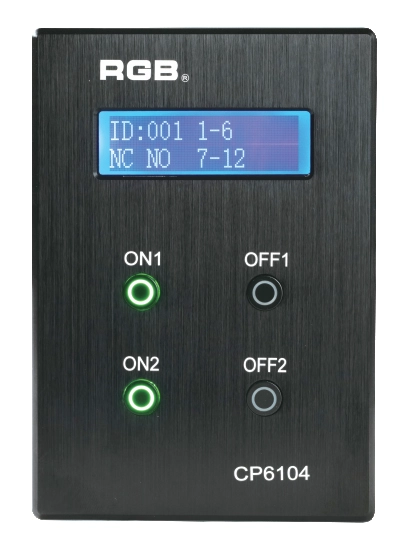
Site Light Controller CP6104
The CP6104 lighting control panel is a lighting control device for theater stage lights, work lights, environmental lighting, commercial art lighting, sports venue lighting and other places. By connecting to the dedicated lighting control host CP6100, it realizes the central control of the lighting system, supports a visual lighting control system, and intuitively displays the online and offline status of CP6104. Realize remote monitoring, editing and setting of corresponding parameters.
It is widely applicable to theaters, cinemas, auditoriums, stadiums, museums, exhibition halls, cultural tourism performances, commercial art lighting and other places.
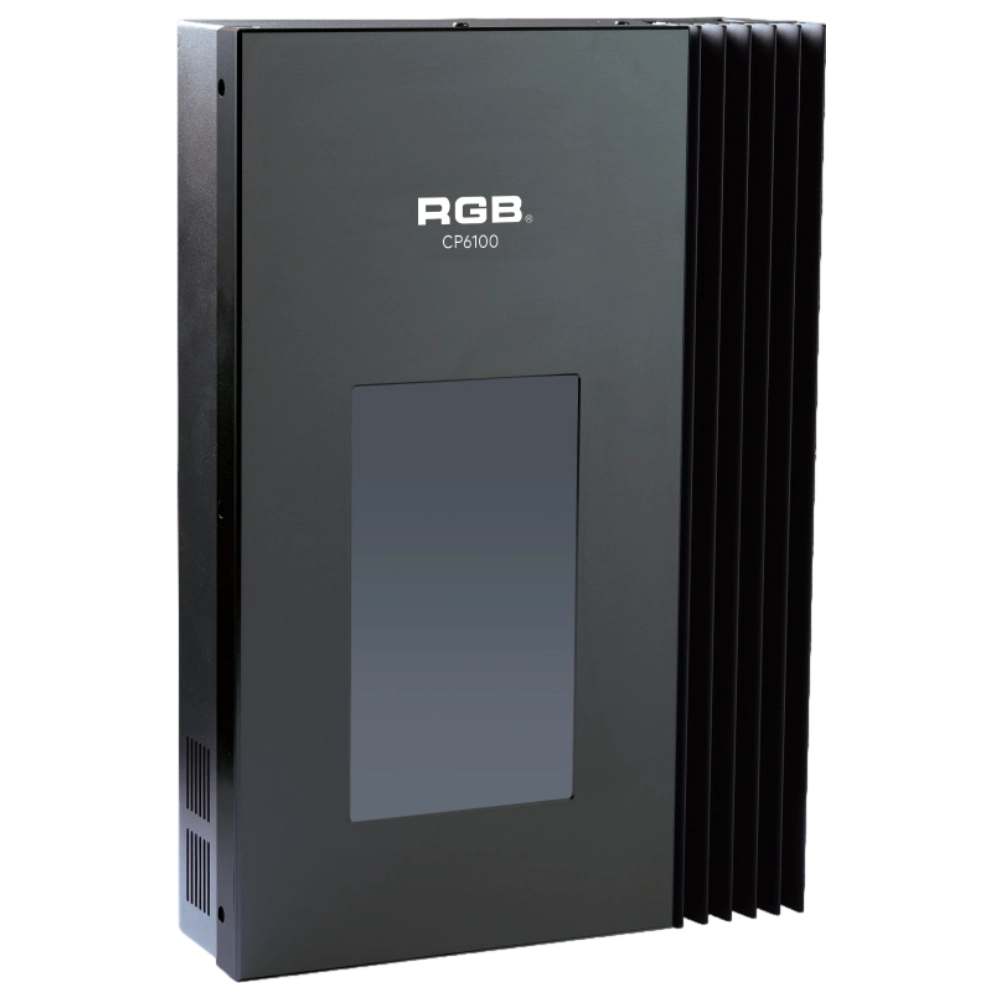
CP6100 Light Control System
The lighting control host is the main control device for theater stage lights, work lights, environmental lighting, commercial art lighting, sports venue lighting, and other places. By connecting the dedicated lighting control panels CP6104 and CP6108, it realizes the central control of the lighting system, supports a visual lighting control system, and intuitively displays the online and offline status of CP6100. Realize remote monitoring, editing, and setting of corresponding parameters.
It is widely applicable to theaters, cinemas, auditoriums, stadiums, museums, exhibition halls, cultural tourism performances, commercial art lighting, and other places.
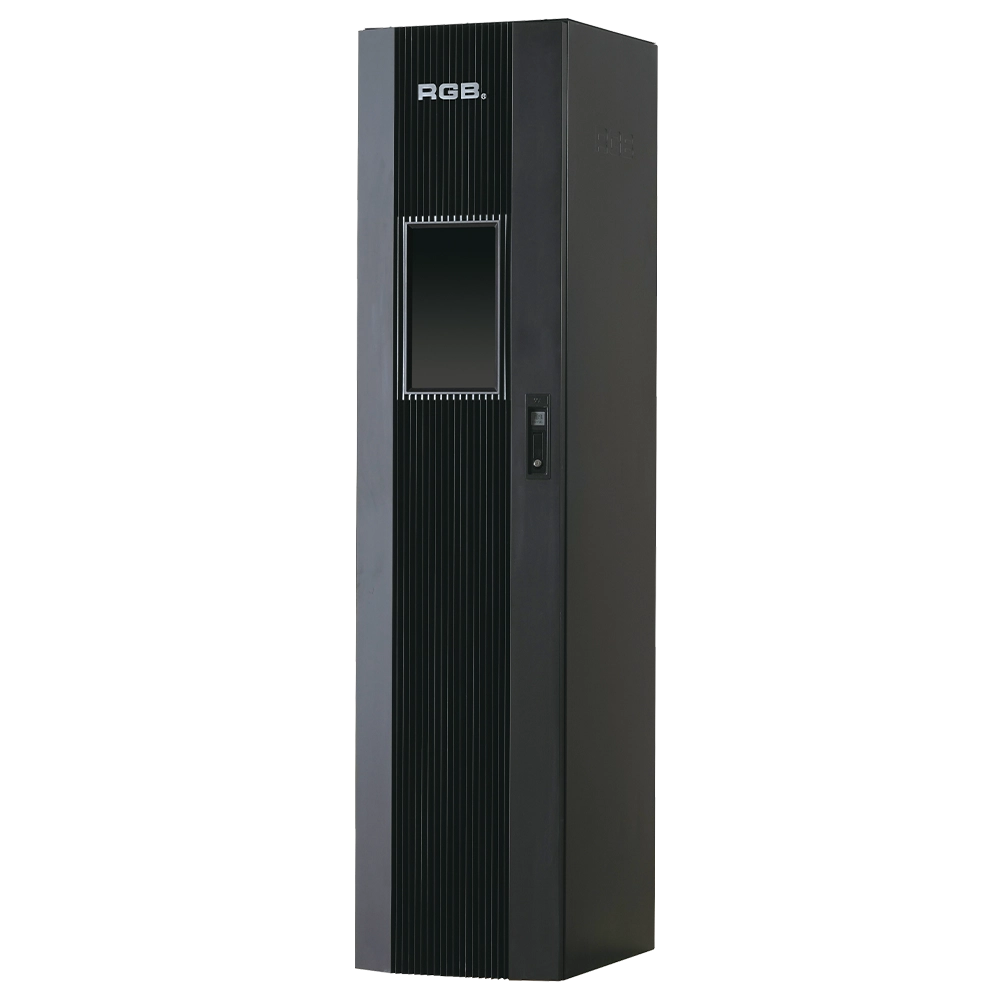
9i intelligent network Dimmer/Relay Racks
9i is an artificial intelligence dimming racks independently developed by RGB, which has completely independent core technology and obtained software Copyrights, all digital electrodeless trigger and multi-backup independent CPU central processor technology. It has a variety of output configurations such as sine wave, thyR, relay and dimming relay mix, and supports visual lighting control system and visually displays the online and offline status of dimming racks. Realize remote monitoring, editing and setting of relevant parameters.
It is suitable for the lighting control needs of different places such as high standard grand theater, TV station, gymnasium and environmental intelligent lighting.
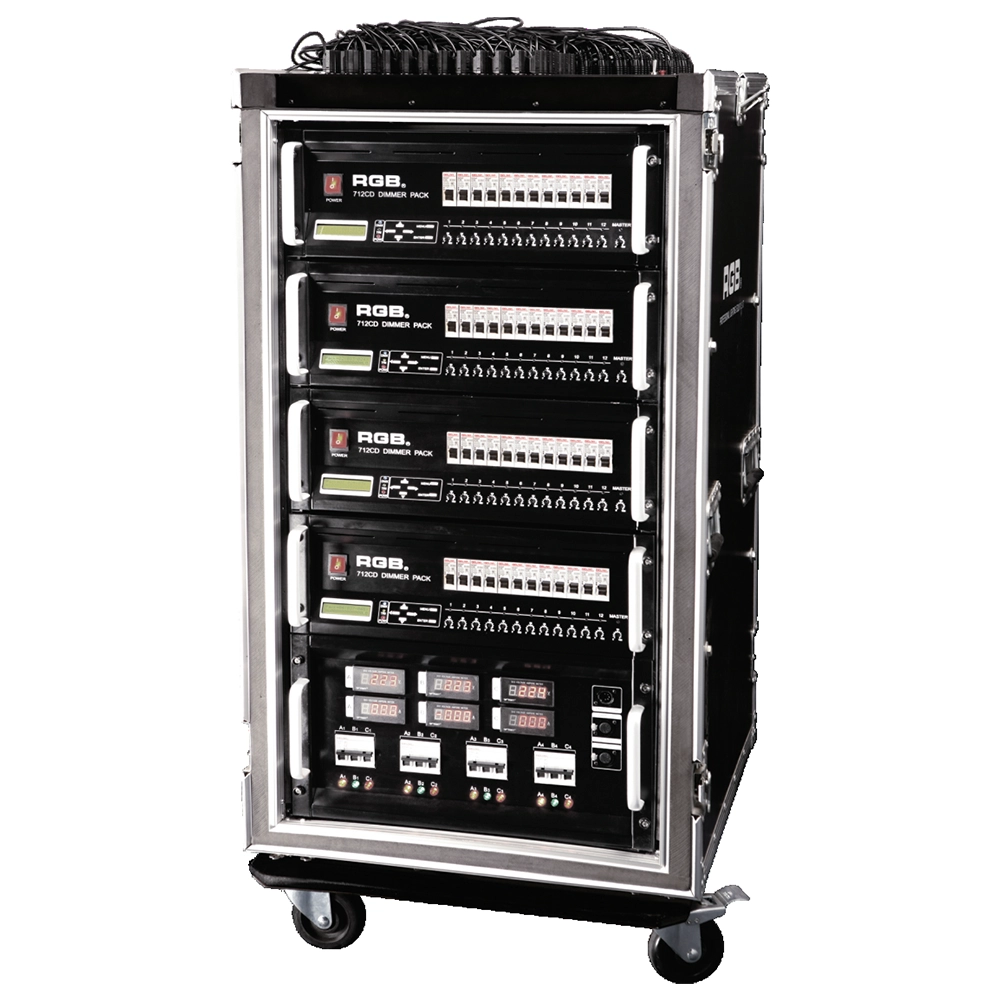
Intelligent Network Touring Dimmer Racks
RGB intelligent network touring dimmer racks can be assembledinto many types of dimmer racks by taking 7 series dimmer
packs as the unit. They are widely used in the entertainment fortheir convenience and practicabillity,
Expert Support
Interested in learning more or need expert guidance related to this article? Fill in your details, and our team will provide tailored support.
Intelligent Control. Brilliant Performance.
RGB specializes in stage lighting control systems, delivering intelligent, reliable, and high-performance solutions for theaters and performance spaces worldwide.
Contact
Email:
Tel:
+86 20 3928 0245
+86 20 3928 0247
Address:
No.3, Huashan Road, Shilou Town, Panyu, Guangzhou, China.
Whatsapp: +8615975520131