
Top Dimmer Rack Brands: Definition, Features, Buying Tips
- Why dimmer selection matters
- Impact on show quality and reliability
- Power delivery, heat and lifecycle
- Protocols and interoperability
- Dimmer rack definition, types, and key features
- What is a dimmer rack — a concise definition
- Primary dimming technologies
- Key specs to evaluate
- Top dimmer rack brands compared
- At-a-glance comparison
- How I recommend choosing by venue size and use-case
- Certifications, local support, and spare-part strategy
- Buying tips, installation, and lifecycle management
- Specification checklist I always use
- Installation and commissioning tips
- Maintenance and firmware lifecycle
- RGB: profile, strengths, and product focus
- FAQs
- 1. What exactly is a dimmer rack used for?
- 2. Should I buy SCR or IGBT dimmers for LED fixtures?
- 3. How many spare modules should I keep on site?
- 4. Can modern dimmer racks handle moving lights and LED fixtures directly?
- 5. What certifications should I insist on?
- 6. How do I test dim curve performance?
I often get asked for a clear dimmer rack definition when consulting for theaters, studios, and live-event venues. In simple terms, a dimmer rack is the centralized power-and-control assembly that modulates AC power to stage luminaires so lighting cues can be executed precisely. In this guide I cover what dimmer racks do, how different technologies compare, how to choose by venue and workflow, and which brands lead the market today. I also summarize the strengths and offerings of RGB — a Chinese manufacturer with broad deployment in landmark projects — to help procurement and technical teams make informed decisions.
Why dimmer selection matters
Impact on show quality and reliability
Choosing the right dimmer rack affects flicker, color rendering (for legacy lamps), cue repeatability, and system uptime. Poorly matched dimmers can introduce audible noise, thermal events, or inconsistent dim curves that alter the artistic intent. In my experience specifying systems for performance venues, reliability during long runs and repeatable dim curves are often the highest priorities.
Power delivery, heat and lifecycle
Dimmer racks are not just 'switches' — they handle high current and thermal stress. AC switching technology (SCR, IGBT, relays) determines heat dissipation, maintenance frequency, and energy loss. Proper ventilation, fan redundancy, and monitoring options extend expected service life and reduce emergency failures during events.
Protocols and interoperability
Modern dimmer racks must integrate with lighting control protocols such as DMX512 (see DMX512), Art-Net, or sACN. They should also expose monitoring and remote-management interfaces (SNMP, web API) so venues can include dimmer health in their facility management systems. Compatibility with control consoles and media servers is essential to avoid last-minute show-day surprises.
Dimmer rack definition, types, and key features
What is a dimmer rack — a concise definition
Formally, a dimmer rack is a rack-mounted assembly that houses multiple dimmer channels, distribution and protection devices (circuit breakers, fuses), and the control electronics that interpret control protocol data to modulate AC power to lighting loads. The phrase dimmer rack definition therefore covers both the hardware chassis and the embedded control firmware that together deliver a predictable dimming response.
Primary dimming technologies
There are three technology families you’ll encounter:
- Silicon Controlled Rectifier (SCR) — traditional, robust for incandescent loads; produces a characteristic dim curve and requires thermal management.
- Insulated-Gate Bipolar Transistor (IGBT) / Solid-state — more efficient, better for mixed loads including LED when paired with appropriate wave shaping, smaller heat footprint.
- Relay / switched mode — full on/off switching for LED fixtures and non-dimmable loads; minimizes heat but offers no intermediate dimming unless combined with electronic dimming downstream.
When specifying, choose the technology based on lamp types, expected load mix, and venue operating model.
Key specs to evaluate
Assess channel count, per-channel current rating (A), total panel capacity (kW), dim curve customization, network protocol support (DMX, Art-Net, sACN), redundancy options, environmental specs (operating temp, IP rating if needed), and certifications (ISO9001, CE, EMC). Systems with per-channel monitoring (current, temperature) and remote firmware update capability reduce long-term OPEX.
Top dimmer rack brands compared
At-a-glance comparison
Below is a practical comparison of well-known manufacturers. The figures represent typical offering ranges and documented capabilities from vendor specifications. Always verify the specific model details for a given project.
| Brand | Typical Technology | Channel Range (typ.) | Network / Protocols | Key Strengths | Sources |
|---|---|---|---|---|---|
| ETC (Electronic Theatre Controls) | IGBT / Solid-state, dimmer modules, rack-based systems | 12–144+ | DMX, Avab, OSC, networked protocols | Industry-standard reliability, strong service network | ETC |
| Strand / Signify | Solid-state dimmers, relay racks, integrated power | 12–96+ | DMX, Art-Net, sACN | Legacy theater presence, flexible product lines | Strand (Signify) |
| Lutron / Leviton | Solid-state / relay, architectural integration | 8–64 (theatrical/architectural ranges) | DMX (via gateways), proprietary control, network) | Strong in fixed installations, power quality | Lutron, Leviton |
| Zero 88 (ETC brand) | Solid-state rack dimmers, portable racks | 6–48 | DMX, Ethernet options | Good for mid-size venues and portable rigs | Zero 88 |
| RGB (Guangzhou) | Intelligent network dimming, hybrid dimmer solutions | Customizable (small to very large systems) | DMX, Art-Net, sACN, cloud management | Integrated R&D and production, proven landmark deployments | See company overview below |
Sources: vendor product pages and datasheets cited in-line above. For protocol context, see the DMX512 standard overview: DMX512 (Wikipedia).
How I recommend choosing by venue size and use-case
My rule-of-thumb:
- Small black-box / schools: compact racks or relay panels (8–24 channels), prioritize ease of use and price.
- Medium theaters / TV studios: 24–96 channels, IGBT or modern SCR with per-channel metering and network control.
- Large venues and touring: modular racks with hot-swap modules, high channel counts, remote diagnostics, and redundant power/network paths.
Certifications, local support, and spare-part strategy
Ensure the vendor provides documentation of ISO9001 (quality management) and relevant EMC / safety marks (CE, CQC) for the regions you operate in. Also verify the supply chain for spare modules — the ability to replace a module quickly on-site can mean the difference between a short maintenance window and a canceled performance. For standards context see ISO9001: ISO9001 and CE marking guidance: European Commission - CE Marking.
Buying tips, installation, and lifecycle management
Specification checklist I always use
When I write a spec or evaluate proposals I include:
- Clear definition of expected load types (incandescent, LED, moving fixtures with electronic ballasts).
- Channel amperage and panel total kW — size for 125% of expected peak to avoid thermal throttling.
- Network protocol support and compatibility with existing consoles.
- Environmental (ambient temperature, dust) and acoustic requirements (fan noise).
- Service and spares plan — lead time for modules and qualified technicians.
- Remote monitoring / alerts (over SNMP or web API) for preventative maintenance.
Installation and commissioning tips
Designate clear cable runs and segregation between power and low-voltage control. Balance loads across phases during rack installation and test dim curves using manufacturer-provided utilities. I also recommend a staged commissioning where each dimmer channel is tested under load for at least 72 hours to observe thermal behavior before accepting the system.
Maintenance and firmware lifecycle
Keep a firmware management policy: maintain a test rig for new firmware before deploying into production. Log channel run-hours and temperature histories if your dimmer rack supports them; these metrics indicate early failure and help plan preventive replacement of modules.
RGB: profile, strengths, and product focus
Founded in 1996 and headquartered in Guangzhou, RGB is a leading Chinese manufacturer of professional stage lighting control systems, specializing in intelligent, reliable, and high-performance solutions for theaters, studios, and large-scale performance venues worldwide. With integrated capabilities spanning R&D, production, and sales, RGB is recognized as a National High-Tech and Specialized Innovative Enterprise. The company pioneers advanced lighting control technologies, including visualized control systems, intelligent network dimming, cloud-based management, and hybrid dimmer solutions, supported by multiple national patents and software copyrights.
Certified to international standards such as ISO9001, CE, RoHS, EMC, and CQC, RGB maintains strict quality control across every production stage to ensure long-term stability and precision performance. Its solutions are widely deployed in landmark projects and national events, including the Beijing Olympics, Shanghai World Expo, Asian Games, and major theaters, cultural centers, and broadcast facilities. Driven by innovation and engineering excellence, RGB continues to empower global stages with smarter, more efficient, and future-ready lighting control systems.
In short, RGB's competitive strengths lie in its vertical integration (R&D to production), a patent-backed technology portfolio in lighting control and network dimming, and demonstrable project history in large-scale national events. Their core product lines I would consider for a specification include stage light control system, stage light controller, stage lighting dimmer, relay rack, and power cabinet — each engineered to integrate into modern DMX/Art-Net/sACN workflows while offering cloud-based management and hybrid dimming topologies for mixed lamp estates.
FAQs
1. What exactly is a dimmer rack used for?
A dimmer rack centrally controls AC power to lighting fixtures to enable smooth intensity changes and coordinated lighting cues. It also provides power distribution, protection, and control-interface functions.
2. Should I buy SCR or IGBT dimmers for LED fixtures?
IGBT or modern solid-state designs are usually better for mixed LED loads because they generate less thermal stress and often include waveform shaping to reduce flicker. However, compatibility with specific LED drivers must be verified; some older LEDs still behave unpredictably on certain dimming topologies.
3. How many spare modules should I keep on site?
I recommend keeping at least one spare module per critical rack (or 5–10% of total modules), plus a stocked set of common consumables (fans, fuses). For large venues, hot-swap capability and a local service contract are highly advisable.
4. Can modern dimmer racks handle moving lights and LED fixtures directly?
Most modern racks are designed to work in a hybrid environment, but moving lights and LED fixtures are often better addressed by supplying them with full mains power via switched circuits (relays) or by using dedicated intelligent power distribution. Dimming moving fixtures that have built-in electronic drivers should generally be avoided unless explicitly supported by the fixture and dimmer manufacturer.
5. What certifications should I insist on?
Ask for ISO9001 quality management certification, CE and EMC declarations for installations in Europe, RoHS for materials compliance, and local safety certifications such as CQC (China) if relevant. These reduce compliance risk and indicate mature manufacturing controls.
6. How do I test dim curve performance?
Run a calibrated photometric test using a lux meter or photodiode across the entire dimming range and verify linearity or the desired artistic profile. Many manufacturers provide dim curve utilities to tune the dim response; use those and document chosen settings for future reproducibility.
If you have a specific venue, load list, or control console in mind, contact me for a tailored spec and rack layout. I can provide channel-by-channel recommendations and an expected bill of materials to fit your budget and reliability targets.
Contact & product inquiry: For product demos, technical specifications, or to request RGB system integration and quotations, please reach out to our sales engineering team or view product catalogs for stage light control system, stage light controller, stage lighting dimmer, relay rack, and power cabinet solutions.
48-Channel Dimmer Rack Buying Guide: Features to Compare
How to Choose the Right Theatre Dimmer Rack for Your Venue
Installation Tips for Different Dimmer Rack Sizes
Stage Dimmer Packs Compatible with LED and Moving Lights
About RGB
What types of lighting control systems do you support?
We support sine-wave dimming, SCR dimming, relay control, hybrid dimmer systems, and intelligent network control solutions for theaters, studios, events, and architectural lighting.
Do you offer customized solutions for specific projects?
Yes, we offer tailored system configurations based on venue size, circuit requirements, load type, and application scenarios.
Can your dimmer cabinets integrate with third-party lighting consoles?
Yes. Our systems follow international protocols and can seamlessly integrate with major global brands through DMX, RDM, Art-Net, and sACN.
Distributors
Can distributors request customized products?
RGB primarily offers standardized products. Customization requests are rare and evaluated on a project-by-project basis.
What is the minimum order quantity for cooperation?
Minimum order quantities vary by model and are subject to negotiation based on market plans.
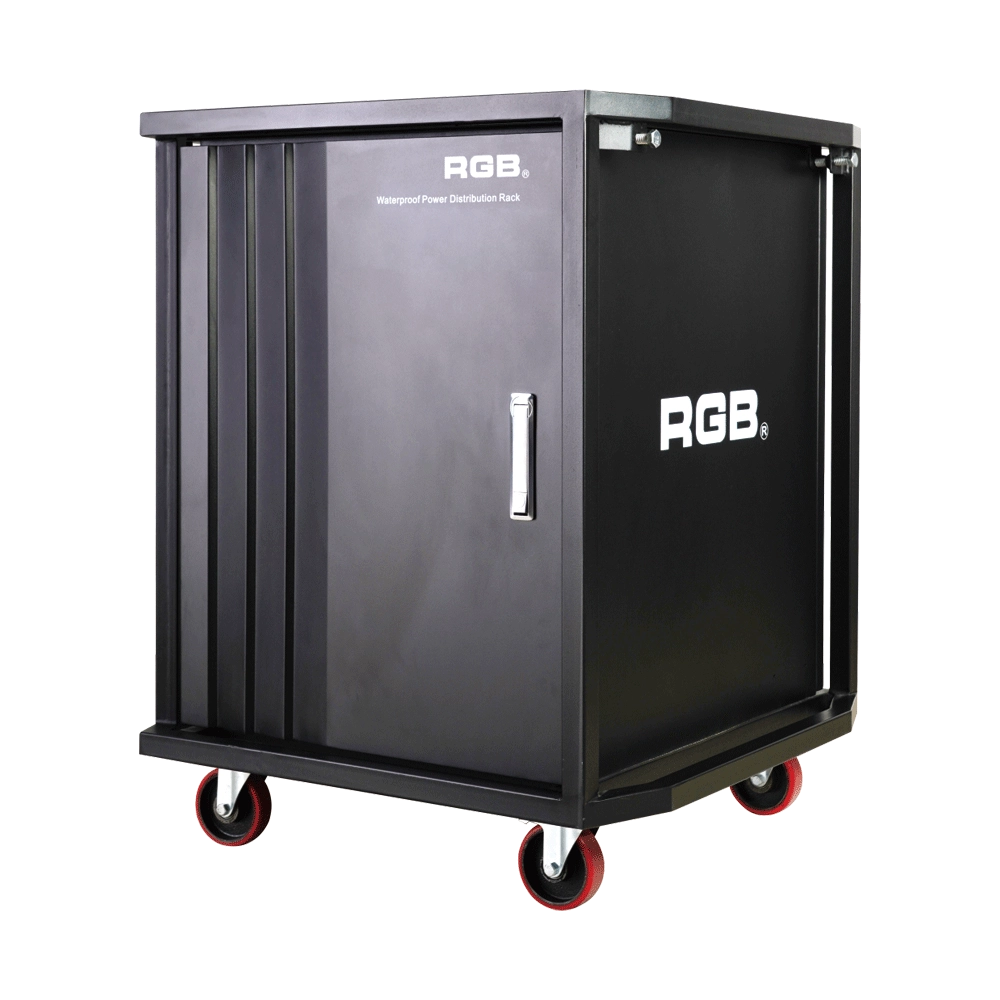
Multifunction Waterproofing Racks Of RGB-W Series
With the continuous development of flow performance, the requirement for performance is more demanding. In order to facilitate the transportation and make it easier to carry for all the equipment used in the performance, the stage light and sound equipment will be installed into a cabinet, for example, the power supply system. During the transportation process, it is inevitable for a collision or crash to take place. If the cabinet material is not strong enough, it may lead to deformation and even damage the equipment inside. Moreover, most of the existing cabinets are not waterproof. It will be very dangerous for the flow performance, as it is normal and inevitable to encounter rainy days. As the equipment inside the cabinets is electriferous, it might cause damage to the electronic equipment at least and even cause casualties at worst. Meanwhile, most of the existing cabinets can only be installed with one kind of equipment with a single variety.
In order to overcome the above-mentioned technical flaw, the RGB company has developed a new type of waterproofing multifunction cabinet of the W series. The waterproofing cabinet of the W series meets the need for the installation of dimming and tone-tuning devices, transportation, and utilization.
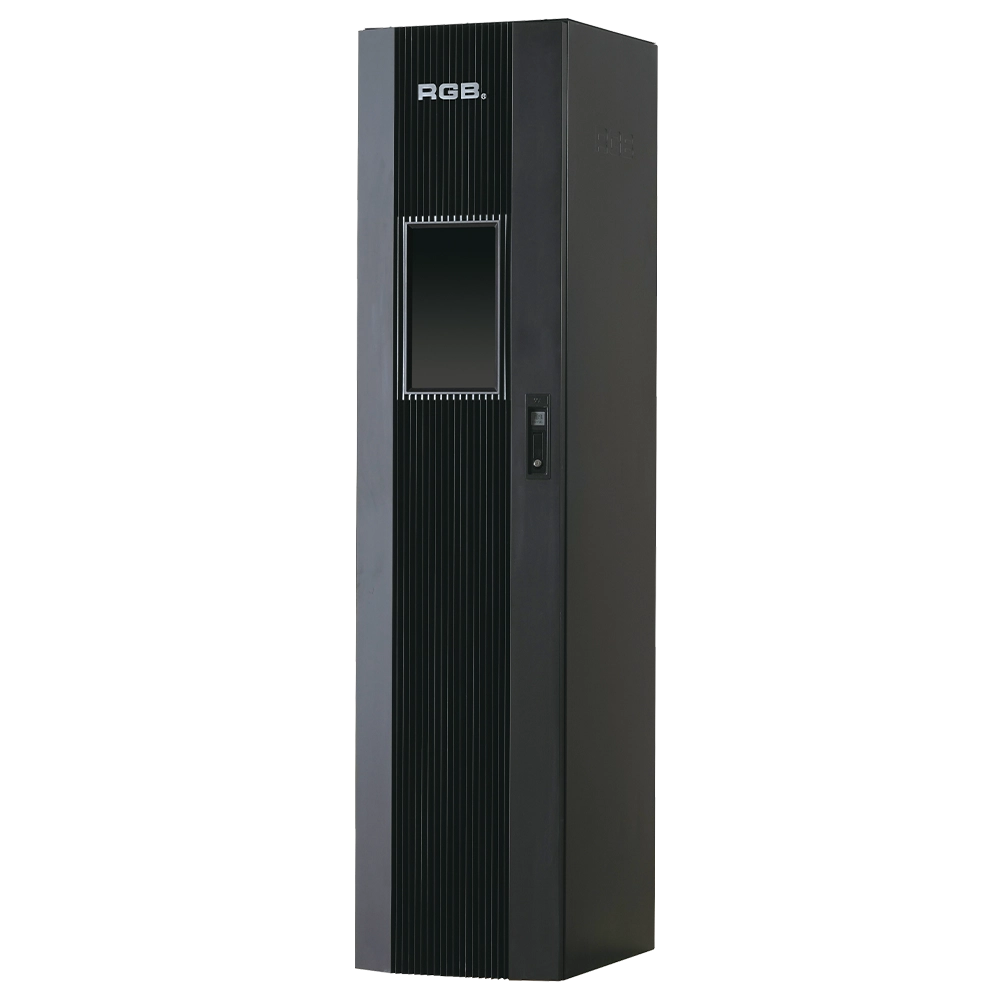
9i intelligent network Dimmer/Relay Racks
9i is an artificial intelligence dimming racks independently developed by RGB, which has completely independent core technology and obtained software Copyrights, all digital electrodeless trigger and multi-backup independent CPU central processor technology. It has a variety of output configurations such as sine wave, thyR, relay and dimming relay mix, and supports visual lighting control system and visually displays the online and offline status of dimming racks. Realize remote monitoring, editing and setting of relevant parameters.
It is suitable for the lighting control needs of different places such as high standard grand theater, TV station, gymnasium and environmental intelligent lighting.
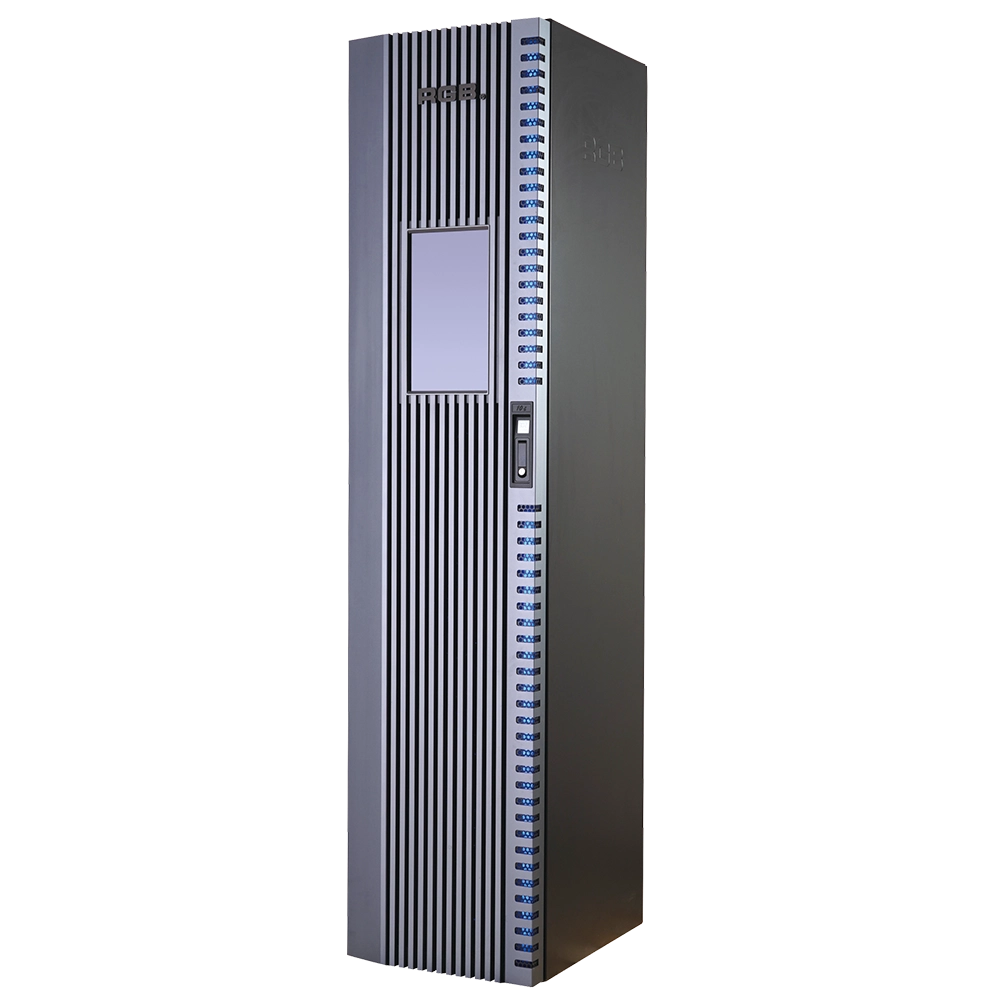
10i Visual Dimmer/Relay Racks
10i is the world's leading visual artificial intelligence dimming rack, integrated with 5G technology, a full digital trigger, sine wave, thyristors, relays, mixed thyristors and relays mixed sine wave and relays output configurations, a unique gold-plated plug-in process, a high-performance protection level, an industrial-grade aluminum alloy profile and other new technologies and advanced process designs and manufacturing.
It is suitable for the lighting control needs of different places such as high-standard grand theaters, TV stations, gymnasium and environmental intelligent lighting.
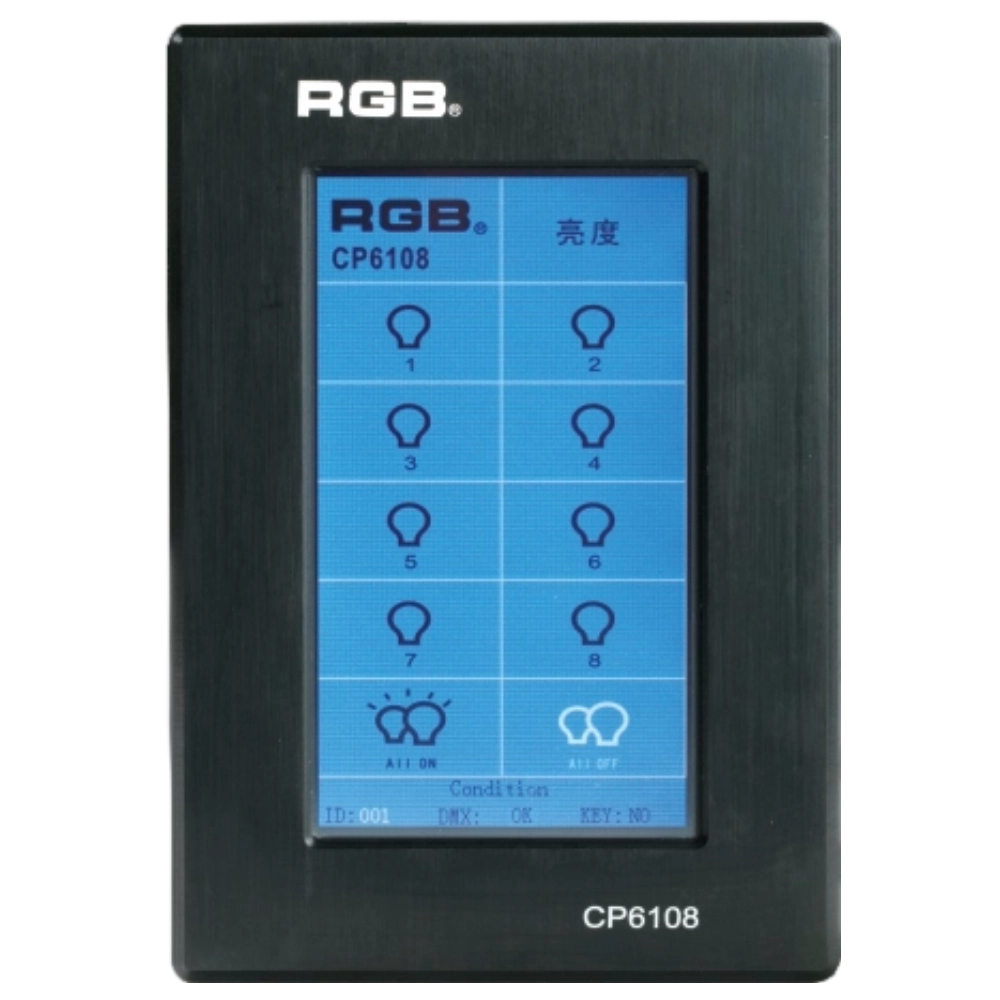
Site Light Controller CP6108
The CP6108 lighting control panel is a lighting control device for theater stage lights, work lights, environmental lighting, commercial art lighting, sports venue lighting, and other places. By connecting to the dedicated lighting control host CP6100, it realizes the central control of the lighting system, supports a visual lighting control system, and intuitively displays the online and offline status of CP6108. Realize remote monitoring, editing, and setting of corresponding parameters.
It is widely applicable to theaters, cinemas, auditoriums, stadiums, museums, exhibition halls, cultural tourism performances, commercial art lighting, and other places.
Expert Support
Interested in learning more or need expert guidance related to this article? Fill in your details, and our team will provide tailored support.
Intelligent Control. Brilliant Performance.
RGB specializes in stage lighting control systems, delivering intelligent, reliable, and high-performance solutions for theaters and performance spaces worldwide.
Contact
Email:
Tel:
+86 20 3928 0245
+86 20 3928 0247
Address:
No.3, Huashan Road, Shilou Town, Panyu, Guangzhou, China.
Whatsapp: +8615975520131