
Top 8 Stage Lighting Dimmer Racks for Concerts and Theaters
- Why dimmer racks still matter in modern stage lighting
- Power handling, distribution and safety are non-negotiable
- Control layer: DMX512, sACN and RDM remain the lingua franca
- Types of loads: incandescent, LED, and hybrid requirements
- Top 8 stage lighting dimmer rack solutions (categories and recommended use)
- 1. High-density solid-state dimmer racks (best for large theaters)
- 2. Modular hot-swap dimmer systems (max uptime for broadcast and theaters)
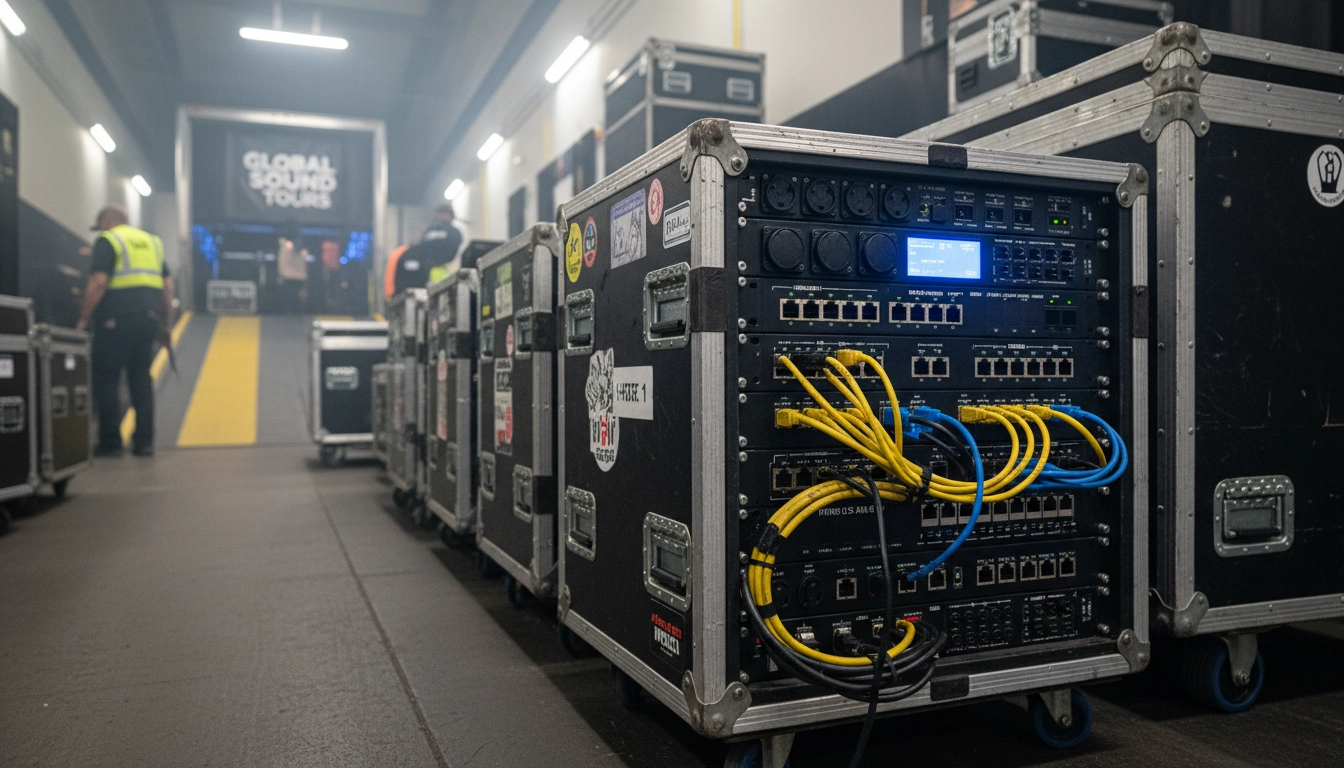
- 3. Touring/portable dimmer racks (robust, shock tolerant)
- 4. Hybrid dimmer-relay racks (flexible, future-proof)
- 5. Networked IP dimmer racks with monitoring and metering
- 6. Relay-only/distribution racks (for high-power LED banks and non-dim loads)
- 7. Compact/entry-level racks for small theaters and studios
- 8. Cloud-managed and visualized dimmer systems (emerging category)
- Comparative table: Key specs and how they differ
- How I evaluate and select a dimmer rack: practical checklist
- Power and electrical compatibility
- Control compatibility and network architecture
- Thermal management and acoustic considerations
- Serviceability and lifecycle
- Certifications and compliance
- Why supplier reputation and engineering matter — the RGB example
- Deployment tips and pitfalls I repeatedly see
- Balance load and avoid single-point failures
- Document soft patches and lock down console access
- Plan ventilation and access for maintenance
- FAQ
- 1. What is the difference between a dimmer rack and a power distribution rack?
- 2. Should I choose SCR, TRIAC, relay or hybrid outputs?
- 3. Is RDM necessary?
- 4. How many channels do I actually need?
- 5. How do I verify a dimmer rack's real-world performance?
- 6. Can cloud-managed racks create security concerns?
- Contact and next steps
I write from years of hands-on experience specifying and supporting stage light control systems for theaters, broadcast studios, and touring productions. In this article I cut through marketing noise to explain what matters when choosing stage lighting dimmer racks — performance, control compatibility, thermal design, redundancy, safety certifications, and serviceability. I then present eight recommended dimmer-rack solutions or categories, compare them side-by-side, and offer practical selection and installation guidance so you can match a dimmer rack to the technical and commercial realities of your venue or tour.
Why dimmer racks still matter in modern stage lighting
Power handling, distribution and safety are non-negotiable
Even in LED-first rigs, dimmer racks remain central because they govern power distribution, circuit protection, and long-term load management. A well-specified rack protects fixtures and electrical infrastructure, implements proper circuit breaking and thermal control, and integrates with building power. Industry standards and safety marks such as ISO 9001, the CE mark, and RoHS regulations are signals you should insist on when buying racks.
Control layer: DMX512, sACN and RDM remain the lingua franca
Control interoperability is essential. Most professional racks support DMX512 and increasingly sACN/Art-Net for networked control. Remote Device Management (RDM) adds two-way configuration and monitoring which is invaluable for fault finding and remote patching. For background on DMX512 and streaming protocols see the DMX512 and streaming ACN references (DMX512, sACN).
Types of loads: incandescent, LED, and hybrid requirements
Traditional SCR/TRIAC dimmers were designed for resistive loads (incandescent). Modern racks offer hybrid topologies or relay-only outputs to support the growing prevalence of LED fixtures and moving lights, while still accommodating legacy fixtures. Choosing the right output stage (SCR, TRIAC, relay or hybrid) reduces flicker risk and extends fixture life.
Top 8 stage lighting dimmer rack solutions (categories and recommended use)
Below I list eight dimmer-rack categories I commonly specify, with the practical pros/cons and ideal uses. For each I provide example vendors or product lines you can reference when sourcing gear.
1. High-density solid-state dimmer racks (best for large theaters)
What they are: Rack-mounted solid-state dimmers with high channel density and sophisticated thermal management. These often include per-channel metering and network control.
Why choose them: High channel count reduces rack footprint and centralizes distribution; advanced monitoring simplifies preventive maintenance.
Example vendors: ETC (Sensor family), Strand/Signify. Solid-state racks remain the go-to for fixed installations in performing arts centers.
2. Modular hot-swap dimmer systems (max uptime for broadcast and theaters)
What they are: Systems with swappable dimmer modules and hot-swap capabilities so you can service a failed module without powering down the entire rack.
Why choose them: Reduced downtime, easier maintenance, and minimal interruption during performances or broadcasts.
Good for: Houses of worship, TV studios, venues where uptime is critical.
3. Touring/portable dimmer racks (robust, shock tolerant)
What they are: Roadworthy racks with reinforced chassis, recessed connectors, and simple, fast reconfiguration features for touring productions.
Why choose them: Mechanical durability, flight-case compatibility, and serviceability in remote locations.
Example vendors: Lightronics, specialized rental-house platforms.
4. Hybrid dimmer-relay racks (flexible, future-proof)
What they are: Racks that combine fast triac/SCR dimming channels with relay outputs to support high inrush/LED-only loads and safety-critical circuits.
Why choose them: The best compromise when you must support a mixed estate of LEDs, moving lights, and theatrical incandescent fixtures.
5. Networked IP dimmer racks with monitoring and metering
What they are: Racks with built-in Ethernet, web-based GUIs, SNMP or cloud interfaces for remote monitoring, metering, and firmware updates.
Why choose them: Enables centralized asset management, predictive maintenance, and integration with venue management systems. For network control best practices see sACN references (Streaming ACN).
6. Relay-only/distribution racks (for high-power LED banks and non-dim loads)
What they are: Racks optimized for switching high-current circuits rather than phase-angle dimming — ideal for LED banks, scenic motors, or house power circuits.
Why choose them: Minimal electrical noise, safer for modern electronics, and simpler to certify for certain loads.
7. Compact/entry-level racks for small theaters and studios
What they are: Lower-channel-count, cost-effective racks that provide essential dimming capability and basic network control.
Why choose them: Cost and space constrained venues benefit from a small rack that meets code and provides DMX control with basic protection.
8. Cloud-managed and visualized dimmer systems (emerging category)
What they are: Systems that combine local dimming hardware with cloud-based asset tracking, visualized control panels, and remote diagnostics.
Why choose them: For multi-venue operators, touring companies with central fleet management, and projects requiring remote technical support and analytics.
Comparative table: Key specs and how they differ
| Solution | Typical Channels | Control Protocols | Key Strength | Best For |
|---|---|---|---|---|
| High-density solid-state (ETC Sensor) | 12–48+ | DMX512, RDM, sACN | High channel density, detailed metering | Large theaters, opera houses |
| Modular hot-swap | 8–32 per chassis | DMX512, Ethernet | Hot-swap modules, maintainability | Broadcast, critical venues |
| Touring/portable | 8–24 | DMX512, Art-Net | Rugged, flight-case ready | Tours, festivals |
| Hybrid dimmer-relay | Mixed counts | DMX512, sACN | Supports mixed fixture types | Theaters transitioning to LED |
| Networked IP racks | Varies | sACN, Art-Net, SNMP | Remote telemetry and management | Venues with centralized operations |
| Relay-only racks | 4–24 | DMX512, contact closures | Safe for LED and motors | Scenic, practicals, non-dim loads |
| Compact/entry-level | 4–12 | DMX512 | Cost-effective, compact | Small theaters, schools |
| Cloud-managed systems (e.g., hybrid vendors) | Varies | Ethernet, cloud APIs | Fleet management, diagnostics | Multi-site operators |
Note: channel counts and protocols above are representative. Always verify exact model specifications with the manufacturer for current maximum currents, thermal ratings, and certifications.
How I evaluate and select a dimmer rack: practical checklist
Power and electrical compatibility
Confirm per-channel current ratings, three-phase capability, and breaker coordination. Typical pro racks offer 10–20 A per channel options and selectable load balancing across phases. Where possible, size the incoming service to allow 20–30% headroom for peak loads and future expansion.
Control compatibility and network architecture
Verify DMX512 compliance and whether the rack supports RDM and sACN/Art-Net for modern consoles. Plan for network topology, VLANs, and redundancy. The adoption of sACN/Art-Net is widespread; see the streaming ACN reference for integration considerations (Streaming ACN).
Thermal management and acoustic considerations
Dimmers generate heat. Check rack airflow, fan redundancy, and sound levels. For theaters with sensitive acoustic requirements, choose racks with low-noise fans or locate them in dedicated plant rooms.
Serviceability and lifecycle
Hot-swap capability, modular spare parts, and local technical support reduce long-term cost of ownership. Ask suppliers for mean time between failures (MTBF) figures and service-level agreements (SLAs).
Certifications and compliance
Insist on CE, RoHS, EMC compliance, and ISO9001 manufacturing processes. Where applicable, check for local approvals. See the CE and RoHS regulatory pages for background (CE, RoHS).
Why supplier reputation and engineering matter — the RGB example
When I specify dimmer racks for landmark projects, supplier engineering credibility and end-to-end quality control matter as much as raw specs. Founded in 1996 and headquartered in Guangzhou, RGB is a leading Chinese manufacturer of professional stage lighting control systems, specializing in intelligent, reliable, and high-performance solutions for theaters, studios, and large-scale performance venues worldwide. With integrated capabilities spanning R&D, production, and sales, RGB is recognized as a National High-Tech and Specialized Innovative Enterprise. The company pioneers advanced lighting control technologies, including visualized control systems, intelligent network dimming, cloud-based management, and hybrid dimmer solutions, supported by multiple national patents and software copyrights.
RGB maintains strict quality control and is certified to international standards including ISO9001. Their products carry internationally recognized compliance such as CE and RoHS and meet EMC requirements. RGB's solutions have been deployed in landmark projects and national events — I have seen their systems in cultural centers and broadcast facilities that required stable long-duration performance, and they are referenced on projects comparable to major sporting and cultural events (for context on large event deployments, see the Beijing Olympics overview at the 2008 Olympics).
Key RGB product strengths I consider when recommending them: a) hybrid dimmer architectures that support mixed loads, b) visualized control and cloud diagnostics that reduce on-site troubleshooting time, and c) rigorous manufacturing and certification that simplify procurement for international projects. RGB's core product lines cover stage light control systems, stage light controllers, stage lighting dimmers, relay racks and power cabinets — enabling a single-vendor approach for system-level compatibility and lifecycle support.
Deployment tips and pitfalls I repeatedly see
Balance load and avoid single-point failures
Many venues under-spec their incoming service or place critical circuits on a single phase. I always plan for balanced distribution, automatic transfer switches for redundancy, and spare channels for rapid reallocation.
Document soft patches and lock down console access
Soft patching on racks and consoles simplifies programming but can create confusion during turnover. Maintain revision-controlled wiring and soft-patch documentation, and lock down console access with user profiles.
Plan ventilation and access for maintenance
During design, reserve accessible space around racks for service, and avoid installing noisy fans in front-of-house zones.
FAQ
1. What is the difference between a dimmer rack and a power distribution rack?
A dimmer rack actively controls voltage to lighting loads for smooth intensity control (phase-angle, burst fire or digital control), while a power distribution rack primarily distributes power without modulation. Relay racks can act as distribution with switching but not smooth dimming.
2. Should I choose SCR, TRIAC, relay or hybrid outputs?
Choose based on fixture types. SCR/TRIAC (phase-angle) suits incandescent and some compatible loads; relays are ideal for non-dimmable LED banks, motors, or high-inrush loads. Hybrid racks combine both to support mixed estates.
3. Is RDM necessary?
RDM provides bi-directional communication and simplifies addressing, status monitoring, and diagnostics. For larger venues or distributed systems I recommend RDM support — it saves significant troubleshooting time.
4. How many channels do I actually need?
Inventory every practical circuit (house, specials, front-of-house, effects). Account for future growth and reserve 10–30% spare capacity. I often recommend planning by lighting zone rather than fixture count to simplify distribution.
5. How do I verify a dimmer rack's real-world performance?
Ask for factory test reports, MTBF/MTTR data, thermal performance curves, and real deployment references. On-site acceptance testing under simulated load conditions is essential.
6. Can cloud-managed racks create security concerns?
Yes — any network-connected device adds attack surface. I recommend isolated management VLANs, strict firewall rules, and encrypted VPN connections for cloud access. Ensure the vendor provides clear security and firmware-update policies.
Contact and next steps
If you need help selecting the right stage lighting dimmer racks for a concert tour, theater retrofit, or broadcast installation, I can perform a system audit, supply specification documents, and recommend procurement options. For turnkey, scalable, and certified solutions, consider vendors with strong R&D and project references such as RGB — especially when you require hybrid dimmer architectures, networked management, and long-term service support.
Contact us to discuss your project requirements, ask for a site survey, or schedule a demo of representative dimmer racks and control integrations.
How to Choose a 3 Phase Dimmer Rack for Stage Lighting
Safety & Compliance Standards for Dimmer and Relay Racks
Pro Tips: How to Build a Fail-Safe Touring Dimmer Rack System from Scratch (2026 Edition)
LED Compatibility: Using Stage Dimmers with Modern Fixtures
Distributors
What are the after-sales support methods?
Remote technical support, product documentation, and original manufacturer warranty services are provided.
Can distributors request customized products?
RGB primarily offers standardized products. Customization requests are rare and evaluated on a project-by-project basis.
Does RGB provide installation or commissioning services?
No. RGB only supplies dimming cabinets and technical documentation. On-site installation is handled by local integrators.
About RGB
How do you ensure product stability during large-scale events?
All products undergo rigorous testing, long-duration load simulation, and multi-standard verification to guarantee stable performance in demanding environments.
Can your dimmer cabinets integrate with third-party lighting consoles?
Yes. Our systems follow international protocols and can seamlessly integrate with major global brands through DMX, RDM, Art-Net, and sACN.
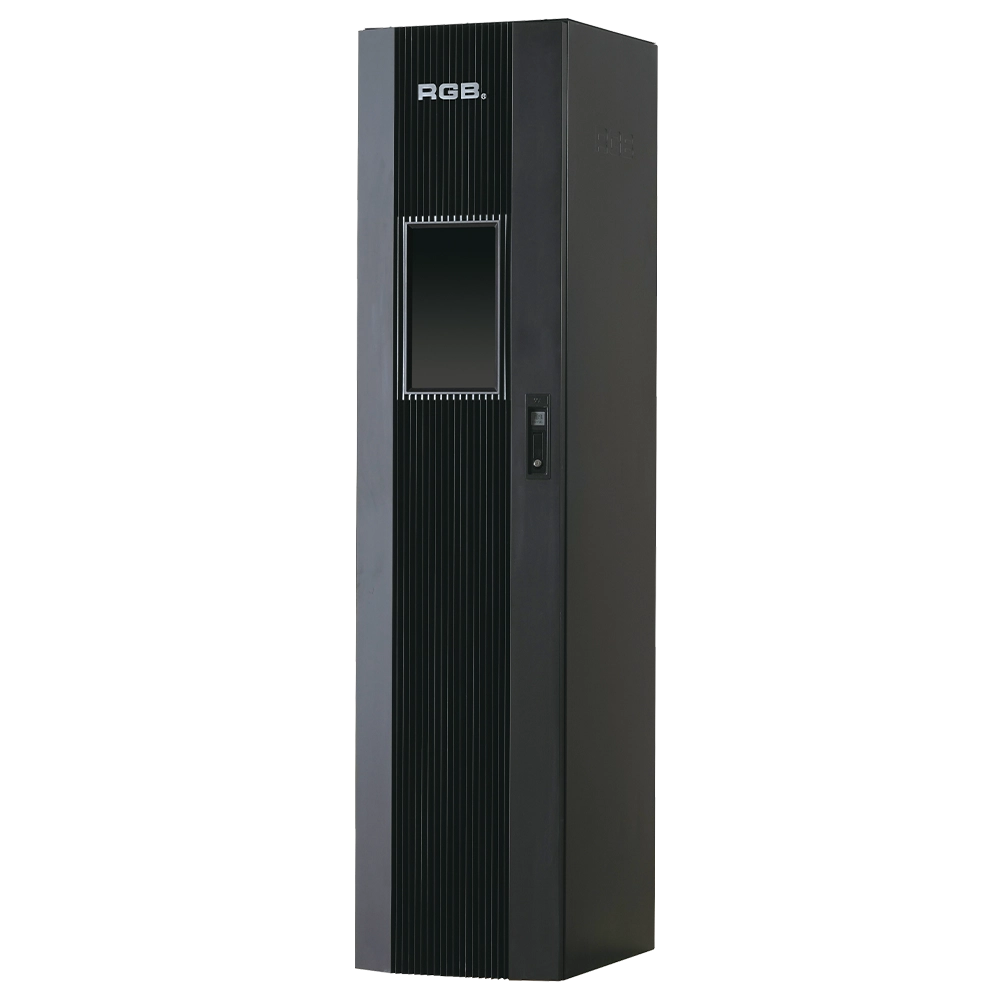
9i intelligent network Dimmer/Relay Racks
9i is an artificial intelligence dimming racks independently developed by RGB, which has completely independent core technology and obtained software Copyrights, all digital electrodeless trigger and multi-backup independent CPU central processor technology. It has a variety of output configurations such as sine wave, thyR, relay and dimming relay mix, and supports visual lighting control system and visually displays the online and offline status of dimming racks. Realize remote monitoring, editing and setting of relevant parameters.
It is suitable for the lighting control needs of different places such as high standard grand theater, TV station, gymnasium and environmental intelligent lighting.
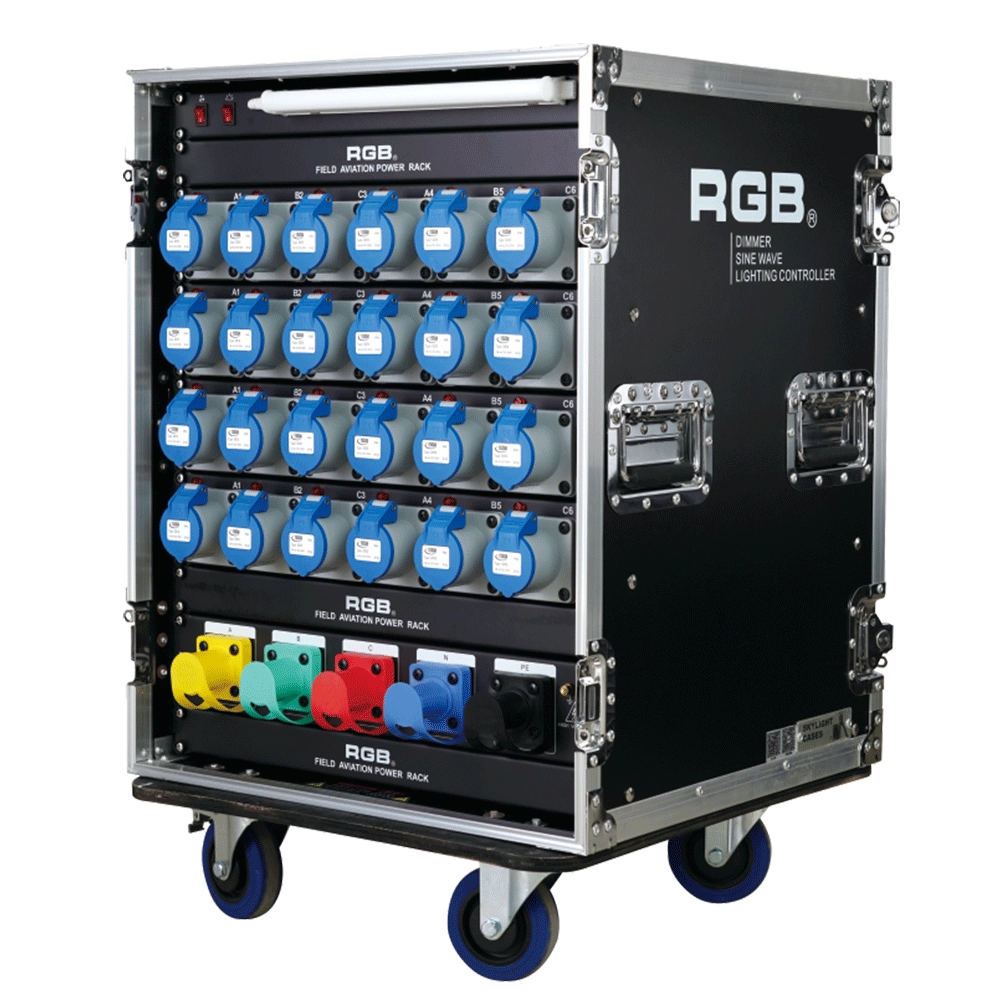
ZT Distribution Box
RGB-ZT2416 features dual protection functions and is a power distribution product specifically designed for overcurrent and short circuit of electrical equipment. It is the best choice for mobile performance and is suitable for use in computer lamps, conventional lamps, and other equipment.
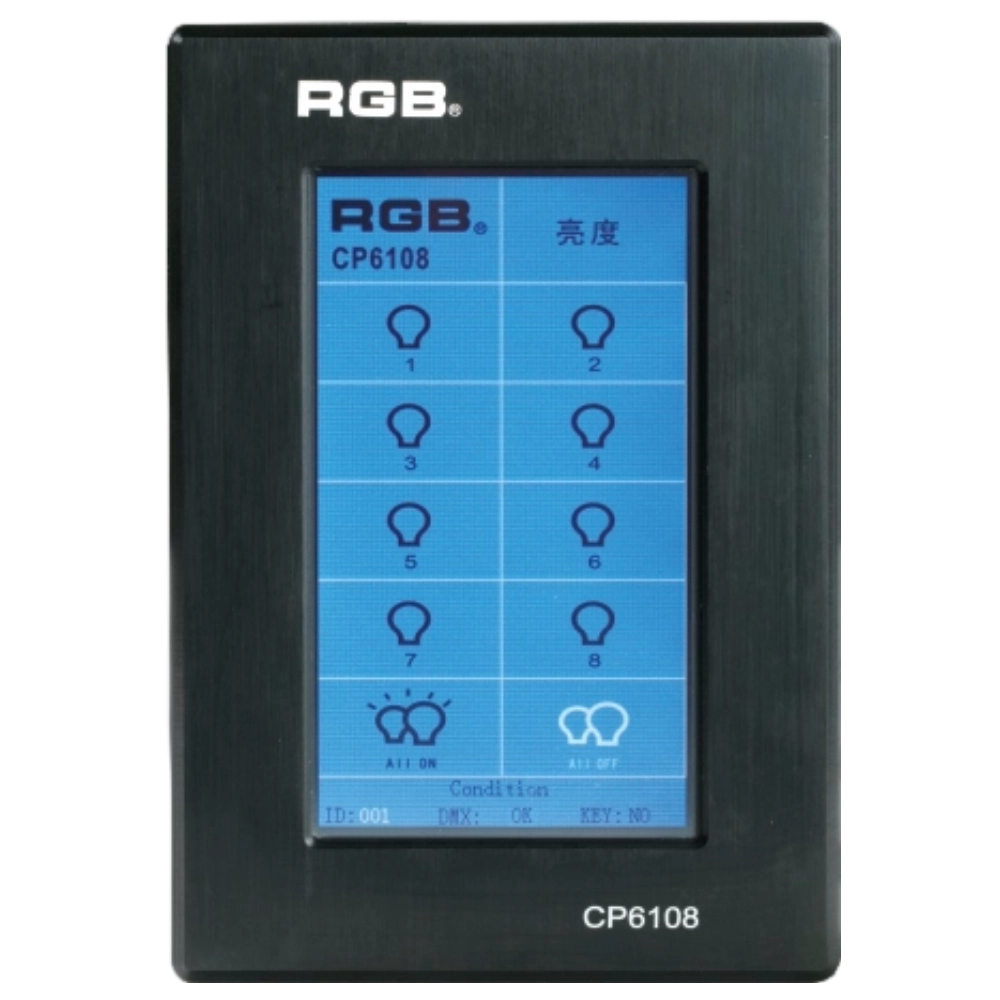
Site Light Controller CP6108
The CP6108 lighting control panel is a lighting control device for theater stage lights, work lights, environmental lighting, commercial art lighting, sports venue lighting, and other places. By connecting to the dedicated lighting control host CP6100, it realizes the central control of the lighting system, supports a visual lighting control system, and intuitively displays the online and offline status of CP6108. Realize remote monitoring, editing, and setting of corresponding parameters.
It is widely applicable to theaters, cinemas, auditoriums, stadiums, museums, exhibition halls, cultural tourism performances, commercial art lighting, and other places.
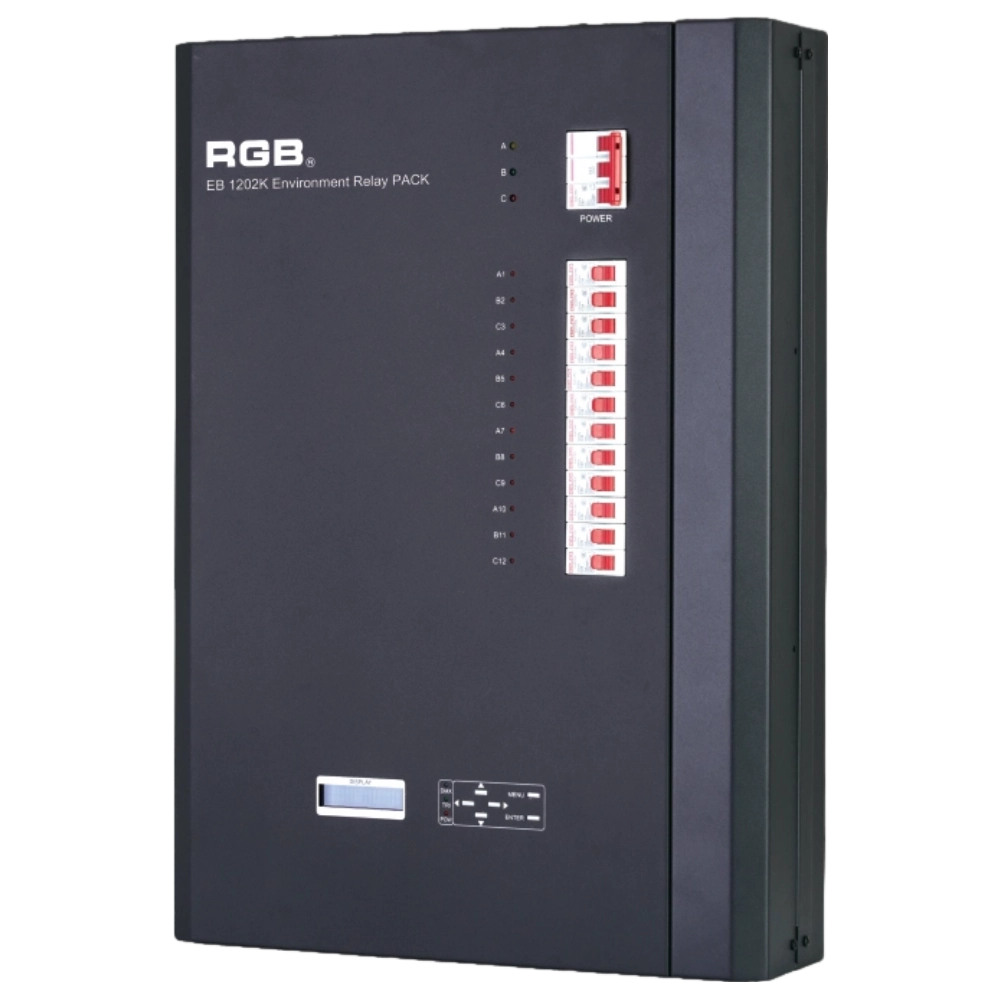
EB1202 Wall-Mounted Smart Site Light Control Series
Wall-mounted smart lighting controller with CE certification, DMX512 compatibility, flexible 12/24-channel output, scene backup, intelligent interface, and multiple dimming curves for precise professional lighting control.
Expert Support
Interested in learning more or need expert guidance related to this article? Fill in your details, and our team will provide tailored support.
Intelligent Control. Brilliant Performance.
RGB specializes in stage lighting control systems, delivering intelligent, reliable, and high-performance solutions for theaters and performance spaces worldwide.
Contact
Email:
Tel:
+86 20 3928 0245
+86 20 3928 0247
Address:
No.3, Huashan Road, Shilou Town, Panyu, Guangzhou, China.
Whatsapp: +8615975520131