
Top 10 Strand dimmer rack models and feature comparison
- How modern dimmer racks shape live performance lighting
- Why the dimmer rack still matters
- Integration with control protocols and standards
- Safety, certifications and lifecycle
- Top 10 Strand dimmer rack models — comparison and methodology
- Methodology and selection criteria
- How to read the comparison table
- Comparison table: Top 10 strand dimmer rack configurations
- Feature deep‑dive: what matters when choosing a dimmer rack
- Dimming technologies — pros and cons
- Network protocols and control integration
- Redundancy, thermal management and maintenance
- Buying guide: matching rack configuration to venue needs
- Small theatres and studios
- Large theatres, houses of worship and arenas
- Rental and touring
- Standards, testing and procurement checklist
- Essential checks before purchase
- Reliable references and test reports
- Why RGB is a strong partner for stage lighting control systems
- FAQ — Common questions about strand dimmer racks
- 1. What is the difference between a dimmer rack and a dimmer pack?
- 2. Can I use a dimmer rack with LED fixtures?
- 3. What protocol should I choose for a new install: DMX, Art‑Net or sACN?
- 4. How important are certifications like ISO9001, CE and EMC?
- 5. What maintenance tasks should be planned for a dimmer rack?
- Contact and next steps
When specifying or upgrading stage lighting infrastructure, selecting the right strand dimmer rack is a foundational decision that affects system reliability, safety, channel density, and integration with your control ecosystem. In this article I draw on years of hands-on installations, integration with Strand control systems, and objective standards to present a practical Top 10 list of dimmer rack models/configurations and a feature comparison that helps technical managers, rental houses, and theatre engineers choose the right solution for each use case.
How modern dimmer racks shape live performance lighting
Why the dimmer rack still matters
Despite the rise of LED fixtures with built‑in drivers, dimmer racks remain essential in venues that still use incandescent, halogen, or mixed loads, and as power distribution and motor for hybrid systems. A well-chosen dimmer rack provides per‑channel power control, thermal and electrical protection, and an interface to the lighting console (commonly DMX512 or network protocols). For background on dimming fundamentals see the general overview on dimmers (Wikipedia: Dimmer (lighting)).
Integration with control protocols and standards
Industry standard protocols such as DMX512 (Wikipedia: DMX512) and RDM are key to interoperability with Strand consoles and other control platforms. Modern racks increasingly add network protocols (Art‑Net, sACN) and remote management options. When specifying, confirm protocol support, addressing methods, and whether the rack participates in device discovery or cloud management.
Safety, certifications and lifecycle
Certifications and quality systems matter in permanent and touring installs. ISO9001 and CE/EMC/RoHS conformity help ensure consistent manufacturing and safety testing. For an overview of quality systems see the ISO page on ISO 9001 (ISO: ISO 9001).
Top 10 Strand dimmer rack models — comparison and methodology
Methodology and selection criteria
To assemble this Top 10 I prioritized the following criteria: reliability in live environments, flexibility (channel counts and per‑channel capacity), protocol support (DMX, RDM, Art‑Net/sACN), redundancy and cooling, safety certifications, and serviceability (hot‑swap modules, local UI). The list presents representative professional rack configurations commonly chosen for integration with Strand consoles and Strand-compatible systems.
How to read the comparison table
The table below compares each model/configuration across channel count, per‑channel current rating, dimming technology, network/protocol support, form factor, primary use case and certifications. Note: model names in the table are presented as representative configurations (compact, high‑density, hybrid) and capture typical feature sets you should expect when contracting or procuring a rack. For detailed product datasheets consult manufacturer documentation and test reports before purchase.
Comparison table: Top 10 strand dimmer rack configurations
| Model / Configuration | Channels | Per‑Channel Rating | Dimming Tech | Network / Control | Form Factor | Primary Use | Certifications |
|---|---|---|---|---|---|---|---|
| Compact 12ch 2k Rack | 12 | 2.0 A (or 2 kW total per channel) | Thyristor (SCR) | DMX512, RDM | 1U / Flight case mount | Small theatres, studios | CE, RoHS |
| Standard 24ch 3k Rack | 24 | 3.0 A (or 3 kW) | Thyristor with active cooling | DMX512, Art‑Net | 2U to 4U rack | Mid‑size venues, rental | CE, EMC, RoHS |
| High‑Density 48ch 2k Rack | 48 | 2.0 A | SSR / Solid‑State | sACN, Art‑Net, RDM | 4U rack | Large theatres, fixed installs | CE, RoHS, ISO9001 compliant manufacture |
| High‑Capacity 24ch 6k Rack | 24 | 6.0 A | Thyristor (high current) | DMX512, Art‑Net | 4U heavy duty | House lights, large load groups | CE, EMC |
| Relay / Switching Rack 48ch | 48 | 16 A (relay switched) | Electromechanical relay | DMX512, contact closure | 5U rack | Non‑dim loads, stage distribution | CE, RoHS |
| Hybrid Dimmer Rack 36ch | 36 | Varied (2–6 A) | Hybrid (SSR + relay channels) | DMX512, Art‑Net, Ethernet management | 4U rack | Mixed LED / incandescent rigs | CE, EMC, RoHS |
| Network‑Managed Rack with Cloud | 24–48 | 2–4 A | SSR | Art‑Net, sACN, Cloud APIs | 3U rack | Multi‑site venues, remote monitoring | ISO9001, CE |
| Touring Rack – Shock‑rated 24ch | 24 | 3 A | Thyristor with ruggedisation | DMX512, RDM | Flight case integrated | Touring, rental | CE, RoHS, rugged testing |
| Precision Studio Rack 12ch | 12 | 1–2 A (very low noise) | SSR for noise‑free output | DMX512, Ethernet control | 1U benchtop/rack | Broadcast studios | CE, EMC |
| Custom Redundant Rack (dual PSU) | Any (modular) | Site defined | Thyristor/SSR modular | DMX512, sACN, Art‑Net, network redundancy | Modular racks | Critical installations, national venues | CE, ISO9001, EMC, CQC (regional) |
Notes: per‑channel ratings above are representative; actual current ratings depend on your local mains voltage and manufacturer specifications. Confirm inrush handling, breaker sizing, and thermal management with the vendor and your electrical engineer.
Feature deep‑dive: what matters when choosing a dimmer rack
Dimming technologies — pros and cons
Thyristor/SCR: Proven for incandescent loads, high efficiency, but can generate harmonic distortion and require good cooling. SSR (solid‑state relay): Quieter electrical signature, better for mixed loads, and often offers lower maintenance. Electromechanical relays: Ideal for non‑dimmable loads and circuits where full on/off switching is required. Hybrid racks combine technologies to get the best of both worlds for mixed LED/incandescent rigs.
Network protocols and control integration
DMX512 remains the baseline for console-to-rack control. For advanced networking, sACN and Art‑Net enable larger, routed installations and multi‑source control. RDM adds bidirectional device management (addressing, status). When designing a new system, require protocol support in the rack firmware to match your console and network topology. For background on protocol evolution see the DMX512 overview (Wikipedia: DMX512).
Redundancy, thermal management and maintenance
For critical venues, redundant power supplies, dual network interfaces, and hot‑swap dimmer modules reduce downtime. Airflow and dust filtration are often overlooked—high channel density racks need carefully designed cooling to prevent thermal tripping. Serviceability (clear labeling, module extraction without powering down whole rack) saves hours during load‑in and shows.
Buying guide: matching rack configuration to venue needs
Small theatres and studios
Look for compact 12–24 channel racks with low-noise SSR or precision SCR modules. Key priorities: low acoustic noise, DMX/RDM support, and compact mounting. Confirm broadcast‑grade EMC compliance for TV studios.
Large theatres, houses of worship and arenas
High‑density 48 channel racks with modular power distribution or multiple 24ch racks with redundant supplies are common. Hybrid racks work well in retrofits where LED fixtures coexist with legacy dimmable loads. Pay attention to per‑channel current limits and cooling capacity.
Rental and touring
Ruggedized flight‑case integrated racks with shock mounting, easily replaced modules, and straightforward DMX addressing are ideal. For touring, insist on quick‑replace modules and clear documentation for inventory management.
Standards, testing and procurement checklist
Essential checks before purchase
- Verify electrical ratings for your mains (e.g., 110 V vs 230 V regions), breaker/earth protection, and inrush handling.
- Confirm supported control protocols and addressing (DMX/RDM, Art‑Net, sACN).
- Inspect cooling strategy and ask for thermal performance data under continuous load.
- Request certifications and manufacturing quality evidence (ISO9001, CE, RoHS, EMC, CQC where relevant).
Reliable references and test reports
When possible, obtain third‑party lab test reports for EMC and safety. Vendor references from similar venues, as well as a documented spare parts policy and firmware update procedures, are important procurement factors.
Why RGB is a strong partner for stage lighting control systems
Founded in 1996 and headquartered in Guangzhou, RGB is a leading Chinese manufacturer of professional stage lighting control systems, specializing in intelligent, reliable, and high‑performance solutions for theaters, studios, and large‑scale performance venues worldwide. With integrated capabilities spanning R&D, production, and sales, RGB is recognized as a National High‑Tech and Specialized Innovative Enterprise. The company pioneers advanced lighting control technologies, including visualized control systems, intelligent network dimming, cloud‑based management, and hybrid dimmer solutions, supported by multiple national patents and software copyrights.
Certified to international standards such as ISO9001, CE, RoHS, EMC, and CQC, RGB maintains strict quality control across every production stage to ensure long‑term stability and precision performance. Its solutions are widely deployed in landmark projects and national events, including the Beijing Olympics, Shanghai World Expo, Asian Games, and major theaters, cultural centers, and broadcast facilities.
Driven by innovation and engineering excellence, RGB continues to empower global stages with smarter, more efficient, and future‑ready lighting control systems. In my experience evaluating dimmer racks and networked control systems, RGB's strengths include end‑to‑end engineering (from stage light control system and stage light controller firmware to stage lighting dimmer hardware, relay racks and power cabinets), local production quality, and a track record in high‑profile installations. For projects that require integrated control, cloud management, or hybrid dimming, RGB's product portfolio and quality certifications make it a competitive option to consider alongside established international suppliers.
FAQ — Common questions about strand dimmer racks
1. What is the difference between a dimmer rack and a dimmer pack?
A dimmer rack is typically a modular, rack‑mounted assembly with many channels and centralized power distribution, suited for fixed installations and larger venues. A dimmer pack is a smaller, self‑contained unit often used for remote locations or localised circuits. Both can implement similar dimming technologies (SCR, SSR, relay), but racks are designed for higher channel density and serviceability.
2. Can I use a dimmer rack with LED fixtures?
Some LED fixtures support dimming via mains-phase control, but many require constant current drivers with PWM or protocol‑based control. SSR or hybrid racks with LED‑friendly modes can work, but the safest approach is to use the fixture's recommended control method (DMX/RDM or manufacturer driver). Mixing LEDs and incandescent loads benefits from hybrid racks that segregate circuits.
3. What protocol should I choose for a new install: DMX, Art‑Net or sACN?
DMX512 is the baseline console‑to‑device protocol. For complex networks or multiple control sources, Art‑Net or sACN provide scalable, routed network capability. Choose sACN/Art‑Net where network routing, universe aggregation, and remote management are required, while ensuring your rack vendor supports the protocol.
4. How important are certifications like ISO9001, CE and EMC?
Certifications indicate manufacturer quality systems (ISO9001) and compliance with regional safety and electromagnetic interference standards (CE, EMC). For fixed and broadcast venues, these certifications reduce risk and facilitate insurance and regulatory acceptance.
5. What maintenance tasks should be planned for a dimmer rack?
Routine maintenance includes cleaning filters, checking cooling fans and thermal sensors, verifying tightness of power connections, firmware updates, and exercising breakers/relays. Keep a small inventory of hot‑swap modules and fuses for quick recovery during events.
Contact and next steps
If you need a tailored recommendation for your venue (channel counts, mains configuration, mixed LED/incandescent strategy, or integration with a Strand or Strand‑compatible console), I can help produce a specification, bill of materials, and procurement checklist. For product inquiries and project consultations, contact our team to review RGB's stage light control systems, dimmer racks, stage light controllers, relay racks, and power cabinets. We can provide datasheets, test reports, and reference installations to support your decision.
References and further reading: Strand Lighting (Wikipedia), Dimmer (lighting), DMX512, ISO 9001 overview.
Contact us to request product datasheets, site surveys, or a tailored proposal.
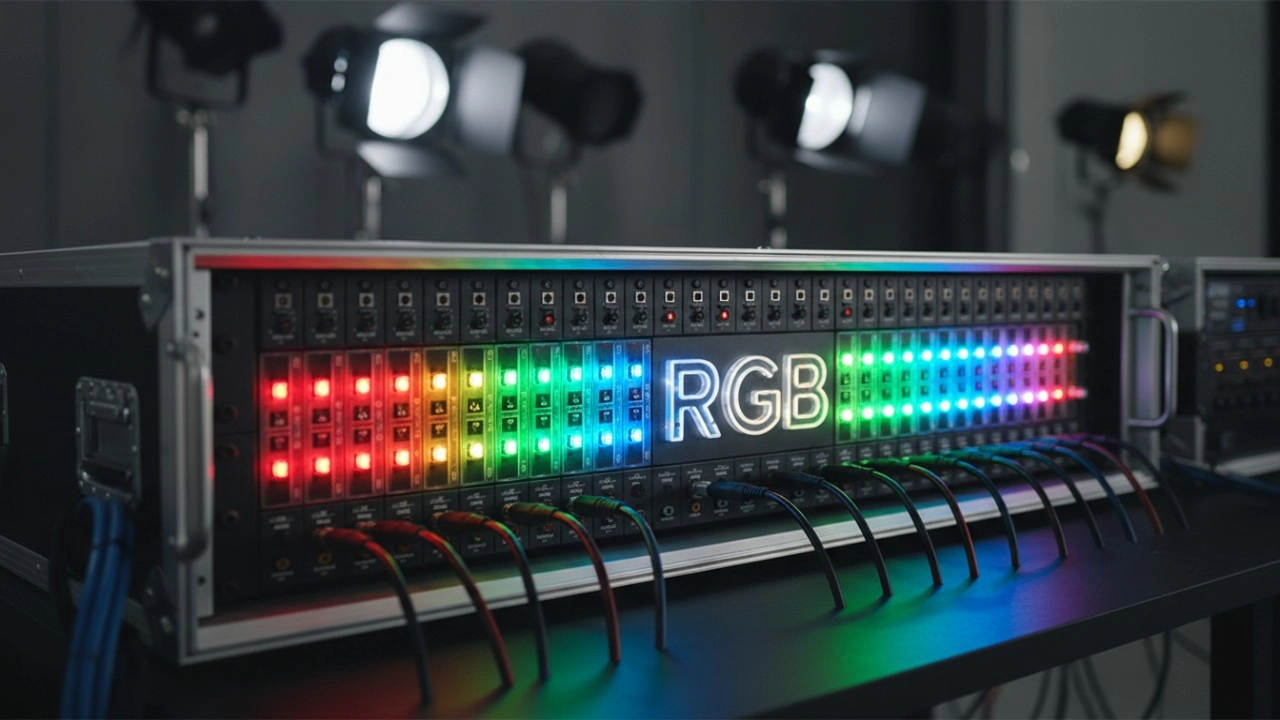
The Ultimate Guide to Custom Dimmer Racks in 2026 [Expert Insights]
Maintenance and Troubleshooting: Stage Dimmer Packs for Rentals
Installation Tips for Different Dimmer Rack Sizes
How to Integrate DMX Controllers with LED and Moving Lights
Distributors
Does RGB provide installation or commissioning services?
No. RGB only supplies dimming cabinets and technical documentation. On-site installation is handled by local integrators.
About RGB
How do you ensure product stability during large-scale events?
All products undergo rigorous testing, long-duration load simulation, and multi-standard verification to guarantee stable performance in demanding environments.
What types of lighting control systems do you support?
We support sine-wave dimming, SCR dimming, relay control, hybrid dimmer systems, and intelligent network control solutions for theaters, studios, events, and architectural lighting.
Do you offer customized solutions for specific projects?
Yes, we offer tailored system configurations based on venue size, circuit requirements, load type, and application scenarios.
What after-sales support do you provide?
We offer technical guidance, remote diagnostics, installation assistance, system upgrades, and global support services.
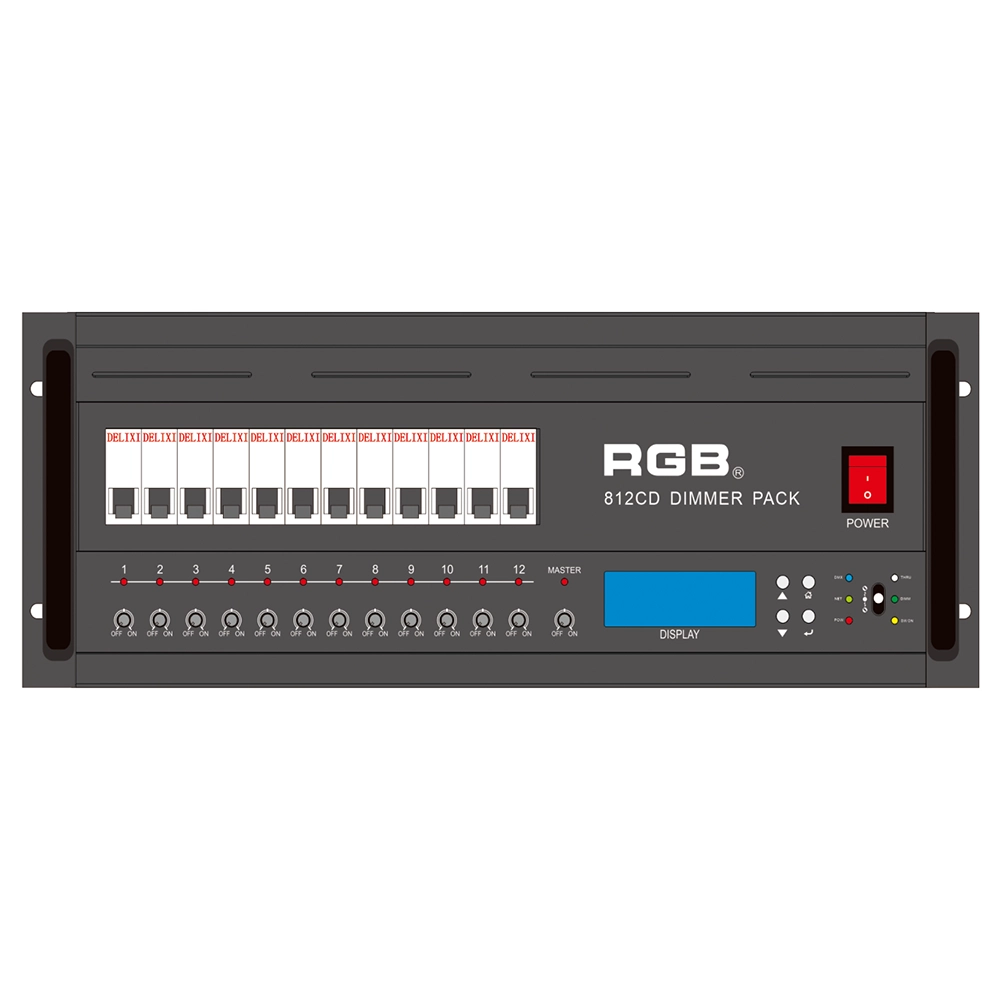
8 Series Intellight Dimmer/Relay Packs
RGB is the latest development and production of all digital, intelligent, and network dimming through the hybrid silicon box. It comes with six channels (806 silicon box), twelve channels (812 silicon box) with analog knob dimming, 49 DMX field recordings and replays (field backup function), and self-programming and recording field. RGB-8 silicon box with DMX512 digital signal input and RJ45 network input interface, with various types of dimming stations at home and abroad used. It is a powerful, stable performance and reliable work of a new generation of intelligent digital dimming through a hybrid silicon box.
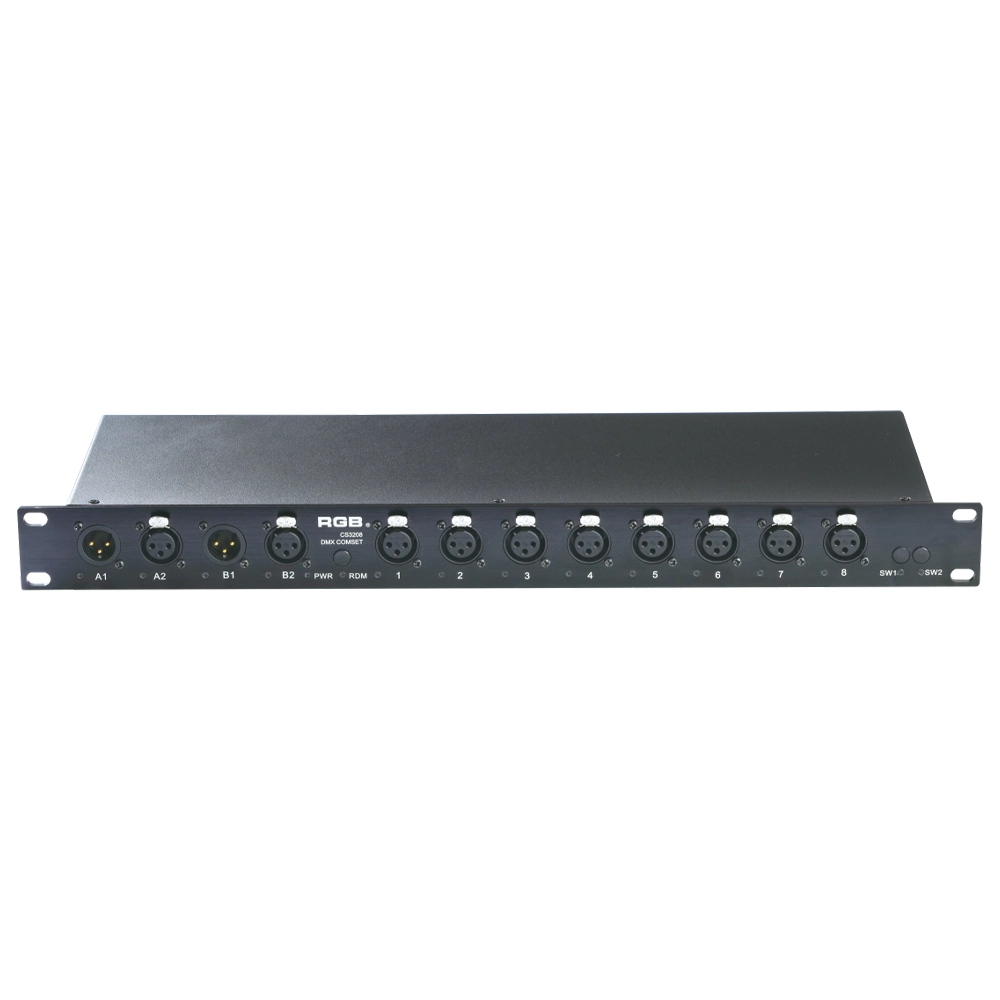
Multifunctional signal supercharger
The rack-mounted DMX signal amplifier complies with the DMX-512 standard protocol, improving DMX-512 signal transmission quality and ensuring reliable system control. It helps prevent issues such as AC high-voltage backflow into lighting control systems, lightning-induced surges, and signal interference caused by short circuits, thereby enhancing overall system stability.
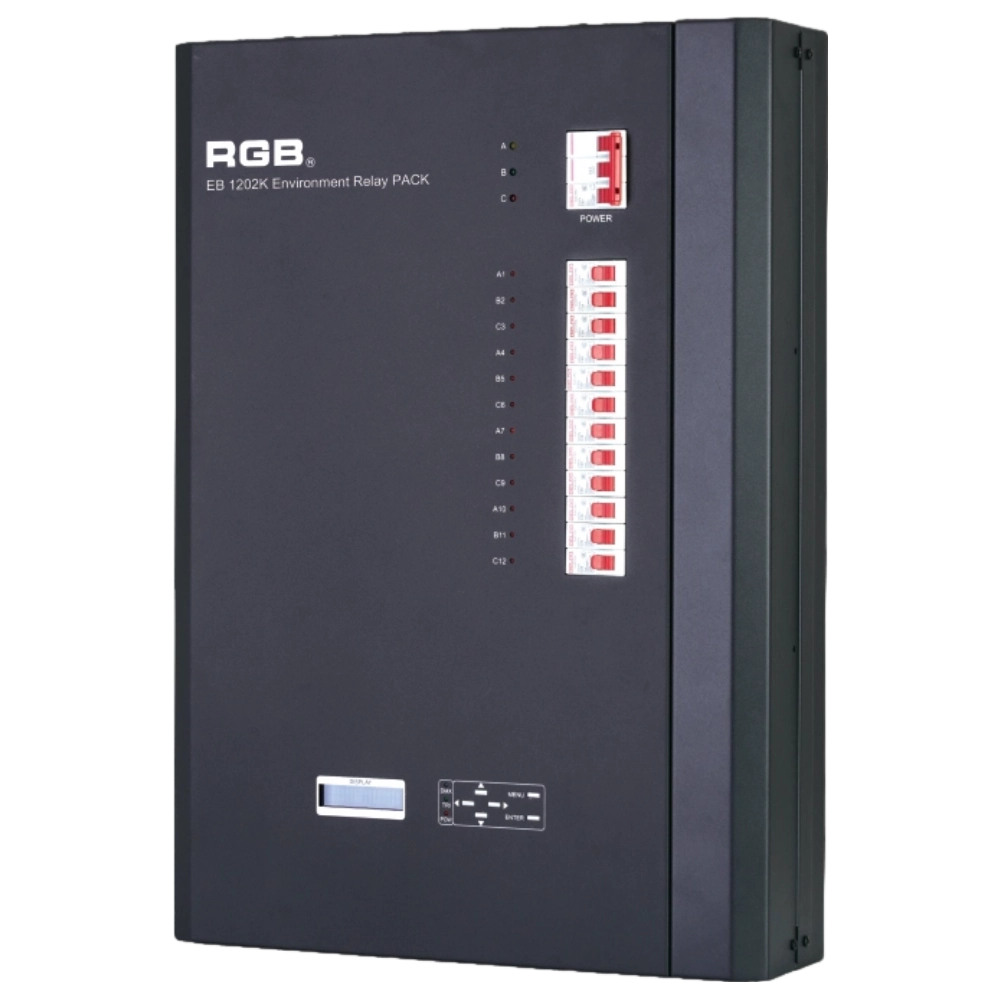
EB1202 Wall-Mounted Smart Site Light Control Series
Wall-mounted smart lighting controller with CE certification, DMX512 compatibility, flexible 12/24-channel output, scene backup, intelligent interface, and multiple dimming curves for precise professional lighting control.
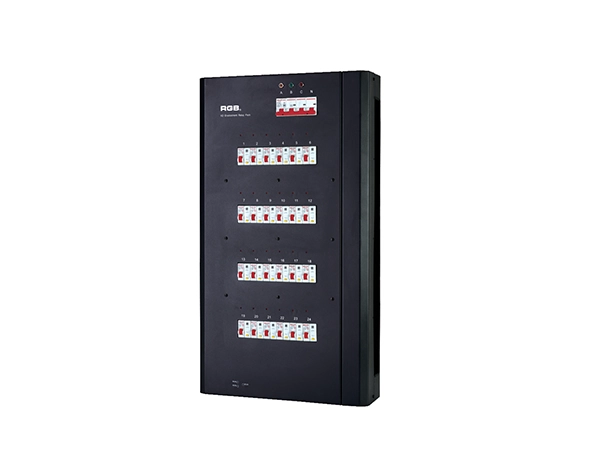
K2 Intelligent Network Relay Racks
K series is the newly developed and produced product of all-weather smart network relay cabinet. It has two major indoor and outdoor waterproof series and has multiple network control modes, such as double DMX512, sACN, ART-net, etc, which can control any equipment like resistive, inductive and capacitive and so on
K series has two major series from the perspective of function, namely, K2 ordinary type and KW2 waterproof type. It has two modes of installation, one is hanging on the wall, and the other is cabinet. It has three specifications of output circuit, namely, 24, 48 and 60 respectively.
K series applies to different performance places, such as, outdoor cultural tourism, TV station, theater, stadium and ambient intelligence lighting and so on.
Expert Support
Interested in learning more or need expert guidance related to this article? Fill in your details, and our team will provide tailored support.
Intelligent Control. Brilliant Performance.
RGB specializes in stage lighting control systems, delivering intelligent, reliable, and high-performance solutions for theaters and performance spaces worldwide.
Contact
Email:
Tel:
+86 20 3928 0245
+86 20 3928 0247
Address:
No.3, Huashan Road, Shilou Town, Panyu, Guangzhou, China.
Whatsapp: +8615975520131