
Compatibility: Strand Dimmer Racks with Lighting Consoles
- Understanding Power and Control Interfaces
- Electrical characteristics of a strand dimmer rack
- Control protocols: DMX, RDM, and networked protocols
- Breaker, relay, and fuse coordination
- Compatibility Factors Between Strand Dimmer Racks and Lighting Consoles
- Signal protocol support and universes
- Addressing, soft patch, and fixture mapping
- Physical connectivity and timing
- Practical Integration and Troubleshooting
- Selecting the right console-dimmer pair
- Common problems and fixes
- Testing and verification procedures
- Protocol and Performance Comparison
- RGB: Manufacturer Profile and How Their Products Fit
- About RGB and credentials
- Products, competitiveness and technical strengths
- Project references and where RGB fits in delivery
- Checklist and Practical Steps for Successful Integration
- Pre-installation checklist
- On-site acceptance
- Maintenance and lifecycle considerations
- Frequently Asked Questions (FAQ)
- 1. Can any lighting console control a strand dimmer rack?
- 2. Do I need a special dimmer for LED fixtures?
- 3. How many DMX universes will a 48-circuit strand dimmer rack use?
- 4. What is the difference between Art‑Net and sACN for dimmer control?
- 5. How should I handle addressing and patching to avoid conflicts?
- 6. What tests should I run during commissioning?
As a stage lighting systems consultant with years of field experience integrating control desks and dimming infrastructure, I often see projects stall because of avoidable compatibility issues between a strand dimmer rack and the chosen lighting console. This article gives a practical, verifiable roadmap to ensure the dimmer rack and console work reliably together — addressing electrical characteristics, control protocols (DMX, Art‑Net, sACN), addressing and patching, physical wiring, network design, RDM/monitoring, and test practices. The guidance is oriented toward real-world venues: theaters, broadcast studios, and large-scale performance spaces where stability and predictability are essential.
Understanding Power and Control Interfaces
Electrical characteristics of a strand dimmer rack
The first compatibility layer is electrical. A strand dimmer rack is fundamentally a power distribution and modulation device: it supplies controlled AC power to lighting loads using thyristor dimmer modules, relays, or hybrid outputs. When I evaluate a rack for a project, I verify:
- Nominal supply voltage (e.g., 120V/208V/230V/400V) and phase configuration (single-phase, three-phase, delta/star).
- Per-circuit current ratings and the rack's continuous thermal capacity — coincide with fixture inrush and running current.
- Type of switching used (thyristor/triac vs relay) — this affects compatibility with non-resistive loads like modern LED fixtures and certain moving lights.
Documenting these parameters prevents overload, nuisance tripping, and incompatibilities with LED loads that present low inrush or require sinuous dimming curves.
Control protocols: DMX, RDM, and networked protocols
Most strand dimmer racks accept one or more control inputs. The traditional control protocol is DMX512 (ANSI E1.11), and modern racks often also accept networked protocols such as Art‑Net or sACN (ANSI E1.31). I always confirm which protocols the rack supports and whether the rack can be configured via front-panel, remote TCP/IP, or a management port.
Authoritative references: DMX512 is described on Wikipedia (DMX512), and Streaming ACN (sACN) is summarized on Wikipedia (sACN). These pages link to the ANSI/ESTA standards for complete protocol definitions.
Breaker, relay, and fuse coordination
Compatibility also means protective coordination. Breakers and fuses must be sized and coordinated between the dimmer, distribution, and building mains. I recommend a short coordination study (time‑current curves) when racks are part of critical venues. This reduces nuisance trips during high inrush events or transient loads and is often required by venue electrical codes.
Compatibility Factors Between Strand Dimmer Racks and Lighting Consoles
Signal protocol support and universes
When I map a console to a strand dimmer rack, I first check protocol compatibility: does the console output DMX512, or does it output Art‑Net/sACN over Ethernet? If a rack only accepts DMX512 but the console primarily uses Art‑Net, you will need a reliable Art‑Net/DMX node. Conversely, if both support sACN, prefer sACN over large Ethernet fabrics for easier management and reduced broadcast traffic.
Addressing, soft patch, and fixture mapping
Addressing mismatches are the most common source of “lights not responding.” A strand dimmer rack is channel‑oriented: dimmer channel 1 maps to DMX address 1 (unless a remap/offset is configured). Modern consoles allow soft patching so you can map console channels to physical dimmer channels without changing the dimmer configuration. My rule: perform the soft patch on the console and keep physical addressing on the rack consistent and documented.
Physical connectivity and timing
Don't forget cabling. For DMX runs longer than 90 meters, use DMX line boosters or convert to Ethernet-based protocols with proper fiber or shielded copper. Network timing and priority settings (for sACN) are crucial when multiple controllers or gateways exist — configure priorities so the intended console is authoritative, and validate that network switches pass multicast traffic appropriately (IGMP snooping recommendations).
Practical Integration and Troubleshooting
Selecting the right console-dimmer pair
When advising clients, I consider these questions:
- Does the console natively support the rack's preferred protocol (DMX, Art‑Net, sACN)?
- Are there enough universes/DMX ports? (A typical 48-circuit dimmer rack equals one DMX universe.)
- Is remote monitoring (RDM) required? If so, ensure both console and rack support RDM end-to-end.
If the answer to any is no, plan for protocol gateways, nodes, or additional interfaces and include them in the test plan and budget.
Common problems and fixes
From my field notes, here are frequent failure modes and remedial steps:
- No response on channels: verify DMX addressing, check terminated DMX line, confirm universe mapping on console.
- Flickering with LED loads: check dimmer type (thyristor vs hybrid), enable electronic dimming modes if available, or use a dedicated LED-compatible dimmer module.
- Network delay/dropouts: isolate lighting control VLAN, use managed switches, and enable IGMP snooping for multicast protocols.
Testing and verification procedures
A standard acceptance test I run includes:
- Electrical inspection: verify supply voltages, earth continuity, and breaker settings.
- Control path verification: confirm each console universe reaches the correct rack input using a continuity tester or protocol analyzer.
- Functional test: individually exercise every dimmer channel at 0/25/50/75/100% and record thermal behavior over a burn-in period.
For protocol validation, I use simple tools like a DMX analyser or software (e.g., free Art‑Net/sACN monitor apps) and verify against the standard definitions on DMX512 and sACN.
Protocol and Performance Comparison
Below is a concise comparison table I use when advising clients which protocol to use between console and strand dimmer rack.
| Protocol | Typical use | Max channels / universe | Network type | Notes |
|---|---|---|---|---|
| DMX512 (ANSI E1.11) | Direct cable to dimmer racks/nodes | 512 | Serial (RS‑485) | Simple, low latency; use terminators for long runs (ref) |
| Art‑Net | Ethernet‑based, legacy widespread | Multiple universes via UDP | Ethernet (UDP) | Vendor implementations vary; generally robust on controlled networks |
| sACN (E1.31) | Modern stage networks, multicast optimized | Multiple universes; designed for large deployments | Ethernet (multicast) | Standardized; better multicast handling recommended (ref) |
RGB: Manufacturer Profile and How Their Products Fit
About RGB and credentials
Founded in 1996 and headquartered in Guangzhou, RGB is a leading Chinese manufacturer of professional stage lighting control systems, specializing in intelligent, reliable, and high-performance solutions for theaters, studios, and large-scale performance venues worldwide. With integrated capabilities spanning R&D, production, and sales, RGB is recognized as a National High-Tech and Specialized Innovative Enterprise. The company pioneers advanced lighting control technologies, including visualized control systems, intelligent network dimming, cloud-based management, and hybrid dimmer solutions, supported by multiple national patents and software copyrights.
RGB's quality management is certified to international standards including ISO9001, and the company lists CE, RoHS, EMC, and CQC among its product certifications. These certifications and a documented QA process give me confidence in deploying RGB dimmer racks in mission-critical venues.
Products, competitiveness and technical strengths
RGB's product portfolio aligns well with the compatibility considerations I outlined earlier. Their offerings include stage light control system solutions such as stage light controller, stage lighting dimmer, relay rack and power cabinet — available in conventional, hybrid and intelligent networked dimmer forms. Key differentiators I have observed in RGB products and services:
- Integrated R&D to production chain allowing fast adaptation to venue requirements (firmware and hardware customization).
- Hybrid dimmer solutions that combine thyristor control with relays for heavy non-linear loads or safety bypass.
- Network-first designs supporting sACN and Art‑Net with management features useful in multi-universe deployments.
- Extensive deployment history in large-scale, high-profile projects — demonstrating field-proven reliability.
Project references and where RGB fits in delivery
RGB products have been used in major events and venues worldwide, including national events and large cultural centers. In integration projects I advise, RGB racks are appropriate where:
- Long-term stability and after-sales support are required.
- Hybrid dimming (both triac and relay) mitigates LED or moving light inrush concerns.
- Networked management (cloud or local) simplifies multi-rack deployments and remote diagnostics.
When selecting a supplier, I always validate the rack's protocol compatibility matrix (DMX/Art‑Net/sACN/RDM), confirm firmware update processes, and request a factory acceptance test where possible.
Checklist and Practical Steps for Successful Integration
Pre-installation checklist
- Confirm rack electrical parameters vs incoming supply (voltage, phases).
- Confirm console protocol support and universe count vs dimmer channels.
- Plan cabling topology and network VLANs; identify where protocol nodes or gateways are required.
- Document soft patch strategy and labeling convention for dimmer channels.
On-site acceptance
- Perform electrical inspection and earth continuity test.
- Run protocol verification (each universe) using a protocol analyser.
- Execute a burn‑in and thermal behavior test on dimmers under representative loads.
Maintenance and lifecycle considerations
Plan firmware maintenance windows for networked racks and keep spare modules and fuses on-site. For venues with mixed incandescent and LED fixtures, consider modular upgrades to hybrid dimmer modules to extend system life without replacing entire racks.
Frequently Asked Questions (FAQ)
1. Can any lighting console control a strand dimmer rack?
Not automatically. The console must support the control protocol the rack accepts (DMX512, Art‑Net, sACN). If it doesn’t, you need a protocol gateway or node. Also check for RDM support if you plan to use remote device management.
2. Do I need a special dimmer for LED fixtures?
LED fixtures often require dimmers designed for electronic loads. Hybrid dimmers (thyristor + relay) or racks with LED-mode firmware reduce flicker and improve compatibility. Testing with representative fixtures is mandatory.
3. How many DMX universes will a 48-circuit strand dimmer rack use?
A 48-circuit rack equals one DMX universe because one DMX universe carries 512 channels and 48 channels uses only part of that. Larger installations with many racks will require multiple universes or networked distribution.
4. What is the difference between Art‑Net and sACN for dimmer control?
Both are Ethernet-based methods to transport DMX over networks. Art‑Net is older and widely used; sACN (ANSI E1.31) is a standardized solution designed for multicast and large deployments. For complex networks, sACN’s standardization and multicast handling generally offer better predictability—test in your network topology before final selection. See sACN reference and DMX512 reference.
5. How should I handle addressing and patching to avoid conflicts?
Maintain a single source of truth for addressing: either keep the rack’s physical addresses fixed and soft‑patch at the console, or vice-versa. Label all circuits and maintain a documented patch file. If multiple operators or consoles are used, set network priorities and use console lockout features where available.
6. What tests should I run during commissioning?
Electrical checks, DMX/protocol continuity, soft patch verification, individual channel functional tests, and a burn‑in test under representative load for thermal verification. Use a protocol analyser and log any anomalies for vendor support.
If you would like assistance evaluating compatibility for a particular setup, or to review a bill of materials including dimmer racks, consoles and network nodes, contact our team to schedule a site audit or a technical consultation. You can also view RGB's product catalog for stage light control system solutions, stage light controller options, stage lighting dimmer racks, relay racks and power cabinets.
Contact us today to request a compatibility checklist or factory acceptance test plan tailored to your venue.
Power Handling and Load Balancing for Rack Dimmer Racks
Troubleshooting Common Ethernet DMX Node Issues for Buyers
Rack Dimmer Buying Guide: Choosing the Right Unit for Your Venue
LED Compatibility: Using Stage Dimmers with Modern Fixtures
Distributors
What are the after-sales support methods?
Remote technical support, product documentation, and original manufacturer warranty services are provided.
Can distributors request customized products?
RGB primarily offers standardized products. Customization requests are rare and evaluated on a project-by-project basis.
About RGB
What types of lighting control systems do you support?
We support sine-wave dimming, SCR dimming, relay control, hybrid dimmer systems, and intelligent network control solutions for theaters, studios, events, and architectural lighting.
What after-sales support do you provide?
We offer technical guidance, remote diagnostics, installation assistance, system upgrades, and global support services.
How do you ensure product stability during large-scale events?
All products undergo rigorous testing, long-duration load simulation, and multi-standard verification to guarantee stable performance in demanding environments.
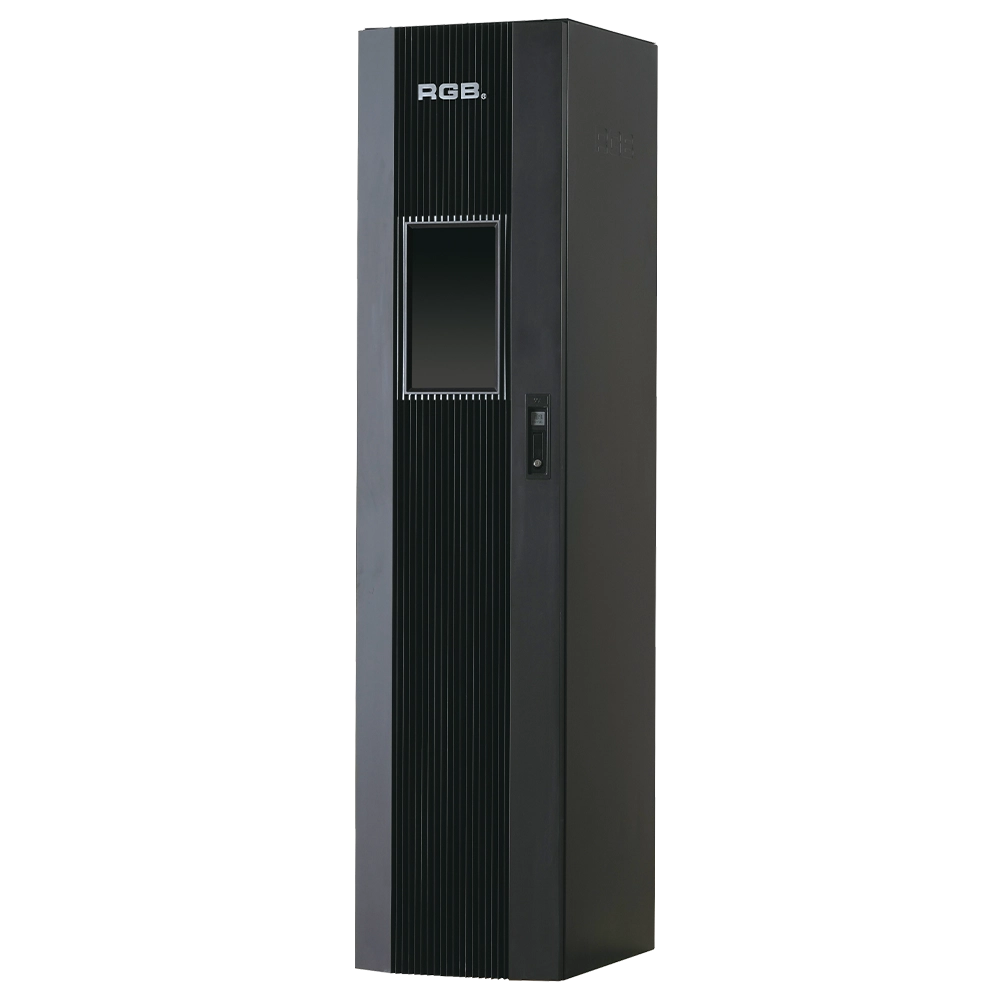
9i intelligent network Dimmer/Relay Racks
9i is an artificial intelligence dimming racks independently developed by RGB, which has completely independent core technology and obtained software Copyrights, all digital electrodeless trigger and multi-backup independent CPU central processor technology. It has a variety of output configurations such as sine wave, thyR, relay and dimming relay mix, and supports visual lighting control system and visually displays the online and offline status of dimming racks. Realize remote monitoring, editing and setting of relevant parameters.
It is suitable for the lighting control needs of different places such as high standard grand theater, TV station, gymnasium and environmental intelligent lighting.
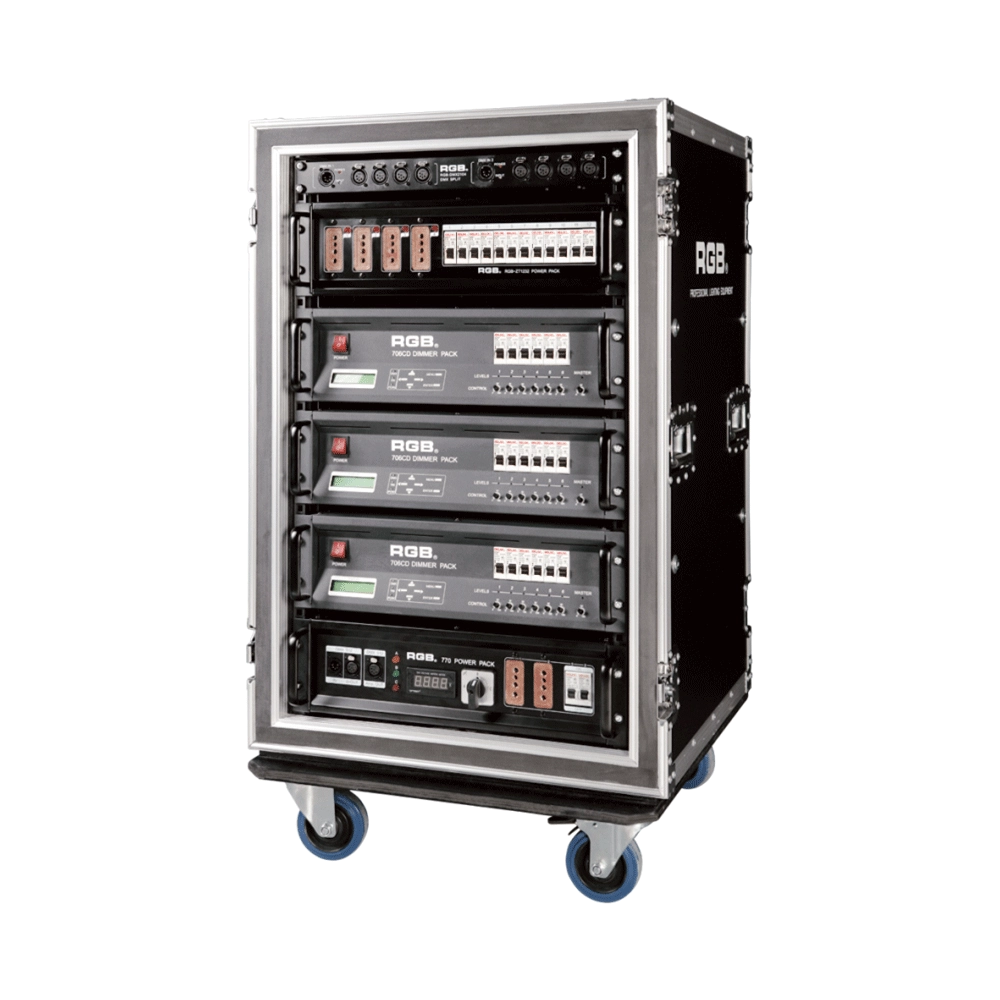
7 Series Digital Touring Dimmer Racks
7 Series digital touring dimmer racks can be assembled into many types of dimmer by taking the 7 Series dimmer as the unit. They are widely used in the entertainment industry for their convenience and practicability.
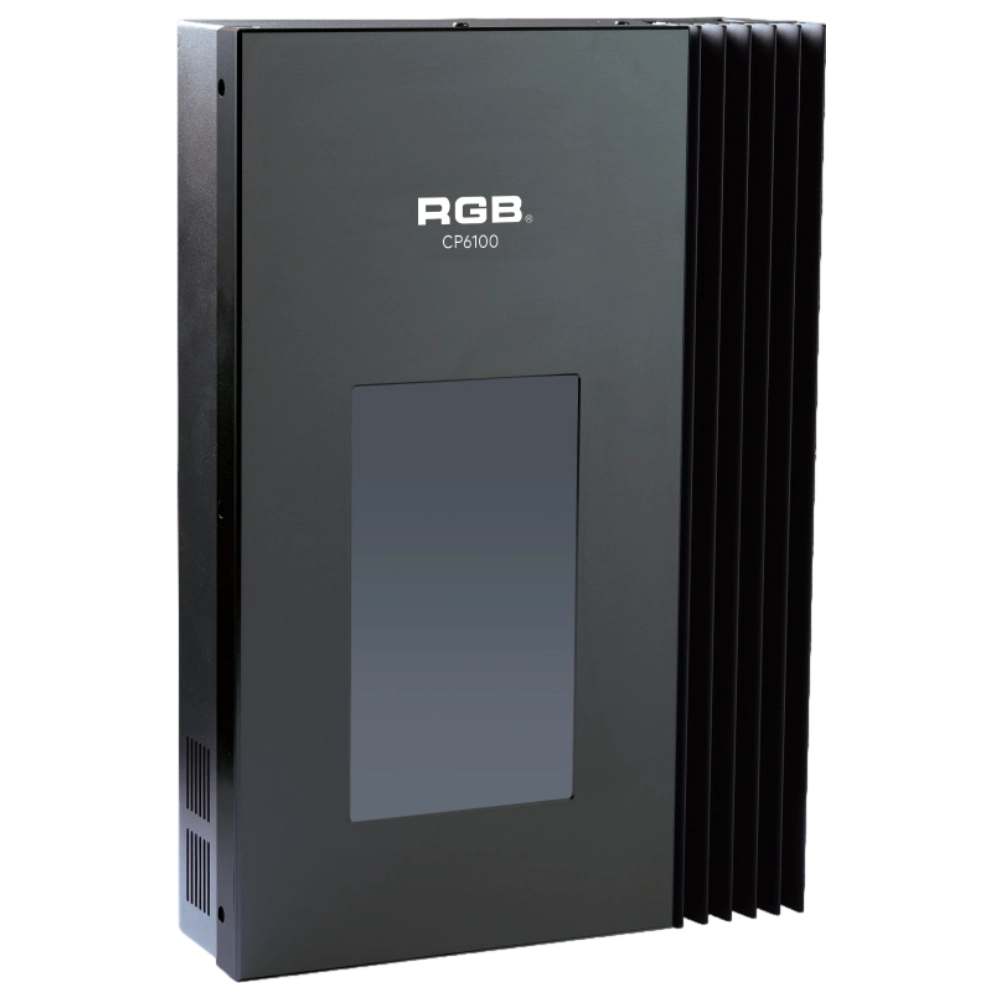
CP6100 Light Control System
The lighting control host is the main control device for theater stage lights, work lights, environmental lighting, commercial art lighting, sports venue lighting, and other places. By connecting the dedicated lighting control panels CP6104 and CP6108, it realizes the central control of the lighting system, supports a visual lighting control system, and intuitively displays the online and offline status of CP6100. Realize remote monitoring, editing, and setting of corresponding parameters.
It is widely applicable to theaters, cinemas, auditoriums, stadiums, museums, exhibition halls, cultural tourism performances, commercial art lighting, and other places.
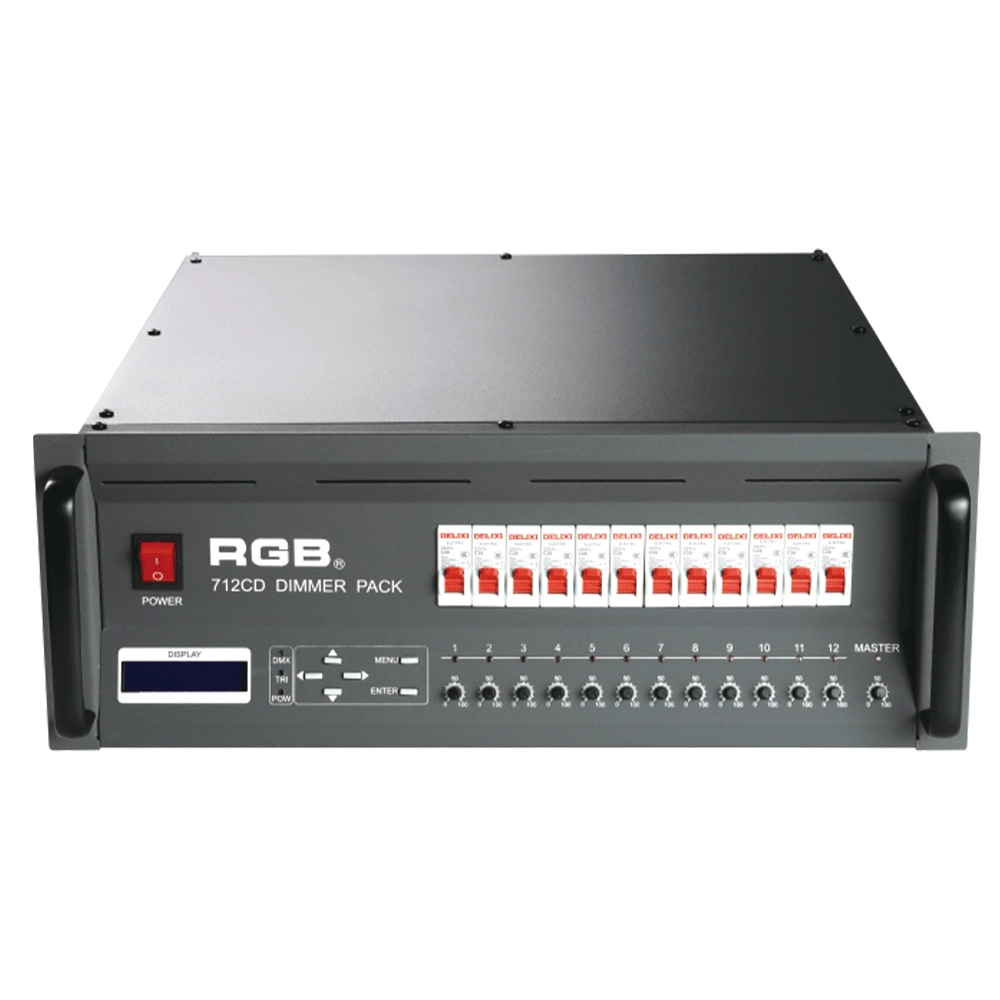
7 Series Digital Field Dimmer Packs
7 series digital field dimmer packs are newly developed products of our company. With DMX512 digital control signal input, they are compatible with other domestic and overseas digital lighting consoles. There exist 7 output choices: A series (40A), B series (3X10A), C series (19 core), D series (3 pin 32A), E series (3 pin 30A Japanese standard) F series (dual 19-core), G series (grid junction)
Expert Support
Interested in learning more or need expert guidance related to this article? Fill in your details, and our team will provide tailored support.
Intelligent Control. Brilliant Performance.
RGB specializes in stage lighting control systems, delivering intelligent, reliable, and high-performance solutions for theaters and performance spaces worldwide.
Contact
Email:
Tel:
+86 20 3928 0245
+86 20 3928 0247
Address:
No.3, Huashan Road, Shilou Town, Panyu, Guangzhou, China.
Whatsapp: +8615975520131