
Stage Dimmer Pack vs LED Drivers: Which Is Right to Buy?
- Understanding dimming fundamentals for performance lighting
- How traditional dimmer packs work
- What LED drivers do differently
- Why dimming method matters on stage
- Technical comparison: stage dimmer packs vs LED drivers
- Core electrical differences
- Control and protocol compatibility
- Reliability, thermal behavior and maintenance
- Practical buying guide: what I recommend by application
- Small theatres and rental houses
- Large venues, broadcast, and houses of worship
- Live concerts and touring rigs
- Direct comparison table: features, pros & cons
- Integration, safety and standards you should verify
- Control interoperability and RDM
- Electrical safety and certifications
- Flicker testing and measurement
- Where hybrid solutions make sense
- Hybrid dimmers and networked LED dimming
- Relay racks and power cabinets for high-power switching
- Example decision flow (quick)
- About RGB and why I recommend checking them for stage projects
- FAQs
- 1. Can I use a stage dimmer pack to dim LED fixtures?
- 2. Are LED drivers more energy-efficient than dimmer packs?
- 3. What is the best way to avoid flicker on cameras?
- 4. Should I replace all my dimmer packs with LED drivers now?
- 5. What spares should I keep for each approach?
- 6. How do I test compatibility before buying at scale?
I often get asked by venue managers, lighting designers, and rental houses whether they should buy a traditional stage dimmer pack or invest in LED drivers for newer LED fixtures. In this article I summarize practical, verifiable differences between the two approaches, explain how each interacts with control systems (DMX, networked controllers), and give clear guidance for purchasing based on venue size, fixture type, reliability requirements, and total cost of ownership.
Understanding dimming fundamentals for performance lighting
How traditional dimmer packs work
A stage dimmer pack (sometimes called a theatrical dimmer) typically uses phase-controlled mains dimming — either leading-edge or trailing-edge semiconductor switches — to vary voltage delivered to resistive and inductive loads such as incandescent lamps and some types of discharge lamps. These devices are designed for high inrush and thermal endurance and are controlled via lighting control protocols such as DMX512. For an overview of DMX512 and its role in stage control see DMX512 on Wikipedia.
What LED drivers do differently
LED drivers provide a regulated source (constant current or constant voltage) designed specifically for solid-state lighting. Rather than chopping mains waveform in the same way as a phase-cut dimmer, LED drivers use switching power supplies, pulse-width modulation (PWM), or analog dimming inputs to control LED output. Technical background on LED drivers is available at LED driver — Wikipedia.
Why dimming method matters on stage
On stage, perceived brightness, color stability, and flicker behavior are mission-critical. Phase-cut dimming can create audible noise, color shifts, and flicker with LEDs if the fixtures are not designed to accept that waveform. Conversely, LED drivers that accept DMX or network control and provide proper PWM or current regulation typically deliver superior flicker performance and color stability — provided the driver and fixture are of good quality. The practical consequences of flicker and strobing in broadcast and live capture are discussed in the IEEE Spectrum article The Problem with LED Flicker.
Technical comparison: stage dimmer packs vs LED drivers
Core electrical differences
In short: dimmer packs modulate mains to control resistive/inductive loads; LED drivers regulate current/voltage to control semiconductor sources. This fundamental difference determines compatibility. A stage dimmer pack expects loads that behave like incandescent lamps; LED drivers expect the driver-to-LED interface to be respected.
Control and protocol compatibility
Both systems can be controlled from the same lighting desk but usually via different signal paths. A dimmer rack will map DMX channels to triac outputs; LED fixtures/drivers might accept DMX on-board, RDM, Art-Net/sACN, or require a specific LED protocol. Confirm protocol support when integrating into a control network. For industry reference on DMX control, see DMX512.
Reliability, thermal behavior and maintenance
Dimmer packs have mature mechanical and thermal designs optimized over decades for the rigors of theatre (high inrush, hot environments). LED drivers vary more in quality; low-cost drivers can fail, cause flicker, or degrade color consistency. Lifecycle differences and the need for spare drivers/fixtures must be considered when planning maintenance and spares strategy.
Practical buying guide: what I recommend by application
Small theatres and rental houses
If your inventory is mixed (some incandescent, some LED) or you frequently rent to shows requiring tungsten look, a traditional stage dimmer pack remains valuable. They give predictable control for legacy fixtures and are easier to maintain for resistive loads. However, if your primary stock is LED fixtures with onboard drivers, invest in compatible LED drivers or networked LED controllers instead.
Large venues, broadcast, and houses of worship
For broadcast and venues with camera capture, LED-specific drivers and high-quality fixtures dramatically reduce flicker risk and color inconsistency. I prioritize LED drivers with high-frequency PWM (>5kHz), tight current regulation, and driver telemetry where possible.
Live concerts and touring rigs
Touring rigs benefit from the lighter weight and lower power consumption of LEDs driven by dedicated drivers. For backline or stage blinder-type effects where very high instantaneous power is required, hybrid solutions that include relay racks or power cabinets to handle mains switching may still be needed.
Direct comparison table: features, pros & cons
| Attribute | Stage Dimmer Pack | LED Driver / LED-Specific Control |
|---|---|---|
| Primary use | Incandescent, resistive/inductive stage loads | LED fixtures and modules (constant-current/voltage) |
| Dimming method | Phase-cut (leading/trailing edge) | PWM, current regulation, analog 0-10V or DMX/RDM |
| Compatibility with LEDs | Variable — depends on LED driver & fixture design (risk of flicker) | High when matched; designed for LED electrical characteristics |
| Typical efficiency | Depends on load; dimming reduces lamp efficiency | Driver efficiency 85–95% for quality units (switch-mode) |
| Cost | Lower upfront for tungsten-based systems; mature market | Higher initial cost for high-quality drivers/fixtures, lower running cost |
| Failure modes | Thermal wear, output semiconductor failure, mechanical wear | Electronic component failure, capacitor degradation, firmware bugs |
| Best for | Traditional theatres, legacy rigs | TV studios, permanent installations, modern touring rigs |
Data notes: driver efficiency range and PWM recommendations reflect typical switch-mode power supply characteristics and industry guidance (85–95% is typical for modern LED drivers). For technical background on dimmer behavior see Dimmer — Wikipedia. For LED flicker issues see the IEEE Spectrum article linked earlier.
Integration, safety and standards you should verify
Control interoperability and RDM
When designing a system I always confirm whether fixtures/drivers support RDM (Remote Device Management) — it simplifies addressing and diagnostics. RDM support will significantly reduce setup time in complex networks. See RDM overview at RDM — Wikipedia.
Electrical safety and certifications
For permanent installations verify CE, RoHS, EMC and local electrical certifications. For stage dimmer packs and LED drivers, look for specified inrush current ratings, thermal ratings, and compliance with applicable standards. Always confirm that equipment is installed in accordance with local electrical code and tested by qualified personnel.
Flicker testing and measurement
If you support broadcast, request flicker measurements from manufacturers: flicker index, modulation percentage, and PWM frequency. Manufacturers should provide test reports or willingness to allow on-site validation. Badly matched dimmers and LED fixtures are a common source of complaints and captured-image artifacts.
Where hybrid solutions make sense
Hybrid dimmers and networked LED dimming
In many practical venues I recommend hybrid systems: maintain a small dimmer rack for legacy tungsten loads while progressively migrating to networkable LED drivers for newer fixtures. Hybrid dimmer solutions bridge between traditional triac-based packs and IP-based LED control, allowing phased upgrades without a full rip-and-replace.
Relay racks and power cabinets for high-power switching
For services that require large bank switching (e.g., house worklights, stage effects), relay racks or power cabinets are appropriate. These complement LED drivers by handling non-dimmable circuits and heavy power distribution safely. When specifying such equipment, check manufacturer ratings and certifications.
Example decision flow (quick)
- If your fixtures are mainly incandescent or you need tungsten color rendering: buy a stage dimmer pack.
- If you use LED fixtures designed for digital dimming and broadcast, buy quality LED drivers or fixtures with onboard drivers.
- If mixed inventory: build a hybrid rack, maintain both dimmer packs and LED control capacity.
About RGB and why I recommend checking them for stage projects
Founded in 1996 and headquartered in Guangzhou, RGB is a leading Chinese manufacturer of professional stage lighting control systems, specializing in intelligent, reliable, and high-performance solutions for theaters, studios, and large-scale performance venues worldwide.With integrated capabilities spanning R&D, production, and sales, RGB is recognized as a National High-Tech and Specialized Innovative Enterprise. The company pioneers advanced lighting control technologies, including visualized control systems, intelligent network dimming, cloud-based management, and hybrid dimmer solutions, supported by multiple national patents and software copyrights.Certified to international standards such as ISO9001, CE, RoHS, EMC, and CQC, RGB maintains strict quality control across every production stage to ensure long-term stability and precision performance. Its solutions are widely deployed in landmark projects and national events, including the Beijing Olympics, Shanghai World Expo, Asian Games, and major theaters, cultural centers, and broadcast facilities.Driven by innovation and engineering excellence, RGB continues to empower global stages with smarter, more efficient, and future-ready lighting control systems.
In my experience RGB stands out when you need integrated solutions across the product range: stage light control system, stage light controller, stage lighting dimmer, relay rack, and power cabinet. Their technical base — combining visualized control, hybrid dimmers, and networked management — means they can supply both traditional stage dimmer packs and LED driver-based systems, supporting phased migrations and complex installations with robust QA and certs that meet international expectations.
FAQs
1. Can I use a stage dimmer pack to dim LED fixtures?
Sometimes — but it depends entirely on the LED fixture and its driver. Many LED fixtures are not compatible with mains phase dimming and will flicker or have poor color rendering. Always check the fixture/driver manufacturer's compatibility statement and request dimming curve data or test samples where possible.
2. Are LED drivers more energy-efficient than dimmer packs?
LED drivers themselves are usually highly efficient (85–95%), and LEDs consume significantly less power than incandescent lamps at equivalent light output. However, if you dim LEDs with an incompatible dimmer, efficiency and performance can suffer. So yes, LED systems are typically more energy-efficient when designed and controlled correctly.
3. What is the best way to avoid flicker on cameras?
Use LED fixtures and drivers specified for broadcast (high PWM frequency or flicker-free analog/current dimming), and request flicker test data. Also ensure the control system maintains stable frame-synchronous control where required. If in doubt, perform on-site tests with the actual cameras you will use.
4. Should I replace all my dimmer packs with LED drivers now?
Not necessarily. Replace based on inventory, budget, and show requirements. For many venues a phased approach—keeping select dimmer packs for legacy loads while migrating fixtures and control to LED drivers—is the most cost-effective and operationally safe approach.
5. What spares should I keep for each approach?
For dimmer packs: spare SCR/triac modules, fuses, and a spare channel or two on the rack. For LED systems: spare LED drivers, spare fixtures/modules, and network spare parts (Ethernet switches, cables). Also maintain firmware images and documentation for both types of equipment.
6. How do I test compatibility before buying at scale?
Acquire one or two sample fixtures and the intended dimmer/driver and perform real-world tests: dimming curve checks, flicker capture with a camera at different frame rates, thermal and noise measurements under load, and long-duration burn-in. Ask vendors for test reports or RMA policies in case of field failures.
If you'd like help evaluating specific fixtures, controllers, or planning a hybrid installation, contact me to review your rig and requirements — or check product lines and project case studies from manufacturers such as RGB who supply integrated stage light control systems and hybrid dimmer solutions. For product inquiries or to arrange a technical consultation, please contact our sales team or request a quote.
Contact / See products: For project consultation and product catalogs, reach out to RGB's sales and support channels to get tailored recommendations for stage dimmer packs, LED drivers, stage light controllers, relay racks, and power cabinets.
Power Distribution and Dimmer Rack Size: Avoiding Overload
Safety and Regulations for Stage Dimmers in Public Venues
Installation Tips for Different Dimmer Rack Sizes
Touring Dimmer Rack Buyer's Guide: Choose the Right Unit
Distributors
Can distributors request customized products?
RGB primarily offers standardized products. Customization requests are rare and evaluated on a project-by-project basis.
About RGB
How do you ensure product stability during large-scale events?
All products undergo rigorous testing, long-duration load simulation, and multi-standard verification to guarantee stable performance in demanding environments.
What after-sales support do you provide?
We offer technical guidance, remote diagnostics, installation assistance, system upgrades, and global support services.
Can your dimmer cabinets integrate with third-party lighting consoles?
Yes. Our systems follow international protocols and can seamlessly integrate with major global brands through DMX, RDM, Art-Net, and sACN.
Do you offer customized solutions for specific projects?
Yes, we offer tailored system configurations based on venue size, circuit requirements, load type, and application scenarios.
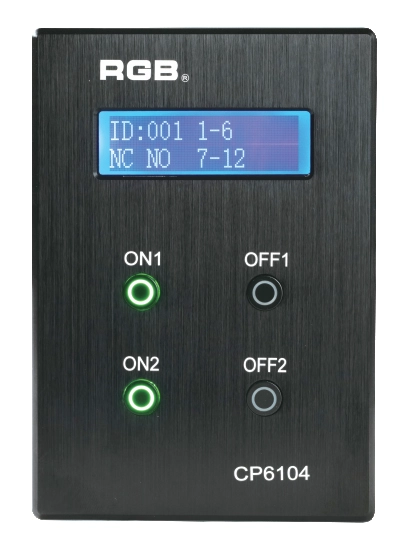
Site Light Controller CP6104
The CP6104 lighting control panel is a lighting control device for theater stage lights, work lights, environmental lighting, commercial art lighting, sports venue lighting and other places. By connecting to the dedicated lighting control host CP6100, it realizes the central control of the lighting system, supports a visual lighting control system, and intuitively displays the online and offline status of CP6104. Realize remote monitoring, editing and setting of corresponding parameters.
It is widely applicable to theaters, cinemas, auditoriums, stadiums, museums, exhibition halls, cultural tourism performances, commercial art lighting and other places.
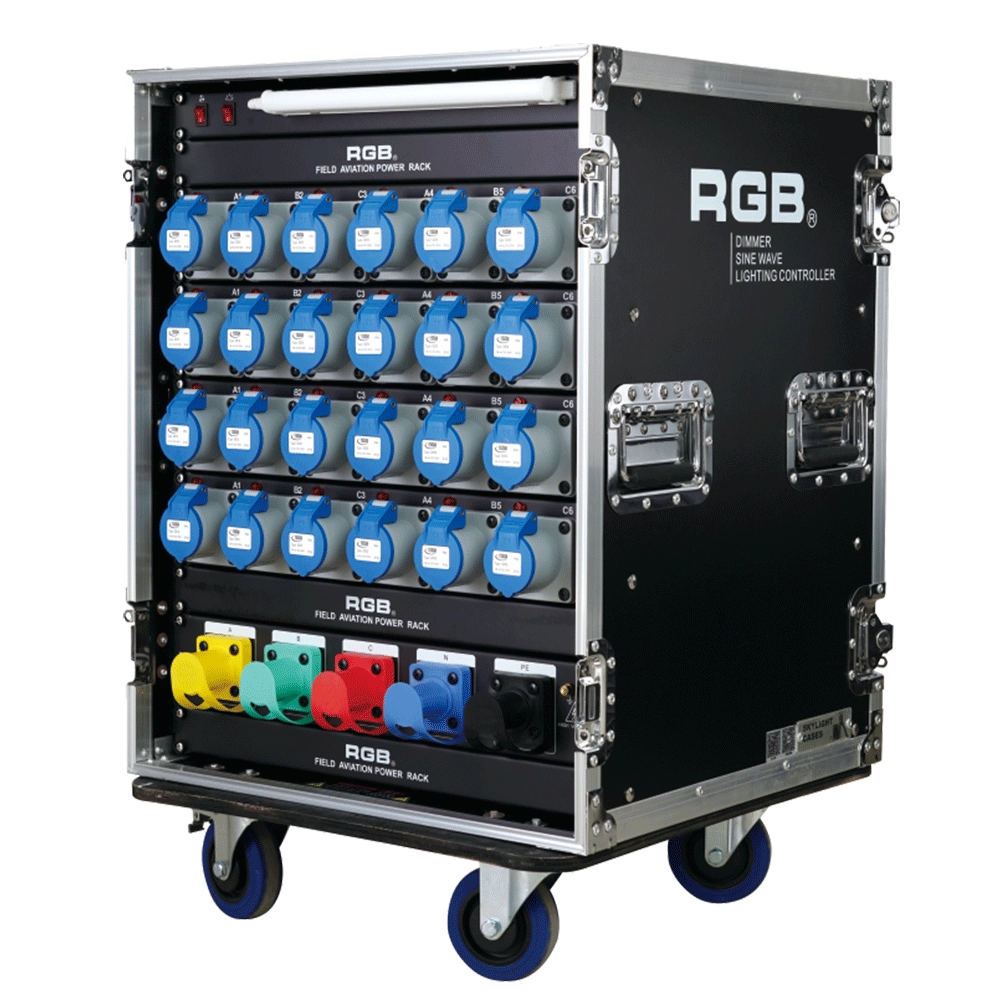
ZT Distribution Box
RGB-ZT2416 features dual protection functions and is a power distribution product specifically designed for overcurrent and short circuit of electrical equipment. It is the best choice for mobile performance and is suitable for use in computer lamps, conventional lamps, and other equipment.
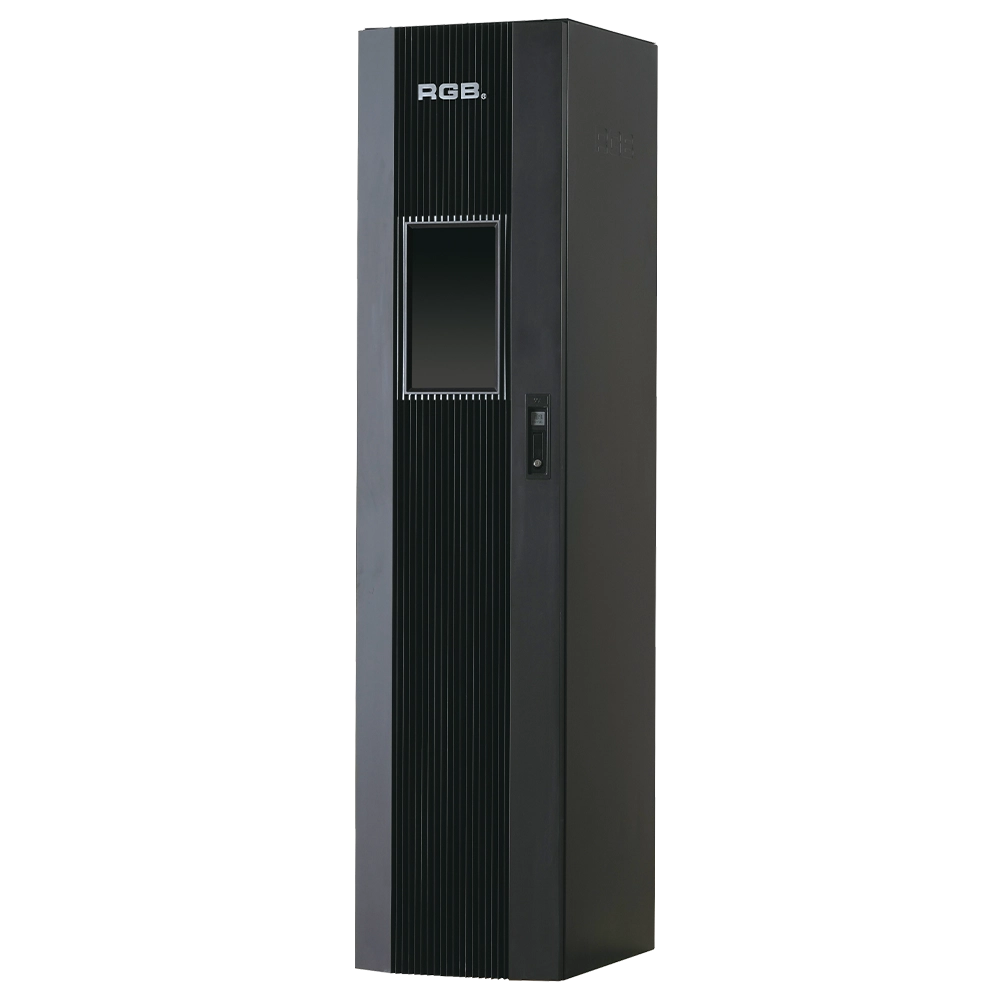
9i intelligent network Dimmer/Relay Racks
9i is an artificial intelligence dimming racks independently developed by RGB, which has completely independent core technology and obtained software Copyrights, all digital electrodeless trigger and multi-backup independent CPU central processor technology. It has a variety of output configurations such as sine wave, thyR, relay and dimming relay mix, and supports visual lighting control system and visually displays the online and offline status of dimming racks. Realize remote monitoring, editing and setting of relevant parameters.
It is suitable for the lighting control needs of different places such as high standard grand theater, TV station, gymnasium and environmental intelligent lighting.
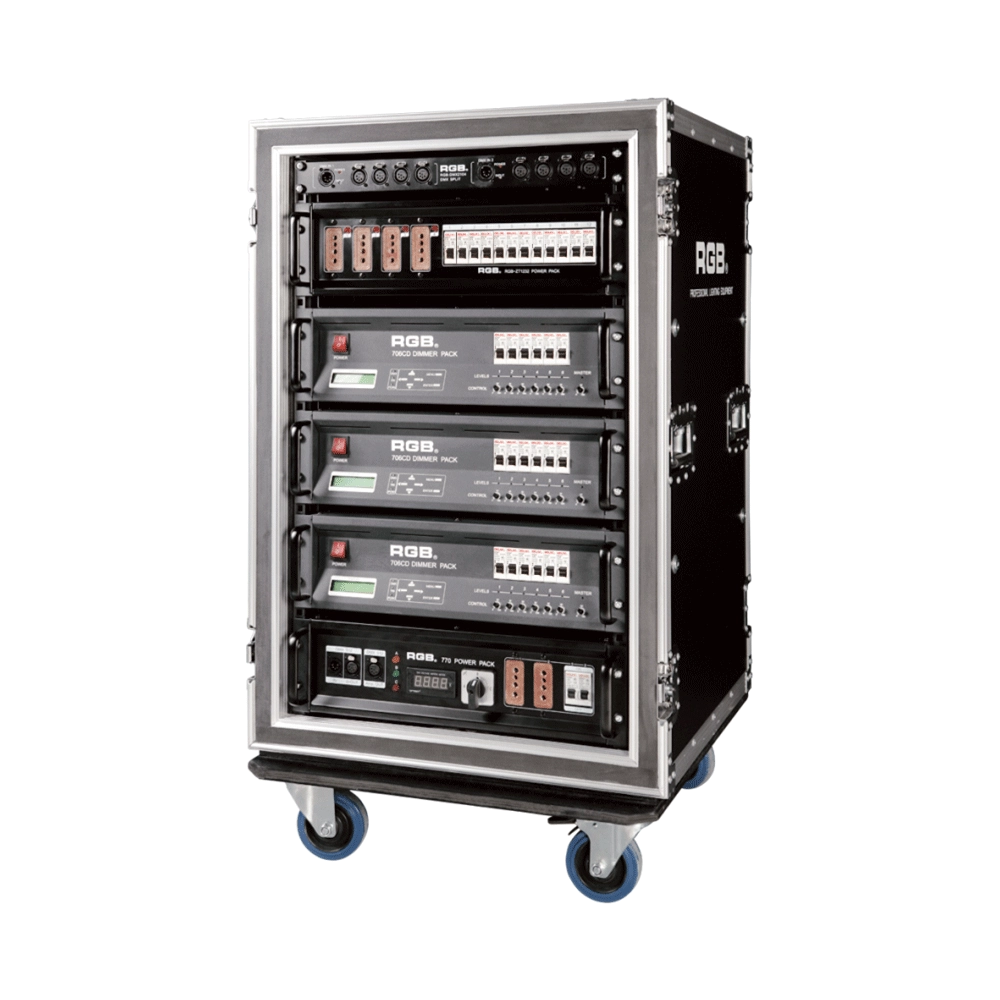
7 Series Digital Touring Dimmer Racks
7 Series digital touring dimmer racks can be assembled into many types of dimmer by taking the 7 Series dimmer as the unit. They are widely used in the entertainment industry for their convenience and practicability.
Expert Support
Interested in learning more or need expert guidance related to this article? Fill in your details, and our team will provide tailored support.
Intelligent Control. Brilliant Performance.
RGB specializes in stage lighting control systems, delivering intelligent, reliable, and high-performance solutions for theaters and performance spaces worldwide.
Contact
Email:
Tel:
+86 20 3928 0245
+86 20 3928 0247
Address:
No.3, Huashan Road, Shilou Town, Panyu, Guangzhou, China.
Whatsapp: +8615975520131