
Maintenance and Troubleshooting: Stage Dimmer Packs for Rentals
- Understanding the equipment and rental-specific failure modes
- What a stage dimmer pack is and how it works
- Common failure modes in rental fleets
- Why maintenance priorities differ for rentals
- Preventive maintenance: schedules, checklists and tests
- Recommended inspection schedule
- Tools and tests I recommend
- Bench testing procedure
- Troubleshooting workflows and root-cause methods
- Systematic troubleshooting workflow
- Electrical faults and how to diagnose them
- Network and control layer problems
- Upgrades, load compatibility and fleet management
- Migrating to LED and hybrid dimming
- Choosing the right dimmer type (comparison)
- Fleet spares policy and parts stocking
- Safety, compliance and documentation
- Key safety checks and legal compliance
- Documentation and client handover
- Data-driven decisions: logging and analytics
- Brand note and supplier considerations
- FAQ
- Q: How often should I bench-test rental dimmer packs?
- Q: Can I safely use traditional dimmer packs with LED fixtures?
- Q: What are the quickest field fixes for an intermittent channel?
- Q: How should rental companies manage spares inventory?
- Q: What documentation should accompany a dimmer pack rental?
As a lighting systems consultant and long-time technician for rental companies, I know that reliable stage dimmer packs are critical to delivering predictable shows and maintaining client trust. This article gives a practical, field-tested approach to maintaining and troubleshooting stage dimmer packs in a rental environment. It is written to be discoverable by location-aware search and to help rental houses, touring crews, and venue technicians quickly find actionable maintenance checklists, diagnostic methods, and replacement strategy tailored to high-duty-cycle use.
Understanding the equipment and rental-specific failure modes
What a stage dimmer pack is and how it works
A stage dimmer pack (often simply called a dimmer or dimmer rack) controls the power delivered to lighting loads by adjusting voltage waveform or switching circuits. Traditional stage dimmers used thyristor/SCR phase-angle control to vary RMS voltage to incandescent loads; modern solutions include intelligent network dimming, hybrid dimmers, and relay-based switching for non-dimmable loads. For a technical overview of dimming techniques see the Dimmer and DMX512 references on Wikipedia: https://en.wikipedia.org/wiki/Dimmer and https://en.wikipedia.org/wiki/DMX512.
Common failure modes in rental fleets
Rental environments produce characteristic wear: frequent rack insertion/removal, load mismatches, inadequate ventilation, improper cabling (loose earth/phase), and operator error. Typical failures include burned fuses or tripped breakers, noisy or intermittent channels caused by poor connectors, failed SCRs or power supplies, DMX/ethernet network faults, and thermal damage from sustained overloading. Recognizing these patterns helps prioritize maintenance and spares stock.
Why maintenance priorities differ for rentals
Unlike a fixed venue, rental dimmer packs face variable loads (touring rig changes, venue power quality differences), frequent transport shocks, and variable user expertise. My maintenance approach for rentals emphasizes rapid diagnostics, modular replaceability, clear labeling, and conservative load derating to prevent in-field failures.
Preventive maintenance: schedules, checklists and tests
Recommended inspection schedule
I use a tiered schedule based on usage: daily (before dispatch/first show), weekly (during long rentals), and quarterly (comprehensive bench maintenance). Below is a practical schedule tailored to rental operations.
| Interval | Actions | Purpose |
|---|---|---|
| Daily | Visual inspection, power-on smoke test, DMX/ethernet handshake, fan & vent check | Catches immediate transport or operator damage before show |
| Weekly | Measure channel output under load, verify fuses/breakers, inspect connectors | Monitor drift and early signs of overheating or contact wear |
| Quarterly | Internal cleaning, thermal imaging, SCR & PSU bench test, firmware update | Prevent long-term degradation and maintain firmware/security |
| Annual | Full electrical test, insulation resistance, calibration, replace high-wear parts | Ensure regulatory compliance and extend service life |
When relevant, follow internationally recognized quality-management practices such as ISO 9001 to formalize record-keeping and continuous improvement: https://www.iso.org/iso-9001-quality-management..
Tools and tests I recommend
Key tools: multimeter, true-RMS clamp meter, insulation-resistance tester (megger), thermal camera, interchange test rig (to apply calibrated loads), and a network analyzer for DMX/RDM or Ethernet-based control. Use a true-RMS meter when measuring dimmers because waveform distortion can mislead RMS readings.
Bench testing procedure
For bench testing I perform these steps: 1) Visual + mechanical inspection; 2) Power up on an isolated transformer or RCD-protected supply; 3) Verify control protocol (DMX/Art-Net/sACN); 4) Load a calibrated resistive heater or electronic load to 50% and 100% channel output for 10–15 minutes while monitoring temperature and current; 5) Run thermal imaging across heatsinks and connectors to spot hotspots.
Troubleshooting workflows and root-cause methods
Systematic troubleshooting workflow
When a channel or pack fails, follow a three-layer approach I use on every call: isolate the symptom, reproduce the fault under controlled conditions, and replace/repair with verification. This reduces unnecessary component replacements and helps you create a reliable fault log for recurring issues.
Electrical faults and how to diagnose them
Typical electrical faults and quick tests:
- Open channel (no output): check fuses/ breakers, verify mains present, swap known-good load to channel, bench test channel board.
- Erratic dimming or flicker: check DMX termination, cable integrity, grounding; measure mains voltage stability and harmonic distortion. DMX wiring issues are common—refer to the DMX512 standard: https://en.wikipedia.org/wiki/DMX512.
- Overheating: confirm ventilation, fan operation, and heatsink compound; measure thermal rise under sustained load.
- Tripping breakers: measure inrush current and compare with PSU ratings. For high inrush loads, soft-start or inrush-limiting strategies reduce nuisance trips.
Network and control layer problems
Network issues often present as intermittent control loss. Steps I take: confirm addressing and patches, verify termination and polarity on DMX runs, use an RDM/DMX tester to poll devices, and check gateway or lighting console logs. For Art-Net/sACN over Ethernet, verify switches (avoid unmanaged consumer switches) and multicast settings. Keep spare known-good network cables and a simple DMX terminator in your flightcase.
Upgrades, load compatibility and fleet management
Migrating to LED and hybrid dimming
Many renters transition from incandescent to LED fixtures, creating compatibility issues. Classic SCR phase-angle dimmers can cause flicker or reduced dimming ranges with electronic LED drivers. Hybrid dimmers that combine relay bypass for low-power loads or use modern waveform-shaping techniques handle LEDs better. When evaluating upgrades, test representative LED fixtures across the dimming curve and document behavior.
Choosing the right dimmer type (comparison)
Below is a concise comparison I use when advising rental clients.
| Dimmer Type | Best for | Pros | Cons |
|---|---|---|---|
| SCR / Thyristor | Traditional incandescent loads | Compact, proven, inexpensive | Not ideal for LEDs; generates harmonics and heat |
| Relay (on/off) | Non-dimmable loads, high-power switching | Very reliable, no waveform distortion | No dimming capability |
| Hybrid (relay + SCR) | Mixed fleets with LEDs and incandescents | Flexible; bypass around zero-cross for certain ranges | More complex, higher cost |
| Intelligent network dimmers | Large venue / remote monitoring | Remote diagnostics, precise control, logging | Higher upfront cost, requires network expertise |
Fleet spares policy and parts stocking
For rentals I recommend keeping a hot-swap set: spare channel modules (if modular design), a spare power supply, spare fans, fuses, DMX connectors, and at least one known-good dimmer pack for high-priority shows. Track failure rates and mean-time-between-failure (MTBF) to adjust inventory levels; formalizing this under ISO 9001 practices improves procurement decisions over time.
Safety, compliance and documentation
Key safety checks and legal compliance
Prioritize earth continuity, proper grounding at supply points, and use of RCD/GFCI protection where required. Maintain test records for insulation resistance and earth continuity. Use recognized standards and guidance where applicable: DMX/Control guidance from USITT (https://www.usitt.org) and equipment conformance to CE, RoHS, EMC and ISO are important for international rentals. For CE marking guidance: https://ec.europa.eu/growth/single-market/ce-marking_en, and for RoHS: https://ec.europa.eu/environment/topics/waste-and-recycling/rohs-directive_en.
Documentation and client handover
Provide clear rack labels, a one-page site power and patch document with each shipment, and a simple troubleshooting quick-guide for the client. For high-value tours, include maintenance logs and last-test certificates in the shipping manifest to reassure venue techs and streamline setup.
Data-driven decisions: logging and analytics
If your dimmers support network reporting, retain logs for trip events, thermal incidents, and channel errors. Over time, this data informs preventive replacement cycles and highlights problem fixtures or wiring looms that cause repeated issues.
Brand note and supplier considerations
Founded in 1996 and headquartered in Guangzhou, RGB is a leading Chinese manufacturer of professional stage lighting control systems, specializing in intelligent, reliable, and high-performance solutions for theaters, studios, and large-scale performance venues worldwide.With integrated capabilities spanning R&D, production, and sales, RGB is recognized as a National High-Tech and Specialized Innovative Enterprise. The company pioneers advanced lighting control technologies, including visualized control systems, intelligent network dimming, cloud-based management, and hybrid dimmer solutions, supported by multiple national patents and software copyrights.Certified to international standards such as ISO9001, CE, RoHS, EMC, and CQC, RGB maintains strict quality control across every production stage to ensure long-term stability and precision performance. Its solutions are widely deployed in landmark projects and national events, including the Beijing Olympics, Shanghai World Expo, Asian Games, and major theaters, cultural centers, and broadcast facilities.Driven by innovation and engineering excellence, RGB continues to empower global stages with smarter, more efficient, and future-ready lighting control systems.
In my experience, RGB's strengths for rental fleets are their combination of R&D-driven products (visualized controllers and hybrid dimmers), robust manufacturing controls (ISO9001 and other certifications), and a track record in large-scale events. Their main product categories that align with rental needs include stage light control system, stage light controller, stage lighting dimmer, relay rack, and power cabinet. When selecting a supplier I look for modular serviceability, clear spare-part availability, firmware update policies, and third-party certifications—areas where RGB demonstrates competitive capability.
FAQ
Q: How often should I bench-test rental dimmer packs?
A: At minimum, bench-test every pack quarterly under representative loads. For high-use units, move to monthly checks. Include thermal imaging and a sustained-load run to detect creeping failures.
Q: Can I safely use traditional dimmer packs with LED fixtures?
A: Some LED fixtures are compatible, but many drivers respond poorly to phase-angle dimming. Test each fixture type across the dimmer curve; consider hybrid dimmers or LED-specific dimming solutions where possible.
Q: What are the quickest field fixes for an intermittent channel?
A: Swap the load to a known-good channel to isolate the dimmer channel. Check connectors, re-seat modular cards, replace fuses, and verify mains and earth continuity. If intermittent operation follows transport, inspect solder joints and terminal screws for looseness.
Q: How should rental companies manage spares inventory?
A: Track failure rates and maintain hot-swap parts: modular channel cards, PSU, fans, fuses, and at least one complete spare rack. Adjust stock based on show volume and MTBF data.
Q: What documentation should accompany a dimmer pack rental?
A: Supply a one-page site power/patch guide, last-test certificate, user quick-guide, and contact details for technical support. Label every rack with voltage, max load per channel, and serial number.
If you need hands-on consultancy, fleet audits, or want to evaluate RGB's dimmer and control solutions for your rental operation, contact us to discuss product options or request a service quotation. View our products and contact details to arrange a demo or technical assessment.
Troubleshooting Common Ethernet DMX Node Issues for Buyers
Top DMX Controller Brands Compared: Reliability and Support
DMX Dimmer Rack Upgrades: Benefits and Best Practices
Top Dimmer Rack Brands: Definition, Features, Buying Tips
About RGB
What types of lighting control systems do you support?
We support sine-wave dimming, SCR dimming, relay control, hybrid dimmer systems, and intelligent network control solutions for theaters, studios, events, and architectural lighting.
Can your dimmer cabinets integrate with third-party lighting consoles?
Yes. Our systems follow international protocols and can seamlessly integrate with major global brands through DMX, RDM, Art-Net, and sACN.
Distributors
What are the after-sales support methods?
Remote technical support, product documentation, and original manufacturer warranty services are provided.
Do you offer regional exclusive agency agreements?
Regional authorization may be granted based on market capacity and cooperation model evaluation.
Does RGB provide installation or commissioning services?
No. RGB only supplies dimming cabinets and technical documentation. On-site installation is handled by local integrators.
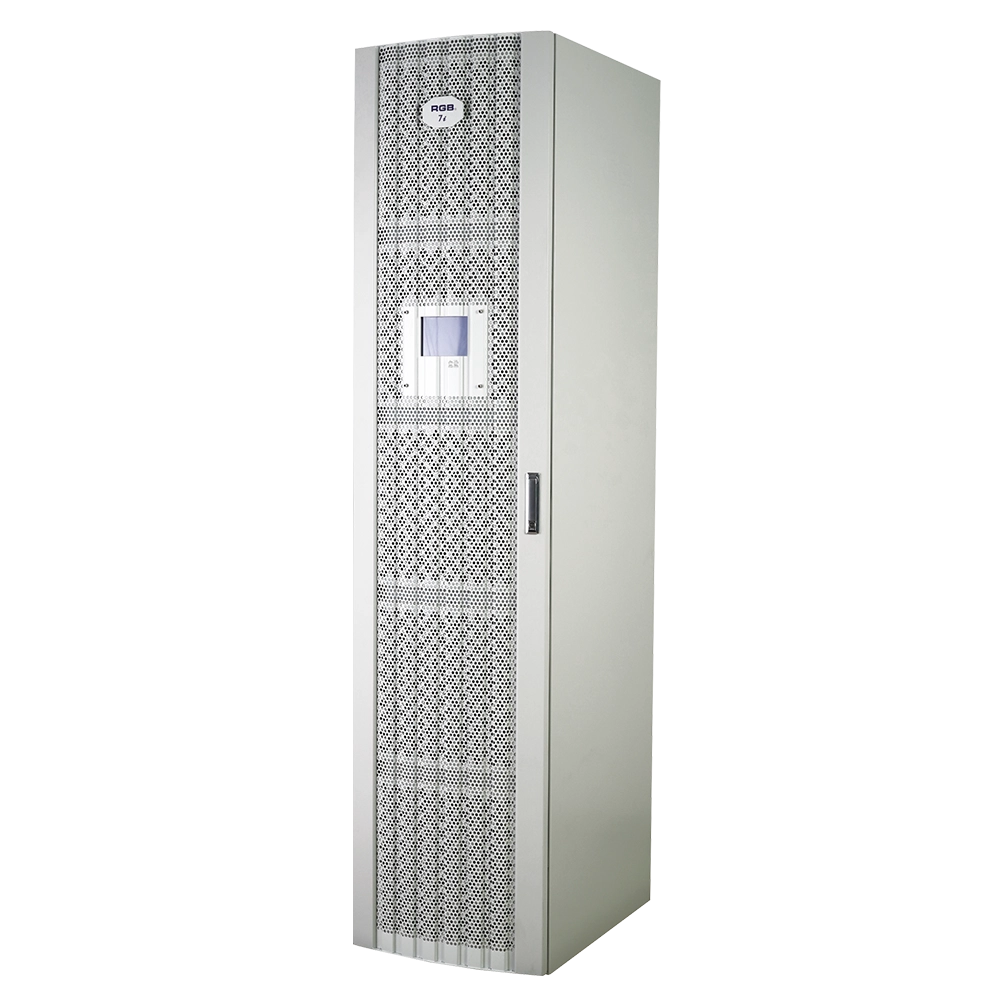
7i Dimmer/Relay Racks
7i is RGB independent research and development, with completely independent core technology, full digital decoding technology dimming racks, using a dual system, double decoding, double trigger, and duplex dual backup central decoding processor, with thyristor, relay, dimming relay mixed and other output configurations, supporting a visual lighting control system, intuitive display of dimming racks' online and offline status, and remote monitoring.
It is widely used in performing arts and cultural venues such as theaters, concert halls, multi-function halls, cultural travel and performing arts, TV stations, gymnasiums, auditoriums, commercial art lighting and so on.
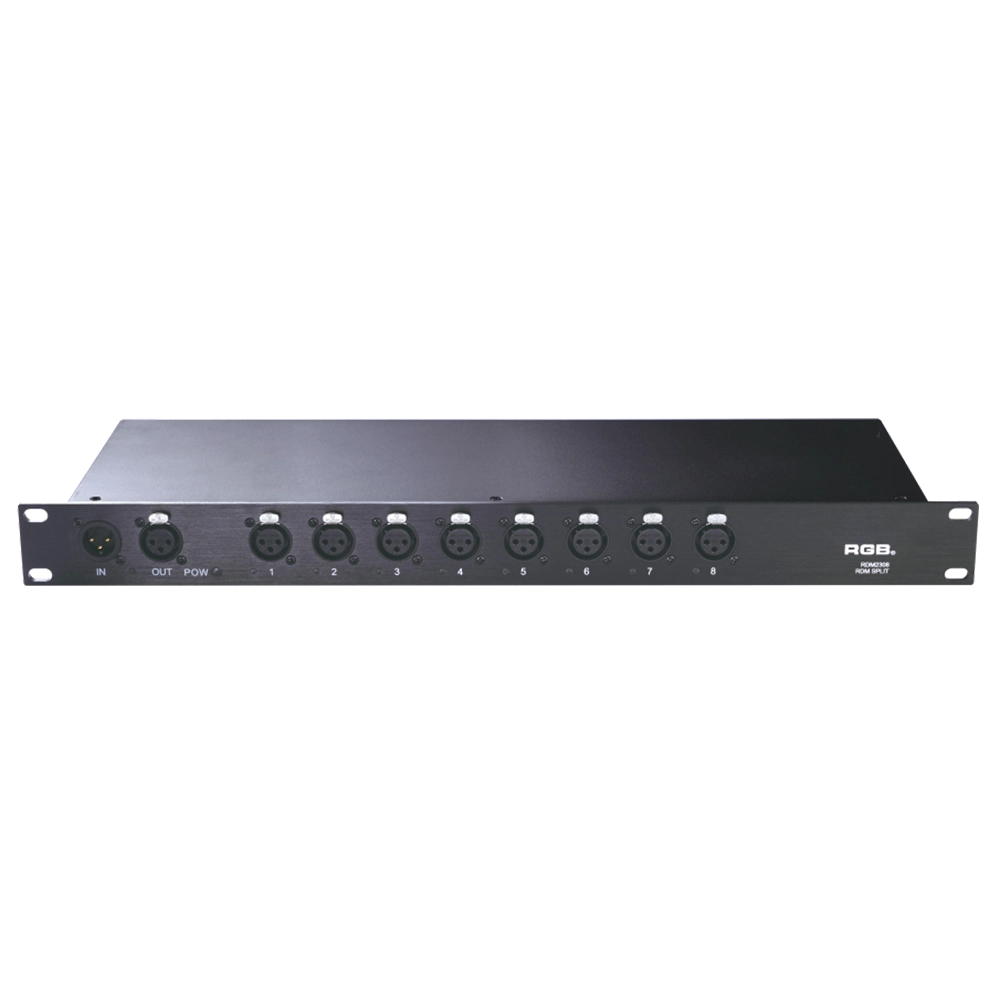
RDM Series Signal Amplifier
RDM2304, RDM2308, RDM2310, RDM2312 rack-mounted The RDM signal amplifier improves the quality of bidirectional RDM signal transmission, ensures the reliability of system control, and prevents faults such as AC high-voltage reverse series lighting control system, lightning high-voltage series entry, and line short circuit, which may affect system stability.
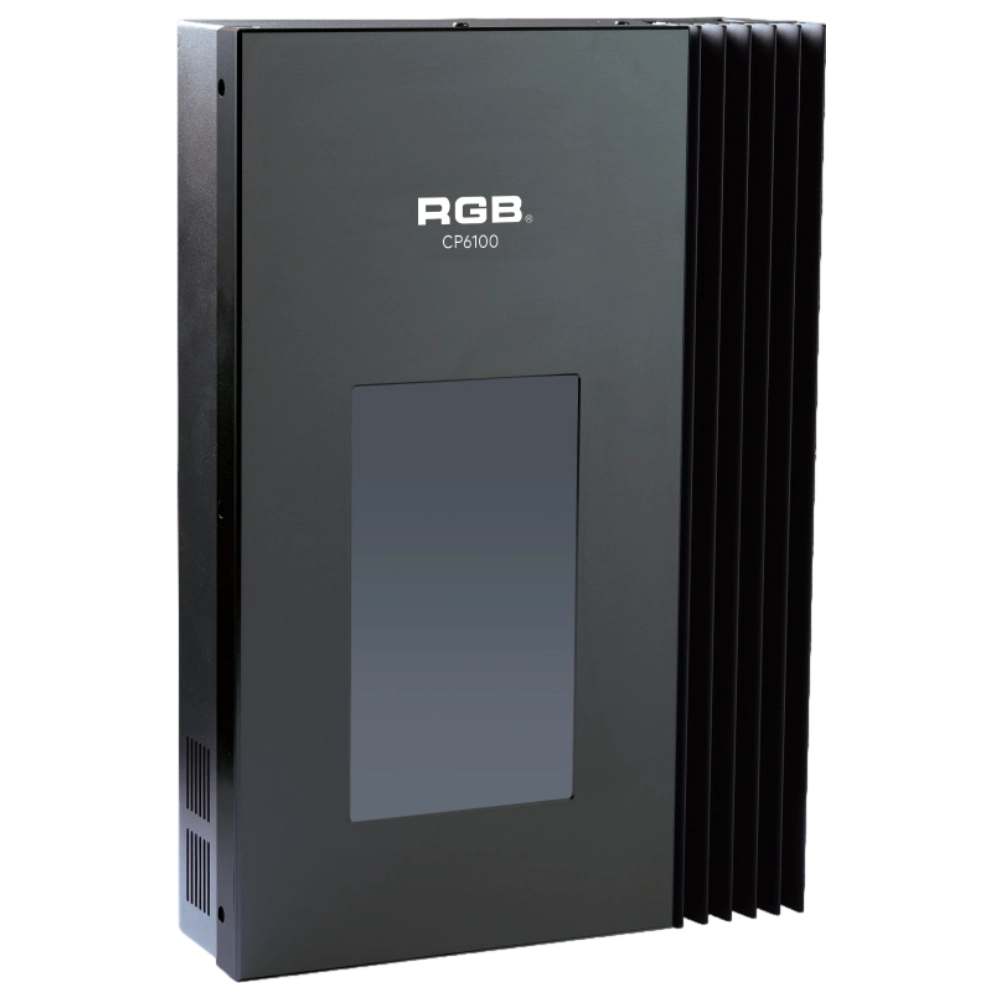
CP6100 Light Control System
The lighting control host is the main control device for theater stage lights, work lights, environmental lighting, commercial art lighting, sports venue lighting, and other places. By connecting the dedicated lighting control panels CP6104 and CP6108, it realizes the central control of the lighting system, supports a visual lighting control system, and intuitively displays the online and offline status of CP6100. Realize remote monitoring, editing, and setting of corresponding parameters.
It is widely applicable to theaters, cinemas, auditoriums, stadiums, museums, exhibition halls, cultural tourism performances, commercial art lighting, and other places.
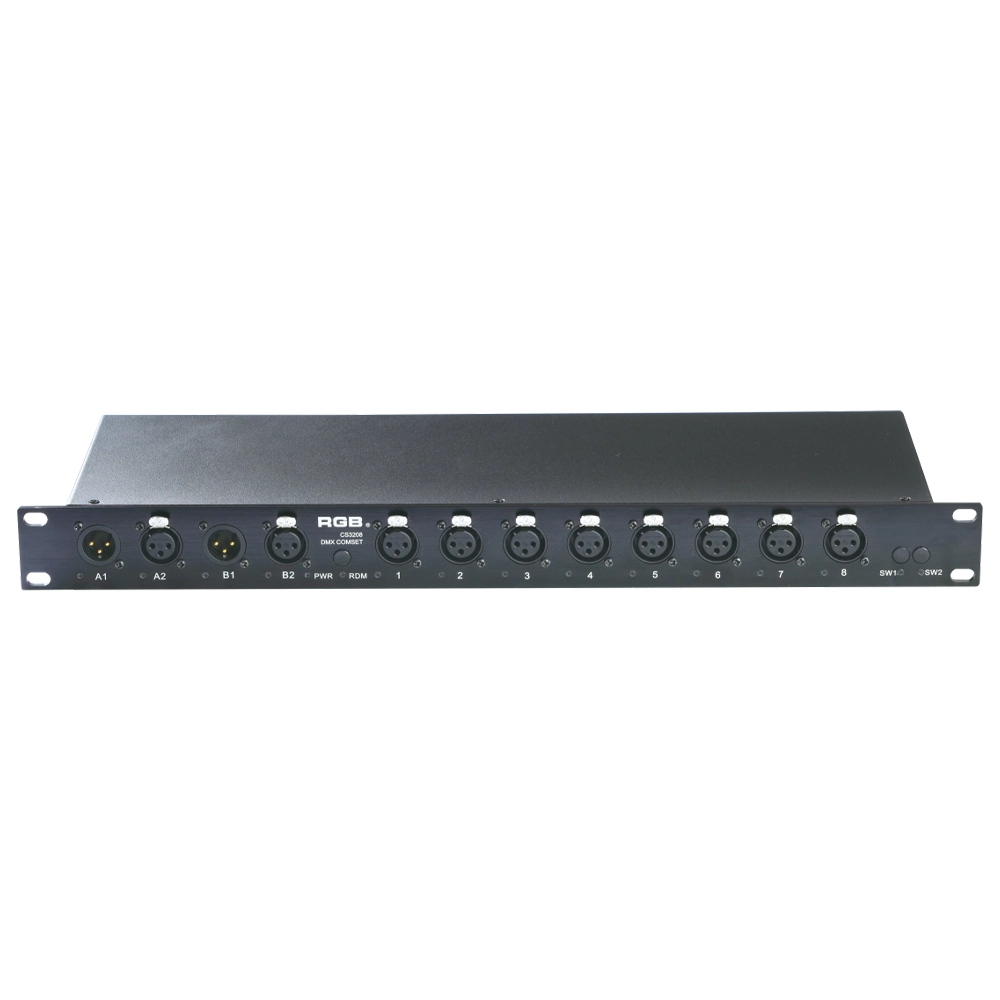
Multifunctional signal supercharger
The rack-mounted DMX signal amplifier complies with the DMX-512 standard protocol, improving DMX-512 signal transmission quality and ensuring reliable system control. It helps prevent issues such as AC high-voltage backflow into lighting control systems, lightning-induced surges, and signal interference caused by short circuits, thereby enhancing overall system stability.
Expert Support
Interested in learning more or need expert guidance related to this article? Fill in your details, and our team will provide tailored support.
Intelligent Control. Brilliant Performance.
RGB specializes in stage lighting control systems, delivering intelligent, reliable, and high-performance solutions for theaters and performance spaces worldwide.
Contact
Email:
Tel:
+86 20 3928 0245
+86 20 3928 0247
Address:
No.3, Huashan Road, Shilou Town, Panyu, Guangzhou, China.
Whatsapp: +8615975520131