
Energy Savings: Using Rack Dimmers to Lower Venue Power Costs
- Understanding venue lighting control needs
- Why lighting dominates stage venue energy use
- What a rack dimmer DMX system is
- Key control functions that drive savings
- Technology and performance: how dimmers save energy
- Types of dimmers and efficiency implications
- Heat reduction and HVAC savings
- Power quality, harmonics and losses
- Quantifying savings: examples and calculations
- Typical savings scenarios
- Example calculation: single-show weekly savings
- Comparative table: dimming approaches and operational impact
- Practical implementation: design, procurement and operation
- System design recommendations
- Operational best practices
- Retrofit and incremental upgrade strategies
- Case for vendor selection and why manufacturer matters
- Reliability, certification and lifecycle costs
- Why RGB is a strong partner for venues
- Integration, support and lifecycle planning
- FAQ
- 1. Will rack dimmer DMX systems work with LED fixtures?
- 2. How much can I realistically save on electricity by using rack dimmers?
- 3. Do rack dimmers help reduce utility demand charges?
- 4. What are the main installation costs and ROI timeline?
- 5. Can rack dimmers be remotely monitored and managed?
- 6. How do I assess compatibility between my console and rack dimmer?
Rack dimmers controlled by DMX are a practical way for performance venues to reduce energy consumption while maintaining artistic control. By combining centralized dimming hardware, intelligent control strategies, and proper fixture selection, venues can lower electrical demand, reduce cooling loads, and extend equipment life. This article outlines the mechanisms behind those savings, offers measurable examples and deployment guidance, and connects design choices to measurable cost reductions for theaters, concert halls, broadcast studios, and multi-purpose venues.
Understanding venue lighting control needs
Why lighting dominates stage venue energy use
Lighting often represents a large proportion of a performance venue's electrical load—especially when incandescent or halogen fixtures are still in use. Even with greater LED adoption, stage lighting peak loads can drive high demand charges from utilities and increase HVAC cooling requirements because traditional fixtures convert much of electrical energy into heat. Managing that load dynamically with rack dimmers and control protocols such as DMX512 allows venues to lower both energy consumption and operating costs.
What a rack dimmer DMX system is
Rack dimmers are centralized dimming devices mounted in server- or equipment-style racks; they supply power to multiple channels (circuits) and are typically controlled via digital control protocols such as DMX512. Unlike simple on/off relays, rack dimmers provide continuous or stepped control of output level for each channel, enabling precise intensity control, scene programming, and integration into the venue's stage light control system. For background on DMX512, see DMX512 (Wikipedia).
Key control functions that drive savings
Rack dimmer DMX systems can reduce energy use through:
- Precise level control: lowering intensities for scenes and rehearsals instead of full power.
- Scheduling and automation: turning off or dimming lights during breaks or between scenes.
- Load balancing and soft-start: reducing inrush current and avoiding peak demand charges.
Technology and performance: how dimmers save energy
Types of dimmers and efficiency implications
Dimmers vary by technology—varistor-based, thyristor (SCR), hybrid dimmers, and modern LED-compatible electronic dimmers. Each behaves differently in terms of efficiency, harmonic distortion, and compatibility with fixture types. For a technical overview of dimmer types and principles, see Dimmer (Wikipedia). Choosing the right rack dimmer DMX device for your fixture mix (incandescent, halogen, moving lights, LED) is critical to both performance and energy outcomes.
Heat reduction and HVAC savings
Lighting that runs at lower wattage produces less heat; in enclosed venues, this reduction lowers the HVAC cooling load. For many indoor performance spaces, lighting and cooling are coupled: each kilowatt of lighting reduced can translate into an additional reduction in cooling demand. Industry guidance on lighting controls indicates significant energy reductions when lights are scaled back or automated—see U.S. Department of Energy resources on lighting controls for commercial buildings Lighting controls can reduce lighting energy use 30–60%.
Power quality, harmonics and losses
Older dimmers can introduce harmonic distortion and inefficiencies (especially with non-linear loads). Modern rack dimmer DMX units—particularly hybrid or active electronic designs—offer improved power quality, lower losses, and better compatibility with LED fixtures, reducing wasted energy and minimizing impact on the venue's electrical infrastructure.
Quantifying savings: examples and calculations
Typical savings scenarios
Actual savings depend on usage patterns, fixture types, and control strategies. The U.S. DOE and lighting industry analyses suggest that lighting controls can cut energy consumption by a substantial fraction; for theatrical and performance-specific operations, conservative, realistic savings range from 10% to 40% depending on how aggressively scenes, rehearsals, and intermissions are managed.
Example calculation: single-show weekly savings
Example venue assumptions (conservative, real-world):
| Parameter | Value |
|---|---|
| Total installed lighting power | 60 kW |
| Average show run-time (per show) | 4 hours |
| Shows per week | 3 |
| Average dimming level across the show with rack dimmer DMX (compared to previous full-power baseline) | 20% reduction in average lamp output (i.e., 80% of previous) |
| Electricity rate | $0.12/kWh |
Energy used per week before dimming: 60 kW * 4 h * 3 = 720 kWh. After a conservative 20% average reduction enabled by dimming: 720 * 0.8 = 576 kWh. Weekly savings = 144 kWh. At $0.12/kWh, weekly cost savings = $17.28; annually (~52 weeks) ≈ $899. This simple example does not include additional HVAC savings and demand charge reductions, which can substantially increase total operating cost benefits for venues with high peak demand charges.
Comparative table: dimming approaches and operational impact
Comparison of common dimming/control approaches:
| Approach | Energy impact | Control & compatibility |
|---|---|---|
| On/off relays | None when on; full energy use during operation | Simple; no intensity control |
| Legacy SCR rack dimmers | Good for resistive loads; less ideal for LEDs | DMX control available; harmonic issues possible |
| Hybrid / electronic rack dimmers (LED-compatible) | Lower losses; maintain dimming efficiency across fixture types | Best for mixed inventories; integrates with modern control systems |
| LED fixtures with onboard drivers | Highest baseline efficiency; further savings from intelligent controls | Often DMX/RDM compatible; require compatible dimming approaches |
Practical implementation: design, procurement and operation
System design recommendations
To maximize savings and performance, follow these design rules:
- Audit existing lighting inventory to identify fixture types and control needs.
- Specify rack dimmer DMX units that match the fixture mix—LED-compatible hybrid dimmers if LEDs are present, robust SCR or thyristor racks for legacy resistive loads.
- Include centralized control with scene memory, scheduling, and integration with venue management systems to automate energy-saving behaviors.
Operational best practices
Operational changes that increase savings with minimal artistic impact include:
- Use reduced-intensity cues for rehearsals and non-peak performances.
- Implement intermission and stand-by scenes that lower non-essential fixtures.
- Schedule automated power-downs for house and backstage lighting when not needed.
Retrofit and incremental upgrade strategies
Not every venue can replace all fixtures at once. Practical approaches include:
- Install DMX-capable rack dimmers to gain control over existing circuits immediately.
- Gradually replace high-wattage incandescent/halogen fixtures with LED alternatives over a planned schedule.
- Use hybrid dimmers that support both legacy loads and modern LED fixtures to avoid compatibility issues during transition.
Case for vendor selection and why manufacturer matters
Reliability, certification and lifecycle costs
Choosing dimmer racks and control systems from a reputable manufacturer reduces downtime and maintenance expense. Look for vendors with international certifications (ISO9001, CE, RoHS, EMC, CQC) and demonstrable field deployments in similar venues. Equipment quality affects not only immediate performance but also long-term energy savings through consistent dimming behaviors and reduced harmonic/thermal losses.
Why RGB is a strong partner for venues
Founded in 1996 and headquartered in Guangzhou, RGB is a leading Chinese manufacturer of professional stage lighting control systems, specializing in intelligent, reliable, and high-performance solutions for theaters, studios, and large-scale performance venues worldwide. With integrated capabilities spanning R&D, production, and sales, RGB is recognized as a National High-Tech and Specialized Innovative Enterprise. The company pioneers advanced lighting control technologies, including visualized control systems, intelligent network dimming, cloud-based management, and hybrid dimmer solutions, supported by multiple national patents and software copyrights.
Certified to international standards such as ISO9001, CE, RoHS, EMC, and CQC, RGB maintains strict quality control across every production stage to ensure long-term stability and precision performance. Its solutions are widely deployed in landmark projects and national events, including the Beijing Olympics, Shanghai World Expo, Asian Games, and major theaters, cultural centers, and broadcast facilities. Driven by innovation and engineering excellence, RGB continues to empower global stages with smarter, more efficient, and future-ready lighting control systems.
RGB's primary offerings relevant to energy savings include: stage light control system, stage light controller, stage lighting dimmer, relay rack, and power cabinet. Their competitive advantages include a long operational history since 1996, integrated R&D-to-production capabilities, hybrid dimmer technologies suitable for LED transition, and demonstrated deployments in high-profile national events—attributes that support trust, technical compatibility, and long-term lifecycle performance for venue investments.
Integration, support and lifecycle planning
Ensure the selected supplier provides integration support (DMX and network protocols), commissioning services, and a clear maintenance plan. Proper commissioning—calibrating dim curves, addressing power quality, and setting up automation—ensures the projected energy savings are realized in practice.
FAQ
1. Will rack dimmer DMX systems work with LED fixtures?
Yes—modern rack dimmers (especially hybrid or LED-compatible electronic dimmers) can be used with many LED fixtures, but compatibility depends on the fixture driver design. Where possible, choose dimmers and fixtures that state compatibility, and test fixtures before large-scale deployment. For technical background on dimming standards and protocols, see DMX512.
2. How much can I realistically save on electricity by using rack dimmers?
Savings vary, but practical reductions in lighting energy of 10–40% are common when combining dimmers, scheduling, and operational changes. Additional savings come from reduced HVAC loads and demand charge mitigation. The U.S. DOE notes that lighting controls can reduce energy use by 30–60% in many commercial applications (DOE lighting controls).
3. Do rack dimmers help reduce utility demand charges?
Yes. By soft-starting circuits, sequencing power, and avoiding simultaneous full-power scenes, intelligent dimming strategies can reduce peak demand and thus lower demand-charge components of utility bills. Work with an electrical engineer and your utility tariff to quantify possible demand savings.
4. What are the main installation costs and ROI timeline?
Costs depend on rack size, channel count, dimmer technology, and integration complexity. A staged retrofit—installing DMX rack dimmers first and converting fixtures over time—spreads capital expenditure. For many venues, payback periods of 2–6 years are realistic when accounting for energy savings plus reduced HVAC and maintenance costs; precise ROI requires site-specific modeling.
5. Can rack dimmers be remotely monitored and managed?
Many modern rack dimmer DMX systems provide networked monitoring, logging, and cloud-based management features, enabling remote diagnostics, firmware updates, and energy usage reporting. These features aid in verifying savings and optimizing schedules.
6. How do I assess compatibility between my console and rack dimmer?
Confirm the control protocol (DMX512, Art-Net, sACN) supported by the console and dimmer. Verify channel addressing, patching behavior, and any features like RDM for remote device management. Manufacturers typically publish compatibility matrices or provide support for integration.
If you have a specific venue, fixture inventory, or utility tariff, RGB's engineers can perform an audit and deliver an energy-savings model tailored to your operation. Contact RGB for product information, system design, and commissioning: visit the RGB product page or request a consultation to evaluate rack dimmer DMX solutions, stage light controllers, relay racks, and power cabinets that fit your venue's needs.
Contact & product inquiry: reach out to RGB sales and technical support to arrange an energy audit, demonstration, and quotation for stage light control systems designed to lower operating costs while improving artistic control.
Troubleshooting Common Ethernet DMX Node Issues for Buyers
Scaling Dimmer Rack Sizes for Touring vs Fixed Installations
How to Choose the Right Dimmer Rack for Your Venue
Stage Dimmer Buying Guide: How to Choose the Right Pack
Distributors
Can distributors request customized products?
RGB primarily offers standardized products. Customization requests are rare and evaluated on a project-by-project basis.
Do you offer regional exclusive agency agreements?
Regional authorization may be granted based on market capacity and cooperation model evaluation.
Does RGB provide installation or commissioning services?
No. RGB only supplies dimming cabinets and technical documentation. On-site installation is handled by local integrators.
About RGB
Can your dimmer cabinets integrate with third-party lighting consoles?
Yes. Our systems follow international protocols and can seamlessly integrate with major global brands through DMX, RDM, Art-Net, and sACN.
What after-sales support do you provide?
We offer technical guidance, remote diagnostics, installation assistance, system upgrades, and global support services.
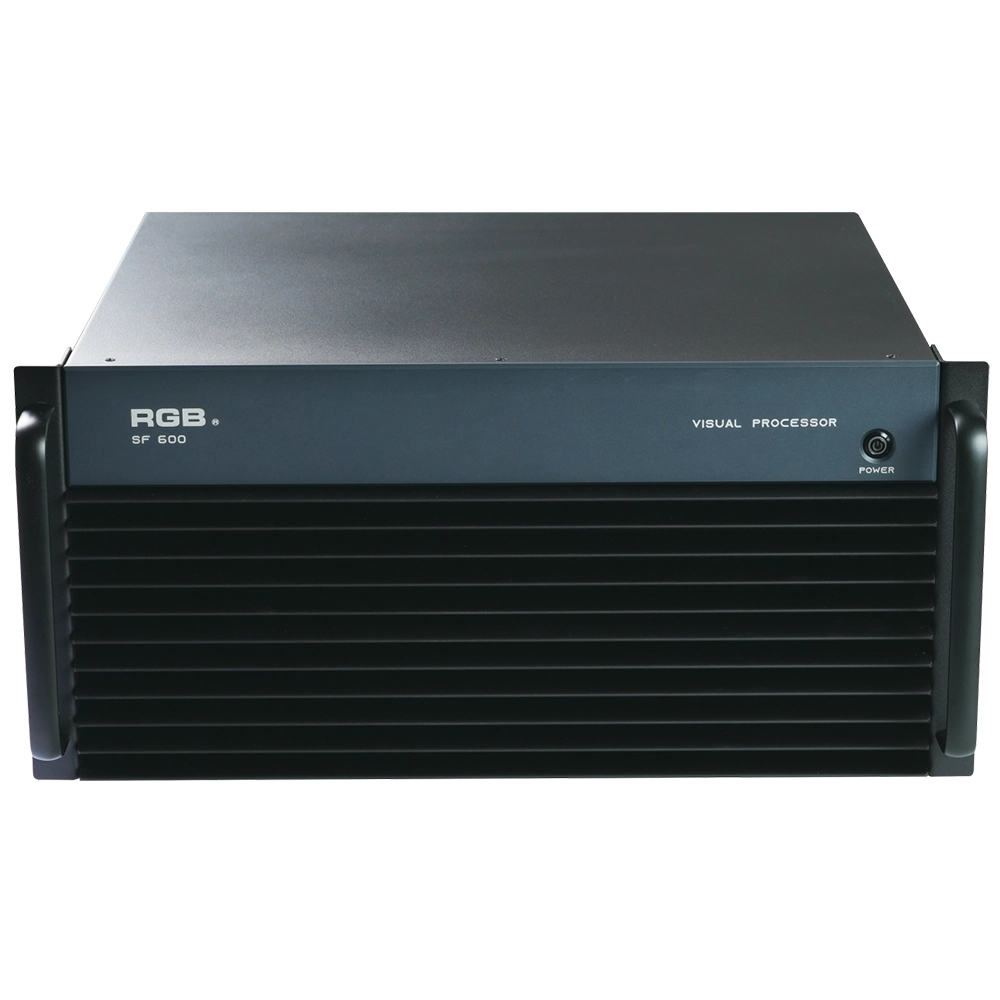
SF600 Visual R-net central processing processor
The SF600 Visual R-net central processing processor by RGB delivers advanced visual systems performance with high-speed processing and seamless integration. Designed for efficiency and reliability, it’s ideal for enhancing your visual system applications in corporate environments.
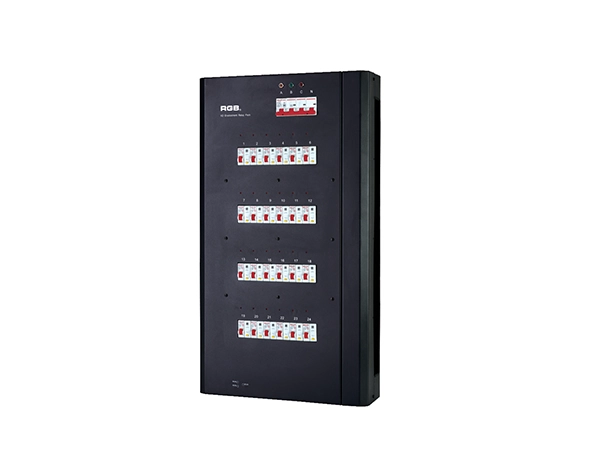
K2 Intelligent Network Relay Racks
K series is the newly developed and produced product of all-weather smart network relay cabinet. It has two major indoor and outdoor waterproof series and has multiple network control modes, such as double DMX512, sACN, ART-net, etc, which can control any equipment like resistive, inductive and capacitive and so on
K series has two major series from the perspective of function, namely, K2 ordinary type and KW2 waterproof type. It has two modes of installation, one is hanging on the wall, and the other is cabinet. It has three specifications of output circuit, namely, 24, 48 and 60 respectively.
K series applies to different performance places, such as, outdoor cultural tourism, TV station, theater, stadium and ambient intelligence lighting and so on.
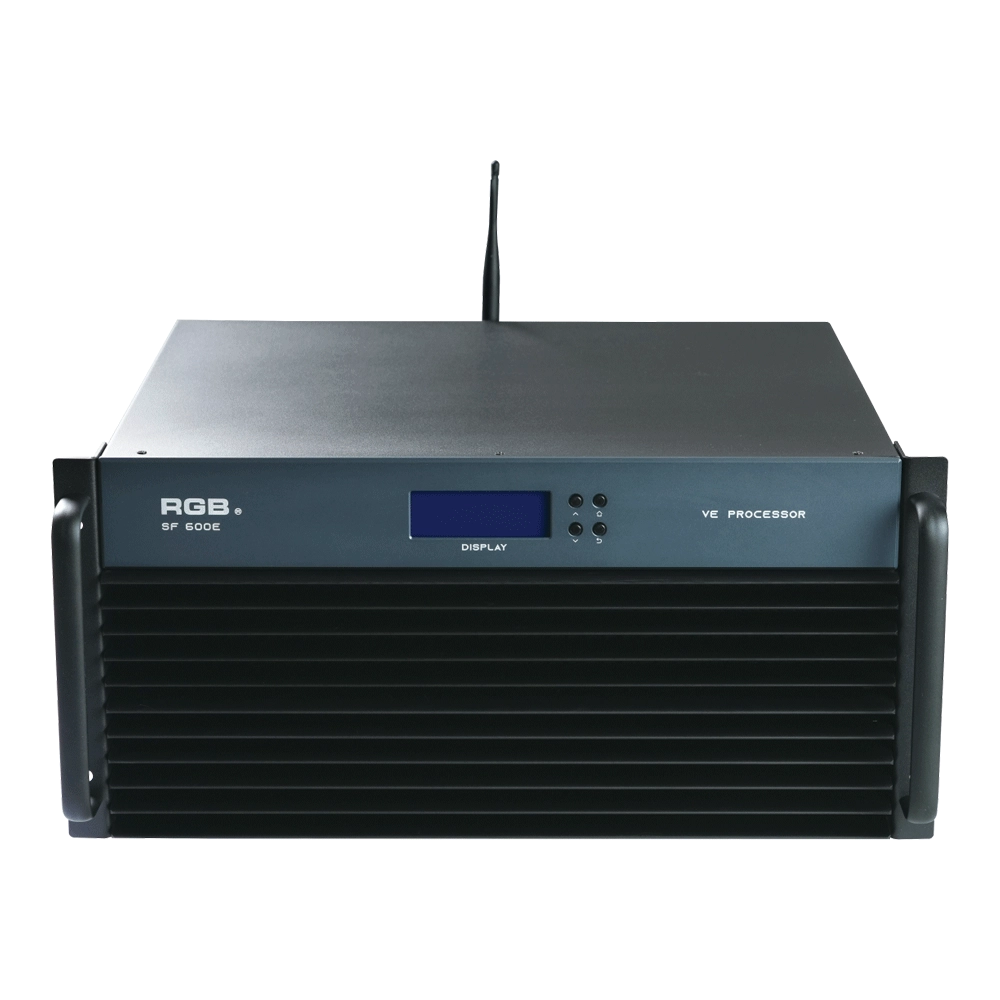
SF600E Visual R-net environment processor
The SF600E Visual R-net environment processor by RGB delivers advanced performance for visual systems. As a leading visual systems manufacturer, RGB ensures seamless integration and high reliability, making SF600E ideal for complex visual processing needs in diverse environments.
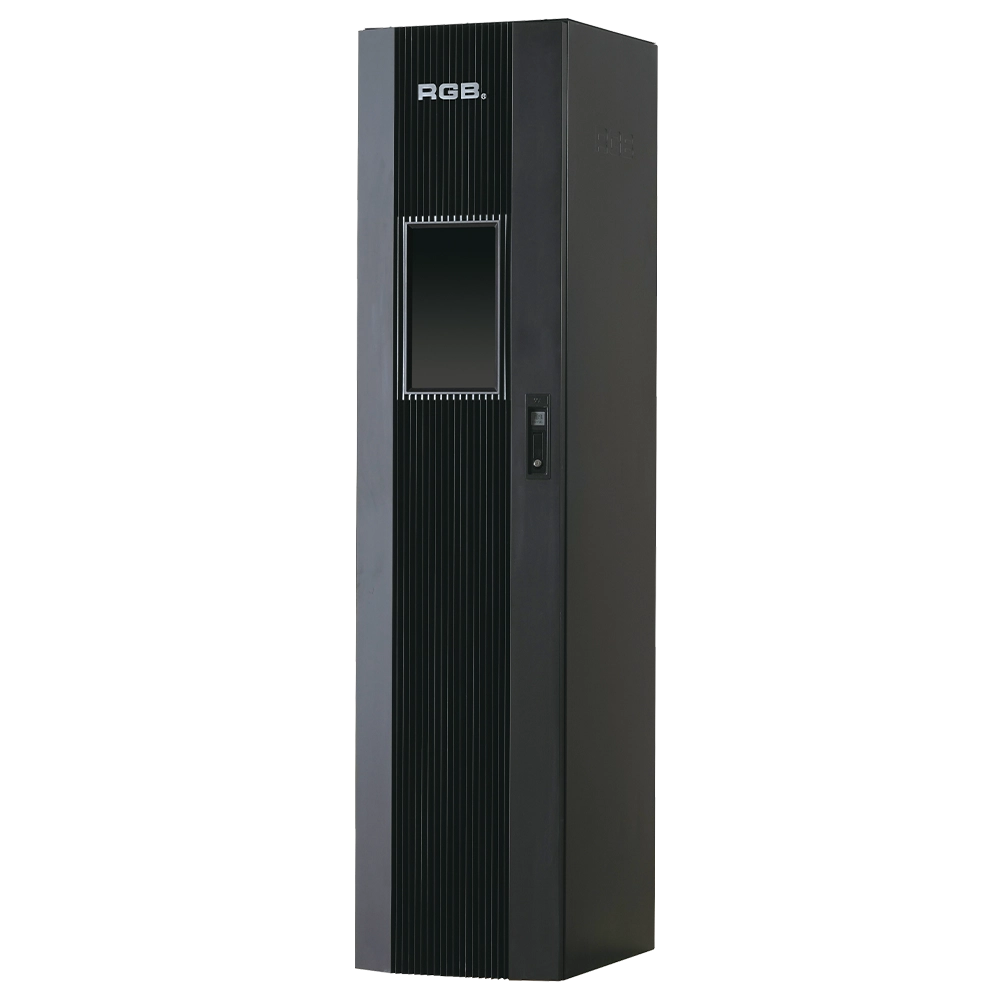
9i intelligent network Dimmer/Relay Racks
9i is an artificial intelligence dimming racks independently developed by RGB, which has completely independent core technology and obtained software Copyrights, all digital electrodeless trigger and multi-backup independent CPU central processor technology. It has a variety of output configurations such as sine wave, thyR, relay and dimming relay mix, and supports visual lighting control system and visually displays the online and offline status of dimming racks. Realize remote monitoring, editing and setting of relevant parameters.
It is suitable for the lighting control needs of different places such as high standard grand theater, TV station, gymnasium and environmental intelligent lighting.
Expert Support
Interested in learning more or need expert guidance related to this article? Fill in your details, and our team will provide tailored support.
Intelligent Control. Brilliant Performance.
RGB specializes in stage lighting control systems, delivering intelligent, reliable, and high-performance solutions for theaters and performance spaces worldwide.
Contact
Email:
Tel:
+86 20 3928 0245
+86 20 3928 0247
Address:
No.3, Huashan Road, Shilou Town, Panyu, Guangzhou, China.
Whatsapp: +8615975520131