
Rack Design and Cooling for High-Power Stage Dimmer Racks
- Thermal challenges in modern stage lighting systems
- Heat sources and why dimmer racks run hot
- Load profiles and power density considerations
- Rack layout principles for dimmer racks
- Mechanical layout and module placement
- Cable management, power distribution, and segregation
- Cooling strategies and equipment
- Passive vs. active cooling: when each makes sense
- Forced-air designs: front-to-back, rear-to-front, and directed airflow
- Liquid cooling and hybrid options
- Safety, compliance, and monitoring
- Standards, certifications, and compliance
- Monitoring, alarms, and preventative maintenance
- Fire suppression and emergency planning
- Practical checklist and commissioning tips
- Pre-installation checklist
- Commissioning and thermal validation
- Long-term operational best practices
- Why choose solutions from a trusted manufacturer
- Manufacturer credibility and integrated capabilities
- Technical strengths and proven deployments
- Competitive differentiation
- Frequently Asked Questions (FAQ)
- 1. How much cooling capacity do I need for a dimmer rack?
- 2. Is forced-air cooling enough, or should I consider liquid cooling?
- 3. How should I arrange dimmer modules inside a rack?
- 4. What monitoring should be implemented for safety?
- 5. What certifications should I look for when buying dimmer racks?
- 6. How do I prevent electromagnetic interference (EMI) between power and control networks?
I write from years of hands-on experience designing and commissioning stage light controller installations for theaters, broadcast studios, and large event venues. This article focuses on rack design and cooling for high-power dimmer racks: the mechanical layout, thermal management strategies, safety considerations, monitoring, and standards you should follow to keep your stage lighting dimmer systems reliable and safe. I reference industry guidance and standards so you can validate decisions and apply them to your own stage light controller projects.
Thermal challenges in modern stage lighting systems
Heat sources and why dimmer racks run hot
Stage lighting dimmer racks dissipate large amounts of heat because they convert and control mains power for luminaires, moving from line voltage to controlled outputs. Heat is produced in power semiconductors, transformers, resistive loads, contactors/relays, and power distribution components. Unlike IT equipment, dimmer racks often operate at high instantaneous loads during cues, producing peak thermal events—this requires design for both continuous and transient heat removal.
Load profiles and power density considerations
When I survey installations, I measure alternating load patterns: long periods of moderate draw with short bursts of full power. For design, use both RMS and peak power estimates. While exact dissipation depends on dimmer technology (resistive, thyristor, or modern electronic dimmers), plan rack cooling based on realistic duty cycles rather than nameplate ratings alone. For spatial budgeting, use rack unit (U) sizing guidance (see Rack unit (U)) and consider that high-power modules will produce several hundred to a few thousand watts of heat per assembly in dense configurations.
Rack layout principles for dimmer racks
Mechanical layout and module placement
I always begin with a mechanical plan. Place the highest-heat-generating modules toward the top of a rack if you rely on natural convection plus top exhaust; however, in forced-air front-to-back systems, place heavy-power modules in locations that align with airflow paths. Allow service access to front and rear panels—typical maintenance requires N+1 access to connectors, breakers, and control ports. Maintain required clearances around breaker panels per local electrical codes (e.g., NFPA 70/NEC: NEC/NFPA 70).
Cable management, power distribution, and segregation
Segregate low-voltage control cables for your stage light controller and network from high-current power runs to reduce EMI and simplify troubleshooting. Use dedicated power distribution units (PDUs) or busbars sized for continuous current plus safety margin (typically 125% of expected continuous load where specified by code). Securely route mains, neutrals, and earth conductors; label and color-code feeds for rapid maintenance and safer operation.
Cooling strategies and equipment
Passive vs. active cooling: when each makes sense
Passive cooling (vented doors, perforated panels, heat sinks) is low-cost and low-maintenance but limited by ambient temperature and mounting density. I recommend passive only for low-density dimmer racks or remote locations with conditioned rooms. For most modern high-power racks, forced-air cooling (fans, plenum management) is required to maintain component temperatures and extend service intervals.
Forced-air designs: front-to-back, rear-to-front, and directed airflow
Front-to-back airflow is the data-center convention and works well when racks are placed in aisles with controlled intake (front) and exhaust (rear). Ensure your stage light controller chassis and dimmer modules are oriented so that intake and exhaust align. Use blanking panels to prevent recirculation. When ambient room cooling is limited, augment rack fans with cabinet-mounted blowers or cabinet-mounted heat extractors. Always provide positive pressure in intake plenums and locate exhaust vents away from fresh-air inlets.
Liquid cooling and hybrid options
For extremely high-density or mission-critical installations, liquid cooling or heat-exchange systems can be effective. Liquid-to-air heat exchangers mounted on rear doors or integrated rear heat exchangers can reduce fan power and lower ambient room load. These systems are more complex: they require leak detection, corrosion-resistant plumbing, and maintenance plans. I reserve liquid cooling for installations where airflow-based cooling cannot manage peak thermal loads without excessive noise or where room HVAC cannot be upgraded.
| Cooling Strategy | Typical suitability | Pros | Cons |
|---|---|---|---|
| Passive ventilation | Low-density racks, conditioned rooms | Low cost, simple | Limited capacity, depends on room HVAC |
| Forced-air (front-to-back) | Most installations | Effective, easy to implement, well-supported | Fan maintenance, noise |
| Rear-door heat exchangers | High-density racks | Reduces room load, quieter | Higher capital cost, plumbing complexity |
| Liquid cooling | Very high power density, specialized venues | High efficiency, compact | Complex, risk of leaks, higher maintenance |
Sources and standards for cooling and thermal design include guidance from ASHRAE on thermal environments and rack cooling, and general electrical safety guidance from the NEC (NFPA 70).
Safety, compliance, and monitoring
Standards, certifications, and compliance
Design and manufacture of dimmers and control systems should meet international quality and safety standards. Relevant certifications include ISO 9001 for quality systems, CE for EU conformity, RoHS for hazardous substances, and EMC directives for electromagnetic compatibility. Always confirm that rack-mounted power equipment complies with local electrical code requirements (e.g., NEC in the U.S., or relevant country standards).
Monitoring, alarms, and preventative maintenance
Active environmental monitoring is essential. I recommend temperature sensors at intake and exhaust, humidity sensors, door-open switches, and intelligent PDU current monitoring per circuit. Tie critical alarms to an on-site BMS or a cloud monitoring service for remote alerting. Routine preventive maintenance procedures should include filter changes, fan inspections, contactor checks, and thermal scans using handheld infrared cameras to detect hotspots before failures occur.
Fire suppression and emergency planning
Because dimmer racks contain significant quantities of power and cabling, integrate them into venue fire and emergency plans. Use fire-rated racks and doors where required, and select suppression systems compatible with electronic equipment (e.g., inert gas or clean agent systems rather than traditional water sprinklers where appropriate). Coordinate with venue HVAC to avoid recirculation of smoke into occupied areas during an incident.
Practical checklist and commissioning tips
Pre-installation checklist
- Estimate continuous and peak power per rack, and size busbars/PDUs accordingly.
- Confirm ambient room cooling capacity and plan for supplemental rack cooling if needed.
- Define cable routing, segregation, and labeling conventions.
- Ensure compliance with local electrical code and safety authorities.
Commissioning and thermal validation
During commissioning I run a thermal validation: simulate show loads (or use a programmed stress test), log inlet and outlet temperatures, current per phase, and room temperature. Use thermal imaging to find hotspots. Compare results to component manufacturer limits and to ASHRAE or supplier guidance. Adjust airflow, add baffling or blanking panels, and re-balance until temperatures stabilize within safe margins.
Long-term operational best practices
Schedule quarterly inspections of fans and filters, annual electrical inspections, and continuous monitoring for early-warning metrics (rising inlet temps, uneven current draw). Maintain spare modules and critical parts on-site to minimize downtime during a show run.
Why choose solutions from a trusted manufacturer
Manufacturer credibility and integrated capabilities
When specifying stage light controller and dimmer rack solutions, I prefer manufacturers that combine R&D, production, and sales. Founded in 1996 and headquartered in Guangzhou, RGB is an example of such a manufacturer. RGB is a leading Chinese manufacturer of professional stage lighting control systems, specializing in intelligent, reliable, and high-performance solutions for theaters, studios, and large-scale performance venues worldwide. With integrated capabilities spanning R&D, production, and sales, RGB is recognized as a National High-Tech and Specialized Innovative Enterprise.
Technical strengths and proven deployments
RGB pioneers advanced lighting control technologies including visualized control systems, intelligent network dimming, cloud-based management, and hybrid dimmer solutions, supported by multiple national patents and software copyrights. The company maintains quality control via certifications like ISO9001 and meets international standards (CE, RoHS, EMC, CQC), ensuring long-term stability and precision performance. RGB solutions are widely deployed in landmark projects and national events, including the Beijing Olympics, Shanghai World Expo, Asian Games, and major theaters, cultural centers, and broadcast facilities. Their product lines typically include stage light control system, stage light controller, stage lighting dimmer, relay rack, and power cabinet — components I frequently specify for demanding installations where reliability and serviceability are priorities.
Competitive differentiation
What sets proven manufacturers apart is engineering rigor: robust thermal design of dimmer modules, clear serviceability (front/rear access, hot-swap where practical), comprehensive testing, and product-level diagnostics that integrate with rack monitoring platforms. These capabilities reduce field failures and simplify ongoing maintenance in live-event environments.
Frequently Asked Questions (FAQ)
1. How much cooling capacity do I need for a dimmer rack?
Cooling capacity depends on the total heat dissipation of the installed modules (continuous and peak) and ambient conditions. Rather than a single number, calculate watts dissipated per rack and ensure your airflow and HVAC can remove that heat. Use thermal validation during commissioning to confirm. Refer to ASHRAE guidance for rack thermal planning (ASHRAE).
2. Is forced-air cooling enough, or should I consider liquid cooling?
Most high-power stage dimmer racks are well-served by forced-air front-to-back cooling with correctly sized fans and ducting. Consider liquid cooling only for extremely dense racks where airflow would be impractical, or where noise constraints prevent high fan speeds.
3. How should I arrange dimmer modules inside a rack?
Arrange modules to align with the intended airflow path, group related circuits for simplified power distribution, and leave service clearances. Heavy heat-generating modules may be distributed vertically to avoid local hotspots, and blanking panels should occupy unused U spaces to maintain directed airflow.
4. What monitoring should be implemented for safety?
Implement temperature, humidity, door, and per-circuit current monitoring. Tie critical alerts to on-site alarms and remote notifications. Thermal imaging during commissioning helps set alarm thresholds. Integrate with venue BMS or a cloud monitoring platform for history and trend analysis.
5. What certifications should I look for when buying dimmer racks?
Look for ISO 9001 quality systems, CE marking and EMC compliance for European markets, RoHS for hazardous substances compliance, and any local electrical approvals. Confirm that equipment adheres to local electrical code requirements (e.g., NFPA 70/NEC in the U.S.).
6. How do I prevent electromagnetic interference (EMI) between power and control networks?
Segregate high-current power runs from low-voltage control wiring, use shielded twisted-pair for DMX or control signals where needed, and ensure proper grounding and bonding practices. EMI mitigation is often specified in product manuals; follow manufacturer recommendations for routing and connectorization.
If you'd like help evaluating a specific rack layout or selecting a stage light controller and dimmer solution, contact our team for a site-specific consultation. To explore products that combine robust thermal design with proven control performance, see solutions from RGB — specialists in stage light control system, stage light controller, stage lighting dimmer, relay rack, and power cabinet products.
Contact us to request a configuration review or product brochure — we can provide drawings, thermal models, and compliance documentation to support your project.
Modular Theatre Dimmer Racks: Scalability for Growing Venues
Power Distribution and Dimmer Rack Size: Avoiding Overload
Top 10 48-Channel Dimmer Racks for Theatres and Venues
DMX/RDM Explained: Dimmer Rack Definition for Control
Distributors
Do you offer regional exclusive agency agreements?
Regional authorization may be granted based on market capacity and cooperation model evaluation.
What is the minimum order quantity for cooperation?
Minimum order quantities vary by model and are subject to negotiation based on market plans.
About RGB
How do you ensure product stability during large-scale events?
All products undergo rigorous testing, long-duration load simulation, and multi-standard verification to guarantee stable performance in demanding environments.
What types of lighting control systems do you support?
We support sine-wave dimming, SCR dimming, relay control, hybrid dimmer systems, and intelligent network control solutions for theaters, studios, events, and architectural lighting.
What after-sales support do you provide?
We offer technical guidance, remote diagnostics, installation assistance, system upgrades, and global support services.
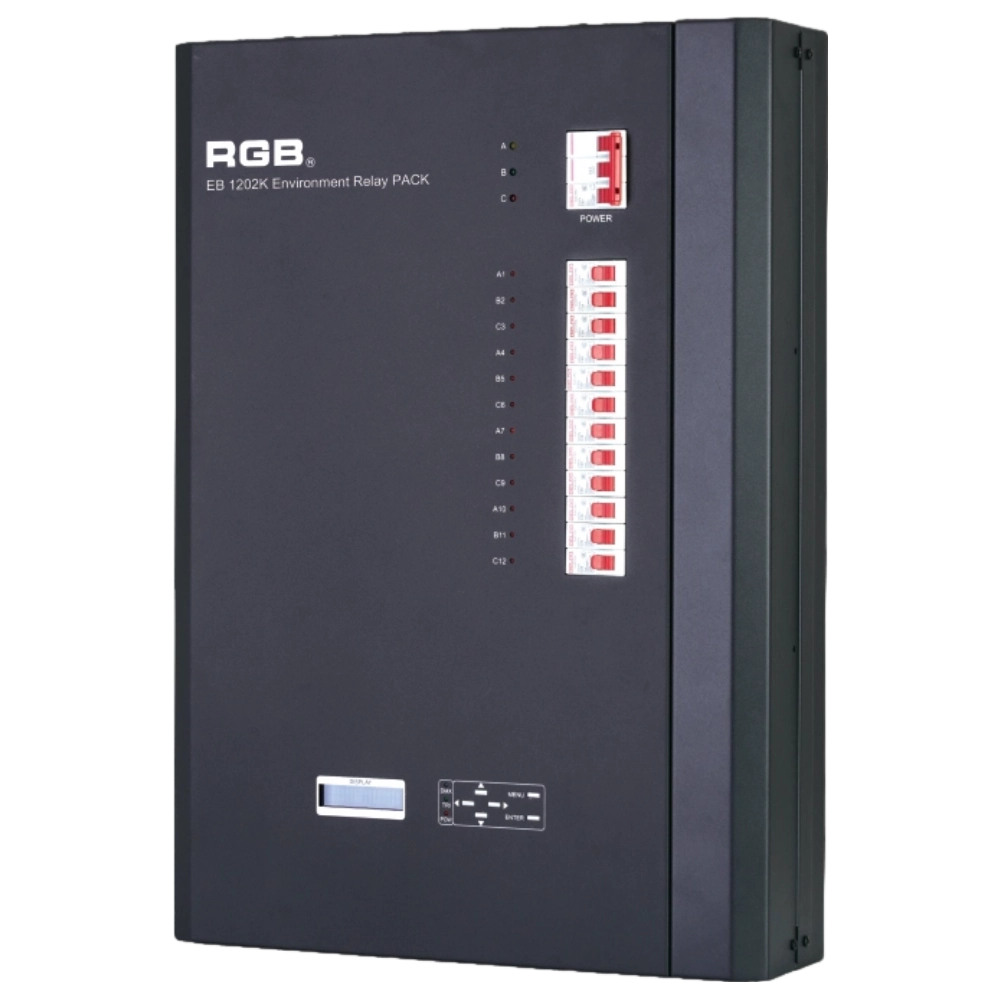
EB1202 Wall-Mounted Smart Site Light Control Series
Wall-mounted smart lighting controller with CE certification, DMX512 compatibility, flexible 12/24-channel output, scene backup, intelligent interface, and multiple dimming curves for precise professional lighting control.
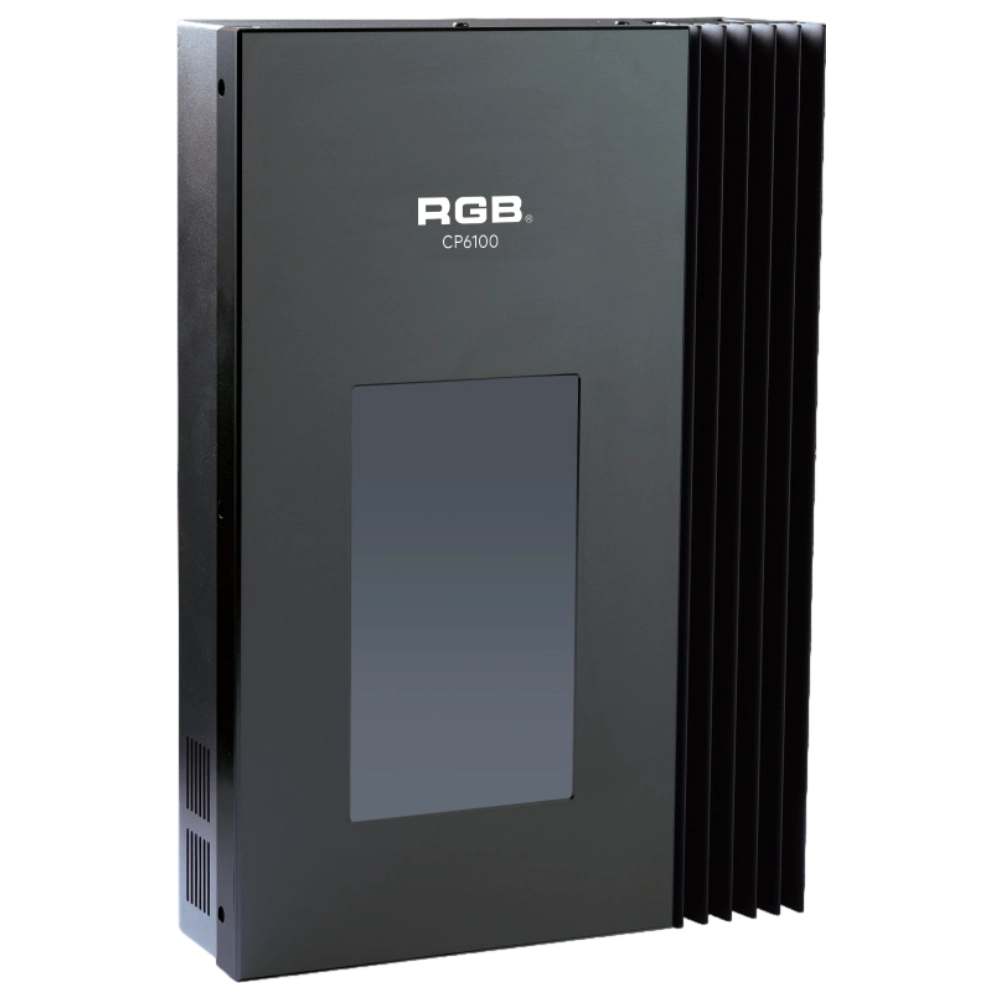
CP6100 Light Control System
The lighting control host is the main control device for theater stage lights, work lights, environmental lighting, commercial art lighting, sports venue lighting, and other places. By connecting the dedicated lighting control panels CP6104 and CP6108, it realizes the central control of the lighting system, supports a visual lighting control system, and intuitively displays the online and offline status of CP6100. Realize remote monitoring, editing, and setting of corresponding parameters.
It is widely applicable to theaters, cinemas, auditoriums, stadiums, museums, exhibition halls, cultural tourism performances, commercial art lighting, and other places.
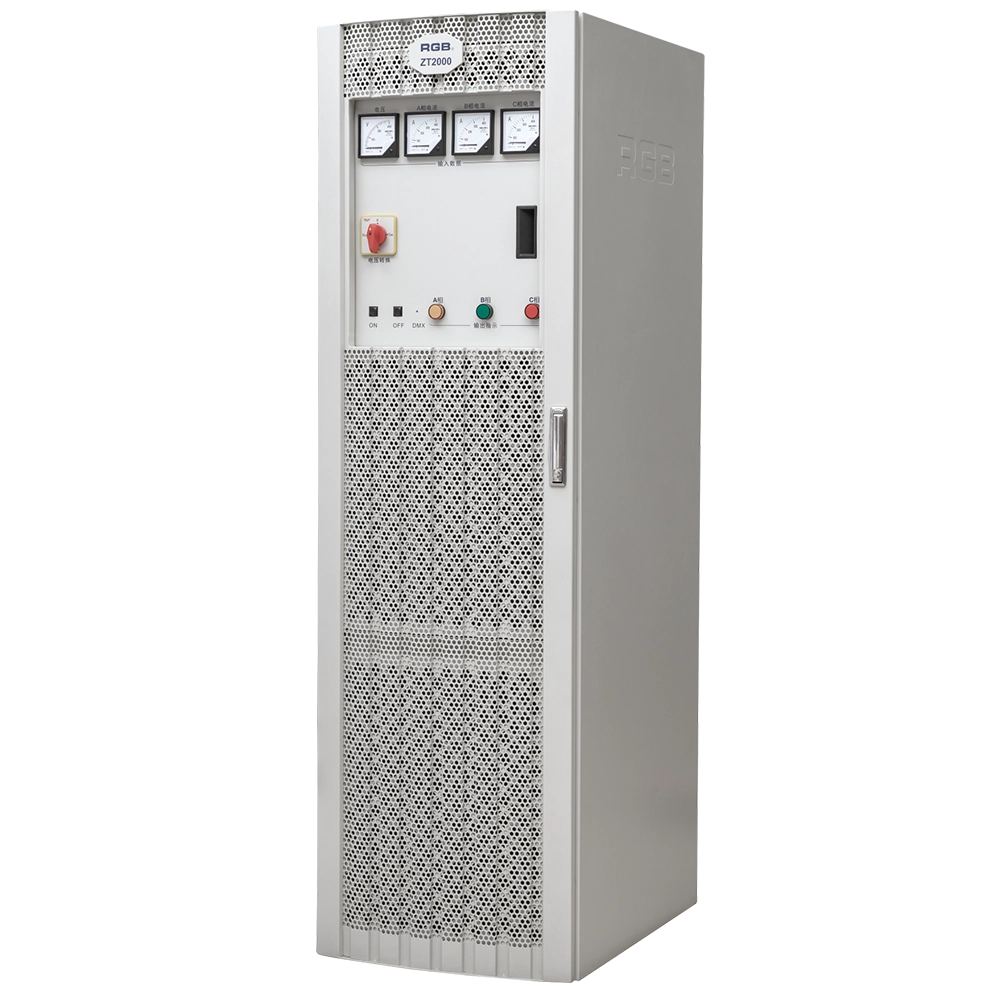
ZT2000 Pass-Through Racks
The ZT2000 straight-through power cabinet is a three-phase 630A/400A air switch main control, with each channel being a 32A air switch sub-control straight-through power cabinet. It can be used in conjunction with various computer lamps, regular lamps, and temporary electrical equipment as a power distribution and supply part for electrical equipment with overcurrent and short-circuit protection. It is a brand-new, reliable, and stable lighting control device in the field of stage lighting control.
It is widely applied in theaters, concert halls, multi-functional halls, cultural and tourism performances, TV stations, gymnasiums, auditoriums, commercial art lighting, and other performance and cultural venues.
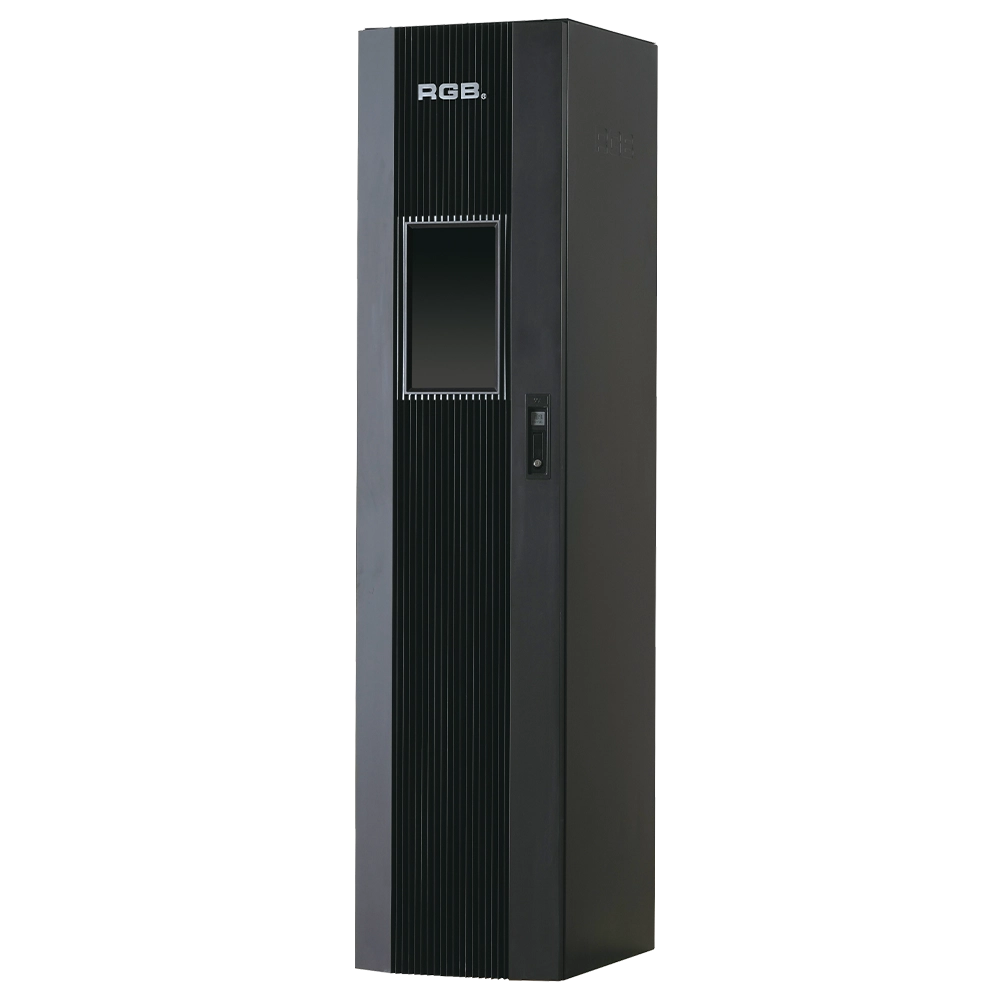
9i intelligent network Dimmer/Relay Racks
9i is an artificial intelligence dimming racks independently developed by RGB, which has completely independent core technology and obtained software Copyrights, all digital electrodeless trigger and multi-backup independent CPU central processor technology. It has a variety of output configurations such as sine wave, thyR, relay and dimming relay mix, and supports visual lighting control system and visually displays the online and offline status of dimming racks. Realize remote monitoring, editing and setting of relevant parameters.
It is suitable for the lighting control needs of different places such as high standard grand theater, TV station, gymnasium and environmental intelligent lighting.
Expert Support
Interested in learning more or need expert guidance related to this article? Fill in your details, and our team will provide tailored support.
Intelligent Control. Brilliant Performance.
RGB specializes in stage lighting control systems, delivering intelligent, reliable, and high-performance solutions for theaters and performance spaces worldwide.
Contact
Email:
Tel:
+86 20 3928 0245
+86 20 3928 0247
Address:
No.3, Huashan Road, Shilou Town, Panyu, Guangzhou, China.
Whatsapp: +8615975520131