
Pro Tips: How to Build a Fail-Safe Touring Dimmer Rack System from Scratch (2026 Edition)
- Quick Summary: The Architect's Blueprint
- Core Components & Safety
- What Defines a Fail-Safe Touring Dimmer Rack?
- The Evolution of Hybrid Racks
- Phase 1: Selecting the Skeleton (Chassis & Protection)
- Airflow Architecture & Thermal Management
- Phase 2: Power Distribution & Input Architecture
- Main Breaker Sizing & Metering
- Phase 3: The Brains – Control & Redundancy
- Redundant sACN/Art-Net Networking
- Phase 4: Output Patching & Connectivity
- The Hot Patch Bay
- Expert Tips: Common Build Mistakes to Avoid
- Conclusion
- FAQ
- What is the difference between a touring dimmer rack and an install rack?
- How do you calculate the power requirements for a custom dimmer rack?
- Can I mix LED and tungsten fixtures in the same dimmer rack?
- Why is shock mounting essential for touring dimmer systems?
- What is the best control protocol for large touring racks?
- How often should touring dimmer rack air filters be cleaned?
- What is a 'Hot Patch' in a dimmer rack system?
- What are the safety requirements for Cam-Lok power connections?
Quick Summary: The Architect's Blueprint
A fail-safe touring rack is a custom-engineered power control system designed to withstand the physical rigors of the road while providing redundant electrical and data pathways. It serves as the central nervous system for live event lighting, combining Portable Power Distribution Units (PDU), dimming, and network processing into a single mobile unit. Success relies on three pillars: thermal stability, shock protection, and rapid deployment capabilities tailored to UL standards.
Core Components & Safety
To guarantee reliability during high-stakes productions, your build must include:
- Chassis: A 48U Shock-mount road case with floating inner racks to dampen truck vibrations.
- Power Input: 3-Phase Cam-Lok distribution with verified ground/neutral reversal protection.
- Hybrid Control: ThruPower breaker modules that switch between dimming (tungsten) and relay (LED) modes.
- Compliance: Strict adherence to UL 1640 standards for temporary power distribution safety.
What Defines a Fail-Safe Touring Dimmer Rack?
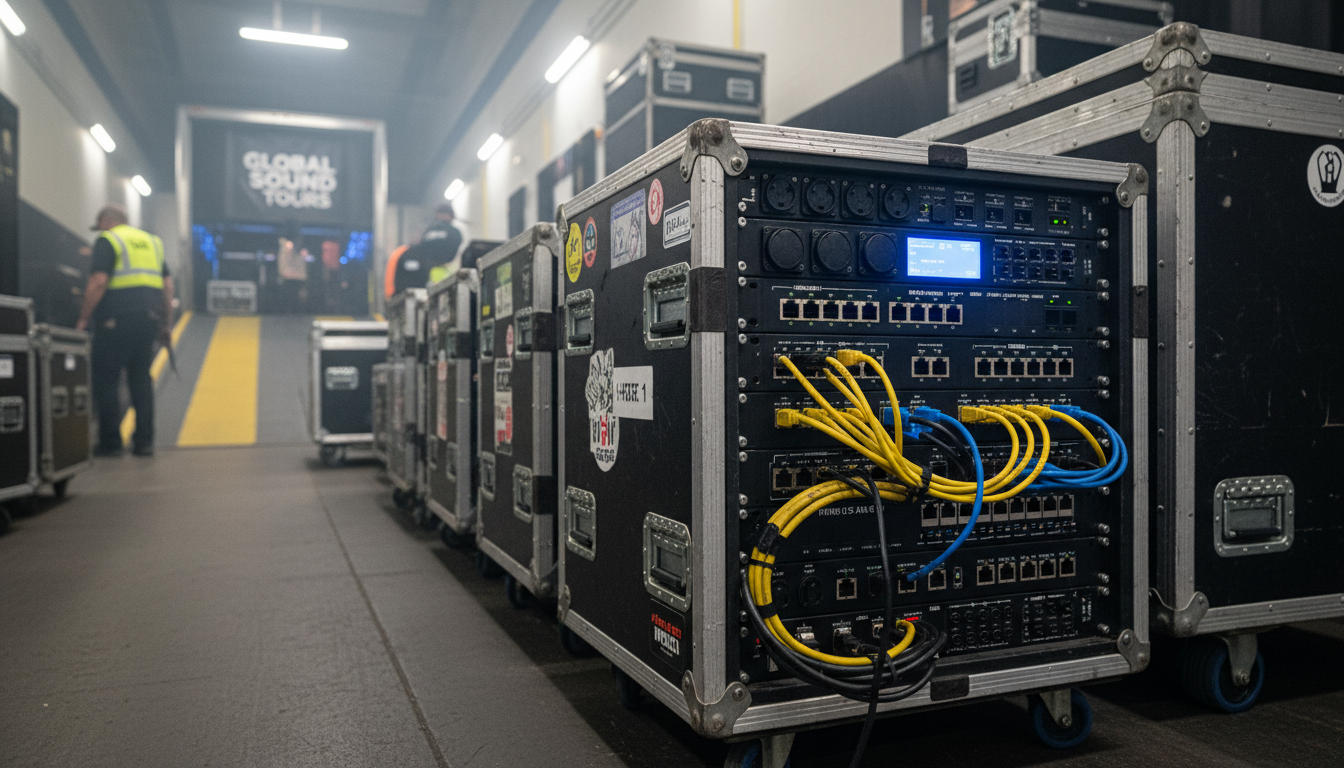
A fail-safe touring dimmer rack is a portable power control unit designed with redundant electrical and data pathways to prevent blackout scenarios during live events. Unlike standard architectural installations, these systems utilize heavy-duty shock mounting, integrated hot-patch capabilities, and active cooling tunnels optimized for harsh road environments. Modern fail-safe systems integrate 'ThruPower' technology, allowing circuits to switch between dimming for traditional tungsten fixtures and hard power for automated Hybrid Power/Data Racks instantly.
The Evolution of Hybrid Racks
The shift from pure tungsten rigs to mixed LED/intelligent lighting environments has necessitated a change in rack architecture. In 2026, a rack that only dims is obsolete. You need a system that can:
- Auto-Detect Loads: Automatically switch between Constant Current (CC) for LEDs and Phase Control for incandescents.
- Isolate Faults: Ensure a single tripped breaker does not take down the rack's processor.
- Monitor Real-Time Data: Provide voltage, amperage, and thermal feedback via RDM (Remote Device Management).
Phase 1: Selecting the Skeleton (Chassis & Protection)
The foundation of any touring system is a floating shock-mount road case, typically between 16U and 48U, designed to isolate sensitive electronics from transport vibration. This "skeleton" must feature inner rack rails suspended by foam or rubber isolators to absorb the kinetic energy of truck travel. Without this isolation, soldered components on circuit boards will eventually fatigue and fail.
Airflow Architecture & Thermal Management
Heat is the enemy of electronics. When designing your rack, you must calculate the Thermal Load Calculation for Road Cases. This involves determining the total BTU output of your dimmers and processors at full load.
- Negative Pressure: Design fans to pull cool air from the bottom (cold aisle) and exhaust hot air out the top-rear.
- CFM Calculation: Ensure your fans' Cubic Feet per Minute (CFM) rating exceeds the total heat dissipation requirements of your modules.
- Filtration: Install washable foam filters on intake vents to prevent stage dust and haze fluid residue from coating internal components.
Phase 2: Power Distribution & Input Architecture
The mains feed architecture must utilize Cam-Lok E1016 series inputs with specific keying to prevent accidental cross-phase connection, ensuring the safety of both equipment and crew. A robust input panel is the first line of defense against "dirty" generator power often found at festival sites.
Main Breaker Sizing & Metering
Your Main Breaker is the gatekeeper. It must be sized to handle the total potential load while avoiding nuisance tripping during momentary inrush currents.
- Load Calculation: If your rack powers 48 x 2.4kW dimmers, your theoretical max is high, but the diversity factor (real-world usage) is usually 70-80%. A 400A disconnect is standard for large racks.
- Digital Metering: Integrate a high-resolution digital multimeter. As noted in safety guidelines by IAEI Magazine, portable power units (UL 1640) require distinct identification and protection features. Real-time monitoring of voltage drop and phase balance is critical for diagnosing generator issues before they damage fixtures.
Phase 3: The Brains – Control & Redundancy
The control system requires a modular processor capable of hot-swapping and dual-protocol inputs to ensure lighting control is never lost, even during component failure. This is the "brain" of your operation. In a fail-safe build, you never rely on a single point of failure.
Redundant sACN/Art-Net Networking
Modern touring relies heavily on Ethernet-based protocols. Redundant sACN/Art-Net Networking is superior to standard DMX because it supports thousands of universes and allows for network-level redundancy.
- Primary/Secondary Streams: Configure your console to send sACN (ANSI E1.31) with a priority rating. If the primary console fails, the backup console (with a lower priority) automatically takes over without a blackout.
- UPS Integration: Install a small, rack-mounted Uninterruptible Power Supply (UPS) dedicated solely to the network switch and rack processor. This keeps the "brain" alive during brownouts, allowing the system to recover instantly when power stabilizes.
- Panic Switch: Wire a hardware bypass "Panic Switch" that forces specific circuits (like work lights or house lights) to full on, bypassing the DMX processor entirely in emergencies.
Phase 4: Output Patching & Connectivity
Output patching should prioritize modularity, utilizing hardwired 19-pin Socapex connectors for rapid deployment of multi-circuit lighting bars. Hardwiring eliminates the need to plug in 48 individual cables at every load-in, significantly reducing setup time.
The Hot Patch Bay
A custom "Hot Patch" bay is essential for touring. It allows you to reroute any dimmer circuit to any output line without opening the rack.
- Flexibility: If Dimmer 1 dies, you can physically patch Output 1 to Dimmer 2 in seconds.
- Socapex 19-Pin Pinout Configuration: Standardization is key. As detailed by Phase 3 Connectors, the industry standard dictates that Pins 1 through 12 carry the Live and Neutral for circuits 1-6, while Pins 13 through 18 are the dedicated Earths. Adhering to this pinout ensures your rack is compatible with rented cabling and house rigs worldwide.
- Cable Management: Use lacing bars and high-temperature zip ties. Poor cable management restricts airflow, leading to thermal shutdowns.
Expert Tips: Common Build Mistakes to Avoid
The most frequent error in custom rack builds is the 'Hot Pocket' effect, where high-density dimmer modules are packed without adequate spacing for heat dissipation.
- Ground Loops: These create an audible hum in the audio system. Always isolate your DMX/Network ground from the chassis electrical ground.
- Labeling Neglect: A rack looks different in a dark backstage corner than it does in a well-lit shop. Use UV-reactive or glow tape for all circuit labels to aid troubleshooting during a show.
- Ignoring UL 1640: Building a rack that doesn't meet the UL 1640 standard for portable power distribution units can void insurance policies and get your gear shut down by fire marshals. According to UL Standards, these requirements specifically cover safety for carnivals, circuses, and theatrical environments, ensuring personnel protection against shock hazards.
Conclusion
Building a fail-safe touring dimmer rack requires balancing rugged physical protection with intelligent electronic redundancy. By integrating hybrid power modules, robust Redundant sACN/Art-Net Networking, and strict adherence to safety standards, your system will survive the rigors of the road well into the 2030s. The investment in a custom, well-engineered infrastructure pays dividends in reliability and peace of mind on every show.
Contact us today to optimize your Portable Power Distribution Units strategy.
FAQ
What is the difference between a touring dimmer rack and an install rack?
Touring racks are built into shock-mounted road cases for vibration resistance and portability. Unlike install racks, which are usually wall-mounted cabinets with less robust cooling and fixed wiring, touring units feature Cam-Lok power inputs for temporary hookups. Install racks are typically hardwired directly to the building's infrastructure.
How do you calculate the power requirements for a custom dimmer rack?
To calculate power requirements, sum the wattage of all potential fixtures per circuit (Watts = Volts x Amps). Apply a diversity factor (usually 70-80%) since not all lights are at 100% intensity simultaneously. Ensure the Main Breaker exceeds this total load across all three phases to prevent tripping.
Can I mix LED and tungsten fixtures in the same dimmer rack?
Yes, but you need 'ThruPower' or 'Relay' modules for the LEDs. Plugging LED fixtures into standard SCR dimmers can damage the fixture's power supply due to the chopped waveform. A hybrid rack uses interchangeable or dual-mode modules to handle both resistive (tungsten) and inductive/electronic (LED) load types safely.
Why is shock mounting essential for touring dimmer systems?
Shock mounting is essential because it isolates sensitive electronics (processors and circuit breakers) from truck vibrations and impact shocks. This prevents modules from unseating during transit and significantly extends the lifespan of solder joints and internal cabling, which are prone to fatigue failure.
What is the best control protocol for large touring racks?
sACN (Streaming ACN) is preferred for large channel counts and network redundancy. While DMX512 is standard for local control, it has a limit of 512 channels per universe. A fail-safe system often uses sACN over Ethernet to handle thousands of channels, utilizing a DMX hardware backup for emergency redundancy.
How often should touring dimmer rack air filters be cleaned?
Ideally, air filters should be cleaned after every tour leg or every 100 hours of operation in dusty venues. Clogged filters cause thermal throttling, which can shut down the rack mid-show. High-end touring racks use washable foam filters that should be part of a regular maintenance schedule.
What is a 'Hot Patch' in a dimmer rack system?
A 'Hot Patch' is a physical patch bay allowing you to plug any circuit (dimmer) into any output cable (Socapex channel). It provides flexibility when the lighting plot changes without needing to rewire the bar or climb the truss. This is crucial for touring where venue sizes and cable runs vary from night to night.
What are the safety requirements for Cam-Lok power connections?
For Cam-Lok power connections, always Connect Ground (Green) first, then Neutral (White), then Hots (Black/Red/Blue). When disconnecting, do so in reverse order (Hots, Neutral, Ground). This ensures the chassis is always grounded before it is energized. Always ensure connectors are rated for the full amperage and locked (twisted) securely.
Dimmer Rack vs LED Driver: Which Is Best for Stage Lighting
Scaling Dimmer Rack Sizes for Touring vs Fixed Installations
Energy-Efficient Stage Dimmers: Save Power Without Sacrificing Light
Top 10 Stage Lighting Control Systems Manufacturers and Supplier Brands
About RGB
What types of lighting control systems do you support?
We support sine-wave dimming, SCR dimming, relay control, hybrid dimmer systems, and intelligent network control solutions for theaters, studios, events, and architectural lighting.
Can your dimmer cabinets integrate with third-party lighting consoles?
Yes. Our systems follow international protocols and can seamlessly integrate with major global brands through DMX, RDM, Art-Net, and sACN.
How do you ensure product stability during large-scale events?
All products undergo rigorous testing, long-duration load simulation, and multi-standard verification to guarantee stable performance in demanding environments.
Distributors
Can distributors request customized products?
RGB primarily offers standardized products. Customization requests are rare and evaluated on a project-by-project basis.
Does RGB provide installation or commissioning services?
No. RGB only supplies dimming cabinets and technical documentation. On-site installation is handled by local integrators.
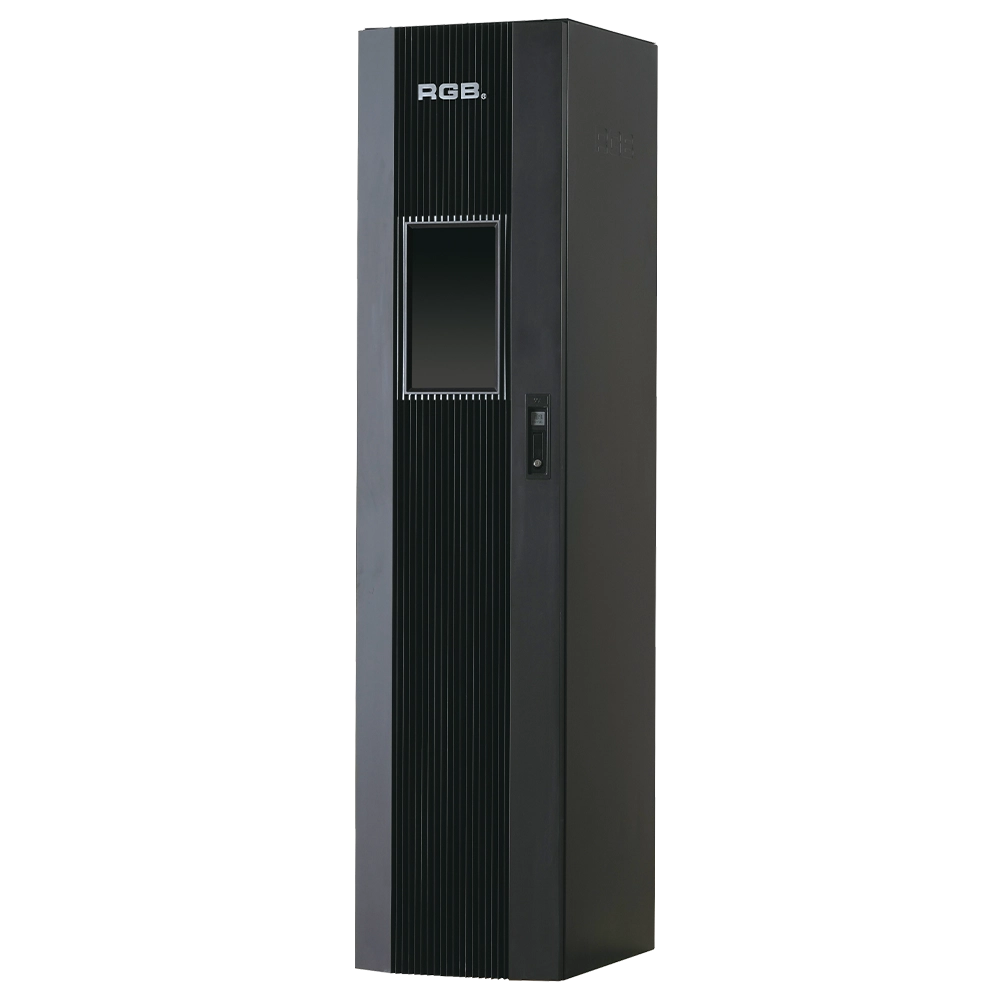
9i intelligent network Dimmer/Relay Racks
9i is an artificial intelligence dimming racks independently developed by RGB, which has completely independent core technology and obtained software Copyrights, all digital electrodeless trigger and multi-backup independent CPU central processor technology. It has a variety of output configurations such as sine wave, thyR, relay and dimming relay mix, and supports visual lighting control system and visually displays the online and offline status of dimming racks. Realize remote monitoring, editing and setting of relevant parameters.
It is suitable for the lighting control needs of different places such as high standard grand theater, TV station, gymnasium and environmental intelligent lighting.
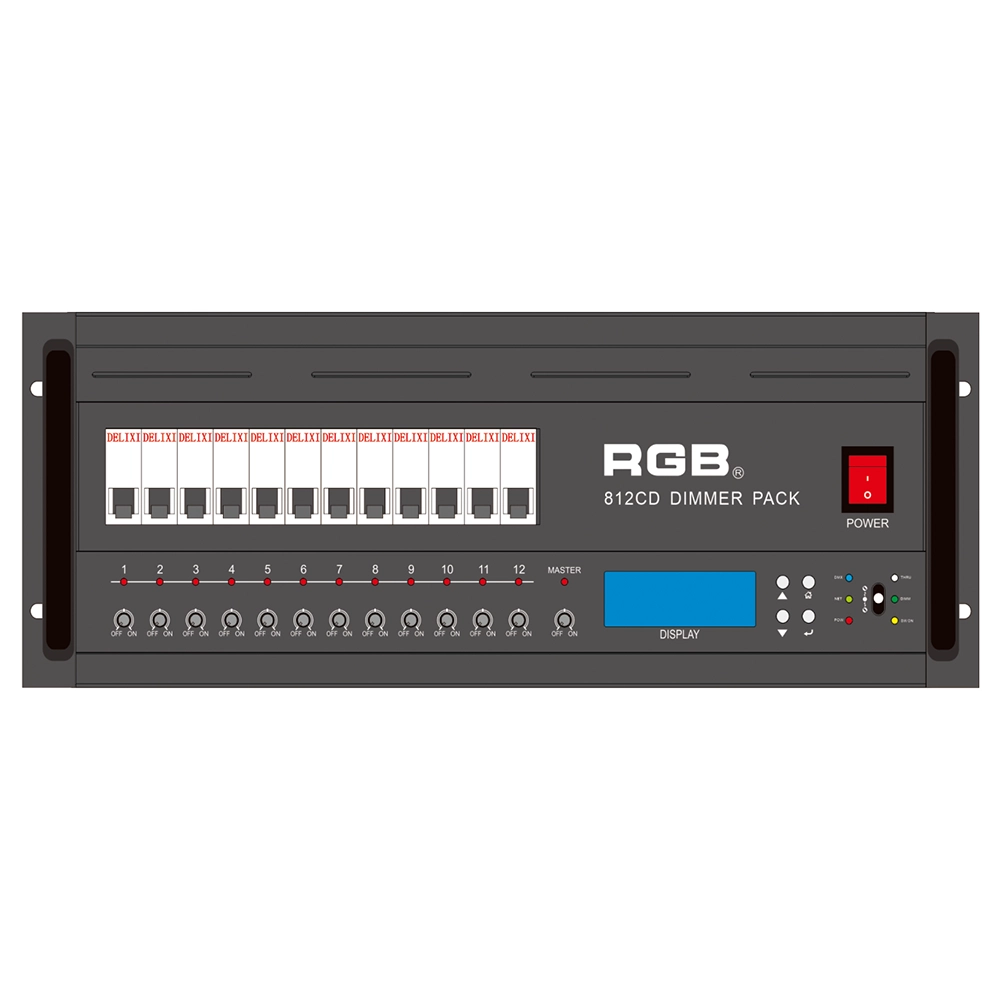
8 Series Intellight Dimmer/Relay Packs
RGB is the latest development and production of all digital, intelligent, and network dimming through the hybrid silicon box. It comes with six channels (806 silicon box), twelve channels (812 silicon box) with analog knob dimming, 49 DMX field recordings and replays (field backup function), and self-programming and recording field. RGB-8 silicon box with DMX512 digital signal input and RJ45 network input interface, with various types of dimming stations at home and abroad used. It is a powerful, stable performance and reliable work of a new generation of intelligent digital dimming through a hybrid silicon box.
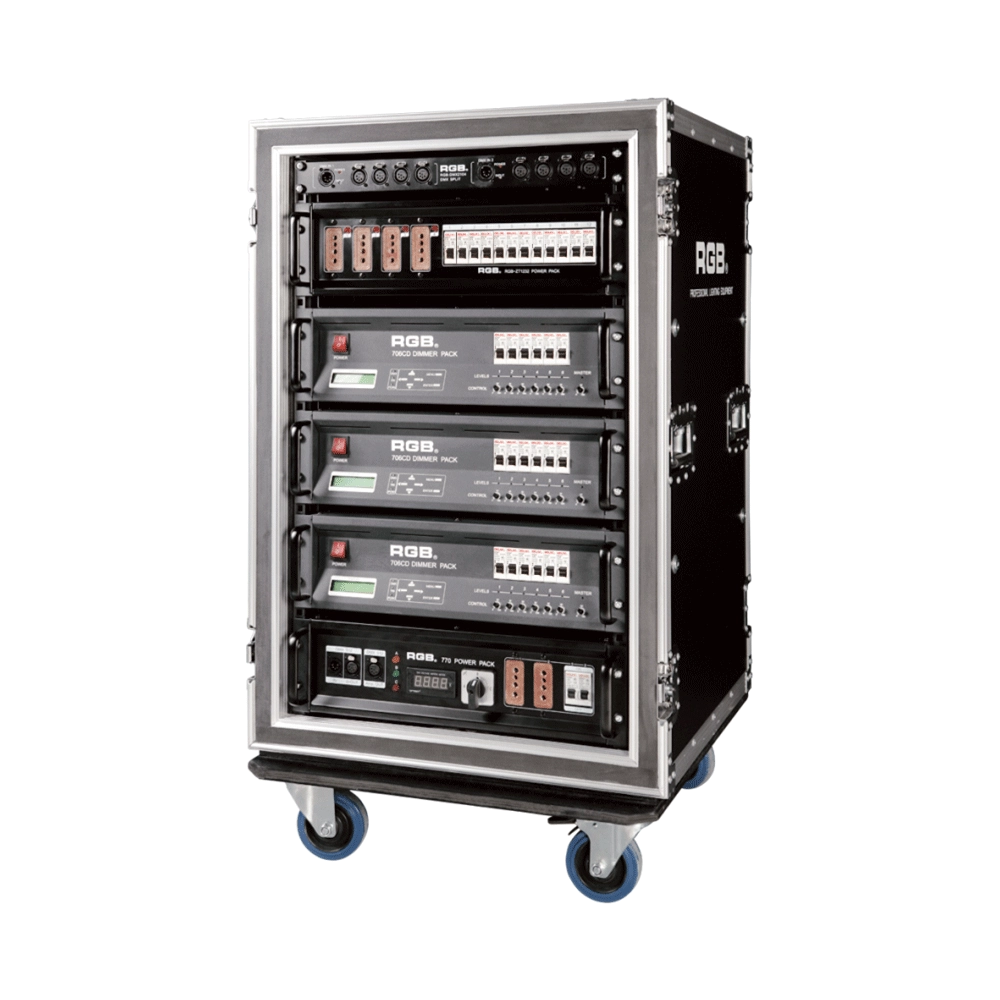
7 Series Digital Touring Dimmer Racks
7 Series digital touring dimmer racks can be assembled into many types of dimmer by taking the 7 Series dimmer as the unit. They are widely used in the entertainment industry for their convenience and practicability.
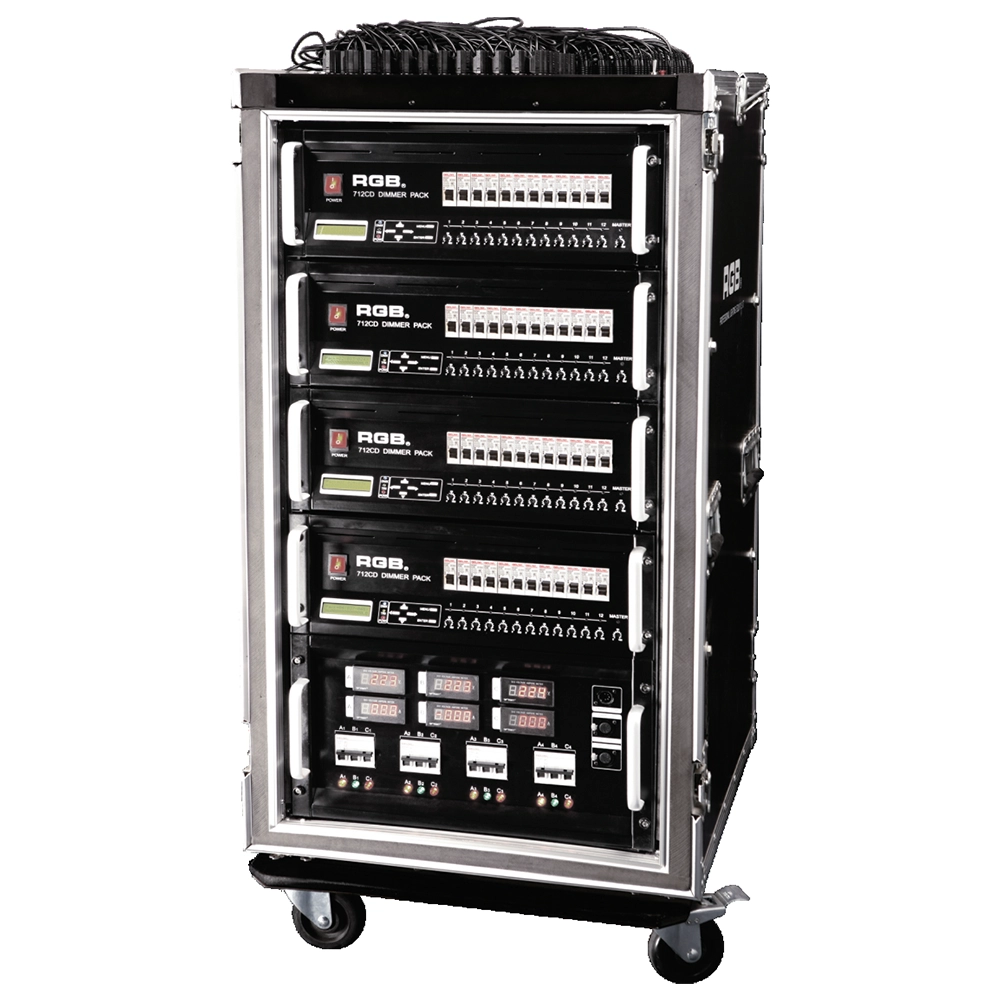
Intelligent Network Touring Dimmer Racks
RGB intelligent network touring dimmer racks can be assembledinto many types of dimmer racks by taking 7 series dimmer
packs as the unit. They are widely used in the entertainment fortheir convenience and practicabillity,
Expert Support
Interested in learning more or need expert guidance related to this article? Fill in your details, and our team will provide tailored support.
Intelligent Control. Brilliant Performance.
RGB specializes in stage lighting control systems, delivering intelligent, reliable, and high-performance solutions for theaters and performance spaces worldwide.
Contact
Email:
Tel:
+86 20 3928 0245
+86 20 3928 0247
Address:
No.3, Huashan Road, Shilou Town, Panyu, Guangzhou, China.
Whatsapp: +8615975520131