
The Ultimate Guide to Pathport DMX Nodes: Scaling Your Lighting Network in 2026
- What is a Pathport DMX Node?
- Key Takeaways: Scaling Your Lighting Rig in 2026
- The Pathport Product Ecosystem: From Uno to Octo
- Node Data Comparison Table
- Core Protocols & Features: Mastering the Network
- Expert Tips: Common Setup Mistakes and Troubleshooting
- Gap Analysis: Future Trends in DMX Distribution for 2026
- Industry-Leading Integration: Powering Massive Rigs with RGB Solutions
- Conclusion
- FAQs About pathport dmx node
- What is the difference between sACN and ArtNet on a Pathport node?
- How do I configure a Pathport node using Pathscape?
- Why are my DMX fixtures flickering when connected to Pathport?
- Can Pathport nodes merge multiple DMX sources?
- What does crossfade on loss of signal mean?
- How do you fix a 'Limited Connection' error in Pathscape?
- Are Pathport nodes compatible with RGB stage light control systems?
- How do I update the firmware on my Pathport gateway?
What is a Pathport DMX Node?
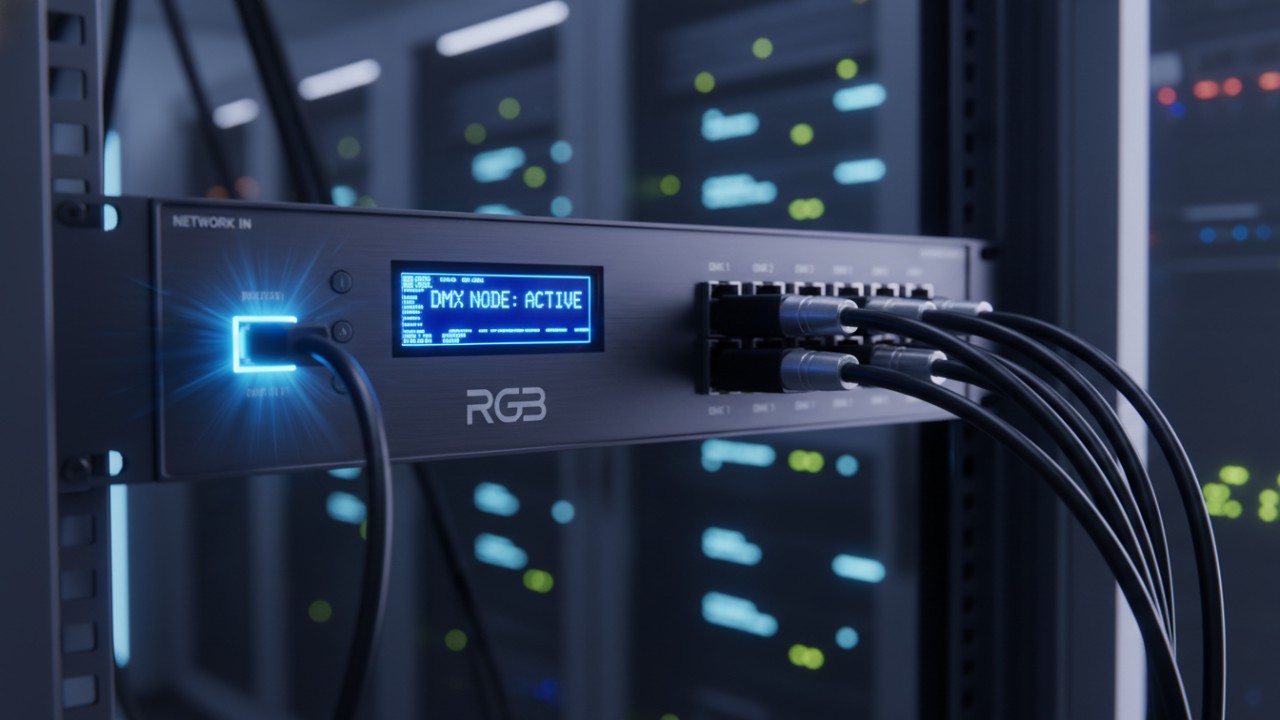
A pathport dmx node is an advanced Ethernet to DMX gateway that directly translates network protocols like sACN and Art-Net into standard DMX512 signals, serving as the central routing hub to distribute, merge, and manage multiple universes for stage lighting equipment.
Understanding the core functionality of these nodes is the first critical step in designing a modern, highly scalable lighting network. As theatrical shows, broadcast studios, and stadium concerts become increasingly complex, relying solely on traditional daisy-chained 5-pin DMX cables is no longer viable. Network-based distribution allows lighting designers to push vast amounts of synchronized data across a venue using standard IT infrastructure.
Key features and benefits of deploying a standard pathport dmx node include:
- Seamless Protocol Translation: Effortlessly converting high-speed data streams into physical DMX512 outputs required by stage fixtures.
- Power over Ethernet (PoE): Eliminating the need for localized, bulky power supplies by drawing operating power directly from the network switch.
- Remote Device Management: Allowing lighting operators to monitor, address, and configure automated fixtures remotely without needing physical access to the lighting rig.
- Custom Patching: Enabling granular, slot-by-slot routing and custom universe creation through centralized software platforms.
Key Takeaways: Scaling Your Lighting Rig in 2026
Scaling a lighting rig in 2026 mandates using high-density Ethernet-based DMX distribution, leveraging centralized management software for real-time diagnostics, and pairing robust nodes with enterprise-grade infrastructure to achieve seamless, low-latency control across massive venues.
The modern lighting landscape demands flexibility and absolute reliability. As pixel mapping and complex LED arrays require massive universe counts, your network architecture must be able to handle the increased bandwidth without dropping packets.
Critical factors for successfully scaling your network in 2026 include:
- Adopting Modern Protocols: Ethernet-based DMX distribution (specifically sACN) is now the mandatory baseline for theatrical and stadium lighting networks, replacing aging proprietary transmission methods.
- Optimizing Node Density: Choosing the correct node configuration—ranging from single-port localized drops to high-density 8-port rack units—dictates your network's physical scalability and overall cost-efficiency.
- Centralized Diagnostics: Utilizing hybrid network integration and management tools to monitor fixture health and execute real-time troubleshooting.
- Future-Proofing Infrastructure: Guaranteeing success by pairing highly reliable data nodes with enterprise-grade stage light control systems and intelligent dimming racks capable of supporting heavy electrical loads.
The Pathport Product Ecosystem: From Uno to Octo
The Pathport product ecosystem provides a tiered range of DMX gateways, scaling from the single-port Uno for localized data drops to the high-density eight-port Octo designed for massive, stadium-level lighting data distribution and cost-effective routing.
Choosing the appropriate hardware form factor ensures that data is delivered exactly where it is needed without unnecessary cable runs or inflated hardware costs. By strategically placing different nodes throughout a venue, integrators can build a highly customized, robust topology.
The primary hardware options within the ecosystem include:
- Pathport Uno: A single-port solution ideal for localized, single-universe applications, such as a simple data drop-point in a small studio or architectural installation.
- C-Series 2-Port: The classic, flush-mount, or portable dual-port gateway featuring highly configurable input and output options for classic theaters.
- 4-Port Rack Mount: Designed for centralized theatrical DMX distribution, featuring intuitive front panel LCD interfaces and individual port configuration.
- Octo 8-Port: The ultimate high-density distribution unit, offering the lowest cost-per-port metric for large-scale venues, music festivals, and arena tours.
- Touring Edition: Ruggedized, IP54-rated network nodes built specifically with advanced diagnostic tools to survive the physical abuses of life on the road.
Node Data Comparison Table
To assist in planning your 2026 network expansion, refer to this hardware comparison table:
| Node Model | Total Ports | Best Application Use-Case | Form Factor | Cost-per-Port Efficiency |
|---|---|---|---|---|
| Pathport Uno | 1 | Localized drops, architectural lighting | Wall / Flush Mount | Moderate |
| C-Series | 2 | Portable setups, classic proscenium theaters | Flush / Portable Box | Good |
| 4-Port Series | 4 | Centralized theatrical data distribution | 1U Rack Mount | High |
| Octo Series | 8 | Massive stadiums, complex LED pixel mapping | 1U Rack Mount | Very High |
Core Protocols & Features: Mastering the Network
Mastering a modern lighting network requires a deep understanding of multicast routing protocols, efficient universe merging techniques, and leveraging centralized configuration platforms to ensure perfectly synchronized data distribution across all connected stage fixtures.
The foundation of robust sACN and ArtNet DMX distribution lies in selecting the appropriate digital language for your specific network scale. Ensuring you maintain proper DMX Controller Compatibility across your lighting consoles and data gateways is critical to preventing latency and dropped packets.
Key protocols and software features to master include:
- sACN (Streaming ACN): As established by industry standards outlined on Wikipedia, Streaming ACN (sACN) uses the Architecture for Control Networks (ACN) root layer to reliably transport DMX512 data over IP networks. Because it utilizes multicasting and supports priority merging, it is widely considered the superior standard for large-scale setups in 2026.
- Art-Net: Conversely, Wikipedia details that Art-Net is a ubiquitous, royalty-free communications protocol operating over the User Datagram Protocol (UDP). While highly compatible with legacy hardware, it relies heavily on unicast or broadcast traffic, demanding careful IP subnetting (typically utilizing 2.x.x.x or 10.x.x.x IP ranges).
- Pathscape Configuration Software: This powerful software empowers network administrators to navigate custom universe creation, assign strict IP configurations, and establish advanced Priority Merging (HTP vs. Priority) across multiple lighting consoles seamlessly.
- Loss of Signal Crossfading: Advanced nodes can be programmed to smoothly crossfade to a backup lighting state or architectural look if the primary data signal is interrupted, preventing abrupt blackouts during live performances.
Expert Tips: Common Setup Mistakes and Troubleshooting
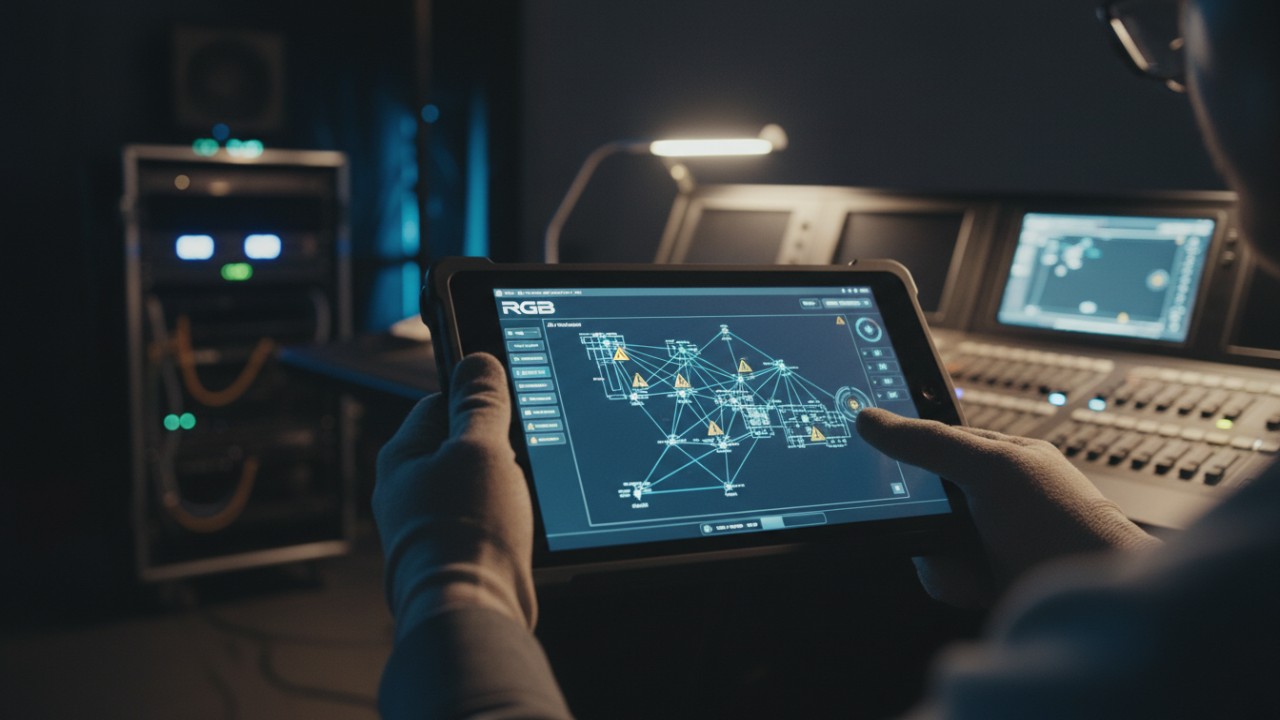
Effective RDM lighting network troubleshooting requires methodically addressing IP subnet mismatches, modifying DMX refresh rates to prevent legacy fixture flickering, and utilizing proper power cycling techniques to maintain continuous data flow across complex routing paths.
Even the most meticulously designed lighting networks can encounter localized communication failures. Understanding the root causes of these hardware and software conflicts minimizes downtime and ensures that the show runs flawlessly.
Essential troubleshooting practices include:
- Resolving 'Limited Connection' Errors: This frequent software warning is almost always caused by an IP address or subnet mask mismatch between the control PC and the node. Ensure both devices operate on the exact same local subnet, and perform routine ping tests to verify connectivity.
- Eliminating RDM Flickering: According to Wikipedia, Remote Device Management (RDM) is a protocol addition to DMX512 introduced in 2006 that enables bidirectional communication. However, older, non-compliant stage fixtures often misinterpret these data packets, resulting in severe visual flickering. Disabling RDM on the specific node port or slowing down the DMX output speed refresh rate instantly solves this hardware bug.
- Universe Routing Clarity: Keeping meticulous, centralized documentation of your routing paths prevents crossed signals and unexpected output behavior, especially when integrating primary consoles with backup desks.
- Evaluating Hardware Choices: Reviewing fundamental DMX Node Pros and Cons allows technical directors to decide when to deploy hardwired Ethernet nodes versus wireless DMX transmitters, mitigating persistent environmental dropouts.
Gap Analysis: Future Trends in DMX Distribution for 2026
Future trends in DMX distribution for 2026 center on cloud-based remote diagnostics, automated network redundancy, handling massive data throughput for pixel mapping, and seamlessly bridging legacy hardware with ultra-fast Ethernet protocols.
As the entertainment lighting industry evolves, the sheer volume of data required to run a show is expanding exponentially. Traditional lighting networks must adapt to support modern aesthetic demands.
Emerging requirements for future-proofed networks include:
- Visualized Control Systems: Moving away from localized terminal diagnostics toward cloud-based, graphical interfaces that allow off-site engineers to monitor network health, PoE status, and thermal metrics in real-time.
- High-Density Universe Management: Accommodating the astronomical universe counts required by complex LED arrays, moving head video integration, and intricate stage pixel mapping.
- Automated Redundancy: Designing networks that utilize dual Ethernet ports and seamless backup switching, ensuring that a severed cable or failed switch never halts a live broadcast.
- Cost-per-Port Efficiency: Navigating modern supply chain realities by analyzing the true scalability costs of expanding a venue's DMX backbone.
Industry-Leading Integration: Powering Massive Rigs with RGB Solutions
Integrating high-performance pathport dmx nodes with comprehensive Stage lighting control system integration ensures that massive venues possess the bulletproof reliability, intelligent network dimming, and high-voltage power distribution required for flawless Olympic-level productions.
While high-quality network gateways handle the complex digital translation of lighting data flawlessly, they must be supported by an overarching hardware architecture capable of withstanding the immense physical and electrical demands of professional installations. This is where partnering with an elite manufacturing integration partner becomes paramount.
Guangzhou RGB Lighting Equipment Co.,Ltd., founded in 1996 and headquartered in Guangzhou, serves as a premier global manufacturer of these critical infrastructure components. As a recognized National High-Tech and Specialized Innovative Enterprise, the RGB brand pioneers the advanced lighting control technologies necessary to support modern Ethernet grids.
- Global Event Pedigree: RGB's industry-leading power cabinets, relay racks, and stage light controllers have driven landmark events, including the Beijing Olympics, the Shanghai World Expo, and the Asian Games.
- Uncompromising Quality Standards: Certified to strict international standards—including ISO9001, CE, RoHS, EMC, and CQC—RGB maintains absolute quality control across every production stage to guarantee long-term operational stability.
- Advanced Ecosystem Integration: Deploying a dedicated network node alongside RGB's visualized control systems and cloud-based management frameworks guarantees a zero-latency environment tailored for large-scale theaters, broadcast studios, and performance venues.
- Future-Ready Infrastructure: RGB's intelligent network dimming and hybrid dimmer solutions create a safe, highly stable high-voltage backbone that perfectly complements the hyper-fast data delivery of modern DMX gateways.
Conclusion
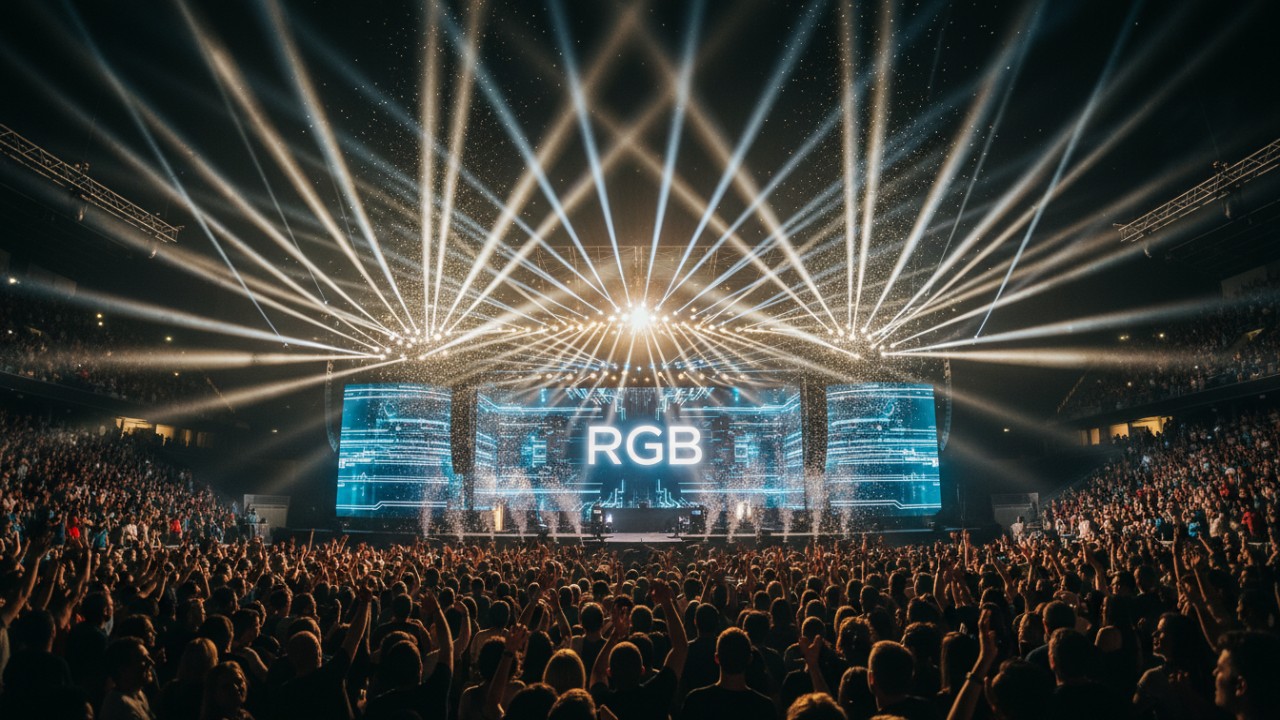
Successfully scaling a modern stage lighting network relies on combining cutting-edge Ethernet gateways with bulletproof power and control infrastructure to ensure seamless, zero-latency performances in demanding environments. By mastering essential protocols like sACN, optimizing node port density, and avoiding common RDM troubleshooting pitfalls, technical directors can confidently build intelligent rigs prepared for the intense visual demands of 2026. Ultimately, pairing reliable data routing devices with world-class, internationally certified power distribution hardware from trusted manufacturers is the definitive strategy for long-term operational success and system stability. Contact us today to optimize your pathport dmx node strategy.
FAQs About pathport dmx node
What is the difference between sACN and ArtNet on a Pathport node?
sACN is an efficient multicast protocol that automatically routes data without heavy network configuration and supports priority merging. ArtNet is an older, widely supported protocol that typically relies on broadcast or unicast routing, which can sometimes saturate larger networks if not subnetted correctly.
How do I configure a Pathport node using Pathscape?
You must connect the node to a network switch, ensure your computer's IP address is in the same range, and open the Pathscape software. From there, you can discover devices, assign IP addresses, set universe routing, and configure port directions (In/Out).
Why are my DMX fixtures flickering when connected to Pathport?
Flickering is often caused by older or non-compliant fixtures receiving RDM (Remote Device Management) packets. You can fix this by disabling RDM on the specific node port via Pathscape or by adjusting the DMX output speed to a slower refresh rate.
Can Pathport nodes merge multiple DMX sources?
Yes, Pathport nodes support multi-source merging. They can merge using HTP (Highest Takes Precedence) or priority-based merging. This is highly useful for backup consoles or integrating architectural control systems with primary stage lighting desks.
What does crossfade on loss of signal mean?
If the primary DMX or network signal is suddenly lost, the node can be configured to smoothly fade to a secondary backup source rather than snapping to blackout. It can also be set to hold the last look or crossfade to a pre-recorded emergency scene.
How do you fix a 'Limited Connection' error in Pathscape?
This error almost always points to an IP address or subnet mask mismatch between the computer running Pathscape and the Pathport node. Verify that both devices are on the exact same subnet and that no firewalls are blocking the Pathscape application.
Are Pathport nodes compatible with RGB stage light control systems?
Yes. Pathport nodes use standard Ethernet protocols (sACN/ArtNet) and output standard DMX512. This makes them perfectly compatible as data distribution endpoints within larger stage light control systems and intelligent dimming networks manufactured by RGB.
How do I update the firmware on my Pathport gateway?
Firmware updates are deployed through the Pathscape software. Once your devices are discovered and secure on the network, you can download the latest firmware package from Pathway and push it to the nodes via the software interface.
Top DMX Controller Brands Compared: Reliability and Support
Scalable Stage Lighting Systems for Touring Productions
Rack Dimmer Maintenance Tips to Reduce Downtime and Costs
DMX Dimmer Rack Upgrades: Benefits and Best Practices
Distributors
Can distributors request customized products?
RGB primarily offers standardized products. Customization requests are rare and evaluated on a project-by-project basis.
Does RGB provide installation or commissioning services?
No. RGB only supplies dimming cabinets and technical documentation. On-site installation is handled by local integrators.
About RGB
What after-sales support do you provide?
We offer technical guidance, remote diagnostics, installation assistance, system upgrades, and global support services.
What types of lighting control systems do you support?
We support sine-wave dimming, SCR dimming, relay control, hybrid dimmer systems, and intelligent network control solutions for theaters, studios, events, and architectural lighting.
How do you ensure product stability during large-scale events?
All products undergo rigorous testing, long-duration load simulation, and multi-standard verification to guarantee stable performance in demanding environments.
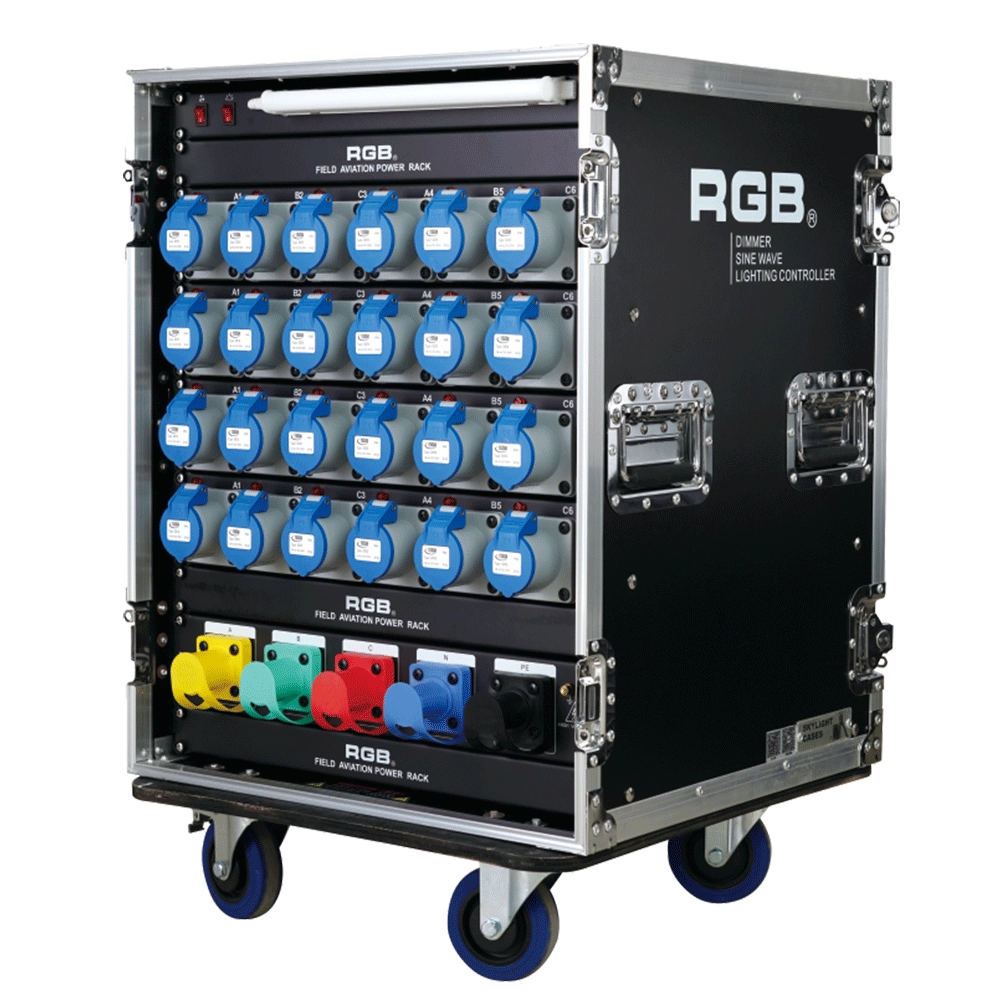
ZT Distribution Box
RGB-ZT2416 features dual protection functions and is a power distribution product specifically designed for overcurrent and short circuit of electrical equipment. It is the best choice for mobile performance and is suitable for use in computer lamps, conventional lamps, and other equipment.
7i Dimmer/Relay Racks
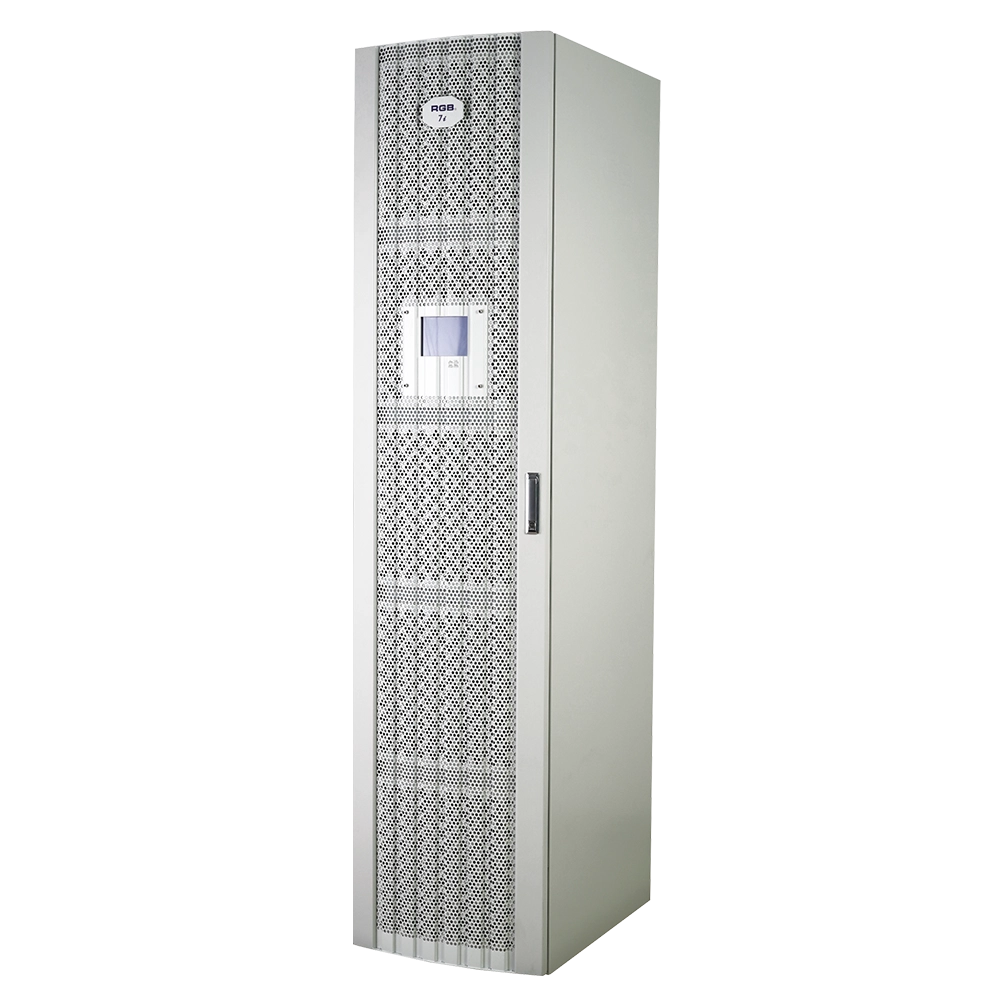
7i is RGB independent research and development, with completely independent core technology, full digital decoding technology dimming racks, using a dual system, double decoding, double trigger, and duplex dual backup central decoding processor, with thyristor, relay, dimming relay mixed and other output configurations, supporting a visual lighting control system, intuitive display of dimming racks' online and offline status, and remote monitoring.
It is widely used in performing arts and cultural venues such as theaters, concert halls, multi-function halls, cultural travel and performing arts, TV stations, gymnasiums, auditoriums, commercial art lighting and so on.
Site Light Controller CP6104
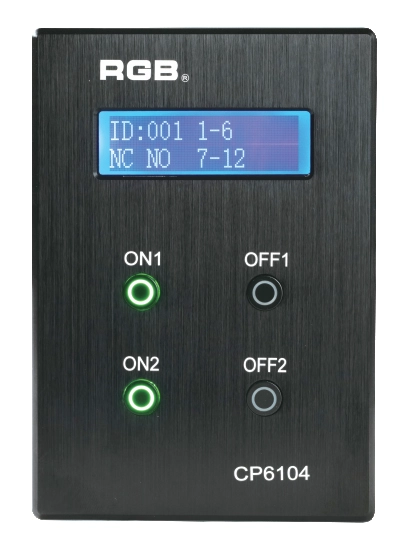
The CP6104 lighting control panel is a lighting control device for theater stage lights, work lights, environmental lighting, commercial art lighting, sports venue lighting and other places. By connecting to the dedicated lighting control host CP6100, it realizes the central control of the lighting system, supports a visual lighting control system, and intuitively displays the online and offline status of CP6104. Realize remote monitoring, editing and setting of corresponding parameters.
It is widely applicable to theaters, cinemas, auditoriums, stadiums, museums, exhibition halls, cultural tourism performances, commercial art lighting and other places.
Alloy Relay Packs
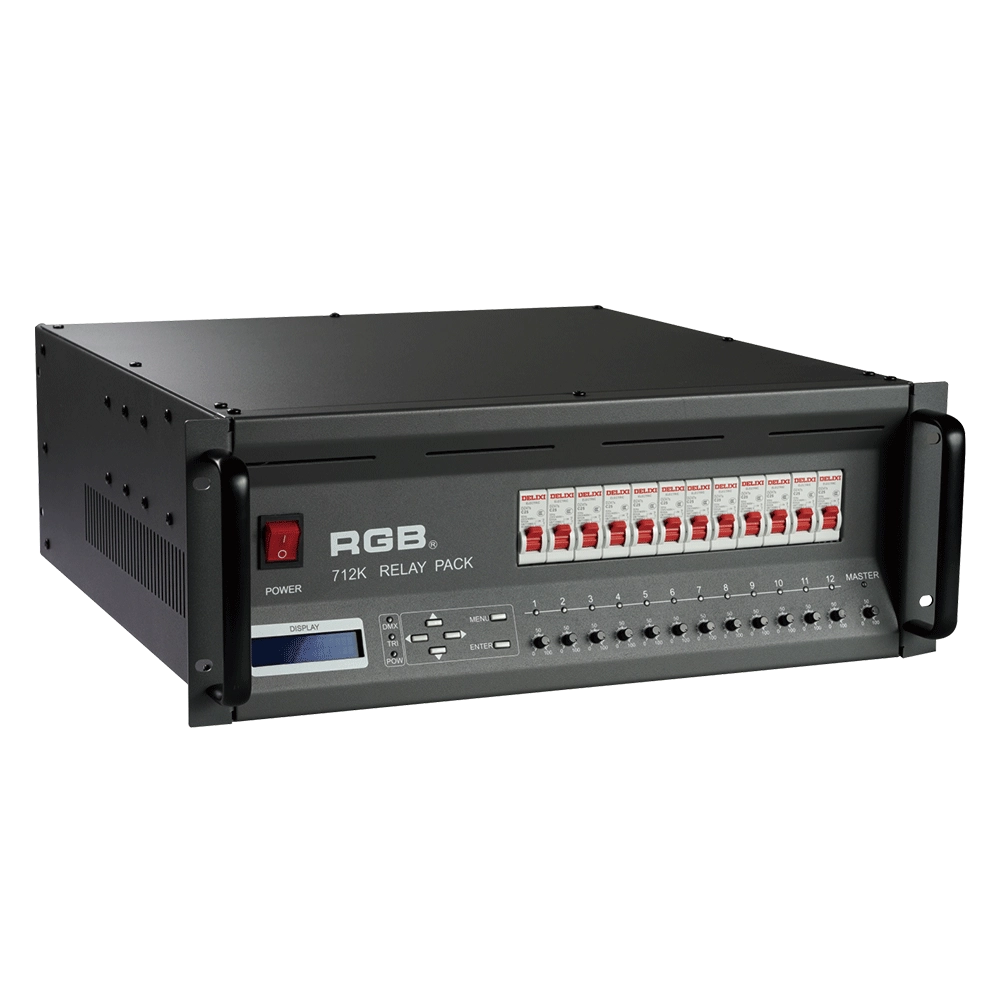
High-performance DMX512 relay dimming unit with 512 addressable circuits, phase-loss protection, dual-signal amplification, 20A output per channel, and robust design for reliable stage and mobile lighting applications.
Expert Support
Interested in learning more or need expert guidance related to this article? Fill in your details, and our team will provide tailored support.
Intelligent Control. Brilliant Performance.
RGB specializes in stage lighting control systems, delivering intelligent, reliable, and high-performance solutions for theaters and performance spaces worldwide.
Contact
Email:
Tel:
+86 20 3928 0245
+86 20 3928 0247
Address:
No.3, Huashan Road, Shilou Town, Panyu, Guangzhou, China.
Whatsapp: +8615975520131