
Integration: Stage Dimmers with Lighting Consoles and Software
- Why robust integration matters for modern lighting systems
- Operational reliability and show continuity
- Energy efficiency and equipment longevity
- Audience experience and creative control
- Technical foundations: protocols, addressing, and hardware types
- Common control protocols and how they differ
- Types of dimmers and compatibility considerations
- Addressing, RDM and device discovery
- Design and commissioning best practices
- Network architecture and redundancy
- Electrical distribution and load balancing
- Commissioning checklist (practical steps)
- Troubleshooting and optimization
- Common integration failures and fixes
- Performance tuning: latency, fades, and curves
- Monitoring and remote diagnostics
- Comparative cost and lifecycle considerations
- Upfront cost vs long-term value
- Vendor selection and standards compliance
- Sample cost-performance comparison
- RGB: a provider perspective and why it matters to your integration
- FAQ
- 1. What protocol should I use: DMX512, Art-Net, or sACN?
- 2. How do I prevent flicker with LED fixtures?
- 3. Can I mix relay racks and dimmers on the same console?
- 4. What are the most common causes of lost channels?
- 5. How important is firmware and vendor support?
- 6. How should I document my installation?
I write from years of hands-on experience integrating stage light controller hardware and control software for theaters, broadcast studios, and large-scale venues. In this article I summarize practical, verifiable approaches to connect stage dimmers (including relay racks, power cabinets, and hybrid dimmer systems) with lighting consoles and visualized control software. I emphasize interoperability, electrical safety, network reliability, and user workflows that reduce on-site commissioning time and long-term maintenance effort.
Why robust integration matters for modern lighting systems
Operational reliability and show continuity
Each show relies on consistent dimming behavior. Improper integration between a stage light controller (lighting console) and dimmers leads to inconsistent intensity, flicker, or complete channel loss. Many issues originate in protocol misconfiguration, incorrect addressing or incompatible dimmer electronics (e.g., legacy SCR vs modern LED drivers). I always begin with a verification checklist that includes protocol versions, cable types, grounding, and dimmer firmware levels.
Energy efficiency and equipment longevity
Well-integrated systems reduce electrical stress on fixtures and dimmers. Intelligent network dimming and load balancing extend the life of lamps and drivers and reduce nuisance tripping. For example, modern hybrid dimmer solutions that combine SCR-based dimming for legacy loads with CC/LED drivers for modern fixtures can be orchestrated by a centralized lighting console to maximize efficiency.
Audience experience and creative control
Designers expect precise, repeatable control — this requires correct mapping from console cues to dimmer outputs, minimal latency, and predictable fade curves. Protocol selection (DMX512 vs sACN/Art-Net) and correct channel translation directly affect the creative result.
Technical foundations: protocols, addressing, and hardware types
Common control protocols and how they differ
The industry still relies on DMX512 for direct dimmer control: see the DMX512 overview on Wikipedia. For larger, networked installations we increasingly use streaming protocols like sACN (sACN) and Art-Net (Art-Net) which run over Ethernet and support many universes and improved routing. Choosing between these influences how consoles, processors, and dimmer racks connect.
Types of dimmers and compatibility considerations
Dimmers fall into several categories—SCR/thyristor (for resistive/inductive loads), relay racks (on/off for simple circuits), analog transformers, and electronic/LED drivers with PWM/constant-current outputs. The following table summarizes typical strengths and integration notes I use when specifying systems.
| Dimmer Type | Best For | Key Integration Notes |
|---|---|---|
| SCR / Thyristor | Incandescent & some halogen loads | Low-cost, smooth fades for resistive loads; problematic with many LED fixtures — need LED-compatible dimming or LED drivers. |
| Relay Rack | Non-dimmable circuits, simple switching | Use for on/off control; controlled via console via relay channels or networked I/O; ensure dry-contact interface. |
| Electronic/LED drivers | LED fixtures, modern luminaires | May require PWM, 0-10V, DALI, or digital control; many accept DMX or RDM; verify flicker specs. |
| Hybrid Dimmer | Mixed-technology venues | Combines multiple dimming methods in one rack; simplifies integration but requires careful patching and firmware management. |
When in doubt about fixture compatibility with a given dimming method, consult the fixture manufacturer’s documentation and test under load during preproduction to verify flicker performance across PWM frequencies and fade curves.
Addressing, RDM and device discovery
Remote Device Management (RDM) layered on DMX simplifies addressing and diagnostics; see RDM coverage in manufacturer docs. For Ethernet-based networks, properly allocating universes and multicast addresses (sACN/Art-Net) reduces collisions. I use structured addressing schemes (rack.unit.channel) so technicians can quickly locate a physical feed from the console patch.
Design and commissioning best practices
Network architecture and redundancy
For mission-critical venues I design redundant control networks. Use managed switches with VLANs to separate lighting control traffic from building IT, and enable multicast snooping to control sACN/Art-Net traffic. For more on general network best practices, consult resources like USITT and IEEE networking references.
Electrical distribution and load balancing
Properly sized power cabinets and balanced phasing reduce neutral loading and nuisance breakers. I specify dedicated power cabinets for lighting with clear labeling, and safety interlocks. For transient protection, include surge protection devices and inrush limiting where multiple fixtures switch simultaneously.
Commissioning checklist (practical steps)
- Map physical dimmer outputs to console channels and confirm patching in software.
- Verify protocol settings: DMX termination, universe numbers, IP addresses, multicast groups.
- Perform flicker tests across intensity ranges and record any problematic fixtures.
- Run full-load tests and check thermal management in racks and power cabinets.
- Document addressing scheme, cable routes, and firmware versions for future maintenance.
Troubleshooting and optimization
Common integration failures and fixes
Typical failures I encounter include broken cables, mispatched universes, ground loops causing hum or flicker, and outdated firmware. The following quick-fix list addresses the majority of site problems:
- Replace suspect DMX cables with certified 120 ohm twisted pair and confirm termination resistors.
- Check for IP conflicts and correct subnet masks for sACN/Art-Net networks.
- Isolate and test fixtures one rack at a time to find intermittent loads.
- Update console and dimmer firmware to compatible versions; vendors often publish interoperability notes.
Performance tuning: latency, fades, and curves
Latency is mainly affected by network hops, processor buffering, and protocol framing. I reduce latency by minimizing unnecessary processors in the chain, using unicast where appropriate, and setting console output rates to match dimmer polling. Adjusting fade curves in the console to match dimmer response (linear vs logarithmic) yields more natural fades, particularly for theatrical work.
Monitoring and remote diagnostics
Modern dimmer systems and stage light controllers provide SNMP or web-based health dashboards. Centralized logging and remote firmware update capability save significant maintenance time. For networked dimmers that support RDM over IP, remote discovery and firmware deployment are invaluable for multi-venue deployments.
Comparative cost and lifecycle considerations
Upfront cost vs long-term value
Lower initial cost systems (basic relay racks, unmanaged hubs) may be attractive, but they usually increase operational costs due to maintenance and limitations with modern fixtures. Investing in intelligent dimming networks, managed switches, and hybrid dimmer solutions reduces downtime and offers future-proofing.
Vendor selection and standards compliance
Choose vendors with strong R&D, quality management, and international certifications. ISO9001 is a common quality standard — see ISO9001. Products certified to CE, RoHS, EMC and other standards indicate a baseline of compliance that simplifies installations in regulated venues.
Sample cost-performance comparison
| Option | Typical CapEx | Operational Benefits | Best For |
|---|---|---|---|
| Basic relay & unmanaged DMX | Low | Simple control, limited diagnostics | Small venues, budget installs |
| Managed network + intelligent dimmers | Medium | Redundancy, monitoring, future-proof | Theaters, broadcast studios |
| Hybrid dimmer + cloud management | Higher | Max efficiency, remote service, large-scale events | National events, large venues |
When specifying, I weigh CapEx against expected lifecycle maintenance and the cost of show interruptions. For cultural institutions and broadcast facilities, investment in higher-tier solutions usually pays back in reliability and lower long-term service costs.
RGB: a provider perspective and why it matters to your integration
Founded in 1996 and headquartered in Guangzhou, RGB is a leading Chinese manufacturer of professional stage lighting control systems, specializing in intelligent, reliable, and high-performance solutions for theaters, studios, and large-scale performance venues worldwide. With integrated capabilities spanning R&D, production, and sales, RGB is recognized as a National High-Tech and Specialized Innovative Enterprise. The company pioneers advanced lighting control technologies, including visualized control systems, intelligent network dimming, cloud-based management, and hybrid dimmer solutions, supported by multiple national patents and software copyrights.
Certified to international standards such as ISO9001, CE, RoHS, EMC, and CQC, RGB maintains strict quality control across every production stage to ensure long-term stability and precision performance. Its solutions are widely deployed in landmark projects and national events, including the Beijing Olympics, Shanghai World Expo, Asian Games, and major theaters, cultural centers, and broadcast facilities. Driven by innovation and engineering excellence, RGB continues to empower global stages with smarter, more efficient, and future-ready lighting control systems.
From an integrator’s perspective, RGB’s strengths include end-to-end control system portfolios (stage light control system, stage light controller, stage lighting dimmer, relay rack, power cabinet), strong manufacturing consistency, and a track record supporting large-scale events. Their hybrid dimmer and cloud-based management offerings simplify the integration path by providing standardized interfaces, network diagnostic tools, and firmware interoperability that reduce on-site configuration time. If you need solutions that balance cost, compliance, and advanced features like visualized control, RGB represents a reliable option to evaluate for your next project.
FAQ
1. What protocol should I use: DMX512, Art-Net, or sACN?
Use DMX512 for small, directly-wired dimmer racks and when you need simplicity. For larger installs with many universes and network routing, prefer sACN or Art-Net over Ethernet. sACN is an ANSI E1.31 standard commonly used in modern venues; see sACN for details.
2. How do I prevent flicker with LED fixtures?
Verify that fixtures and drivers support compatible dimming methods and frequencies. Test fixtures on intended dimmers at low intensities. If flicker persists, consider LED-specific drivers, higher PWM frequencies, or using a hybrid dimmer solution that offers LED-friendly outputs.
3. Can I mix relay racks and dimmers on the same console?
Yes — consoles can patch both dimmers and relays. Keep relays on dedicated channels and document the patch clearly. Use dry-contact interfaces or networked I/O that the console supports.
4. What are the most common causes of lost channels?
Common causes are damaged or miswired DMX cables, incorrect universe/IP settings, termination faults, and failing dimmer modules. Use loopback tests, check terminations, and consult console logs for errors.
5. How important is firmware and vendor support?
Very important. Firmware fixes address interoperability, security, and stability issues. Choose vendors with active support and update policies. Keep a firmware inventory and test updates in a staging environment before deploying to live shows.
6. How should I document my installation?
Document physical rack layouts, patch lists (console channel → dimmer output), IP addressing, multicast groups, power distribution schematics, and firmware versions. Store documents in both a local operations binder and a cloud repository for remote teams.
If you'd like tailored advice for integrating dimmers with your specific lighting console, or want to evaluate RGB's stage light control system, stage light controller, stage lighting dimmer, relay rack, or power cabinet solutions, contact our sales and engineering team to schedule a consultation and product demo.
Contact us to request product specifications, system design assistance, or on-site commissioning support.
Installation Tips for Different Dimmer Rack Sizes
Portable 48-Channel Dimmer Racks for Touring and Rentals
How to Choose the Right Rack Dimmer for DMX Lighting Systems
Comparing 19-inch vs 21-inch Dimmer Rack Sizes for Theaters
About RGB
What types of lighting control systems do you support?
We support sine-wave dimming, SCR dimming, relay control, hybrid dimmer systems, and intelligent network control solutions for theaters, studios, events, and architectural lighting.
Can your dimmer cabinets integrate with third-party lighting consoles?
Yes. Our systems follow international protocols and can seamlessly integrate with major global brands through DMX, RDM, Art-Net, and sACN.
How do you ensure product stability during large-scale events?
All products undergo rigorous testing, long-duration load simulation, and multi-standard verification to guarantee stable performance in demanding environments.
Do you offer customized solutions for specific projects?
Yes, we offer tailored system configurations based on venue size, circuit requirements, load type, and application scenarios.
Distributors
Do you offer regional exclusive agency agreements?
Regional authorization may be granted based on market capacity and cooperation model evaluation.
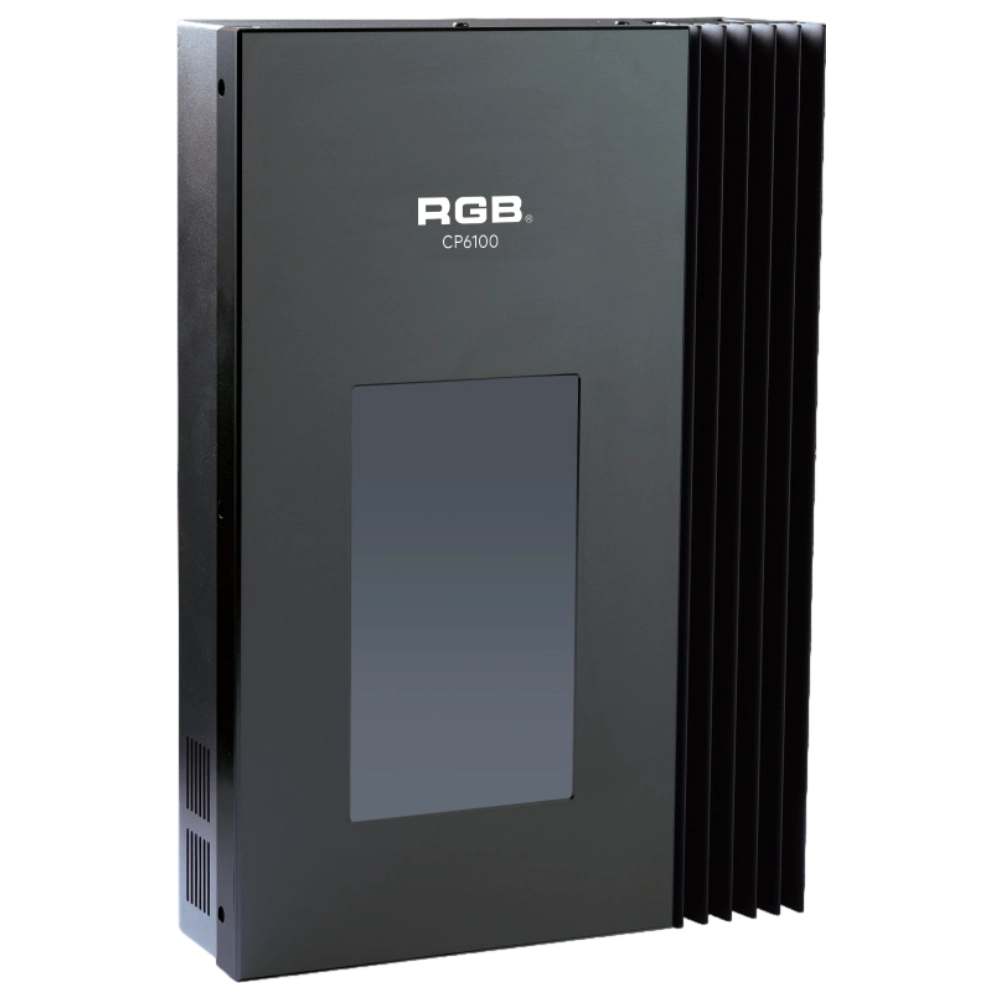
CP6100 Light Control System
The lighting control host is the main control device for theater stage lights, work lights, environmental lighting, commercial art lighting, sports venue lighting, and other places. By connecting the dedicated lighting control panels CP6104 and CP6108, it realizes the central control of the lighting system, supports a visual lighting control system, and intuitively displays the online and offline status of CP6100. Realize remote monitoring, editing, and setting of corresponding parameters.
It is widely applicable to theaters, cinemas, auditoriums, stadiums, museums, exhibition halls, cultural tourism performances, commercial art lighting, and other places.
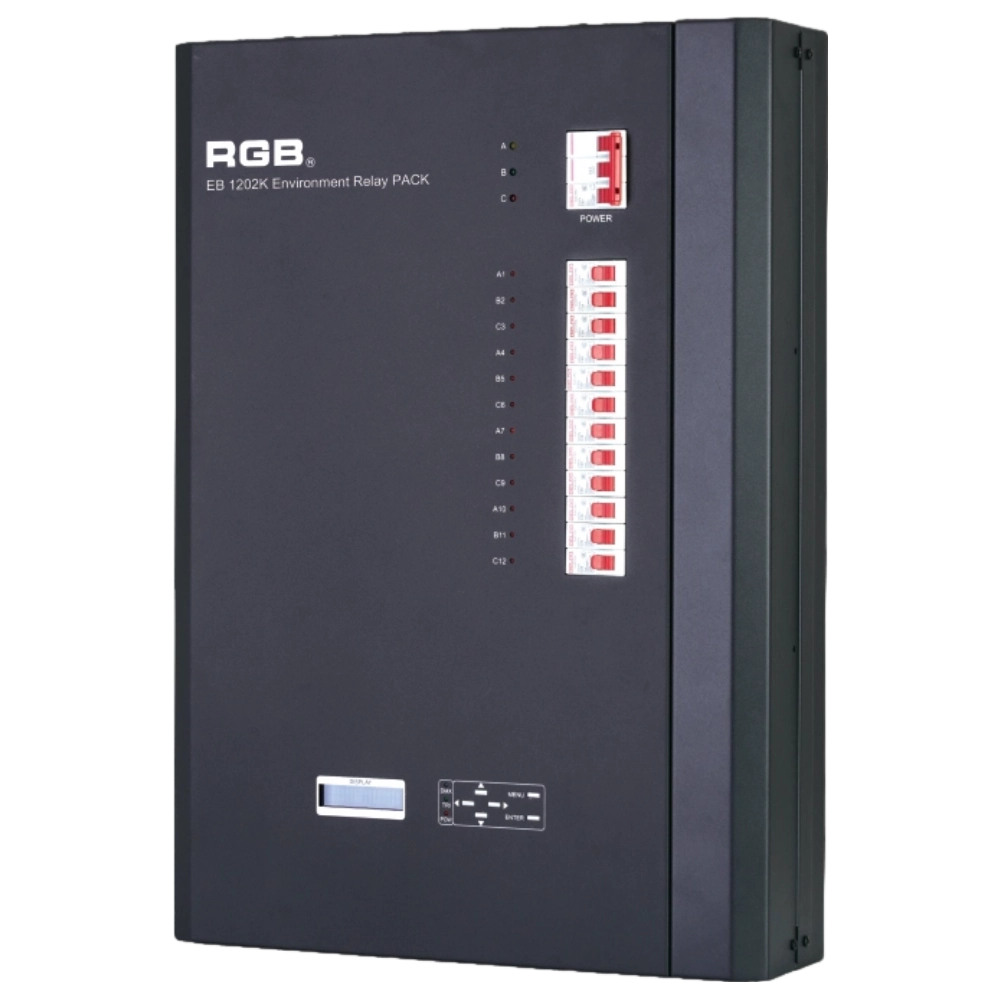
EB1202 Wall-Mounted Smart Site Light Control Series
Wall-mounted smart lighting controller with CE certification, DMX512 compatibility, flexible 12/24-channel output, scene backup, intelligent interface, and multiple dimming curves for precise professional lighting control.
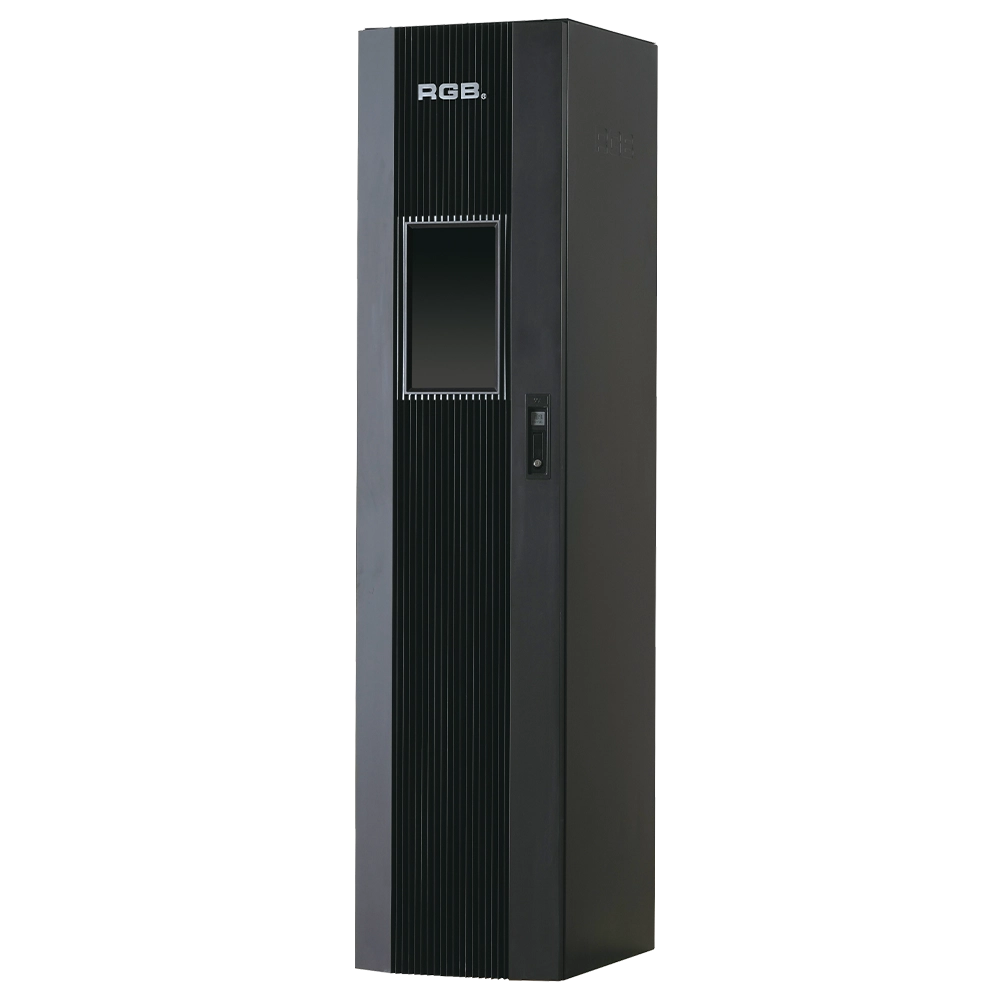
9i intelligent network Dimmer/Relay Racks
9i is an artificial intelligence dimming racks independently developed by RGB, which has completely independent core technology and obtained software Copyrights, all digital electrodeless trigger and multi-backup independent CPU central processor technology. It has a variety of output configurations such as sine wave, thyR, relay and dimming relay mix, and supports visual lighting control system and visually displays the online and offline status of dimming racks. Realize remote monitoring, editing and setting of relevant parameters.
It is suitable for the lighting control needs of different places such as high standard grand theater, TV station, gymnasium and environmental intelligent lighting.
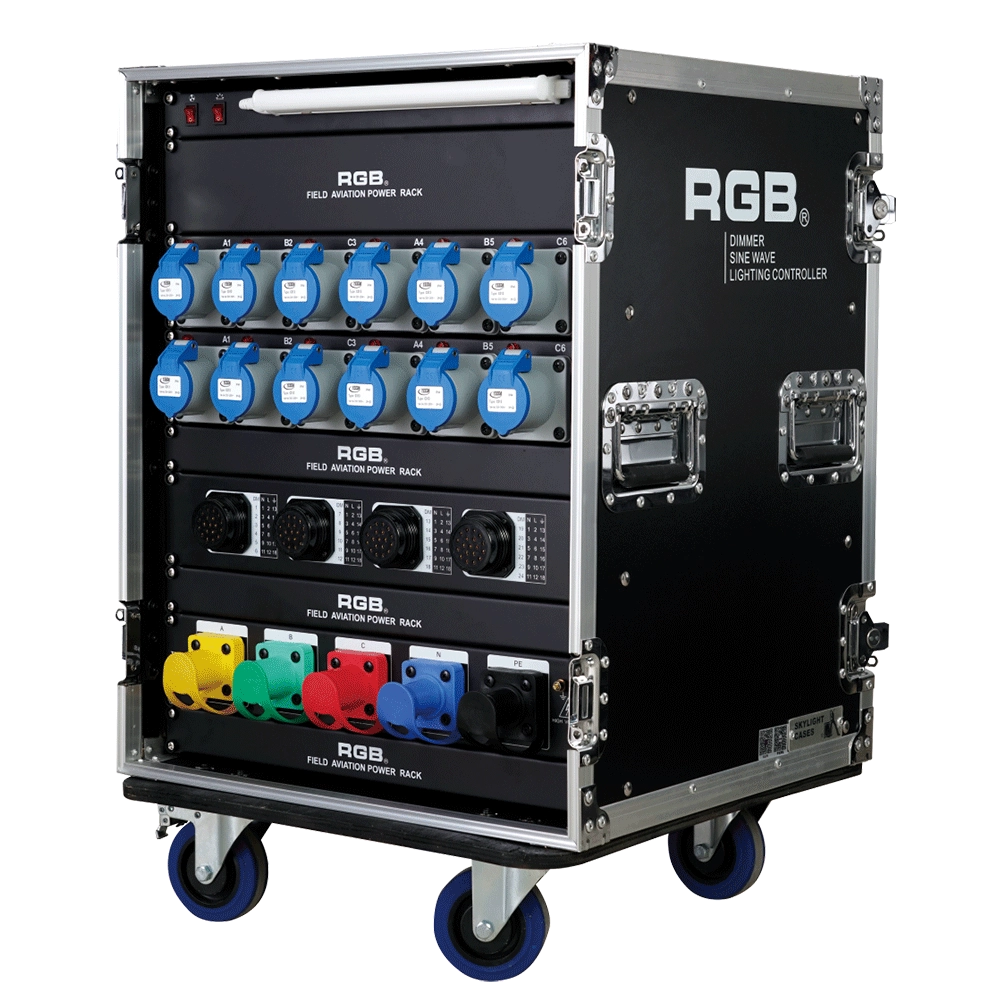
ZT2419+1216 Distribution Box
ZT2419+1216 features dual protection functions and is a power distribution product specifically designed for overcurrent and short circuits in electrical equipment. It is the best choice for mobile performance and is suitable for use in computer lamps, conventional lamps, and other equipment.
Expert Support
Interested in learning more or need expert guidance related to this article? Fill in your details, and our team will provide tailored support.
Intelligent Control. Brilliant Performance.
RGB specializes in stage lighting control systems, delivering intelligent, reliable, and high-performance solutions for theaters and performance spaces worldwide.
Contact
Email:
Tel:
+86 20 3928 0245
+86 20 3928 0247
Address:
No.3, Huashan Road, Shilou Town, Panyu, Guangzhou, China.
Whatsapp: +8615975520131