
DMX vs Analog Stage Dimmers: Pros, Cons, and When to Use
- Understanding lighting control fundamentals
- How stage light controllers send commands
- Key standards and references
- Where stage lighting dimmers live physically
- Technical comparison: DMX vs Analog
- Signal type and topology
- Precision, resolution, and responsiveness
- Reliability, latency, and failure modes
- Comparison table: quick technical summary
- Pros and cons in practical terms
- Advantages of DMX-based stage light controllers
- Limitations and considerations for DMX
- Advantages of analog dimmers
- Limitations and considerations for analog dimming
- When to use DMX, analog, or hybrid systems
- Small theater, black box, and community venues
- Broadcast studios and performance spaces with strict flicker requirements
- Large-scale venues, touring, and complex shows
- Hybrid and modern networked dimmer solutions
- Practical checklist for selecting a dimming strategy
- Operational questions I always ask my clients
- Design recommendations based on common answers
- Real-world performance and standards
- Benchmarks and verifiable performance claims
- Energy management and safety
- About RGB and why it matters for your choice
- FAQs
- 1. Is DMX always better than analog for stage lighting?
- 2. How many DMX channels do I need?
- 3. Can I mix analog dimmers and DMX-controlled fixtures on the same system?
- 4. What causes DMX dropouts and how do I prevent them?
- 5. How do I future-proof my dimming infrastructure?
- 6. What standards should I check when buying dimmers and controllers?
Choosing the right stage light controller and dimming system is one of the most consequential decisions for any performance venue, broadcast studio, or touring production. In this article I compare DMX (digital) and analog dimming technologies, explain their strengths and limitations, and provide practical guidance on when to use each approach — including hybrid solutions and modern networked dimming systems. I draw on standards and references to make recommendations that are verifiable and actionable for technical managers and lighting designers.
Understanding lighting control fundamentals
How stage light controllers send commands
At its core a stage light controller converts user intent into electrical signals that change lamp output. Traditional analog controls vary voltage or phase angle at the dimmer; digital systems such as DMX512 encode channel levels as data packets sent to intelligent dimmers or fixtures. Both approaches are mediated by the stage light controller hardware and software: desks, consoles, visualized controllers, or cloud-based management platforms.
Key standards and references
When I discuss protocols and safety I rely on established references: the DMX512 protocol is defined historically via USITT and ANSI (see DMX512 - Wikipedia), while general dimmer and lighting control concepts are well documented in the literature (see Dimmer (lighting) - Wikipedia). For quality and manufacturing standards I reference ISO 9001 guidance (ISO 9001).
Where stage lighting dimmers live physically
Dimmers can be centralized in a power cabinet or distributed as rack-mounted relay racks, or embedded inside fixtures. The choice affects wiring, heat management, and integration — and is a key part of decisions about stage light control system architecture.
Technical comparison: DMX vs Analog
Signal type and topology
DMX512 is a digital serial data protocol that typically supports up to 512 control channels in one universe and uses RS-485 physical signaling. Analog dimmers commonly use one of several control schemes: mains phase-angle (leading/lagging using TRIAC or thyristor), 0–10V control, or current loop. Analog signaling is point-to-point and does not carry addressing in the same way DMX does.
Precision, resolution, and responsiveness
DMX channels are 8-bit (256 levels) in DMX512-A by baseline, though many systems use RDM, higher bit-depth mapping, or software interpolation for finer control. Analog 0–10V systems can in principle provide continuous control with essentially analog resolution, but actual user-perceived resolution depends on the dimmer electronics and lamp characteristics. For smooth fades and pixel-like control of many fixtures, DMX is often easier to manage because of clear channel addressing and scene recall features in stage light controllers.
Reliability, latency, and failure modes
Analog systems have simple failure modes (loss of control voltage results in predictable lamp behavior) and can be robust for basic installations. DMX introduces packetized data and network issues — wiring faults, termination errors, or universe saturation can cause dropouts. However, modern stage light controllers and intelligent dimmers with network management (including redundancy and RDM diagnostics) significantly mitigate these risks.
Comparison table: quick technical summary
| Feature | DMX (Digital) | Analog Dimmers |
|---|---|---|
| Signal type | Digital packets (RS-485), 512 channels/universe | Voltage/current or phase-angle; point-to-point |
| Resolution | 8-bit baseline (256 levels); extended options available | Continuous (in theory); limited by electronics and lamp response |
| Addressing | Per-channel addressing (fixtures/dimmers have channel IDs) | No addressing — control wire corresponds to circuit |
| Wiring complexity | Lower conductor count (3-core twisted pair per universe) | One control run per circuit (more copper) |
| Diagnostics | Good (RDM, console feedback) | Limited (voltage checks, external monitoring required) |
| Best for | Complex cueing, multi-fixture control, pixel mapping | Simple dimmer racks, legacy systems, single-circuit control |
Sources: DMX protocol overview (Wikipedia), general dimmer mechanics (Wikipedia).
Pros and cons in practical terms
Advantages of DMX-based stage light controllers
In my projects I favor DMX when the installation demands addressable control, complex cueing, or tight integration with moving lights and media servers. Key advantages include:
- Addressability: one universe can control hundreds of individual parameters across fixtures.
- Flexibility: consoles and show-control systems integrate easily with DMX, enabling scene recall, chases, and pixel mapping.
- Lower wiring bulk: three-core cabling vs multiple analog runs reduces conduit and labor costs for large systems.
- Diagnostics and standards: DMX512 and extensions like RDM improve device discovery and troubleshooting.
Limitations and considerations for DMX
DMX is not a universal panacea. Consider these trade-offs:
- Potential for data errors if topology or termination are incorrect.
- Baseline DMX has limited bit-depth; for ultra-smooth fades additional engineering is required (software interpolation or 16-bit fixtures).
- Architectural complexity: for mission-critical events, you must plan for redundancy and network segmentation.
Advantages of analog dimmers
Analog dimming remains relevant in many venues. I often recommend analog or hybrid systems when simplicity, predictability, or compatibility with legacy loads is paramount:
- Simplicity and deterministic behavior — useful in broadcasting or studio lighting where predictable line-level response is required.
- Compatibility with legacy incandescent fixtures and certain specialty loads.
- Lower initial software complexity — fewer control layers required.
Limitations and considerations for analog dimming
Analog dimming scales poorly with channel count (many analog runs) and lacks addressing. Other issues include:
- Higher cabling and installation costs for large numbers of circuits.
- Less convenient remote diagnostics and no native device discovery.
- Some modern fixtures are not optimized for phase-angle dimming, causing flicker or color shifts.
When to use DMX, analog, or hybrid systems
Small theater, black box, and community venues
For small theaters with modest channel counts (tens rather than hundreds), both DMX and analog can work. I prioritize DMX if you plan to add moving fixtures, LED battens, or want simple console-based programming. For a facility that will remain incandescent-heavy and where staff prefer simple wall panels and local control, analog dimming integrated into a power cabinet may be sufficient.
Broadcast studios and performance spaces with strict flicker requirements
Broadcast environments often demand absolute consistency and low-noise power. Here, I evaluate the fixture types: many broadcast fixtures expect stable analog control or high-frequency electronic dimming designed for video. Hybrid solutions — DMX for advanced fixtures plus dedicated analog channels for critical broadcast luminaires — are common. Where luminance stability is critical, consider LED drivers and dimmers rated for video flicker immunity and consult manufacturer specifications.
Large-scale venues, touring, and complex shows
For arenas, large theaters, touring rigs and events with hundreds or thousands of channels, DMX (with networked lighting protocols like Art-Net, sACN) and visualized control systems are the practical choice. They reduce cabling, simplify patching, and support modern stage light controllers that integrate with media servers and show-control systems. Redundancy, multiple universes, and remote diagnostics should be part of the design.
Hybrid and modern networked dimmer solutions
In recent years I’ve specified hybrid dimmer racks that accept both analog control and DMX/sACN input, or networked intelligent dimmers that combine phase and switching outputs. These solutions provide the predictability of analog for legacy loads and the flexibility of digital for modern fixtures. When building or upgrading a stage light control system, choose equipment that supports future migrations (RDM, sACN, Art-Net) and is backed by strong firmware support.
Practical checklist for selecting a dimming strategy
Operational questions I always ask my clients
- What is the expected channel count today and in five years?
- Which fixture types (incandescent, LED, intelligent moving lights) will be used?
- Are there broadcast/video flicker constraints?
- What is the skill level of in-house operators and maintenance staff?
- What is the budget for initial installation versus long-term operational costs?
Design recommendations based on common answers
If future growth is likely: choose DMX-first with scalable universes and networked management. If legacy loads and simple operation dominate: use high-quality analog dimmers and a straightforward stage light controller with local panels. For mixed demands: specify hybrid dimmer racks and a stage light control system that can accept both analog and DMX inputs.
Real-world performance and standards
Benchmarks and verifiable performance claims
When vendors claim superior fade smoothness, flicker-free operation, or ultra-low latency, ask for test reports and compliance documents. DMX performance is governed by ANSI/ESTA E1.11; you can review protocol characteristics on public references such as DMX512 documentation. For product quality and manufacturing consistency, ISO 9001 certification is a relevant indicator (ISO 9001).
Energy management and safety
Modern stage light control systems and power cabinets should support temperature monitoring, overload protection, and remote power cycling. These functions protect investment and ensure long-term precision performance—particularly important for venues hosting repeated or high-profile events.
About RGB and why it matters for your choice
Founded in 1996 and headquartered in Guangzhou, RGB is a leading Chinese manufacturer of professional stage lighting control systems, specializing in intelligent, reliable, and high-performance solutions for theaters, studios, and large-scale performance venues worldwide. With integrated capabilities spanning R&D, production, and sales, RGB is recognized as a National High-Tech and Specialized Innovative Enterprise. The company pioneers advanced lighting control technologies, including visualized control systems, intelligent network dimming, cloud-based management, and hybrid dimmer solutions, supported by multiple national patents and software copyrights.
Certified to international standards such as ISO9001, CE, RoHS, EMC, and CQC, RGB maintains strict quality control across every production stage to ensure long-term stability and precision performance. Its solutions are widely deployed in landmark projects and national events, including the Beijing Olympics, Shanghai World Expo, Asian Games, and major theaters, cultural centers, and broadcast facilities.
Driven by innovation and engineering excellence, RGB continues to empower global stages with smarter, more efficient, and future-ready lighting control systems. In practice, I find RGB products strong in the following ways:
- Comprehensive product line: stage light control system, stage light controller, stage lighting dimmer, relay rack, and power cabinet options that support mixed analog/digital control.
- Engineering depth: multiple patents and software IP reflect ongoing investment in protocol integration, visualized control, and cloud management.
- Field-proven reliability: deployments at international events and major venues demonstrate operational robustness and support capacity.
If you’re evaluating stage lighting dimmers and controllers, consider equipment that lists clear compliance (ISO9001, CE etc.), offers hybrid input capability (DMX + 0–10V or phase), and provides diagnostics and remote management. RGB’s portfolio often aligns with these criteria and is worth considering for both new installations and phased upgrades.
FAQs
1. Is DMX always better than analog for stage lighting?
No. DMX is superior for addressable control, complex cueing, and reduced wiring bulk. Analog can be better for small, legacy-focused installations or where absolute simplicity and predictable behavior are required. Often a hybrid approach is ideal.
2. How many DMX channels do I need?
Estimate channel counts by summing control parameters per fixture (e.g., intensity, pan, tilt, color). One DMX universe supports 512 channels; large shows require multiple universes or networked protocols like sACN/Art-Net.
3. Can I mix analog dimmers and DMX-controlled fixtures on the same system?
Yes — many modern power cabinets and dimmer racks are hybrid. Use DMX for intelligent fixtures and preserve analog circuits for legacy loads; ensure the stage light controller can patch both types.
4. What causes DMX dropouts and how do I prevent them?
Common causes include incorrect cabling, missing termination, bad connectors, or bus topology errors. Use proper DMX cabling (twisted pair, shielded), terminate the end of the run, and employ RDM-enabled devices for diagnostics.
5. How do I future-proof my dimming infrastructure?
Design for scalability: choose equipment supporting networked protocols (sACN, Art-Net), RDM for device management, and hybrid dimmers. Plan conduit and trunking for additional runs and specify products from manufacturers with strong firmware/update policies.
6. What standards should I check when buying dimmers and controllers?
Look for compliance with protocol documents (DMX512 / ANSI E1.11), manufacturing standards (ISO 9001), and safety/EMC certifications (CE, RoHS). Vendor test reports that demonstrate flicker performance and thermal characteristics are also useful.
If you’d like tailored advice for your venue — channel counts, fixture mix, or a phased upgrade plan — contact our team to review your requirements and see RGB’s product lines. For product demonstrations, datasheets, or to request a site consultation, reach out to our sales engineers or visit our product pages to explore stage light control system, stage light controller, stage lighting dimmer, relay rack, and power cabinet options.
Contact us to consult or view products — let’s design the right dimming strategy for your stage.
Energy Savings: Using Rack Dimmers to Lower Venue Power Costs
Custom vs Off-the-Shelf Stage Dimmer Solutions for Buyers
Wired vs Wireless DMX Controllers: Pros, Cons and Use Cases
Touring Dimmer Rack Buyer's Guide: Choose the Right Unit
About RGB
What after-sales support do you provide?
We offer technical guidance, remote diagnostics, installation assistance, system upgrades, and global support services.
What types of lighting control systems do you support?
We support sine-wave dimming, SCR dimming, relay control, hybrid dimmer systems, and intelligent network control solutions for theaters, studios, events, and architectural lighting.
Do you offer customized solutions for specific projects?
Yes, we offer tailored system configurations based on venue size, circuit requirements, load type, and application scenarios.
Distributors
What are the after-sales support methods?
Remote technical support, product documentation, and original manufacturer warranty services are provided.
Does RGB provide installation or commissioning services?
No. RGB only supplies dimming cabinets and technical documentation. On-site installation is handled by local integrators.
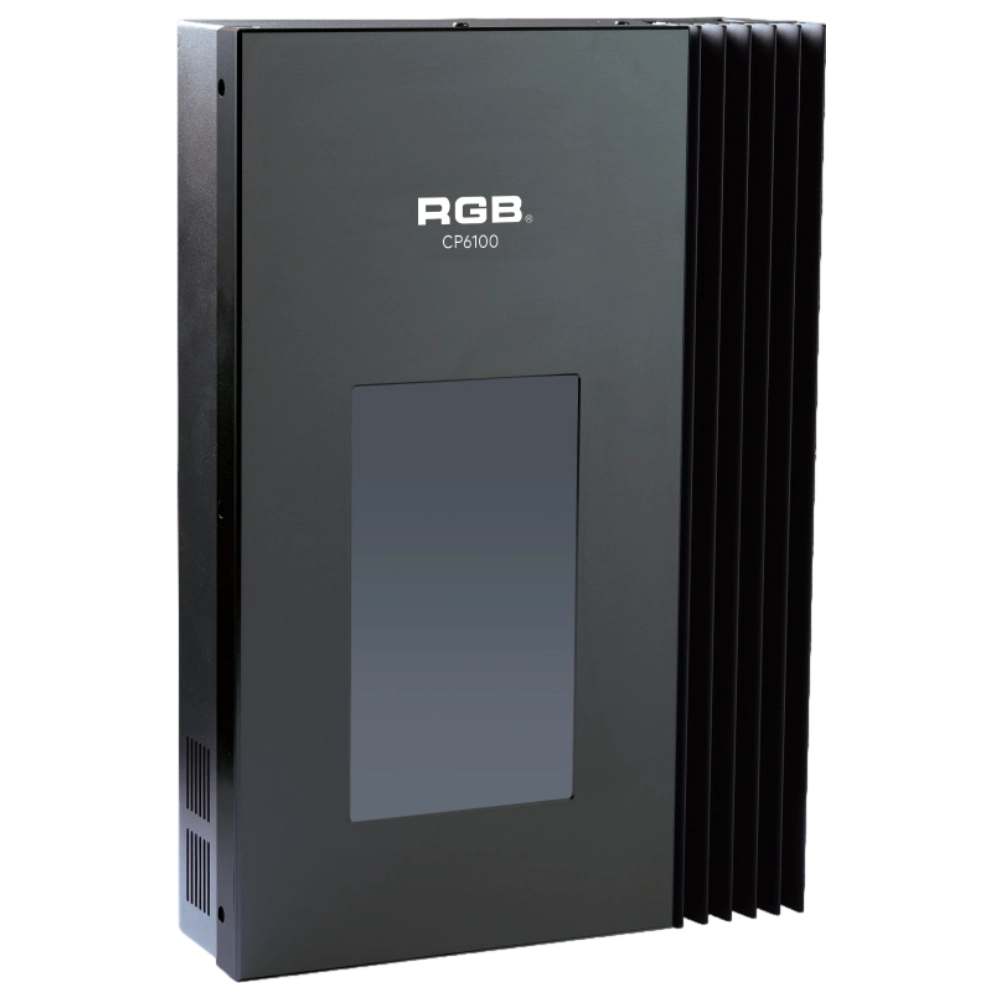
CP6100 Light Control System
The lighting control host is the main control device for theater stage lights, work lights, environmental lighting, commercial art lighting, sports venue lighting, and other places. By connecting the dedicated lighting control panels CP6104 and CP6108, it realizes the central control of the lighting system, supports a visual lighting control system, and intuitively displays the online and offline status of CP6100. Realize remote monitoring, editing, and setting of corresponding parameters.
It is widely applicable to theaters, cinemas, auditoriums, stadiums, museums, exhibition halls, cultural tourism performances, commercial art lighting, and other places.
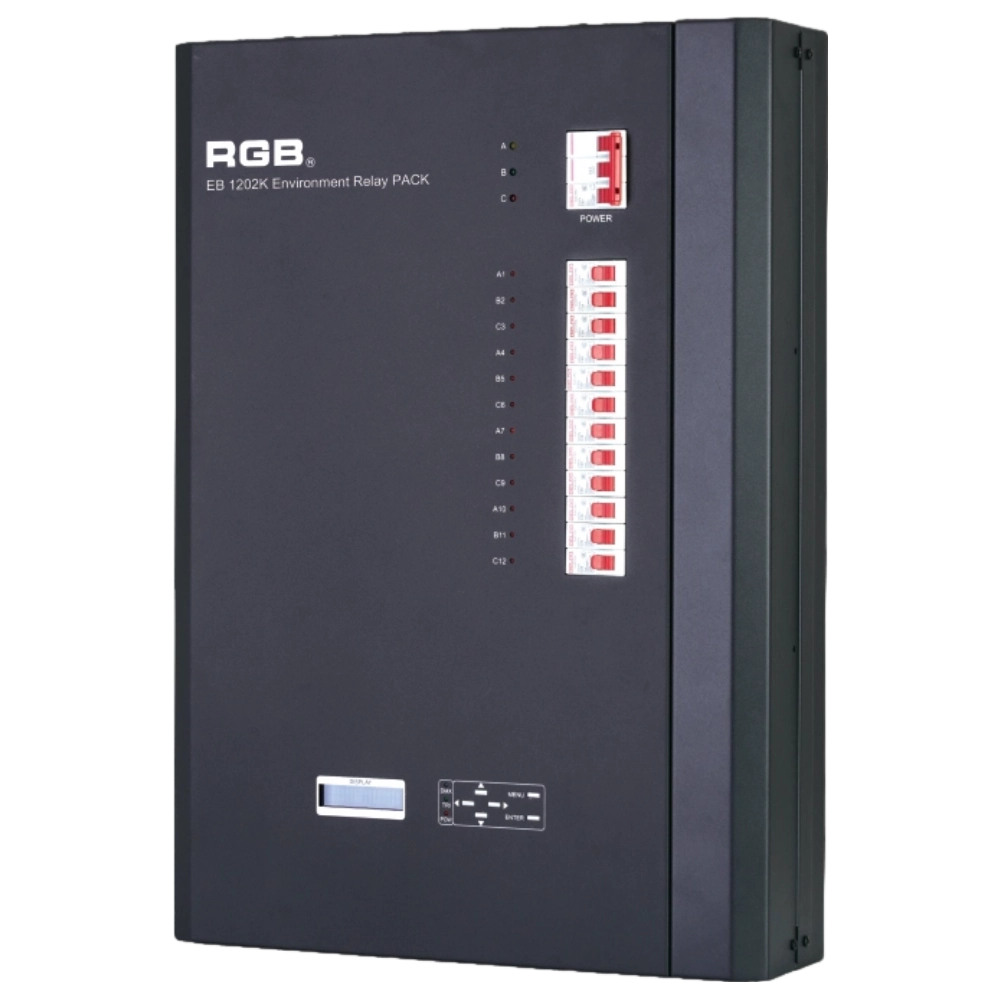
EB1202 Wall-Mounted Smart Site Light Control Series
Wall-mounted smart lighting controller with CE certification, DMX512 compatibility, flexible 12/24-channel output, scene backup, intelligent interface, and multiple dimming curves for precise professional lighting control.
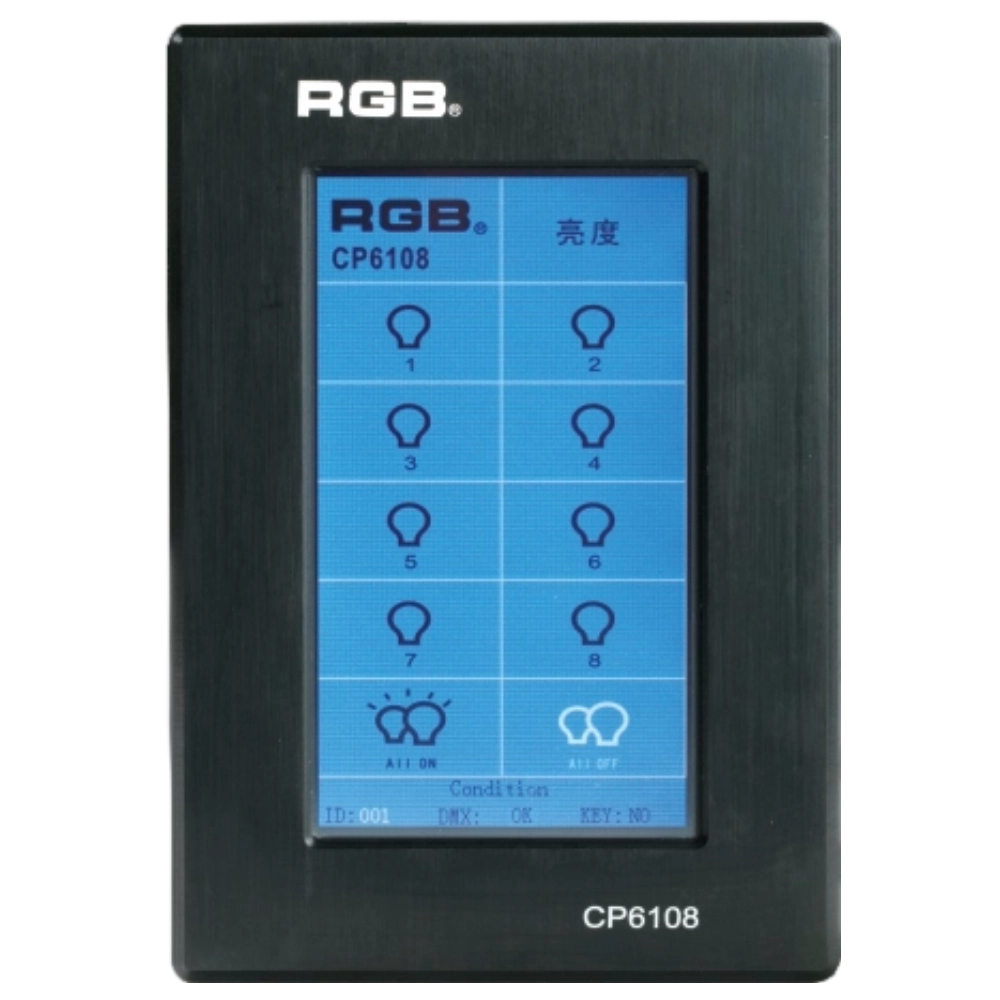
Site Light Controller CP6108
The CP6108 lighting control panel is a lighting control device for theater stage lights, work lights, environmental lighting, commercial art lighting, sports venue lighting, and other places. By connecting to the dedicated lighting control host CP6100, it realizes the central control of the lighting system, supports a visual lighting control system, and intuitively displays the online and offline status of CP6108. Realize remote monitoring, editing, and setting of corresponding parameters.
It is widely applicable to theaters, cinemas, auditoriums, stadiums, museums, exhibition halls, cultural tourism performances, commercial art lighting, and other places.
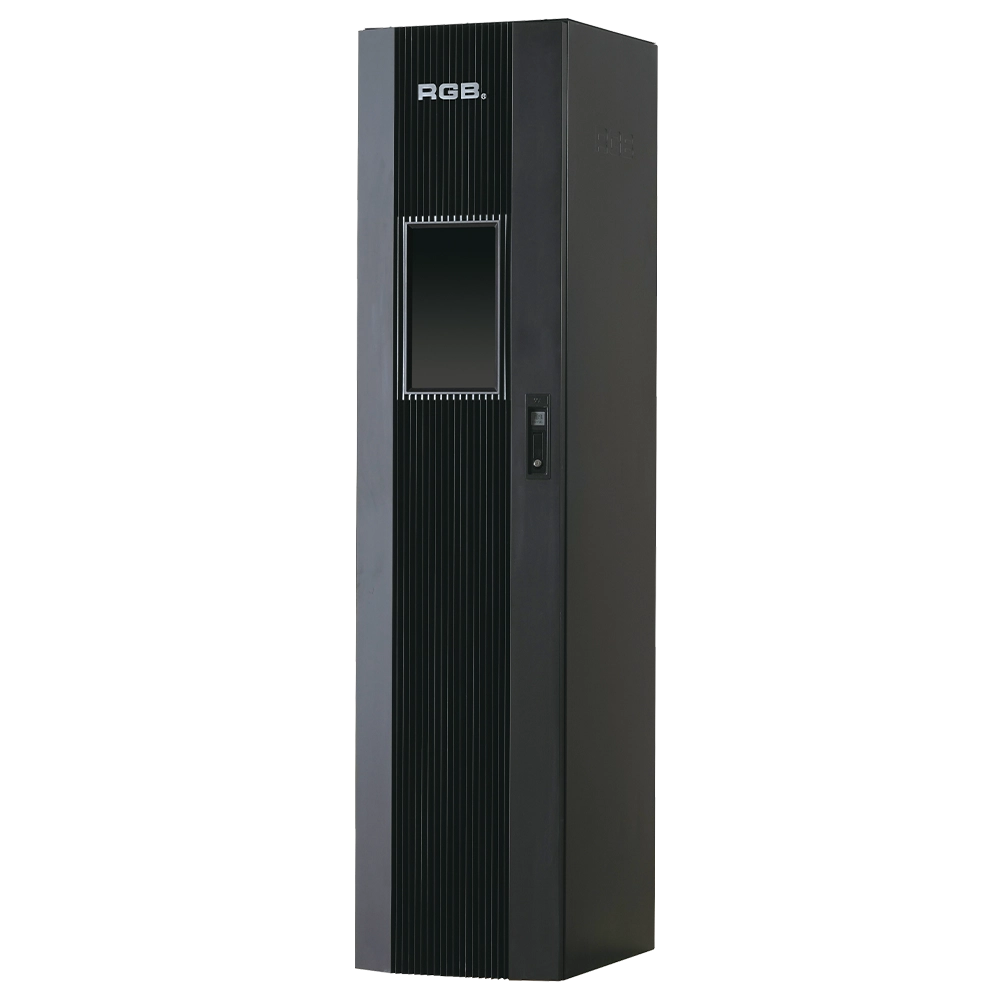
9i intelligent network Dimmer/Relay Racks
9i is an artificial intelligence dimming racks independently developed by RGB, which has completely independent core technology and obtained software Copyrights, all digital electrodeless trigger and multi-backup independent CPU central processor technology. It has a variety of output configurations such as sine wave, thyR, relay and dimming relay mix, and supports visual lighting control system and visually displays the online and offline status of dimming racks. Realize remote monitoring, editing and setting of relevant parameters.
It is suitable for the lighting control needs of different places such as high standard grand theater, TV station, gymnasium and environmental intelligent lighting.
Expert Support
Interested in learning more or need expert guidance related to this article? Fill in your details, and our team will provide tailored support.
Intelligent Control. Brilliant Performance.
RGB specializes in stage lighting control systems, delivering intelligent, reliable, and high-performance solutions for theaters and performance spaces worldwide.
Contact
Email:
Tel:
+86 20 3928 0245
+86 20 3928 0247
Address:
No.3, Huashan Road, Shilou Town, Panyu, Guangzhou, China.
Whatsapp: +8615975520131