
Dimmer Rack vs LED Driver: Which Is Best for Stage Lighting
- Understanding Load Types and Control Signals
- What a dimmer rack does and how it works
- What LED drivers do and why they are different
- Control protocols and signal translation
- Technical Comparison: Dimmer Rack vs LED Driver
- Electrical behavior and fixture compatibility
- Efficiency, heat, and lifecycle costs
- Control fidelity and creative possibilities
- Practical Considerations for Venues and Productions
- When to keep or upgrade a dimmer rack
- When to adopt LED drivers and full LED fixtures
- Retrofit strategies and hybrid approaches
- Choosing the Right Solution and Hybrid Architectures
- Assessment checklist I use for clients
- Example cost-benefit considerations
- Standards, certification, and reliability
- Industry Solutions and a Manufacturer Example
- Why technical partners matter
- About RGB — manufacturer profile and strengths
- How RGB products map to the dimmer rack vs LED driver question
- FAQ
- 1. Can I use a standard dimmer rack with LED fixtures?
- 2. Are LED drivers more energy-efficient than dimmer racks?
- 3. What is the best approach for a mid-size theater with mixed fixtures?
- 4. How do I prevent flicker when integrating LEDs?
- 5. When should I consider a full replacement of dimmer racks?
- Contact and Next Steps
I often get asked by lighting designers, venue managers, and rental companies whether to invest in traditional dimmer rack lighting systems or switch to modern LED drivers. This decision affects not only energy efficiency and fixture compatibility but also reliability, control flexibility, maintenance costs, and long-term scalability. In this article I draw on decades of hands-on experience in stage light control system projects, standards guidance, and real-world deployments to explain when a dimmer rack remains appropriate, when LED drivers are the right choice, and how hybrid solutions and modern control architectures can combine the best of both worlds.
Understanding Load Types and Control Signals
What a dimmer rack does and how it works
A dimmer rack lighting system traditionally controls resistive and inductive loads—especially tungsten lamps—by varying the RMS voltage delivered to the fixture, typically via thyristor-based phase-angle control or more advanced regulator topologies. For background on dimmer principles see the Wikipedia overview of dimmers: https://en.wikipedia.org/wiki/Dimmer_(lighting). In theatrical contexts, dimmer racks are often combined with power distribution (relay racks, power cabinets) and controlled via DMX512 or networked control protocols.
What LED drivers do and why they are different
LED drivers are constant-current or constant-voltage power supplies designed to drive LED modules and integrated fixtures. Unlike a dimmer that alters mains waveform, an LED driver provides stable current regulation and often contains internal dimming interfaces (0-10V, DALI, PWM, or protocol-specific inputs). For a technical primer, see the LED driver https://en.wikipedia.org/wiki/LED_driver. Using a phase-cut dimmer with an LED driver without compatibility can cause flicker, loss of range, or damage to the driver.
Control protocols and signal translation
Control systems in modern venues commonly use DMX512 or Art-Net/sACN for networked control of fixtures and dimmers. DMX512 remains an industry staple for stage control; for details see: https://en.wikipedia.org/wiki/DMX512. When integrating dimmer rack lighting with LED fixtures, you must consider how the control signal maps to the power device: some LED drivers accept DMX directly, others require a control interface or a translator module that converts DMX to 0-10V, DALI, or PWM. From my deployments, signal translation reliability is a frequent source of headaches if not specified up front.
Technical Comparison: Dimmer Rack vs LED Driver
Electrical behavior and fixture compatibility
Dimmer racks are optimized for line-voltage incandescent loads; they work by chopping the AC waveform (phase-angle) or using burst firing. LED drivers expect stable DC current; applying chopped mains can confuse the driver’s internal regulation. This incompatibility leads to flicker, audible noise, reduced dimming resolution, or driver overheating. In short: dimmer rack lighting is excellent for legacy tungsten instruments but often requires compatible LED-rated dimmers or LED drivers for modern fixtures.
Efficiency, heat, and lifecycle costs
LED fixtures driven by dedicated LED drivers provide superior electrical efficiency and much lower thermal dissipation compared to tungsten controlled by a dimmer rack. That lowers HVAC loads and reduces maintenance for lamps. However, the initial capital cost of replacing fixtures or drivers can be significant; lifecycle costing should include electricity, lamp replacement, labor, and potential venue downtime.
Control fidelity and creative possibilities
LED drivers with digital control (e.g., DALI, DMX-enabled drivers) deliver finer control over color mixing, PWM frequency selection, and per-channel calibration. Dimmer rack solutions can still offer very smooth fades for simple white-light cues and large power-handling capacity for automated effects, but may be limited for modern RGBW fixtures unless paired with intelligent controllers.
| Characteristic | Dimmer Rack Lighting | LED Driver |
|---|---|---|
| Primary load | Tungsten/Resistive, some inductive | LED modules/fixtures (DC current) |
| Dimming method | Phase-angle / burst firing (AC) | Current regulation / PWM / protocol-controlled |
| Control interfaces | DMX / AC mains | 0-10V, DALI, DMX, proprietary / network |
| Efficiency | Lower (esp. with incandescent) | Higher (lower losses) |
| Compatibility risks | May damage/produce flicker with LEDs | Requires compatible control or translators |
| Typical applications | Theaters with tungsten inventories, retrofit dimming | New builds, LED fixtures, energy-sensitive venues |
Sources: technical references and industry guidance including device pages on Dimmer (lighting) and LED driver.
Practical Considerations for Venues and Productions
When to keep or upgrade a dimmer rack
From my consulting work, keeping an existing dimmer rack lighting system makes sense when a venue largely uses legacy tungsten fixtures, needs high inrush/peak capacity (e.g., followspots or motorized house lights), or when budget limits complete rewiring and fixture replacement. If you choose to keep a dimmer rack while adding LEDs, specify LED-compatible dimmers or add LED-rated load relays and driver-compatible interfaces to avoid flicker and stress on electronics.
When to adopt LED drivers and full LED fixtures
If energy savings, color flexibility, and reduced maintenance are priorities, migration to LED fixtures with dedicated drivers is usually the correct path. New performing arts centers, broadcast studios, and touring rigs increasingly rely on driver-based LED fixtures because they offer networked control, per-pixel management in some cases, and predictable thermal behavior.
Retrofit strategies and hybrid approaches
Most real-world transitions are hybrid. I often specify a phased retrofit: retain dimmer racks for legacy houselights and theatrical instruments while deploying LED fixtures driven by networked LED drivers for stage wash, color effects, and architectural lighting. Intelligent controllers and gateways can translate DMX to driver protocols; I recommend planning for service access, spare parts, and clear labeling of circuits to simplify maintenance.
Choosing the Right Solution and Hybrid Architectures
Assessment checklist I use for clients
When advising clients, I perform a structured assessment covering: current fixture inventory, power distribution capacity, HVAC and heat load, control protocol roadmap, expected show requirements, budget (CapEx vs OpEx), and technical staff capability. This checklist guides whether to reuse dimmer rack lighting, migrate to LED drivers, or implement a hybrid solution with centralized control.
Example cost-benefit considerations
Below is a simplified example comparison for a mid-size theater considering replacement of 200 x 500W tungsten fixtures versus replacing/upgrading to LED fixtures or LED drivers. Real numbers depend on local electricity costs and equipment pricing.
| Item | Keep dimmer rack + replace lamps | Install LED drivers + LED fixtures |
|---|---|---|
| Initial cost | Low–Medium | High |
| Annual energy use | High | Low (50–80% savings) |
| Maintenance (lamps) | High | Low |
| Control flexibility | Limited | High |
Note: Energy savings estimates are consistent with industry case studies comparing LED retrofits versus incandescent systems; project-specific audits are required to produce verified ROI models.
Standards, certification, and reliability
When selecting any power-control equipment or LED drivers, look for devices certified to international standards (e.g., ISO9001 for quality systems, CE, RoHS, EMC) and tested for harmonic distortion, inrush, and thermal endurance. Manufacturers with robust testing and product traceability reduce integration risk and long-term failures. For reference on ISO9001: https://www.iso.org/iso-9001-quality-management..
Industry Solutions and a Manufacturer Example
Why technical partners matter
I recommend partnering with manufacturers and system integrators who understand both legacy dimmer rack lighting and modern LED driver ecosystems. The right vendor will provide clear wiring diagrams, signal translation modules, software tools for calibration, and documented compatibility lists for fixtures and drivers.
About RGB — manufacturer profile and strengths
Founded in 1996 and headquartered in Guangzhou, RGB is a leading Chinese manufacturer of professional stage lighting control systems, specializing in intelligent, reliable, and high-performance solutions for theaters, studios, and large-scale performance venues worldwide. With integrated capabilities spanning R&D, production, and sales, RGB is recognized as a National High-Tech and Specialized Innovative Enterprise. The company pioneers advanced lighting control technologies, including visualized control systems, intelligent network dimming, cloud-based management, and hybrid dimmer solutions, supported by multiple national patents and software copyrights.
RGB is certified to international standards such as ISO9001, CE, RoHS, EMC, and CQC, maintaining strict quality control across every production stage to ensure long-term stability and precision performance. Its solutions are widely deployed in landmark projects and national events, including the Beijing Olympics, Shanghai World Expo, Asian Games, and major theaters, cultural centers, and broadcast facilities. Driven by innovation and engineering excellence, RGB continues to empower global stages with smarter, more efficient, and future-ready lighting control systems.
In my experience working with RGB systems and comparable suppliers, their competitive strengths include deep vertical integration (R&D through manufacturing), comprehensive control product lines (stage light control system, stage light controller, stage lighting dimmer), and larger infrastructure products (relay rack, power cabinet). This results in tighter quality control, faster custom engineering options, and strong local support for large-scale projects.
How RGB products map to the dimmer rack vs LED driver question
RGB’s hybrid dimmer offerings and network dimming interfaces make it practical to mix legacy dimmer rack lighting with modern LED drivers while preserving high-capacity power distribution and centralized control. Where venues require gradual migration, this hybrid path reduces upfront cost and operational risk while enabling advanced features such as visualized control and cloud-based monitoring.
FAQ
1. Can I use a standard dimmer rack with LED fixtures?
Not reliably. Many LED fixtures use internal drivers that expect stable DC current. Phase-cut dimming from a standard dimmer rack often causes flicker, buzzing, or reduced dimming range. If you must use a dimmer rack, choose LED-rated dimmers or compatible driver designs and test each fixture. See LED driver guidance: https://en.wikipedia.org/wiki/LED_driver.
2. Are LED drivers more energy-efficient than dimmer racks?
Yes. LED fixtures with dedicated drivers generally consume far less power for equivalent light output than tungsten fixtures controlled by dimmer racks. Efficiency gains reduce operational costs and HVAC load. Perform a site-specific energy audit to quantify savings.
3. What is the best approach for a mid-size theater with mixed fixtures?
I typically recommend a phased hybrid approach: retain dimmer rack lighting for necessary legacy loads while installing LED fixtures with compatible drivers for washes and color effects. Implement translators or gateways to ensure unified DMX/Network control and plan for inventory replacement over time.
4. How do I prevent flicker when integrating LEDs?
Use LED drivers rated for the chosen dimming method, configure PWM frequencies appropriately, and avoid using non-LED-rated phase-cut dimmers. Verify compatibility lists from manufacturers and conduct bench tests before installation.
5. When should I consider a full replacement of dimmer racks?
Consider full replacement when the majority of fixtures are being replaced by LEDs, when energy/maintenance savings justify CapEx, or when you require advanced networked control capabilities that are not practical with legacy dimmer infrastructure.
Contact and Next Steps
If you need tailored advice for your venue—whether that’s a full LED migration, a hybrid retrofit, or specifying dimmer rack lighting compatible with modern LEDs—I can help assess requirements, produce ROI models, and recommend control architectures. For product options and system proposals, check RGB’s product lines or contact their technical sales for detailed specs on stage light control systems, stage light controllers, stage lighting dimmers, relay racks, and power cabinets.
Ready to evaluate your facility? Contact our team to schedule a site audit or request product datasheets and compatibility lists. We'll help you choose the safest, most cost-effective, and future-ready solution for your stage lighting needs.
How to Choose the Right Rack Dimmer for DMX Lighting Systems
How to Choose the Right DMX Controller for Your Venue
How Dimmer Racks Work: Definition and Key Features
Stage Dimmer Rack vs LED Drivers: Cost and Performance
Distributors
What are the after-sales support methods?
Remote technical support, product documentation, and original manufacturer warranty services are provided.
Can distributors request customized products?
RGB primarily offers standardized products. Customization requests are rare and evaluated on a project-by-project basis.
Does RGB provide installation or commissioning services?
No. RGB only supplies dimming cabinets and technical documentation. On-site installation is handled by local integrators.
About RGB
What after-sales support do you provide?
We offer technical guidance, remote diagnostics, installation assistance, system upgrades, and global support services.
Do you offer customized solutions for specific projects?
Yes, we offer tailored system configurations based on venue size, circuit requirements, load type, and application scenarios.
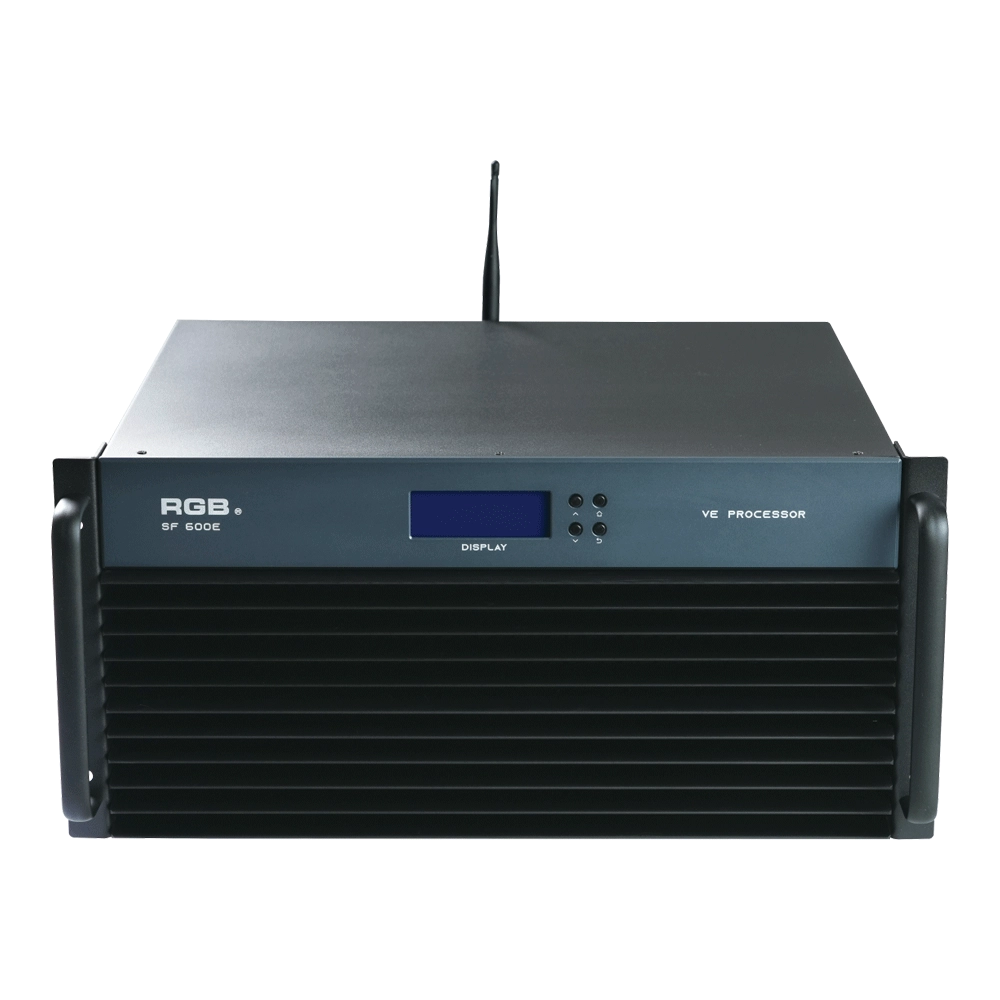
SF600E Visual R-net environment processor
The SF600E Visual R-net environment processor by RGB delivers advanced performance for visual systems. As a leading visual systems manufacturer, RGB ensures seamless integration and high reliability, making SF600E ideal for complex visual processing needs in diverse environments.
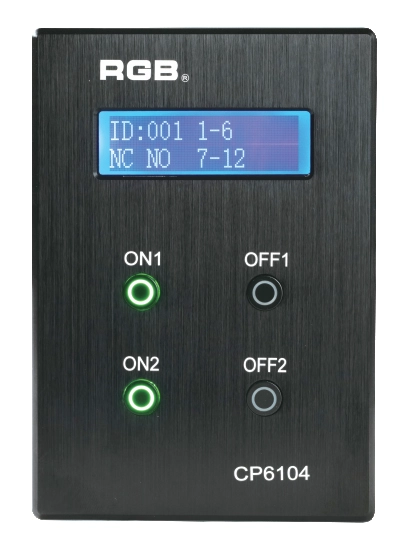
Site Light Controller CP6104
The CP6104 lighting control panel is a lighting control device for theater stage lights, work lights, environmental lighting, commercial art lighting, sports venue lighting and other places. By connecting to the dedicated lighting control host CP6100, it realizes the central control of the lighting system, supports a visual lighting control system, and intuitively displays the online and offline status of CP6104. Realize remote monitoring, editing and setting of corresponding parameters.
It is widely applicable to theaters, cinemas, auditoriums, stadiums, museums, exhibition halls, cultural tourism performances, commercial art lighting and other places.
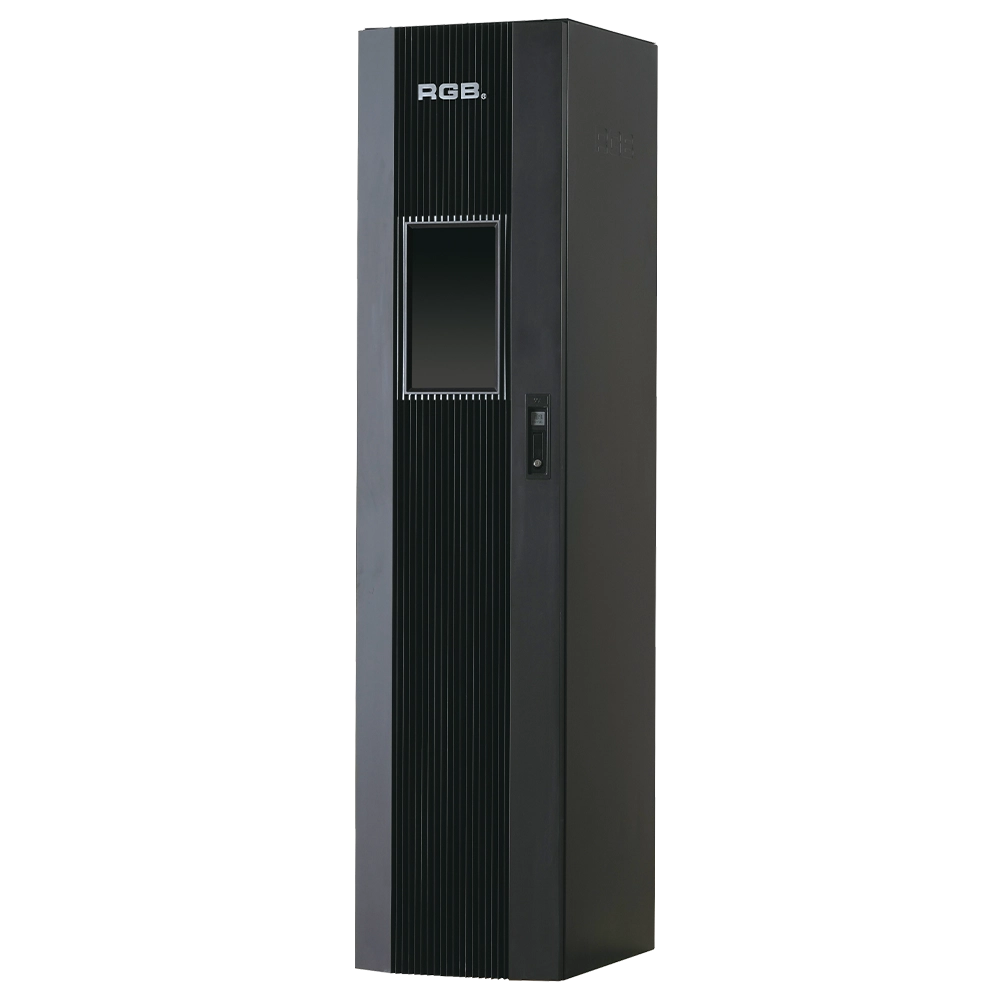
9i intelligent network Dimmer/Relay Racks
9i is an artificial intelligence dimming racks independently developed by RGB, which has completely independent core technology and obtained software Copyrights, all digital electrodeless trigger and multi-backup independent CPU central processor technology. It has a variety of output configurations such as sine wave, thyR, relay and dimming relay mix, and supports visual lighting control system and visually displays the online and offline status of dimming racks. Realize remote monitoring, editing and setting of relevant parameters.
It is suitable for the lighting control needs of different places such as high standard grand theater, TV station, gymnasium and environmental intelligent lighting.
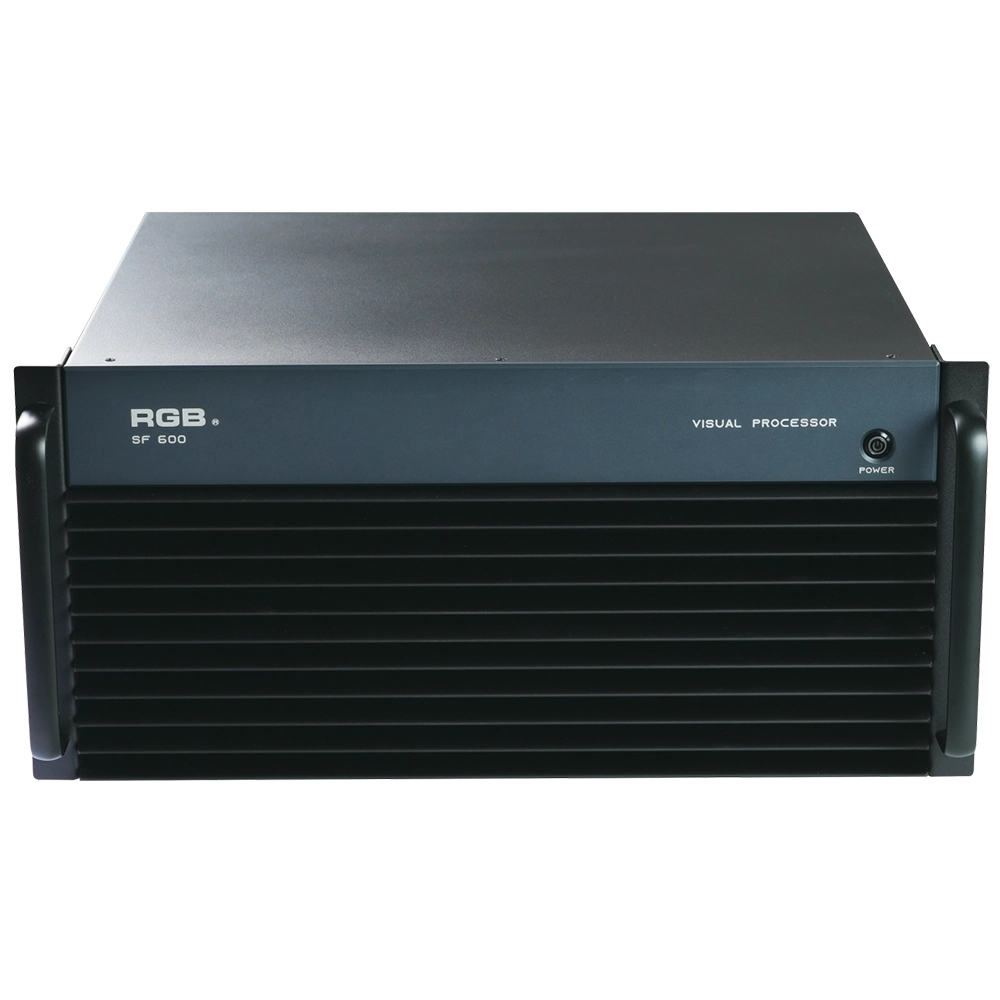
SF600 Visual R-net central processing processor
The SF600 Visual R-net central processing processor by RGB delivers advanced visual systems performance with high-speed processing and seamless integration. Designed for efficiency and reliability, it’s ideal for enhancing your visual system applications in corporate environments.
Expert Support
Interested in learning more or need expert guidance related to this article? Fill in your details, and our team will provide tailored support.
Intelligent Control. Brilliant Performance.
RGB specializes in stage lighting control systems, delivering intelligent, reliable, and high-performance solutions for theaters and performance spaces worldwide.
Contact
Email:
Tel:
+86 20 3928 0245
+86 20 3928 0247
Address:
No.3, Huashan Road, Shilou Town, Panyu, Guangzhou, China.
Whatsapp: +8615975520131