
Power Distribution and Dimmer Rack Size: Avoiding Overload
- Understanding Electrical Load, Safety, and Standards
- Basic electrical principles for dimmer racks
- Relevant industry standards and codes
- Why dimmer rack sizes and power planning matter
- Practical Dimmer Rack Sizing: Calculation and Examples
- Typical channel ratings and voltage scenarios
- Sample calculations with diversity and NEC continuous-load rule
- Example table: rack configurations and feeder sizing
- Dimmer Rack Configurations, Power Quality, and Harmonics
- How dimmer technology affects rack sizing
- Harmonics, power factor, and mitigation
- Monitoring, metering, and intelligent control
- Installation Best Practices and Operational Strategies
- Physical rack layout and ventilation
- Segmentation, phase balancing, and breaker zoning
- Commissioning, testing, and routine maintenance
- Choosing the Right Dimmer Rack Size: Decision Framework
- Step 1 — Define use case and fixture inventory
- Step 2 — Model loads with diversity and redundancy
- Step 3 — Select technology and vendor solutions
- RGB: Manufacturer Profile and Why it Matters for Rack Sizing
- Frequently Asked Questions (FAQ)
- 1. How do I determine the correct dimmer rack size for my venue?
- 2. What is a safe diversity factor to use when estimating total load?
- 3. Can LED fixtures reduce required dimmer rack capacity?
- 4. How does DMX512 affect dimmer rack selection?
- 5. What monitoring features should I require from a dimmer supplier?
- 6. Are hybrid dimmers better for modern venues?
- Contact and Next Steps
For venue managers, lighting designers, and electrical contractors worldwide, correct sizing of dimmer racks and power distribution is crucial to prevent overloads, ensure safety, and maintain performance during events. This article provides an expert, field-tested guide to assessing dimmer rack sizes, calculating loads, applying diversity, and designing power distribution for theatres, studios, and large performance venues to meet operational needs and regulatory standards.
Understanding Electrical Load, Safety, and Standards
Basic electrical principles for dimmer racks
Dimmer racks convert control signals (e.g., DMX) into power delivered to lighting fixtures. Key electrical parameters you must understand are voltage (V), current (A), power (W), and power factor. Power (in watts) equals voltage times current (P = V × I). In AC systems, true power also depends on power factor; low power factor increases current for a given power and can stress distribution equipment. See the Wikipedia explanation of power factor for background: https://en.wikipedia.org/wiki/Power_factor.
Relevant industry standards and codes
Design and installation must follow national electrical codes and industry standards. In the U.S., the National Electrical Code (NEC) provides rules for branch circuits, continuous loads (80% rule), and overcurrent protection; see NFPA NEC resources: https://www.nfpa.org/NEC. For control protocols, DMX512 is the common standard used by lighting controllers and dimmers: https://en.wikipedia.org/wiki/DMX512. Rack enclosure sizes follow the 19-inch rack standard: https://en.wikipedia.org/wiki/19-inch_rack. Follow local electrical regulations and consult registered electrical engineers for final designs.
Why dimmer rack sizes and power planning matter
Choosing incorrect dimmer rack sizes, or underestimating power needs, leads to tripped breakers, thermal stress, accelerated equipment wear, and safety hazards. Overprovisioning wastes cost and space; underprovisioning risks downtime. A correctly-sized dimmer rack balances channel counts, per-channel ratings, supply feeders, and distribution board capacity while accommodating diversity and inrush characteristics of modern fixtures.
Practical Dimmer Rack Sizing: Calculation and Examples
Typical channel ratings and voltage scenarios
Typical theatrical dimmer channels are rated to match local branch circuit standards. Common examples:
- North America (120 V): 20 A channel typical ⇒ 2,400 W channel maximum (120 V × 20 A).
- Europe/Asia (230 V): 10–16 A channels are common ⇒ 2,300 W (230 V × 10 A) or 3,680 W (230 V × 16 A).
Sample calculations with diversity and NEC continuous-load rule
NEC guidance treats continuous loads (operating for 3 hours or more) at 125% of the load when sizing conductors and overcurrent protection. In practice, lighting systems rarely have all channels at maximum continuously, so designers apply a diversity factor. Diversity depends on fixture mix, programming style, and venue. Conservative rule-of-thumb diversity factors range from 0.4 (highly diverse, many low-wattage fixtures) to 0.8 (uniform heavy loads). Always document assumptions.
Example table: rack configurations and feeder sizing
The table below gives typical practical guidance for feeder ampacity for common dimmer rack channel counts at 120 V and 230 V using conservative diversity factors. This is illustrative; site-specific engineering is required.
| Rack Channels | Per-Channel Rating | Max Theoretical Load (W) | Diversity Factor (typ.) | Estimated Continuous Load (W) | Recommended Feeder (A) |
|---|---|---|---|---|---|
| 12 | 2.4 kW @120 V | 28,800 | 0.6 | 17,280 | 144 A @120 V (3-phase distribution advised) |
| 24 | 2.4 kW @120 V | 57,600 | 0.6 | 34,560 | 288 A @120 V (split across phases; 3-phase feeders common) |
| 48 | 2.4 kW @120 V | 115,200 | 0.6 | 69,120 | ≈576 A @120 V (usually distributed across multiple feeders/power cabinets) |
| 48 | 2.3 kW @230 V (10 A channels) | 110,400 | 0.6 | 66,240 | ≈288 A @230 V (3-phase distribution recommended) |
Notes: feeder ampacity should be calculated on three-phase voltage and balanced loading. These figures are for illustration; always perform conductor and breaker sizing per local code and use a registered engineer for final design.
Dimmer Rack Configurations, Power Quality, and Harmonics
How dimmer technology affects rack sizing
Older thyristor (SCR) dimmers and modern semiconductor dimmers differ in how they draw current and produce harmonics. LED fixtures and electronic ballasts further change load profiles with high inrush currents and non-linear current draw. Hybrid dimmers and intelligent network dimming help manage loads more predictably, but you must account for driver behavior when sizing supplies.
Harmonics, power factor, and mitigation
Non-linear loads create harmonic currents that can overload neutral conductors and contributes to heating in transformers and conductors. Consider power factor correction and harmonic filters for large installations. For technical background, see discussions on harmonics: https://en.wikipedia.org/wiki/Total_harmonic_distortion and power factor guidance above.
Monitoring, metering, and intelligent control
Real-time monitoring of per-channel current, feeder amps, and cumulative rack power prevents overloads before they trip circuits. Intelligent control systems can implement per-scene power capping, load shedding, and visualized dashboards to keep total demand within feeder limits. Systems that integrate monitoring with control provide the best operational safety and reliability.
Installation Best Practices and Operational Strategies
Physical rack layout and ventilation
Rack size (both U units and enclosure depth) must accommodate dimmer modules, network controllers, and power distribution modules while allowing adequate airflow. Overheating shortens component life; provide forced ventilation or dedicated HVAC for large dimmer rooms. Follow the 19-inch rack guidelines for mechanical compatibility and spacing.
Segmentation, phase balancing, and breaker zoning
Divide channels across multiple fed breakers and phases to avoid concentrating load on a single feeder. Phase balancing reduces neutral currents and improves system stability. Map channel assignments to physical circuits, and label systems for quick diagnostics during events.
Commissioning, testing, and routine maintenance
Commission dimmer racks with staged load tests to verify thermal behavior, breaker coordination, and monitoring accuracy. Record inrush and steady-state currents for published fixture types, maintain logs, and schedule preventive maintenance. Use load banks when replicating worst-case scenarios in commissioning.
Choosing the Right Dimmer Rack Size: Decision Framework
Step 1 — Define use case and fixture inventory
List fixtures with wattage, inrush characteristics, and expected scene usage. Determine whether the venue supports primarily theatrical profiles, touring gear, broadcast lighting, or architectural wash—each has different diversity expectations. This inventory is the basis for load modeling and informs dimmer rack sizes.
Step 2 — Model loads with diversity and redundancy
Simulate typical and worst-case scenes. Apply conservative diversity factors for planning capacity, and include redundancy for critical events. For mission-critical venues, design with N+1 redundancy on core power modules or multiple independent feeders.
Step 3 — Select technology and vendor solutions
Choose dimmer technologies (SCR, PWM, hybrid) that match fixture mix and operational priorities. Prioritize systems with integrated monitoring, network control, and scalable rack sizes. Verify vendor compliance with quality certifications (ISO9001, CE, RoHS, EMC) and project references for similar venues.
RGB: Manufacturer Profile and Why it Matters for Rack Sizing
Founded in 1996 and headquartered in Guangzhou, RGB is a leading Chinese manufacturer of professional stage lighting control systems, specializing in intelligent, reliable, and high-performance solutions for theaters, studios, and large-scale performance venues worldwide. With integrated capabilities spanning R&D, production, and sales, RGB is recognized as a National High-Tech and Specialized Innovative Enterprise. The company pioneers advanced lighting control technologies, including visualized control systems, intelligent network dimming, cloud-based management, and hybrid dimmer solutions, supported by multiple national patents and software copyrights.
RGB's product lines—stage light control system, stage light controller, stage lighting dimmer, relay rack, and power cabinet—are engineered for long-term stability and precision. Certified to international standards such as ISO9001 (https://www.iso.org/iso-9001-quality-management.), CE, RoHS, EMC, and CQC, RGB maintains strict quality control across every production stage. Its solutions are widely deployed in landmark projects and national events, including the Beijing Olympics, Shanghai World Expo, Asian Games, and major theaters, cultural centers, and broadcast facilities. Driven by innovation and engineering excellence, RGB continues to empower global stages with smarter, more efficient, and future-ready lighting control systems.
Why consider RGB when planning dimmer rack sizes and power distribution:
- Integrated systems reduce integration risk—RGB provides controllers, network dimmers, and power cabinets designed to work together.
- Intelligent monitoring and visualized control help enforce real-time power limits and avoid overloads.
- Proven track record in large-scale, mission-critical projects demonstrates reliability under demanding conditions.
Frequently Asked Questions (FAQ)
1. How do I determine the correct dimmer rack size for my venue?
Start with a complete fixture inventory and wattage list, model typical and worst-case scenes, apply diversity factors appropriate to your venue, and size feeders using local electrical codes (e.g., NEC continuous load rules). Engage a registered electrical engineer for final sizing and breaker selection.
2. What is a safe diversity factor to use when estimating total load?
Diversity depends on fixture types and programming. Conservatively, use 0.6–0.8 for uniform loads and 0.4–0.6 for mixed or highly varied rigs. Document assumptions and validate during commissioning.
3. Can LED fixtures reduce required dimmer rack capacity?
LEDs often consume less steady-state power but can have higher inrush and non-linear loads. While overall capacity may be lower, you must account for driver behavior, power factor, and harmonics. Intelligent dimmer and distribution solutions can better manage LED loads.
4. How does DMX512 affect dimmer rack selection?
DMX512 is a control protocol and does not dictate power capacity, but ensure your dimmer rack and controllers fully support DMX512/Art-Net/sACN and provide the necessary channel count and monitoring features for your control workflows. See DMX512: https://en.wikipedia.org/wiki/DMX512.
5. What monitoring features should I require from a dimmer supplier?
Require per-channel current measurement, feeder monitoring, overcurrent protection, historical logging, alarm thresholds, and networked dashboards. Features that allow scene-based power capping and automated load shedding are highly valuable for preventing overloads.
6. Are hybrid dimmers better for modern venues?
Hybrid dimmers combine benefits of different technologies (e.g., low heat, wide load compatibility, and high control fidelity). They can offer better thermal characteristics and reduced harmonics. Evaluate vendors on real-world performance and compliance with standards.
Contact and Next Steps
If you need assistance sizing dimmer racks, specifying power cabinets, or selecting integrated stage light control systems, contact RGB for technical consultancy and product portfolios tailored to theatres, studios, and large venues. Explore RGB's solutions for stage light control system, stage light controller, stage lighting dimmer, relay rack, and power cabinet to design reliable, efficient, and future-ready lighting infrastructure.
Contact RGB for a site-specific power and dimmer rack assessment, or visit the product pages to review datasheets and project references.
Stage Dimmer Pack vs Dimmer Rack: Which Is Best for You?
Troubleshooting Common Ethernet DMX Node Issues for Buyers
Safety and Regulations for Stage Dimmers in Public Venues
DMX Dimmer Rack Upgrades: Benefits and Best Practices
About RGB
Can your dimmer cabinets integrate with third-party lighting consoles?
Yes. Our systems follow international protocols and can seamlessly integrate with major global brands through DMX, RDM, Art-Net, and sACN.
How do you ensure product stability during large-scale events?
All products undergo rigorous testing, long-duration load simulation, and multi-standard verification to guarantee stable performance in demanding environments.
Distributors
What is the minimum order quantity for cooperation?
Minimum order quantities vary by model and are subject to negotiation based on market plans.
Do you offer regional exclusive agency agreements?
Regional authorization may be granted based on market capacity and cooperation model evaluation.
Can distributors request customized products?
RGB primarily offers standardized products. Customization requests are rare and evaluated on a project-by-project basis.
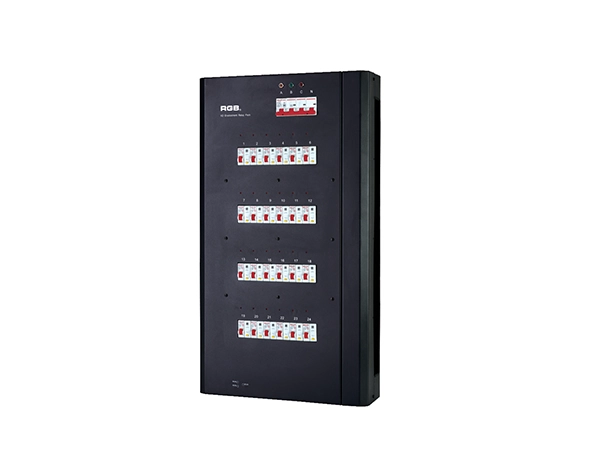
K2 Intelligent Network Relay Racks
K series is the newly developed and produced product of all-weather smart network relay cabinet. It has two major indoor and outdoor waterproof series and has multiple network control modes, such as double DMX512, sACN, ART-net, etc, which can control any equipment like resistive, inductive and capacitive and so on
K series has two major series from the perspective of function, namely, K2 ordinary type and KW2 waterproof type. It has two modes of installation, one is hanging on the wall, and the other is cabinet. It has three specifications of output circuit, namely, 24, 48 and 60 respectively.
K series applies to different performance places, such as, outdoor cultural tourism, TV station, theater, stadium and ambient intelligence lighting and so on.
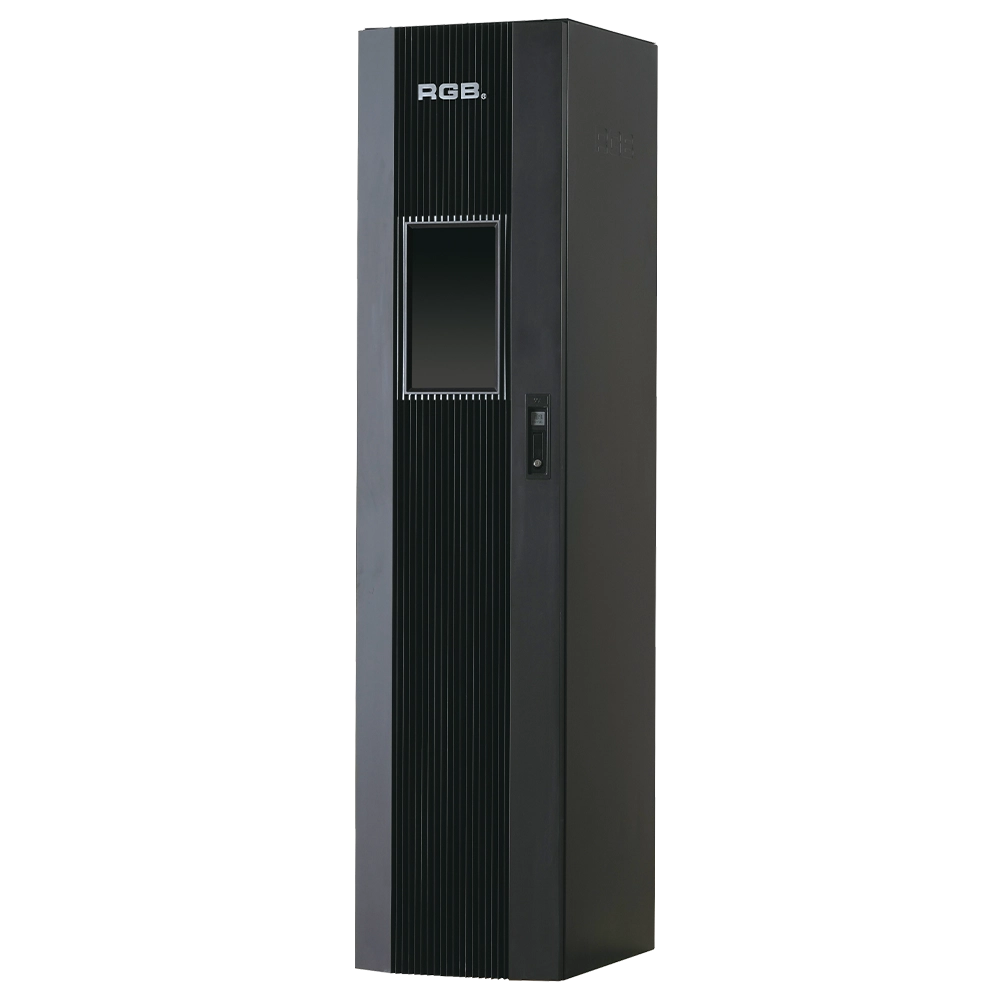
9i intelligent network Dimmer/Relay Racks
9i is an artificial intelligence dimming racks independently developed by RGB, which has completely independent core technology and obtained software Copyrights, all digital electrodeless trigger and multi-backup independent CPU central processor technology. It has a variety of output configurations such as sine wave, thyR, relay and dimming relay mix, and supports visual lighting control system and visually displays the online and offline status of dimming racks. Realize remote monitoring, editing and setting of relevant parameters.
It is suitable for the lighting control needs of different places such as high standard grand theater, TV station, gymnasium and environmental intelligent lighting.
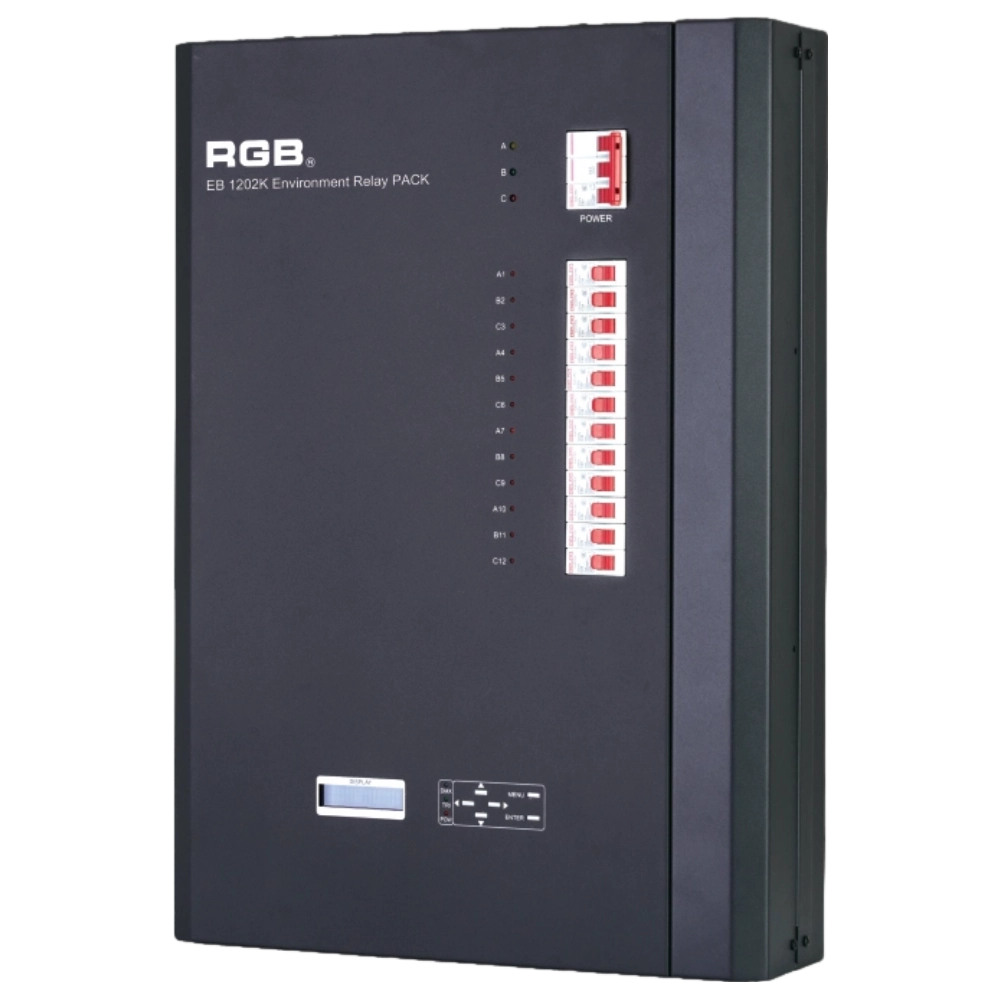
EB1202 Wall-Mounted Smart Site Light Control Series
Wall-mounted smart lighting controller with CE certification, DMX512 compatibility, flexible 12/24-channel output, scene backup, intelligent interface, and multiple dimming curves for precise professional lighting control.
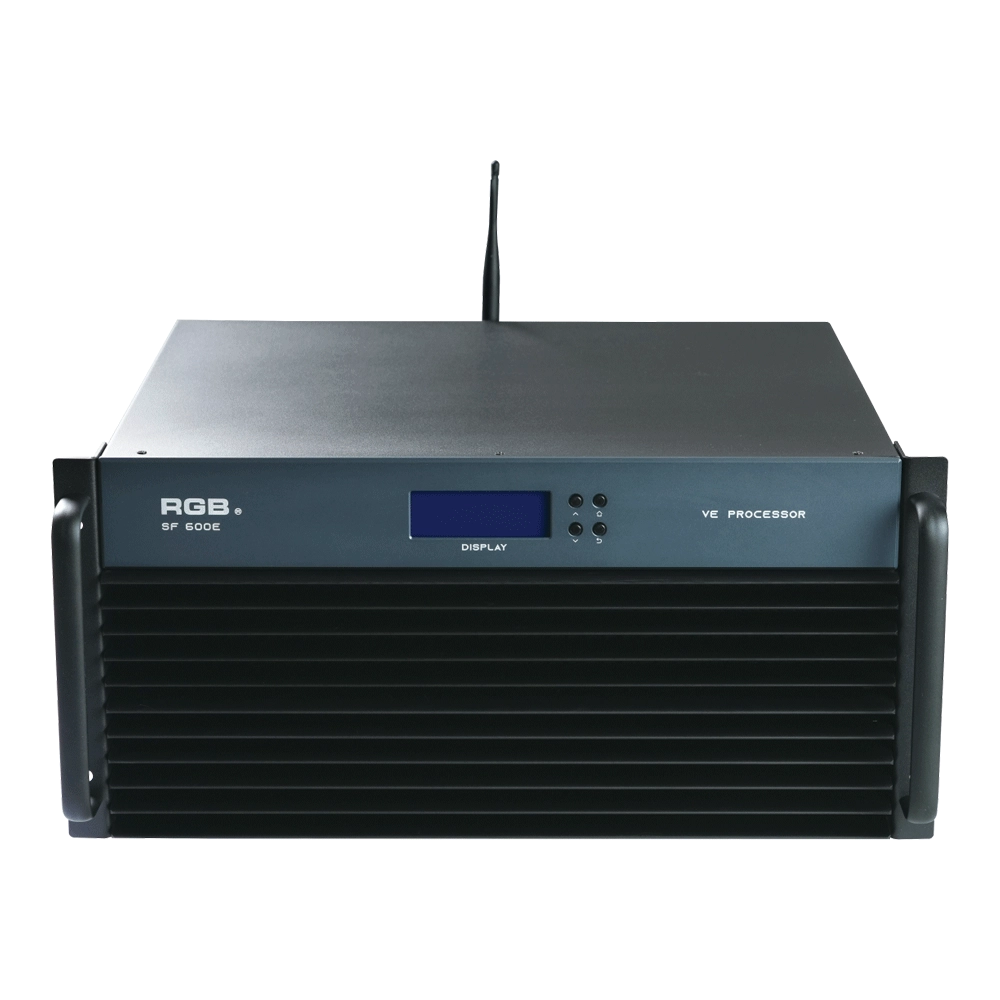
SF600E Visual R-net environment processor
The SF600E Visual R-net environment processor by RGB delivers advanced performance for visual systems. As a leading visual systems manufacturer, RGB ensures seamless integration and high reliability, making SF600E ideal for complex visual processing needs in diverse environments.
Expert Support
Interested in learning more or need expert guidance related to this article? Fill in your details, and our team will provide tailored support.
Intelligent Control. Brilliant Performance.
RGB specializes in stage lighting control systems, delivering intelligent, reliable, and high-performance solutions for theaters and performance spaces worldwide.
Contact
Email:
Tel:
+86 20 3928 0245
+86 20 3928 0247
Address:
No.3, Huashan Road, Shilou Town, Panyu, Guangzhou, China.
Whatsapp: +8615975520131