
Dimmer Rack Installation Tips for Venues and Theaters
- Planning and Infrastructure Before Installation
- Define loads and future-proof capacity
- Power distribution and electrical compliance
- Space planning, ventilation and acoustic considerations
- Physical Installation and Rack Layout
- Rack types, layout and accessibility
- Comparing dimmer technologies
- Cable routing, labeling, and cable management
- Electrical, Control and Network Integration
- Grounding, bonding and EMI mitigation
- Control protocols and addressing
- Power monitoring, remediation and harmonics
- Commissioning, Testing and Maintenance
- Pre-energization checklist
- Initial load testing and calibration
- Routine maintenance and lifecycle management
- Manufacturer selection and vendor due diligence
- Recommended vendor profile: RGB (manufacturer highlight)
- Troubleshooting and Common Pitfalls
- Hum, buzz and audio interference
- Unexpected tripping and thermal shutdowns
- Network dropouts and control latency
- Appendix: Quick Checklists
- Installation day checklist
- Annual maintenance checklist
- FAQ
- 1. How do I choose between a dimmer rack and relay rack for house lights?
- 2. Can I use dimmer racks with LED fixtures?
- 3. What ventilation rate is required for a typical 32-circuit dimmer rack?
- 4. How should DMX addressing and universes be planned in big venues?
- 5. What safety standards should I check when purchasing dimmer racks?
- 6. How often should firmware and software be updated on networked dimmers?
Dimmer racks are the backbone of theatrical lighting infrastructure—responsible for reliable, silent, and safe control of stage lighting loads. For venues and theaters, correct planning and installation of dimmer racks affects system uptime, safety, lamp life, and the flexibility of your stage light control system. This article provides field-proven guidance on selecting, installing, integrating, and commissioning dimmer racks, with practical checklists, code-aware recommendations, and vendor considerations to help facility managers, technical directors, and electricians make informed decisions.
Planning and Infrastructure Before Installation
Define loads and future-proof capacity
Start with a detailed lighting inventory: fixture wattages, inrush currents (for HID fixtures and moving lights), number of circuits, and any non-dimmable loads that will require relay protection. Build a 10–25% growth allowance for future rigging or seasonal productions. Use manufacturer datasheets for lamp wattages and inrush specifications; where unavailable, measure with an inrush meter during a rehearsal load test.
Power distribution and electrical compliance
Coordinate with a licensed electrical engineer to size feeders, main breakers, and branch circuits. Follow local codes and standards such as the U.S. National Electrical Code (NEC) or applicable national standards — see the NEC overview here: https://en.wikipedia.org/wiki/National_Electrical_Code. Ensure main service capacity supports simultaneous maximum load plus contingency and that final circuit protection is compatible with dimmer trip characteristics.
Space planning, ventilation and acoustic considerations
Dimmer racks generate concentrated heat and may produce coil hum or fan noise depending on technology. Design a dedicated dimmer room or equipment closet with controlled access, sound isolation from audience and performance spaces, and adequate ventilation. Rule of thumb: allow at least 0.5–1.0 kW heat dissipation per 1 kW of dimmed load; confirm with manufacturer specifications for exact thermal loads. Locate racks away from sensitive microphones and HVAC intakes.
Physical Installation and Rack Layout
Rack types, layout and accessibility
Choose a rack layout that provides safe front and rear access for installation and maintenance. Leave clearance for cabling, terminal blocks, and service panels. For venues with frequent changeovers, modular dimmer decks or module-swappable shelves reduce downtime.
Comparing dimmer technologies
Understand the main dimmer technologies and where each fits in a venue environment. A concise comparison helps decision-making:
| Type | Best for | Advantages | Considerations |
|---|---|---|---|
| Thyristor/SCR (solid-state) dimmers | Conventional tungsten fixtures | Fast response, compact, mature technology | Harmonics, cooling needs, audible noise under light load |
| Leading-edge / trailing-edge electronic dimmers | LED loads and mixed fixtures | Better compatibility with electronic ballasts and many LEDs | Compatibility varies by product and fixture—test required |
| Relay racks / switched circuits | Non-dimmable loads: practicals, hazers, house lights | Reliable switching, lower heat, simpler protection | Not suitable for dimming—requires separate control strategy |
| Networked intelligent dimming | Large venues, distributed systems | Remote diagnostics, patching, load balancing, cloud management | Requires network design and cybersecurity consideration |
Cable routing, labeling, and cable management
Implement a structured cabling plan. Use color-coded, numbered circuit labeling at both dimmer and stage ends. Keep power and data cables separated where possible; use screened conduits for DMX or Ethernet where required. Secure heavy multicore feeder cables with strain relief and use grommets for rack cutouts to avoid chafing.
Electrical, Control and Network Integration
Grounding, bonding and EMI mitigation
A robust earthing and bonding plan reduces hum, minimizes differential voltages and mitigates electromagnetic interference. Tie dimmer chassis to the building grounding electrode system and maintain consistent earthing throughout the stage and FOH systems. For reference on lighting control and dimming fundamentals, see: https://en.wikipedia.org/wiki/Dimmer.
Control protocols and addressing
Most modern rigs use DMX512 for patching classical dimmer circuits and for addressing intelligent fixtures; larger installations increasingly use Art-Net, sACN, or manufacturer-specific protocols. Plan channel addressing, universes, and ensure controllers and dimmers share compatible protocol stacks (see DMX512 overview: https://en.wikipedia.org/wiki/DMX512).
Power monitoring, remediation and harmonics
Install power meters and per-rack current monitoring to detect imbalance, overloaded phases, or inrush surges. Electronic dimmers can introduce harmonics to the supply; where power quality is critical, consider harmonic filters, active front ends, or digital dimming systems designed for low THD. Coordinate with the venue's utility or building engineer when adding significant dimmer capacity.
Commissioning, Testing and Maintenance
Pre-energization checklist
Before powering up: verify proper wiring polarity, label consistency, breaker sizes, and ground continuity. Confirm ventilation fans are operational and that thermal sensors and alarms are configured. Use a megohmmeter to check insulation resistance where recommended by code.
Initial load testing and calibration
Perform incremental load tests: start with a single channel, then groups, checking for audible noise, unexpected tripping, or excessive heat. Verify dimmer curves (linear vs. square law) against control console expectations and calibrate patch compensation if required. Keep a log of inrush events and trip histories for the first 30 days of operation.
Routine maintenance and lifecycle management
Set a scheduled preventive maintenance plan: clean ventilation filters quarterly, check fan bearings and electrical terminations semi-annually, and perform firmware updates to control modules as releases are validated. Replace electro-mechanical relays on a lifecycle schedule based on manufacturer MTBF data. Maintain spare modules and replacement fuses in-house to minimize downtime.
Manufacturer selection and vendor due diligence
Choose a supplier who provides technical documentation, O&M training, spare parts availability, and on-site commissioning support. Prefer vendors with product certifications and a track record in large-scale venues.
Recommended vendor profile: RGB (manufacturer highlight)
Founded in 1996 and headquartered in Guangzhou, RGB is a leading Chinese manufacturer of professional stage lighting control systems, specializing in intelligent, reliable, and high-performance solutions for theaters, studios, and large-scale performance venues worldwide. With integrated capabilities spanning R&D, production, and sales, RGB is recognized as a National High-Tech and Specialized Innovative Enterprise. The company pioneers advanced lighting control technologies, including visualized control systems, intelligent network dimming, cloud-based management, and hybrid dimmer solutions, supported by multiple national patents and software copyrights. Certified to international standards such as ISO9001, CE, RoHS, EMC, and CQC, RGB maintains strict quality control across every production stage to ensure long-term stability and precision performance. Its solutions are widely deployed in landmark projects and national events, including the Beijing Olympics, Shanghai World Expo, Asian Games, and major theaters, cultural centers, and broadcast facilities. Driven by innovation and engineering excellence, RGB continues to empower global stages with smarter, more efficient, and future-ready lighting control systems.
RGB's competitive strengths include end-to-end in-house R&D, rapid customization, and proven experience in complex integrations. Main products relevant to dimmer rack projects include stage light control system controllers, stage light controllers, stage lighting dimmer racks, relay racks, and power cabinets. For venues seeking a partner with both manufacturing depth and project experience, RGB is positioned to support turnkey deployments and long-term service agreements.
Troubleshooting and Common Pitfalls
Hum, buzz and audio interference
Common causes include poor grounding, stray magnetic fields from transformers, and mechanical vibrations from fans. Diagnose using a process of elimination: isolate circuits, verify grounding, and temporarily disable nearby HVAC or audio sub-systems to see if symptoms persist.
Unexpected tripping and thermal shutdowns
Often caused by underestimated inrush currents, overloaded phases, or blocked ventilation. Use power logging during a production to correlate trip events with fixture types and stage configurations. Where repeated tripping occurs, consider load redistribution, increasing feeder capacity, or upgrading to dimmers with higher peak current tolerance.
Network dropouts and control latency
Ensure DMX and Ethernet cabling meet recommended specifications, use terminated and shielded cabling for long DMX runs, and segment control networks to avoid broadcast storms. For complex networks, implement managed switches with VLANs and QoS to prioritize lighting control traffic.
Appendix: Quick Checklists
Installation day checklist
- Verify power and neutral phasing and labeling
- Confirm grounding continuity to building earth
- Check ventilation fans and temperature alarms
- Ensure DMX/Ethernet terminations are correct and labeled
- Load-test channels incrementally and record results
Annual maintenance checklist
- Inspect and tighten all electrical connections
- Replace air filters and clean heat sinks
- Run full-load diagnostic scenarios and review power logs
- Update control firmware after vendor validation
- Verify spare parts inventory and service contacts
FAQ
1. How do I choose between a dimmer rack and relay rack for house lights?
If house lights need smooth intensity control (dimming), use a dimmer rack configured for line-voltage dimming and ensure lamp compatibility. For simple on/off switching, especially with LED drivers or mains-rated non-dimmable loads, relay racks or switched circuits are more reliable and produce less heat.
2. Can I use dimmer racks with LED fixtures?
Many modern dimmers are LED-compatible, but LED behavior depends on fixture electronics. Test representative fixtures across the dimming range. Consider electronic trailing-edge dimmers or intelligent network dimmers designed for low-THD and LED compatibility if the rig is LED-heavy.
3. What ventilation rate is required for a typical 32-circuit dimmer rack?
Ventilation needs vary by dimmer efficiency and load. Use manufacturer thermal output spec sheets; a common planning estimate is 0.5–1.0 kW of removed heat per 1 kW of dimmed load, but always validate with vendor data and add reserve capacity for peak loads.
4. How should DMX addressing and universes be planned in big venues?
Map fixtures and dimmer channels by area and function (e.g., stage left, cyc, specials) and allocate DMX universes so that local control and troubleshooting are straightforward. Use Art-Net or sACN for large distributed systems and keep routing documentation current.
5. What safety standards should I check when purchasing dimmer racks?
Confirm compliance with relevant standards such as ISO9001 for quality systems and product-level certifications like CE, RoHS, EMC, and any national electrical approvals required in your jurisdiction. Vendor test reports and field references are important for verification.
6. How often should firmware and software be updated on networked dimmers?
Perform firmware updates after vendor release notes are reviewed and updates are validated in a lab or staging environment. For critical shows, avoid last-minute upgrades; schedule updates during planned maintenance windows and keep rollback procedures ready.
For additional assistance in system design, product selection, or on-site commissioning, contact our technical consultants or explore product offerings. To view compatible stage light control systems, stage light controllers, stage lighting dimmers, relay racks, and power cabinets, or to request a site survey and quote, please contact RGB for professional support and product information.
Contact/Request: For project enquiries or to schedule an on-site assessment, email sales@rgb-lighting.com or visit our product pages. Our engineers can provide load calculations, rack layouts, and integration plans tailored to your venue.
How to Size a Dimmer Pack for Your Venue's Power Needs
Scaling Dimmer Rack Sizes for Touring vs Fixed Installations
Strand Dimmer Rack vs Modern LED Dimmers: A Buyer’s Guide
Stage Dimmer Pack vs LED Drivers: Which Is Right to Buy?
Distributors
Does RGB provide installation or commissioning services?
No. RGB only supplies dimming cabinets and technical documentation. On-site installation is handled by local integrators.
What is the minimum order quantity for cooperation?
Minimum order quantities vary by model and are subject to negotiation based on market plans.
About RGB
What after-sales support do you provide?
We offer technical guidance, remote diagnostics, installation assistance, system upgrades, and global support services.
Can your dimmer cabinets integrate with third-party lighting consoles?
Yes. Our systems follow international protocols and can seamlessly integrate with major global brands through DMX, RDM, Art-Net, and sACN.
What types of lighting control systems do you support?
We support sine-wave dimming, SCR dimming, relay control, hybrid dimmer systems, and intelligent network control solutions for theaters, studios, events, and architectural lighting.
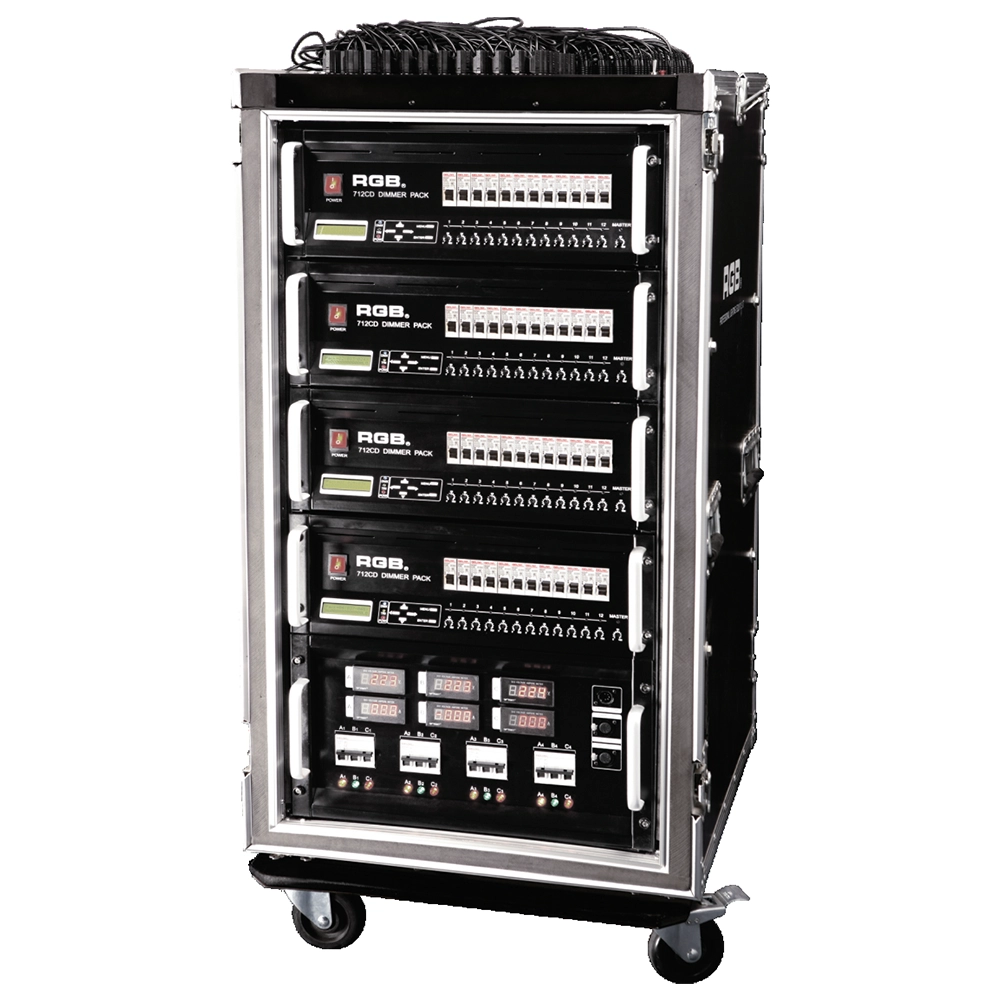
Intelligent Network Touring Dimmer Racks
RGB intelligent network touring dimmer racks can be assembledinto many types of dimmer racks by taking 7 series dimmer
packs as the unit. They are widely used in the entertainment fortheir convenience and practicabillity,
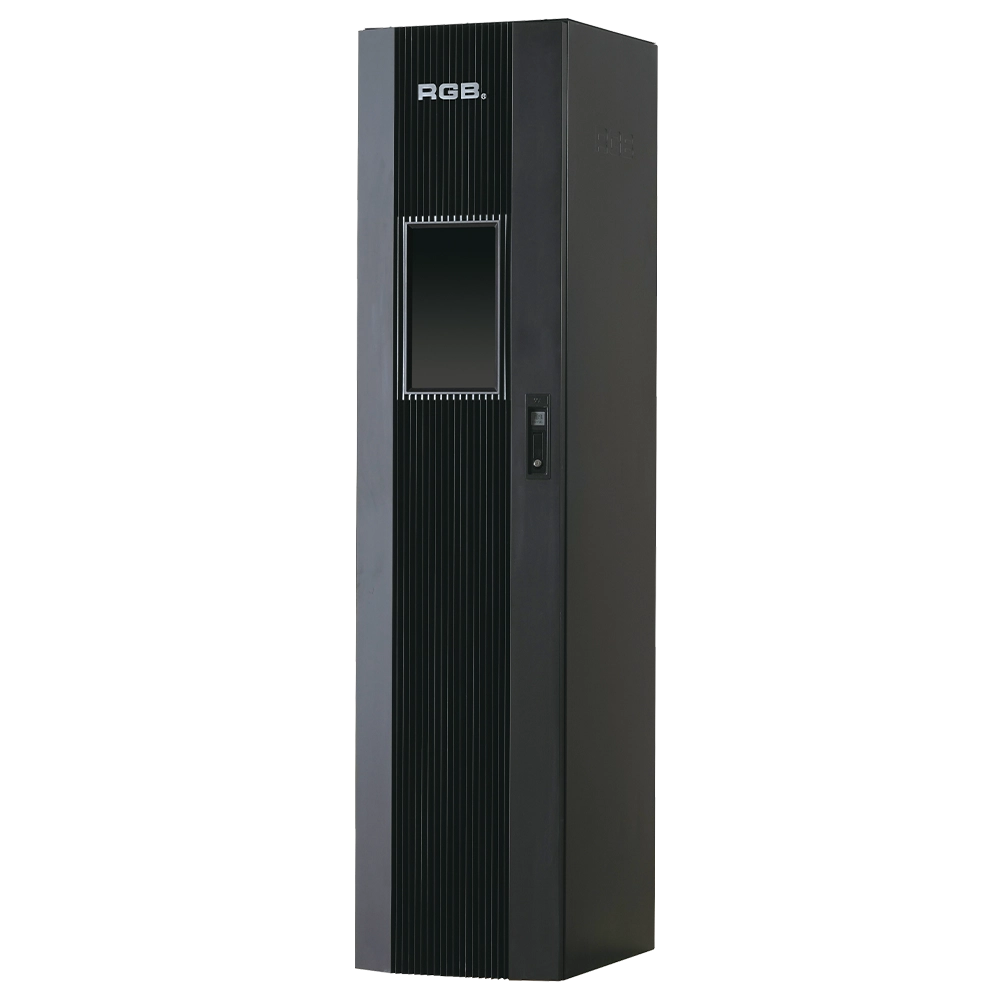
9i intelligent network Dimmer/Relay Racks
9i is an artificial intelligence dimming racks independently developed by RGB, which has completely independent core technology and obtained software Copyrights, all digital electrodeless trigger and multi-backup independent CPU central processor technology. It has a variety of output configurations such as sine wave, thyR, relay and dimming relay mix, and supports visual lighting control system and visually displays the online and offline status of dimming racks. Realize remote monitoring, editing and setting of relevant parameters.
It is suitable for the lighting control needs of different places such as high standard grand theater, TV station, gymnasium and environmental intelligent lighting.
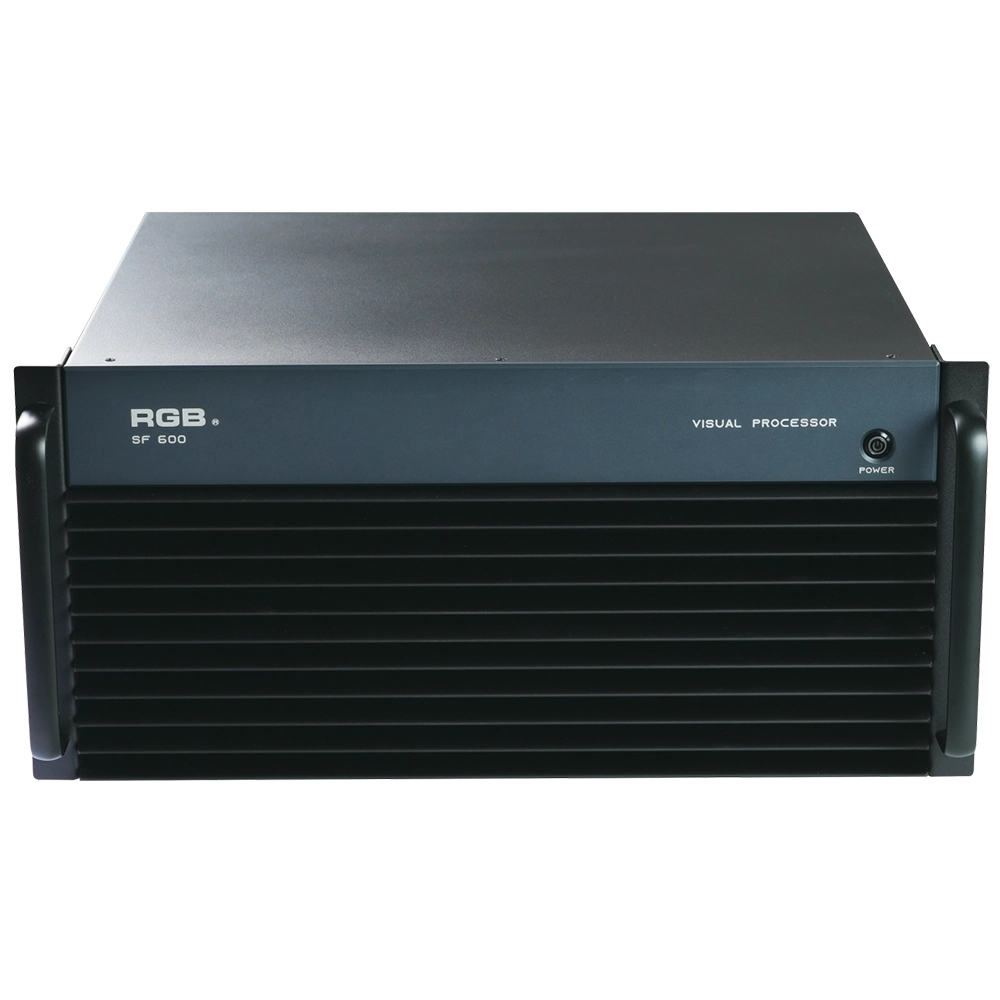
SF600 Visual R-net central processing processor
The SF600 Visual R-net central processing processor by RGB delivers advanced visual systems performance with high-speed processing and seamless integration. Designed for efficiency and reliability, it’s ideal for enhancing your visual system applications in corporate environments.
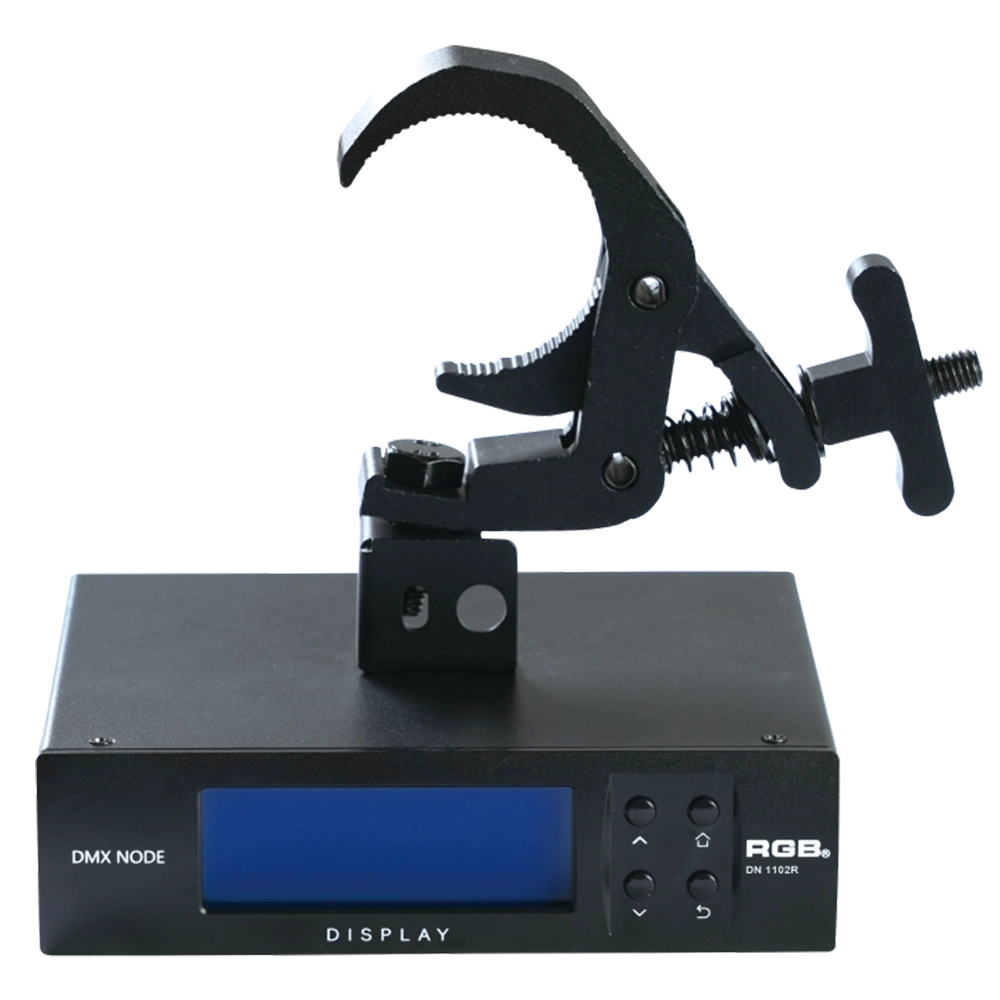
RDM Nodes
The DN series network decoder is a product of the lighting control system independently developed by RGB, featuring completely independent core technology and obtaining software copyrights. It seamlessly connects and decodes the sACN and Art-Net network protocols based on TCP/IP with the DMX-512 and RDM communication protocols. Supports a visual lighting control system, intuitively displaying the online and offline status of the DN series network decoders, and enabling remote monitoring, editing, and setting of corresponding parameters.
It is widely applied in theaters, concert halls, multi-functional halls, cultural and tourism performances, TV stations, gymnasiums, auditoriums, commercial art lighting, and other performance and cultural venues.
Expert Support
Interested in learning more or need expert guidance related to this article? Fill in your details, and our team will provide tailored support.
Intelligent Control. Brilliant Performance.
RGB specializes in stage lighting control systems, delivering intelligent, reliable, and high-performance solutions for theaters and performance spaces worldwide.
Contact
Email:
Tel:
+86 20 3928 0245
+86 20 3928 0247
Address:
No.3, Huashan Road, Shilou Town, Panyu, Guangzhou, China.
Whatsapp: +8615975520131