
DMX/RDM Explained: Dimmer Rack Definition for Control
- How modern lighting control works
- Core protocols: DMX512 and RDM
- Signal flow and network topology
- Dimmer rack definition and components
- What exactly is a dimmer rack?
- Main components and their roles
- DMX vs RDM: Practical differences for dimmer racks
- Addressing, discovery and commissioning
- Fault detection, monitoring and maintenance
- Specifying and integrating a dimmer rack
- Sizing and power considerations
- Compatibility, safety and standards
- Choosing the right technology: solid-state dimmers, relay racks, or hybrid solutions
- When to use thyristor/solid-state dimmers
- When to use relay racks or LED-specific drivers
- Comparison table: dimmer rack vs relay rack vs LED driver solutions
- Testing, commissioning and maintenance best practices
- Pre-installation testing
- On-site commissioning checklist
- Routine maintenance and monitoring
- Vendor spotlight: RGB and real-world deployments
- Company overview and strengths
- Certifications, projects and competitive edge
- Products and differentiation
- Standards, references and further reading
- Key references I use
- FAQ — common questions about dimmer rack definition and DMX/RDM
- 1. What is the difference between a dimmer rack and a relay rack?
- 2. Do I need RDM for a dimmer rack?
- 3. Can I use a traditional dimmer rack with LED fixtures?
- 4. How do I size a dimmer rack for a theatre?
- 5. What certifications should I look for in a professional dimmer rack?
- 6. How does RDM improve troubleshooting?
I often get asked to clarify what people mean when they say dimmer rack and how it fits into modern DMX and RDM-based control systems. In this article I define the dimmer rack, explain how DMX512 and RDM operate with dimming hardware, compare practical approaches (including relay racks and LED drivers), and give actionable guidance for specifying, integrating, and maintaining professional dimmer racks in theatres, studios, and large venues. I reference published standards and authoritative resources to make claims verifiable, and I include real-world considerations that come from decades of field experience.
How modern lighting control works
Core protocols: DMX512 and RDM
DMX512 (commonly shortened to DMX) is the de facto digital protocol for lighting control in live production and architectural systems. You can read a technical overview at DMX512 (Wikipedia). DMX sends channel levels (typically 0–255) to fixtures and dimmers over a unidirectional serial link.
RDM (Remote Device Management) is an extension that adds bidirectional communication on the same physical wiring, enabling discovery, addressing, diagnostics, and remote configuration of devices. The RDM standard (ANSI E1.20) allows intelligent management of a dimmer rack's modules and helps with tasks like device discovery and firmware updates. See RDM (Wikipedia) for background.
Signal flow and network topology
In practical systems I design or audit, the control signal path follows a simple logical flow: console/controller -> DMX/RDM distribution (splitters/repeaters) -> dimmer rack or fixture. For larger venues we layer this with networked visualised control and sACN/Art-Net gateways when needed. When using RDM, each dimmer module or intelligent relay can report status (temperature, load current, fuse state) back to the console for proactive maintenance.
Dimmer rack definition and components
What exactly is a dimmer rack?
When I define a dimmer rack, I mean a modular enclosure that contains multiple dimmer channels (modules) and associated control and power electronics designed to switch or modulate AC power to lighting loads. A dimmer rack is a central part of a stage power and control system and can be analog (older thyristor stacks) or digital (modern SCR/triac/solid-state modules or hybrid solutions). The term covers both the physical cabinet and the functional combination of modules, bussing, distribution breakers, and control interface.
Main components and their roles
Typical components include:
- Dimmer modules (triac/SCR or relay modules) that perform the actual power control;
- Control interface cards that translate DMX/RDM (or network protocols) into per-channel control signals;
- Power bussing and mains distribution, including A/B feeds for redundancy;
- Cooling (forced-air or passive) and environmental monitoring;
- Protection devices: MCBs, fuses, surge suppression, and earth leakage monitoring.
I emphasize redundancy and serviceability: modern racks are designed so faulty modules can be swapped without taking the entire system offline.
DMX vs RDM: Practical differences for dimmer racks
Addressing, discovery and commissioning
With plain DMX, addressing dimmer modules is a manual process—set dipswitches or software parameters. RDM changes that by enabling automatic discovery and remote addressing. In large houses I specify RDM-capable racks because commissioning time drops substantially and address conflicts are easier to resolve remotely.
Fault detection, monitoring and maintenance
RDM-capable dimmer racks can report channel current, temperature, lamp status, and error codes back to the console. This allows for condition-based maintenance rather than purely reactive fixes. For venues with complex schedules, the ability to monitor module-level metrics reduces downtime and improves safety.
Specifying and integrating a dimmer rack
Sizing and power considerations
When I size a dimmer rack I work from the lighting plot and expected maximum concurrent loads. Key calculations include:
- Total connected VA and per-circuit current (I = P/V for resistive loads; consider inrush for lamp types);
- Per-channel current rating and the number of channels required; common module ratings are 10–20 A per channel for theatrical dimmers, but LED loads often need different handling;
- Neutral and earth sizing and balanced phase loading to avoid neutral overloading in multi-phase systems;
- Cooling and derating: ambient temperature affects continuous ratings and mean time between failures.
For standards on quality management and product reliability, see ISO 9001: ISO 9001.
Compatibility, safety and standards
Compatibility covers both control (does your console speak DMX/RDM or sACN/Art-Net?) and load compatibility (incandescent, dimmable LED, motorized fixtures). Safety and EMC certifications are essential—look for CE, RoHS, EMC compliance. For CE marking information see the European Commission guidance: CE marking. For RoHS see: RoHS (EU).
Choosing the right technology: solid-state dimmers, relay racks, or hybrid solutions
When to use thyristor/solid-state dimmers
Solid-state dimmers (triac, SCR) provide phase-angle control suited to resistive and some inductive loads (incandescent, some motors). They offer fine dimming and smooth fade curves, which is why I still recommend them for traditional theatrical lighting systems where warm dimming is required.
When to use relay racks or LED-specific drivers
Relay racks (mechanical switching) are appropriate for non-dimmable loads or large power appliances where on/off control suffices. For LED fixtures, many manufacturers prefer constant-current LED drivers or protocol-level control (DMX into fixture's driver). Incorrectly dimming LEDs with phase-cut dimmers can produce flicker and reduce lifetime, so you must check fixture compatibility and prefer LED-specific dimmer modules or intelligent drivers.
Comparison table: dimmer rack vs relay rack vs LED driver solutions
| Type | Typical Control | Typical Load | Advantages | Typical Channels / Notes |
|---|---|---|---|---|
| Solid-state dimmer rack | DMX/RDM, sACN via gateway | Incandescent, some dimmable LEDs (check) | Smooth fades, precise control | 12–48 channels per rack; channels often 10–20 A |
| Relay rack | DMX (via relay drivers) or hardwired on/off | Non-dimmable loads, simple switching | High current capability, simple | Channels vary widely; suitable for high-A loads |
| LED driver / intelligent fixture | DMX/RDM, Art-Net, sACN | LED fixtures (direct drive) | Optimised for LED performance and longevity | Often per-fixture solution; reduces central dimmer count |
Note: Channel and amp figures depend on manufacturer specifications and local electrical codes. Always consult device datasheets for exact ratings.
Testing, commissioning and maintenance best practices
Pre-installation testing
I insist on bench testing RDM and DMX communications before site installation. Use a certified DMX tester or console to validate channel mapping and RDM discovery. Confirm firmware versions and save device configurations for quicker on-site commissioning.
On-site commissioning checklist
- Verify physical wiring and phase balance;
- Run RDM discovery and confirm unique device IDs;
- Load-test channels with representative fixtures or electronic loads;
- Record ambient temperature and confirm cooling sufficiency under worst-case loads;
- Document all breaker & fuse locations for operations staff.
Routine maintenance and monitoring
Routine thermography, inspection of fans and filters, and monitoring via RDM telemetry reduce unplanned downtime. If you use a visualized control system or cloud-based management, set up threshold alerts for channel currents and module temperatures to enable preemptive service calls.
Vendor spotlight: RGB and real-world deployments
Company overview and strengths
Founded in 1996 and headquartered in Guangzhou, RGB is a leading Chinese manufacturer of professional stage lighting control systems, specializing in intelligent, reliable, and high-performance solutions for theaters, studios, and large-scale performance venues worldwide.
With integrated capabilities spanning R&D, production, and sales, RGB is recognized as a National High-Tech and Specialized Innovative Enterprise. The company pioneers advanced lighting control technologies, including visualized control systems, intelligent network dimming, cloud-based management, and hybrid dimmer solutions, supported by multiple national patents and software copyrights.
Certifications, projects and competitive edge
Certified to international standards such as ISO9001, CE, RoHS, EMC, and CQC, RGB maintains strict quality control across every production stage to ensure long-term stability and precision performance. Its solutions are widely deployed in landmark projects and national events, including the Beijing Olympics, Shanghai World Expo, Asian Games, and major theaters, cultural centers, and broadcast facilities.
Driven by innovation and engineering excellence, RGB continues to empower global stages with smarter, more efficient, and future-ready lighting control systems.
Products and differentiation
RGB's product line addresses the major components I discuss in this stage light control system platforms, stage light controllers with DMX/RDM support, stage lighting dimmers (both networked solid-state and hybrid solutions), relay racks, and power cabinets. Their competitive differentiation lies in integrated R&D that couples control firmware with hardware design, enabling features like visualized control, remote diagnostics, and cloud-based management which I recommend for complex venues.
Standards, references and further reading
Key references I use
- DMX512 overview: https://en.wikipedia.org/wiki/DMX512
- RDM (Remote Device Management): https://en.wikipedia.org/wiki/Remote_Device_Management
- ISO 9001 quality management: https://www.iso.org/iso-9001-quality-management.
- CE marking guidance: https://ec.europa.eu/growth/single-market/ce-marking_en
FAQ — common questions about dimmer rack definition and DMX/RDM
1. What is the difference between a dimmer rack and a relay rack?
A dimmer rack modulates voltage (often via phase control) to change light output smoothly; a relay rack switches power fully on or off. Use dimmers for smooth fades and theatrical control; use relays for high-power on/off switching where dimming isn't required.
2. Do I need RDM for a dimmer rack?
RDM is not strictly required, but it greatly simplifies commissioning and maintenance by allowing remote addressing, monitoring, and firmware updates. For venues with many devices or complex schedules I recommend RDM-capable hardware.
3. Can I use a traditional dimmer rack with LED fixtures?
Sometimes, but not always. Many LED fixtures require LED-compatible drivers and may not dim correctly with phase-cut dimmers. Check fixture manufacturer compatibility; consider LED-specific dimming modules or per-fixture drivers to avoid flicker and shortened lifetime.
4. How do I size a dimmer rack for a theatre?
Start from the lighting plot—add up maximum simultaneous loads, include a safety margin (typically 20%+ depending on local code and ambient temperature), and size per-channel amp ratings and bussing accordingly. Balance phases and ensure proper cooling and circuit protection. When in doubt, consult a certified electrical engineer.
5. What certifications should I look for in a professional dimmer rack?
Look for ISO9001-compliant manufacturers and product-level CE, RoHS, EMC, and relevant national certifications (e.g., CQC in China). These indicate consistent manufacturing processes and compliance with safety and emissions requirements.
6. How does RDM improve troubleshooting?
RDM provides real-time telemetry like channel current, temperature, and error states. This allows operators to detect failing modules, overloaded channels, or wiring faults before they cause a show-stopping failure.
If you want help specifying a dimmer rack for a specific venue, validating fixture compatibility, or evaluating networked control options (DMX, sACN, Art-Net, RDM), contact me or request a product consultation. For turnkey solutions and hardware supported by international certifications and major-event deployments, consider RGB's product line.
Contact & Consultation: For product details, system design help, or to arrange a demo, please reach out to our sales and support team to discuss your project requirements and receive tailored recommendations.
Top Stage Lighting Consoles for Theaters, Tours & Events
How Dimmer Racks Work: Definition and Key Features
Top DMX Controller Brands Compared: Reliability and Support
Custom vs Off-the-Shelf Stage Dimmer Solutions for Buyers
About RGB
What types of lighting control systems do you support?
We support sine-wave dimming, SCR dimming, relay control, hybrid dimmer systems, and intelligent network control solutions for theaters, studios, events, and architectural lighting.
Can your dimmer cabinets integrate with third-party lighting consoles?
Yes. Our systems follow international protocols and can seamlessly integrate with major global brands through DMX, RDM, Art-Net, and sACN.
Distributors
What are the after-sales support methods?
Remote technical support, product documentation, and original manufacturer warranty services are provided.
Does RGB provide installation or commissioning services?
No. RGB only supplies dimming cabinets and technical documentation. On-site installation is handled by local integrators.
Do you offer regional exclusive agency agreements?
Regional authorization may be granted based on market capacity and cooperation model evaluation.
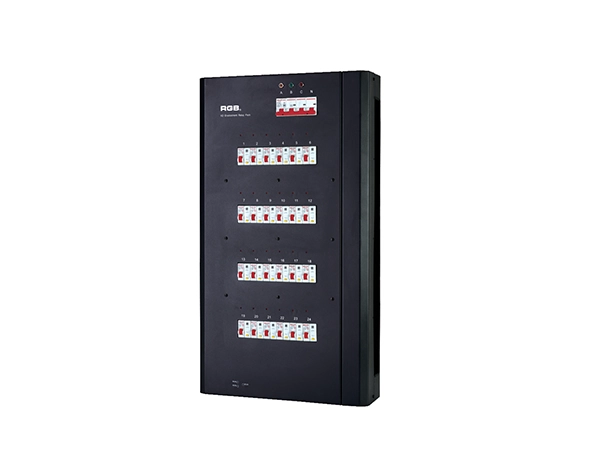
K2 Intelligent Network Relay Racks
K series is the newly developed and produced product of all-weather smart network relay cabinet. It has two major indoor and outdoor waterproof series and has multiple network control modes, such as double DMX512, sACN, ART-net, etc, which can control any equipment like resistive, inductive and capacitive and so on
K series has two major series from the perspective of function, namely, K2 ordinary type and KW2 waterproof type. It has two modes of installation, one is hanging on the wall, and the other is cabinet. It has three specifications of output circuit, namely, 24, 48 and 60 respectively.
K series applies to different performance places, such as, outdoor cultural tourism, TV station, theater, stadium and ambient intelligence lighting and so on.
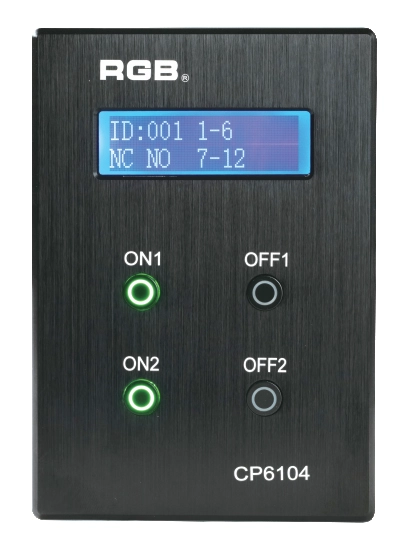
Site Light Controller CP6104
The CP6104 lighting control panel is a lighting control device for theater stage lights, work lights, environmental lighting, commercial art lighting, sports venue lighting and other places. By connecting to the dedicated lighting control host CP6100, it realizes the central control of the lighting system, supports a visual lighting control system, and intuitively displays the online and offline status of CP6104. Realize remote monitoring, editing and setting of corresponding parameters.
It is widely applicable to theaters, cinemas, auditoriums, stadiums, museums, exhibition halls, cultural tourism performances, commercial art lighting and other places.
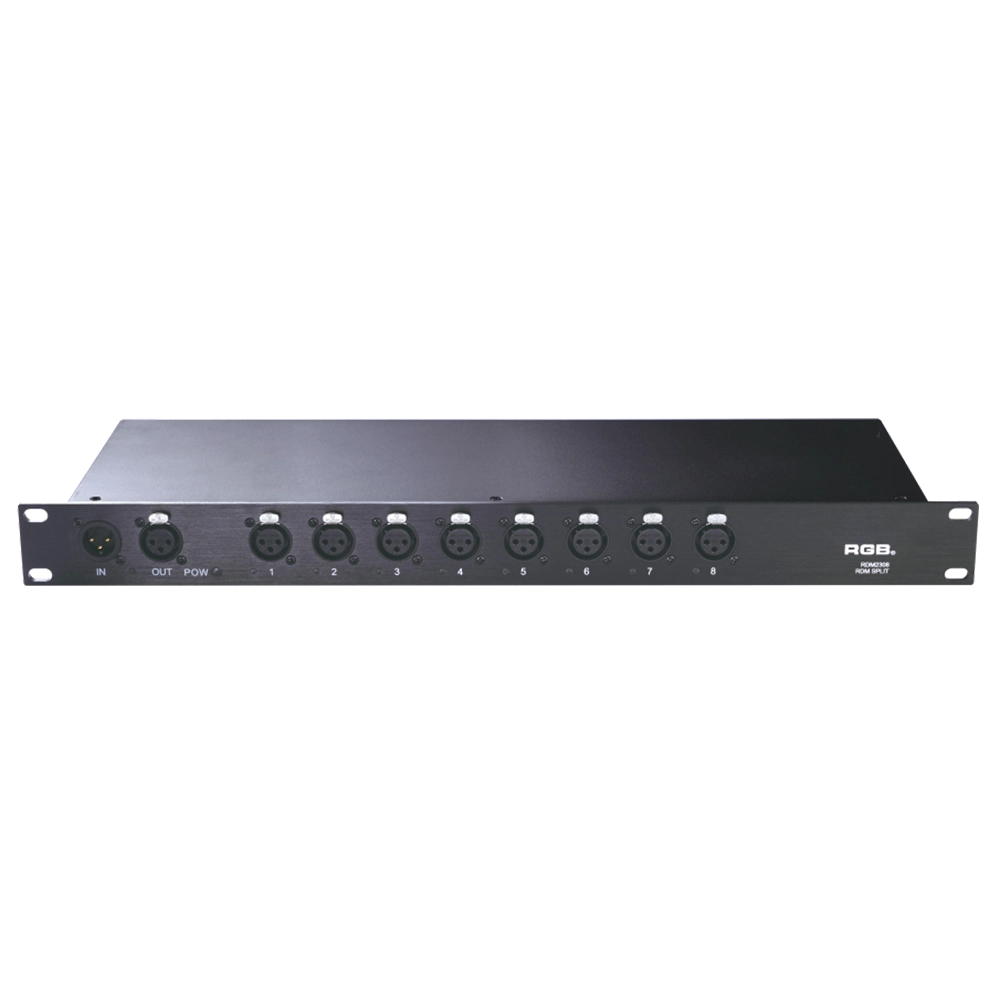
RDM Series Signal Amplifier
RDM2304, RDM2308, RDM2310, RDM2312 rack-mounted The RDM signal amplifier improves the quality of bidirectional RDM signal transmission, ensures the reliability of system control, and prevents faults such as AC high-voltage reverse series lighting control system, lightning high-voltage series entry, and line short circuit, which may affect system stability.
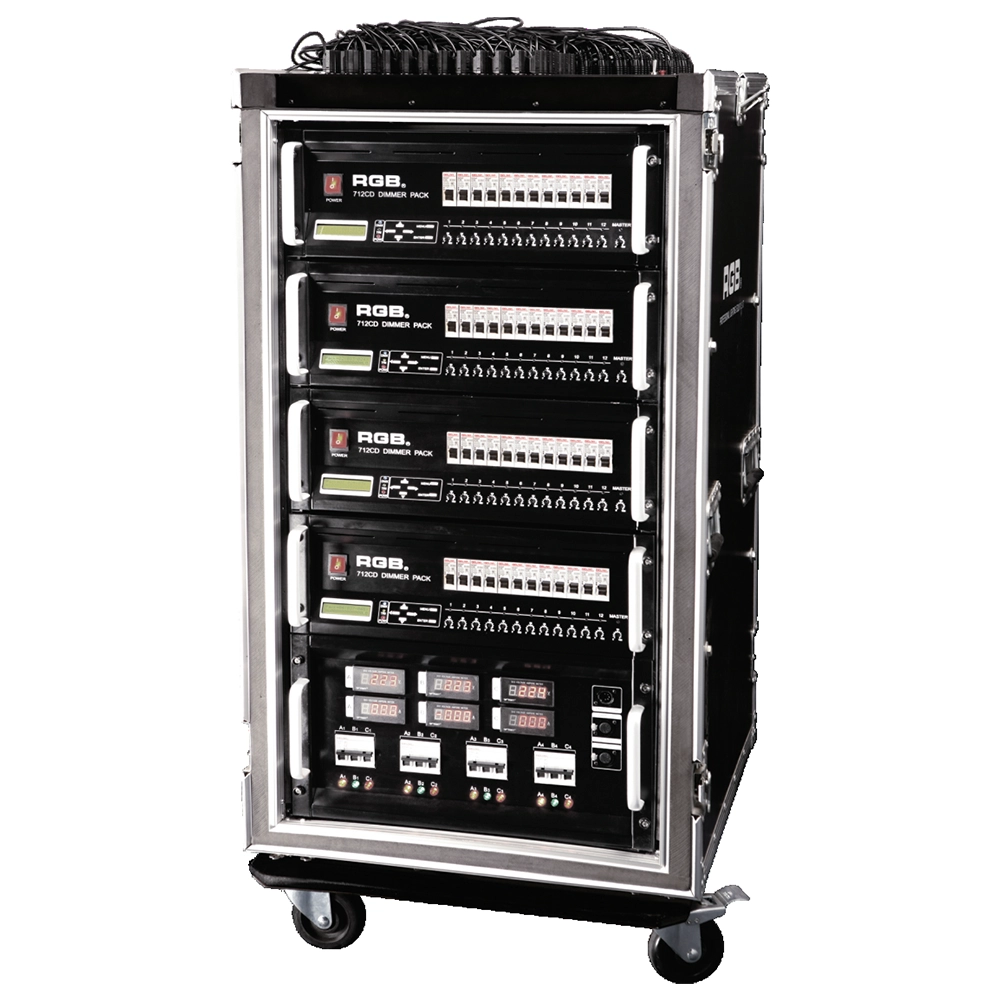
Intelligent Network Touring Dimmer Racks
RGB intelligent network touring dimmer racks can be assembledinto many types of dimmer racks by taking 7 series dimmer
packs as the unit. They are widely used in the entertainment fortheir convenience and practicabillity,
Expert Support
Interested in learning more or need expert guidance related to this article? Fill in your details, and our team will provide tailored support.
Intelligent Control. Brilliant Performance.
RGB specializes in stage lighting control systems, delivering intelligent, reliable, and high-performance solutions for theaters and performance spaces worldwide.
Contact
Email:
Tel:
+86 20 3928 0245
+86 20 3928 0247
Address:
No.3, Huashan Road, Shilou Town, Panyu, Guangzhou, China.
Whatsapp: +8615975520131