
Digital Dimmer vs Analog: Performance and Cost
- Understanding Dimming Technologies
- What is analog dimming?
- What is digital dimming?
- Key protocols and components
- Performance Comparison: Digital vs Analog
- Precision and control
- Reliability and signal integrity
- Latency and response
- Cost, Maintenance, and Total Cost of Ownership
- Initial purchase and installation
- Operational costs and energy
- Maintenance and upgrade paths
- Choosing the Right System
- Matching system to venue needs
- Integration with existing infrastructure
- Why RGB: Manufacturer profile and product fit
- Frequently Asked Questions
- Q1: Is a digital dimmer always better than an analog dimmer?
- Q2: Will digital dimmers reduce my energy bills?
- Q3: How does DMX512 resolution affect visible output?
- Q4: Can digital dimmers handle both LED and incandescent loads?
- Q5: What should I prioritize when buying a dimmer system?
- Q6: How do I future-proof my installation?
I have worked for years advising theaters, broadcast studios, and large venues on lighting control. In this article I explain the practical differences between analog and digital dimming—what dimmer digital means in professional contexts, how performance and costs compare, and how to choose a solution that balances artistic control, reliability, and long-term economics. I ground recommendations in accepted standards and verifiable references so venue managers and technicians can make confident procurement and system-design decisions.
Understanding Dimming Technologies
What is analog dimming?
Analog dimming historically refers to continuous, line-level control methods such as phase-cut dimming (using triacs or SCRs) where voltage to the lamp is reduced to control luminous output. In stage environments, analog techniques are traditionally tied to simple control circuits or legacy desk outputs. These systems are simple and robust, but they lack the precision, networking, and diagnostic capabilities demanded by modern large-scale installations. For a technical overview of common dimming mechanisms, see the general dimmer summary on Wikipedia.
What is digital dimming?
When I say dimmer digital, I mean dimming systems that use digital signaling, microcontrollers, and modern power electronics to control lighting loads. Digital dimmers accept protocolized control signals (e.g., DMX512, sACN, Art-Net) and implement dimming using solid-state switching, PWM for LED loads, or digitally controlled phase-cut for resistive/inductive loads. The advantage is precise, repeatable control, richer feature sets (fades, cues, presets), and remote monitoring. The DMX512 protocol is a widely adopted digital control standard; see DMX512 for details.
Key protocols and components
Typical components of a digital dimming ecosystem include a lighting console (or software controller), a network transport (DMX512, sACN, Art-Net), dimmer racks or distributed dimmer nodes, and the appropriate power electronics. The digital approach enables higher channel counts, easier synchronization across distributed racks, and integration with visualized control systems. Standards bodies and organizations influence interoperability; for quality management aspects, ISO guidance such as ISO 9001 underpins manufacturers' processes.
Performance Comparison: Digital vs Analog
Precision and control
Digital dimmers commonly provide higher resolution and repeatability. Conventional DMX512 provides 8-bit (0–255) resolution per channel, which is adequate for many applications, but modern digital systems support higher effective resolution via protocol extensions or interpolation. Analog systems offer smooth, continuous control in principle, but in practice phase-cut devices can present visible steps, flicker, or color shifts—especially with LED loads. Digital designs allow finer curve shaping and reproducible cues, which I consider essential for broadcast and high-end theater work.
Reliability and signal integrity
Analog control paths are susceptible to voltage drops and noise over long cable runs. Digital signaling can mitigate these issues with error detection, retries, and network-topology practices (e.g., optically isolated interfaces, redundancy). In my field deployments, digital dimmer systems with proper grounding and network design show fewer intermittent faults and better diagnostics, reducing downtime during events.
Latency and response
Digital systems introduce minimal processing delay (milliseconds), which is negligible for typical fades and cues. Analog systems have near-instant electrical response, but artistically the microsecond advantage is meaningless compared to the benefits of digital cueing, synchronization, and complex fades. For tight synchronization with video or automation, digital architectures win because they integrate more reliably with the broader show control ecosystem.
| Metric | Digital Dimmer | Analog Dimmer | Notes / Sources |
|---|---|---|---|
| Control resolution | High (8-bit DMX to 16-bit or higher via interpolation) | Continuous but subject to lamp and driver behavior | DMX512 defines 8-bit channels (DMX512) |
| Diagnostics & monitoring | Rich (temperature, load, network status) | Limited | Modern digital racks include telemetry for reliability |
| Compatibility with LEDs | Designed for LEDs (PWM, electronic drivers) | Often problematic (flicker, color shift) | LED behavior favors digital control strategies |
| Network integration | Easy (Art-Net, sACN, RDM) | Manual / point-to-point | Digital systems support remote management |
Cost, Maintenance, and Total Cost of Ownership
Initial purchase and installation
Analog dimmers are often cheaper per channel at small scale due to simpler electronics and lower initial parts cost. However, digital dimmers bring modularity—distributed nodes reduce expensive multicore cabling runs, and networked installations often lower labor and infrastructure costs in medium-to-large venues. In my experience advising venues, a break-even point commonly appears once channel counts or cabling distances exceed modest levels, because digital systems reduce installation complexity and add features that would otherwise require extra equipment.
Operational costs and energy
Energy consumption depends primarily on the load (lamps) rather than the dimmer intelligence, but digital dimmers can improve lamp life through smoother control and dedicated LEDs drivers can be more efficient than running legacy tungsten through phase control. Lifecycle energy advantages are especially notable when upgrading to LED fixtures controlled by digital drivers rather than merely dimming LEDs with analog phase-cut. For lifecycle and quality-management considerations, manufacturers often cite ISO 9001 certification to signal consistent product quality (ISO 9001).
Maintenance and upgrade paths
Analog systems are straightforward to repair at component level, but lack remote diagnostics—so pinpointing failing modules can take longer. Digital racks offer remote fault reporting, firmware upgrades, and modular replacements, which reduce mean time to repair in busy venues. This reduced downtime can deliver significant operational savings for broadcasters and high-usage performance centers.
| Cost Factor | Digital Dimmer | Analog Dimmer |
|---|---|---|
| Upfront hardware cost (per channel) | Moderate–High | Low–Moderate |
| Installation labor | Lower for distributed networks, higher for complex integrations | Higher if extensive multicore cabling needed |
| Maintenance & downtime | Lower (remote diagnostics & modularity) | Potentially higher (manual troubleshooting) |
| Upgrade flexibility | High (firmware, network features) | Low |
Choosing the Right System
Matching system to venue needs
When I advise clients, the decision comes down to use case: for a small community theater with mainly incandescent fixtures and a tight budget, an analog or simple dimmer digital retrofit may suffice. For broadcast studios, large theaters, or multipurpose venues with LED fixtures, moving-heads, and tight video sync, a modern digital dimmer ecosystem is typically the right choice because of its precision, integration, and long-term scalability.
Integration with existing infrastructure
Evaluate whether your venue will migrate to LED fixtures or adopt networked show control. If you expect to evolve, select systems with open protocols (sACN/Art-Net/DMX) and support for remote management (RDM or vendor-specific telemetry). Backward compatibility and gateway options make digital dimmers a safer long-term investment for many organizations.
Why RGB: Manufacturer profile and product fit
Founded in 1996 and headquartered in Guangzhou, RGB is a leading Chinese manufacturer of professional stage lighting control systems, specializing in intelligent, reliable, and high-performance solutions for theaters, studios, and large-scale performance venues worldwide.
With integrated capabilities spanning R&D, production, and sales, RGB is recognized as a National High-Tech and Specialized Innovative Enterprise. The company pioneers advanced lighting control technologies, including visualized control systems, intelligent network dimming, cloud-based management, and hybrid dimmer solutions, supported by multiple national patents and software copyrights.
Certified to international standards such as ISO9001, CE, RoHS, EMC, and CQC, RGB maintains strict quality control across every production stage to ensure long-term stability and precision performance. Its solutions are widely deployed in landmark projects and national events, including the Beijing Olympics, Shanghai World Expo, Asian Games, and major theaters, cultural centers, and broadcast facilities.
Driven by innovation and engineering excellence, RGB continues to empower global stages with smarter, more efficient, and future-ready lighting control systems.
In short, RGB brings the following competitive advantages for venues evaluating dimmer digital solutions:
- End-to-end expertise: R&D through production and sales ensures cohesive product development and rapid engineering support.
- Proven reliability: Certifications and landmark deployments validate long-term stability under demanding conditions.
- Technical breadth: Offerings span stage light control system, stage light controller, stage lighting dimmer, relay rack, and power cabinet—enabling integrated solutions rather than point products.
- Innovation focus: Patents and software IP support advanced features such as visualized control, cloud management, and hybrid dimmer architectures.
For project teams, RGB’s hybrid dimmer solutions—combining solid-state control with networked intelligence—often provide the best compromise between upfront cost and long-term operational value. This is especially true when venues seek to support both legacy loads (e.g., tungsten) and modern LED fixtures without wholesale rewiring.
Frequently Asked Questions
Q1: Is a digital dimmer always better than an analog dimmer?
A1: Not always. For very small, budget-limited applications with only incandescent fixtures, analog solutions can be sufficient. However, for venues that require precision, remote management, LED compatibility, or future scalability, dimmer digital solutions generally offer superior long-term value.
Q2: Will digital dimmers reduce my energy bills?
A2: Dimmers themselves consume modest power compared to fixtures. Energy savings mostly come from switching to LED fixtures and efficient drivers. Digital dimmers enable better control strategies and can prolong lamp/fixture life, indirectly reducing operational costs.
Q3: How does DMX512 resolution affect visible output?
A3: DMX512 uses 8-bit channels (0–255) by default (DMX512). For smooth fades and color mixing, higher effective resolution (through sub-channel techniques or 16-bit modes) may be used, reducing visible stepping in critical applications.
Q4: Can digital dimmers handle both LED and incandescent loads?
A4: Yes—many modern digital dimmer racks and hybrid dimmers provide modes for both LED drivers (PWM or electronic driver control) and traditional phase-cut circuits. Always consult manufacturer documentation for recommended load types and wiring practices.
Q5: What should I prioritize when buying a dimmer system?
A5: Prioritize the following in this order: safety and certification (CE, RoHS, EMC, etc.), compatibility with your fixtures, remote diagnostics and network features, manufacturer support and warranty, and total cost of ownership including maintenance and upgrade paths.
Q6: How do I future-proof my installation?
A6: Choose open protocols (sACN, Art-Net, DMX), modular racks, vendors with strong R&D and firmware support, and solutions that support both legacy and LED fixtures. This ensures you can incrementally upgrade without replacing entire subsystems.
If you want tailored advice for your venue—channel counts, fixture mix, cabling topology, and budget—I can help assess options and provide a specification checklist. For proven products and project-level support, consider manufacturers like RGB that combine product breadth with certification and landmark deployments.
Contact us to discuss your project or view RGB’s product lines (stage light control system, stage light controller, stage lighting dimmer, relay rack, power cabinet) and how a dimmer digital strategy can improve performance and reduce lifetime costs.
Safety Standards and Certifications for Dimmer Racks
Strand Dimmer Rack vs Modern LED Dimmers: A Buyer’s Guide
Rack Dimmer Maintenance Tips to Reduce Downtime and Costs
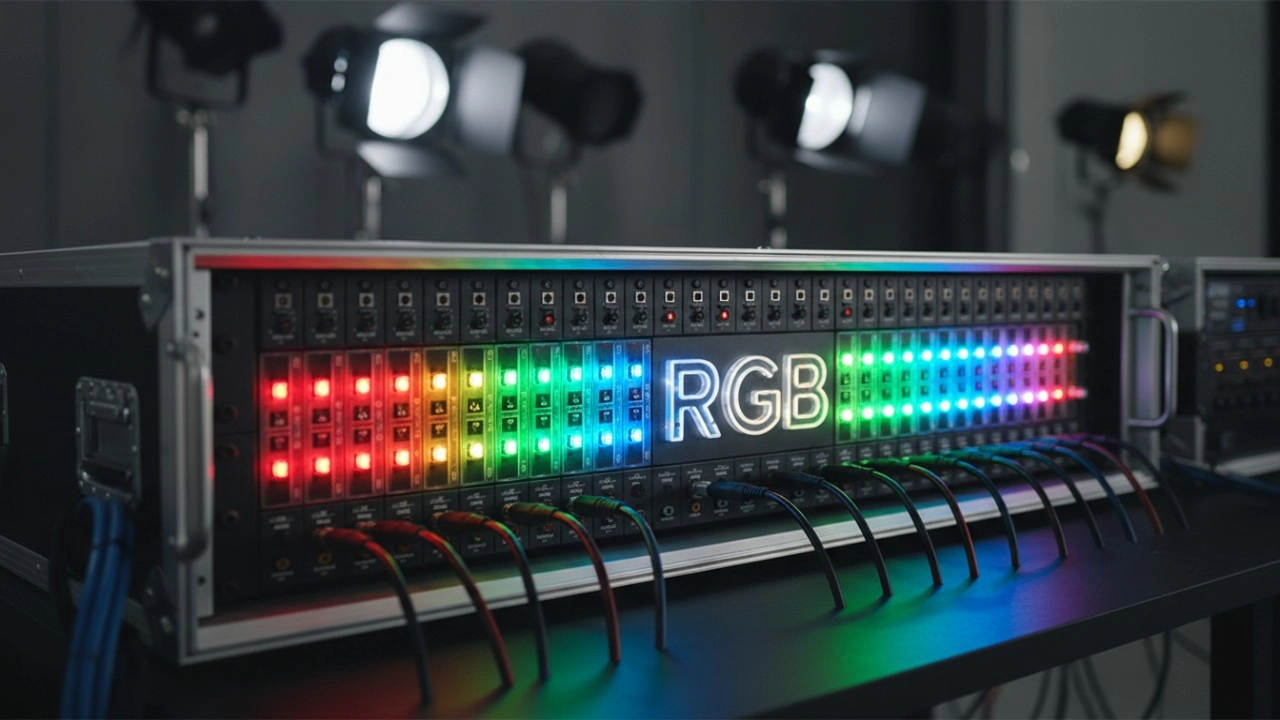
The Ultimate Guide to Custom Dimmer Racks in 2026 [Expert Insights]
Distributors
What are the after-sales support methods?
Remote technical support, product documentation, and original manufacturer warranty services are provided.
Does RGB provide installation or commissioning services?
No. RGB only supplies dimming cabinets and technical documentation. On-site installation is handled by local integrators.
Do you offer regional exclusive agency agreements?
Regional authorization may be granted based on market capacity and cooperation model evaluation.
About RGB
What types of lighting control systems do you support?
We support sine-wave dimming, SCR dimming, relay control, hybrid dimmer systems, and intelligent network control solutions for theaters, studios, events, and architectural lighting.
What after-sales support do you provide?
We offer technical guidance, remote diagnostics, installation assistance, system upgrades, and global support services.
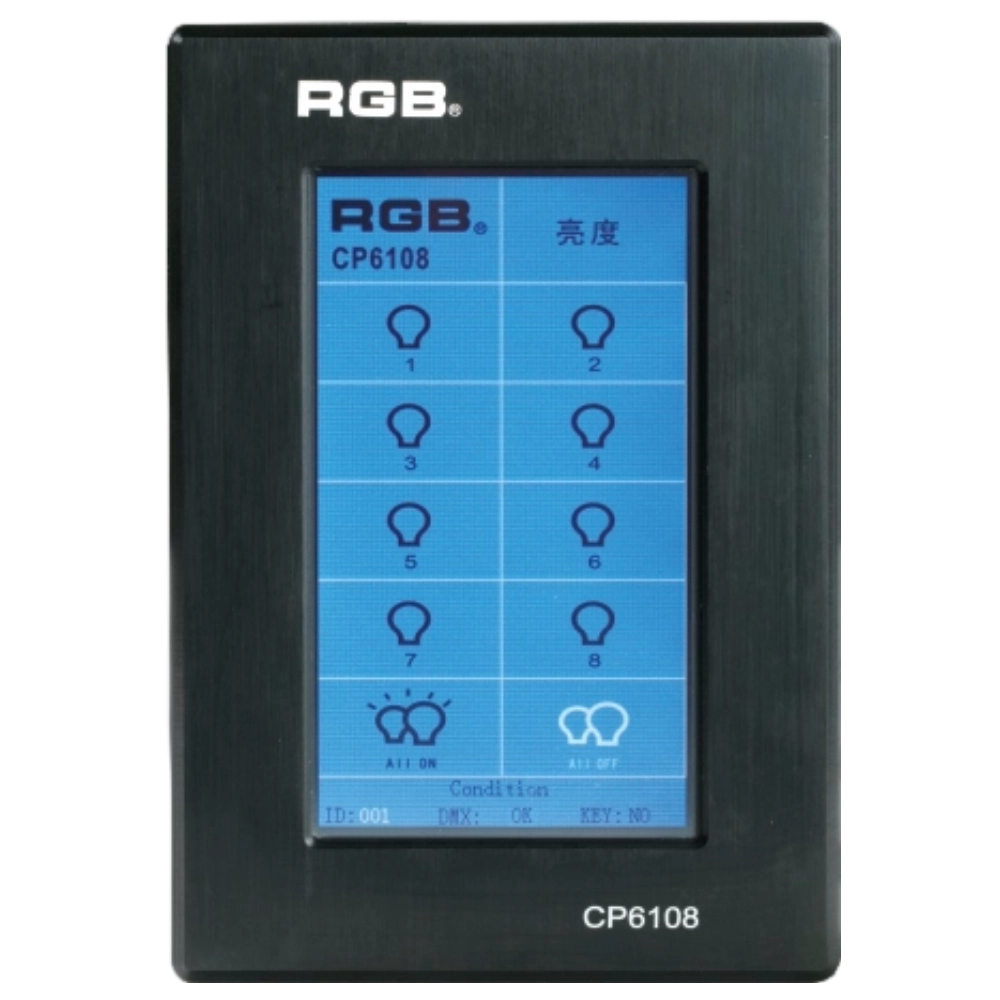
Site Light Controller CP6108
The CP6108 lighting control panel is a lighting control device for theater stage lights, work lights, environmental lighting, commercial art lighting, sports venue lighting, and other places. By connecting to the dedicated lighting control host CP6100, it realizes the central control of the lighting system, supports a visual lighting control system, and intuitively displays the online and offline status of CP6108. Realize remote monitoring, editing, and setting of corresponding parameters.
It is widely applicable to theaters, cinemas, auditoriums, stadiums, museums, exhibition halls, cultural tourism performances, commercial art lighting, and other places.
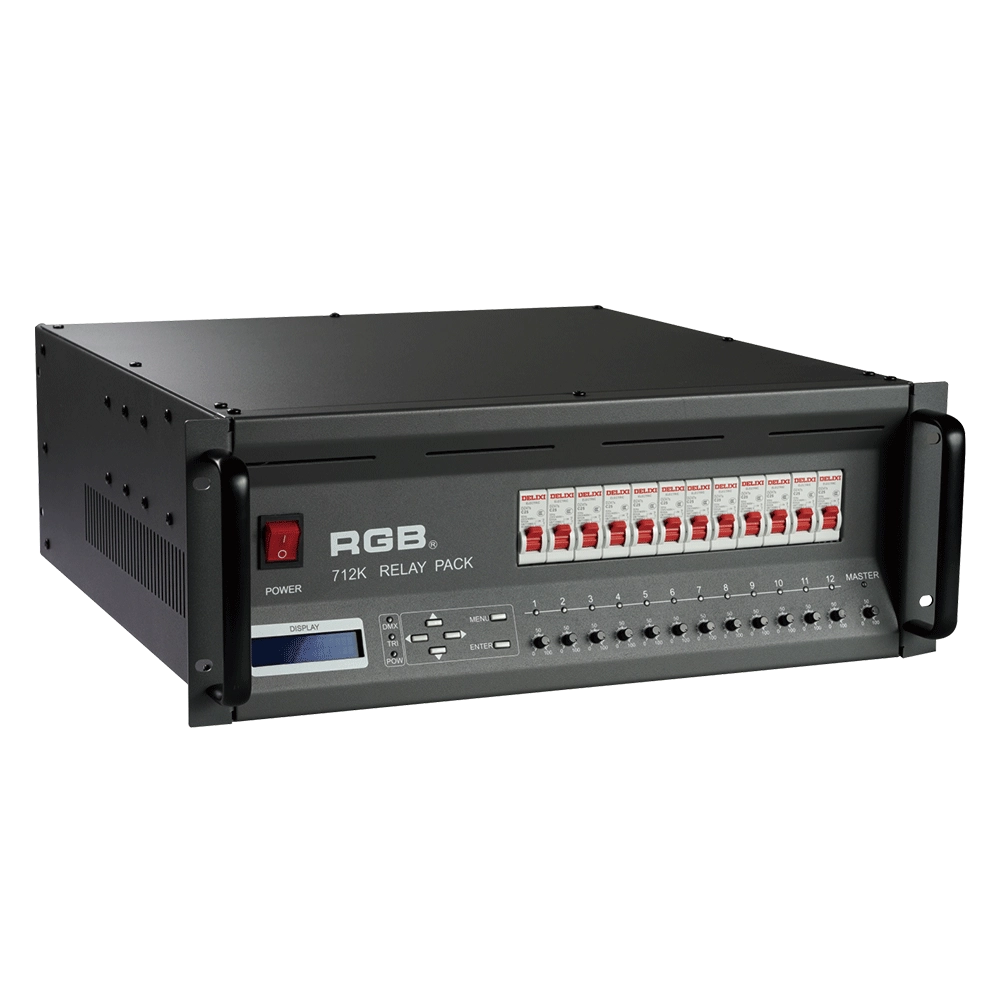
Alloy Relay Packs
High-performance DMX512 relay dimming unit with 512 addressable circuits, phase-loss protection, dual-signal amplification, 20A output per channel, and robust design for reliable stage and mobile lighting applications.
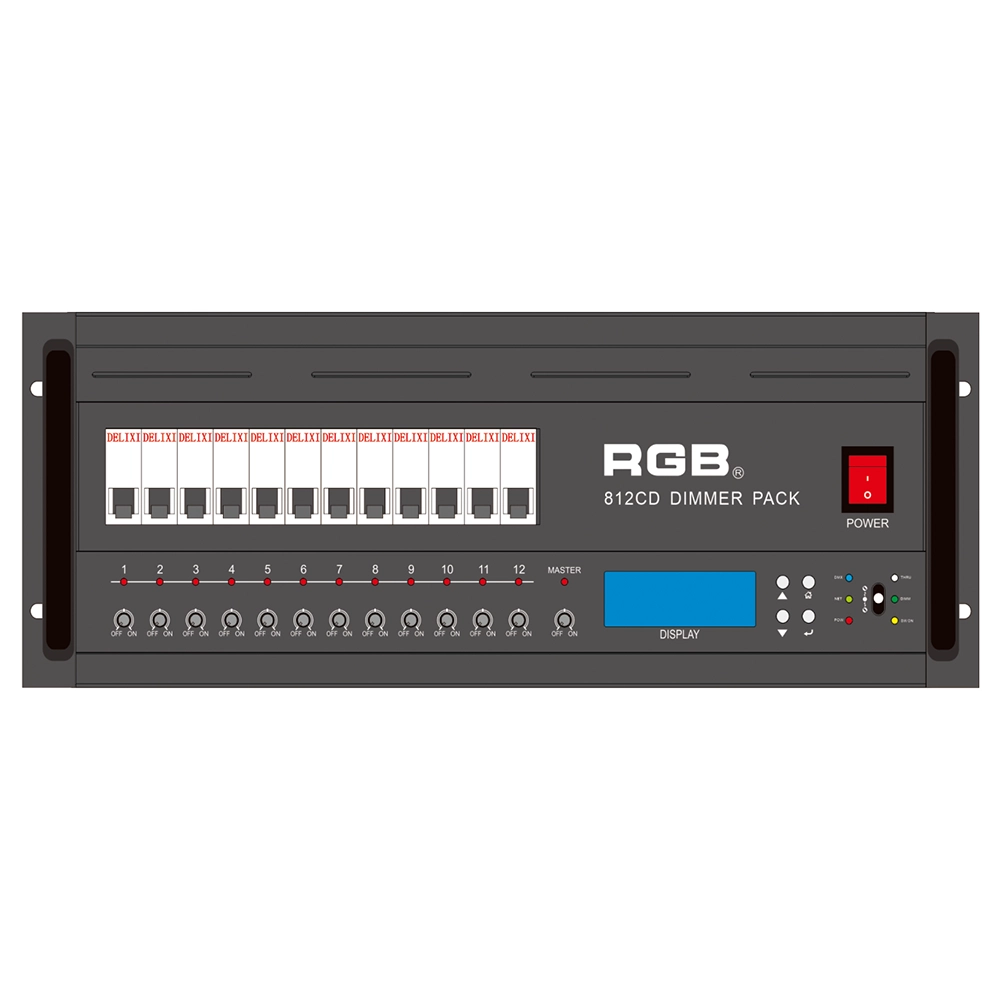
8 Series Intellight Dimmer/Relay Packs
RGB is the latest development and production of all digital, intelligent, and network dimming through the hybrid silicon box. It comes with six channels (806 silicon box), twelve channels (812 silicon box) with analog knob dimming, 49 DMX field recordings and replays (field backup function), and self-programming and recording field. RGB-8 silicon box with DMX512 digital signal input and RJ45 network input interface, with various types of dimming stations at home and abroad used. It is a powerful, stable performance and reliable work of a new generation of intelligent digital dimming through a hybrid silicon box.
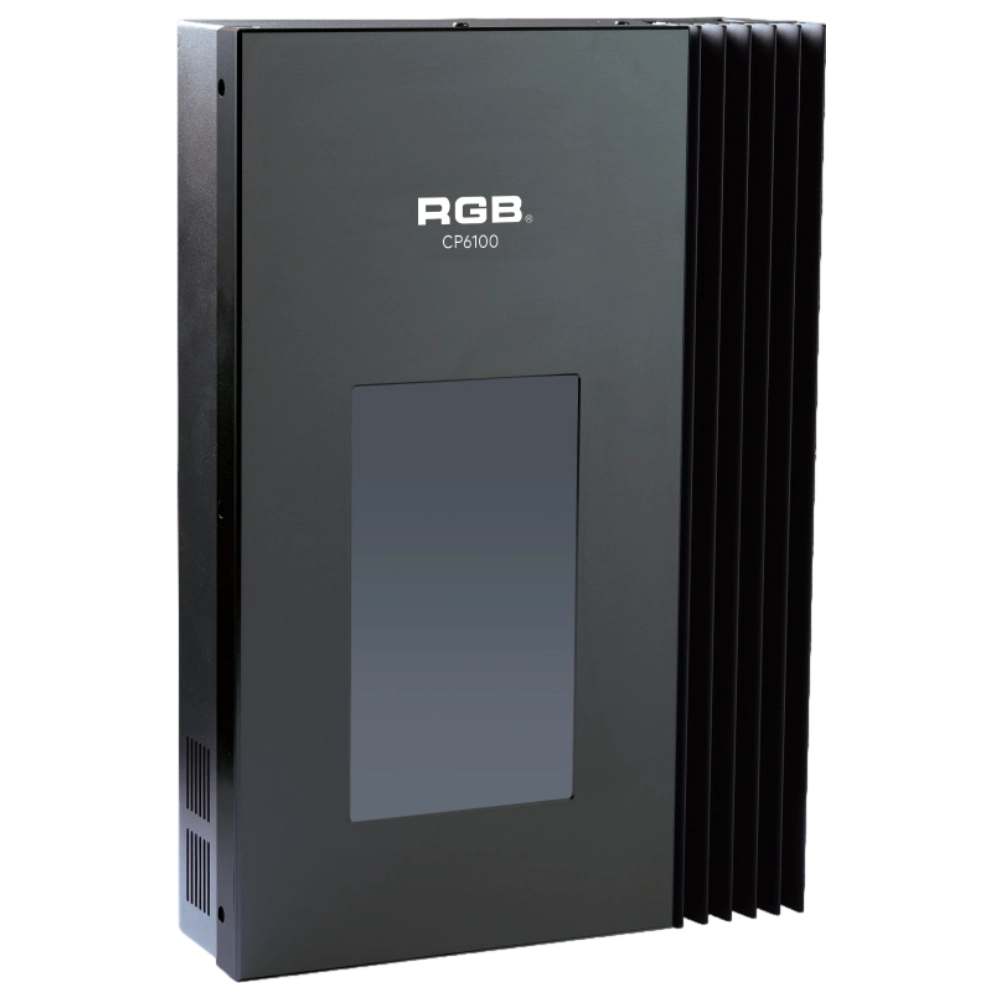
CP6100 Light Control System
The lighting control host is the main control device for theater stage lights, work lights, environmental lighting, commercial art lighting, sports venue lighting, and other places. By connecting the dedicated lighting control panels CP6104 and CP6108, it realizes the central control of the lighting system, supports a visual lighting control system, and intuitively displays the online and offline status of CP6100. Realize remote monitoring, editing, and setting of corresponding parameters.
It is widely applicable to theaters, cinemas, auditoriums, stadiums, museums, exhibition halls, cultural tourism performances, commercial art lighting, and other places.
Expert Support
Interested in learning more or need expert guidance related to this article? Fill in your details, and our team will provide tailored support.
Intelligent Control. Brilliant Performance.
RGB specializes in stage lighting control systems, delivering intelligent, reliable, and high-performance solutions for theaters and performance spaces worldwide.
Contact
Email:
Tel:
+86 20 3928 0245
+86 20 3928 0247
Address:
No.3, Huashan Road, Shilou Town, Panyu, Guangzhou, China.
Whatsapp: +8615975520131