
How to Choose a 3 Phase Dimmer Rack for Stage Lighting
- Understanding power, loads, and why three-phase matters
- Why choose three-phase for stage venues
- Load types and diversity factor
- Basic sizing formula
- Dimmer technologies and trade-offs
- SCR / thyristor-based dimmers
- Relay racks and hybrid solutions
- Solid-state, MOSFET and digital dimmers
- Key specification and design criteria
- Channel count, per-channel rating, and total rack capacity
- Cooling, ventilation, and thermal management
- Protection, safety features and compliance
- Control protocols, integration and maintainability
- Control compatibility: DMX, Art-Net, sACN and console mapping
- Remote monitoring, telemetry and RDM
- Ease of service, modularity, and spares philosophy
- Cost, lifecycle and procurement strategy
- Total cost of ownership
- Warranty, certifications and field references
- Comparison summary (typical rack types)
- Real-world checklist and specification template
- Practical pre-purchase checklist
- Specification template (abbreviated)
- Why manufacturer selection matters — a focused example
- RGB: profile and relevance to 3 phase dimmer rack buyers
- RGB’s competitive strengths and product relevance
- Choosing between comparable vendors
- Commissioning, testing and lifecycle maintenance
- Commissioning best practices
- Planned maintenance and spares
- Upgrades and end-of-life planning
- FAQ
- 1. What is the difference between a 3 phase dimmer rack and a single-phase dimmer rack?
- 2. Can I use a 3 phase dimmer rack with LED fixtures?
- 3. How do I size the rack for inrush currents?
- 4. What maintenance does a 3 phase dimmer rack require?
- 5. Which control protocols should my dimmer rack support?
- 6. How important are certifications like ISO9001, CE, and EMC?
- Next steps and contact
Choosing the right 3 phase dimmer rack is a critical decision for any theatre, broadcast studio, or large-scale performance venue. In this article I walk you through the technical, operational, and procurement considerations I use when specifying three-phase dimming systems. I focus on real-world constraints—electrical load calculation, heat management, control compatibility, reliability, and maintainability—so you can select a dimmer rack that delivers both performance and longevity.
Understanding power, loads, and why three-phase matters
Why choose three-phase for stage venues
Three-phase power provides balanced distribution of high current loads, reduces neutral current, and lowers per-phase conductor sizes for the same delivered power. For large lighting rigs with many high-wattage fixtures, a 3 phase dimmer rack reduces voltage drop and improves system stability compared with single-phase solutions. For technical background on three-phase benefits, see the Wikipedia overview on three-phase electric power.
Load types and diversity factor
Not all loads are constant or resistive. Tungsten/HMI/inertial loads, LED loads, and motorized effects have different inrush and running characteristics. I always calculate an expected diversity factor: the percentage of the total rig likely to run at full simultaneously. Realistic diversity reduces overspecification but must be conservative enough to avoid tripping supply breakers during peak cues.
Basic sizing formula
For preliminary sizing I use P = √3 × V × I × PF (for three-phase systems), rearranged to solve for required current per phase. For example, a 4000 W per-channel average across 12 channels yields a different rack current depending on diversity and load distribution. For formula context, see general power relationships on power (physics) and applied three-phase formulae referenced above.
Dimmer technologies and trade-offs
SCR / thyristor-based dimmers
Silicon-controlled rectifier (SCR) dimmers have been the industry workhorse. They provide smooth phase-angle control for resistive and many inductive loads. Their strengths are high reliability at mid-to-high loads, good dimming curve control for conventional lamps, and mature service infrastructure. However, they generate significant harmonic distortion and heat, requiring robust cooling and sometimes harmonic mitigation on the electrical distribution.
Relay racks and hybrid solutions
Relay racks (on/off switching) are appropriate where precise dimming is not required—for example house lights, strobe circuits, or simple followspot feeds. Hybrid racks combine relays for high-current switching and thyristors or MOSFETs for dimming, offering a balance between efficiency and cost. These approaches can reduce heat and extend component life for large non-dimming loads.
Solid-state, MOSFET and digital dimmers
Newer solid-state dimming topologies including MOSFET-based and digitally-sampled dimmers can provide lower distortion, better efficiency, and improved protection for sensitive LED fixtures. If your house or rental stock includes LEDs and intelligent fixtures, prioritize dimmers with active waveform management and compatibility testing. The lighting control and dimming landscape is evolving; check device datasheets and manufacturer test reports before specification.
Key specification and design criteria
Channel count, per-channel rating, and total rack capacity
Match channel ratings to the highest expected circuit load, and avoid constant derating unless required by environmental constraints (high ambient temperature, restricted airflow). Typical professional racks support 12–24 channels per rack; distributed power and multiple racks may be preferable to a single overloaded cabinet. I recommend allowing at least 20–25% spare capacity for future additions and to avoid running components at continuous maximum rating.
Cooling, ventilation, and thermal management
Heat is the primary failure mode in dimmer racks. Choose designs with directed airflow, filtered intakes, and easily serviceable fans. If the dimmer rack will be installed in an equipment room with limited airflow, specify additional front-to-back forced ventilation or remote heat extraction. For data on equipment cooling best practices, reference standards and manufacturer guidelines; ISO 9001 certified manufacturers typically document thermal management in their quality procedures (ISO 9001).
Protection, safety features and compliance
Verify compliance with CE, RoHS, EMC and relevant local codes. Essential protections include overcurrent, short-circuit, ground-fault detection, and per-channel thermal trip. Redundancy in control power supplies and clear status LEDs or network telemetry for each channel reduce downtime during shows.
Control protocols, integration and maintainability
Control compatibility: DMX, Art-Net, sACN and console mapping
Your dimmer rack must support the control protocols used in your workflow. DMX512 remains ubiquitous for theatrical dimming, while Art-Net and sACN are common for networked installations and larger universes. Ensure the rack supports mapping, universes, and priority management consistent with your lighting console. Manufacturer documentation should list supported protocols and any firmware upgradability.
Remote monitoring, telemetry and RDM
Racks that provide remote telemetry for temperature, load, status, and log events reduce troubleshooting time. Remote Device Management (RDM) over DMX can simplify addressing and diagnostics. If you manage multiple venues or remote performance spaces, cloud-enabled management systems offer additional benefits but check cybersecurity and latency implications carefully.
Ease of service, modularity, and spares philosophy
I prioritize modular designs where power modules and control boards can be swapped quickly on-site. Documented Mean Time to Repair (MTTR), local spares list, and a service-friendly layout (front or rear access, captive fasteners, labeled harnesses) materially reduce downtime. Confirm manufacturer support locations and spare parts lead times during procurement.
Cost, lifecycle and procurement strategy
Total cost of ownership
Initial purchase price is only part of the equation. Include installation (power distribution and panel work), shipping, commissioning, annual maintenance, power/kVA costs due to inefficiency/harmonics, and eventual upgrade/recycling. A slightly higher-capital option with better efficiency and serviceability often proves cheaper over a 7–10 year lifecycle for institutional buyers.
Warranty, certifications and field references
Insist on at least a 2–3 year warranty and ask for performance references from similar venues. Certify that the manufacturer complies with listed standards (CE, RoHS, EMC, CQC) and quality systems like ISO9001 (ISO 9001). Field-proven installations at comparable venues are a strong indicator of reliability.
Comparison summary (typical rack types)
| Feature | SCR / Thyristor Dimmer | Relay Rack | MOSFET / Digital Dimmer |
|---|---|---|---|
| Best for | Smooth dimming of resistive/legacy loads | High-current on/off circuits (house lights) | LEDs and sensitive electronic loads |
| Efficiency / Heat | Moderate; significant heat under load | Lower heat when off; heat depends on load switching pattern | Higher efficiency; improved thermal characteristics |
| Harmonics / Power Quality | Higher harmonics; may require mitigation | Low harmonic contribution | Lower harmonics; better power factor control |
| Serviceability | High (widely understood tech) | Very high (simple components) | High but requires manufacturer support |
Sources: technology descriptions consolidated from manufacturer white papers and industry references such as Wikipedia's overview of dimmers and technical documentation published by professional lighting manufacturers.
Real-world checklist and specification template
Practical pre-purchase checklist
- Confirm input voltage and phase configuration at installation site.
- Document all fixture types, wattages, and inrush specs to calculate diversity.
- Decide required control protocols (DMX, Art-Net, sACN) and console compatibility.
- Specify per-channel continuous current, peak inrush capability, and total rack capacity with 20–25% spare headroom.
- Require specific protection features: per-channel trips, supply protection, thermal alarms and logging.
- Identify serviceability needs: modular spares, local support, on-site swapping procedure.
Specification template (abbreviated)
Include these clauses in any RFQ/RFP:
- Manufacturer must supply 3 phase dimmer rack compliant with CE, RoHS, EMC; provide ISO9001 certification copy.
- Rack supports DMX512, Art-Net and sACN; firmware upgradable via network or USB.
- Per-channel rating: X A continuous; peak inrush Y A. Total rack capacity: Z kW at nominal line voltage.
- Remote telemetry: per-channel current, temperature, and fault logs accessible via SNMP or vendor cloud API.
- Serviceability: hot-swappable power/control modules and 48-hour spare parts SLA for critical modules.
Why manufacturer selection matters — a focused example
When I advise clients, I weigh technical fit, manufacturing credibility, and field references. A manufacturer that combines in-house R&D, production control, and international certifications typically delivers more predictable quality and service. Below I present an example of a credible supplier profile and how that maps to buyer needs.
RGB: profile and relevance to 3 phase dimmer rack buyers
Founded in 1996 and headquartered in Guangzhou, RGB is a leading Chinese manufacturer of professional stage lighting control systems, specializing in intelligent, reliable, and high-performance solutions for theaters, studios, and large-scale performance venues worldwide. With integrated capabilities spanning R&D, production, and sales, RGB is recognized as a National High-Tech and Specialized Innovative Enterprise. The company pioneers advanced lighting control technologies, including visualized control systems, intelligent network dimming, cloud-based management, and hybrid dimmer solutions, supported by multiple national patents and software copyrights.
Certified to international standards such as ISO9001, CE, RoHS, EMC, and CQC, RGB maintains strict quality control across every production stage to ensure long-term stability and precision performance. Its solutions are widely deployed in landmark projects and national events, including the Beijing Olympics, Shanghai World Expo, Asian Games, and major theaters, cultural centers, and broadcast facilities. Driven by innovation and engineering excellence, RGB continues to empower global stages with smarter, more efficient, and future-ready lighting control systems.
RGB’s competitive strengths and product relevance
What I value about RGB is their end-to-end capability: from stage light control system design to manufacturing of stage light controllers, stage lighting dimmers, relay racks and power cabinet solutions. That vertical integration shortens feedback loops between field experience and product iterations, which matters when you need firmware updates, custom I/O, or rapid replacement parts. Their certifications and large-scale references provide the verification buyers need when specifying mission-critical equipment.
Choosing between comparable vendors
Use a weighted scoring matrix: technical fit (30%), service & spares (25%), standards & certifications (15%), field references & case studies (15%), and price (15%). Vendors who score consistently across these categories are more likely to deliver an installation that meets uptime and performance expectations.
Commissioning, testing and lifecycle maintenance
Commissioning best practices
Commission with staged load testing, thermal monitoring under representative cue sequences, and full integration testing with your lighting console and networking equipment. Validate channel mapping, priority behavior, and trip thresholds. Capture baseline telemetry for future troubleshooting.
Planned maintenance and spares
Establish quarterly visual inspections, fan replacements on an annual schedule, and a log of channel-level alarms. Keep a minimal spare kit: one power module, one control module, and replacement fans. Test and record firmware updates in a controlled maintenance window.
Upgrades and end-of-life planning
Plan for LED transition and network convergence. When selecting a 3 phase dimmer rack today, ensure it supports firmware upgrades and has a migration path (e.g., hybrid outputs or replaceable power modules) to extend service life as venue requirements evolve.
FAQ
1. What is the difference between a 3 phase dimmer rack and a single-phase dimmer rack?
A 3 phase dimmer rack distributes load across three phases, reducing per-phase current and enabling stable power delivery for high aggregate loads. Single-phase racks are suitable for smaller venues or less-power-hungry rigs.
2. Can I use a 3 phase dimmer rack with LED fixtures?
Yes—if the dimmer topology supports LED loads. Verify the manufacturer's LED compatibility list, active waveform management, and flicker mitigation features. MOSFET/digital topologies generally handle LEDs better than older SCR racks.
3. How do I size the rack for inrush currents?
Calculate worst-case inrush based on fixture datasheets (HID, motorized automated fixtures have significant inrush). Include inrush diversity assumptions and specify peak current ratings for the rack. Consult manufacturers for guaranteed inrush handling specs.
4. What maintenance does a 3 phase dimmer rack require?
Routine cleaning, fan replacement, thermal checks, and firmware updates. Keep spare modules and establish a troubleshooting log. Annual or semi-annual electrical inspection is recommended for mission-critical venues.
5. Which control protocols should my dimmer rack support?
At minimum DMX512; for larger or networked systems add Art-Net and sACN. Consider RDM for remote management and SNMP/cloud APIs for telemetry if you need centralized monitoring.
6. How important are certifications like ISO9001, CE, and EMC?
Very important. Certifications demonstrate manufacturing quality processes (ISO9001) and basic safety/EMC compliance (CE, EMC). They are particularly critical for venues that host public performances and for installations in regulated facilities.
Next steps and contact
If you’re specifying a 3 phase dimmer rack for a new installation or upgrade, I can help with load calculations, RFQ wording, and vendor shortlisting based on your venue profile. For proven systems and integrated solutions, consider RGB’s range of stage light control system products including stage light controller, stage lighting dimmer, relay rack, and power cabinet. To discuss a tailored specification or to view product datasheets and case studies, contact RGB or request a quote through their official channels.
For technical consultations, RFQ templates, or to review RGB product lines and references, please contact our sales and engineering team to arrange a site assessment or remote specification workshop.
LED Fixtures and Stage Dimmers: Compatibility and Best Practices
Safety Standards and Certifications for Stage Dimmer Packs
Rack Mount Dimmer vs Lighting Controller: Which to Choose
Top Rack Mount Dimmers 2026: Features and Comparison
Distributors
What is the minimum order quantity for cooperation?
Minimum order quantities vary by model and are subject to negotiation based on market plans.
What are the after-sales support methods?
Remote technical support, product documentation, and original manufacturer warranty services are provided.
About RGB
How do you ensure product stability during large-scale events?
All products undergo rigorous testing, long-duration load simulation, and multi-standard verification to guarantee stable performance in demanding environments.
Can your dimmer cabinets integrate with third-party lighting consoles?
Yes. Our systems follow international protocols and can seamlessly integrate with major global brands through DMX, RDM, Art-Net, and sACN.
Do you offer customized solutions for specific projects?
Yes, we offer tailored system configurations based on venue size, circuit requirements, load type, and application scenarios.
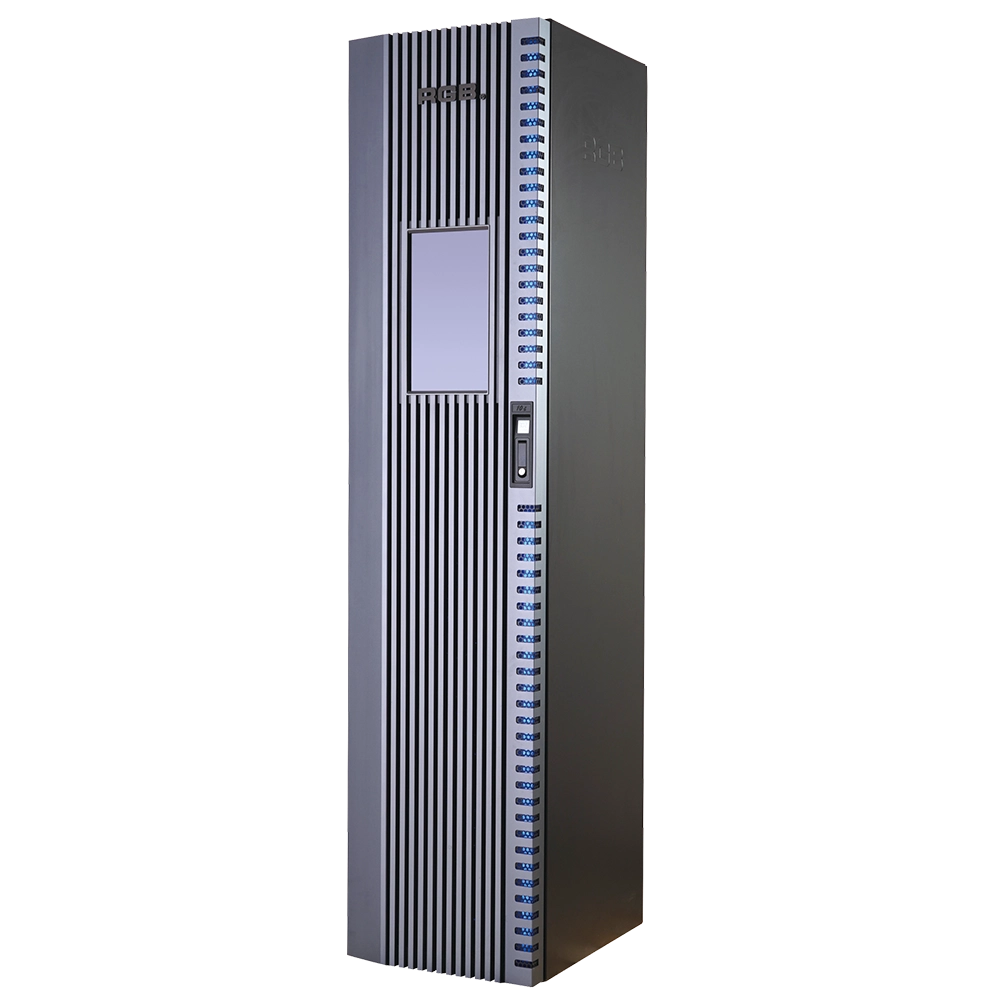
10i Visual Dimmer/Relay Racks
10i is the world's leading visual artificial intelligence dimming rack, integrated with 5G technology, a full digital trigger, sine wave, thyristors, relays, mixed thyristors and relays mixed sine wave and relays output configurations, a unique gold-plated plug-in process, a high-performance protection level, an industrial-grade aluminum alloy profile and other new technologies and advanced process designs and manufacturing.
It is suitable for the lighting control needs of different places such as high-standard grand theaters, TV stations, gymnasium and environmental intelligent lighting.
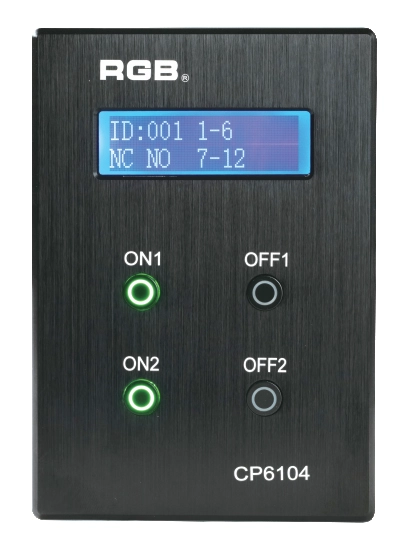
Site Light Controller CP6104
The CP6104 lighting control panel is a lighting control device for theater stage lights, work lights, environmental lighting, commercial art lighting, sports venue lighting and other places. By connecting to the dedicated lighting control host CP6100, it realizes the central control of the lighting system, supports a visual lighting control system, and intuitively displays the online and offline status of CP6104. Realize remote monitoring, editing and setting of corresponding parameters.
It is widely applicable to theaters, cinemas, auditoriums, stadiums, museums, exhibition halls, cultural tourism performances, commercial art lighting and other places.
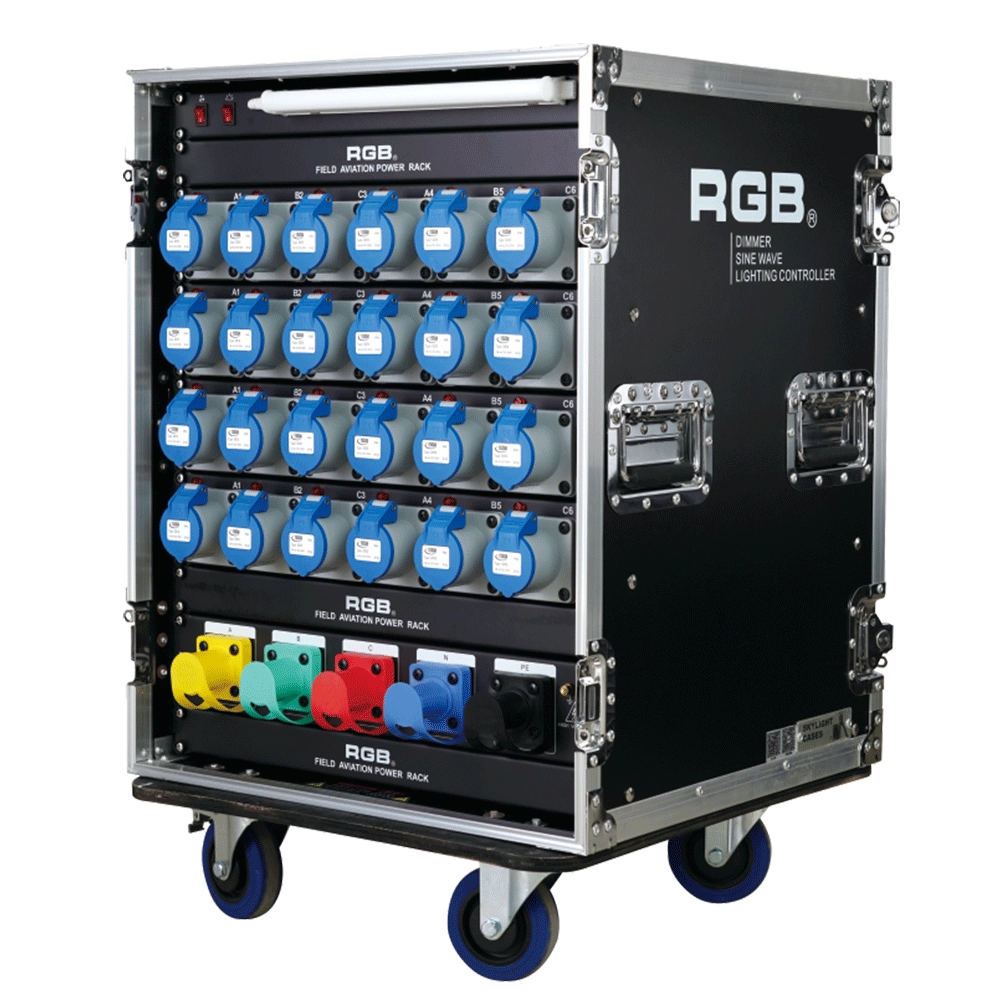
ZT Distribution Box
RGB-ZT2416 features dual protection functions and is a power distribution product specifically designed for overcurrent and short circuit of electrical equipment. It is the best choice for mobile performance and is suitable for use in computer lamps, conventional lamps, and other equipment.
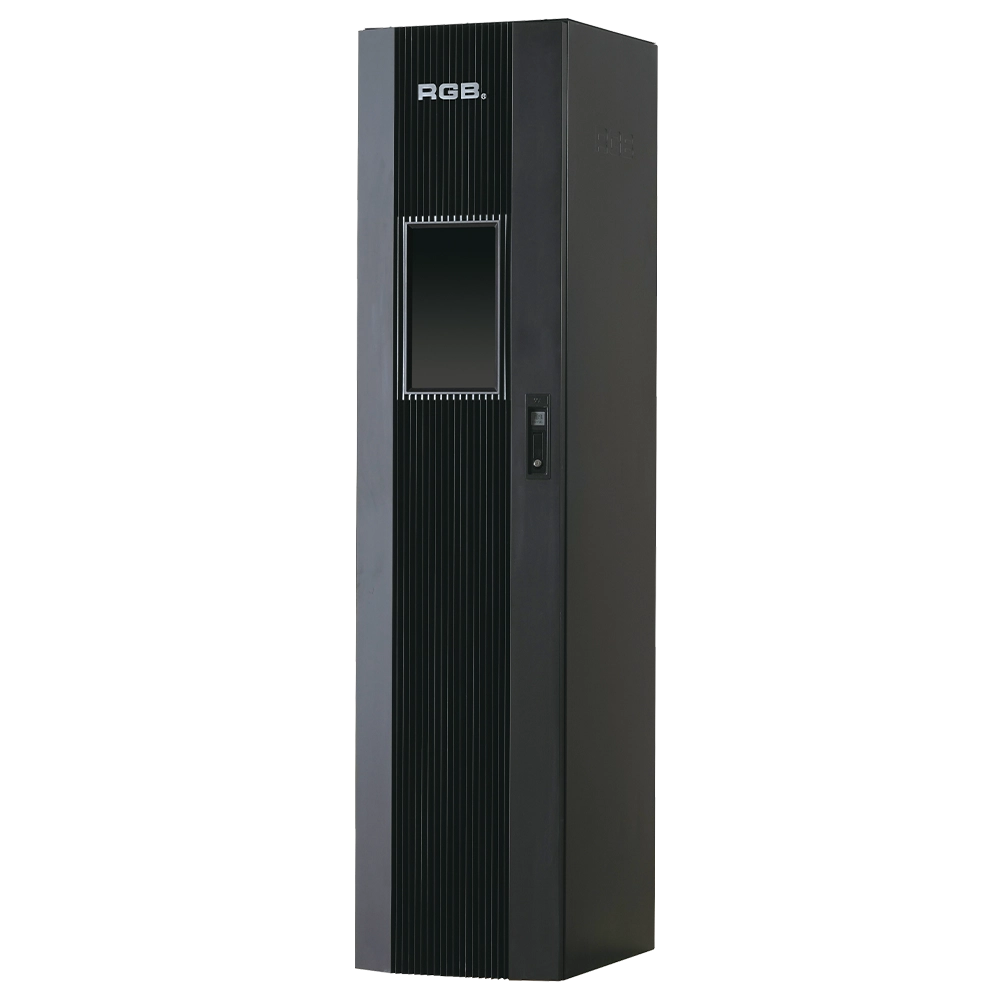
9i intelligent network Dimmer/Relay Racks
9i is an artificial intelligence dimming racks independently developed by RGB, which has completely independent core technology and obtained software Copyrights, all digital electrodeless trigger and multi-backup independent CPU central processor technology. It has a variety of output configurations such as sine wave, thyR, relay and dimming relay mix, and supports visual lighting control system and visually displays the online and offline status of dimming racks. Realize remote monitoring, editing and setting of relevant parameters.
It is suitable for the lighting control needs of different places such as high standard grand theater, TV station, gymnasium and environmental intelligent lighting.
Expert Support
Interested in learning more or need expert guidance related to this article? Fill in your details, and our team will provide tailored support.
Intelligent Control. Brilliant Performance.
RGB specializes in stage lighting control systems, delivering intelligent, reliable, and high-performance solutions for theaters and performance spaces worldwide.
Contact
Email:
Tel:
+86 20 3928 0245
+86 20 3928 0247
Address:
No.3, Huashan Road, Shilou Town, Panyu, Guangzhou, China.
Whatsapp: +8615975520131