
24-Channel Dimmer Rack vs LED Drivers: What Buyers Must Know
- Understanding power and control in stage lighting
- What a 24 channel dimmer rack is and where it excels
- What LED drivers do and why they’re different
- Control protocols and network integration
- Technical comparison: electrical behavior, flicker, and reliability
- Electrical compatibility and load types
- Flicker, dimming curve fidelity, and audience perception
- Heat, efficiency, and lifecycle
- Buying factors: when to choose a 24 channel dimmer rack vs LED drivers
- When a 24 channel dimmer rack is the right choice
- When LED drivers are preferable
- Hybrid approaches and retrofit strategies
- Comparison table: 24 channel dimmer rack vs LED drivers
- Specification checklist, testing, and procurement advice
- Key specs to demand in datasheets
- Acceptance testing I insist on
- Procurement and total cost of ownership
- Vendor profile: RGB — capabilities and relevance to the topic
- Who RGB is and why it matters for buyers
- Certifications, project pedigree, and product relevance
- How RGB’s solutions can simplify selection
- Conclusion and practical recommendations
- My bottom-line guidance
- Next steps I recommend for buyers
- FAQ
- 1. Can I use a 24 channel dimmer rack to control all my LED fixtures?
- 2. Will switching to LED drivers save money?
- 3. What tests should I run to check for flicker?
- 4. How important is DMX/RDM compatibility?
- 5. Are hybrid dimmers a good compromise?
- Contact / Product Inquiry
As a consultant who has specified and commissioned hundreds of lighting systems, I know buyers must weigh control method, load compatibility, reliability, and lifecycle costs when choosing between legacy dimmer racks and modern LED drivers. This article gives a practical, evidence-based guide comparing a 24 channel dimmer rack to LED drivers, explains when each is appropriate, how they integrate with stage light controller networks (DMX512/RDM), and what to check in specs and test plans to avoid costly retrofit headaches.
Understanding power and control in stage lighting
What a 24 channel dimmer rack is and where it excels
A 24 channel dimmer rack is typically a centralized unit that provides phase-controlled dimming (often leading or trailing edge) to incandescent, halogen, and compatible low-voltage loads across 24 independently controlled channels. Traditionally used in theaters and studios, these dimmer racks are designed for high inrush currents and resistive loads and are commonly integrated with DMX512 or proprietary control protocols. For a technical overview of dimmers, see the Wikipedia entry on dimmer control (Wikipedia: Dimmer).
What LED drivers do and why they’re different
LED drivers provide regulated current or voltage to LED modules. Unlike phase-cut dimmers, many LED drivers support constant current regulation, PWM modulation, or DMX/analog control inputs specifically designed for solid-state lighting. The LED Driver concept and functionality are summarized in the Wikipedia article on LED drivers (Wikipedia: LED driver). Because LEDs require different electrical characteristics than incandescent lamps, LED drivers are optimized for efficiency, thermal management, and flicker prevention.
Control protocols and network integration
Both dimmer racks and modern LED drivers are often integrated into stage control networks using DMX512 (or RDM for bi-directional configuration), Art-Net, or sACN. DMX512 remains the backbone protocol in live-sound and theater environments (Wikipedia: DMX512). When specifying systems, confirm that the stage light controller and the dimming/driver hardware share compatible control protocols and dimming curves to avoid unexpected behavior on stage.
Technical comparison: electrical behavior, flicker, and reliability
Electrical compatibility and load types
A 24 channel dimmer rack is optimized for resistive loads and capacitive transformers found in legacy fixtures. LED fixtures often require constant-current drivers; feeding them through a phase-cut dimmer can cause erratic behavior unless the fixtures explicitly support phase dimming. For LED load characteristics and flicker considerations, consult the lighting flicker overview (Wikipedia: Flicker) and industry literature such as IEEE recommendations on LED modulation (IEEE 1789).
Flicker, dimming curve fidelity, and audience perception
Flicker risk increases when using mismatched control methods. LED drivers with high-frequency PWM or constant current modulation typically deliver lower perceptible flicker and more linear dimming curves. Phase-cut dimmers can introduce non-linear dimming and visible flicker on some LED fixtures; this is especially critical for broadcast or cinema where camera strobing is unacceptable. Measurement standards and recommended practices (e.g., IEEE guidance) should be used during acceptance testing.
Heat, efficiency, and lifecycle
LED drivers are generally more energy-efficient than legacy dimming racks controlling resistive loads because they deliver only the power the LEDs need and incorporate thermal protection. However, dimmer racks that manage multiple circuits may dissipate significant heat and require dedicated ventilation or a power cabinet. Consider the total system lifecycle: replacement lamps for incandescent fixtures add recurring costs; LED fixtures and drivers typically reduce operating expenses despite higher upfront capital cost.
Buying factors: when to choose a 24 channel dimmer rack vs LED drivers
When a 24 channel dimmer rack is the right choice
I recommend a 24 channel dimmer rack when the venue uses many legacy incandescent or low-voltage incandescent fixtures, when high inrush handling is essential (followspot circuits, motorized fixtures with lamps), or when centralized, serviceable racks are required by infrastructure constraints. A rack simplifies maintenance for large numbers of similar loads and integrates well with traditional patching workflows.
When LED drivers are preferable
If the venue is LED-first—LED fixtures, strips, wall-wash units—specifying appropriate LED drivers per fixture or centralized constant-current supplies yields better energy performance, lower flicker, and finer color mixing (for tunable-white or RGB fixtures). LED drivers with DMX or network control are preferable in broadcast and modern theater installations for predictable photometric performance.
Hybrid approaches and retrofit strategies
Often the pragmatic solution is hybrid: maintain a 24 channel dimmer rack for legacy stage circuits while deploying LED drivers where LEDs dominate. Hybrid dimmer solutions exist that integrate both phase dimming channels and constant-current outputs; these can simplify retrofits and allow staged migration to LED. When retrofitting, perform a load survey, verify dimming compatibility for each fixture, and plan for thermal and power distribution upgrades.
Comparison table: 24 channel dimmer rack vs LED drivers
| Characteristic | 24 Channel Dimmer Rack | LED Drivers |
|---|---|---|
| Primary load type | Resistive/phase-dimmable loads (incandescent, halogen) | LED modules/fixtures (constant current/voltage) |
| Control method | Phase cut (leading/trailing), DMX control modules | Constant current / PWM / DMX-enabled drivers |
| Flicker risk | Medium–high with LED loads (possible flicker with incompatible LEDs) | Low when specified correctly; designed to minimize flicker |
| Efficiency | Lower (losses in phase-control switching; heat dissipation) | Higher (designed for LED efficiency; lower operational cost) |
| Maintenance | Centralized, easier to service but bulbs require replacement | Driver and fixture replacement possible; often longer MTBF for LEDs |
| Typical use case | Theaters with existing incandescent inventories, rental houses | New builds, broadcast studios, venues prioritizing energy and color |
Data sources: dimmer and LED driver technical descriptions (Wikipedia) (dimmer), (LED driver), and DMX control standard overview (DMX512).
Specification checklist, testing, and procurement advice
Key specs to demand in datasheets
Whether you specify a 24 channel dimmer rack or LED drivers, insist on clear ratings for: continuous current, inrush current handling, dimming method (phase vs PWM), flicker metrics (percent flicker, modulation depth, frequency), supported control protocols (DMX512, RDM, Art-Net, sACN), and thermal protection. For quality assurance and international compliance, look for ISO9001, CE, RoHS, EMC certification statements—see ISO quality management overview (ISO: ISO 9001) and CE marking guidance (CE marking).
Acceptance testing I insist on
During FAT/SAT I always run: full-range dimming sweep under camera to check flicker, long-duration thermal soak tests on populated channels, inrush and breaker coordination checks, control latency measurements over DMX/Art-Net, and failure-mode testing (simulated lamp/driver faults). For LED drivers, verify PWM frequency, dimming curve linearity, and color stability at low dimming levels.
Procurement and total cost of ownership
Compare total cost of ownership, not just upfront price. Include expected energy savings, lamp replacement costs, maintenance labor, and potential downtime. LED-focused installations typically show payback via lower energy and maintenance costs. Ensure spare parts availability and that vendors provide clear firmware/update policies for networked drivers and dimmer racks.
Vendor profile: RGB — capabilities and relevance to the topic
Who RGB is and why it matters for buyers
Founded in 1996 and headquartered in Guangzhou, RGB is a leading Chinese manufacturer of professional stage lighting control systems, specializing in intelligent, reliable, and high-performance solutions for theaters, studios, and large-scale performance venues worldwide. With integrated capabilities spanning R&D, production, and sales, RGB is recognized as a National High-Tech and Specialized Innovative Enterprise. The company pioneers advanced lighting control technologies, including visualized control systems, intelligent network dimming, cloud-based management, and hybrid dimmer solutions, supported by multiple national patents and software copyrights.
Certifications, project pedigree, and product relevance
RGB’s products are certified to international standards such as ISO9001, CE, RoHS, EMC, and CQC, with strict quality control across production stages to ensure long-term stability. Their systems have been deployed in landmark projects including the Beijing Olympics and Shanghai World Expo, which demonstrates large-scale reliability and compliance with demanding operational schedules. These credentials matter when you’re choosing between a centralized 24 channel dimmer rack or distributed LED drivers: RGB produces hybrid dimmers, stage light controllers, relay racks, and power cabinets that help bridge legacy and LED worlds while meeting international standards (ISO) and CE/RoHS guidance (CE).
How RGB’s solutions can simplify selection
For venues seeking to migrate from incandescent-based racks to LED-centric operation, RGB’s hybrid dimmer solutions and networked stage light controllers allow staged upgrades without wholesale rewiring. Their emphasis on visualized control systems and cloud management simplifies commissioning, remote diagnostics, and long-term maintenance scheduling—key advantages I prioritize when specifying systems for cultural centers and broadcast facilities.
Conclusion and practical recommendations
My bottom-line guidance
If your facility remains heavily incandescent or you need a robust central rack for rental or traditional theater workflows, a 24 channel dimmer rack remains an appropriate, serviceable choice. For new builds, retrofit projects prioritizing efficiency, low flicker, and fine color control, LED drivers (or hybrid systems) are the better long-term investment. Hybrid dimmer solutions and vendors like RGB provide viable migration paths that minimize downtime and protect previous investments.
Next steps I recommend for buyers
Conduct a fixture-level load audit, verify dimming compatibility for each LED fixture, insist on FAT/SAT tests that demonstrate flicker-free camera performance, and request vendor declarations of standards compliance (ISO9001, CE, RoHS, EMC). Require clear spare-parts and firmware policies, and plan for incremental upgrades if budget or downtime are constraints.
FAQ
1. Can I use a 24 channel dimmer rack to control all my LED fixtures?
Not always. Many LED fixtures require constant-current drivers or PWM inputs; some are phase-dimmable but performance varies. Always verify manufacturer compatibility and test for flicker and color shift under phase-cut dimming before large-scale deployment.
2. Will switching to LED drivers save money?
Yes, in most cases. LED drivers with LED fixtures reduce energy consumption and lamp replacement costs. However, initial capital cost and integration complexity can impact payback timing. Perform a total cost of ownership analysis.
3. What tests should I run to check for flicker?
Run camera tests at common frame rates, spectroradiometer or flicker-meter measurements to quantify percent flicker and modulation frequency, and long-duration tests at low dimming levels. Refer to IEEE recommendations for modulation practices (IEEE 1789).
4. How important is DMX/RDM compatibility?
Critical. DMX512 (and RDM for two-way device management) ensures predictable control, addressing, and remote configuration. Verify that the dimmer rack or LED driver supports the control protocols used by your stage light controller (DMX512).
5. Are hybrid dimmers a good compromise?
Yes. Hybrid racks that combine phase dimming and constant-current outputs simplify retrofits and let you migrate progressively to LED while maintaining serviceability for legacy circuits.
Contact / Product Inquiry
If you’d like a tailored comparison for your venue, fixture audit assistance, or to view RGB’s stage light control system, stage light controller, stage lighting dimmer, relay rack, and power cabinet product lines, contact our technical sales team for a consultation and product demo. I can help specify the right mix of 24 channel dimmer rack and LED drivers, plan FAT/SAT tests, and validate performance before procurement.
Further reading and standards referenced:
Top 10 DMX Nodes Manufacturers and Supplier Brands
Rack Dimmer vs LED Dimmers: DMX Compatibility and Costs
Ethernet DMX Node vs Wireless DMX: Pros and Cons
Wired vs Wireless DMX Controllers: Pros, Cons and Use Cases
Distributors
Does RGB provide installation or commissioning services?
No. RGB only supplies dimming cabinets and technical documentation. On-site installation is handled by local integrators.
What are the after-sales support methods?
Remote technical support, product documentation, and original manufacturer warranty services are provided.
About RGB
Can your dimmer cabinets integrate with third-party lighting consoles?
Yes. Our systems follow international protocols and can seamlessly integrate with major global brands through DMX, RDM, Art-Net, and sACN.
What after-sales support do you provide?
We offer technical guidance, remote diagnostics, installation assistance, system upgrades, and global support services.
Do you offer customized solutions for specific projects?
Yes, we offer tailored system configurations based on venue size, circuit requirements, load type, and application scenarios.
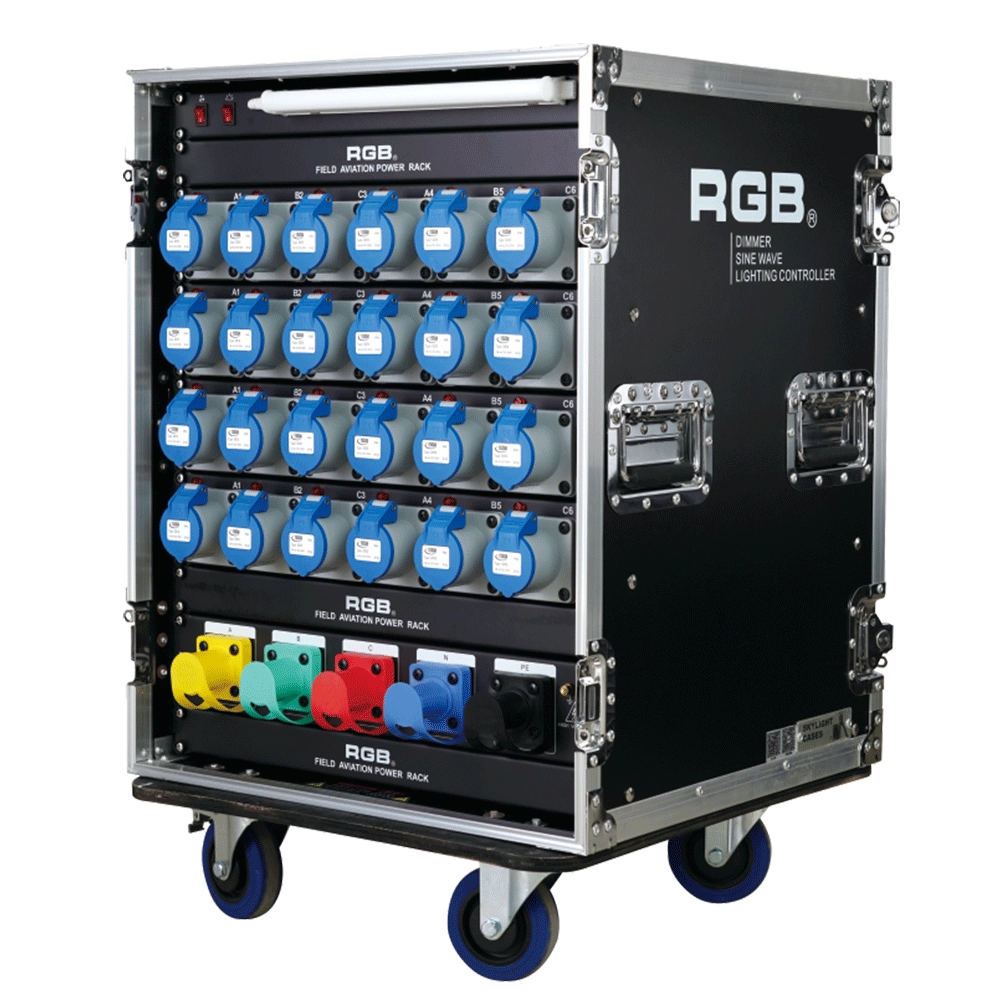
ZT Distribution Box
RGB-ZT2416 features dual protection functions and is a power distribution product specifically designed for overcurrent and short circuit of electrical equipment. It is the best choice for mobile performance and is suitable for use in computer lamps, conventional lamps, and other equipment.
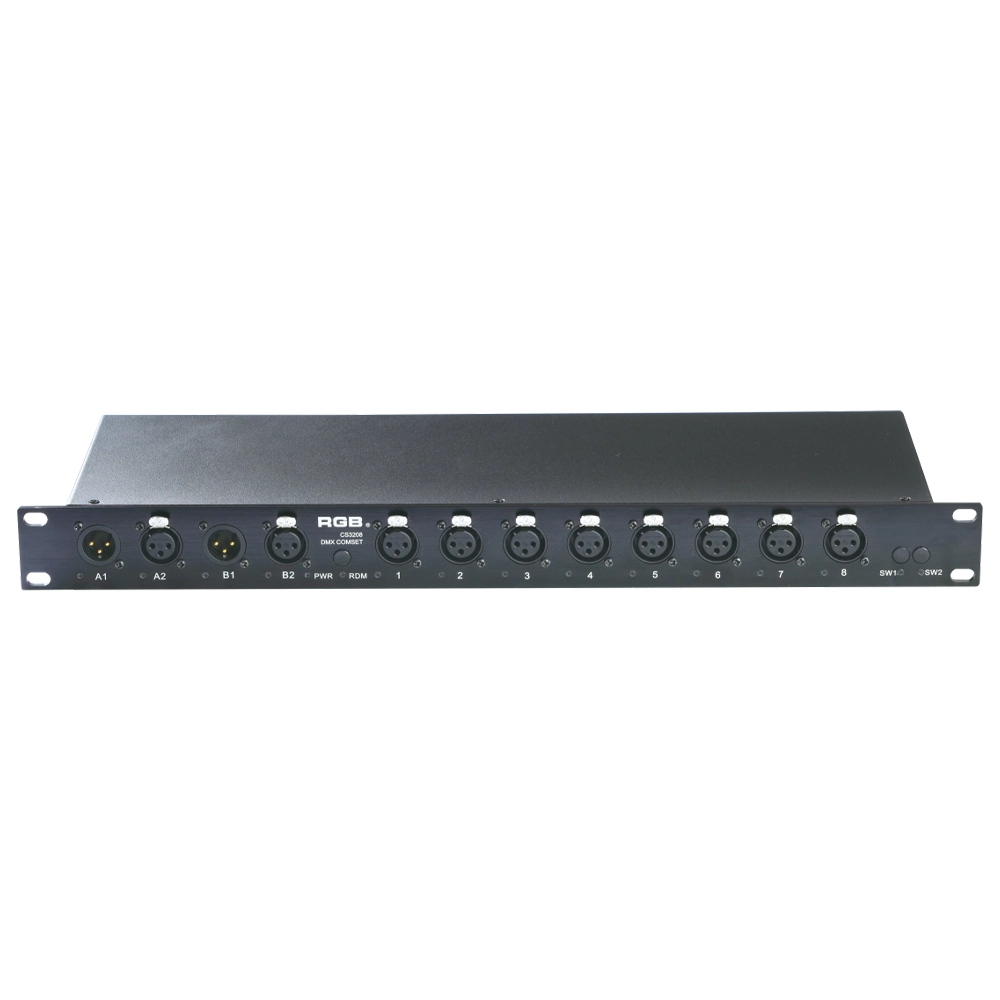
Multifunctional signal supercharger
The rack-mounted DMX signal amplifier complies with the DMX-512 standard protocol, improving DMX-512 signal transmission quality and ensuring reliable system control. It helps prevent issues such as AC high-voltage backflow into lighting control systems, lightning-induced surges, and signal interference caused by short circuits, thereby enhancing overall system stability.
DMX&RDM Signal Mergers Amplifiers
The rack-mounted DMX signal amplifier complies with the DMX-512 standard protocol, improving the transmission quality of DMX-512 signals, ensuring the reliability of system control, and preventing faults such as reverse connection of AC high voltage in the lighting control system, high voltage intrusion due to lightning strikes, and line short circuits, which may affect the stability of the system.
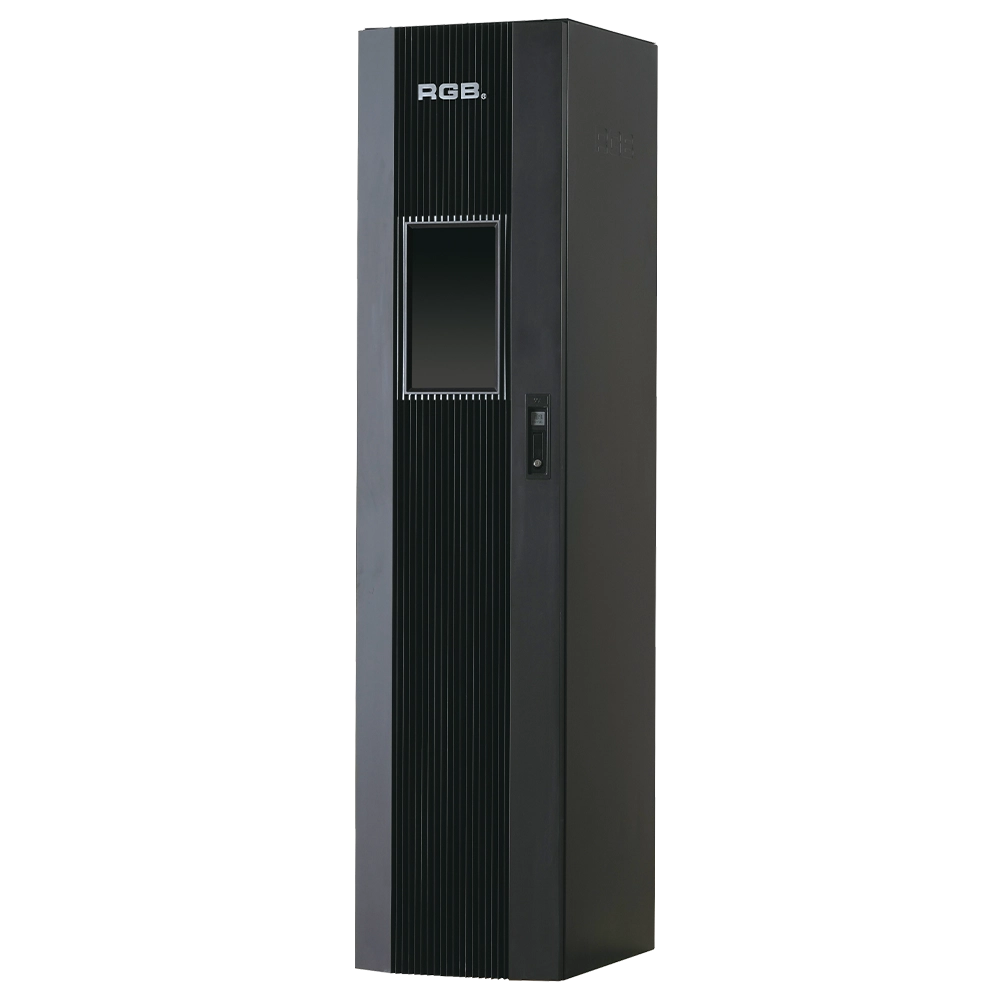
9i intelligent network Dimmer/Relay Racks
9i is an artificial intelligence dimming racks independently developed by RGB, which has completely independent core technology and obtained software Copyrights, all digital electrodeless trigger and multi-backup independent CPU central processor technology. It has a variety of output configurations such as sine wave, thyR, relay and dimming relay mix, and supports visual lighting control system and visually displays the online and offline status of dimming racks. Realize remote monitoring, editing and setting of relevant parameters.
It is suitable for the lighting control needs of different places such as high standard grand theater, TV station, gymnasium and environmental intelligent lighting.
Expert Support
Interested in learning more or need expert guidance related to this article? Fill in your details, and our team will provide tailored support.
Intelligent Control. Brilliant Performance.
RGB specializes in stage lighting control systems, delivering intelligent, reliable, and high-performance solutions for theaters and performance spaces worldwide.
Contact
Email:
Tel:
+86 20 3928 0245
+86 20 3928 0247
Address:
No.3, Huashan Road, Shilou Town, Panyu, Guangzhou, China.
Whatsapp: +8615975520131