
10i Visual Dimmer Relay Racks — Intelligent, Reliable Stage Dimming for Modern Venues
- How to integrate a visual dimmer into an existing stage lighting system?
- How do I connect the 10i Visual Dimmer Relay Racks to DMX512 and RDM networks?
- How should I plan network topology for visual dimmer racks in large venues?
- How can I link the 10i to visualized console software and cloud management?
- Why choose relay-based visual dimmers over traditional SCR or TRIAC dimmers?
- Why are relay racks more reliable for high-inrush or inductive loads?
- How does visual dimming improve troubleshooting and maintenance?
- How does the 10i help extend fixture and wiring life?
- How to ensure compliance, safety, and predictable performance with the 10i?
- How does manufacturing certification affect long-term performance?
- What safety and EMC standards should I verify before installation?
- How often should preventive maintenance be scheduled for relay dimmer racks?
- What results can system integrators expect when deploying the 10i in modern venues?
- How does the 10i improve operational uptime and event reliability?
- How will the 10i impact installation and lifecycle costs?
- How can designers scale from one rack to an entire campus of venues?
- Frequently Asked Questions
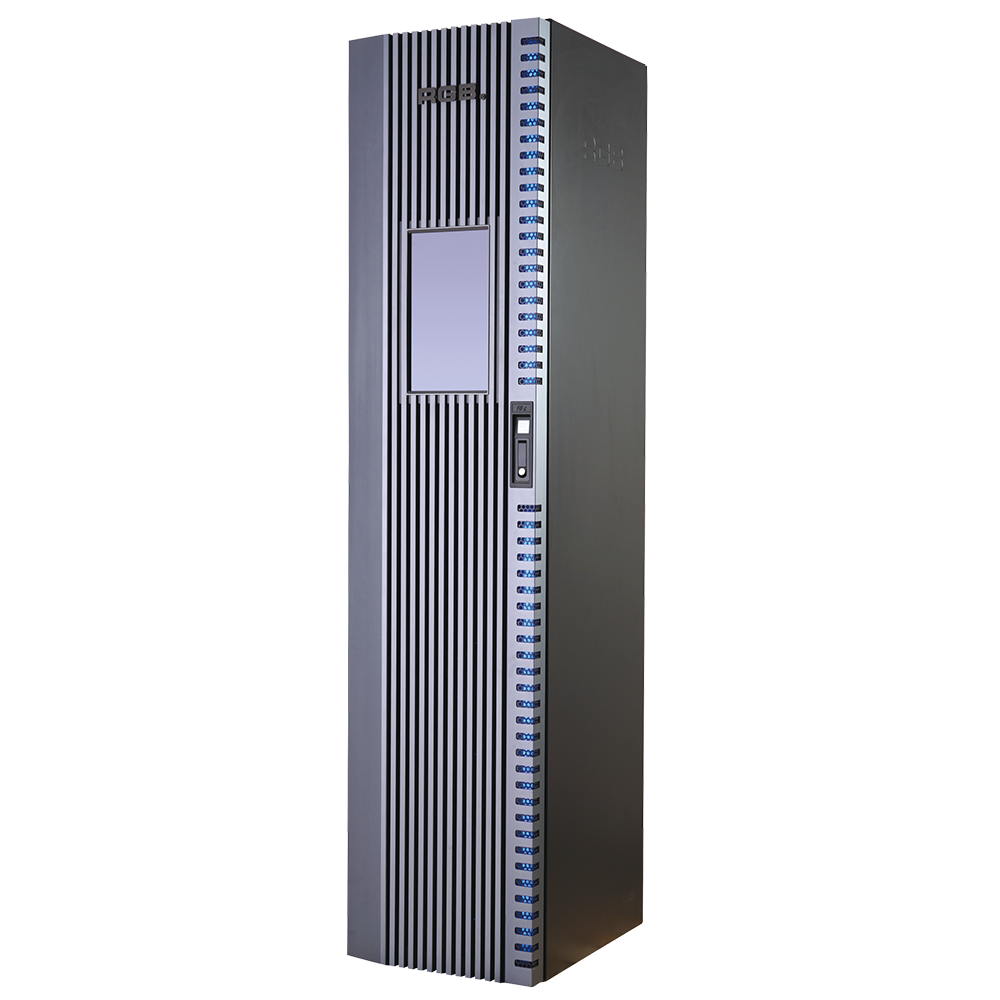
The 10i Visual Dimmer Relay Racks combine relay-based power switching with visualized control and networked intelligence to provide reliable, efficient dimming solutions for theatrical and broadcast applications. Leveraging standards like DMX512 and RDM while conforming to ISO9001 and CE production controls, the 10i is optimized for long-term stability, predictable behavior under load, and simplified maintenance—key concerns for venue managers, rental houses, and systems integrators.
How to integrate a visual dimmer into an existing stage lighting system?
How do I connect the 10i Visual Dimmer Relay Racks to DMX512 and RDM networks?
Connect the 10i via standard DMX512 cabling and configure each rack’s address using its RDM-capable interface for remote identification and addressing. Using RDM (E1.20) reduces on-site setup time because you can query and configure devices remotely; see the RDM protocol details on the Remote Device Management overview (RDM (E1.20) protocol).
How should I plan network topology for visual dimmer racks in large venues?
Design a star or redundant ring topology with managed Ethernet switches when using networked control layers; place the 10i racks close to load clusters to keep feeder runs short. Integrating managed switches with QoS and VLANs isolates lighting control traffic and improves deterministic DMX-over-IP performance in complex installations.
How can I link the 10i to visualized console software and cloud management?
Use the 10i’s visualized control interface or compatible lighting consoles to map relay channels to visual faders and cues. For centralized monitoring and firmware updates, opt for cloud-enabled management tools supported by the manufacturer to maintain configuration consistency across multiple venues.
Why choose relay-based visual dimmers over traditional SCR or TRIAC dimmers?
Why are relay racks more reliable for high-inrush or inductive loads?
Relay-based dimmers are inherently robust against inductive motor loads and high inrush currents because they switch mains rather than modulate waveform. That makes the 10i ideal for practical stage scenarios—moving lights, motorized scenery or tungsten fixtures—where thermal and EMI issues with SCR/triac dimming can become problematic.
How does visual dimming improve troubleshooting and maintenance?
Visual dimmers provide status indicators and diagnostic feedback per channel, allowing technicians to rapidly identify tripped circuits or failed relays without oscilloscope-level troubleshooting. This reduces downtime and enables targeted part replacement, which is crucial for busy performance schedules.
How does the 10i help extend fixture and wiring life?
By switching loads cleanly and avoiding continuous phase chopping, relay dimming minimizes thermal stress on wiring and lamp filaments, which translates into longer lamp life and reduced maintenance intervals—particularly important in high-use venues and rental fleets.
How to ensure compliance, safety, and predictable performance with the 10i?
How does manufacturing certification affect long-term performance?
The 10i is produced under ISO9001-aligned quality systems to ensure consistent build quality and traceable production records. Refer to ISO 9001 quality management principles for insights on production controls (ISO 9001 quality management).
What safety and EMC standards should I verify before installation?
Confirm that the rack’s certifications (CE, RoHS, EMC) meet local regulatory requirements; CE marking indicates conformity with relevant European safety and EMC directives. For details on CE marking and compliance, consult the European Commission guidance on CE marking (CE marking guidance).
How often should preventive maintenance be scheduled for relay dimmer racks?
Schedule visual inspection and mechanical contact checks every 6–12 months depending on show frequency; high-use touring rigs may require checks every 3–6 months. Regular contact cleaning and firmware updates help preserve deterministic control and electrical safety.
What results can system integrators expect when deploying the 10i in modern venues?
How does the 10i improve operational uptime and event reliability?
With robust relay switching, local diagnostics and networked monitoring, venues see fewer surprise failures and faster mean time to repair (MTTR). These capabilities reduce event risk and support consistent cue playback across repeated performances.
How will the 10i impact installation and lifecycle costs?
Although relay racks may have higher initial cost versus simple dimmer packs, lifecycle savings come from reduced fixture replacement, lower wiring rework, and fewer on-site troubleshooting hours. For venues running daily events, the total cost of ownership favors reliable relay solutions.
How can designers scale from one rack to an entire campus of venues?
Scale by connecting multiple 10i units into the venue’s control network and using centralized management tools for firmware and configuration replication. RGB’s cloud and hybrid control strategies support multi-venue management, ensuring consistent channel mapping and version control across installations.
For product details, specifications and ordering, view the full 10i Visual Dimmer Relay Racks product page: 10i Visual Dimmer Relay Racks. RGB, founded in 1996 and headquartered in Guangzhou, brings ISO9001 and CE-certified manufacturing, patented control technologies, and field-proven deployments at major events and venues.
Frequently Asked Questions
- What is the difference between DMX512 and RDM for the 10i?
DMX512 carries control data while RDM (E1.20) adds bidirectional device management. RDM enables remote addressing and status queries, simplifying commissioning and troubleshooting. - How many external control protocols does the 10i support?
The 10i supports industry-standard DMX512 and RDM for device management. It also integrates with networked lighting layers and visual console software for unified control. - Can the 10i handle inductive loads like motorized scenery?
Yes, relay switching is suitable for inductive and high-inrush loads. Relays avoid the continuous waveform modulation that can stress motors and transformers. - Why should I prefer units produced under ISO9001 and CE processes?
ISO9001 and CE indicate consistent manufacturing controls and regulatory compliance. These standards reduce defect rates and ensure equipment meets safety and EMC requirements. - How often should firmware and diagnostics be updated on the 10i?
Update firmware when the manufacturer releases revisions; perform diagnostics during major seasonal maintenance or every 6–12 months. Regular updates improve stability and feature parity across racks. - Is the 10i suitable for touring use and fixed installations?
Yes, the 10i’s rugged design and networked management make it appropriate for both touring and fixed venues; many landmark projects have used RGB’s systems in long-term installations and major events.
If you need personalized assistance or a quote, contact RGB sales and technical support via the 10i product page: Contact RGB about the 10i Visual Dimmer Relay Racks.
Selected references: DMX512 protocol overview (DMX512 standard summary), RDM protocol explanation (RDM (E1.20) details), ISO 9001 quality management (ISO 9001 overview), CE marking requirements (CE marking guidance).
How Dimmer Racks Work: Definition and Key Features
Selecting Dimmer Rack Sizes for Theaters vs Concert Venues
Ethernet DMX Node vs Traditional DMX: Buyer Comparison
Stage Dimmer Packs Compatible with LED and Moving Lights
Distributors
Can distributors request customized products?
RGB primarily offers standardized products. Customization requests are rare and evaluated on a project-by-project basis.
What is the minimum order quantity for cooperation?
Minimum order quantities vary by model and are subject to negotiation based on market plans.
About RGB
Do you offer customized solutions for specific projects?
Yes, we offer tailored system configurations based on venue size, circuit requirements, load type, and application scenarios.
How do you ensure product stability during large-scale events?
All products undergo rigorous testing, long-duration load simulation, and multi-standard verification to guarantee stable performance in demanding environments.
Can your dimmer cabinets integrate with third-party lighting consoles?
Yes. Our systems follow international protocols and can seamlessly integrate with major global brands through DMX, RDM, Art-Net, and sACN.
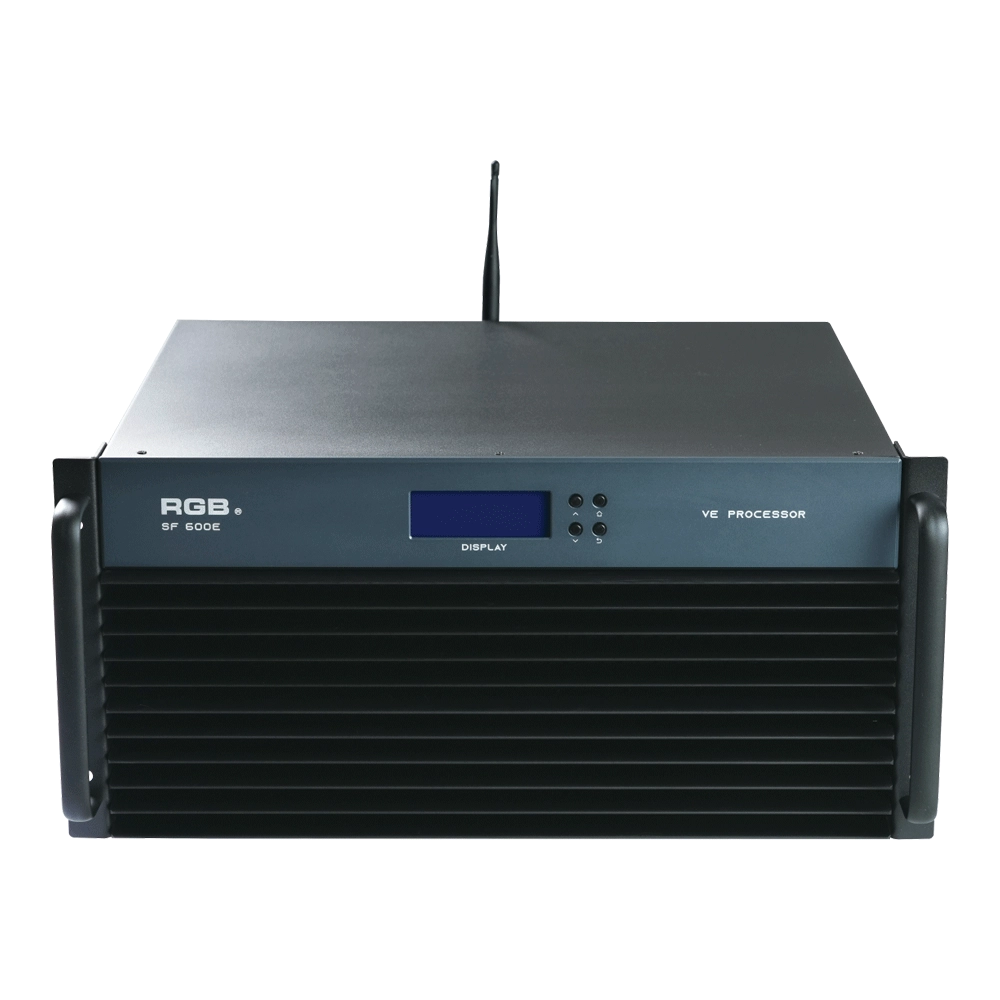
SF600E Visual R-net environment processor
The SF600E Visual R-net environment processor by RGB delivers advanced performance for visual systems. As a leading visual systems manufacturer, RGB ensures seamless integration and high reliability, making SF600E ideal for complex visual processing needs in diverse environments.
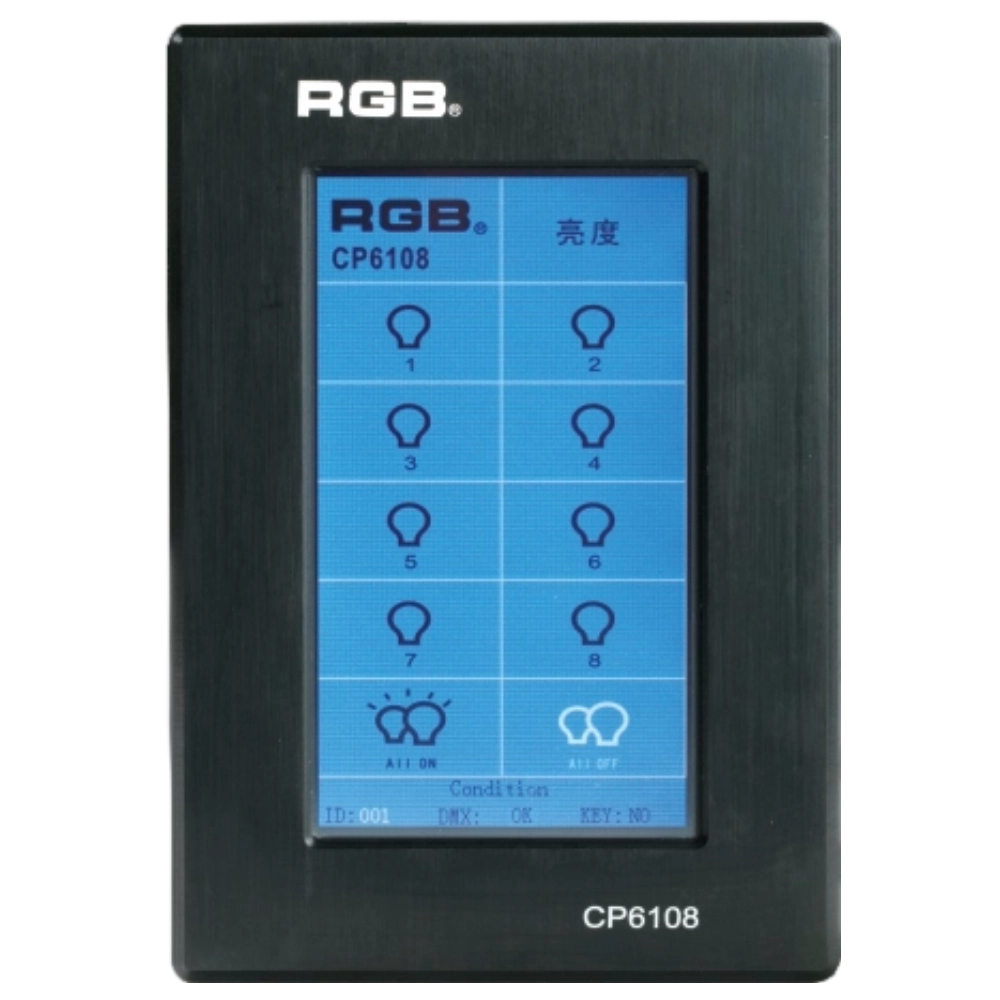
Site Light Controller CP6108
The CP6108 lighting control panel is a lighting control device for theater stage lights, work lights, environmental lighting, commercial art lighting, sports venue lighting, and other places. By connecting to the dedicated lighting control host CP6100, it realizes the central control of the lighting system, supports a visual lighting control system, and intuitively displays the online and offline status of CP6108. Realize remote monitoring, editing, and setting of corresponding parameters.
It is widely applicable to theaters, cinemas, auditoriums, stadiums, museums, exhibition halls, cultural tourism performances, commercial art lighting, and other places.
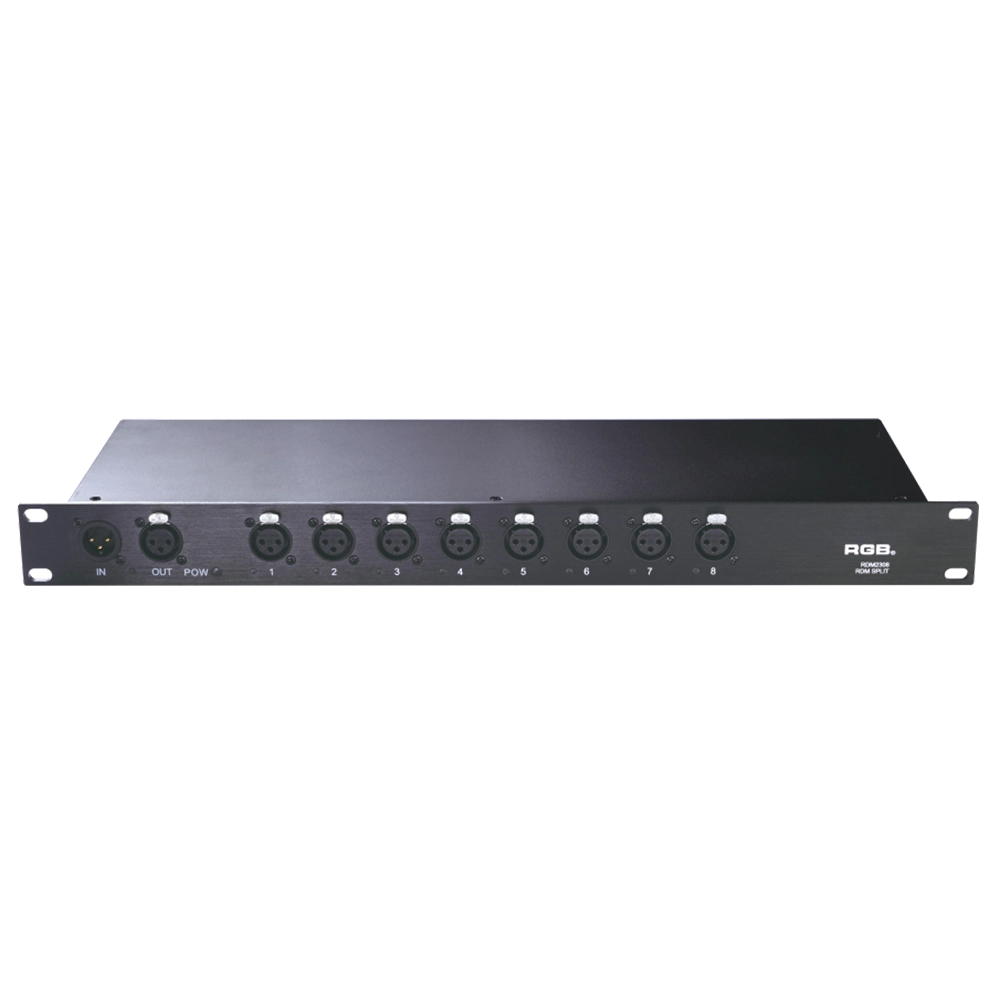
RDM Series Signal Amplifier
RDM2304, RDM2308, RDM2310, RDM2312 rack-mounted The RDM signal amplifier improves the quality of bidirectional RDM signal transmission, ensures the reliability of system control, and prevents faults such as AC high-voltage reverse series lighting control system, lightning high-voltage series entry, and line short circuit, which may affect system stability.
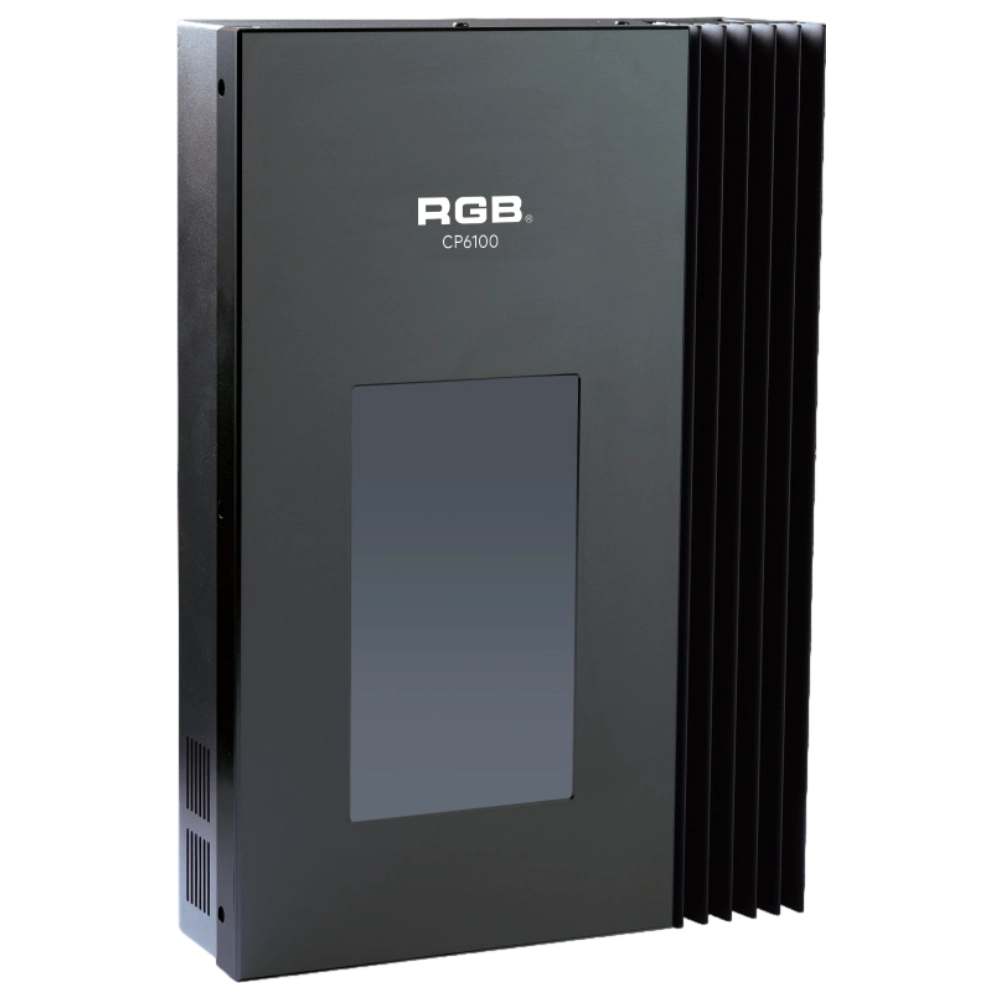
CP6100 Light Control System
The lighting control host is the main control device for theater stage lights, work lights, environmental lighting, commercial art lighting, sports venue lighting, and other places. By connecting the dedicated lighting control panels CP6104 and CP6108, it realizes the central control of the lighting system, supports a visual lighting control system, and intuitively displays the online and offline status of CP6100. Realize remote monitoring, editing, and setting of corresponding parameters.
It is widely applicable to theaters, cinemas, auditoriums, stadiums, museums, exhibition halls, cultural tourism performances, commercial art lighting, and other places.
Expert Support
Interested in learning more or need expert guidance related to this article? Fill in your details, and our team will provide tailored support.
Intelligent Control. Brilliant Performance.
RGB specializes in stage lighting control systems, delivering intelligent, reliable, and high-performance solutions for theaters and performance spaces worldwide.
Contact
Email:
Tel:
+86 20 3928 0245
+86 20 3928 0247
Address:
No.3, Huashan Road, Shilou Town, Panyu, Guangzhou, China.
Whatsapp: +8615975520131