
How to choose stage lighting dimmer systems for your venue?
|
- 1. How can I prevent LED flicker and banding on camera when using legacy triac dimmer racks in a retrofit venue?
- 2. What derating percentage and circuit sizing should I apply to dimmer racks when mixing LED fixtures and halogen/tungsten loads?
- 3. How do I size mains feeders, breakers, and cable for a high-density 96‑channel dimmer rack considering inrush from moving lights and LED drivers?
- 4. Should I choose sine-wave, triac, or constant-current dimmers for a theatre that plans to install both stage LEDs and traditional dimmable fixtures?
- 5. How can I design a DMX/Art‑Net lighting network to avoid dropouts and latency across multiple dimmer racks in large venues?
- 6. What routine maintenance and environmental protections extend the life of high-density dimmer systems in humid or coastal venues?
- Conclusion: Advantages of choosing the right modern dimmer system
Stage Lighting Dimmer Systems: How to Choose for Your Venue
As a professional with deep experience in stage light control systems, I answer six specific, commonly unresolved beginner questions about stage lighting dimmer systems and buying decisions. Answers reference DMX512-A (E1.11), RDM (E1.20), sACN/Art‑Net practices and real-world engineering guidance. Follow manufacturer's specs and local electrical codes for final implementation.
1. How can I prevent LED flicker and banding on camera when using legacy triac dimmer racks in a retrofit venue?
Problem: Legacy leading-edge (triac) dimmers chop the mains waveform. Many modern LED fixtures use electronic drivers with internal PWM or switching supplies; the interaction produces flicker or rolling bands on camera (especially at high frame rates), or visible stutter at low-light levels.
Actionable solution:
- Inventory fixtures and drivers: collect make/model and review manufacturers' datasheets for flicker-free specs and recommended dimming methods (leading-edge vs trailing-edge vs sine-wave).
- Prefer LED fixtures with professional-grade drivers that explicitly state camera safe or flicker-free up to target frame rates (e.g., 24–240 fps or higher). Cinematography often requires drivers rated for high PWM frequencies or constant-current dimming with high bandwidth.
- Replace or supplement legacy triac dimmers with either: (a) sine-wave electronic dimmers (also called high-frequency or transformerless sine-wave dimmers) that deliver a clean AC waveform and are more compatible with LED drivers, or (b) DMX/Art‑Net-controllable LED drivers or LED-specific dimmer packs (constant-current or 0–10V/DALI interfaces) so the driver handles the dimming rather than chopping mains.
- Where replacing racks is unrealistic, use dedicated LED-compatible dimmer modules or vendor-specified retrofit modules that offer a trailing-edge or LED mode. Many modern dimmer manufacturers provide LED-optimized modules and firmware updates for existing racks.
- Test under camera: perform on-site camera tests at the venue's planned frame rates and shutter angles. Observe for banding at low levels and under rapid intensity changes. This is the only definitive test before a show.
- Consider remote distribution and local driver control: use networked control (Art‑Net/sACN) to send level data to local fixture drivers rather than rely on phase dimming over mains where possible.
- Check manufacturer derating recommendations first. Many dimmer rack vendors publish derating charts for non-resistive loads (LEDs, electronic transformers, moving lights). Follow those as primary guidance.
- Rule-of-thumb for mixed modern venues: apply a 15–30% derating on per-channel continuous ratings when the circuit may feed electronic loads (LED drivers, moving lights) rather than purely resistive tungsten. Example: a 16 A channel at 230 V (3.68 kW nominal) might be derated to ~12–14 A continuous for mixed loads.
- Account separately for inrush and steady-state currents. Electronic drivers and moving heads often have low steady currents but very high inrush. Derating for steady thermal load is different from inrush considerations (see next question about mains sizing).
- Set patching policies: limit the number of high-power tungsten fixtures on a single dimmer rack or channel group; use a mix of switched circuits for purely non-dimmable high loads (sconces, practicals) and dedicated LED drivers for dimmable LEDs.
- Implement per-channel monitoring and logging if possible. Modern intelligent dimmer racks provide current monitoring (A) and temperature. Use these to refine derating for your venue over time and to avoid nuisance trips.
- Collect load data: list each fixture's steady current (A), maximum steady wattage (W), and specified inrush (Ipk or I2t) where available. Manufacturers often provide inrush spec (peak amps or I2t energy). For devices lacking specs, assume conservative higher inrush.
- Use diversity factors: building code and practical engineering use diversity to reduce the total prospective load (not all fixtures are at full simultaneously). For theatrical purposes, conservative diversity often ranges from 0.6 to 0.9 depending on rig type—confirm with an electrical engineer and local code. Do not apply excessive diversity for safety-critical circuits.
- Select breakers with appropriate trip curves: standard thermal-magnetic breakers (type B/C in Europe, standard in US) may nuisance trip on large inrush. For circuits feeding dimmer racks with many electronic devices, consider breakers with slower magnetic trip characteristics or use inrush limiting devices upstream. Coordinate with the dimmer vendor and local authority having jurisdiction (AHJ).
- Mitigate inrush: stagger power-on sequencing (soft-start or delayed channel enable), use NTC inrush limiters, or utilize soft-start modules in the rack. Many modern dimmer racks include module-level inrush control or will recommend upstream inrush limiters.
- Cable sizing: size feeders by continuous ampacity per local code (e.g., NEC in the U.S.). For 20 A circuits at 120 V use 12 AWG copper; for 16 A circuits at 230 V follow IEC/EN cable tables. Always check final ampacity with ambient temperature, bundling, and installation method in mind.
- Consult the dimmer manufacturer for recommended mains feeders: many 96-channel racks require three-phase mains with a main breaker sized to the rack's continuous rating plus headroom for inrush and service factor. Manufacturer load-shedding features and remote monitoring reduce the need for oversize feeders but verify specifics.
- Understand the fixtures: traditional tungsten (resistive) works with any phase control dimmer. LED fixtures depend on their driver type—some accept leading-edge or trailing-edge, some require constant-current drivers or digital control interfaces (0–10V, DALI, DMX/RDM).
- Sine-wave (high-frequency) dimmers: best all‑round retrofit solution when mixing LEDs and legacy fixtures. They reproduce a cleaner AC waveform with fewer harmonics, improving compatibility with modern electronic LED drivers and reducing audible noise and flicker. Sine-wave dimmers are generally more expensive but offer broader compatibility and lower EMI.
- Triac (leading-edge) dimmers: cost-effective for resistive loads and older incandescent-heavy venues. Risky with many LED fixtures—expect possible flicker or reduced dimming range unless fixtures explicitly support leading-edge dimming.
- Constant-current LED drivers / LED-specific dimmer packs: for venues planning a long-term LED investment, lean toward distributed LED drivers or LED dimmer packs that operate at control-level (DMX/Art‑Net/0–10V/DALI). This offloads dimming to the driver, which is usually the most reliable flicker-free solution, and enables per-fixture addressing and monitoring via RDM or DALI.
- Hybrid strategy: Install a modern dimmer rack with sine-wave modules for circuits that must remain phase-dimmed (practicals, desk lamps, existing circuits) and provide DMX/Art‑Net-addressable LED power modules or switched circuits for LED fixtures. Use switched breakers (not phase dimming) for non-dimmable device loads.
- Control integration: ensure your console and control network supports the chosen device-level protocols (Art‑Net/sACN for networked distribution, DMX512-A and RDM for device discovery and remote configuration). Many racks now support both phase dimming and networked control via built‑in Ethernet for remote telemetry and firmware updates.
- Use proper topology and physical layer best practices:
- For DMX512: use daisy-chain topology, one transmitter to multiple receivers; avoid long stubs; terminate the last receiver with a 120 Ω resistor; use optically isolated splitters/repeaters for long runs (>300 m) or to fan out to many racks.
- For Art‑Net/sACN: use a dedicated, isolated lighting Ethernet network (separate VLAN) using gigabit managed switches with IGMP snooping enabled to control multicast traffic. Don't put Art‑Net/sACN on the general-purpose building network.
- Limit universe size and plan channels: DMX512 gives 512 channels/universe. For large shows, plan universes ahead and map them to rack modules so each dimmer rack has dedicated universes and local nodes. Reduce broadcast storms by using sACN (E1.31) with proper multicast management.
- Prefer managed switches: use switches that support IGMP snooping, VLANs, and PoE if needed for nodes. Avoid consumer switches that may drop multicast packets or flood traffic. For mission-critical shows, use redundant link aggregation or STP carefully—ensure lighting devices respond predictably to topology changes.
- DMX over Ethernet devices: use high-quality Art‑Net/sACN nodes with good buffering and optical isolation. Place nodes near dimmer racks to minimize DMX cable length, and keep single DMX runs short and properly terminated for reliability.
- Protect against ground loops and electrical noise: use isolated DMX nodes and balanced cable. Separate lighting cables from high-voltage power runs to reduce EMI and induced noise.
- Monitoring and RDM: use RDM (E1.20) enabled devices where possible for remote device discovery, addressing, and status. Monitoring lets you identify failing nodes, bad cables, or overloaded universes before they cause show-stopping dropouts.
- Testing and redundancy: perform pre-show network load tests and include spare universes and patching flexibility. For critical shows, include redundant consoles or a backup DMX/Art‑Net path.
- Environmental controls: where possible, place racks in climate-controlled rooms with dehumidification. Maintain relative humidity below ~60% and stable temperature per rack vendor recommendations (many dimmer racks specify 0–40 °C operational range).
- Ingress protection: use rack doors with filtered airflow or HVAC-filtered enclosures. For coastal venues, consider conformal-coated electronics or vendor-specified corrosion-resistant options.
- Regular cleaning schedule:
- Monthly: visually inspect for dust build-up, clogged fans, or salt deposits. Clean external filters and clear cable routing paths.
- Quarterly: blow out dust with filtered compressed air (power down if recommended), inspect fan bearings, check connector tightness, and verify rack ventilation clearances.
- Annually: perform thermal imaging while under typical load to identify hot spots; check electrolytic capacitor health (they tend to age faster in heat/humidity); update firmware; and verify grounding integrity and breaker performance.
- Spare parts and monitoring: keep spare fans, modules, and fuses on site. Use racks with remote telemetry (current/temperature reporting) to get early warnings of over-temperature or abnormal current draws.
- Coastal-specific measures: if the venue is within a few kilometers of salt water, increase inspection frequency to monthly, apply corrosion-inhibiting sprays to external metal hardware per manufacturer guidance, and use stainless-steel fasteners and plated connectors where possible.
- Record-keeping: maintain a maintenance log with load profiles, firmware versions, repairs, and thermal images. This helps warranty claims and long-term planning.
Standards & references: DMX512-A (E1.11) and RDM (E1.20) are used for fixture control and device discovery. LED driver manufacturers and dimmer vendors publish compatibility notes—always verify with datasheets and test with cameras to avoid flicker surprises.
2. What derating percentage and circuit sizing should I apply to dimmer racks when mixing LED fixtures and halogen/tungsten loads?
Problem: Mixed loads create unpredictable heating, nuisance trips, and reduced life for dimmer modules if you assume full nameplate capacity for every channel.
Guidance and practical rules:
Why this matters: Overrating a dimmer (running near 100% continuously) shortens module life and increases heat. Conservative derating improves reliability and avoids overheating in dense racks.
3. How do I size mains feeders, breakers, and cable for a high-density 96‑channel dimmer rack considering inrush from moving lights and LED drivers?
Problem: Steady-state load figures alone understate the extreme short-duration inrush currents from LED drivers and moving luminaires. Undersized feeders or improper breaker choices cause nuisance trips or damage.
Sizing steps and specific considerations:
Example (illustrative only): a 96-channel rack where each channel is 16 A (230 V) gives a theoretical 1,536 A if all channels were simultaneously at full—unrealistic. Using diversity (e.g., 0.6) and realistic show loads reduces required mains, but you must still plan for inrush. Engage a licensed electrical engineer and the rack vendor's spec sheet to produce final feeder and breaker sizes. Do not rely on rough approximations alone.
4. Should I choose sine-wave, triac, or constant-current dimmers for a theatre that plans to install both stage LEDs and traditional dimmable fixtures?
Decision factors and recommended approach:
Bottom line: For mixed venues, a modern sine-wave dimmer rack plus dedicated LED drivers (or LED-specific dimmer modules) offers the best compatibility and future-proofing. Avoid pure legacy triac-only systems if you plan significant LED adoption.
5. How can I design a DMX/Art‑Net lighting network to avoid dropouts and latency across multiple dimmer racks in large venues?
Typical causes of dropouts: poor cabling/termination, excessive stubs, ground faults, improper DMX termination, or overloaded Ethernet networks when using Art‑Net/sACN. Latency comes from overloaded consoles, inefficient universes, or unmanaged network traffic.
Following these network design practices reduces dropouts, keeps latency predictable (typically under a few hundred milliseconds for well-designed sACN networks), and gives operators confidence during complex shows.
6. What routine maintenance and environmental protections extend the life of high-density dimmer systems in humid or coastal venues?
Environmental problems—salt corrosion, high humidity, dust, and high ambient temperature—accelerate failure in dimmer racks, fans, connectors and PCBs. Proactive maintenance dramatically extends service life.
Maintenance and protection plan:
Following a proactive maintenance regimen reduces failures, improves on-stage reliability, and keeps dimmer systems operating within manufacturer specifications—ly saving downtime and replacement costs.
Conclusion: Advantages of choosing the right modern dimmer system
Selecting the correct stage lighting dimmer systems—whether modern sine-wave dimmer racks, LED-specific drivers, or hybrid solutions—delivers tangible benefits: reduced flicker and camera artifacts, improved compatibility with LED fixtures, lower heat and longer component life through proper derating and ventilation, predictable mains behavior when inrush is managed, and robust control using DMX512-A, RDM and Art‑Net/sACN. A well-designed network and maintenance program minimize dropouts and prolong system uptime. Engage vendors for compatibility testing, follow standards, and work with a licensed electrical engineer for mains sizing and safety compliance.
For a tailored specification, equipment quote and on-site compatibility testing, contact us for a quote: visit www.rgbsystem.com or email info@rgbsystem.com.
Latest News
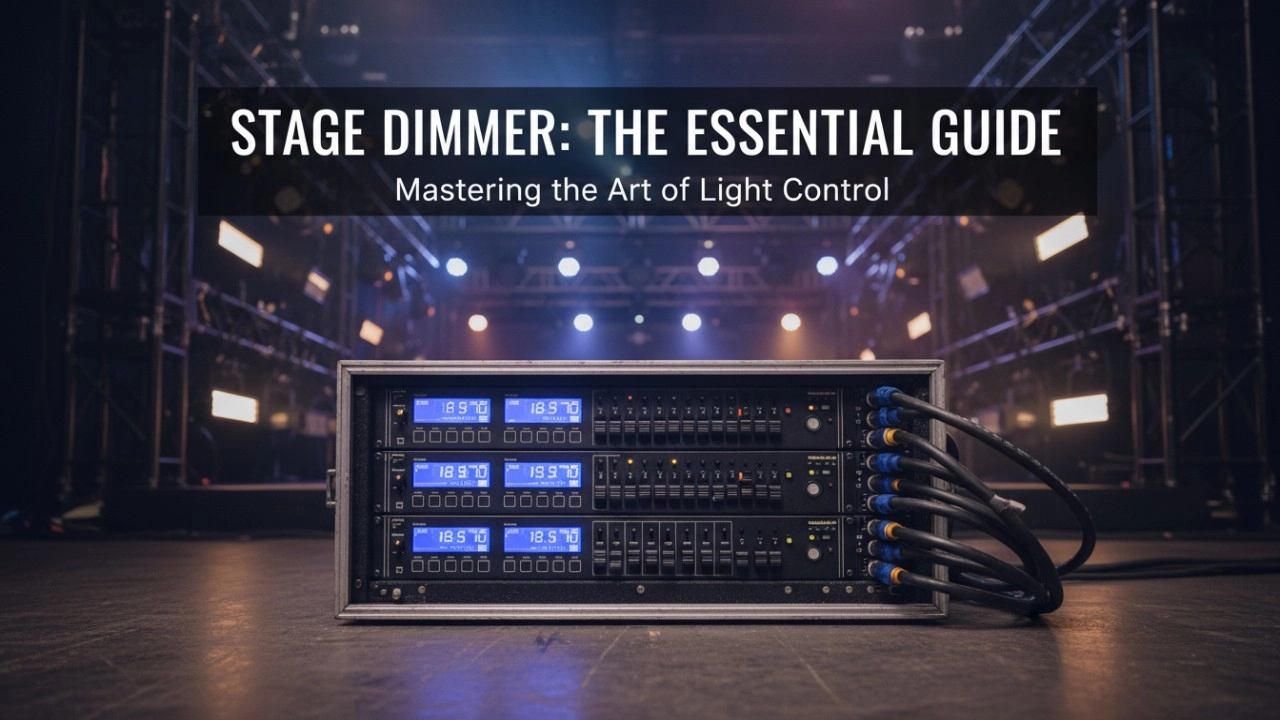
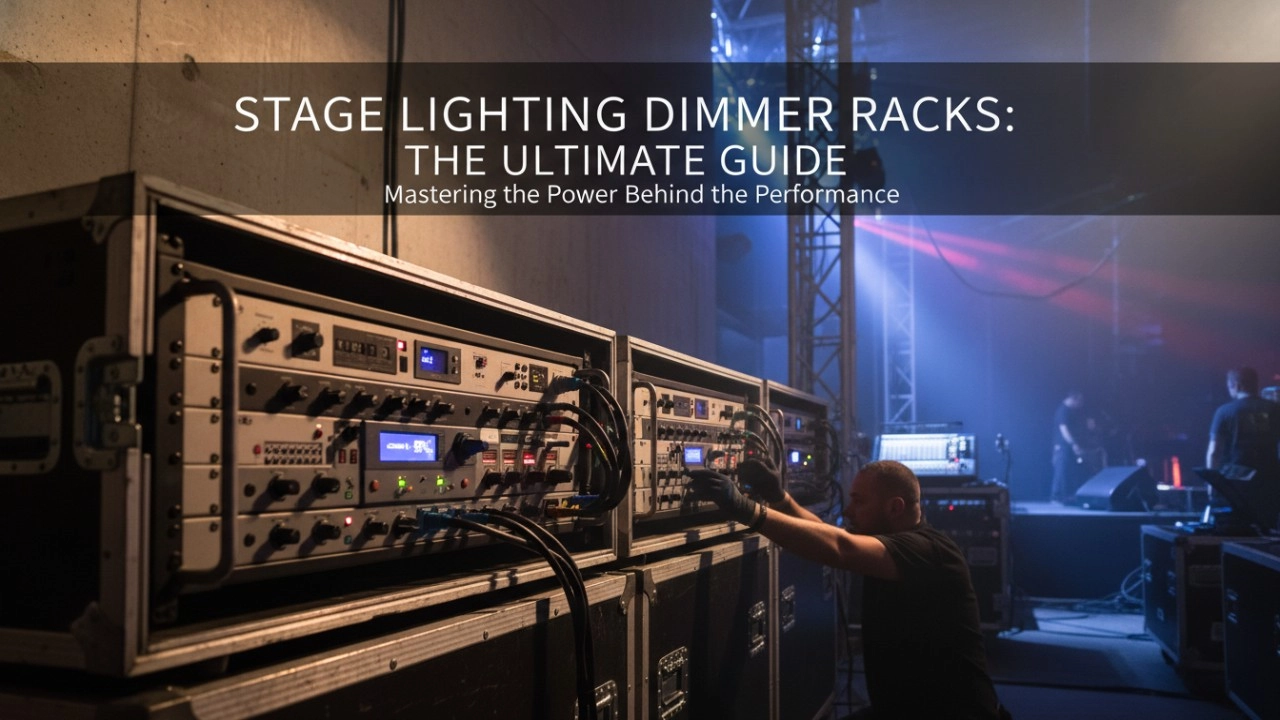
A comprehensive 2026 guide to selecting high-performance stage lighting dimmer racks. We review top hybrid systems, explore SCR vs sine wave technology, and analyze essential features like ThruPower for modern venues.
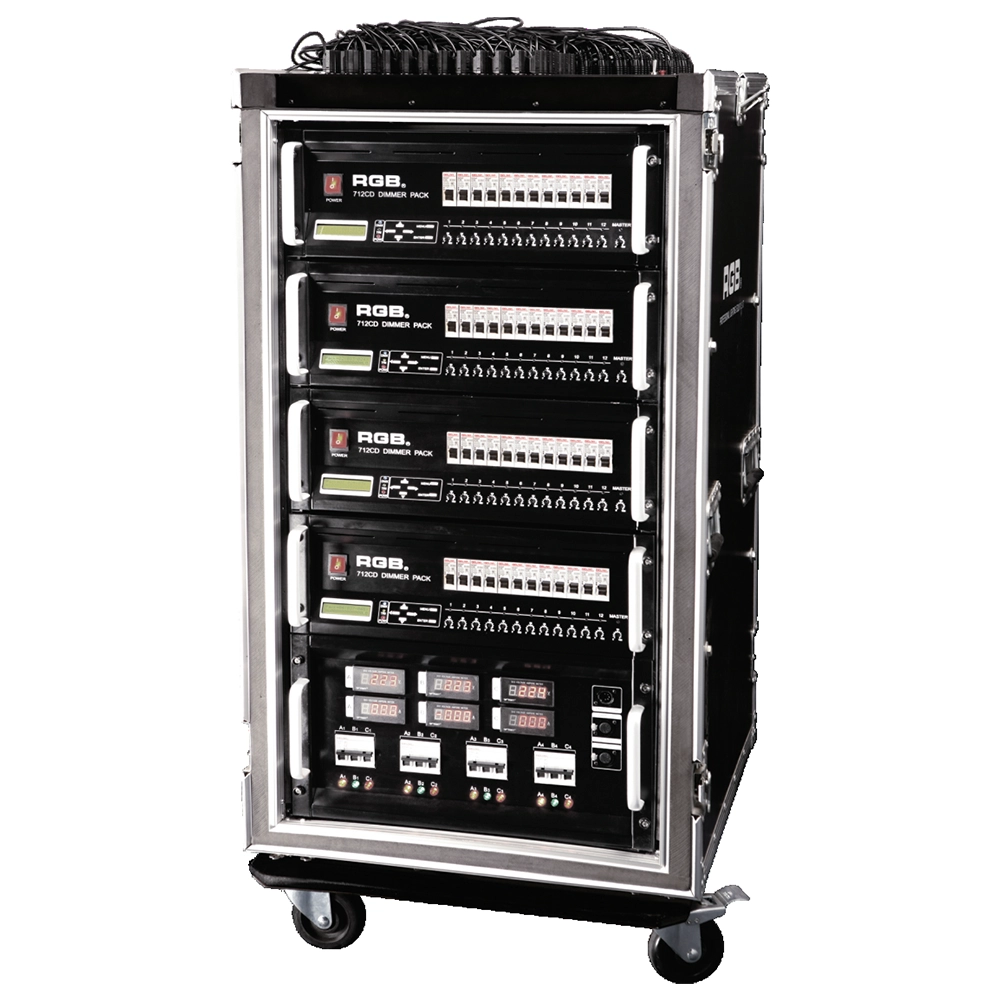
Intelligent Network Touring Dimmer Racks
RGB intelligent network touring dimmer racks can be assembledinto many types of dimmer racks by taking 7 series dimmer
packs as the unit. They are widely used in the entertainment fortheir convenience and practicabillity,
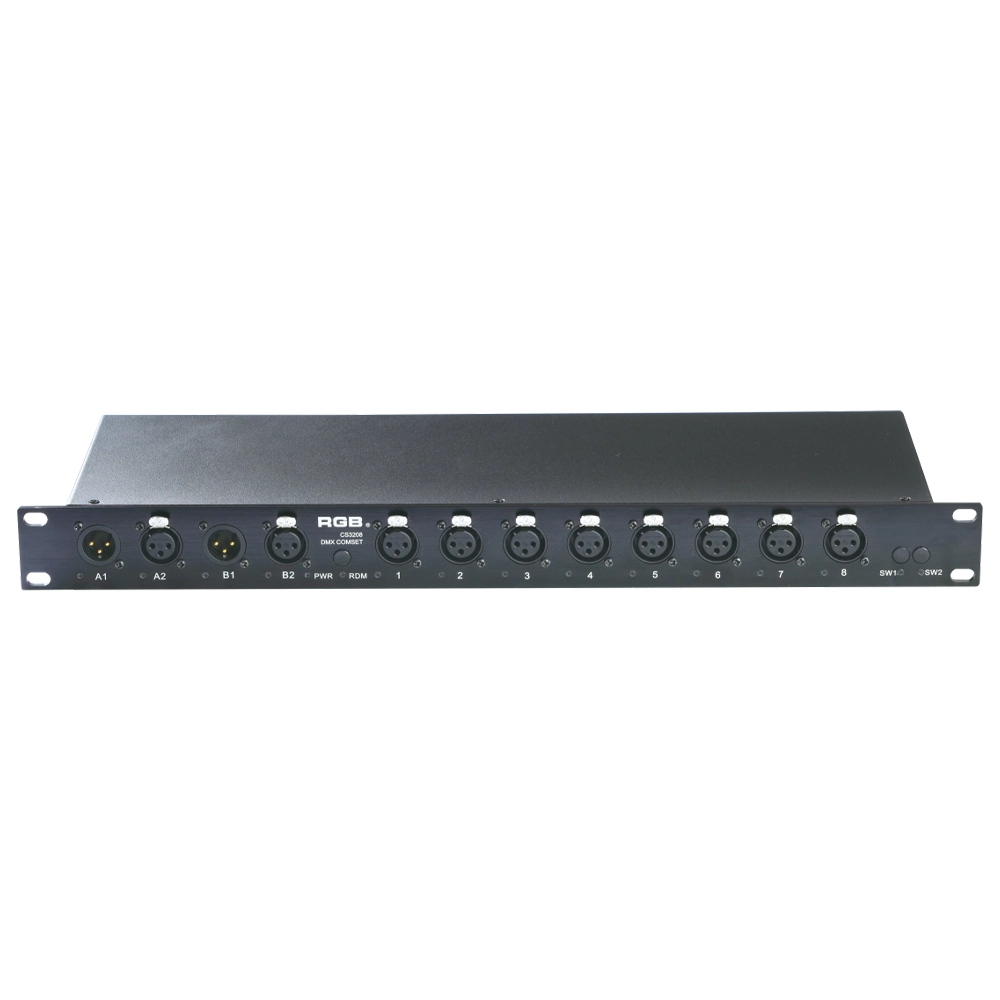
Multifunctional signal supercharger
The rack-mounted DMX signal amplifier complies with the DMX-512 standard protocol, improving DMX-512 signal transmission quality and ensuring reliable system control. It helps prevent issues such as AC high-voltage backflow into lighting control systems, lightning-induced surges, and signal interference caused by short circuits, thereby enhancing overall system stability.
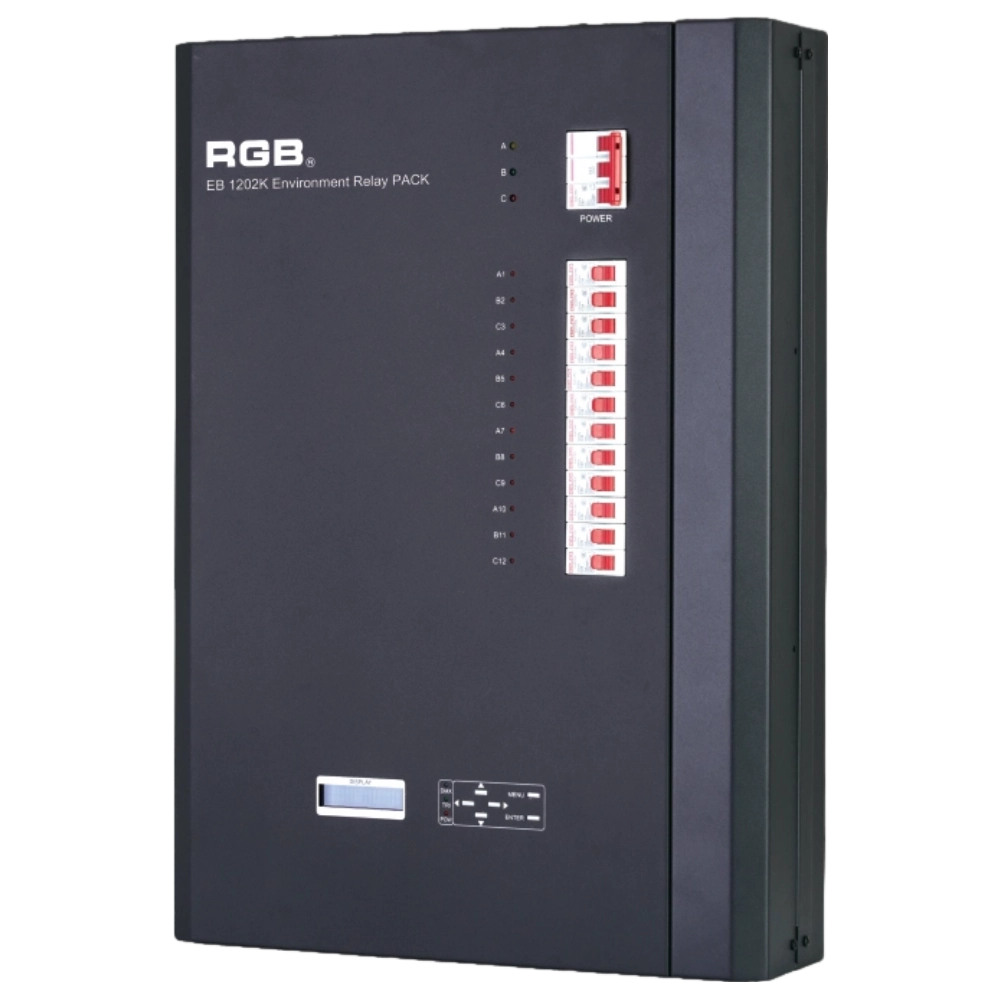
EB1202 Wall-Mounted Smart Site Light Control Series
Wall-mounted smart lighting controller with CE certification, DMX512 compatibility, flexible 12/24-channel output, scene backup, intelligent interface, and multiple dimming curves for precise professional lighting control.
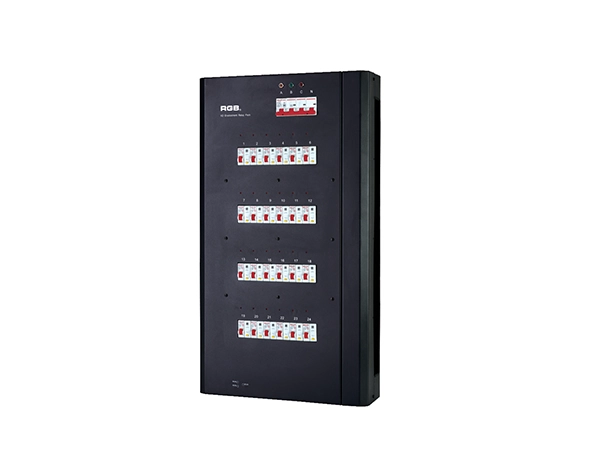
K2 Intelligent Network Relay Racks
K series is the newly developed and produced product of all-weather smart network relay cabinet. It has two major indoor and outdoor waterproof series and has multiple network control modes, such as double DMX512, sACN, ART-net, etc, which can control any equipment like resistive, inductive and capacitive and so on
K series has two major series from the perspective of function, namely, K2 ordinary type and KW2 waterproof type. It has two modes of installation, one is hanging on the wall, and the other is cabinet. It has three specifications of output circuit, namely, 24, 48 and 60 respectively.
K series applies to different performance places, such as, outdoor cultural tourism, TV station, theater, stadium and ambient intelligence lighting and so on.
Expert Support
Interested in learning more or need expert guidance related to this article? Fill in your details, and our team will provide tailored support.
Intelligent Control. Brilliant Performance.
RGB specializes in stage lighting control systems, delivering intelligent, reliable, and high-performance solutions for theaters and performance spaces worldwide.
Contact
Email:
Tel:
+86 20 3928 0245
+86 20 3928 0247
Address:
No.3, Huashan Road, Shilou Town, Panyu, Guangzhou, China.
Whatsapp: +8615975520131