
How to choose a stage light dimmer for touring rigs?
|
- 1. How do I prevent LED stage lights from flickering when using traditional dimmer racks?
- 2. What are the key considerations for power distribution and inrush current management in touring rigs to prevent breaker trips?
- 3. How can I ensure compatibility between LED dimmers and fixtures to avoid erratic dimming behavior?
- 4. What are the best practices for rigging, safety, and power considerations when using commercial-grade stage lights?
- 5. How do I prevent common stage light problems like flickering, dimming, and color shifts?
- 6. What are the common mistakes to avoid when choosing stage lighting?
1. How do I prevent LED stage lights from flickering when using traditional dimmer racks?
Flickering in LED stage lights when connected to traditional dimmer racks is a prevalent issue, often caused by Pulse Width Modulation (PWM) mismatches or 'ghost voltage' leakage from Silicon-Controlled Rectifier (SCR) dimmers. Even when a traditional dimmer is set to 'full,' it may still introduce a small amount of inductance that confuses the LED's power supply, causing it to strobe or flash intermittently. To eliminate this, you must use a 'True Sine Wave' dimming module or a mechanical relay bypass. If you are forced to use an older rack, a 'dummy load' (a small incandescent lamp on the same circuit) can sometimes stabilize the voltage, but this is a temporary fix. The professional solution is to deploy racks with dedicated 'LED Curves' that adjust the firing angle of the current to match the electronic requirements of the diode. ((https://www.rgbsystem.com/guides/stage-lighting-led-dimmer-rack-guide/))
2. What are the key considerations for power distribution and inrush current management in touring rigs to prevent breaker trips?
Touring rigs present two electrical challenges: peak (inrush) currents at power-up and steady-state load. Planning prevents nuisance trips and reduces downtime. To manage these effectively: 1) Determine steady-state current: Use each fixture’s rated power (W) divided by voltage to estimate running current, then add 20–30% headroom. For example, twelve 600 W fixtures = 7,200 W; at 230 V that’s ≈31.3 A steady. Add headroom for other loads (consoles, amps) and your safety margin. 2) Account for inrush current: Many LED drivers have cold inrush many times steady current at switch-on. Use a power sequencer/soft-start or an inrush current limiter to stagger power-on or limit spikes. 3) Power factor and harmonics: Choose fixtures with active Power Factor Correction (PFC); PFC ≥0.9 is common for professional fixtures. Poor PFC increases apparent power draw on circuits. 4) Use correct cabling and connectors: Heavy-gauge multicore or separate circuits sized to the steady-state load; use Neutrik powerCON TRUE1 or equivalent touring-grade connectors; label and lock power feeds.
3. How can I ensure compatibility between LED dimmers and fixtures to avoid erratic dimming behavior?
Incompatible LED dimmers can cause erratic dimming behavior or complete system failure. This issue arises because traditional dimmers were designed for resistive halogen loads, whereas LED drivers present non-linear electrical behavior, including low power factor and inrush current. Leading-edge dimmers (TRIAC-based) can introduce voltage spikes, while trailing-edge dimmers (IGBT-based) provide smoother control for LED drivers. To ensure compatibility: 1) Calculate connected load with a 0.8 derating factor. 2) Distribute fixtures across multiple dimmers. 3) Select dimmers with thermal protection and capacity headroom. 4) Oversize dimmers where access is difficult.
4. What are the best practices for rigging, safety, and power considerations when using commercial-grade stage lights?
When using commercial-grade stage lights, it's crucial to: 1) Secure all fixtures with secondary safety cables. 2) Consider weight limits, truss load, and cable routing—avoid running power or DMX in walkways. 3) Balance circuits and use DMX splitters and power distribution to reduce noise. 4) When touring or renting lighting rigs, document power per circuit and have spares for bulbs and moving parts. 5) For venues requiring certified safety documents, maintain lamp inventories and inspection logs to demonstrate compliance.
5. How do I prevent common stage light problems like flickering, dimming, and color shifts?
Flickering, unexpected dimming, and color shifts are common issues with stage light fixtures. Causes include failing LED drivers, aging lamps, poor power quality, loose connectors, and control signal problems. To resolve these: 1) Swap fixtures: Move the problematic fixture to a known-good channel or power circuit to determine if the issue follows the fixture or the circuit. 2) Check connectors: Inspect IEC plugs, powerCON, or stage plugs for corrosion, bent pins, or loose latching. Tighten or replace as needed. 3) Test the lamp/driver: For LED fixtures, LED drivers often fail before LEDs. Use a compatible replacement driver to confirm. For discharge or halogen lamps, measure lamp filament integrity or replace the bulb and re-measure output. 4) Power conditioning: Install surge protection and voltage stabilizers where brownouts or spikes are common.
6. What are the common mistakes to avoid when choosing stage lighting?
Common mistakes include: 1) Ignoring venue specifications: Each venue has unique characteristics that directly affect stage lighting. What works for a small theatre likely won’t translate well to a sprawling outdoor concert. Ignoring these differences is a recipe for subpar results. 2) Over-lighting the stage: Over-lighting can wash out contrast and destroy the dramatic tension intended by the director. Light is only effective if there is shadow to contrast it against. 3) Poor cable management: Spaghetti cabling is not just ugly; it is a fire hazard and makes troubleshooting impossible during a show. Label every cable at both ends. 4) Neglecting the operator: Designing a rig so complex that it cannot be operated live. Automation helps, but the human element is vital for timing.
By addressing these specific challenges and implementing the recommended solutions, you can enhance the performance and reliability of your stage lighting system for touring rigs. For personalized advice and a quote, please contact us at info@rgbsystem.com or visit our website at www.rgbsystem.com.
Latest News
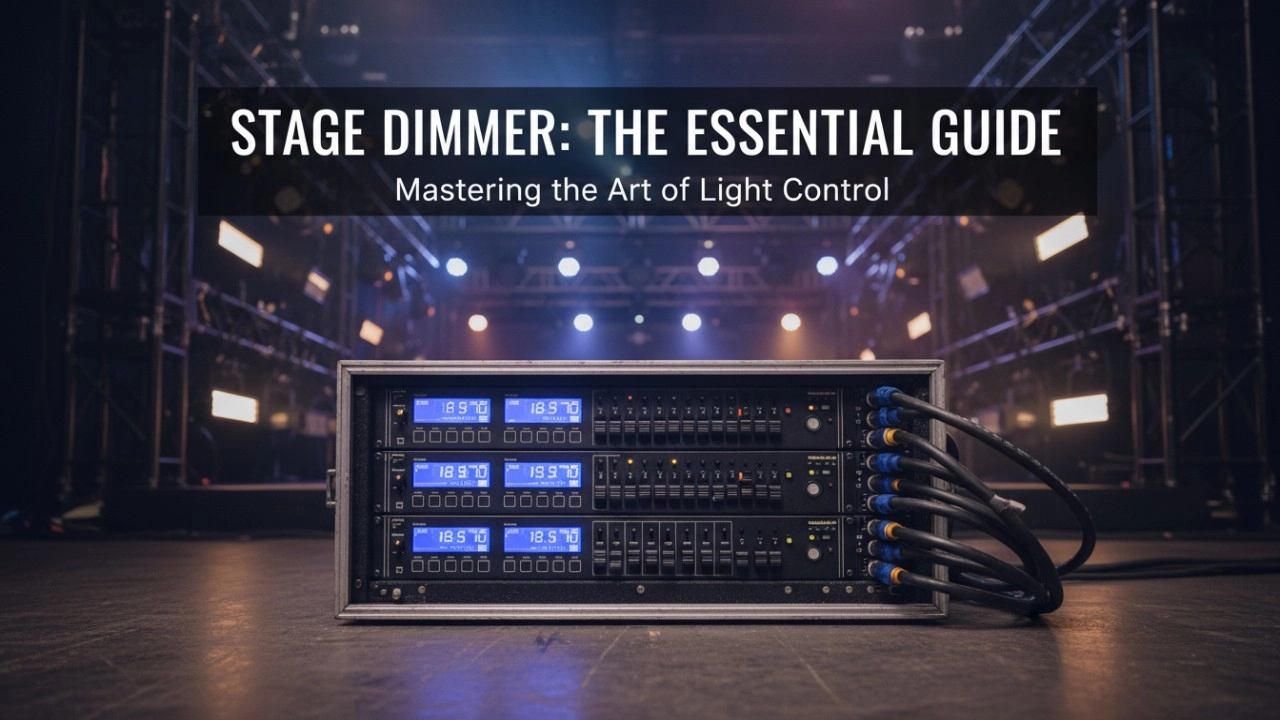
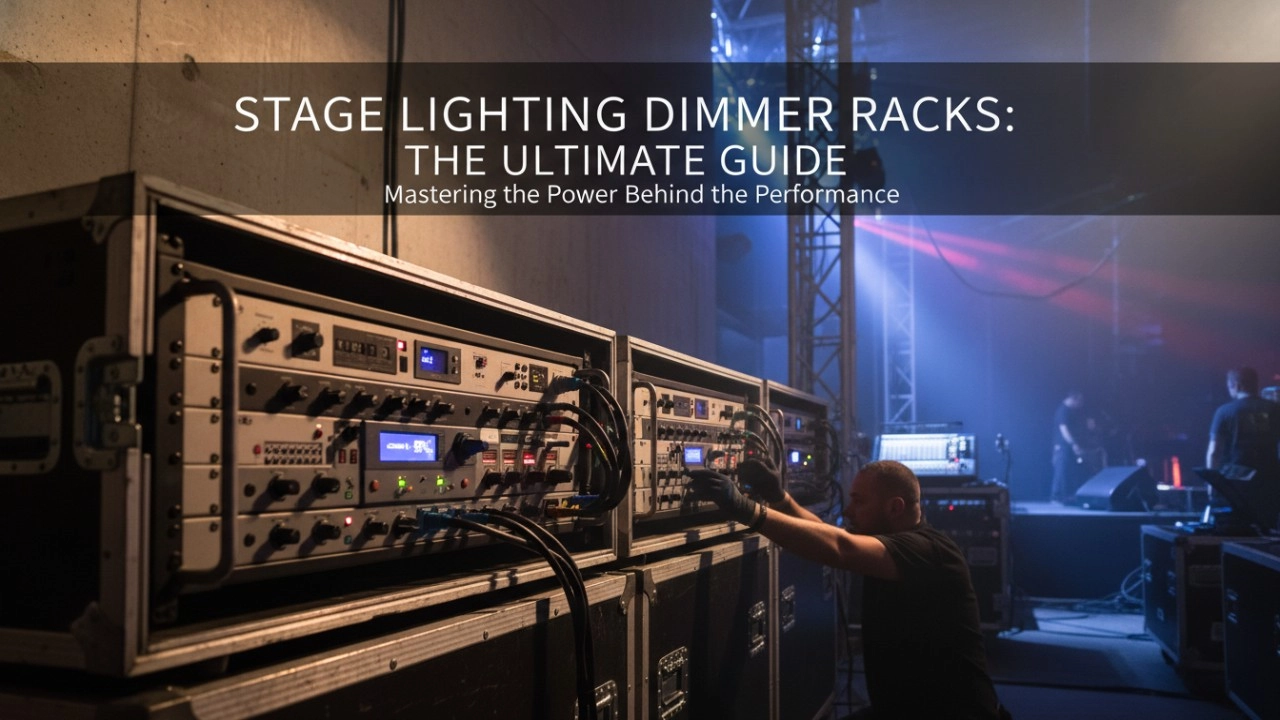
A comprehensive 2026 guide to selecting high-performance stage lighting dimmer racks. We review top hybrid systems, explore SCR vs sine wave technology, and analyze essential features like ThruPower for modern venues.
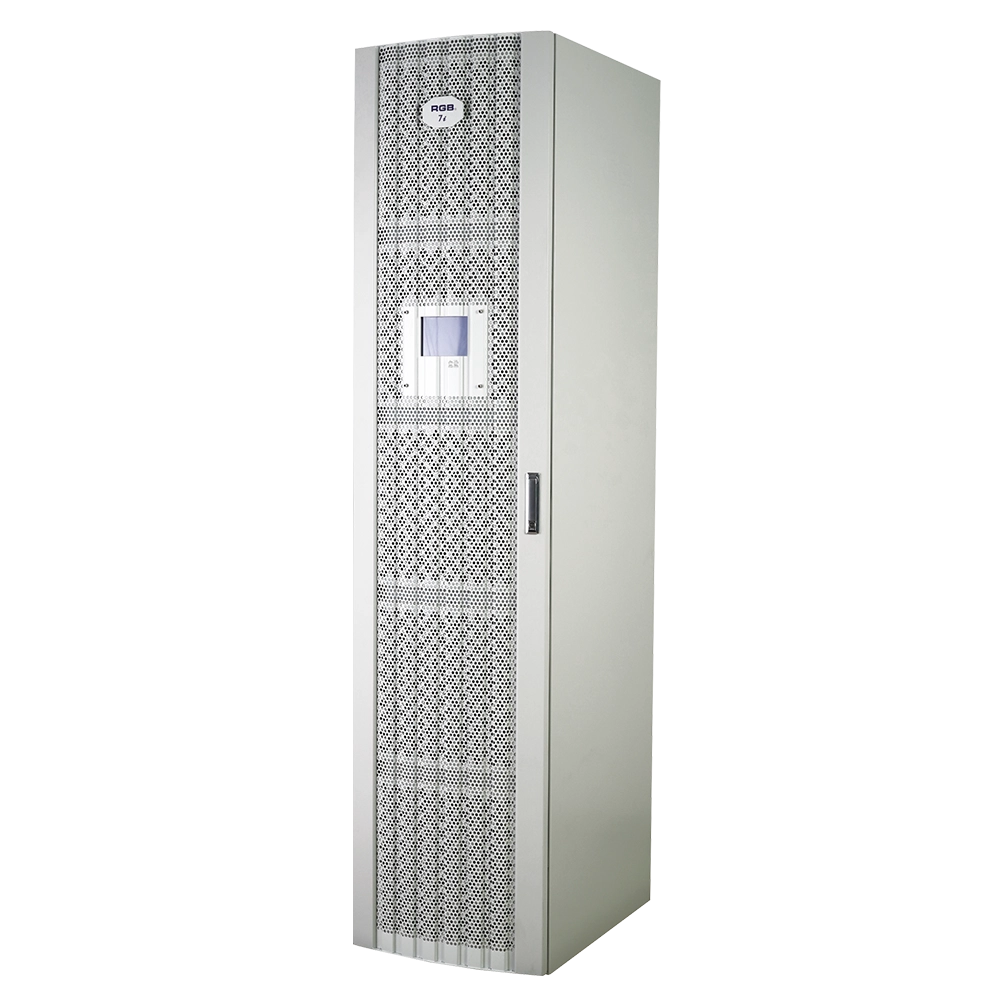
7i Dimmer/Relay Racks
7i is RGB independent research and development, with completely independent core technology, full digital decoding technology dimming racks, using a dual system, double decoding, double trigger, and duplex dual backup central decoding processor, with thyristor, relay, dimming relay mixed and other output configurations, supporting a visual lighting control system, intuitive display of dimming racks' online and offline status, and remote monitoring.
It is widely used in performing arts and cultural venues such as theaters, concert halls, multi-function halls, cultural travel and performing arts, TV stations, gymnasiums, auditoriums, commercial art lighting and so on.
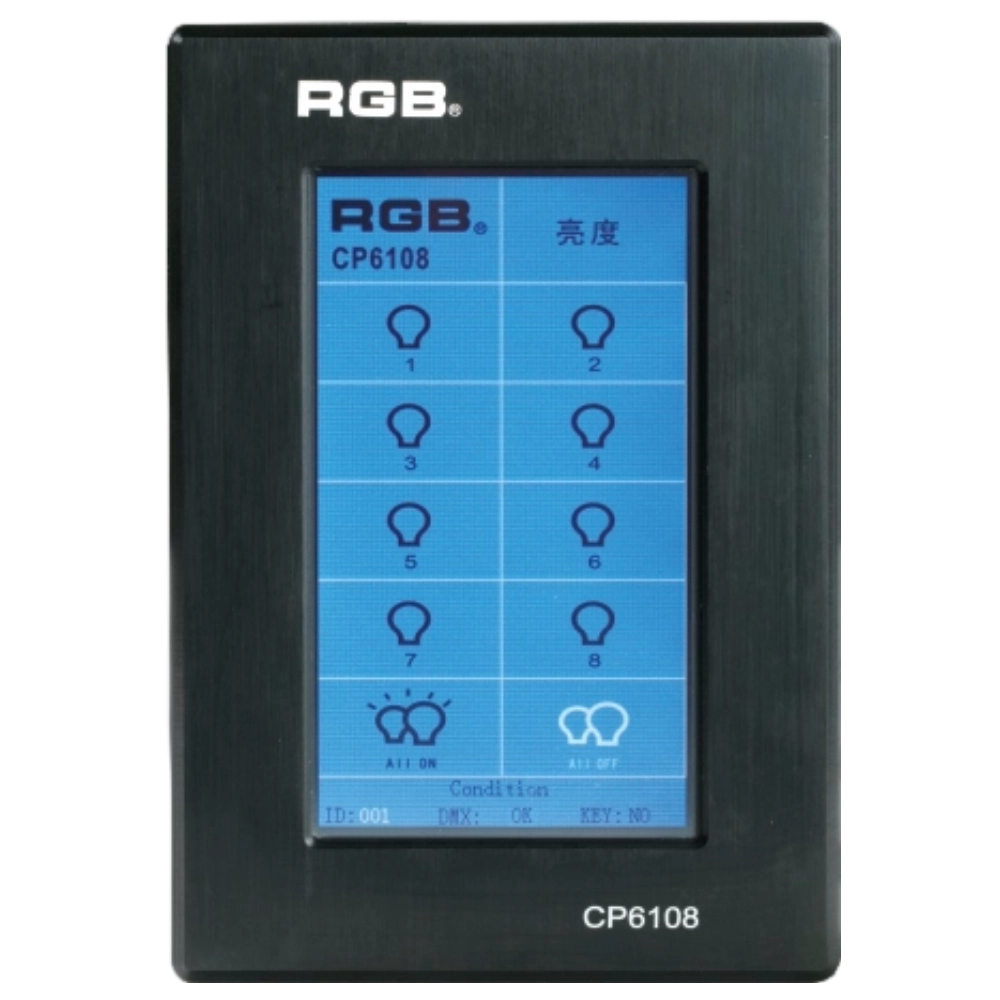
Site Light Controller CP6108
The CP6108 lighting control panel is a lighting control device for theater stage lights, work lights, environmental lighting, commercial art lighting, sports venue lighting, and other places. By connecting to the dedicated lighting control host CP6100, it realizes the central control of the lighting system, supports a visual lighting control system, and intuitively displays the online and offline status of CP6108. Realize remote monitoring, editing, and setting of corresponding parameters.
It is widely applicable to theaters, cinemas, auditoriums, stadiums, museums, exhibition halls, cultural tourism performances, commercial art lighting, and other places.
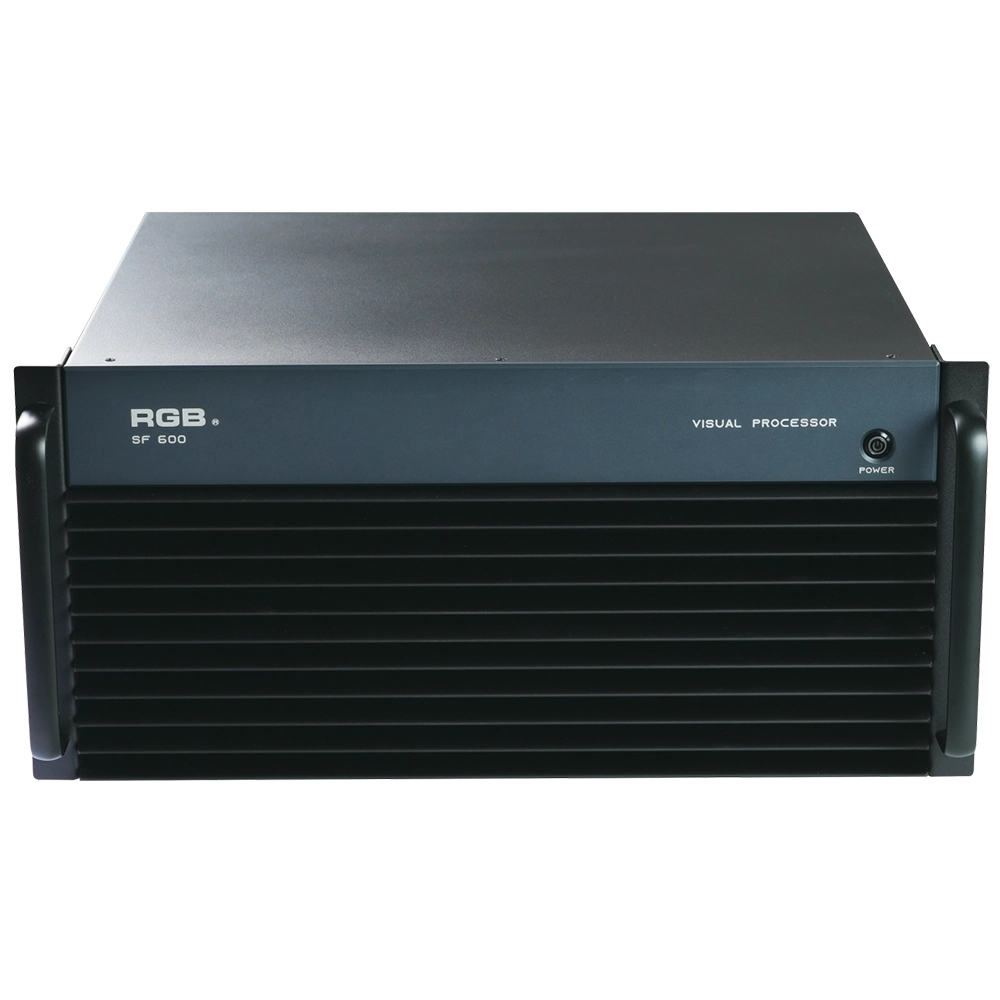
SF600 Visual R-net central processing processor
The SF600 Visual R-net central processing processor by RGB delivers advanced visual systems performance with high-speed processing and seamless integration. Designed for efficiency and reliability, it’s ideal for enhancing your visual system applications in corporate environments.
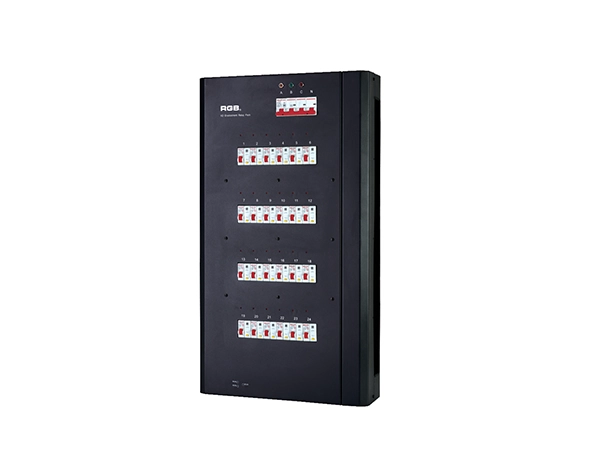
K2 Intelligent Network Relay Racks
K series is the newly developed and produced product of all-weather smart network relay cabinet. It has two major indoor and outdoor waterproof series and has multiple network control modes, such as double DMX512, sACN, ART-net, etc, which can control any equipment like resistive, inductive and capacitive and so on
K series has two major series from the perspective of function, namely, K2 ordinary type and KW2 waterproof type. It has two modes of installation, one is hanging on the wall, and the other is cabinet. It has three specifications of output circuit, namely, 24, 48 and 60 respectively.
K series applies to different performance places, such as, outdoor cultural tourism, TV station, theater, stadium and ambient intelligence lighting and so on.
Expert Support
Interested in learning more or need expert guidance related to this article? Fill in your details, and our team will provide tailored support.
Intelligent Control. Brilliant Performance.
RGB specializes in stage lighting control systems, delivering intelligent, reliable, and high-performance solutions for theaters and performance spaces worldwide.
Contact
Email:
Tel:
+86 20 3928 0245
+86 20 3928 0247
Address:
No.3, Huashan Road, Shilou Town, Panyu, Guangzhou, China.
Whatsapp: +8615975520131