
Mastering Stage Light Dimmers: The Complete 2026 Professional Guide
|
- What is a Stage Light Dimmer and How Does it Work?
- The Mechanics of Dimming
- Top Features to Look for in a Stage Light Dimmer in 2026
- Future-Proofing Your Rig
- The Importance of Stage Light Dimmers for Professional Lighting Design
- Elevating the Audience Experience
- How to Choose the Right Stage Light Dimmer for Your Production Needs
- Matching Technology to Application
- Stage Light Dimmers vs. Traditional Lighting Controls: A Comparison
- The Signal Chain Explained
- Common Problems with Stage Light Dimmers and How to Fix Them
- Troubleshooting Hybrid Rigs
- 2026 Stage Light Dimmer Models: Which One Offers the Best Performance and ROI?
- Evaluating Long-Term Value
- Maintaining and Troubleshooting Your Stage Light Dimmer: Expert Tips
- The 80% Rule and Safety Checks
- Frequently Asked Questions (FAQ)
- References
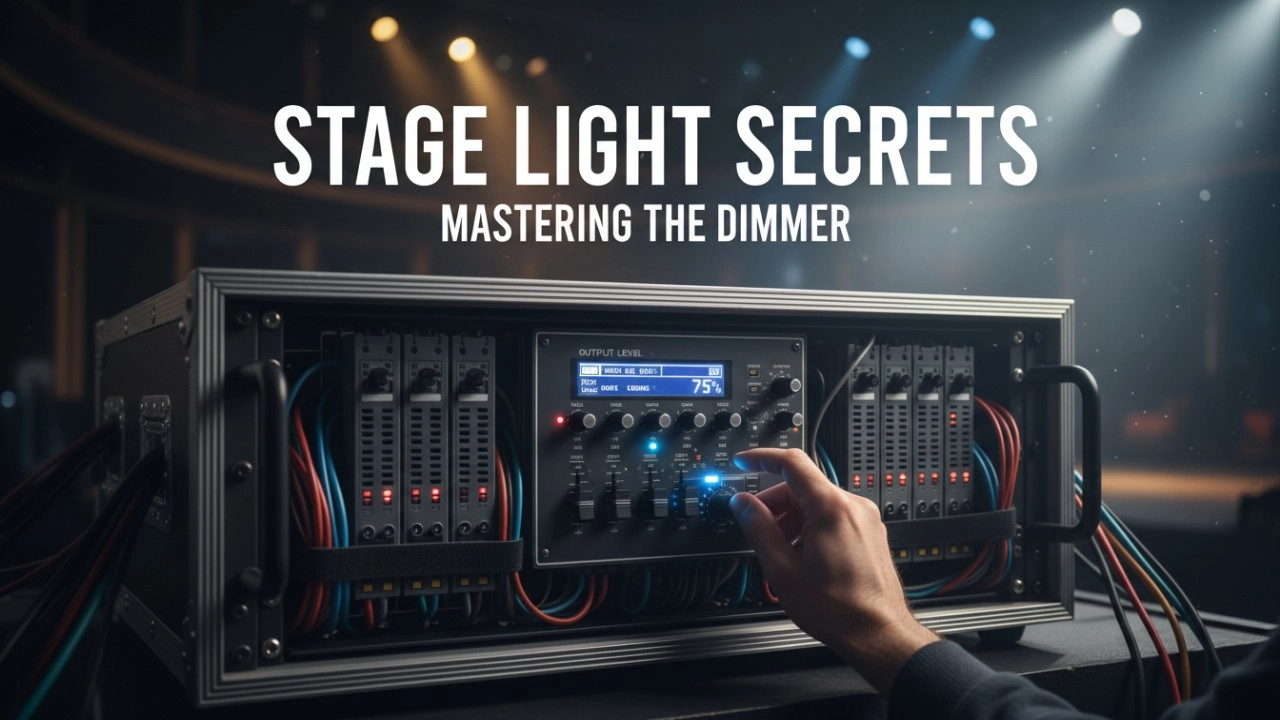
What is a Stage Light Dimmer and How Does it Work?
A stage light dimmer is a power regulation device that controls the intensity of lighting fixtures by adjusting the voltage or current waveform delivered to the lamp. Unlike a simple on/off switch, it enables smooth transitions and precise brightness management essential for theatrical storytelling.

The Mechanics of Dimming
Understanding stage light dimmer mechanics requires looking under the hood at the signal flow. In modern entertainment lighting, the dimmer acts as the bridge between the control console and the fixture. When you push a fader on your stage light dimmer controller, it sends a low-voltage digital signal (typically DMX512) to the dimmer rack. The rack then interprets this data and uses high-power components—traditionally Silicon Controlled Rectifiers (SCR) or modern Insulated-Gate Bipolar Transistors (IGBT)—to "chop" the AC sine wave. This rapid switching happens hundreds of times per second, effectively reducing the total energy reaching the bulb without causing visible flicker to the human eye.
Key Functions:
- Voltage Regulation: Converts standard mains power into variable output for intensity control.
- Signal Conversion: Translates digital DMX instructions into physical electrical current.
- Visual Dynamics: Enables fades, snaps, and chases that define the mood of a performance.
- Load Management: Distributes power safely across multiple circuits to prevent overloads.
Top Features to Look for in a Stage Light Dimmer in 2026
The most critical feature for 2026 is hybrid compatibility, allowing a single dimmer rack to intelligently switch between constant power for LEDs and regulated dimming for tungsten loads. As venues transition to hybrid rigs, this flexibility prevents equipment damage and simplifies infrastructure.
Future-Proofing Your Rig
In 2026, a standard dimmer is no longer enough. The industry is shifting heavily toward smart, bi-directional communication. Guangzhou RGB Lighting Equipment Co.,Ltd. has pioneered this shift since 1996, developing intelligent network dimming solutions that integrate seamlessly with modern workflows. Their R&D emphasizes that a robust dimmer must support RDM (Remote Device Management), which allows the console to query the dimmer for temperature stats, fault logs, and address settings remotely—saving hours of climbing ladders during setup.
Essential 2026 Specifications:
- Universal Load Compatibility: Auto-detection for resistive (incandescent) and capacitive (LED) loads.
- RDM Protocol Support: Essential for remote troubleshooting and bi-directional status updates.
- High Rise Time Inductors: Look for chokes with >400µs rise time to minimize filament sing (noise).
- Real-time Monitoring: Built-in screens or network apps displaying voltage, current, and thermal status.
The Importance of Stage Light Dimmers for Professional Lighting Design
Dimmers are the emotional heartbeat of a production, granting designers the ability to sculpt space, direct audience focus, and manipulate the passage of time through light intensity. Without them, a stage is static and flat; with them, it becomes a living, breathing environment.
Elevating the Audience Experience
In professional theater, the "fade" is a language of its own. A slow, 10-second fade-out can signify a tragic end, while a snap blackout creates shock. Theatrical dimmer rack installation isn't just about power; it's about artistic capability. Proper dimming allows for "zonal lighting," where specific areas of the stage are highlighted while others fall into shadow, guiding the viewer's eye exactly where the director intends.
Design Benefits:
- Mood Control: Low intensity creates intimacy or tension; high intensity evokes energy and openness.
- Focus Direction: Subtly dimming background elements keeps attention on the lead performer.
- Seamless Transitions: Invisible cross-fades between scenes maintain immersion without jarring breaks.
- Visual Depth: Varying intensities across a set creates three-dimensional texture and contrast.
How to Choose the Right Stage Light Dimmer for Your Production Needs
To select the correct dimmer, you must calculate the total amperage of your lighting fixtures and ensure the dimmer channel capacity exceeds this load by at least 20%. This safety margin prevents overheating and ensures compliance with electrical codes.
Matching Technology to Application
The choice heavily depends on your fixture types. LED vs Tungsten dimming compatibility is the most common stumbling block. Traditional SCR dimmers work perfectly for tungsten but can cause strobing or non-linear dimming curves with LEDs. For venues mixing both, companies like Guangzhou RGB Lighting Equipment Co.,Ltd. offer hybrid solutions that can deliver "True Power" (non-dimmed mains voltage) to LEDs while dimming tungsten on adjacent channels.
Selection Criteria:
- Calculate Load: Formula: Watts / Volts = Amps. (e.g., Four 575W lamps on a 120V circuit = 19.2 Amps). requires a 2.4kW (20A) dimmer.
- Check Protocol: Ensure the dimmer accepts the control protocol (DMX512, Art-Net, sACN) used by your console.
- Form Factor: Portable packs for mobile DJs vs. wall-mounted racks for permanent theater installs.
- Rise Time: Higher rise times reduce audio hum, critical for concert halls and recording studios.
Stage Light Dimmers vs. Traditional Lighting Controls: A Comparison
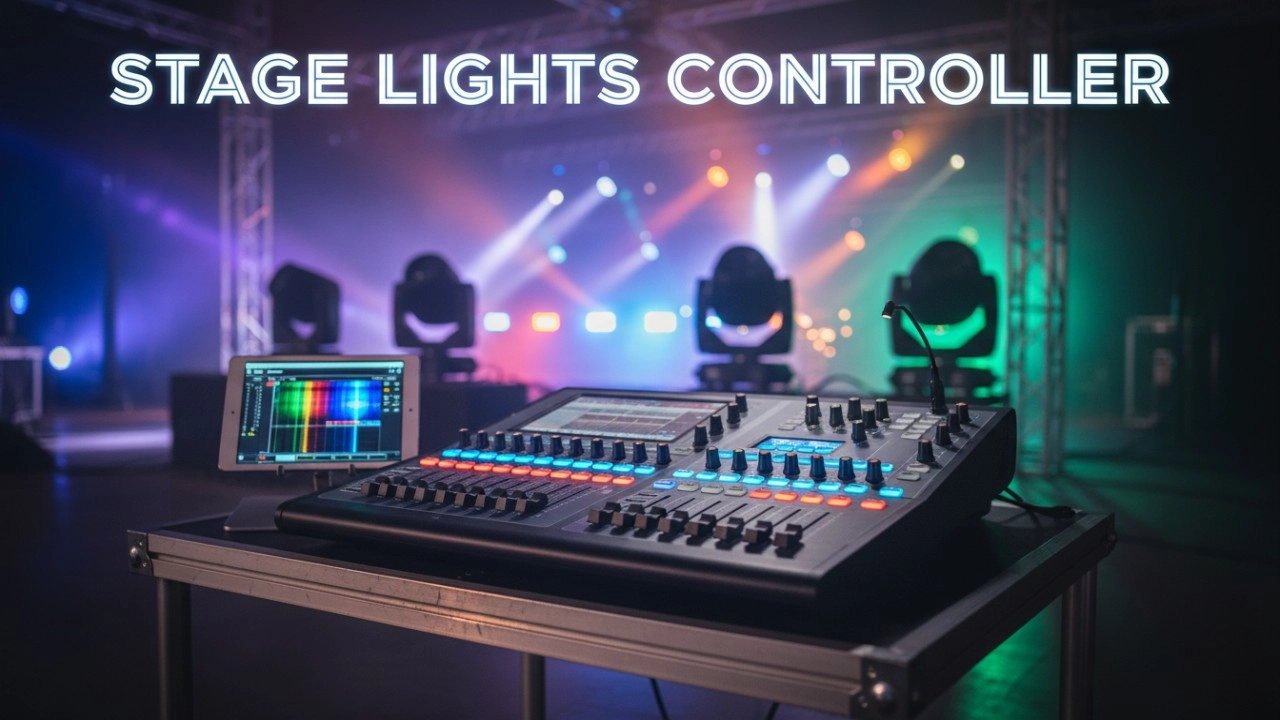
A stage light dimmer handles high-voltage power regulation, whereas a lighting controller (console) processes data and logic to tell the dimmer what to do. Think of the controller as the brain and the dimmer as the muscle.
The Signal Chain Explained
It is a common misconception that a controller directly powers the lights. In a professional system, the stage light dimmer controller sends low-voltage data (digital instructions) to the dimmer rack. The rack then modulates the high-voltage main power accordingly. Traditional switches typically offer binary control (On/Off), whereas dimmers provide 256 steps (8-bit) or 65,536 steps (16-bit) of resolution for smooth fading.
Key Differences:
- Function: Controllers generate data; dimmers regulate power.
- Placement: Controllers sit at the Front of House (FOH); dimmers are backstage or in electrical closets.
- Safety: Dimmers handle dangerous currents (often 100A+ per rack); controllers handle safe logic voltages (5V).
- Versatility: Dimmers enable fades and chases; traditional switches are limited to static looks.
Common Problems with Stage Light Dimmers and How to Fix Them
The most frequent issue is "ghosting" or flickering, often caused by a minimum load mismatch where modern LED fixtures draw too little power for an older dimmer to stabilize. This results in lights glowing faintly when they should be off or pulsing rhythmically.
Troubleshooting Hybrid Rigs
As venues upgrade, LED vs Tungsten dimming compatibility issues spike. Older SCR dimmers leak a small amount of voltage (snubber leakage) to check for open circuits. Tungsten filaments ignore this, but sensitive LED drivers may flash intermittently. Drawing on decades of experience, Guangzhou RGB Lighting Equipment Co.,Ltd. recommends using a "dummy load" (a small resistive load) on the circuit or upgrading to relay-bypass dimmers to solve this.
Troubleshooting Guide:
- Flickering: Check if the LED is dimmable. If yes, adjust the dimmer's "Minimum Level" trim settings.
- Humming Noise: Indicates loose lamp filaments or low-quality dimmer chokes. Tighten bulbs or upgrade the dimmer.
- Tripped Breakers: Likely an overload. adhere to the 80% rule (never load a 20A circuit past 16A).
- Unresponsive Channel: Swap the module with a working one to isolate if the fault is in the dimmer or the fixture.
2026 Stage Light Dimmer Models: Which One Offers the Best Performance and ROI?
The best-performing models for 2026 are high-density, modular racks that support networked DMX (sACN/Art-Net) and offer hot-swappable power modules. These features minimize downtime and maximize Return on Investment (ROI) by extending the lifecycle of the infrastructure.
Evaluating Long-Term Value
When analyzing ROI, look beyond the initial price tag. Energy-efficient dimmers with intelligent cooling systems reduce HVAC costs. Furthermore, robust build quality—like the solutions from RGB Lighting, a National High-Tech Enterprise—ensures reliability for major events like the Beijing Olympics. Their hybrid dimmer solutions reduce the need for separate relay panels, saving significant installation labor and space.
ROI Factors:
- Failure Rate: Low failure rates reduce emergency rental costs and maintenance labor.
- Energy Efficiency: Modern processors reduce "standby" power draw and heat generation.
- Scalability: Modular racks allow you to expand channels as your venue grows.
- Resale Value: Brand-name equipment with RDM support holds value better in the used market.
Maintaining and Troubleshooting Your Stage Light Dimmer: Expert Tips
Routine maintenance involves vacuuming air vents to prevent overheating and torquing electrical terminals annually to prevent arcing and fire hazards. Heat is the enemy of electronics; keeping your rack cool and clean is the single best way to extend its life.
The 80% Rule and Safety Checks
Data from safety reports emphasizes the "80% Rule": never load a dimmer past 80% of its rated capacity (e.g., 1,920 Watts on a 2,400 Watt dimmer). This headroom accounts for "in-rush current"—the momentary spike in power when cold tungsten filaments are turned on. Neglecting this is a primary cause of blown fuses and melted triacs.
Maintenance Checklist:
- Airflow: Clean fan filters and heat sinks every 3-6 months.
- Connections: Tighten all screw terminals (with power OFF) to prevent resistance heating.
- Load Testing: Periodically check actual amp draw with a clamp meter against the console's patch data.
- Firmware: Update dimmer processors to ensure compatibility with the latest RDM features and LED profiles.
Frequently Asked Questions (FAQ)
Q: Can you use a standard household dimmer for stage lights? A: No, household dimmers cannot handle the high wattage or continuous duty cycle required for stage lighting. Furthermore, commercial dimmers lack the noise filters (chokes) necessary to prevent audio interference.
Q: What is the difference between a dimmer and a switch pack? A: Dimmers vary voltage to change intensity; switch packs only offer full ON or full OFF positions. Using a dimmer on a non-dimmable fixture like a moving head can cause permanent circuit damage.
Q: How many DMX channels does a single dimmer pack use? A: A standard pack uses one DMX channel per physical output or "dimmer". For example, a 4-channel portable pack will occupy 4 consecutive addresses in a DMX universe.
Q: Why do stage lights flicker when dimmed low? A: This is often caused by a mismatch between the dimmer's minimum load requirements and the low draw of LED bulbs. It can also result from a low PWM frequency in cheaper LED drivers.
Q: What is the 80% rule in stage dimming? A: It is a safety standard stating you should only load a dimmer to 80% of its maximum rated capacity. This prevents circuit breakers from tripping due to heat expansion and in-rush current during long performances.
Q: What is a 'choke' in a theatrical dimmer? A: A choke is an inductor that slows the rise time of the electrical current. Its primary job is to reduce the physical vibration of lamp filaments (hum) and radio frequency interference (RFI).
Q: What is the difference between hard patching and soft patching? A: Hard patching is the physical plugging of a light into a specific dimmer circuit. Soft patching is the digital assignment of a dimmer channel to a specific fader or channel number on the lighting console.
Q: Do LED stage lights need a dimmer rack? A: Most modern LEDs have built-in dimming electronics and require "constant power" rather than a traditional dimmer rack. They receive dimming instructions via DMX data rather than voltage reduction.
References
Latest News
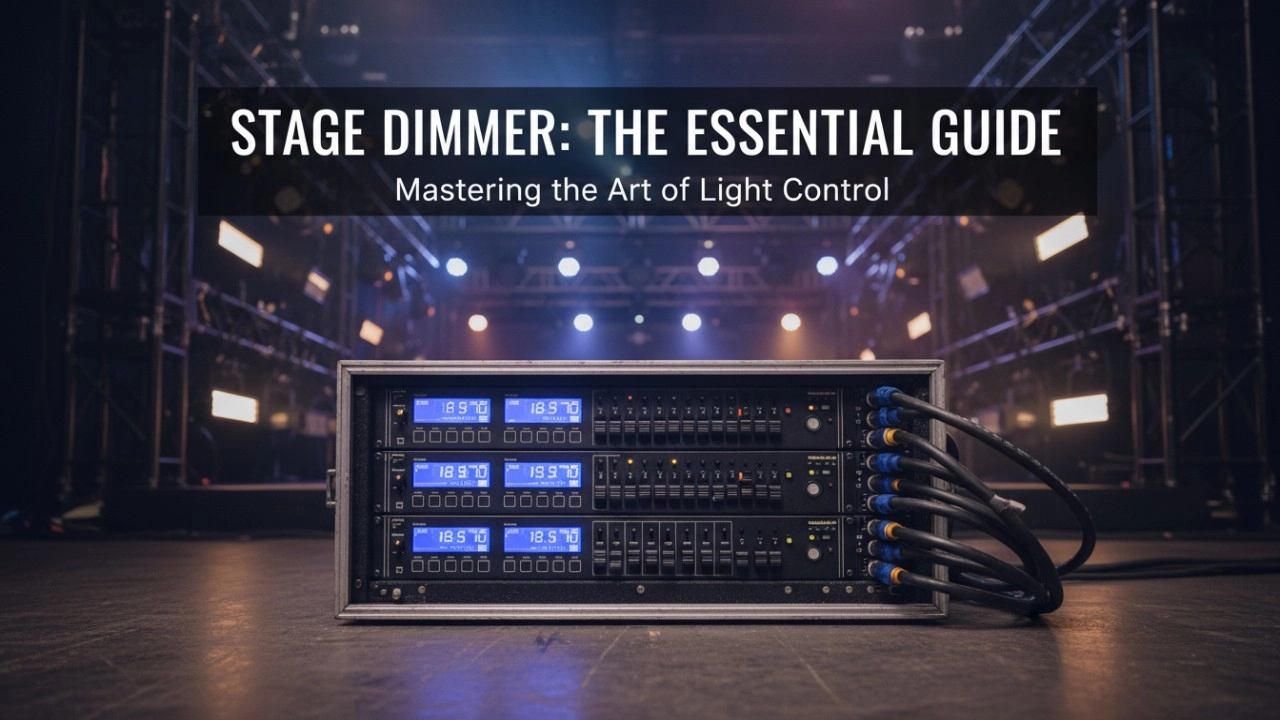
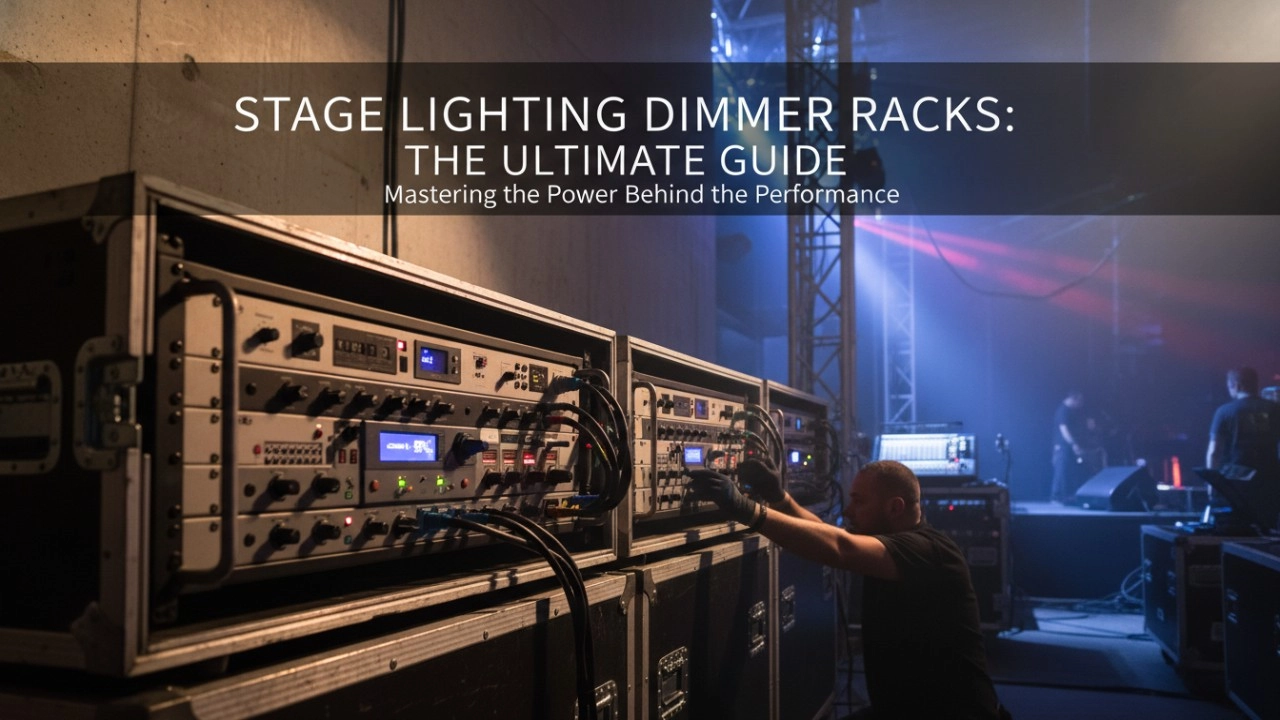
A comprehensive 2026 guide to selecting high-performance stage lighting dimmer racks. We review top hybrid systems, explore SCR vs sine wave technology, and analyze essential features like ThruPower for modern venues.
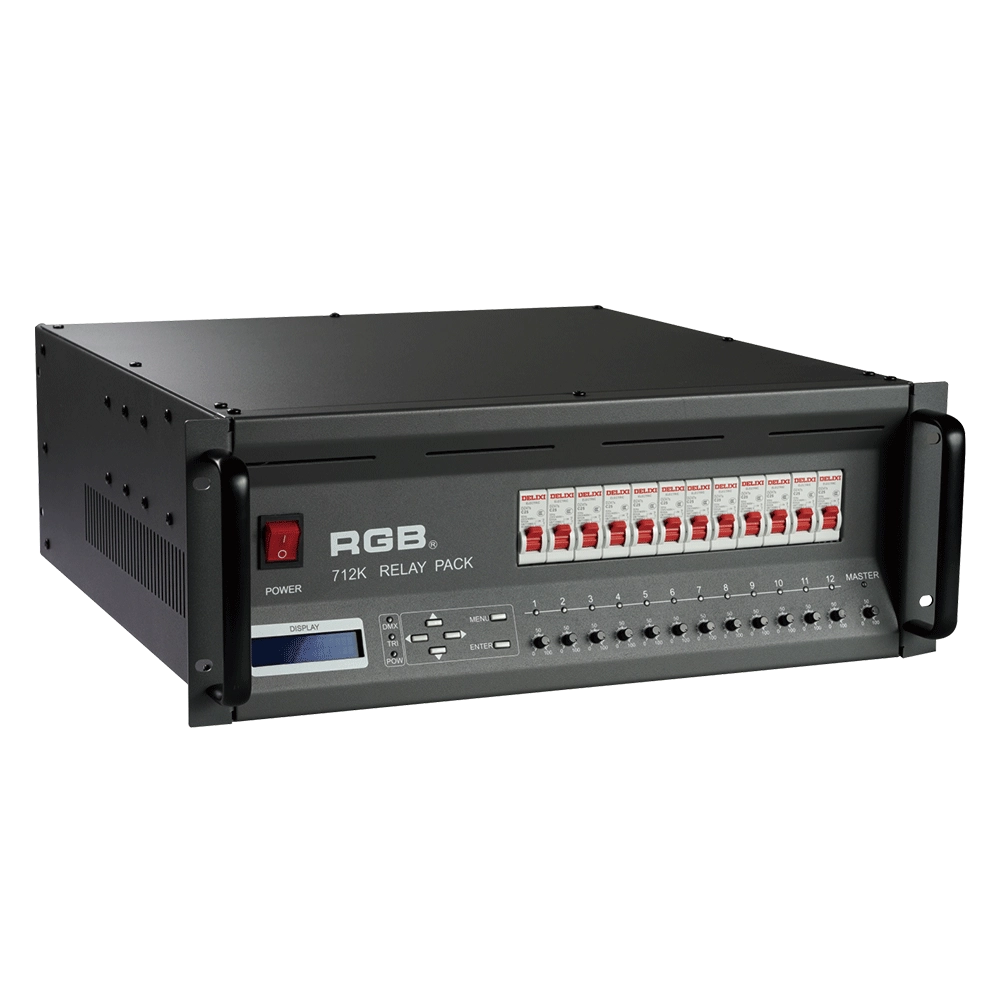
Alloy Relay Packs
High-performance DMX512 relay dimming unit with 512 addressable circuits, phase-loss protection, dual-signal amplification, 20A output per channel, and robust design for reliable stage and mobile lighting applications.
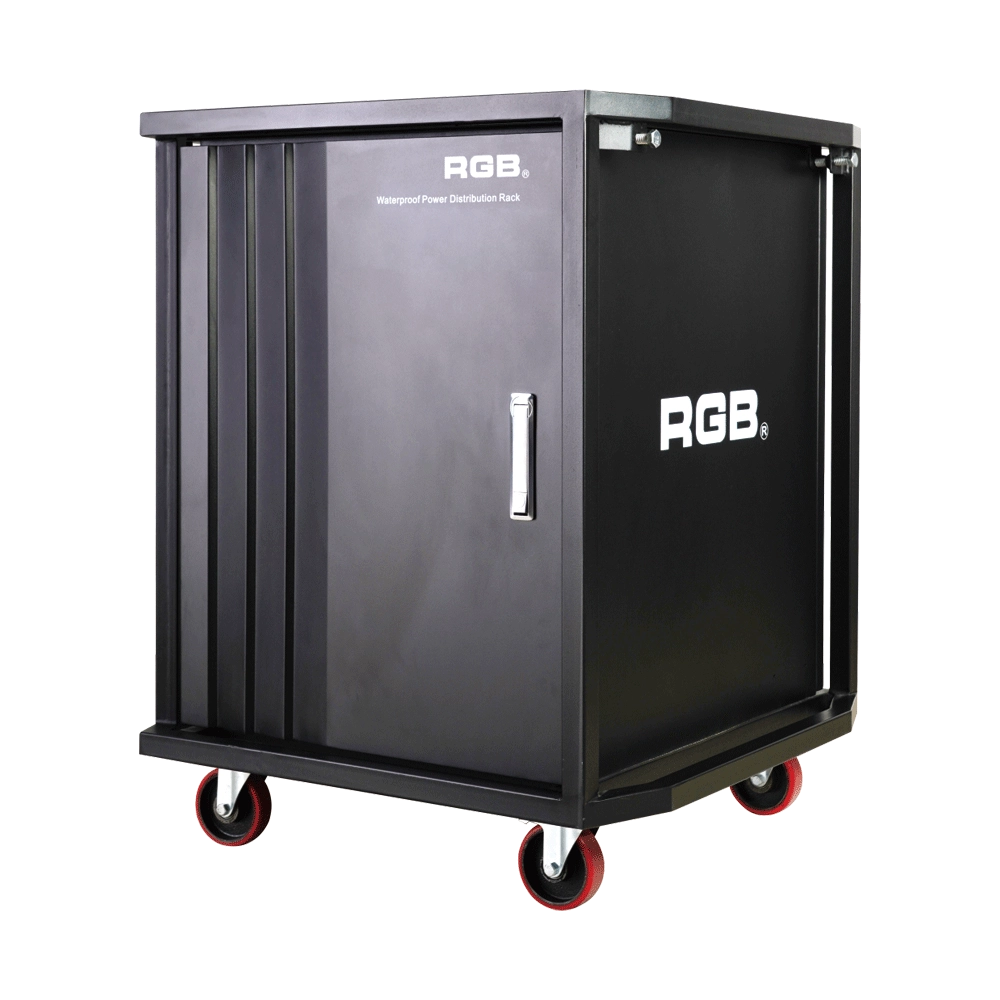
Multifunction Waterproofing Racks Of RGB-W Series
With the continuous development of flow performance, the requirement for performance is more demanding. In order to facilitate the transportation and make it easier to carry for all the equipment used in the performance, the stage light and sound equipment will be installed into a cabinet, for example, the power supply system. During the transportation process, it is inevitable for a collision or crash to take place. If the cabinet material is not strong enough, it may lead to deformation and even damage the equipment inside. Moreover, most of the existing cabinets are not waterproof. It will be very dangerous for the flow performance, as it is normal and inevitable to encounter rainy days. As the equipment inside the cabinets is electriferous, it might cause damage to the electronic equipment at least and even cause casualties at worst. Meanwhile, most of the existing cabinets can only be installed with one kind of equipment with a single variety.
In order to overcome the above-mentioned technical flaw, the RGB company has developed a new type of waterproofing multifunction cabinet of the W series. The waterproofing cabinet of the W series meets the need for the installation of dimming and tone-tuning devices, transportation, and utilization.
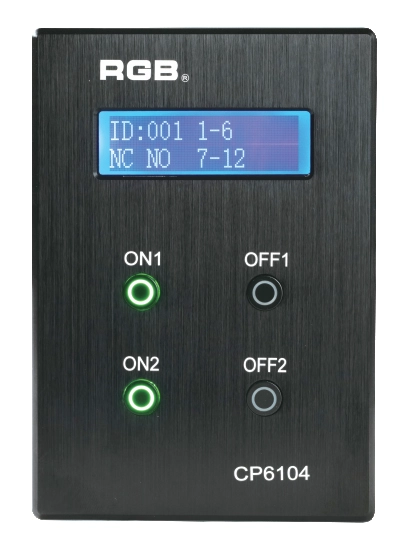
Site Light Controller CP6104
The CP6104 lighting control panel is a lighting control device for theater stage lights, work lights, environmental lighting, commercial art lighting, sports venue lighting and other places. By connecting to the dedicated lighting control host CP6100, it realizes the central control of the lighting system, supports a visual lighting control system, and intuitively displays the online and offline status of CP6104. Realize remote monitoring, editing and setting of corresponding parameters.
It is widely applicable to theaters, cinemas, auditoriums, stadiums, museums, exhibition halls, cultural tourism performances, commercial art lighting and other places.
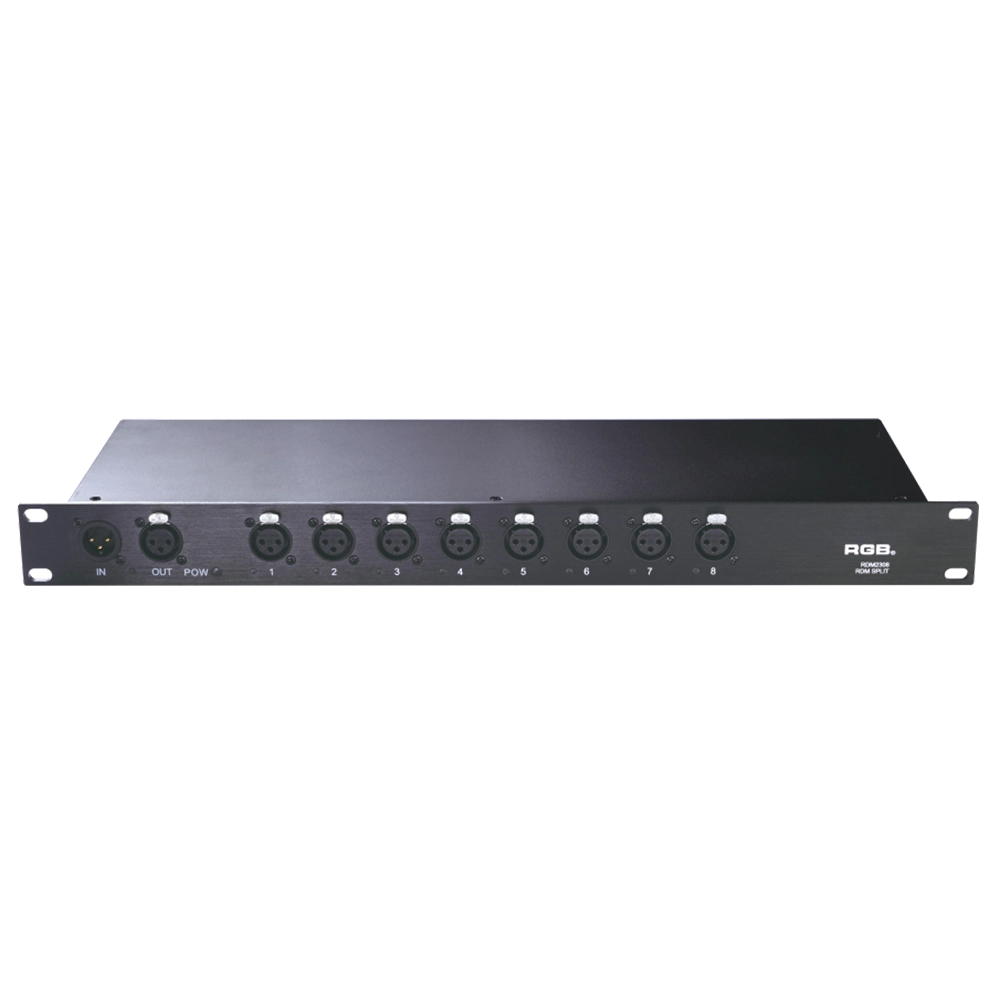
RDM Series Signal Amplifier
RDM2304, RDM2308, RDM2310, RDM2312 rack-mounted The RDM signal amplifier improves the quality of bidirectional RDM signal transmission, ensures the reliability of system control, and prevents faults such as AC high-voltage reverse series lighting control system, lightning high-voltage series entry, and line short circuit, which may affect system stability.
Expert Support
Interested in learning more or need expert guidance related to this article? Fill in your details, and our team will provide tailored support.
Intelligent Control. Brilliant Performance.
RGB specializes in stage lighting control systems, delivering intelligent, reliable, and high-performance solutions for theaters and performance spaces worldwide.
Contact
Email:
Tel:
+86 20 3928 0245
+86 20 3928 0247
Address:
No.3, Huashan Road, Shilou Town, Panyu, Guangzhou, China.
Whatsapp: +8615975520131