
Mastering Stage Light Dimmer Controllers: The Ultimate Guide to DMX, LED Compatibility, and Setup
|
- Introduction
- What is a stage light dimmer controller and how does it work?
- Can you use a stage light dimmer controller with LED lights?
- How do you connect a DMX controller to a stage lighting dimmer pack?
- What is the difference between a dimmer pack and a relay switch pack?
- How many lighting fixtures can you connect to a single dimmer controller?
- Why are my stage lights flickering when connected to a dimmer?
- What features should you look for when buying a stage dimmer controller?
- How does the DMX512 protocol integrate with stage light dimmers?
- Conclusion
- Call to Action
Introduction
A flawless theatrical lighting setup relies on precise control, smooth transitions, and reliable equipment. At the heart of this visual magic is the stage light dimmer controller, a device that dictates the intensity and mood of every performance. Whether you are running a high school play, a mega-church service, or a massive live concert, mastering your dimming system is non-negotiable.
Understanding the technical nuances of these systems can seem daunting, especially with the rapid integration of modern LED technologies alongside traditional incandescent fixtures. From navigating DMX addresses to preventing frustrating light flickers, lighting designers must wear many hats to ensure seamless operation.
In this comprehensive guide, we will break down everything you need to know about stage light dimmer controllers. We will answer the most pressing questions about setup, LED compatibility, protocol integration, and best practices to ensure your next production shines brilliantly from the first cue to the final curtain call.
What is a stage light dimmer controller and how does it work?
A stage light dimmer controller is a specialized electronic device used to adjust the brightness or intensity of lighting fixtures. By varying the amount of electrical power or control signal sent to the lamps, the dimmer allows lighting designers to create dynamic visual atmospheres. It acts as the intermediary bridge between the power source, the lights, and the lighting control console operated by the technician.
Traditionally, these controllers utilized phase-cut dimming, a process that rapidly chops the alternating current (AC) waveform before it reaches the fixture. By reducing the time the voltage is applied during each electrical cycle, the overall light output decreases. This technology was historically perfected for incandescent and halogen lamps, which respond beautifully to voltage reduction with a smooth, warming glow as they dim.
Modern intelligent controllers, however, work differently. Instead of cutting raw electrical power, they often send low-voltage digital signals to fixtures equipped with their own internal drivers. When the operator adjusts a fader on the lighting control console, the controller instantly calculates the desired intensity and transmits this instruction across the lighting network, allowing for instantaneous and highly accurate adjustments.
Can you use a stage light dimmer controller with LED lights?
Using a traditional stage light dimmer controller with modern LED fixtures is one of the most common challenges in today's lighting industry. The short answer is yes, but it heavily depends on the type of dimmer and the specific LED fixture you are using. Older dimmer packs were engineered strictly for resistive loads like incandescent bulbs, relying on phase-cut technology that physically reduces the line voltage.
Because LEDs are solid-state devices powered by electronic drivers, sending a chopped AC waveform to a standard, non-dimmable LED can result in severe flickering, buzzing, or even permanent damage to the fixture's internal circuitry. To successfully dim LEDs, the fixture itself must be explicitly rated as "dimmable," and it must be paired with a compatible controller designed to handle low-wattage, electronic loads.
Instead of altering voltage, modern LED dimming is commonly achieved through Pulse Width Modulation (PWM). This technique controls the average power delivered to the light by rapidly switching it on and off at a frequency far beyond what the human eye can perceive. When using a stage light dimmer controller for LEDs, you typically rely on digital data to tell the LED's internal driver to apply this pulse width modulation, rather than using an external dimmer pack to restrict AC power.
How do you connect a DMX controller to a stage lighting dimmer pack?
Connecting a DMX controller to a stage lighting dimmer pack is a straightforward process, but it requires careful attention to signal flow and addressing. The DMX protocol operates on a daisy-chain topology. This means you run a single data cable from the output of your controller into the input of your first dimmer pack.
If you have multiple dimmer packs, you will connect a cable from the "DMX Out" (or "DMX Thru") port of the first pack to the "DMX In" port of the second pack, continuing this chain for all devices. Standard theatrical connections use either 3-pin or 5-pin XLR cables explicitly rated for digital data transmission. It is crucial to use true DMX cables rather than standard microphone cables, as microphone cables lack the proper 120-ohm impedance and can cause signal reflections.
Once physically connected, you must assign a starting address to the dimmer pack. If your pack has four channels and is set to DMX address 1, it will respond to faders 1, 2, 3, and 4 on your controller. Finally, always insert a DMX terminator into the output port of the very last fixture in your chain. A terminator is a simple connector containing a 120-ohm resistor that absorbs the signal at the end of the line, preventing data bounce-back that could corrupt your lighting cues.
What is the difference between a dimmer pack and a relay switch pack?
While they may look identical on a lighting rig, dimmer packs and relay switch packs serve entirely different purposes. A dimmer pack is designed to vary the intensity of the connected load from 0% to 100%. As discussed, it accomplishes this by altering the electrical waveform or control data, allowing for smooth fades and nuanced lighting states.
A relay switch pack, on the other hand, operates on a strict binary basis: it is either completely ON or completely OFF. Relays use mechanical or solid-state switches to open and close the electrical circuit without supplying any intermediate voltage. When a DMX channel controlling a relay crosses a certain threshold (typically 50%), the relay clicks on, delivering full line voltage to the connected device.
Relay packs are essential for powering non-dimmable stage equipment. If you attempt to plug a moving light, a fog machine, a laser, or a non-dimmable LED into a dimmer pack, the altered voltage will likely destroy the equipment's power supply. By routing these devices through a relay switch pack, you can safely turn them on and off remotely from your console without risking voltage-induced damage.
How many lighting fixtures can you connect to a single dimmer controller?
Determining the maximum number of fixtures you can connect to a single stage light dimmer controller comes down to basic electrical math. Every dimmer pack has two critical maximum ratings: a per-channel maximum and a total pack maximum. You must ensure that the combined wattage or amperage of your fixtures does not exceed either of these limits.
To calculate your load, use the simple electrical formula: Watts = Volts × Amps.
- Calculate Channel Limits: If you are running a standard 120V system and your dimmer pack has a maximum rating of 10 amps per channel, that channel can safely handle up to 1,200 watts. If you are using 500-watt PAR cans, you can safely plug two of them into that single channel (1,000 watts total).
- Calculate Pack Limits: Consider the total unit capacity. A 4-channel dimmer pack might support 10 amps per channel but only have a total unit maximum of 15 amps (1,800 watts) due to its main power cord. You cannot fully load all four channels simultaneously.
Always inventory your fixture wattages, factor in an extra 10% to 20% safety margin for initial inrush current, and distribute your loads evenly across the system to prevent tripped breakers during a live show.
Why are my stage lights flickering when connected to a dimmer?
Flickering is the bane of any lighting designer, and when your stage lights flicker on a dimmer, there are several common culprits to investigate. Resolving these issues quickly requires a systematic approach to troubleshooting your rig.
The most frequent issue in modern setups is a hardware mismatch.
- Compatibility mismatch: Using modern LED fixtures on older phase-cut dimmers often causes flickering if the dimmer's minimum load requirement is not met, or if the LED driver cannot properly interpret the chopped AC waveform.
- Corrupted DMX signal: Because DMX512 operates at a high frequency, the data stream is highly susceptible to interference. Missing DMX terminators or using improper audio cables instead of DMX cables will cause the digital signal to bounce back along the wire, causing random strobing.
- Voltage fluctuations: Sharing power circuits with heavy machinery, air conditioning units, or massive audio amplifiers can cause line voltage drops, which translate directly into visible light fluctuations. Ensure your lighting rig is on isolated, clean power circuits.
What features should you look for when buying a stage dimmer controller?
When investing in a new stage light dimmer controller, your first consideration should be the channel count and power capacity required for your specific theatrical lighting setup. Assess whether you are powering a few front wash lights or an expansive grid of theatrical fixtures. Choose a unit that comfortably exceeds your current wattage requirements to allow for future expansion.
Next, prioritize control protocols and flexibility. Ensure the unit natively supports standard DMX512. Modern controllers may also feature RDM (Remote Device Management), which allows your console to pull diagnostic data and change addresses remotely without requiring a technician to climb a ladder. Additionally, look for controllers with selectable dimming curves so you can match the fade profile perfectly to different types of lamps.
Finally, user interface and standalone capabilities are highly valuable. A digital LCD screen makes addressing far easier than traditional dipswitches. Standalone modes, such as built-in chases or the ability to hold a static look without a console attached, are lifesavers for simpler events. For a deeper dive into selecting the perfect equipment for your venue, check out our Stage Dimmers Guides.
How does the DMX512 protocol integrate with stage light dimmers?
The DMX512 protocol is the universal language of modern entertainment lighting. Originally intended as a standardized method for controlling dimmers, DMX512 is an internationally recognized standard maintained by the Entertainment Services and Technology Association (ESTA). It successfully standardized how consoles and lighting fixtures communicate, ending the era of proprietary, brand-specific control cables.
In practice, a DMX controller sends out a continuous stream of digital data across a network known as a DMX universe. A single universe consists of 512 individual channels. For a standard dimmer pack, each channel corresponds to a single dimmable power outlet. The controller sends a value between 0 and 255 for each channel; a value of 0 tells the dimmer to output 0% intensity, while 255 commands it to push to 100% full brightness.
The integration is seamless. When the dimmer pack receives the data packet, its internal microprocessor reads the specific byte of data assigned to its starting address. It then translates that digital value into an analog voltage output or a digital dimming signal, instantly adjusting the connected lights. This high-speed, unidirectional communication updates roughly 44 times per second, ensuring smooth, real-time control of even the most complex lighting cues.
Conclusion
Mastering stage light dimmer controllers is an essential skill for anyone involved in live production, theater, or event management. By understanding the underlying mechanics of phase-cut dimming, LED compatibility, and the universal DMX512 protocol, you empower yourself to design more reliable, dynamic, and breathtaking visual experiences.
As lighting technology continues to evolve, bridging the gap between traditional power-handling dimmer packs and intelligent, data-driven LED fixtures will remain a crucial part of your technical workflow. Armed with the knowledge of proper load calculations, troubleshooting flicker issues, and optimal setup practices, you are now well-equipped to illuminate your next stage with absolute confidence.
Call to Action
If you are ready to upgrade your lighting rig or need expert advice on selecting the perfect stage light dimmer controller, contact us today for a personalized consultation!
Latest News
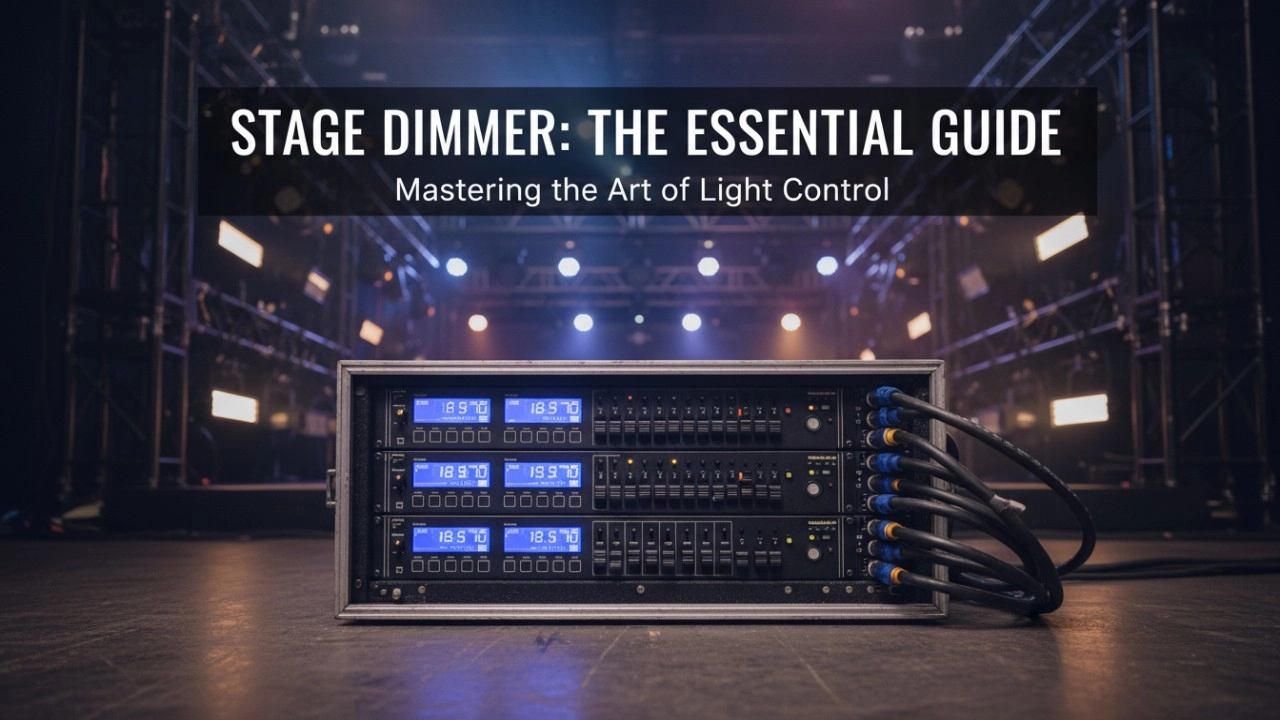
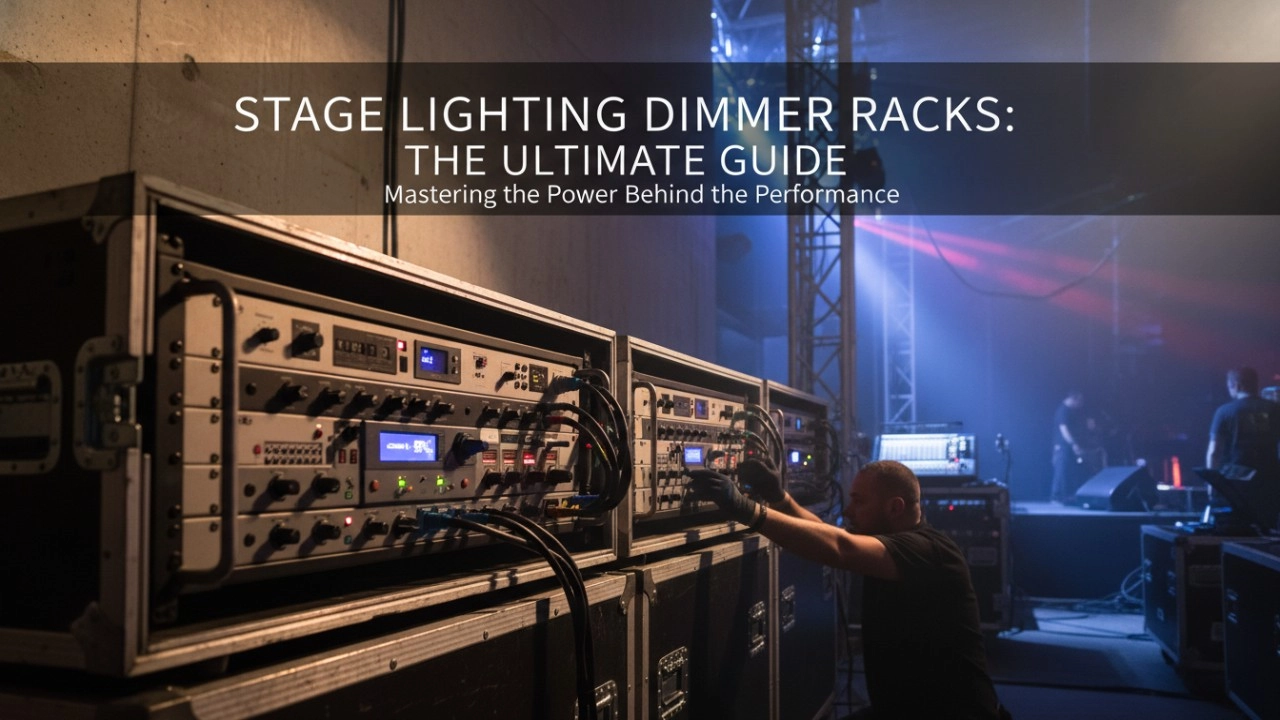
A comprehensive 2026 guide to selecting high-performance stage lighting dimmer racks. We review top hybrid systems, explore SCR vs sine wave technology, and analyze essential features like ThruPower for modern venues.
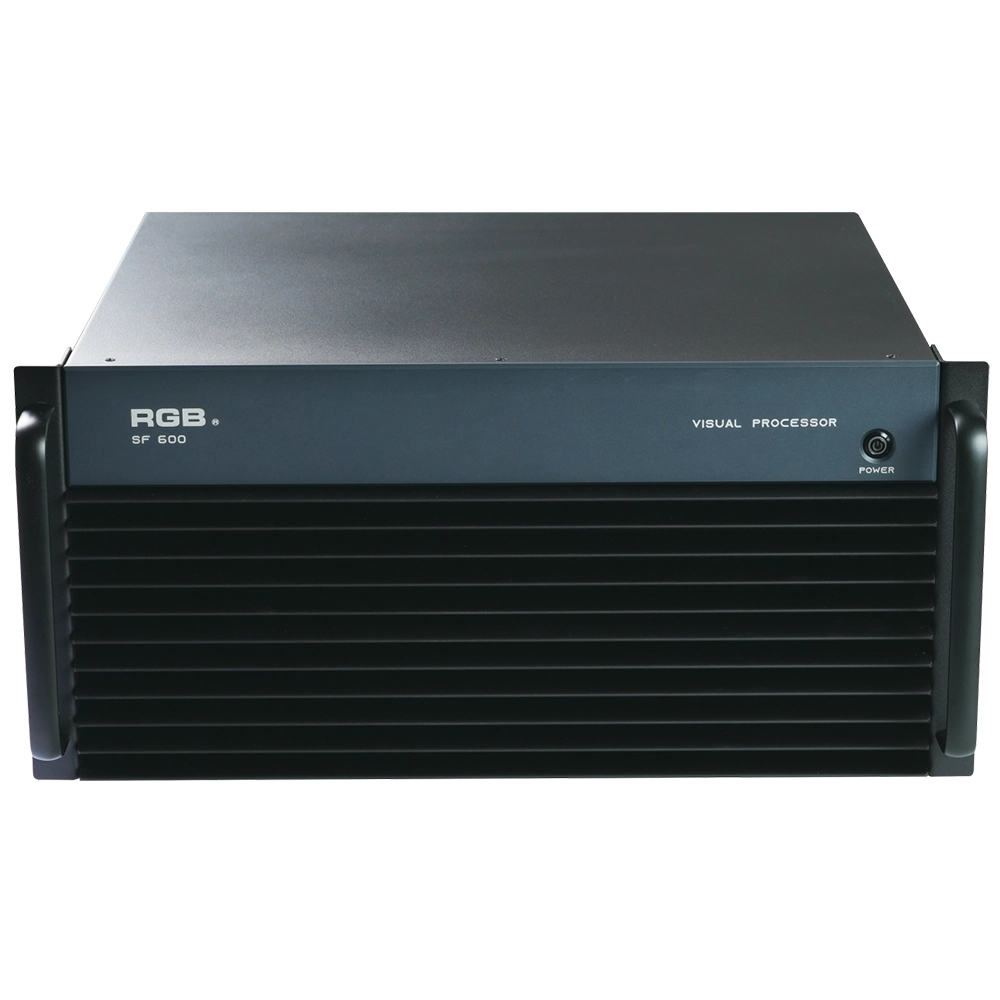
SF600 Visual R-net central processing processor
The SF600 Visual R-net central processing processor by RGB delivers advanced visual systems performance with high-speed processing and seamless integration. Designed for efficiency and reliability, it’s ideal for enhancing your visual system applications in corporate environments.
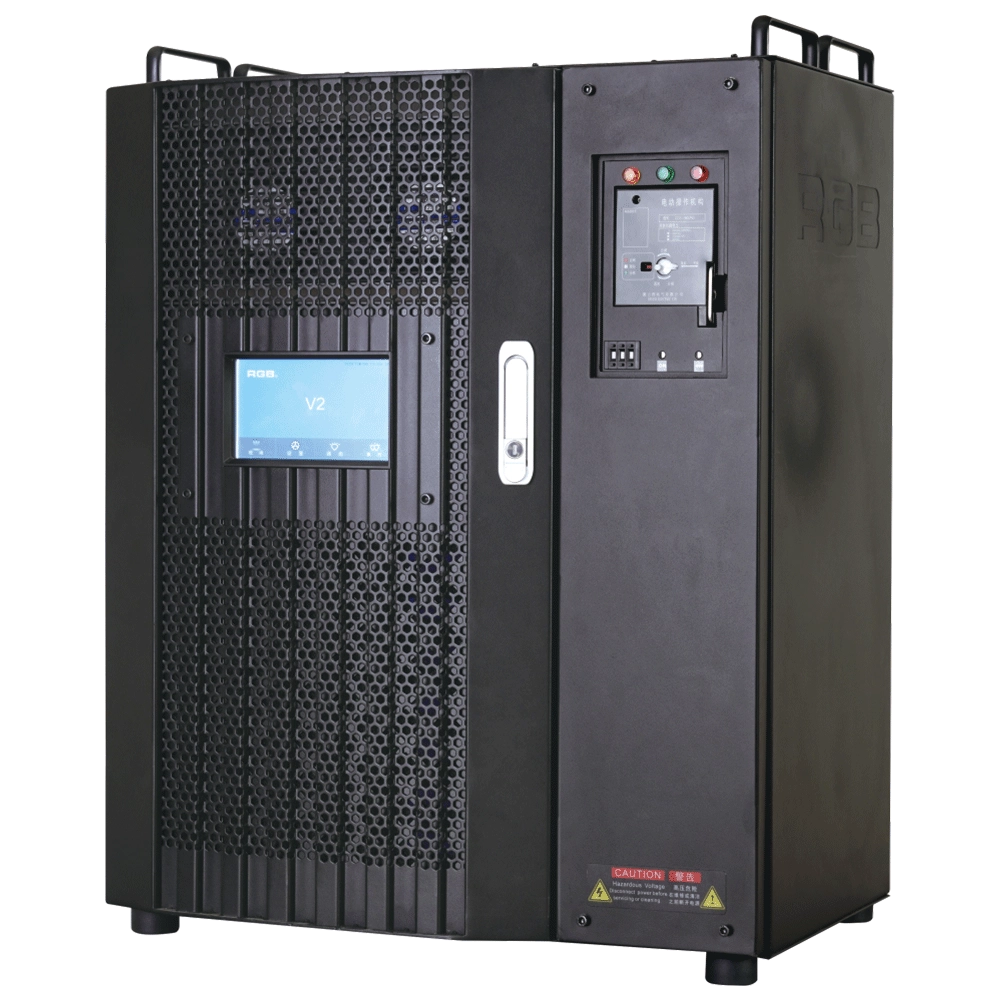
V2 Intelligent Network Dimmer/Relay Racks
V2 is an artificial intelligence dimming rack independently developed by RGB, which has completely independent core technology and obtained software copyrights. It is a fully digital electrodeless trigger and multi-backup independent CPU central processor technology. It has a variety of output configurations, such as sine wave, thyristor, relay, dimming relay, etc. It supports visual lighting control system and visually displays the online and offline status of dimming racks. Realize remote monitoring, editing, and setting of relevant parameters.
It is widely used in performing arts and cultural venues such as theaters, concert halls, multi-function halls, cultural travel and performing arts, TV stations, gymnasiums, auditoriums, commercial art lighting and so on.
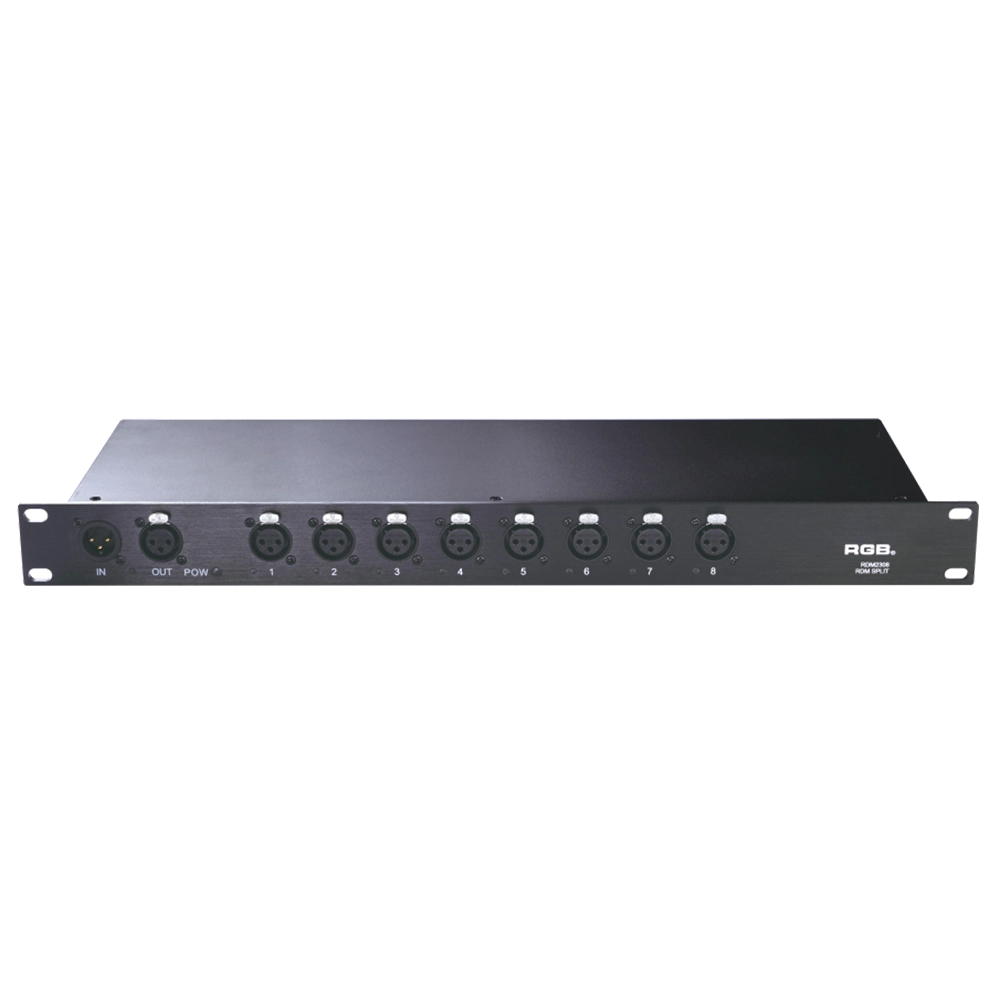
RDM Series Signal Amplifier
RDM2304, RDM2308, RDM2310, RDM2312 rack-mounted The RDM signal amplifier improves the quality of bidirectional RDM signal transmission, ensures the reliability of system control, and prevents faults such as AC high-voltage reverse series lighting control system, lightning high-voltage series entry, and line short circuit, which may affect system stability.
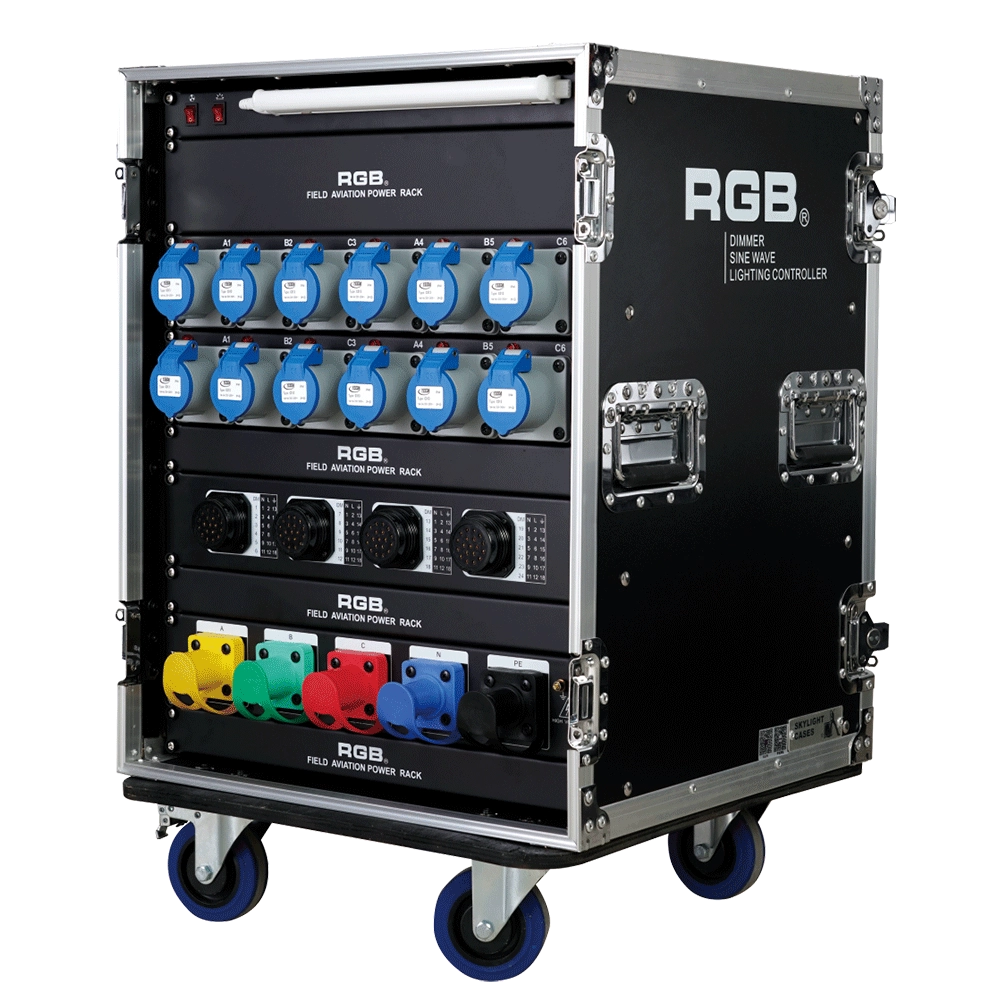
ZT2419+1216 Distribution Box
ZT2419+1216 features dual protection functions and is a power distribution product specifically designed for overcurrent and short circuits in electrical equipment. It is the best choice for mobile performance and is suitable for use in computer lamps, conventional lamps, and other equipment.
Expert Support
Interested in learning more or need expert guidance related to this article? Fill in your details, and our team will provide tailored support.
Intelligent Control. Brilliant Performance.
RGB specializes in stage lighting control systems, delivering intelligent, reliable, and high-performance solutions for theaters and performance spaces worldwide.
Contact
Email:
Tel:
+86 20 3928 0245
+86 20 3928 0247
Address:
No.3, Huashan Road, Shilou Town, Panyu, Guangzhou, China.
Whatsapp: +8615975520131