
Can stage dimmers improve energy efficiency and save costs?
|
- 1. How do stage dimmers contribute to energy efficiency in stage lighting systems?
- 2. What are the cost-saving benefits of using stage dimmers in lighting systems?
- 3. How do stage dimmers extend the lifespan of lighting fixtures?
- 4. Are there specific types of stage dimmers suitable for beginners?
- 5. How do stage dimmers integrate with different lighting technologies?
- 6. What are the environmental benefits of using stage dimmers?
1. How do stage dimmers contribute to energy efficiency in stage lighting systems?
Stage dimmers play a pivotal role in enhancing energy efficiency within stage lighting systems. By adjusting the brightness of lights, dimmers reduce the amount of electricity consumed, leading to significant energy savings. For instance, dimming an incandescent or halogen light by 20% can decrease energy use by approximately 20%.
In practical terms, consider a medium-sized theater that replaces ten 1,000W halogen fixtures with ten 400W LED moving heads. This change reduces the total power consumption from 10,000W to 4,000W. Over a 4-hour show and 200 operating days a year, this equates to 4,800 kWh saved annually, translating to over $576 in electricity savings at a commercial rate of $0.12/kWh.
2. What are the cost-saving benefits of using stage dimmers in lighting systems?
Implementing stage dimmers not only conserves energy but also leads to substantial cost savings. Dimming lights by 25% can result in a 20% reduction in energy consumption. For example, a residential dimmer can save approximately $7.36 per year, effectively paying for itself in about two years.
In commercial settings, the savings are even more pronounced. A commercial dimmer can save over $85 per year in electricity costs, paying for itself in approximately one year. These savings are further amplified when dimming levels are increased, demonstrating a clear return on investment.
3. How do stage dimmers extend the lifespan of lighting fixtures?
Stage dimmers contribute to the longevity of lighting fixtures by reducing the intensity at which they operate. Dimming lights decreases the stress on bulbs, leading to a longer operational life. For instance, dimming an incandescent bulb by 25% can extend its lifespan from 5-6 months to up to four years.
This extended lifespan not only reduces the frequency of bulb replacements but also lowers maintenance costs, making dimmers a cost-effective addition to any lighting system.
4. Are there specific types of stage dimmers suitable for beginners?
For those new to stage lighting, user-friendly dimmer options are available. Basic DMX controllers with built-in programs allow for easy adjustment of brightness, color, and patterns using sliders or buttons. These controllers are affordable and straightforward, making them ideal for beginners.
Additionally, software solutions like Lightkey or Wolfmix offer visual programming, enabling real-time design of light shows. These platforms provide flexibility and control, catering to both novice and experienced users.
5. How do stage dimmers integrate with different lighting technologies?
Modern stage dimmers are designed to be compatible with various lighting technologies, including LED, halogen, and incandescent bulbs. Dimming an LED light to 50% brightness can reduce energy use by approximately 42%, showcasing the efficiency of dimming across different light sources.
This versatility ensures that stage dimmers can be effectively utilized in diverse lighting setups, providing energy savings and extended bulb life regardless of the lighting technology employed.
6. What are the environmental benefits of using stage dimmers?
Beyond energy and cost savings, stage dimmers offer significant environmental advantages. By reducing energy consumption, dimmers help decrease greenhouse gas emissions associated with electricity production. For example, Lutron's lighting control systems have saved nearly 10 billion kWh of energy annually, equivalent to removing 1.5 million cars from the road.
This reduction in energy use not only benefits the environment but also aligns with sustainability goals, making dimmers a responsible choice for energy-conscious individuals and organizations.
In conclusion, incorporating stage dimmers into your lighting system offers numerous benefits, including enhanced energy efficiency, substantial cost savings, extended bulb lifespan, user-friendly operation, compatibility with various lighting technologies, and positive environmental impact. For a personalized quote or more information, please contact us at info@rgbsystem.com or visit our website at www.rgbsystem.com.
Latest News
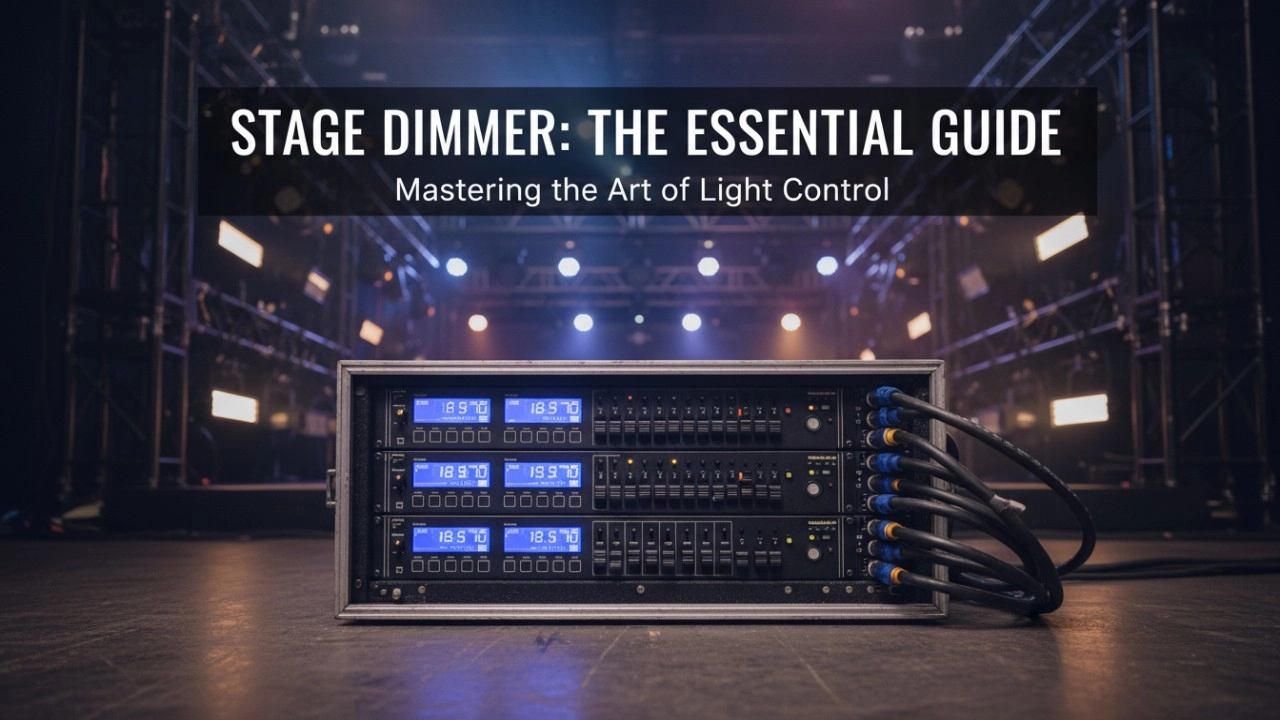
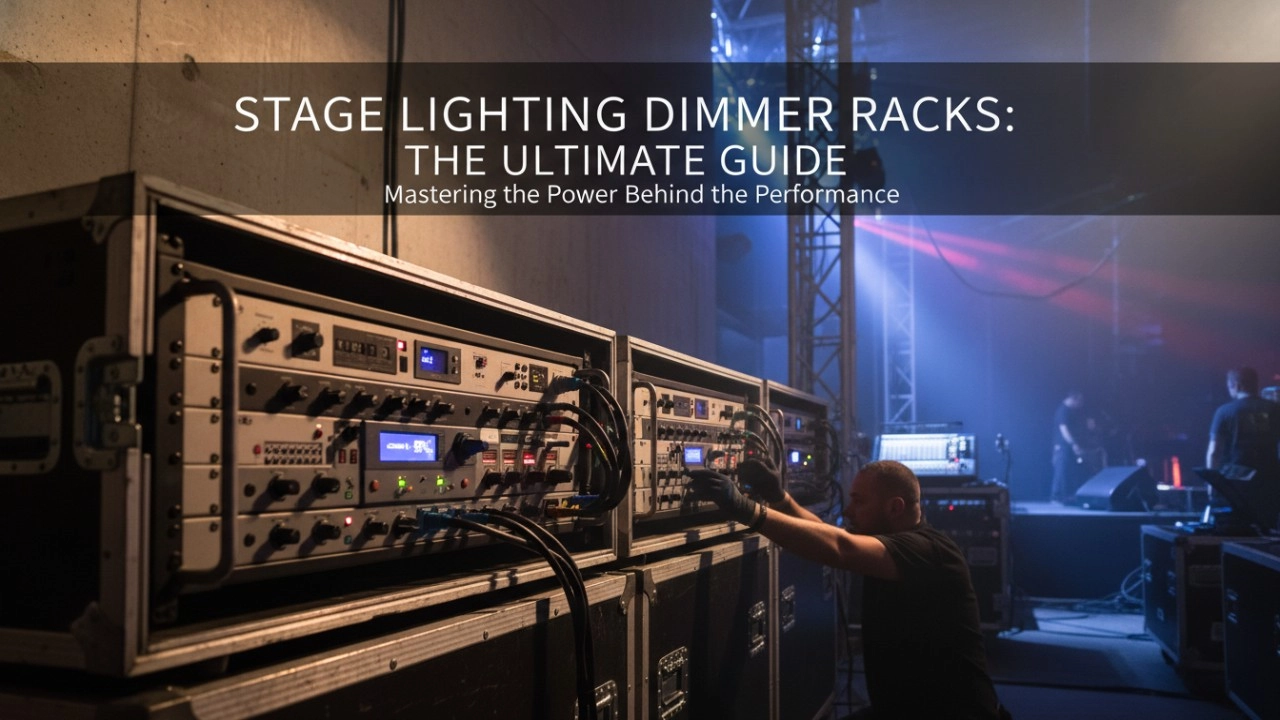
A comprehensive 2026 guide to selecting high-performance stage lighting dimmer racks. We review top hybrid systems, explore SCR vs sine wave technology, and analyze essential features like ThruPower for modern venues.
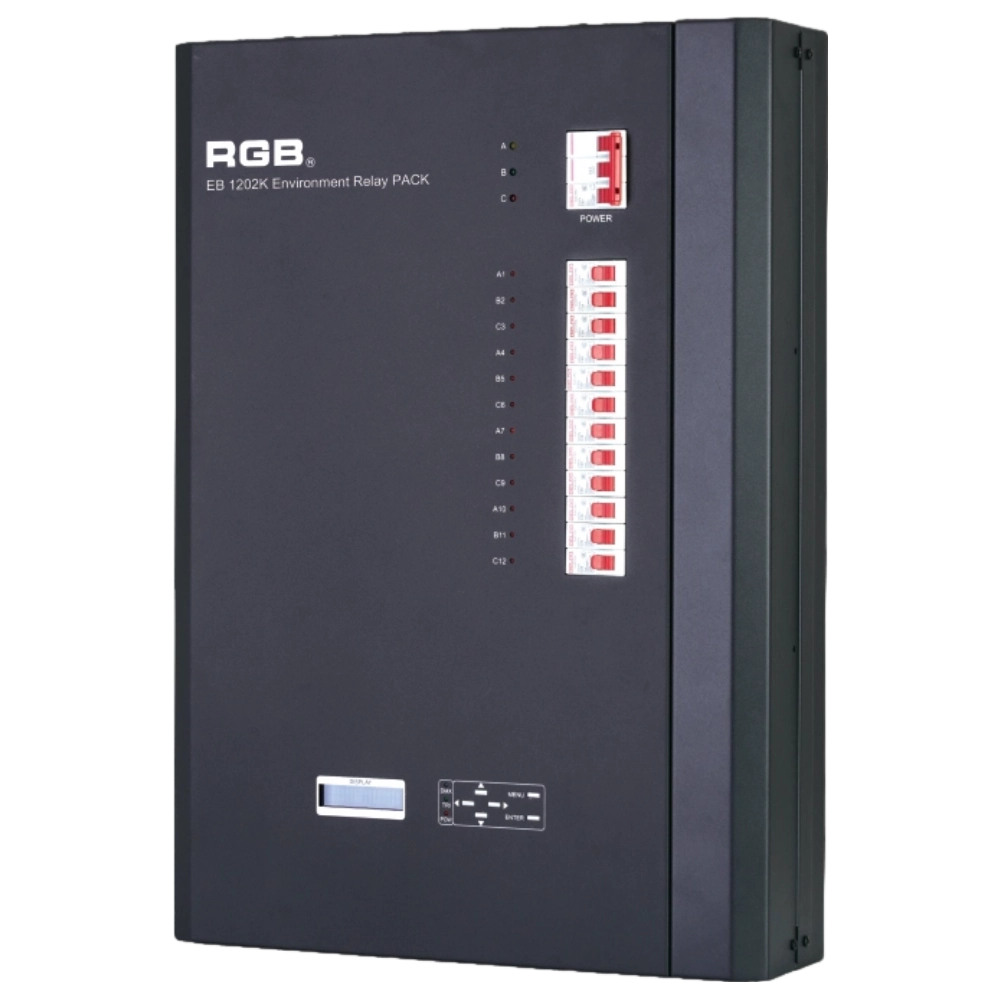
EB1202 Wall-Mounted Smart Site Light Control Series
Wall-mounted smart lighting controller with CE certification, DMX512 compatibility, flexible 12/24-channel output, scene backup, intelligent interface, and multiple dimming curves for precise professional lighting control.
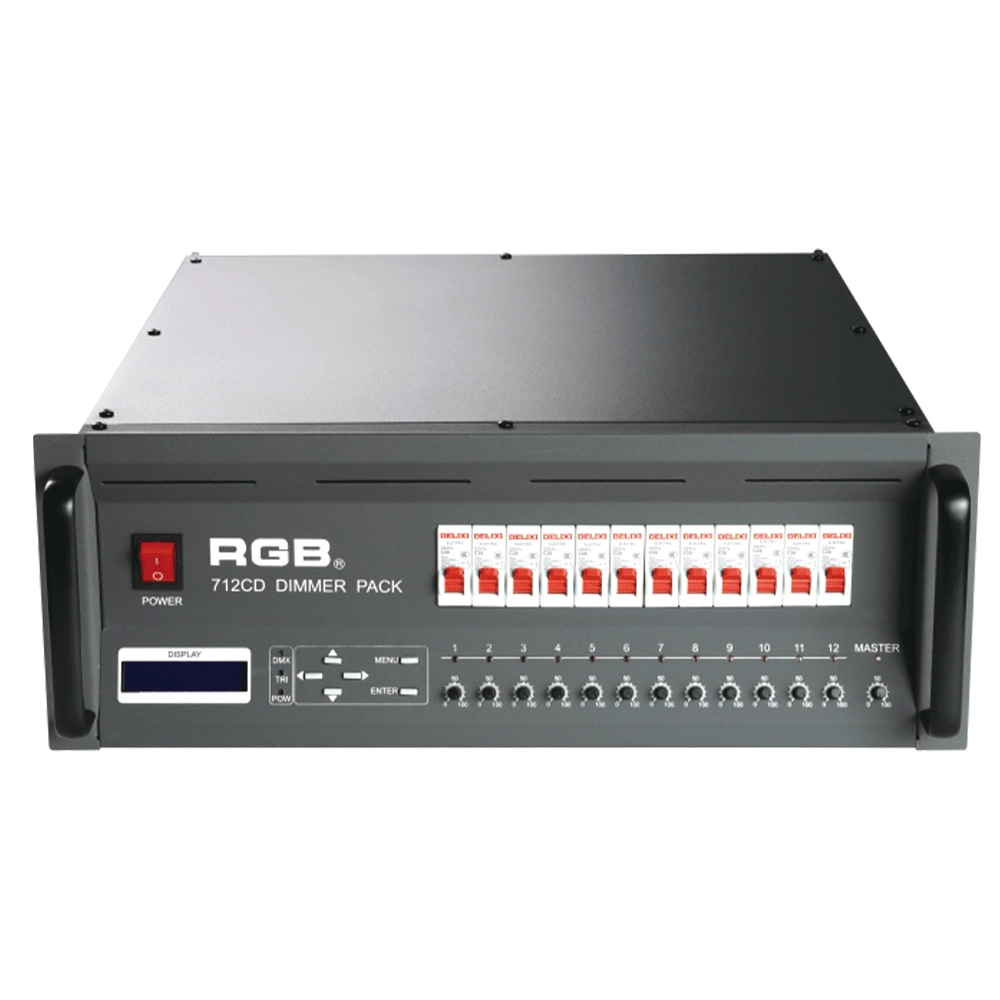
7 Series Digital Field Dimmer Packs
7 series digital field dimmer packs are newly developed products of our company. With DMX512 digital control signal input, they are compatible with other domestic and overseas digital lighting consoles. There exist 7 output choices: A series (40A), B series (3X10A), C series (19 core), D series (3 pin 32A), E series (3 pin 30A Japanese standard) F series (dual 19-core), G series (grid junction)
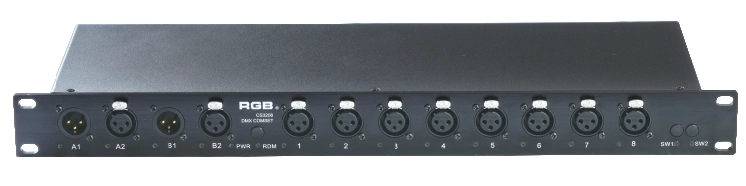
DMX&RDM Signal Mergers Amplifiers
The rack-mounted DMX signal amplifier complies with the DMX-512 standard protocol, improving the transmission quality of DMX-512 signals, ensuring the reliability of system control, and preventing faults such as reverse connection of AC high voltage in the lighting control system, high voltage intrusion due to lightning strikes, and line short circuits, which may affect the stability of the system.
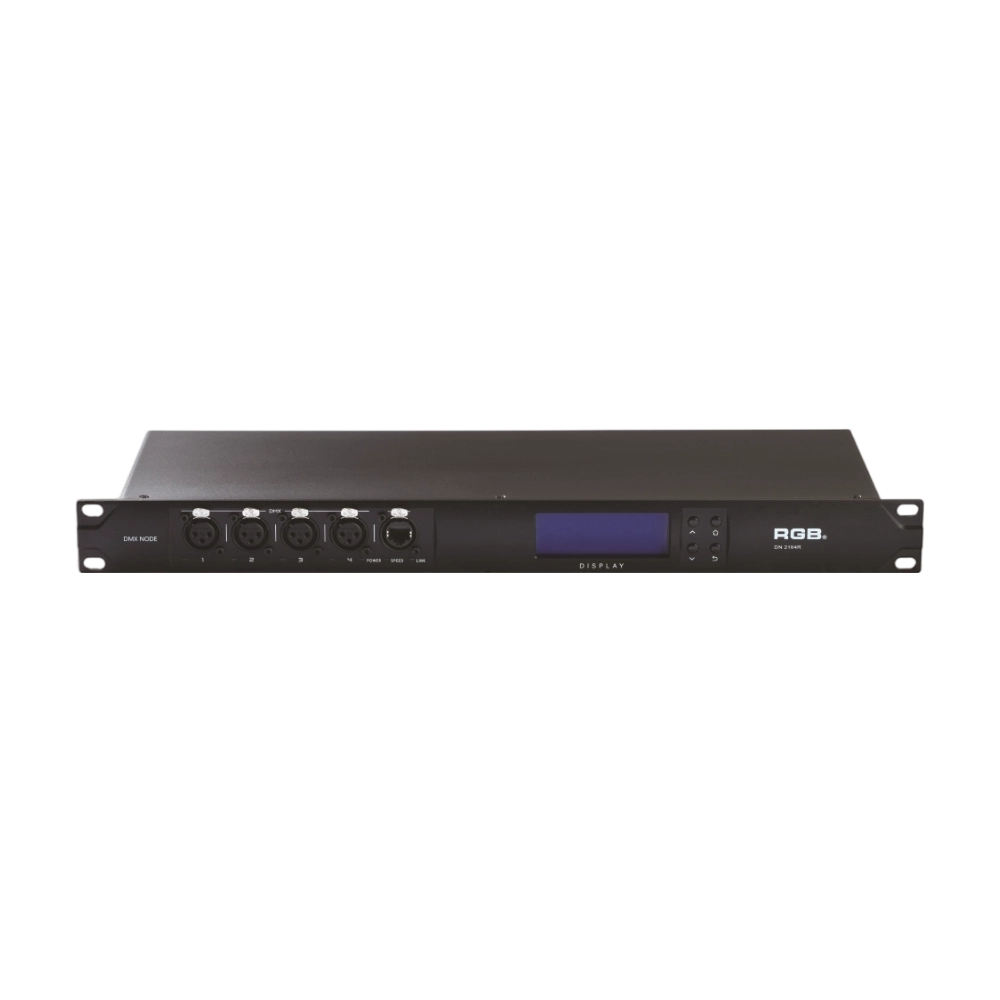
DMX, RDM Nodes
The DN series dual network port network decoder is a lighting control system product independently developed by RGB, featuring completely independent core technology and software copyright. It seamlessly connects and decodes the sACN and ART-Net network protocols based on TCP/IP with the DMX-512 and RDM communication protocols, achieving gigabit communication with dual independent physical address codes. Supports a visual lighting control system, intuitively displaying the online and offline status of the DN series network decoders, and enabling remote monitoring, editing, and setting of corresponding parameters.
It is widely applied in theaters, concert halls, multi-functional halls, cultural and tourism performances, TV stations, gymnasiums, auditoriums, commercial art lighting, and other performance and cultural venues.
Expert Support
Interested in learning more or need expert guidance related to this article? Fill in your details, and our team will provide tailored support.
Intelligent Control. Brilliant Performance.
RGB specializes in stage lighting control systems, delivering intelligent, reliable, and high-performance solutions for theaters and performance spaces worldwide.
Contact
Email:
Tel:
+86 20 3928 0245
+86 20 3928 0247
Address:
No.3, Huashan Road, Shilou Town, Panyu, Guangzhou, China.
Whatsapp: +8615975520131