
stage dimmer | Insights by RGB
|
- 1) Which dimmer technology should I specify for mixed loads (incandescent, LED fixtures, and electronic low‑voltage transformers) to avoid flicker and nuisance tripping?
- 2) What exact specs on a dimmer rack spec sheet predict real reliability in touring vs fixed installations?
- 3) How do I calculate and mitigate total inrush current for a dimmer rack feeding many LED drivers and ELV transformers?
- 4) How do I design a reliable DMX/sACN network for multiple dimmer racks and ensure RDM works across long runs?
- 5) Which dimming curve, bit‑depth and PWM settings give the smoothest fades for theatrical LED profiles while preserving color fidelity?
- 6) What safety, redundancy and testing features should be specified to pass local inspections and ensure continued safe operation in a fixed theatre install?
When purchasing a stage dimmer for touring rigs or fixed theatre installs, generic product pages and forum threads often leave out the real‑world details that cause the most pain: LED flicker, driver inrush, network reliability, safety compliance and how dimming curves translate to perceived brightness. Below are six long‑tail questions commonly asked by technicians and production buyers—each answered with actionable, standards‑based guidance.
1) Which dimmer technology should I specify for mixed loads (incandescent, LED fixtures, and electronic low‑voltage transformers) to avoid flicker and nuisance tripping?
Why this matters: Many buyers assume a single “universal” dimmer will handle everything. Mixed loads are the primary cause of flicker, ghosting, nuisance breaker trips, and shortened component life when the wrong dimmer type is used.
Key facts and actionable guidance:
- Understand the main dimmer topologies: leading‑edge (SCR/Triac) phase control, trailing‑edge (reverse phase/ELV) and PWM/constant‑current solutions. Classic tungsten dimmers use leading‑edge SCRs; many modern LED drivers prefer trailing‑edge or true current control.
- LED compatibility is driver‑dependent. Some LED fixtures explicitly support leading‑edge TRIAC dimming, others require trailing‑edge or 0–10V/PWM/digital control. Always check the LED manufacturer’s dimming spec sheet. If it’s not stated, treat as “unknown” and test before purchase.
- Use trailing‑edge dimmers (or hybrid dimmers that provide configurable leading/trailing modes) for mixed rigs where LEDs and electronic transformers are present. Trailing‑edge is typically gentler on electronic power supplies and reduces audible noise and flicker with many LED drivers.
- If your rig contains lots of moving lights or fixtures with internal drivers, prefer digital control protocols (DMX/sACN) with the fixtures’ native dimming rather than trying to dim them with mains dimmers.
- For high density LED loads, consider LED‑rated dimmer modules or dedicated LED drivers with a network control interface (e.g., RDM, Art‑Net, sACN). These often implement constant‑current or high‑frequency PWM (>2.4 kHz) to eliminate visible flicker and color shifts.
- Always perform a bench and in‑venue test with representative fixtures. Document driver model + dimmer module combinations that were tested successfully and include those in the procurement spec.
Standards note: Control protocols such as DMX512 (ANSI E1.11) and RDM (ANSI E1.20) are the industry norms for console‑to‑fixture communication; specify appropriate protocol support in the dimmer rack if you expect networked control or bidirectional device management.
2) What exact specs on a dimmer rack spec sheet predict real reliability in touring vs fixed installations?
Why this matters: Two racks with identical channel counts can perform very differently on tour. Spec sheets must be read for the right operational metrics beyond “amps per circuit.”
p>Must‑check specification items:
- Per‑channel continuous current rating (A) and the rated mains voltage. Confirm W or VA at the nominal voltage (e.g., 120 V or 230 V) and state both per‑channel and per‑rack limits.
- Thermal dissipation (BTU/hr or Watts). Higher dissipation requires stronger ventilation—critical for fixed installs in fly towers and touring racks with limited airflow.
- Inrush current handling and recommended upstream protection. Look for the manufacturer’s stated peak inrush current per channel/module or measured inrush for a loaded channel with typical LED drivers/ELV transformers.
- Type and rating of internal circuit protection (slow‑blow/thermal/magnetic). For touring, modular breakers that can be changed quickly on site are valuable.
- Control protocol support and redundancy: DMX512 (input + thru), Art‑Net/sACN network ports, and RDM support for device discovery. For large installs, dual Ethernet ports or redundant network paths are important.
- Mechanical ratings: shock and vibration (touring), rack mounting, connector type (Camlock, Socapex, Neutrik powerCON), and ingress protection (IP rating) for dusty/outdoor use.
- Compliance and listings: CE and UKCA for EU/UK, UL/CSA for North America, and UL 508A or equivalent for control panels where applicable. These indicate the vendor follows recognized design and safety practices.
- Serviceability: hot‑swap modules, spare channel modules, and remote firmware update capability. For touring, quick field‑replaceable modules reduce downtime.
Action: Build a procurement checklist with these fields and require measured inrush curves and thermal maps from vendors as part of the bid. That prevents “surprises” when many fixtures power up at once.
3) How do I calculate and mitigate total inrush current for a dimmer rack feeding many LED drivers and ELV transformers?
Why this matters: Inrush, not steady current, usually trips upstream breakers or stresses mains wiring. LED drivers and electronic transformers can generate very short, very high transient currents.
Calculation steps and mitigation strategies:
- Determine the inrush spec per device: get the measured peak inrush and the duration (e.g., 20A for 5 ms) from the fixture/driver datasheet or manufacturer lab measurements. If the data isn’t available, measure with an oscilloscope or inrush logger.
- Sum the concurrent inrushes expected at switch‑on. If fixtures will not be turned on simultaneously in normal operation, estimate the worst‑case concurrent number (e.g., 20 of 48 channels) and calculate that sum.
- Compare the summed inrush to the upstream protective device trip curve. Breakers have time‑current characteristics (thermal/magnetic) — a short 100 A spike for 5 ms may not trip a breaker that tolerates short inrushes, but repeated spikes can cause nuisance trips.
- Mitigations:
- Staggered/soft startup: use a sequencer to bring channels up in small groups with a few hundred ms delay between groups.
- Inrush limiters (NTC thermistors) or soft‑start circuits on the feeder or at module inputs.
- Use contactors or precharge circuits for capacitive supplies to limit dV/dt.
- Specify an upstream distribution device with an appropriate time‑delay or inrush‑tolerant profile (select curve D for transformers/inductive loads in industrial contexts or a thermal‑magnetic breaker sized higher for short transients, as local code and safety allow).
- For touring, ensure mains distribution (generators/camlock distro) is sized for transient peaks and coordinate with the venue’s power crew.
- Document measured inrush for the final fixture + dimmer combination and include it in the system O&M manual so venue electricians know expected behavior.
Practical example: if 24 LED drivers each have a measured inrush of 40 A for 8 ms, worst‑case concurrent inrush could exceed 960 A peak. That level of spike must be managed with staggered powering or inrush limiters; otherwise it will trip upstream protections or damage contacts.
4) How do I design a reliable DMX/sACN network for multiple dimmer racks and ensure RDM works across long runs?
Why this matters: Network problems are a leading cause of “mystery” dimmer failures in large venues. DMX512 (E1.11) remains common, but Ethernet protocols (Art‑Net, sACN) and RDM management are increasingly standard.
Best practices:
- Choose the right protocol for scale: Use DMX for small point‑to‑point connections; for many racks distributed across a venue prefer sACN (E1.31) or Art‑Net over fiber/Ethernet to centralize channel distribution.
- Use network switches with IGMP snooping for sACN multicast to prevent unnecessary multicast flooding. Managed switches allow VLANs and QoS to prioritize lighting control traffic.
- For DMX over copper: stick to 3‑pin or 5‑pin XLR wiring best practices — correct termination (120 Ω) and use of low‑capacitance cable. Use dedicated DMX splitters/repeaters for long daisychains. Avoid distro patching that creates under‑specified star networks without proper repeaters.
- RDM considerations: RDM (Remote Device Management) requires a properly terminated, bidirectional DMX line with powered splitters that are RDM‑compliant. If using sACN/Art‑Net to control fixtures, RDM may still be required for discovery and configuration — in that case use gateway devices that map RDM over Ethernet where supported.
- For long runs and noisy electrical environments, prefer fiber backbone between rooms and then local copper from the rack to fixtures. Fiber eliminates ground loops and substantially reduces EMI risk.
- Plan addressing and universes in advance. Create a channel map and document universe assignments. Use console backups and maintain static IP and DHCP reservations for Art‑Net/sACN nodes to avoid mid‑show address shifts.
Testing checklist before events: verify DMX termination, check continuity and shielding, confirm IGMP behavior on switches, run an RDM discovery session and log device responses. Keep a DMX/RDM tester on site for troubleshooting.
5) Which dimming curve, bit‑depth and PWM settings give the smoothest fades for theatrical LED profiles while preserving color fidelity?
Why this matters: Many buyers expect LEDs to replicate tungsten fades. Without the right dimming curve and resolution, fades will appear stepping, color casts can change, and audience perception differs from incandescent references.
Technical guidance:
- Dimming curves: Human perception of brightness is roughly logarithmic; using a curve such as square‑law or an S‑curve (gamma corrected) often better replicates incandescent behavior than a linear curve. Many consoles and dimmer controllers let you select curve types per channel. For theatrical profiles, use a curve that compensates the LED’s luminous intensity vs current behavior.
- Bit‑depth: Use 16‑bit control (16‑bit dimming = 65,536 steps) for long, smooth fades; 8‑bit (256 steps) can produce visible stepping, especially on large stage wash fades. Many modern consoles and fixtures support 16‑bit DMX resolution—enable it where possible.
- PWM frequency and current‑control: Low‑frequency PWM (<1 kHz) can cause flicker and color shifts when interacting with camera frame rates and the eye. LED drivers operating at higher PWM frequencies (>2–4 kHz) reduce visible flicker. True current‑control drivers rather than naive PWM at low frequencies are preferred for color‑critical profile fixtures.
- Filament emulation / LUTs: Use fixture LUTs or console LUTs that emulate tungsten dimming behavior to preserve color temperature and beam quality across the fade range. Many advanced fixtures and consoles offer configurable gamma curves or color compensation tables.
Practical tip: For an LED theatrical profile used as a replacement for a tungsten ellipsoidal, test the fade from 100% to 0% with a variety of curve and 16‑bit settings and record which combo visually matches the reference. Document the curve and bit‑depth per fixture in the system manual.
6) What safety, redundancy and testing features should be specified to pass local inspections and ensure continued safe operation in a fixed theatre install?
Why this matters: Fixed theatre installs must meet national/local electrical codes and pass inspections. Beyond code, operational safety and redundancy prevent fire and downtime.
Minimum requirements and recommended extras:
- Code compliance: Ensure the dimmer rack and installation meet applicable standards — e.g., local adoption of NFPA 70 (NEC) in the U.S. or IEC 60364 in many other regions. Require equipment with CE/UKCA and appropriate UL/CSA marks for the region.
- Residual current protection: Use RCD/RCBO devices where required by code to protect against earth leakage. Many theatres also deploy earth‑fault monitoring on dimmer racks to detect insulation degradation early.
- Emergency shutdown and fire integration: Provide an EPO (Emergency Power Off) interface tied into the venue’s safety system so dimmers can be de‑energized safely in an emergency. Integrate with fire/smoke detection for automatic safe shutdown where local code permits.
- Thermal and airflow monitoring: Specify temperature sensors and fan interlocks in fixed racks. Include thermal imaging inspection in routine maintenance to detect hotspots or failing components early.
- Redundancy: For critical venues, design redundant control paths (backup console, secondary network path) and consider dual‑redundant power feeds and upstream transformers or UPS when appropriate for control electronics (not necessarily for dimmed mains circuits).
- Testing and documentation: Require factory acceptance tests (FAT) and site acceptance tests (SAT) documented with measured inrush, channel load tests, and network packet latency tests. Maintain an O&M manual with tested configurations, firmware versions and spare parts list.
- Third‑party verification: For high‑profile installs, have a licensed electrical inspector or independent test house verify compliance and provide a sign‑off report before occupancy.
Note: Local code specifics vary—always coordinate final design with licensed electrical engineers and the AHJ (authority having jurisdiction) to ensure compliance.
Conclusion
Choosing the right stage dimmer system means specifying more than channel count and amps: you must match dimmer topology to load types, account for measured inrush currents, design robust DMX/sACN networks with RDM support, pick dimming curves and bit depth that give theatrical quality fades, and build safety and redundancy into fixed installations. A properly specified dimmer rack delivers reliable performance, minimizes flicker and nuisance trips, and reduces lifecycle costs through serviceability and standards compliance.
Advantages of a professionally specified and installed stage dimmer system include improved reliability, flicker‑free LED performance, simplified troubleshooting, compliance with local safety codes, and future‑proof networked control. For a tailored quote and on‑site testing plan, contact us at info@rgbsystem.com or visit www.rgbsystem.com.
Latest News
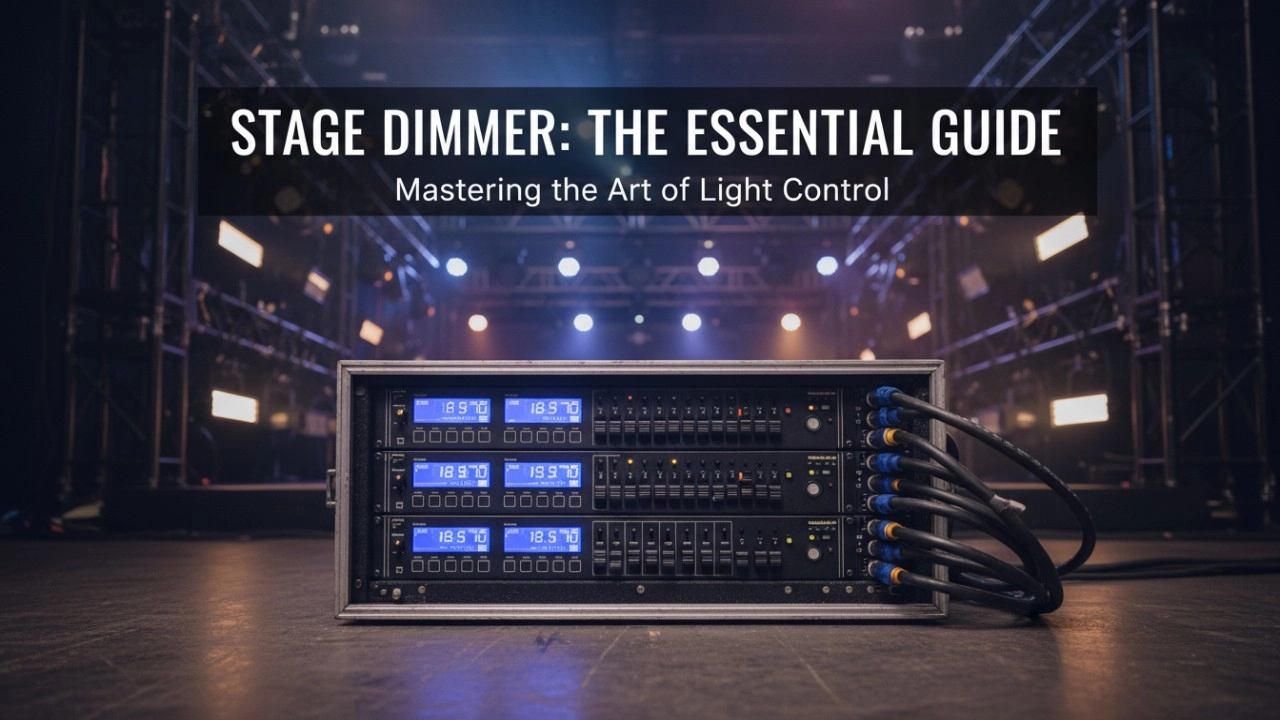
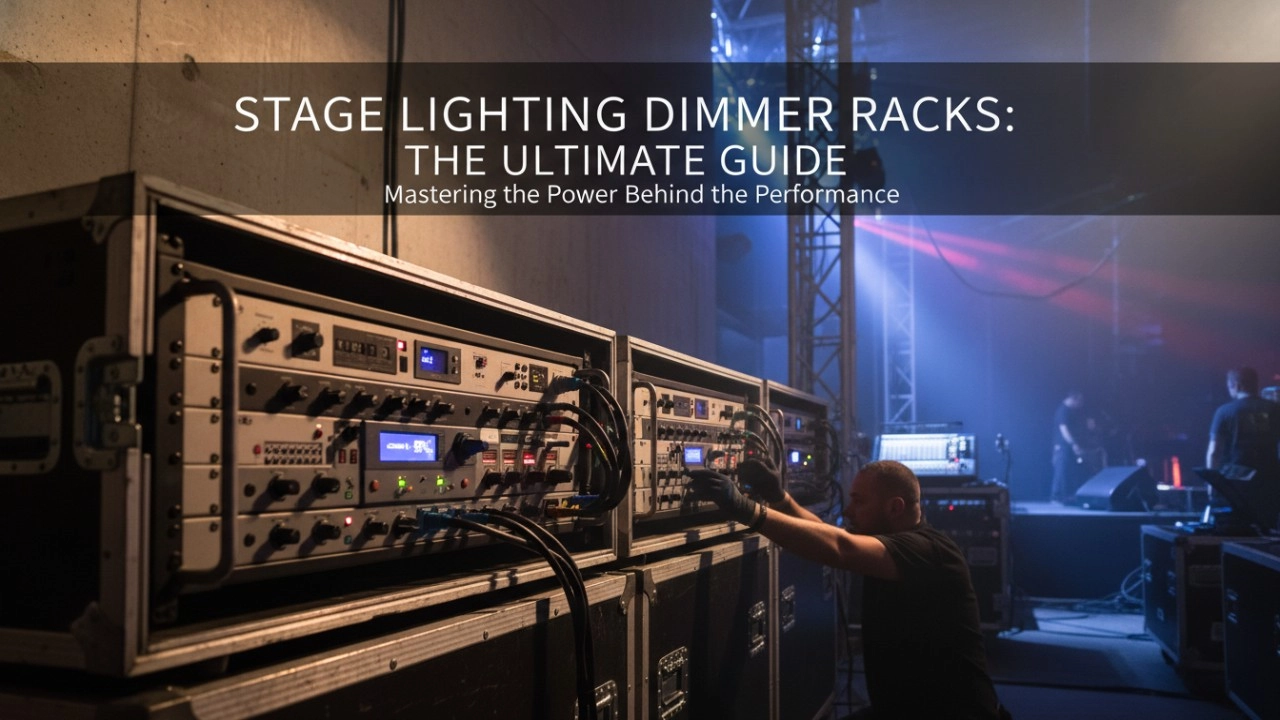
A comprehensive 2026 guide to selecting high-performance stage lighting dimmer racks. We review top hybrid systems, explore SCR vs sine wave technology, and analyze essential features like ThruPower for modern venues.
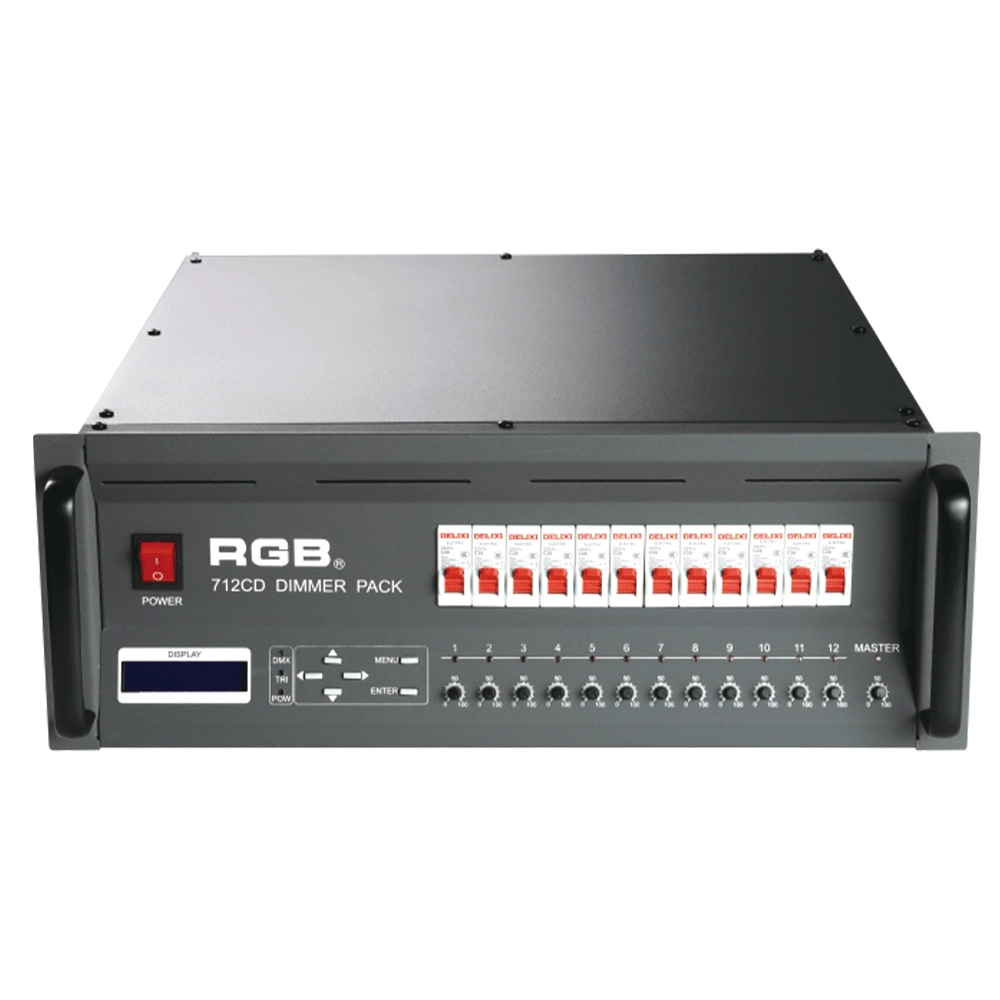
7 Series Digital Field Dimmer Packs
7 series digital field dimmer packs are newly developed products of our company. With DMX512 digital control signal input, they are compatible with other domestic and overseas digital lighting consoles. There exist 7 output choices: A series (40A), B series (3X10A), C series (19 core), D series (3 pin 32A), E series (3 pin 30A Japanese standard) F series (dual 19-core), G series (grid junction)
10i Visual Dimmer/Relay Racks
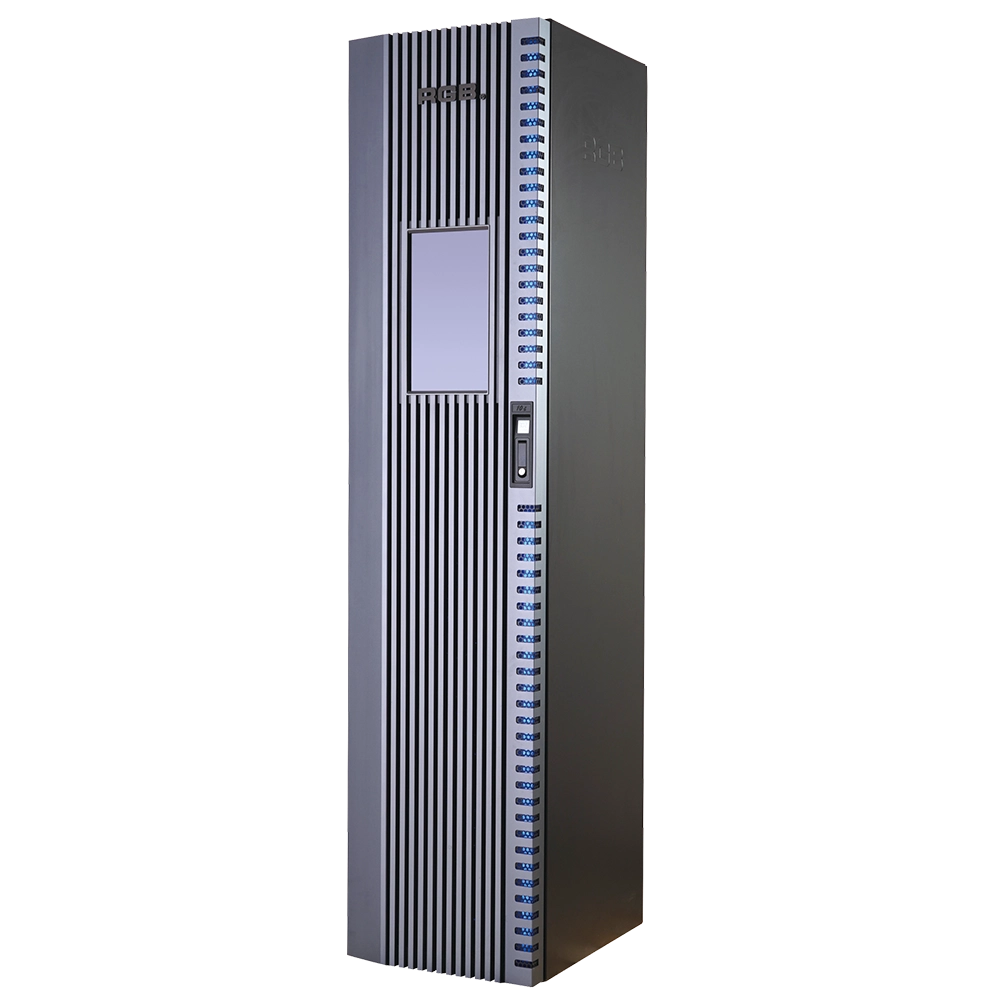
10i is the world's leading visual artificial intelligence dimming rack, integrated with 5G technology, a full digital trigger, sine wave, thyristors, relays, mixed thyristors and relays mixed sine wave and relays output configurations, a unique gold-plated plug-in process, a high-performance protection level, an industrial-grade aluminum alloy profile and other new technologies and advanced process designs and manufacturing.
It is suitable for the lighting control needs of different places such as high-standard grand theaters, TV stations, gymnasium and environmental intelligent lighting.
ZT2000 Pass-Through Racks
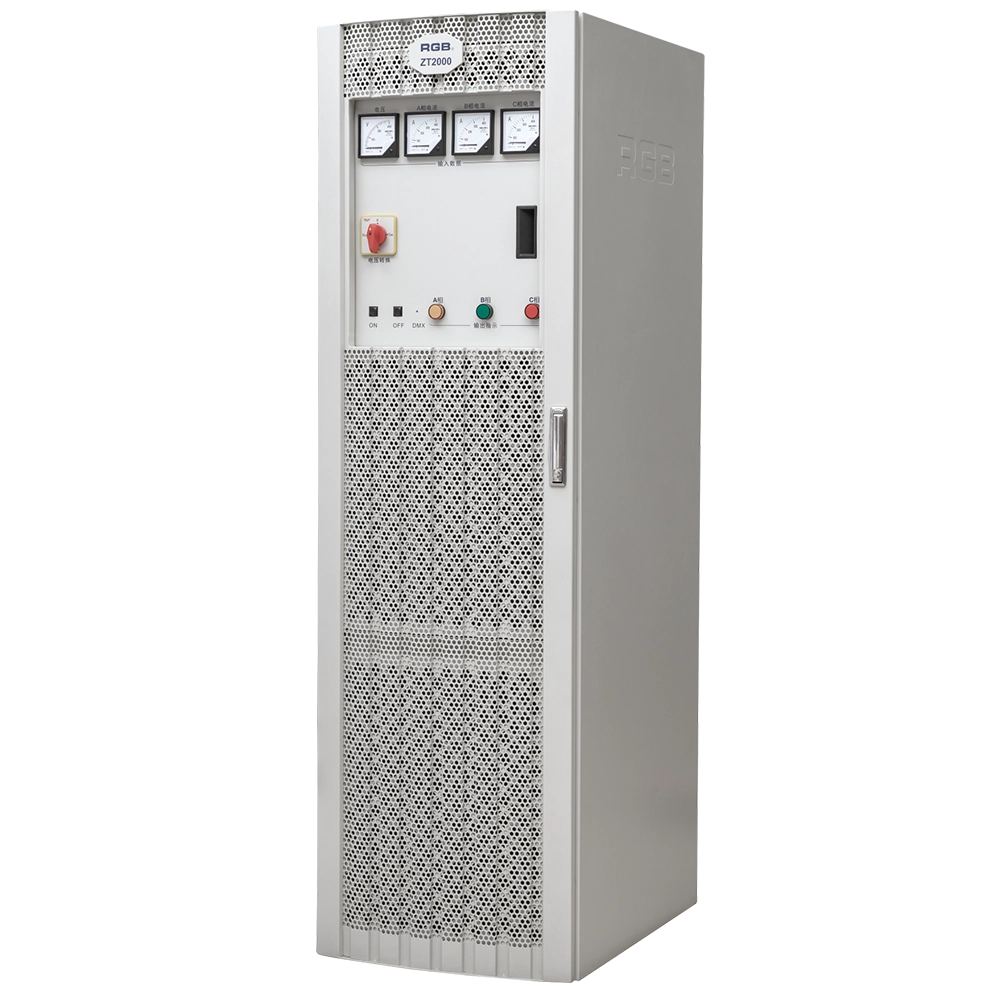
The ZT2000 straight-through power cabinet is a three-phase 630A/400A air switch main control, with each channel being a 32A air switch sub-control straight-through power cabinet. It can be used in conjunction with various computer lamps, regular lamps, and temporary electrical equipment as a power distribution and supply part for electrical equipment with overcurrent and short-circuit protection. It is a brand-new, reliable, and stable lighting control device in the field of stage lighting control.
It is widely applied in theaters, concert halls, multi-functional halls, cultural and tourism performances, TV stations, gymnasiums, auditoriums, commercial art lighting, and other performance and cultural venues.
Intelligent Network Touring Dimmer Racks
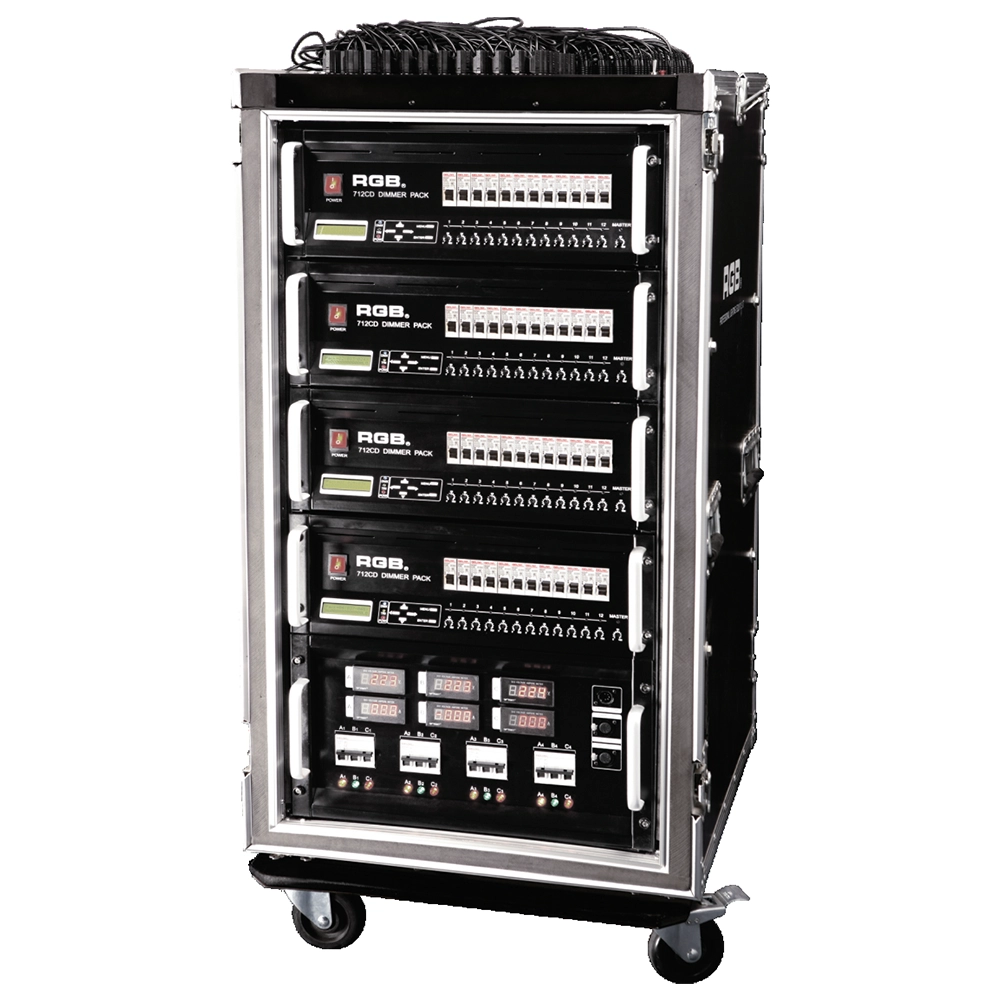
RGB intelligent network touring dimmer racks can be assembledinto many types of dimmer racks by taking 7 series dimmer
packs as the unit. They are widely used in the entertainment fortheir convenience and practicabillity,
Expert Support
Interested in learning more or need expert guidance related to this article? Fill in your details, and our team will provide tailored support.
Intelligent Control. Brilliant Performance.
RGB specializes in stage lighting control systems, delivering intelligent, reliable, and high-performance solutions for theaters and performance spaces worldwide.
Contact
Email:
Tel:
+86 20 3928 0245
+86 20 3928 0247
Address:
No.3, Huashan Road, Shilou Town, Panyu, Guangzhou, China.
Whatsapp: +8615975520131