
Rack dimmer vs LED drivers: which to buy for stage lighting?
|
When outfitting a stage lighting system, one of the pivotal decisions is choosing between traditional rack dimmers and modern LED drivers. This choice significantly impacts performance, compatibility, and future scalability. Below are six critical questions that often arise, accompanied by comprehensive answers to guide your decision-making process.
1. What are the fundamental differences between rack dimmers and LED drivers in stage lighting systems?
Rack dimmers are centralized units that manage the intensity of traditional incandescent and halogen lights by adjusting voltage levels. They are designed to handle high-amperage circuits and are typically used in venues with existing incandescent lighting setups. In contrast, LED drivers are electronic devices that provide the necessary power and control for LED fixtures, ensuring consistent brightness and color output. They are essential for operating LED lights, which require constant current and voltage regulation.
2. Can LED fixtures be connected directly to traditional rack dimmers without causing damage?
Connecting LED fixtures directly to traditional rack dimmers is generally not recommended. LEDs require a constant current and voltage supply, and traditional dimmers are not designed to provide this. Attempting to use a standard dimmer with LED fixtures can lead to flickering, reduced lifespan, or even damage to the LED drivers. It's crucial to use LED drivers or dimmers specifically designed for LED technology to ensure compatibility and safety.
3. How do rack dimmers and LED drivers handle dimming, and what are the implications for stage lighting?
Rack dimmers typically use phase-cut dimming methods, such as leading-edge (triac) or trailing-edge (ELV) dimming, to adjust the brightness of incandescent lights. However, these methods are not suitable for LEDs, which require precise control over current and voltage. LED drivers employ various dimming technologies, including 0-10V, DALI, DMX, and PWM, to achieve smooth and flicker-free dimming. Selecting the appropriate dimming method is essential to maintain lighting quality and prevent issues like flickering or color inconsistencies.
4. What are the potential challenges when integrating LED fixtures into an existing system with traditional rack dimmers?
Integrating LED fixtures into a system with traditional rack dimmers can present several challenges:
Flickering and Incompatibility: LEDs may flicker or fail to operate correctly when connected to dimmers not designed for LED technology.
Electrical Noise: Traditional dimmers can introduce electrical noise that affects LED performance, leading to color shifts or reduced lifespan.
Power Supply Issues: LEDs require a stable and specific power supply; using incompatible dimmers can result in inadequate power delivery.
To address these issues, it's advisable to use LED drivers or dimmers specifically designed for LED fixtures, ensuring compatibility and optimal performance.
5. Are there hybrid solutions available that combine the functionalities of rack dimmers and LED drivers?
Yes, some modern lighting systems offer hybrid solutions that integrate both rack dimmers and LED drivers within a single unit. These systems are designed to handle both traditional incandescent lights and LED fixtures, providing flexibility and ease of use. They typically include features like relay modules for LED fixtures and dimming modules for incandescent lights, allowing seamless control of a mixed lighting rig. ((https://www.rgbsystem.com/blog/dimmer-racks-stage-lighting-guide/))
6. What factors should be considered when deciding between rack dimmers and LED drivers for a new stage lighting installation?
When choosing between rack dimmers and LED drivers for a new installation, consider the following factors:
Type of Fixtures: Determine whether your lighting rig will consist primarily of incandescent or LED fixtures.
Dimming Requirements: Assess the desired dimming capabilities and ensure the chosen system supports the necessary dimming protocols.
Future Scalability: Consider the potential for future upgrades or additions to your lighting system and choose equipment that can accommodate these changes.
Budget Constraints: Evaluate the cost implications of each option, including installation and maintenance expenses.
Consulting with a lighting professional can provide personalized recommendations tailored to your specific needs and venue requirements.
In conclusion, selecting the appropriate lighting control system is crucial for achieving optimal performance and reliability in stage lighting. Understanding the distinctions between rack dimmers and LED drivers, as well as the challenges associated with integrating LED fixtures into existing systems, will guide you in making an informed decision. For personalized advice and a comprehensive quote tailored to your venue's needs, please contact us at info@rgbsystem.com or visit our website at www.rgbsystem.com.
Latest News
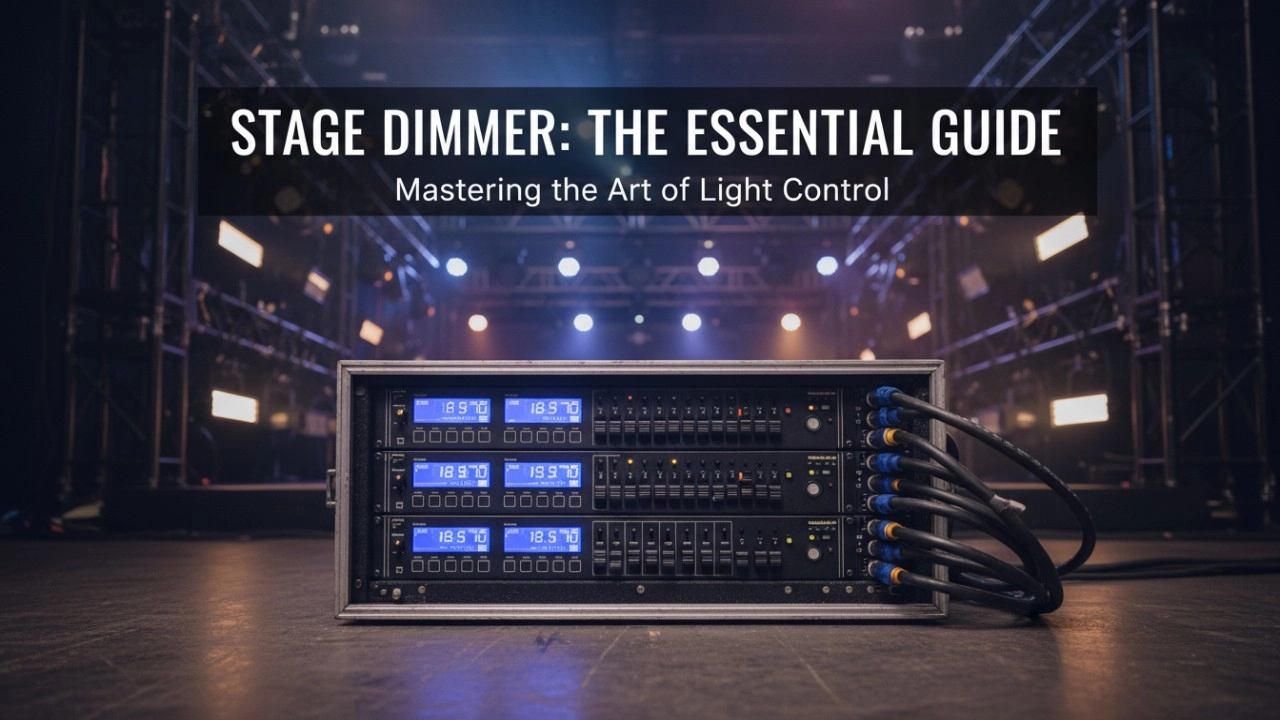
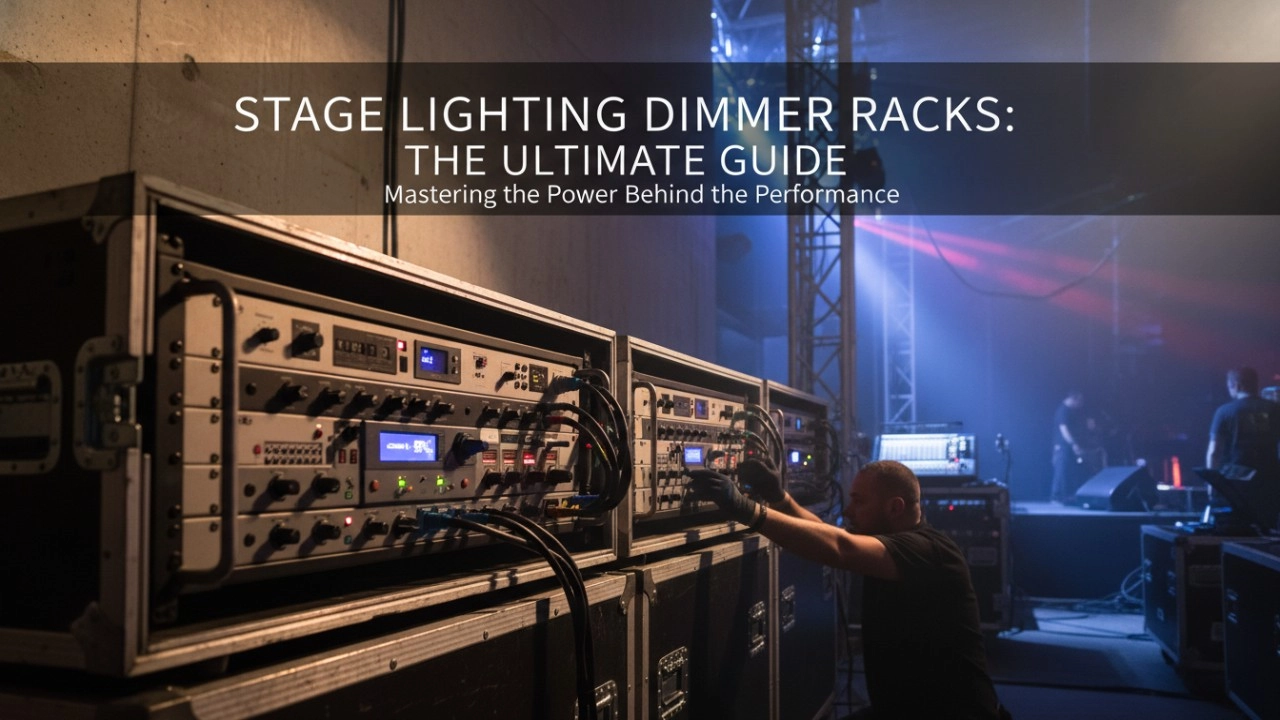
A comprehensive 2026 guide to selecting high-performance stage lighting dimmer racks. We review top hybrid systems, explore SCR vs sine wave technology, and analyze essential features like ThruPower for modern venues.
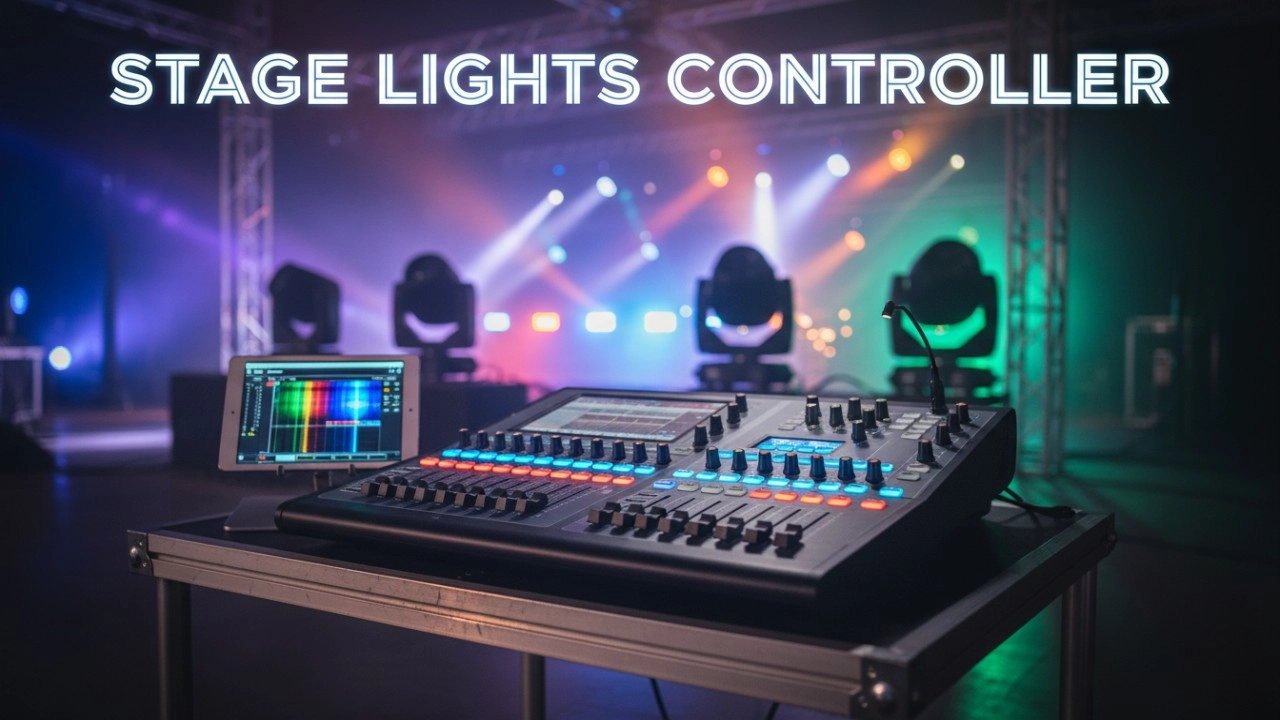
RDM Nodes
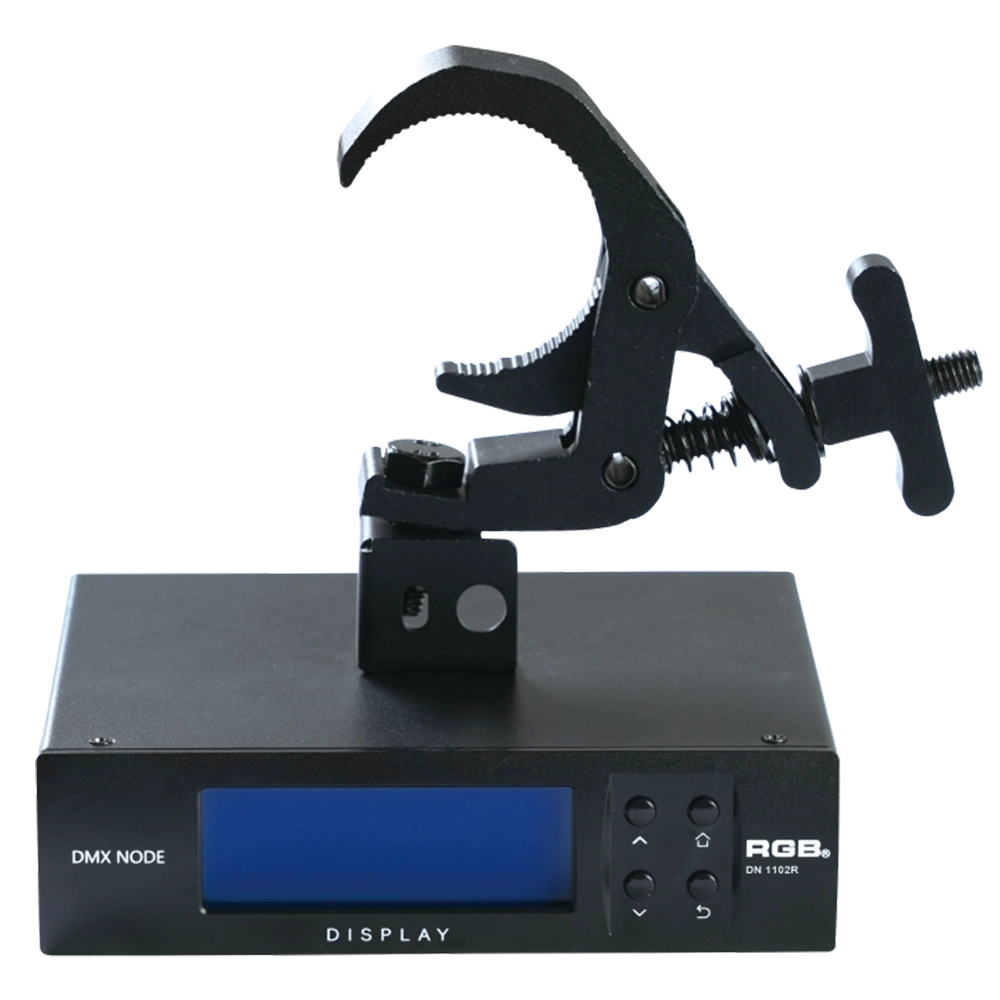
The DN series network decoder is a product of the lighting control system independently developed by RGB, featuring completely independent core technology and obtaining software copyrights. It seamlessly connects and decodes the sACN and Art-Net network protocols based on TCP/IP with the DMX-512 and RDM communication protocols. Supports a visual lighting control system, intuitively displaying the online and offline status of the DN series network decoders, and enabling remote monitoring, editing, and setting of corresponding parameters.
It is widely applied in theaters, concert halls, multi-functional halls, cultural and tourism performances, TV stations, gymnasiums, auditoriums, commercial art lighting, and other performance and cultural venues.
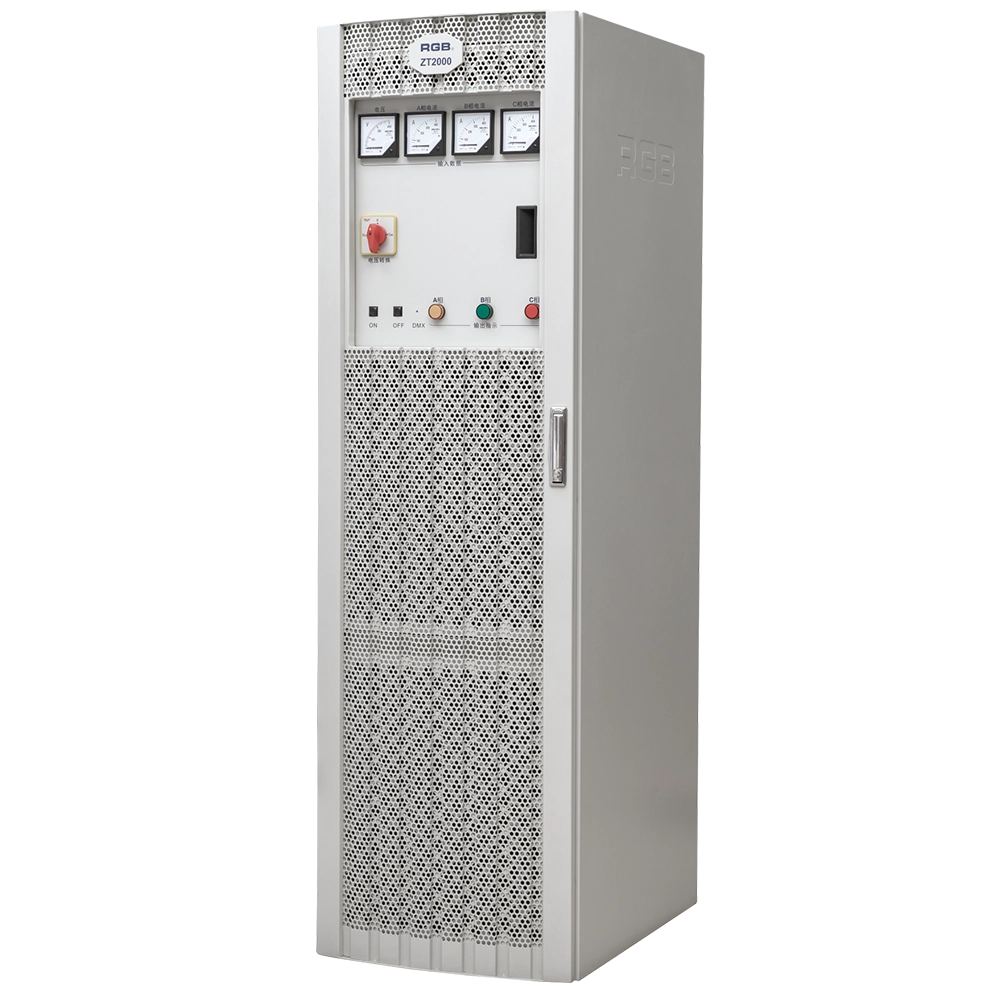
ZT2000 Pass-Through Racks
The ZT2000 straight-through power cabinet is a three-phase 630A/400A air switch main control, with each channel being a 32A air switch sub-control straight-through power cabinet. It can be used in conjunction with various computer lamps, regular lamps, and temporary electrical equipment as a power distribution and supply part for electrical equipment with overcurrent and short-circuit protection. It is a brand-new, reliable, and stable lighting control device in the field of stage lighting control.
It is widely applied in theaters, concert halls, multi-functional halls, cultural and tourism performances, TV stations, gymnasiums, auditoriums, commercial art lighting, and other performance and cultural venues.
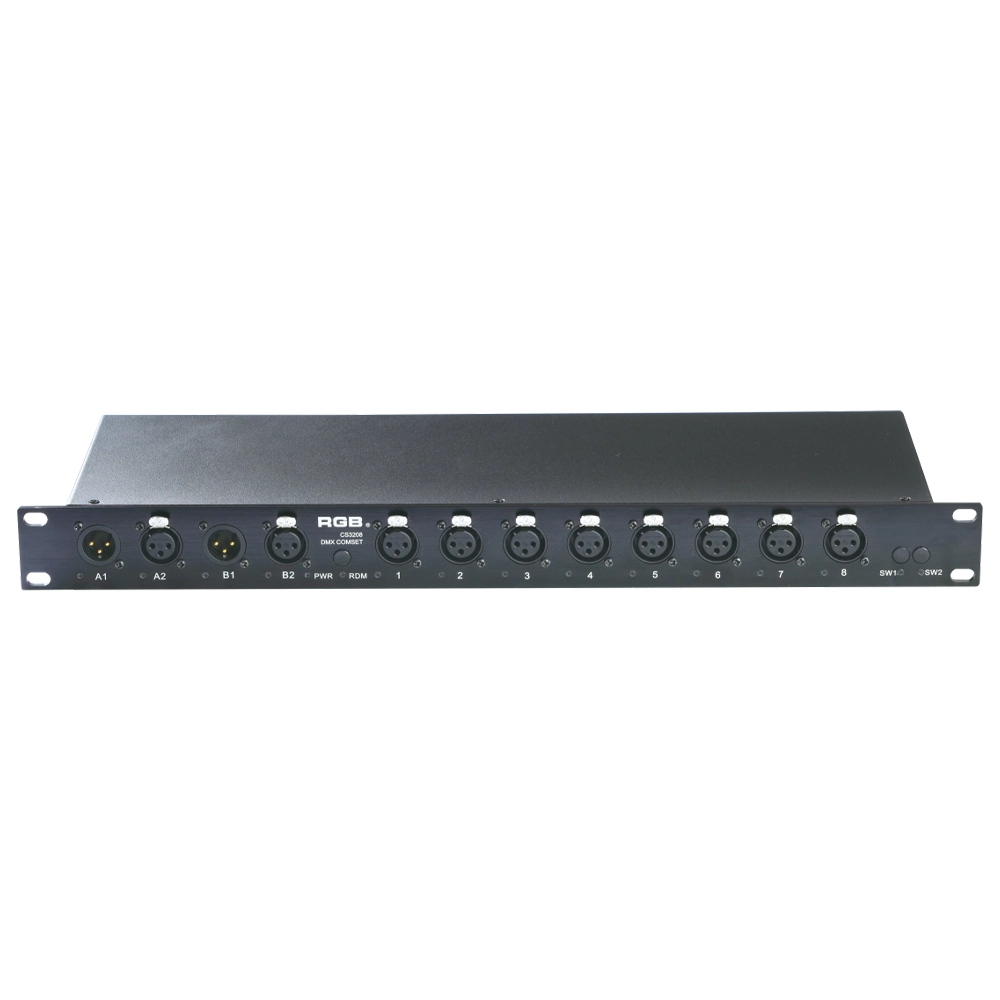
Multifunctional signal supercharger
The rack-mounted DMX signal amplifier complies with the DMX-512 standard protocol, improving DMX-512 signal transmission quality and ensuring reliable system control. It helps prevent issues such as AC high-voltage backflow into lighting control systems, lightning-induced surges, and signal interference caused by short circuits, thereby enhancing overall system stability.
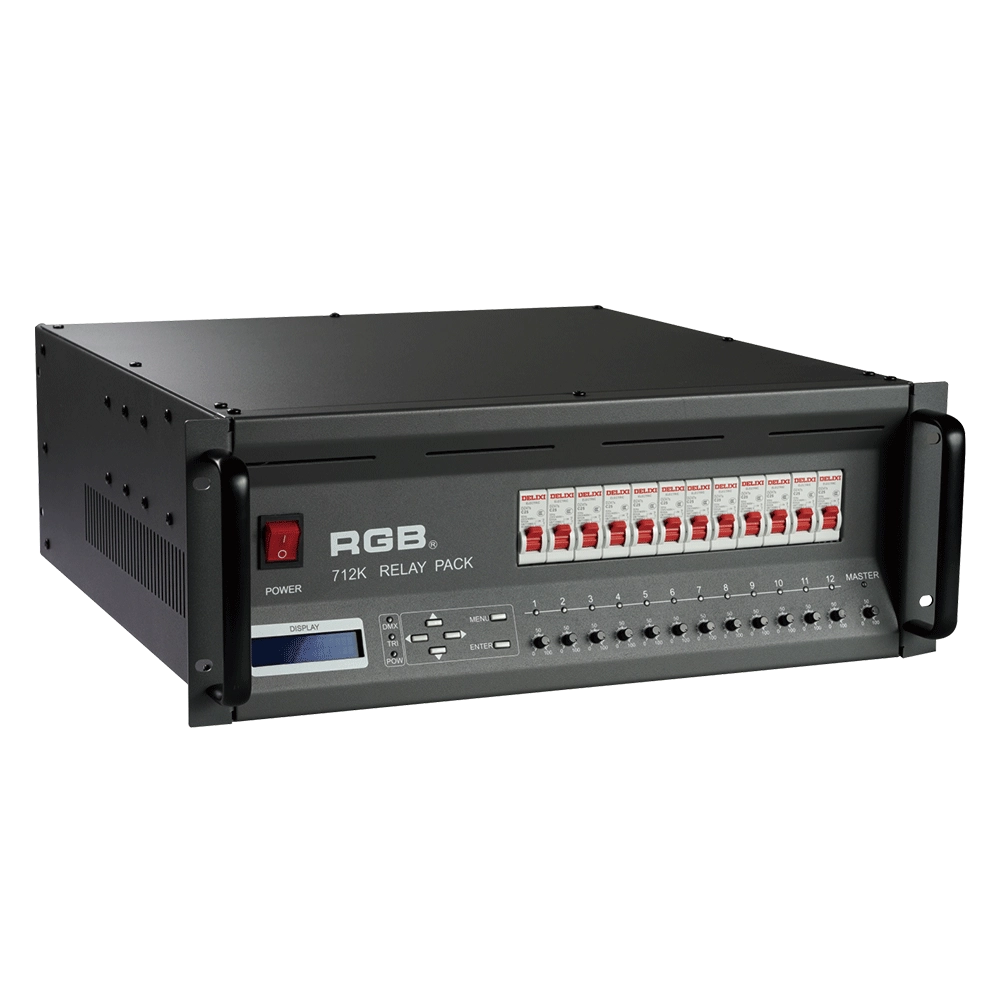
Alloy Relay Packs
High-performance DMX512 relay dimming unit with 512 addressable circuits, phase-loss protection, dual-signal amplification, 20A output per channel, and robust design for reliable stage and mobile lighting applications.
Expert Support
Interested in learning more or need expert guidance related to this article? Fill in your details, and our team will provide tailored support.
Intelligent Control. Brilliant Performance.
RGB specializes in stage lighting control systems, delivering intelligent, reliable, and high-performance solutions for theaters and performance spaces worldwide.
Contact
Email:
Tel:
+86 20 3928 0245
+86 20 3928 0247
Address:
No.3, Huashan Road, Shilou Town, Panyu, Guangzhou, China.
Whatsapp: +8615975520131