
Rack-Mount Dimmer DMX System Guide: 2026 Professional Lighting Manual
|
- Introduction
- What is a Rack Dimmer DMX?
- Key Takeaways: Modern DMX Dimming at a Glance
- Technical Evolution: From SCR to Smart Hybrid Racks
- Addressing and Configuration: Optimizing Signal Flow
- Filling the Gaps: AI Diagnostics and Predictive Maintenance
- Expert Tips: Common Mistakes in Rack Configuration
- The Industry Solution: TDH Hybrid DMX Racks
- Frequently Asked Questions
- What is the difference between a DMX dimmer pack and a dimmer rack?
- How many DMX channels can one rack handle?
- Can I use a DMX dimmer rack for LED lights?
- Why is my DMX rack flickering?
- What is RDM in a DMX dimmer rack?
- What cable is best for connecting DMX racks?
- Should I use 3-pin or 5-pin XLR for my rack?
- How do I calculate the maximum load for a DMX rack channel?
- References
Introduction
As professional stage lighting enters the 2026 landscape, the demands on power distribution have evolved from simple intensity control to complex, data-driven ecosystem management. With the global stage lighting market projected to exceed $4 billion by 2032, largely driven by the adoption of intelligent LED solutions, the humble dimmer rack has had to reinvent itself. Today's intelligent power distribution units are no longer just about voltage regulation; they are the critical bridge between digital intent and physical illumination.
At Guangzhou RGB Lighting Equipment Co., Ltd., we have witnessed this shift first-hand since 1996. From powering landmark events like the Beijing Olympics to modernizing theaters with hybrid solutions, the industry is moving toward racks that can seamlessly handle the voltage requirements of both tungsten heavies and delicate LED drivers. This guide unpacks the technical architecture of modern DMX dimming to help you build future-proof rigs.
What is a Rack Dimmer DMX?

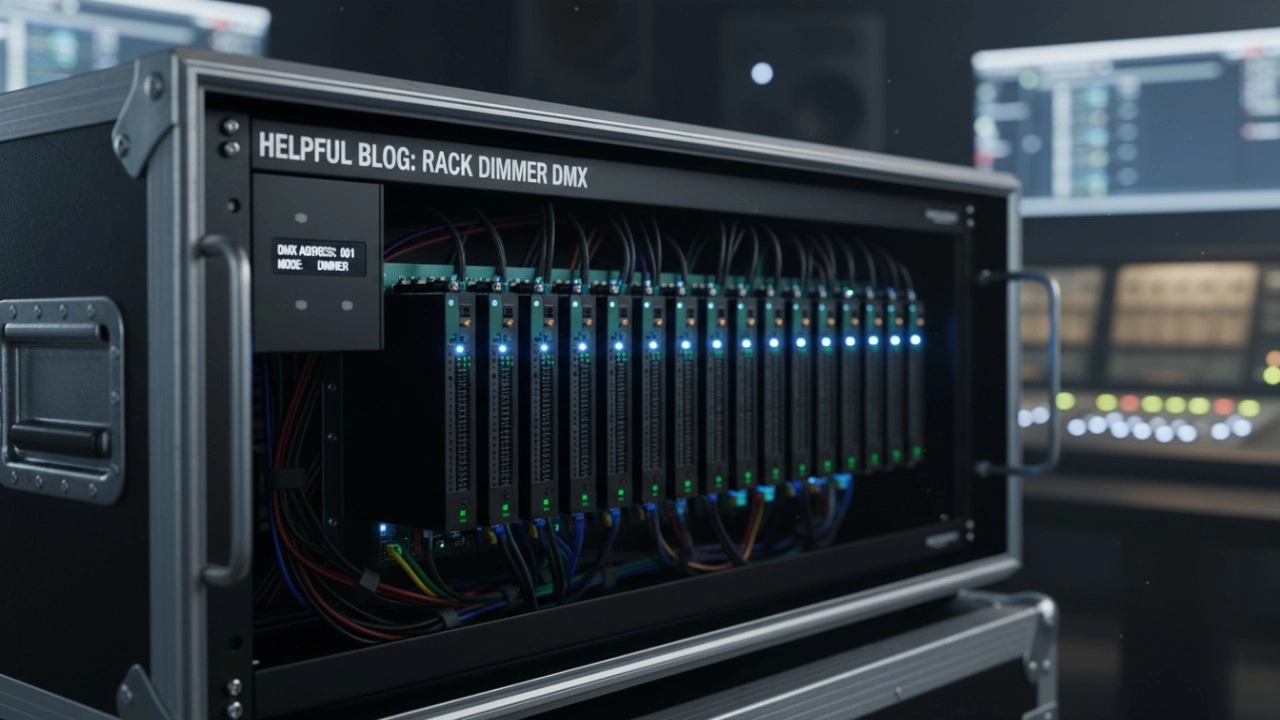
A Rack Dimmer DMX is a high-density power control system that decodes digital DMX512 signals to regulate the voltage output for multiple lighting circuits, serving as the central nervous system for stage illumination. Unlike portable packs, these rack-mounted units are engineered for permanent installation and massive scale.
This device acts as the "muscle" of your lighting rig. It takes the low-voltage instructions from your console—literally micro-volts of data—and translates them into the high-voltage mains power needed to drive 1000W pars or high-output LED arrays. In 2026, these units are defined by their ability to process vast amounts of data without latency.
Core Capabilities:
- High-Density Channel Counts: Standard configurations deliver 12, 24, or 48 channels per rack cabinet, scalable to full universes.
- Processor Logic: Modern units use 32-bit internal processors to manage 16-bit dimming curves, ensuring smooth fades from 0% to 100% without "stepping."
- Thermal Management: Integrated forced-air cooling systems that adjust fan speed based on real-time load heat generation.
Key Takeaways: Modern DMX Dimming at a Glance
Modern DMX dimming requires a hybrid approach, where a single rack enclosure must simultaneously manage high-wattage inductive loads and low-wattage capacitive loads without interference. This versatility is the hallmark of professional-grade power systems.
Understanding these core pillars is essential for any lighting technician operating in the current decade. The days of dedicated "dimmer rooms" and separate "relay rooms" are ending; the new standard is the unified power processor.
2026 Standard Features:
- Hybrid Compatibility: The ability to switch individual channels between dimming (for tungsten) and switched power (for intelligent LEDs).
- Signal Integrity: Full opto-isolation on all data ports to prevent high-voltage electrical surges from frying the control console.
- Scalability: Modular internal cards that can be hot-swapped during a live show if a triac fails.
- Feedback Loops: Native support for remote device management RDM feedback, allowing the rack to report temperature, voltage sag, and breaker status back to the desk.
Technical Evolution: From SCR to Smart Hybrid Racks
The most significant leap in dimmer technology has been the transition from pure silicon controlled rectifier dimming to adaptive hybrid systems. While SCRs remain the gold standard for durable tungsten power, they are notoriously noisy and electrically "dirty" when paired with modern electronics.
To solve this, advanced racks now incorporate Insulated Gate Bipolar Transistors (IGBTs) and hybrid switching logic. This evolution ensures that the chopping of the AC waveform does not induce harmonic distortion that causes LED fixtures to flicker or audio systems to hum.
The Three Tiers of Dimming Technology:
- Silicon Controlled Rectifiers (SCR): The traditional "workhorse" that uses phase-angle control to chop the sine wave. It is robust but generates significant filament buzz and electrical noise.
- Reverse Phase Control (IGBT): Cuts the trailing edge of the AC wave. This is silent and ideal for acoustic environments like opera houses but more expensive.
- Pulse Width Modulation (PWM): Pulse width modulation PWM racks are the modern solution for LEDs. Instead of chopping the AC wave, they rapidly switch power on and off (up to 30,000 times per second), providing smooth dimming for LEDs without the "stair-step" effect visible to high-definition cameras.
Addressing and Configuration: Optimizing Signal Flow
Mastering the DMX512 protocol architecture is non-negotiable for configuring large-scale racks. A single DMX universe contains 512 channels of data, and a large dimmer rack can easily consume a significant portion of that bandwidth, especially when 16-bit mode uses two channels per dimmer for extra precision.
Correct addressing ensures that the console talks to the right physical circuit. In complex installations, we often see "Universes" dedicated solely to power racks to separate them from the noisy data traffic of moving lights.
Configuration Best Practices:
- Start Address Logic: Always map your racks sequentially (e.g., Rack A: 1-96, Rack B: 97-192) to simplify troubleshooting.
- DMX over Ethernet: Modern racks often accept Art-Net or sACN directly via an RJ45 port, decoding the signal internally without needing external nodes.
- Termination: A 120-ohm resistor must be placed across the data + and - pins at the last rack in the chain to prevent signal reflections (ghosting).
- Universe Management: Use separate universes for critical architectural dimming to ensure that a failure in the stage rig doesn't plunge the house lights into darkness.
Filling the Gaps: AI Diagnostics and Predictive Maintenance
The newest frontier in rack technology is the integration of intelligent power distribution units capable of self-diagnosis. By leveraging machine learning algorithms, these racks can analyze current draw patterns to predict failures before they happen.
For example, if a 750W lamp typically draws 6.25 Amps but suddenly drops to 6.0 Amps, the system can flag a "filament degradation" warning. This is crucial for venues like the Shanghai World Expo, where maintenance windows are tight and reliability is paramount.
Smart Rack Features:
- Predictive Load Analysis: Algorithms that detect micro-fluctuations in resistance, signaling a lamp is about to burn out.
- Green Dimming: Automated reporting on energy usage to help venues meet 2026 sustainability mandates, such as the EU's Ecodesign requirements.
- Remote Cloud Sync: Technicians can check the status of all three phases via a smartphone app, removing the need to physically enter the electrical room during a show.
Expert Tips: Common Mistakes in Rack Configuration
Proper phase balancing is the most overlooked aspect of rack installation, often leading to neutral overloads and tripped main breakers. When you have a 3-phase feed (Phase A, B, C), you must patch your high-load fixtures evenly across them.
If you stack all your 2kW fresnels on Phase A, you risk blowing the main feed even if the individual dimmer breakers are fine. Experience from our engineering teams at RGB Lighting suggests that 90% of "dimmer failures" are actually patching errors.
Avoid These Pitfalls:
- Ignoring Phase Balancing: Distribute your load mathematically. A 96-channel rack usually alternates phases every 6 dimmers; know your rack's topology.
- Improper Cabling: Never use microphone cable for DMX. The impedance mismatch (mic cable is ~75 ohms, DMX requires 110 ohms) causes data packet loss.
- Overloading Channels: Derate your dimmers. If a channel is rated for 2.4kW, treat 1.9kW as your functional maximum to account for thermal derating.
- Neglecting Airflow: These units dissipate massive heat. Always leave 1U of rack space between high-power dimmer units for ventilation.
The Industry Solution: TDH Hybrid DMX Racks
To meet the diverse needs of modern theaters, Guangzhou RGB Lighting Equipment Co., Ltd. has pioneered the "TDH Smart-Series," a class of rack that seamlessly integrates military-grade SCRs with precision PWM controllers. This reflects our commitment as a Specialized Innovative Enterprise to push the boundaries of what a dimmer can do.
Drawing from our experience supplying systems for national events, these hybrid racks offer a "switch-and-forget" capability. A venue can run a tungsten rig on Friday and a full LED rig on Saturday without changing a single module. This flexibility is backed by ISO9001 and CQC certifications, ensuring that the hardware is as reliable as the show it powers.
TDH System Benefits:
- Universal Slot Design: Any slot can accept an SCR module, a Relay module, or a PWM LED driver module.
- Real-World Efficiency: Case studies show an 18% reduction in idle power consumption compared to traditional SCR-only racks.
- Advanced Diagnostics: Native integration with major consoles allows for full RDM reporting directly on the lighting desk screens.
Frequently Asked Questions
What is the difference between a DMX dimmer pack and a dimmer rack?
DMX dimmer packs are typically portable, lower-capacity units meant for temporary setups or truss mounting. Dimmer racks are large, floor-standing or wall-mounted cabinets designed for permanent installation, capable of handling hundreds of amps and distributing power to an entire facility.
How many DMX channels can one rack handle?
Standard professional racks typically house between 24 and 96 dimmers. However, because they are modular, multiple racks can be daisy-chained to handle thousands of channels, spanning multiple DMX universes (512 channels per universe).
Can I use a DMX dimmer rack for LED lights?
Yes, but only if the rack is equipped with "Relay" modules or "PWM" modules. You cannot dim a standard LED fixture using a traditional SCR dimmer curve, as this will damage the LED's power supply. The rack must be set to "Switched" mode or use specific LED-compatible hardware.
Why is my DMX rack flickering?
Flickering is usually caused by signal reflection due to the lack of a terminator resistor (120-ohm) at the end of the DMX line. It can also be caused by using audio cable instead of DMX cable, or by RDM packets colliding with non-compliant splitters in the network.
What is RDM in a DMX dimmer rack?
Remote Device Management (RDM) is an extension of the DMX protocol that allows bidirectional communication. It enables the lighting console to "talk back" to the dimmer rack to change DMX addresses, check internal temperatures, and monitor breaker status without a technician touching the rack.
What cable is best for connecting DMX racks?
You must use shielded twisted pair (STP) cable with a characteristic impedance of 110 ohms, specifically labeled for DMX512 or RS-485 data. Cat5e or Cat6 ethernet cable is also acceptable for permanent installs if wired correctly.
Should I use 3-pin or 5-pin XLR for my rack?
Professional standards (USITT DMX512-A) mandate the use of 5-pin XLR connectors. This prevents accidental connection of 48V phantom power from audio consoles, which can destroy DMX circuitry. The extra two pins can also carry secondary data or RDM signals.
How do I calculate the maximum load for a DMX rack channel?
To ensure safety, use the "80% Rule." Multiply your voltage (e.g., 120V) by the breaker's amperage (e.g., 20A) to get the theoretical max wattage (2400W). Then multiply by 0.8 to get the safe continuous load (1920W). Never exceed this limit.
References
Latest News
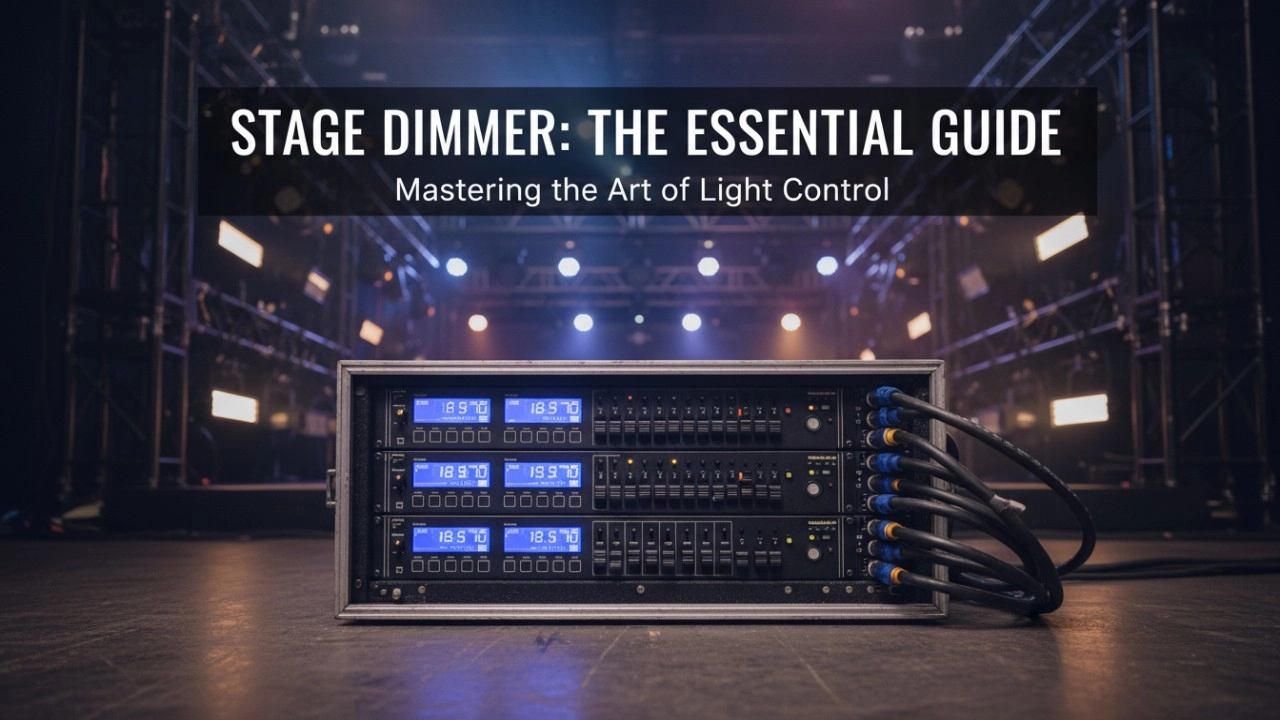
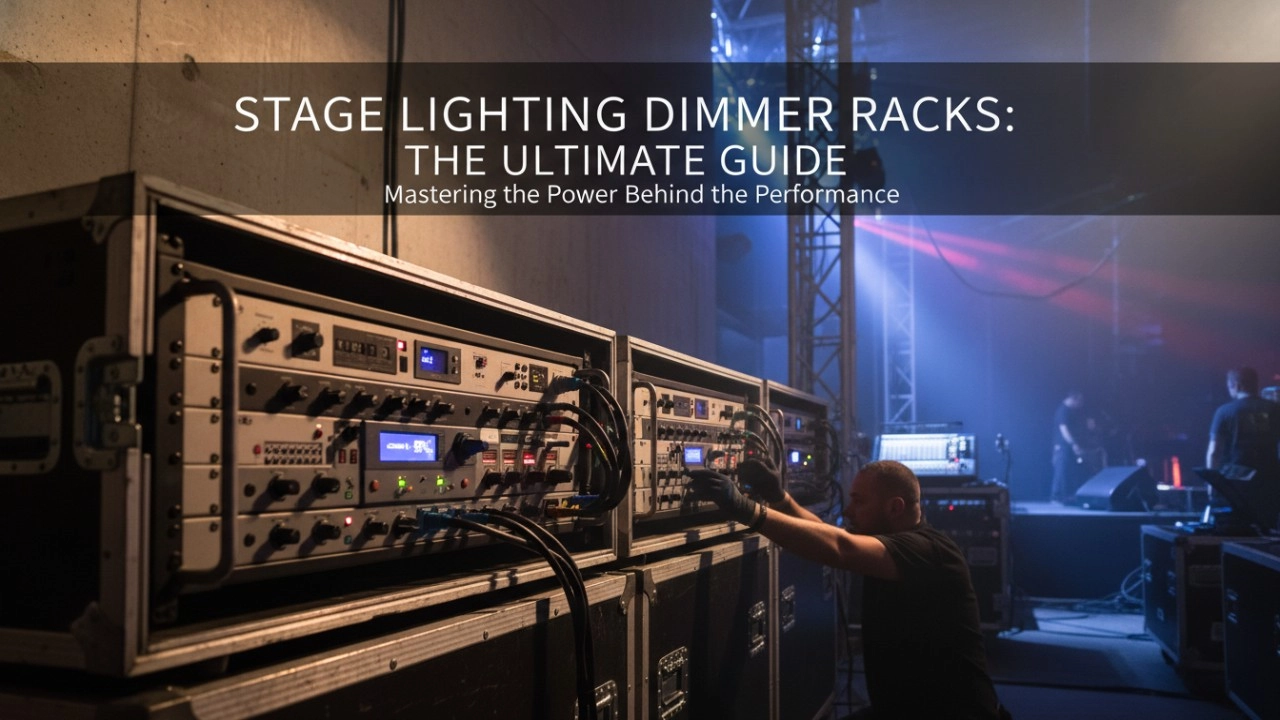
A comprehensive 2026 guide to selecting high-performance stage lighting dimmer racks. We review top hybrid systems, explore SCR vs sine wave technology, and analyze essential features like ThruPower for modern venues.
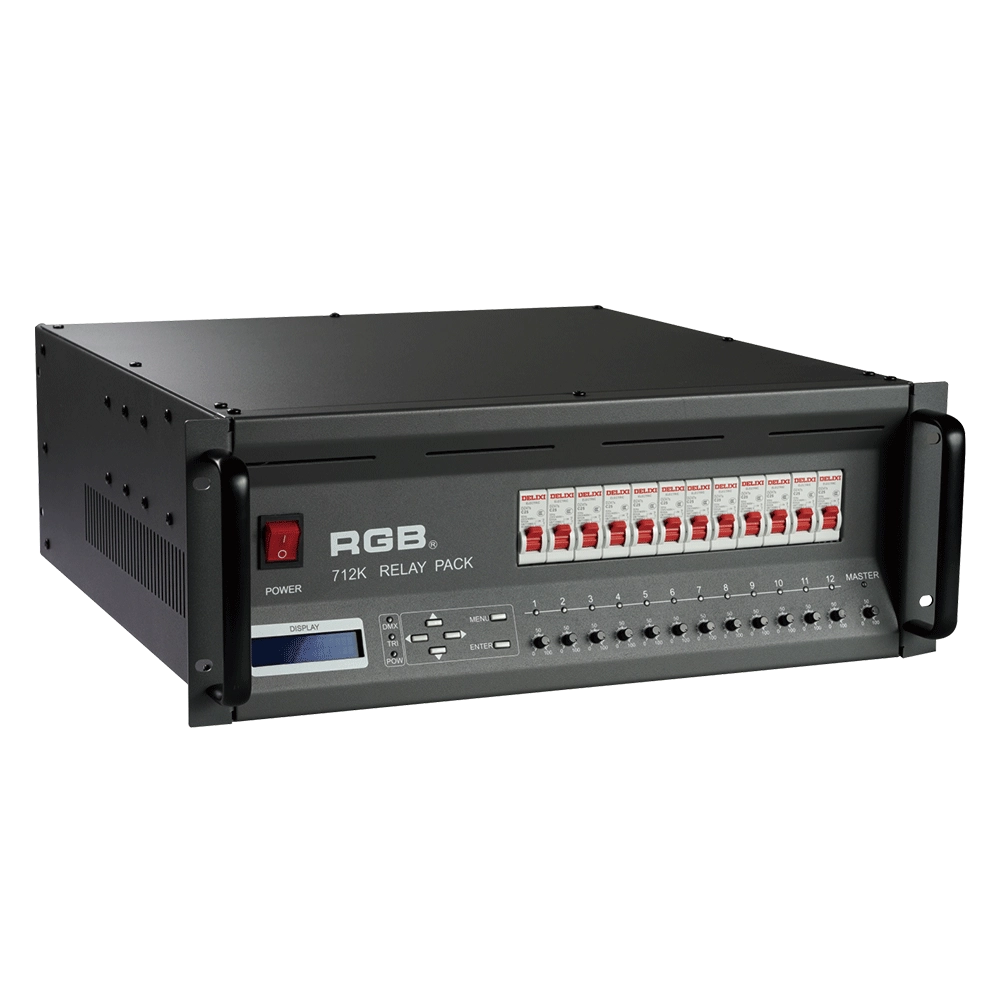
Alloy Relay Packs
High-performance DMX512 relay dimming unit with 512 addressable circuits, phase-loss protection, dual-signal amplification, 20A output per channel, and robust design for reliable stage and mobile lighting applications.
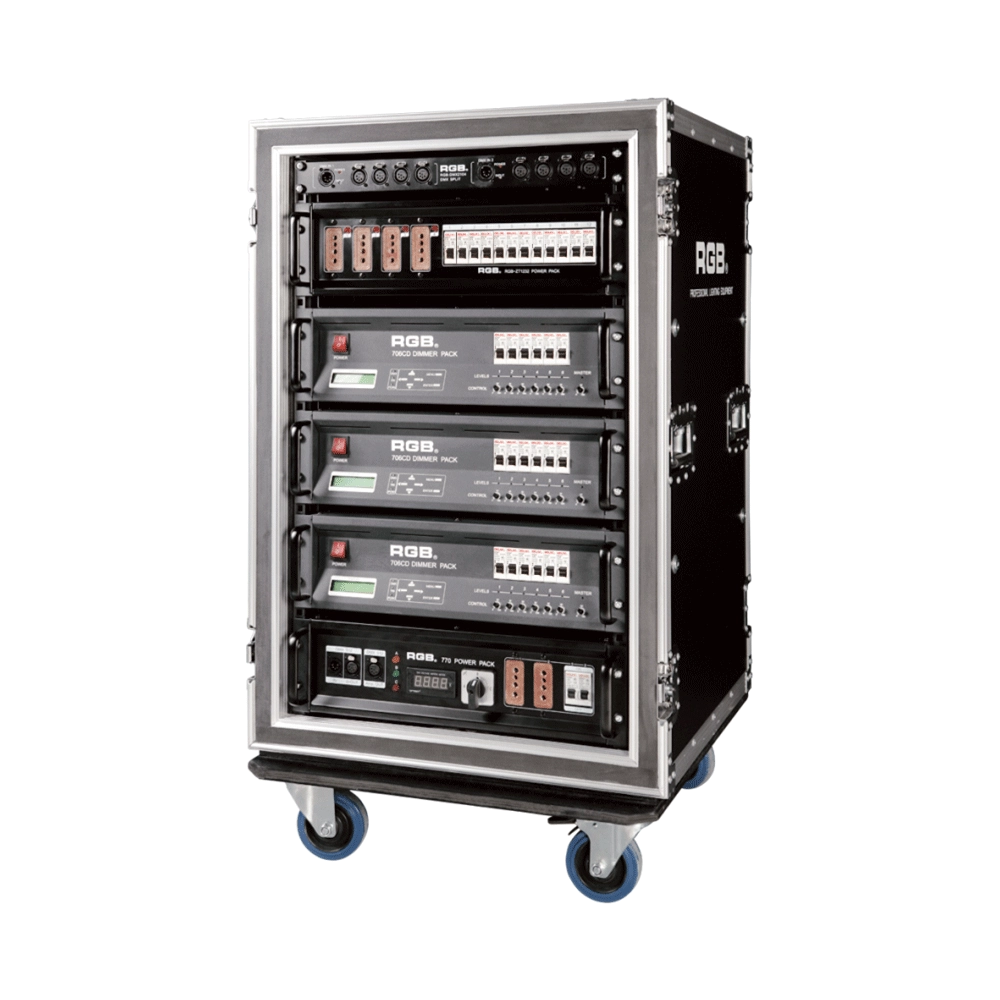
7 Series Digital Touring Dimmer Racks
7 Series digital touring dimmer racks can be assembled into many types of dimmer by taking the 7 Series dimmer as the unit. They are widely used in the entertainment industry for their convenience and practicability.
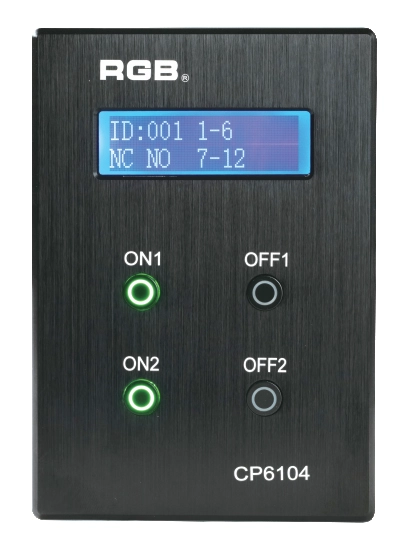
Site Light Controller CP6104
The CP6104 lighting control panel is a lighting control device for theater stage lights, work lights, environmental lighting, commercial art lighting, sports venue lighting and other places. By connecting to the dedicated lighting control host CP6100, it realizes the central control of the lighting system, supports a visual lighting control system, and intuitively displays the online and offline status of CP6104. Realize remote monitoring, editing and setting of corresponding parameters.
It is widely applicable to theaters, cinemas, auditoriums, stadiums, museums, exhibition halls, cultural tourism performances, commercial art lighting and other places.
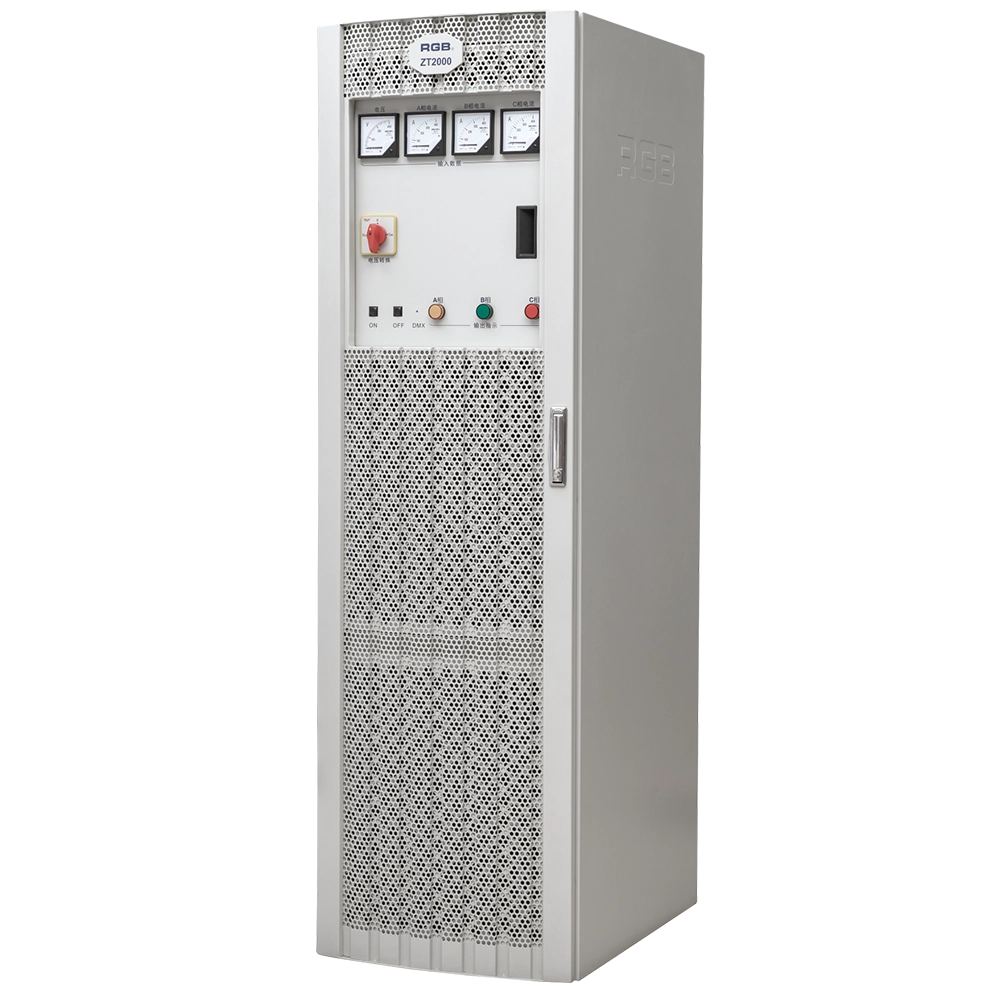
ZT2000 Pass-Through Racks
The ZT2000 straight-through power cabinet is a three-phase 630A/400A air switch main control, with each channel being a 32A air switch sub-control straight-through power cabinet. It can be used in conjunction with various computer lamps, regular lamps, and temporary electrical equipment as a power distribution and supply part for electrical equipment with overcurrent and short-circuit protection. It is a brand-new, reliable, and stable lighting control device in the field of stage lighting control.
It is widely applied in theaters, concert halls, multi-functional halls, cultural and tourism performances, TV stations, gymnasiums, auditoriums, commercial art lighting, and other performance and cultural venues.
Expert Support
Interested in learning more or need expert guidance related to this article? Fill in your details, and our team will provide tailored support.
Intelligent Control. Brilliant Performance.
RGB specializes in stage lighting control systems, delivering intelligent, reliable, and high-performance solutions for theaters and performance spaces worldwide.
Contact
Email:
Tel:
+86 20 3928 0245
+86 20 3928 0247
Address:
No.3, Huashan Road, Shilou Town, Panyu, Guangzhou, China.
Whatsapp: +8615975520131