
What power and wattage do LED stage lighting dimmers need?
|
- 1) How do I calculate the required dimmer wattage when my LED fixtures list driver input amps and power factor rather than a simple wattage?
- 2) Can I plug LED theatrical fixtures with built-in drivers into an old incandescent dimmer rack? What derating and wiring changes are needed to avoid flicker and nuisance trips?
- 3) How should I size breakers and cable for an LED dimmer rack considering startup inrush and NEC continuous-load rules?
- 4) What minimum load and dimmer type prevent flicker across a mix of LED and conventional fixtures?
- 5) For DMX-controlled LED stage lighting, should I use a mains dimmer pack, addressable LED drivers, or fixture-native DMX control to ensure smooth fades and no flicker on camera?
- 6) When shopping, how many watts per channel should I specify for portable LED stage lighting dimmers used in touring rigs, and what headroom and PF corrections should I include?
- Concluding summary: Advantages of properly sizing and selecting LED stage lighting dimmers
LED Stage Lighting Dimmer: What Power and Wattage Do You Need?
Buying a dimmer or dimmer rack for LED stage fixtures raises technical questions that generic articles don’t solve: mixed-driver math, inrush spikes, dimmer type compatibility, breaker and cable sizing, and how to avoid visible or camera flicker. Below are six frequent long-tail beginner questions with in-depth, practical answers that reflect NEC practices and current LED-driver realities. Semantic terms like LED dimmer, LED driver, PWM dimming, DMX512, dimmer rack, power factor correction, inrush current, and trailing-edge dimmer appear naturally throughout.
1) How do I calculate the required dimmer wattage when my LED fixtures list driver input amps and power factor rather than a simple wattage?
Step 1 — use rated input watts when provided: if a fixture lists input power (W) use that as the primary value. Step 2 — convert amps and power factor to watts when only those are given: Watts = Amps × Voltage × Power Factor (W = A × V × PF). Example: a fixture listing 0.8 A at 230 V with PF 0.75 is W = 0.8 × 230 × 0.75 = 138 W.
Step 3 — add realistic headroom for dimmer loading and control electronics. For LED drivers and electronic dimmers, plan 15–30% headroom above summed steady-state watts to cover driver inefficiencies and dimmer control electronics. If you have significant unknowns in PF or driver behavior, increase headroom to 30–50% until you confirm measurements with a power meter.
Step 4 — convert to channel and rack sizing. Sum fixture watts per dimmer channel (grouped fixtures controlled together). If a common dimmer channel is rated in amps or watts (e.g., many stage dimmer channels are 10 A at 120 V ≈ 1,200 W), ensure summed steady-state watts + headroom ≤ channel rating. For multi-channel racks, sum all channels to size the incoming feeder and main breaker.
Practical tip: measure representative fixtures with a true-RMS power meter before the tour or production. PF and harmonic distortion vary by driver; measured real power (watts) is the authoritative input for dimmer sizing.
2) Can I plug LED theatrical fixtures with built-in drivers into an old incandescent dimmer rack? What derating and wiring changes are needed to avoid flicker and nuisance trips?
Short answer: sometimes, but only with caution. Incandescent (leading-edge TRIAC) dimmer racks were designed for resistive loads; many LED drivers are electronic switching supplies that respond poorly to phase-cut mains. Common problems using legacy racks include flicker, limited dimming range, uneven fades, buzzing, and nuisance tripping.
Compatibility checklist:
- Confirm the dimmer manufacturer specifically lists LED compatibility for the rack and channel type.
- Derate legacy channel ratings: manufacturers and integrators often reduce the practical LED capacity to 30–60% of the incandescent rating depending on fixture PF and driver type. When in doubt, treat legacy channel ratings conservatively (e.g., 50% of label) or run a single fixture per channel for testing.
- Prefer trailing-edge (electronic) dimmers or LED-rated dimmer packs for LED loads. Trailing-edge dimmers generally give smoother control and reduce driver stress compared with leading-edge dimmers.
- For mixed rigs (LED + incandescent), keep LED fixtures on LED-rated channels or separate circuits to avoid cross-channel interaction and harmonics.
Wiring changes: ensure neutral and earth are solid; some LED drivers use mains referenced electronics that need a good earth. If using an older rack, add inrush limiting (NTC thermistors or soft-start) on the incoming mains if multiple fixtures cause tripping at switch-on.
3) How should I size breakers and cable for an LED dimmer rack considering startup inrush and NEC continuous-load rules?
Design around two realities: the NEC continuous-load rule and transient inrush from LED driver capacitors/power supplies.
NEC rule (practical application): continuous loads (operating 3 hours or more) should not exceed 80% of the breaker rating. Equivalently, choose breaker rating = steady-state load current / 0.8. Example: five LED fixtures drawing 400 W each on a single-phase 230 V feeder totals 2,000 W → steady current = 2,000 / 230 = 8.7 A → breaker = 8.7 / 0.8 ≈ 10.9 A → choose the next standard breaker (typically 16 A). Choose conductor ampacity at least equal to breaker rating and follow local code for insulation and bundling adjustments.
Inrush: LED drivers can have inrush peaks many times the steady-state current (often 5–30× for small switch-mode supplies; large packs may be higher). While breaker selection follows continuous load requirements, inrush can cause nuisance trips on breakers with fast trip curves. Mitigation options:
- Use breakers with higher magnetic trip thresholds or select a time-delay (type C or D for IEC; type-B/C select appropriately for local standards) suited to inrush.
- Add soft-start or inrush limiting on the feeder or at fixture power inputs for large banks of LEDs.
- Stagger power-on of fixtures to avoid simultaneous inrush.
Rule-of-thumb example for a touring dimmer rack: size incoming feeder breaker to steady-state sum / 0.8, verify with inrush testing, and if nuisance trips occur, add soft-start or change breaker trip characteristics rather than over-sizing conductors unnecessarily.
4) What minimum load and dimmer type prevent flicker across a mix of LED and conventional fixtures?
Flicker sources: incompatible phase-cut method (leading-edge vs trailing-edge), low minimum load on a channel, poor driver dimming curve, and PWM frequency too low for camera capture. To reduce flicker:
- Use LED-rated dimmers (explicitly tested for LEDs) or trailing-edge dimmers for most modern LED drivers. Trailing-edge commonly offers smoother low-end control and lower inrush stress.
- Respect minimum load if specified. Some electronic dimmers require a minimum resistive/LED-equivalent load (e.g., 10–20 W) to stabilize the TRIAC conduction; if your LEDs are under that, add an LED load stabilizer module or use a dedicated LED dimmer with no minimum load requirement.
- Choose fixtures or drivers with high PWM frequency (≥1 kHz) to avoid visible flicker and camera flicker; for professional broadcast/stage camera use, aim for PWM >4 kHz or use linear dimming in the driver where available.
- When mixing incandescent and LED on the same channel, expect altered dimming curves—avoid mixing where precise crossfade behavior is required.
Testing: always test slow fades, chases, and camera angles before the first show. If flicker appears on camera but looks fine to the eye, increase PWM frequency, change dimmer type, or shift to a driver-native control (DMX/0–10V) instead of mains dimming.
5) For DMX-controlled LED stage lighting, should I use a mains dimmer pack, addressable LED drivers, or fixture-native DMX control to ensure smooth fades and no flicker on camera?
General guidance: prefer fixture-native digital control (DMX512/Art-Net/sACN) or driver-level 0–10V/DALI where available. Reasons:
- Fixture-native or driver-level control provides the driver the correct control scheme and avoids mismatches caused by mains-phase cutting.
- Addressable LED drivers with per-LED channel control give better dimming curves, color mixing, and higher PWM frequencies tailored by the manufacturer for minimal flicker.
- DMX dimmer packs (mains switching dimmers) are still useful when fixtures do not support DMX/driver control, but they require LED-compatible packs and proper testing for flicker and compatibility.
If you must use a mains dimmer pack for LED fixtures, use a dimmer specifically rated for LED loads and test with your exact fixture model for camera conditions and slow fades. In professional installations and touring rigs, the current best practice is to use LED fixtures with native DMX/Art-Net/sACN control or drivers supporting industry protocols, and reserve mains dimming for legacy incandescent loads.
6) When shopping, how many watts per channel should I specify for portable LED stage lighting dimmers used in touring rigs, and what headroom and PF corrections should I include?
Start with these practical steps for touring dimmers:
- Decide expected fixture grouping per channel (1–4 fixtures typically). Sum nominal fixture watts per group and then add 20–30% headroom for steady-state uncertainty. If drivers’ PF data is unknown, err to the upper end (30%).
- Prefer dimmer channels rated at industry-common levels: 10 A (≈1,200 W at 120 V) or 16 A (≈1,920 W at 120 V) per channel are common baselines. For touring LED loads, many integrators specify 1,500–2,000 W per channel minimum to avoid constant maxing-out in real rigs, or they split fixtures to multiple channels for flexibility.
- For mains in Europe (230 V), 10 A per channel ≈ 2,300 W; many modern dimmer racks use 10 A/16 A channel ratings—choose based on your region and rack compatibility.
- Factor in power factor only when the dimmer rating is given in VA or when the venue limits apparent power. For most LED driver-dominated rigs use real watts for sizing; if apparent power matters (PA supply limits), then account for PF (VA = W / PF).
- Touring tip: specify dimmers with per-channel metering and logging (real watts and amps) so you can verify actual load in each venue and avoid surprises. Add soft-start and staggered power-up capability to manage inrush during load-in.
Example: a touring rig where a channel controls three 300 W fixtures: steady watts = 900 W. Add 30% headroom = 1,170 W. At 120 V this is 9.75 A steady-state; choose a channel specification of 10 A or greater and ensure feeder and breaker selection follows the NEC 80% rule for continuous loads at the rack level.
Concluding summary: Advantages of properly sizing and selecting LED stage lighting dimmers
Choosing the right LED dimmer system—LED-rated trailing-edge channels, driver-native DMX/0–10V control, correct wattage headroom, and NEC-compliant breaker/cable sizing—delivers predictable fades, no camera flicker, fewer nuisance trips, and longer fixture lifetime. Proper inrush management and per-channel metering reduce downtime on tour and simplify system diagnostics. Using driver-native control where possible avoids mains-phase mismatch and provides smoother color/brightness control for modern LED fixtures.
If you need a quote tailored to your rig (fixture list, region voltage, and control protocol), contact us for a detailed proposal: www.rgbsystem.com or email info@rgbsystem.com.
Latest News
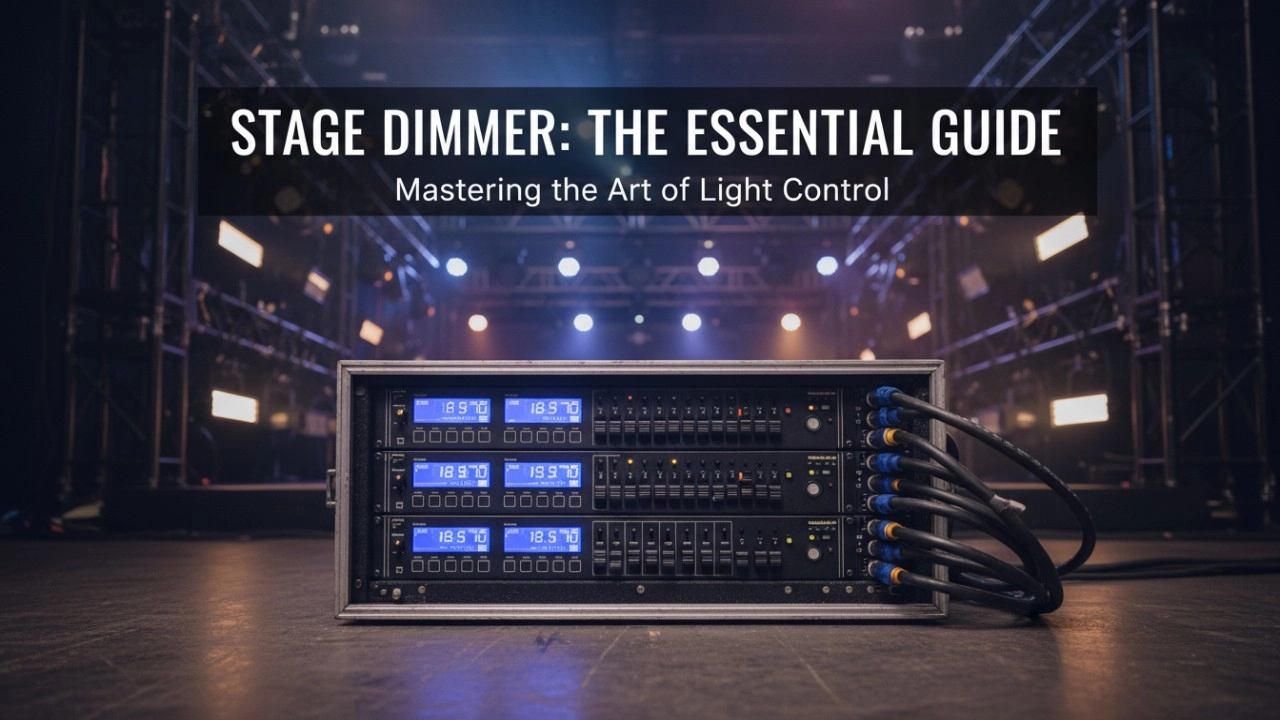
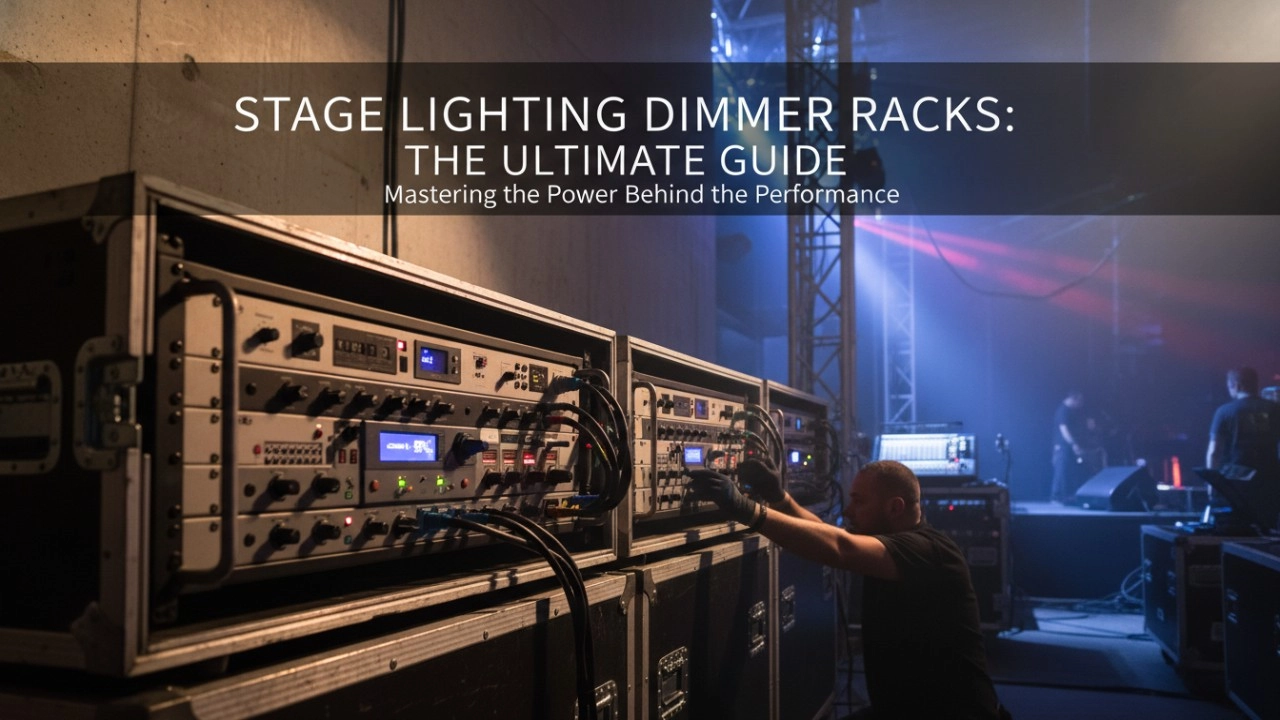
A comprehensive 2026 guide to selecting high-performance stage lighting dimmer racks. We review top hybrid systems, explore SCR vs sine wave technology, and analyze essential features like ThruPower for modern venues.
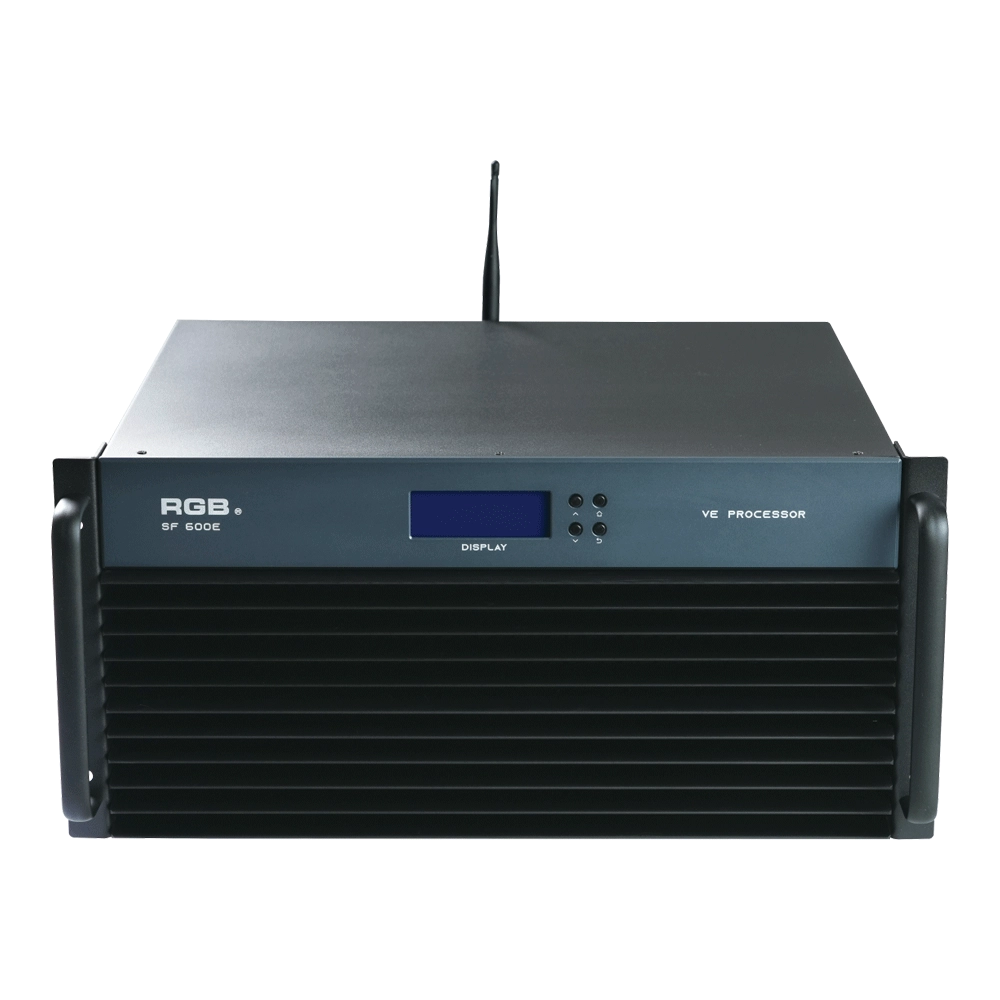
SF600E Visual R-net environment processor
The SF600E Visual R-net environment processor by RGB delivers advanced performance for visual systems. As a leading visual systems manufacturer, RGB ensures seamless integration and high reliability, making SF600E ideal for complex visual processing needs in diverse environments.
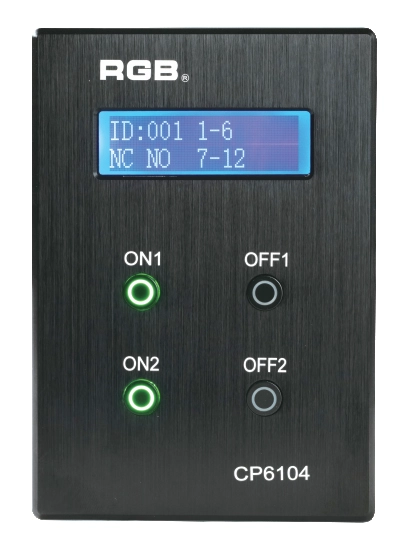
Site Light Controller CP6104
The CP6104 lighting control panel is a lighting control device for theater stage lights, work lights, environmental lighting, commercial art lighting, sports venue lighting and other places. By connecting to the dedicated lighting control host CP6100, it realizes the central control of the lighting system, supports a visual lighting control system, and intuitively displays the online and offline status of CP6104. Realize remote monitoring, editing and setting of corresponding parameters.
It is widely applicable to theaters, cinemas, auditoriums, stadiums, museums, exhibition halls, cultural tourism performances, commercial art lighting and other places.
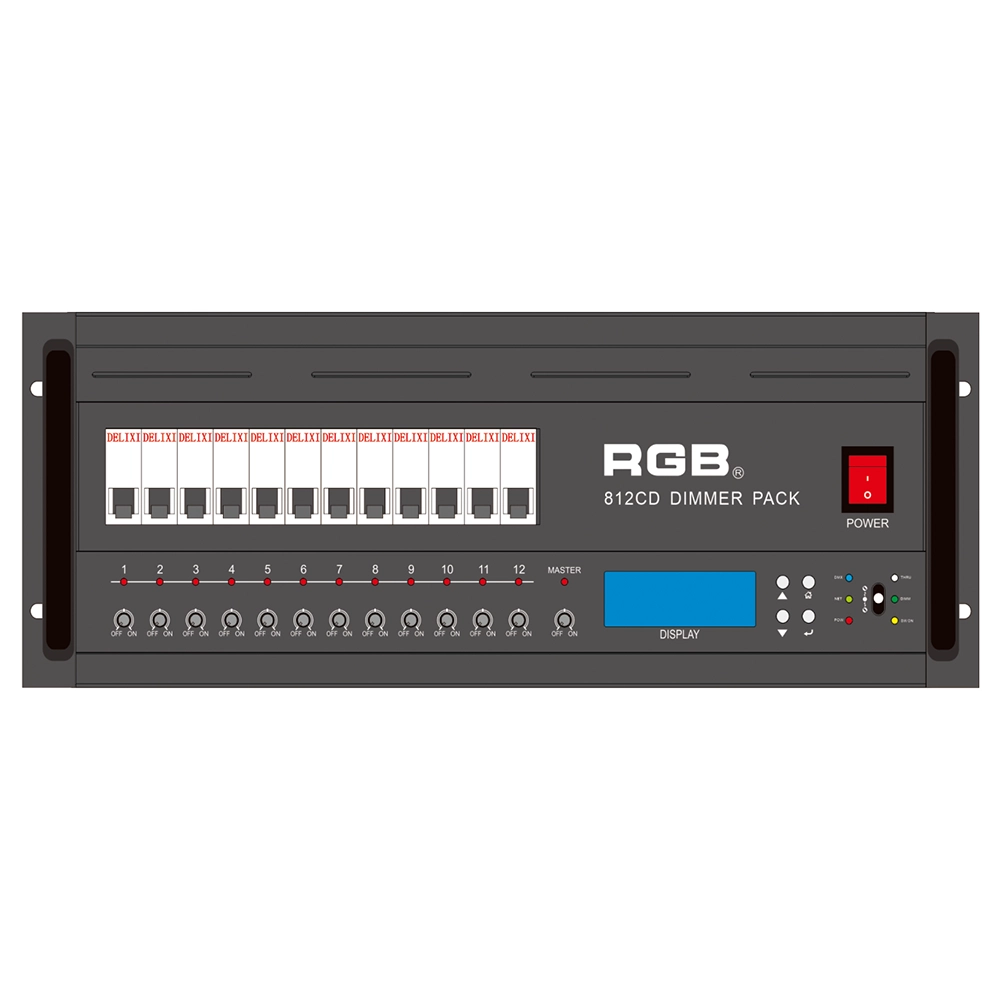
8 Series Intellight Dimmer/Relay Packs
RGB is the latest development and production of all digital, intelligent, and network dimming through the hybrid silicon box. It comes with six channels (806 silicon box), twelve channels (812 silicon box) with analog knob dimming, 49 DMX field recordings and replays (field backup function), and self-programming and recording field. RGB-8 silicon box with DMX512 digital signal input and RJ45 network input interface, with various types of dimming stations at home and abroad used. It is a powerful, stable performance and reliable work of a new generation of intelligent digital dimming through a hybrid silicon box.
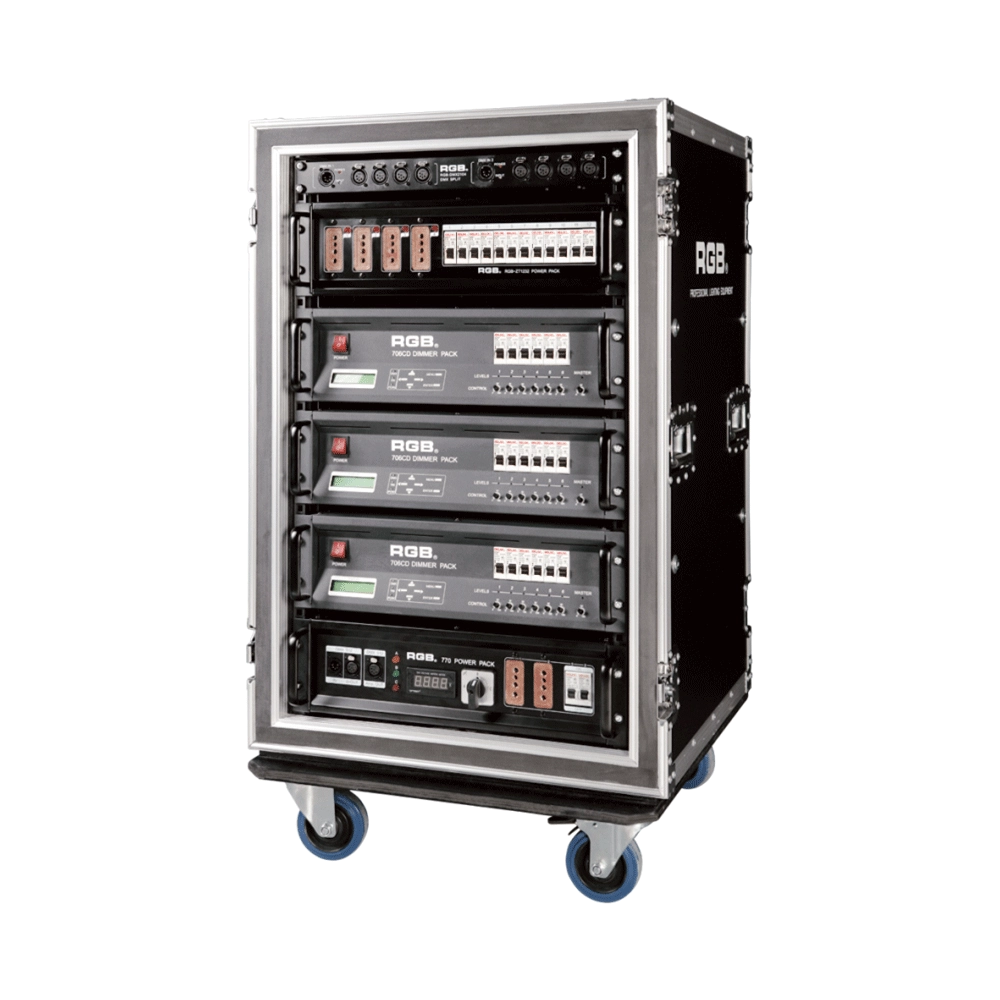
7 Series Digital Touring Dimmer Racks
7 Series digital touring dimmer racks can be assembled into many types of dimmer by taking the 7 Series dimmer as the unit. They are widely used in the entertainment industry for their convenience and practicability.
Expert Support
Interested in learning more or need expert guidance related to this article? Fill in your details, and our team will provide tailored support.
Intelligent Control. Brilliant Performance.
RGB specializes in stage lighting control systems, delivering intelligent, reliable, and high-performance solutions for theaters and performance spaces worldwide.
Contact
Email:
Tel:
+86 20 3928 0245
+86 20 3928 0247
Address:
No.3, Huashan Road, Shilou Town, Panyu, Guangzhou, China.
Whatsapp: +8615975520131