
led stage lighting dimmer | Insights by RGB
|
- 1. How do I ensure my LED stage lighting dimmer won't cause camera-facing flicker on live broadcasts?
- 2. Can I replace an old incandescent dimmer pack with an LED dimmer without rewiring my stage power distribution?
- 3. What dimming curve should I choose for LED stage lighting to match traditional incandescent fades?
- 4. How do I size and spec a multi-channel LED dimmer rack for a touring rig with mixed fixtures (par cans, moving heads, strip LEDs)?
- 5. Why does my LED fixture flicker when controlled from a 0–10V or phase-cut output from our legacy dimmer system, and how to fix it?
- 6. What test procedures should I require from suppliers to verify flicker-free, studio-grade performance of LED dimmers before purchase?
Buying an LED stage lighting dimmer is more than channel count and price. Modern LED dimmer packs and DMX512 controllers require attention to PWM frequency, driver compatibility, dimming curves, inrush current and digital protocols (RDM, sACN/Art-Net). Below are six long-tail, pain-point-focused questions many beginners search for but rarely find fully answered.
1. How do I ensure my LED stage lighting dimmer won't cause camera-facing flicker on live broadcasts?
Why this matters: Broadcast and live-stream cameras reveal temporal light artefacts (flicker) that the human eye may not see. Flicker ruins footage, causes banding and roll bars, and can fail broadcast QC.
Root causes and what to require:
- PWM dimming frequency and waveform: Many LED fixtures and dimmer packs use PWM to modulate LED current. Low PWM frequencies (e.g., <1–2 kHz) can produce visible flicker or interact with camera shutter/frame rates. Spec a dimmer or LED driver with a higher PWM frequency (typical professional ranges: several kHz to tens of kHz) and ask the vendor for measured photodiode/oscilloscope traces at low, mid and high dim levels.
- DMX refresh & update handling: DMX512 (ANSI E1.11) updates at ~44 Hz per universe by default but consoles often send faster. Networked solutions (sACN/Art‑Net) and a dimmer with buffered smoothing and a high internal update loop reduce stepping and low-frequency artefacts. Ensure the dimmer supports smoothing/filtering and user-configurable update rates.
- Driver type compatibility: Use compatible constant-current LED drivers or fixtures that advertise “flicker-free” or studio-grade performance. Dimmers that attempt to phase-cut or alter mains to dim LEDs will often induce strobing on camera. Prefer LED dimmer packs that output a dedicated LED dimming protocol or DMX-controlled drivers.
- Measurement requirements: Ask suppliers to provide CIE S 025 style measurements (temporal light artefacts) or, at minimum, oscilloscope/photodiode data and camera test footage at 24/25/30/50/60/120 fps across dim ranges. Include those tests in contractual acceptance criteria.
- Phase-cut vs LED drivers: Traditional incandescent dimmers use TRIAC/phase-cut control. Most LED fixtures and modern LED drivers don’t respond well to phase-cut mains modulation and can flicker, behave erratically or get damaged. You cannot simply connect LED fixtures to an old dimmer pack and expect reliable results.
- Power wiring & circuits: Check whether your existing breakers, cable gauges and distro can supply the different current characteristics of LEDs. LEDs draw lower steady-state current but can present higher inrush currents and need proper neutral/ground wiring. Some LED dimmer racks require separate neutral routing or multiple circuits per rack; verify wiring compatibility and derating requirements.
- Dimming method choice: Two practical retrofit approaches: (a) Replace rack modules with LED-compatible dimmer modules that mount in existing racks (if vendor supports retrofit modules), or (b) install dedicated DMX/Art-Net-controllable LED dimmer packs or constant-current LED drivers and use the existing power distro where ratings and connectors match.
- Power factor and harmonics: Modern LED drivers include power factor correction (PFC). Ensure your new LED dimmers meet local regulations (CE/UL/EMC) and that the venue’s mains can handle aggregated harmonic distortion. This is especially relevant in older venues with sensitive building infrastructure.
- Incandescent baseline: Incandescent lamps dim by changing filament temperature; perceived brightness vs electrical power is nonlinear. That produces a natural-looking logarithmic-like fade to audiences.
- LED characteristics: LEDs produce luminance roughly proportional to forward current, but perceived brightness is not linear with current. To match incandescent behavior, dimming systems use lookup tables (LUTs) or transform curves (gamma, logarithmic, S-curve).
- Available dimmer curve options: Good LED dimmers/LED drivers offer multiple curve options (linear, logarithmic/gamma, square-law, and theatre-specific S-curves), plus user-adjustable parameters. Some devices implement per-fixture LUT upload via RDM or manufacturer tools so each fixture’s output precisely matches the artistic intent.
- Test and calibrate: Measure actual lux output at multiple control levels using a calibrated light meter, then select or build a LUT to match the incandescent reference curve. Many lighting desks support curve overrides per fixture or channel.
- Color temperature shifts: If you need the warm-off behavior of incandescents, use color temperature control (tunable white) or color LUTs so the fixture’s white shifts as it dims, if the fixture supports it.
- Always verify with real-world cues: Perform artistic eye tests in the venue, not just lab measurements—audience perception is the arbiter.
- Inventory every fixture: list nominal steady-state power (W), inrush characteristics, control channels per fixture (DMX channels), and whether fixtures have internal drivers (constant current) or require external drivers.
- Calculate per-channel and total currents: convert watts at system voltage (I = W/V), then determine maximum expected current per dimmer channel. Allocate diversity for not all channels at full load simultaneously—industry practice often applies a 10–30% diversity factor depending on rig and seasonality, but for tour rigs with unpredictable content, design for at least 100% of the maximum continuous draw for critical channels and 20–30% headroom overall.
- Account for inrush currents: Moving heads and LED drivers can have high startup inrush. Ensure breakers, inrush limiting, or staggered powering strategies to avoid nuisance tripping. Use soft-start features or power sequencing if required.
- Control-channel planning: DMX universes contain 512 channels. Map fixtures so that a single dimmer rack supports whole universes where possible to simplify patching. For large rigs, prefer networked dimmer nodes with sACN/Art‑Net and RDM for easy addressing and monitoring.
- Cooling, ventilation and mechanical considerations: Touring racks should have proper ventilation, temperature monitoring and shock-mounting. Check weight, rackspace (U), connectors (powerCON, stage pin), and IP rating if outdoor use is planned.
- 0–10V systems: Passive 0–10V expects a sinking or sourcing control interface. Some LED drivers expect an active 0–10V interface or specific bias current. If the fixture flickers, check whether the driver is compatible with the amplitude and sourcing of your 0–10V controller. Solutions: use an active 0–10V interface or a DMX-to-0–10V converter designed for LED loads, or replace drivers with DMX/RDM-capable drivers.
- Phase-cut (TRIAC) dimmers: TRIAC dimming chops the mains waveform; many LED power supplies include switching electronics that don’t behave predictably under phase-cut. This creates flicker, jumps at low levels, or audible noise. The remedy is to use an LED-compatible phase-cut interface designed for electronic loads or move to a dedicated LED dimmer/LED driver system that uses PWM/current control.
- Temporary workarounds to avoid: adding random resistive dummy loads (e.g., incandescent bulbs or non-specified resistors) can mask flicker but increase heat and are not a recommended long-term solution. Instead, adopt proper LED-compatible control gear.
- Temporal light artefact (TLA) reports: measured photometric traces from a calibrated photodiode/oscilloscope across 0–100% dimming range and across the dimmer’s supported PWM settings. Include data at typical operating temperatures.
- Camera tests: video footage shot at 24/25/30/50/60/120 fps demonstrating no banding or beat frequencies at low, mid and high dim levels. Ask for raw camera files or frame-by-frame analysis.
- Electrical specs: PWM frequency range, DMX update handling, THD (total harmonic distortion), power factor (PF) numbers, max continuous current per channel and peak/inrush current figures.
- Standards and EMC compliance: CE/UKCA/UL, IEC/EN emission and immunity test compliance, and any lighting-specific standards referenced (e.g., adherence to recommendations in CIE S 025 for temporal light artefacts). Suppliers should provide test certificates and lab reports.
- On-site acceptance test: include an acceptance clause requiring the vendor to run an on-site verification with your actual cameras and fixtures, or to provide a loaner unit for testing during setup. Define pass/fail criteria in the contract (e.g., no visible flicker at listed camera frame rates and dim ranges).
Field test checklist before purchase: run camera tests with your target frame rates, request PWM frequency and waveform data from the vendor, and insist on firmware options to raise PWM or enable dithering/temporal smoothing to avoid beat frequencies with camera shutters.
2. Can I replace an old incandescent dimmer pack with an LED dimmer without rewiring my stage power distribution?
Why this matters: Many venues want to swap heavy, obsolete TRIAC/phase-cut dimmer racks for lightweight LED dimmer packs while keeping existing distribution.
Key compatibility points and steps:
Recommendation: Conduct a site power audit (breaker capacity, cable gauges, neutral routing) and insist the supplier provide wiring diagrams and load-inrush profiles. If you must reuse an old rack frame, confirm compatibility with LED dimmer modules and whether any mains wiring rewiring is required for safe operation.
3. What dimming curve should I choose for LED stage lighting to match traditional incandescent fades?
Why this matters: Designers and operators expect familiar, musical fades. LEDs are inherently different from incandescent lamps, so naive linear dimming will not match perceived brightness or color shift.
Understanding dimming curves:
Practical steps for matching fades:
4. How do I size and spec a multi-channel LED dimmer rack for a touring rig with mixed fixtures (par cans, moving heads, strip LEDs)?
Why this matters: Touring rigs combine many load types with different steady-state currents, inrush behavior and control-channel needs. Underspec’ing a rack risks tripping breakers or damaging equipment; overspec’ing wastes weight and budget.
Sizing workflow and spec checklist:
Specification items to include in RFP: channel continuous amp rating, peak/inrush amp rating, PWM frequency range, smoothing options, DMX/RDM/sACN/Art‑Net support, surge protection, cooling specs, compliance (UL, CE), and required cabling/connectors. Insist on firmware upgradeability and remote monitoring of per-channel current and temperature.
5. Why does my LED fixture flicker when controlled from a 0–10V or phase-cut output from our legacy dimmer system, and how to fix it?
Why this matters: Older venues use 0–10V or phase-cut analogue dimming; many LED drivers were not designed for those control types and will flicker, produce color instability, or fail to reach full range.
Diagnosis and fixes:
Procurement tip: When upgrading a legacy control system, require compatibility certification from the dimmer/driver vendor for your existing 0–10V or phase-cut infrastructure—or budget to migrate to DMX/sACN and LED drivers designed for digital control.
6. What test procedures should I require from suppliers to verify flicker-free, studio-grade performance of LED dimmers before purchase?
Why this matters: Written guarantees are useful but measurable test data and acceptance tests are essential to ensure the dimmer will perform under real-world broadcast and theatre conditions.
Minimum supplier test evidence to request:
Procurement checklist: include test-report delivery, firmware update policy, RMA and warranty conditions (minimum 2–3 years for touring gear), and support for remote diagnostics via RDM or vendor software.
Concluding summary
Modern LED stage lighting dimmer solutions—when specified and tested correctly—offer precise, flicker-free dimming, reduced rack weight, lower power consumption, networked control (DMX/RDM, sACN/Art‑Net), and better reliability versus legacy phase-cut systems. The advantages include consistent broadcast-quality output, easier calibration to match incandescent fades, remote diagnostics and firmware updates, and safer power handling when inrush and power factor are accounted for.
For an accurate quote and product test data tailored to your fixtures and cameras, contact us for a site audit and proposal: www.rgbsystem.com or info@rgbsystem.com.
Latest News
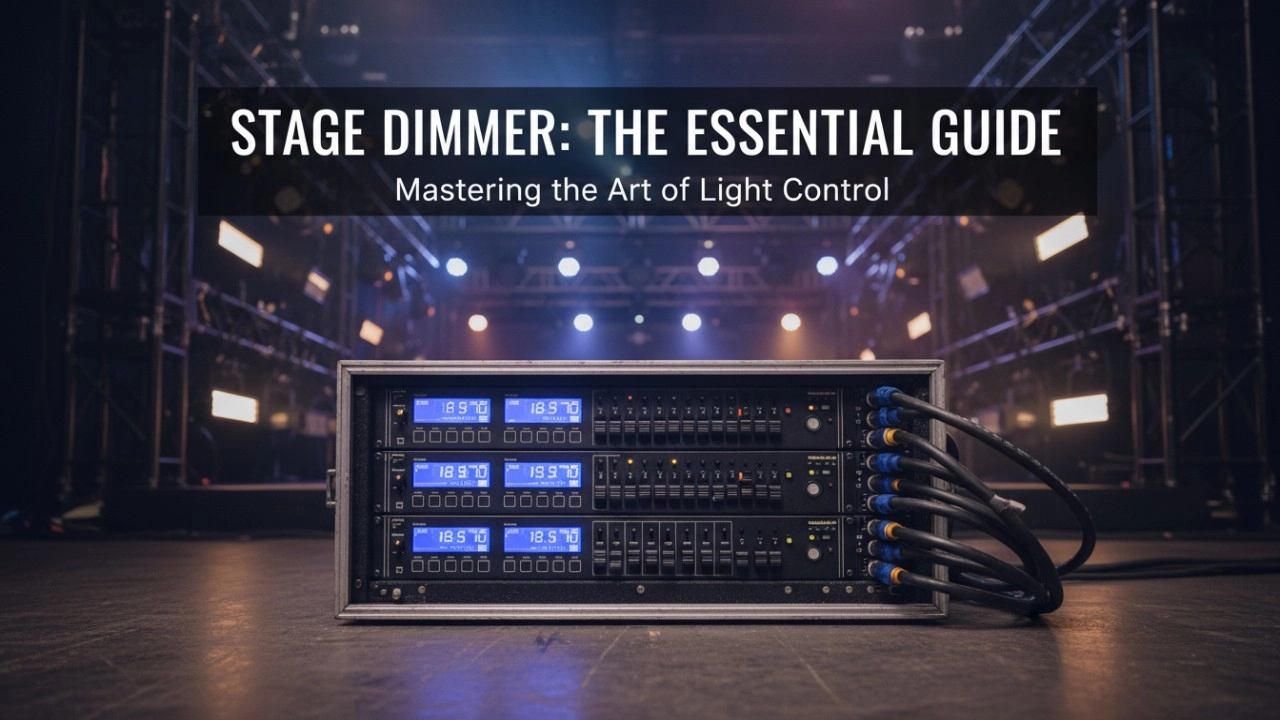
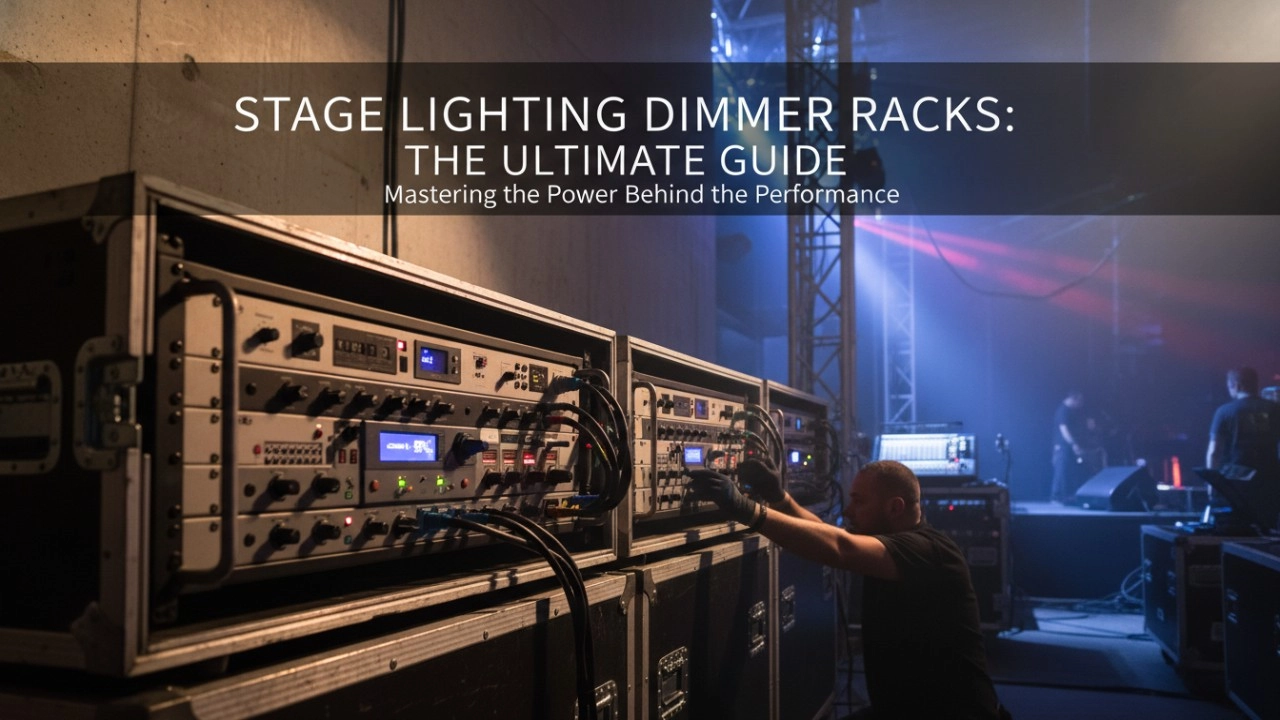
A comprehensive 2026 guide to selecting high-performance stage lighting dimmer racks. We review top hybrid systems, explore SCR vs sine wave technology, and analyze essential features like ThruPower for modern venues.
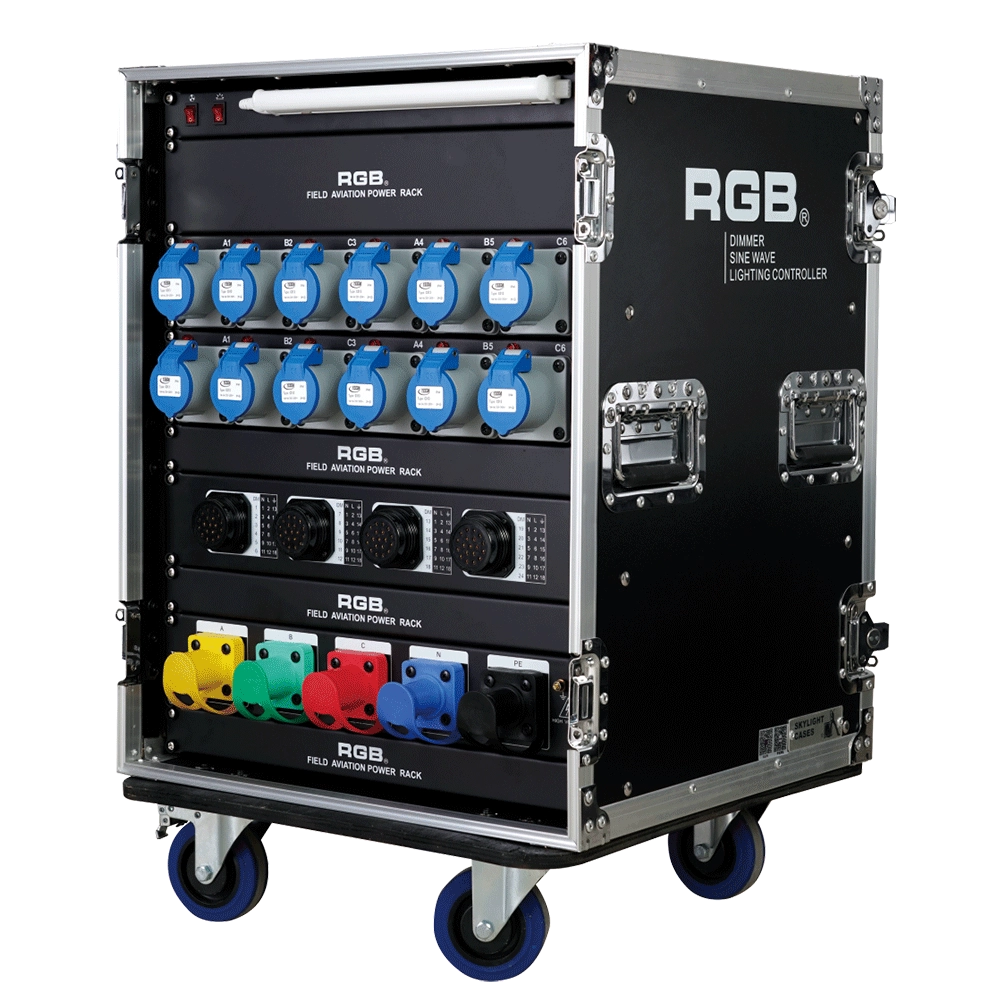
ZT2419+1216 Distribution Box
ZT2419+1216 features dual protection functions and is a power distribution product specifically designed for overcurrent and short circuits in electrical equipment. It is the best choice for mobile performance and is suitable for use in computer lamps, conventional lamps, and other equipment.
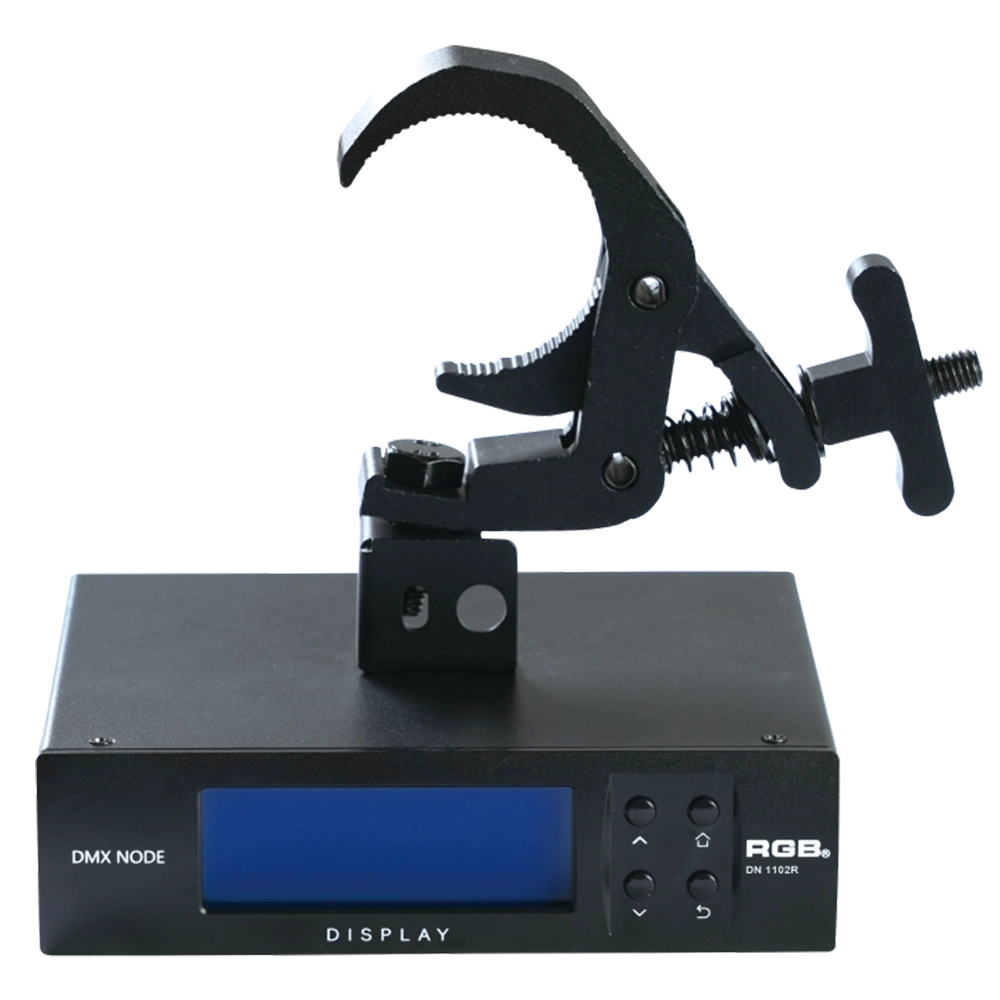
RDM Nodes
The DN series network decoder is a product of the lighting control system independently developed by RGB, featuring completely independent core technology and obtaining software copyrights. It seamlessly connects and decodes the sACN and Art-Net network protocols based on TCP/IP with the DMX-512 and RDM communication protocols. Supports a visual lighting control system, intuitively displaying the online and offline status of the DN series network decoders, and enabling remote monitoring, editing, and setting of corresponding parameters.
It is widely applied in theaters, concert halls, multi-functional halls, cultural and tourism performances, TV stations, gymnasiums, auditoriums, commercial art lighting, and other performance and cultural venues.
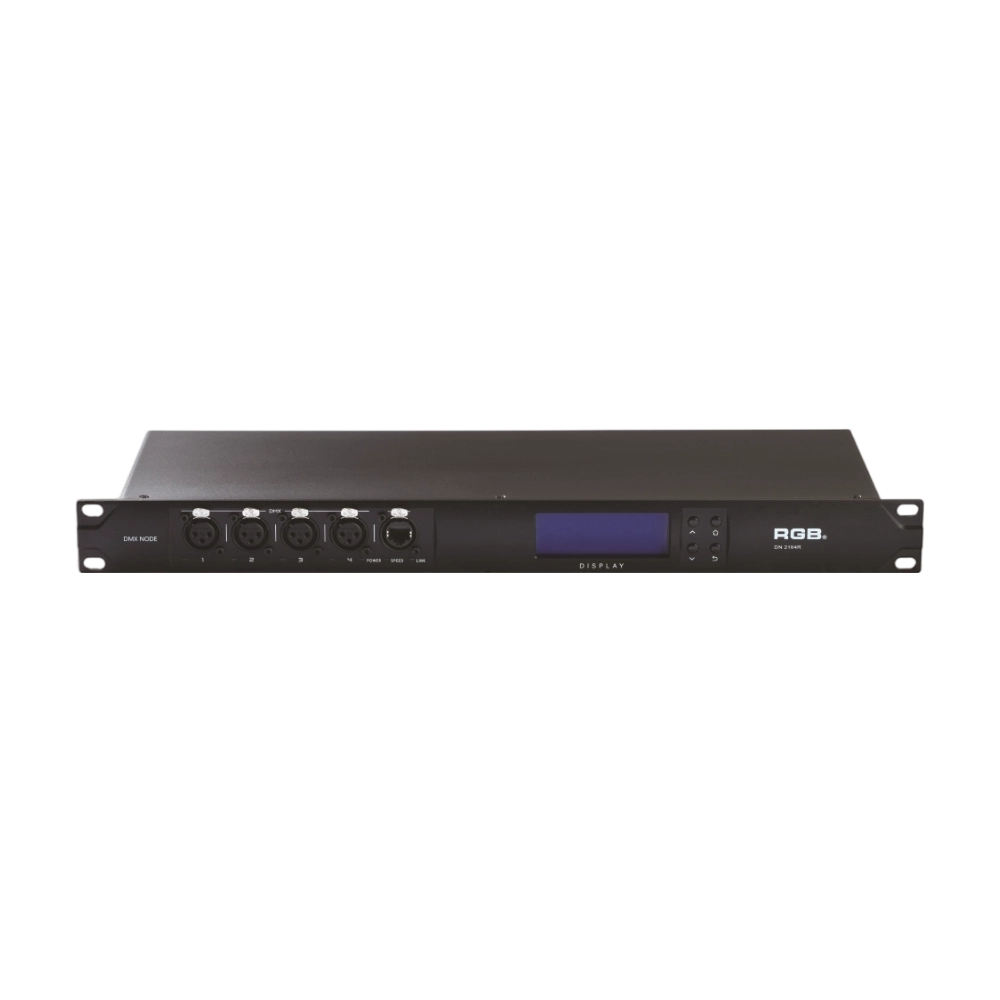
DMX, RDM Nodes
The DN series dual network port network decoder is a lighting control system product independently developed by RGB, featuring completely independent core technology and software copyright. It seamlessly connects and decodes the sACN and ART-Net network protocols based on TCP/IP with the DMX-512 and RDM communication protocols, achieving gigabit communication with dual independent physical address codes. Supports a visual lighting control system, intuitively displaying the online and offline status of the DN series network decoders, and enabling remote monitoring, editing, and setting of corresponding parameters.
It is widely applied in theaters, concert halls, multi-functional halls, cultural and tourism performances, TV stations, gymnasiums, auditoriums, commercial art lighting, and other performance and cultural venues.
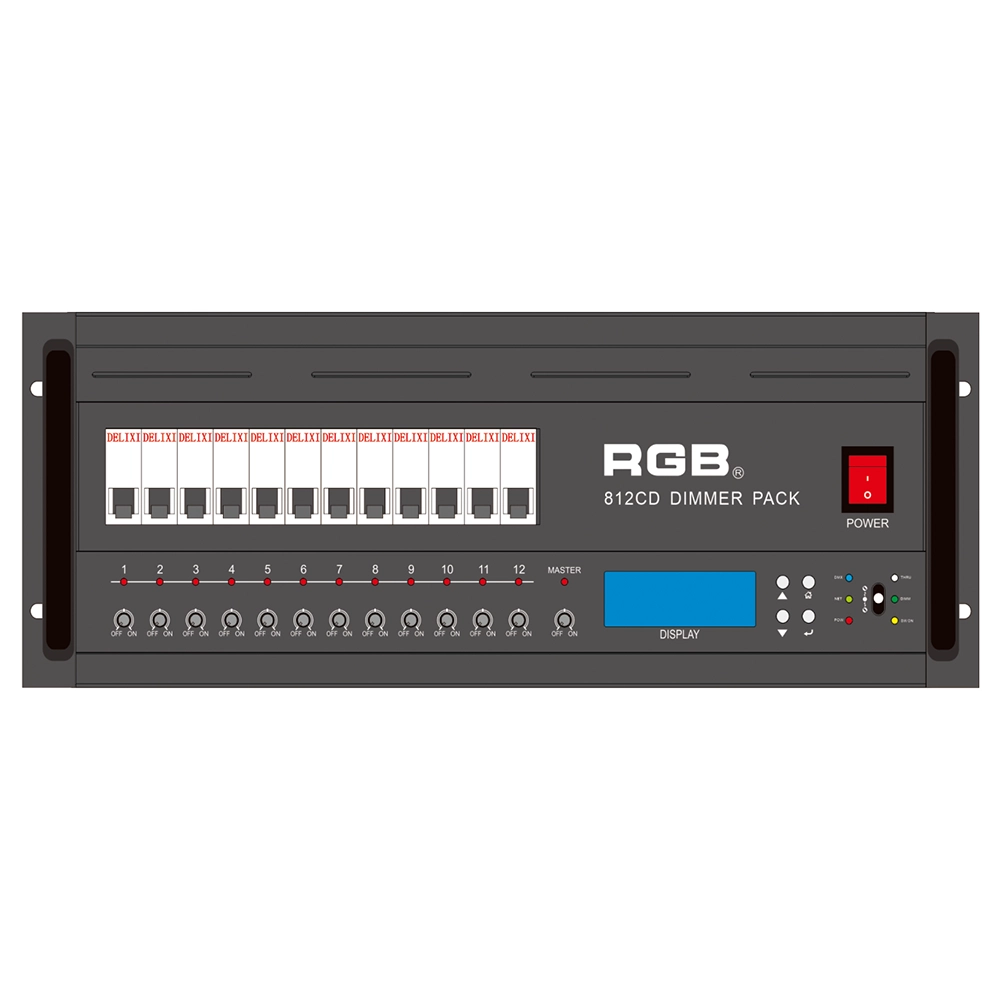
8 Series Intellight Dimmer/Relay Packs
RGB is the latest development and production of all digital, intelligent, and network dimming through the hybrid silicon box. It comes with six channels (806 silicon box), twelve channels (812 silicon box) with analog knob dimming, 49 DMX field recordings and replays (field backup function), and self-programming and recording field. RGB-8 silicon box with DMX512 digital signal input and RJ45 network input interface, with various types of dimming stations at home and abroad used. It is a powerful, stable performance and reliable work of a new generation of intelligent digital dimming through a hybrid silicon box.
Expert Support
Interested in learning more or need expert guidance related to this article? Fill in your details, and our team will provide tailored support.
Intelligent Control. Brilliant Performance.
RGB specializes in stage lighting control systems, delivering intelligent, reliable, and high-performance solutions for theaters and performance spaces worldwide.
Contact
Email:
Tel:
+86 20 3928 0245
+86 20 3928 0247
Address:
No.3, Huashan Road, Shilou Town, Panyu, Guangzhou, China.
Whatsapp: +8615975520131