
Dimmer Rack vs. Smart Relays: Choosing the Best Lighting Control for Modern Theaters
|

- Quick Summary: Key Takeaways for Technical Directors
- What is the difference between a dimmer rack and a smart relay?
- The Legacy Standard: Understanding Dimmer Racks (SCR & IGBT)
- The Modern Solution: Smart Relays and Constant Power
- Comparison: Dimmer Rack vs. Smart Relay Systems
- Expert Tips: Common Mistakes When Mixing Dimmers and LEDs
- 2026 Gap Analysis: Future-Proofing Your Theater Power
- How Guangzhou RGB Lighting Equipment Co. Ltd. Bridges the Gap
- Conclusion & Call to Action
Quick Summary: Key Takeaways for Technical Directors
Traditional dimmer racks modulate voltage for incandescent loads, while smart relays provide switched constant power for intelligent LED fixtures.
For venues upgrading their theater lighting infrastructure in 2026, understanding this distinction is critical to preventing equipment damage.
- Voltage Modulation vs. Constant Power: Attempting to dim LED fixtures via SCR racks often leads to flickering, reduced fixture life, and poor low-end performance.
- Hybrid Flexibility: Systems utilizing thru-power technology offer the most flexibility, allowing venues to mix legacy tungsten and modern intelligent rigs.
- Heat Management: Smart relays significantly reduce heat generation in the rack room compared to SCR dimmers, lowering HVAC costs.
- Safety: Relays eliminate the need for "dummy loads" to prevent LED ghosting.

What is the difference between a dimmer rack and a smart relay?
A dimmer rack uses SCR or IGBT components to 'chop' the AC sine wave to reduce voltage, whereas a smart relay provides full, unregulated 120V/208V sine wave power.
This fundamental difference dictates which power source is safe for your specific lighting inventory.
- Dimmer Racks: Designed for resistive loads (tungsten filaments). They manage intensity at the power source level.
- Smart Relays: Designed for capacitive/inductive loads (LED drivers, moving lights). They simply toggle the circuit on or off via DMX, letting the fixture handle intensity and color internally.
- The Risk: Plugging an LED power distribution system into a dimmed circuit can cause the fixture's power supply units (PSU) to fail catastrophically due to irregular voltage peaks.
The Legacy Standard: Understanding Dimmer Racks (SCR & IGBT)
Phase-control dimmers work by rapidly switching the power on and off 120 times per second to lower the RMS voltage delivered to the lamp.
While this technology has served the industry since the 1970s, it poses specific challenges for modern equipment.
- Leading Edge vs. Trailing Edge: Standard SCRs use "leading edge" dimming, which causes a sharp rise in current that creates electrical noise (filament sing). The large chokes (inductors) required to dampen this noise generate significant heat.
- Minimum Load Requirements: SCRs require a minimum amperage draw to stay "latched" on. Efficient LEDs often draw so little power that the dimmer becomes unstable, causing strobing.
- Legacy Support: Despite the shift to LED, dimmers remain essential for house lights and heritage tungsten inventory in many school and community theaters.
The Modern Solution: Smart Relays and Constant Power
Smart relays utilize air-gap mechanical switching or solid-state technology to deliver pure sine wave power specifically for intelligent fixtures.
Modern LED power distribution systems rely on this clean power to operate onboard computers and sensitive electronics.
- Air-Gap Safety: Unlike solid-state devices that always leak a small amount of current, air-gap relays physically separate the contacts. This prevents "ghosting" (where LEDs glow faintly when off) and ensures safety during maintenance.
- Remote Power Management: Advanced systems utilize intelligent circuit breakers that can be monitored remotely. This allows technicians to reset a tripped breaker or power cycle a frozen moving light directly from the lighting console.
- Energy Code Compliance: According to the National Fire Protection Association, modern electrical codes (NEC Article 520) increasingly favor systems that allow for precise load shedding and energy monitoring, capabilities inherent in networked relay systems.
Comparison: Dimmer Rack vs. Smart Relay Systems
Relay panels are generally 20-30% cheaper per circuit than heavy-duty SCR dimmer modules due to simpler internal mechanics and reduced cooling needs.
However, the choice involves more than just initial hardware costs.
| Feature | Dimmer Rack (SCR) | Smart Relay Panel | Hybrid (ThruPower) |
|---|---|---|---|
| Power Output | Modulated (Chopped) | Constant Sine Wave | Switchable (Both) |
| Primary Load | Tungsten/Incandescent | LEDs / Moving Lights | Mixed Inventory |
| Heat Generation | High (Requires heavy HVAC) | Low (Passive cooling often sufficient) | Moderate |
| Maintenance | High (Fan cleaning, SCR replacement) | Low (Few moving parts) | Moderate |
| Cost | High | Low | Premium |
Expert Tips: Common Mistakes When Mixing Dimmers and LEDs
Setting a dimmer channel to "Non-Dim" or "Switch" mode on a lighting console does NOT turn a dimmer into a true relay.
This is the most common error in SCR vs. relay module management. Even in "Non-Dim" mode, the SCR hardware is still in the circuit path, often distorting the sine wave slightly (zero-cross distortion).
- The Switch Mode Fallacy: Many LED warranties are voided if the fixture is powered by a dimmer in switch mode. The distorted waveform causes the LED's capacitors to overheat.
- Ghosting: Leakage current from the dimmer's snubber circuit can charge the capacitors in an LED driver, causing it to flash periodically even when the console says "0%."
- The Dummy Load Fix: If you must use a dimmer, placing a "ghost load" (a small resistive load like a 25W incandescent bulb) on the same circuit helps stabilize the SCR and prevents LED flickering.
2026 Gap Analysis: Future-Proofing Your Theater Power
Future-proofing requires a shift toward 208V distribution and networked control protocols like sACN and RDM directly at the breaker level.
As venues adopt theater lighting infrastructure 2026 standards, two major trends are emerging:
- High-Voltage Distribution: Moving from 120V to 208V allows you to power nearly double the number of fixtures on the same gauge wire. This is crucial for large LED walls and high-output moving head rigs.
- Networked Integration: Modern power control must integrate with protocols defined by ESTA (specifically ANSI E1.20 RDM). This allows the lighting console to query the rack for temperature data, voltage drops, and breaker status in real-time.
- Sustainability Reporting: Smart relays provide granular power usage data, essential for venues needing to report carbon footprints or comply with green energy grants.
How Guangzhou RGB Lighting Equipment Co. Ltd. Bridges the Gap
Hybrid solutions allow venues to upgrade to LED infrastructure gradually without ripping out existing conduit or discarding functional tungsten fixtures.
Founded in 1996, Guangzhou RGB Lighting Equipment Co., Ltd., has decades of experience helping theaters transition from analog to digital infrastructures. Our approach focuses on modularity and safety.
- Case Study: In a recent upgrade for a municipal theater, RGB replaced aging SCR cards with modular relay cards within the existing rack footprint. This saved the client over 40% in installation costs by reusing the existing feed wiring.
- Thru-Power Technology: RGB's latest racks feature intelligent modules that automatically detect the load type or can be switched via software. This prevents the accidental destruction of intelligent fixtures by locking specific circuits into "Relay Mode."
- Manufacturing Excellence: As a National High-Tech Enterprise with ISO9001 certification, our intelligent circuit breakers and power cabinets are tested to withstand the rigorous demands of professional touring and permanent installation.
Conclusion & Call to Action
Choosing between dimmer racks and smart relays is no longer a binary decision; the most effective modern theaters utilize a hybrid approach that prioritizes safety and flexibility. Whether you are managing a heritage tungsten rig or a cutting-edge 208V LED system, the infrastructure you choose today must support the technologies of tomorrow.
Contact Guangzhou RGB Lighting Equipment Co., Ltd. today to discuss your specific needs and design a future-proof power distribution system tailored to your venue.
Latest News
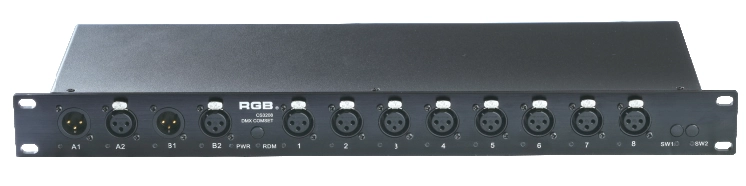
DMX&RDM Signal Mergers Amplifiers
The rack-mounted DMX signal amplifier complies with the DMX-512 standard protocol, improving the transmission quality of DMX-512 signals, ensuring the reliability of system control, and preventing faults such as reverse connection of AC high voltage in the lighting control system, high voltage intrusion due to lightning strikes, and line short circuits, which may affect the stability of the system.
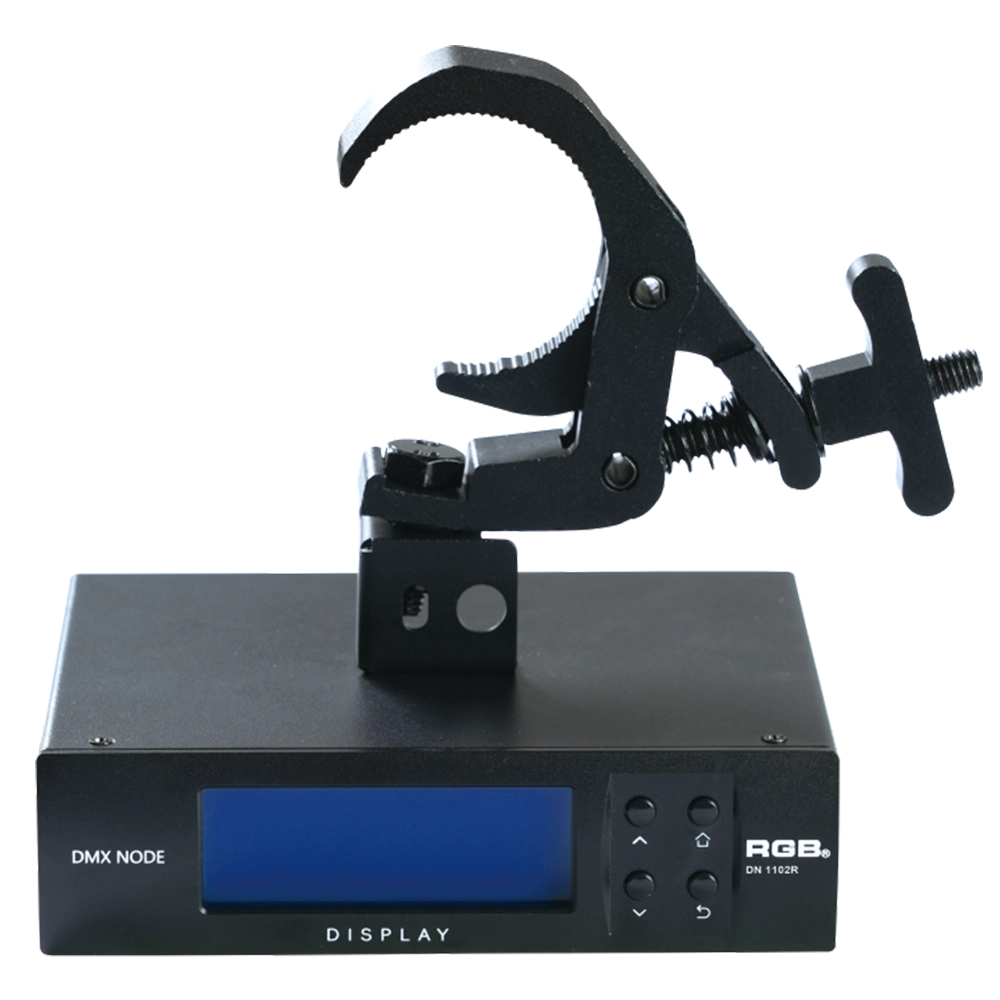
DN1102R/DN1104R Art-Net/sACN DMX & RDM Nodes
RGB DN1102R and DN1104R are DMX512/RDM network nodes for stage lighting control over Art-Net and sACN. The product description lists an Ethernet interface, protocol selection, device status reporting and optional accessories. Published dimensions distinguish DN1102R and DN1104R; do not apply larger DN Series 8- or 12-universe configurations to these two models without specific evidence.
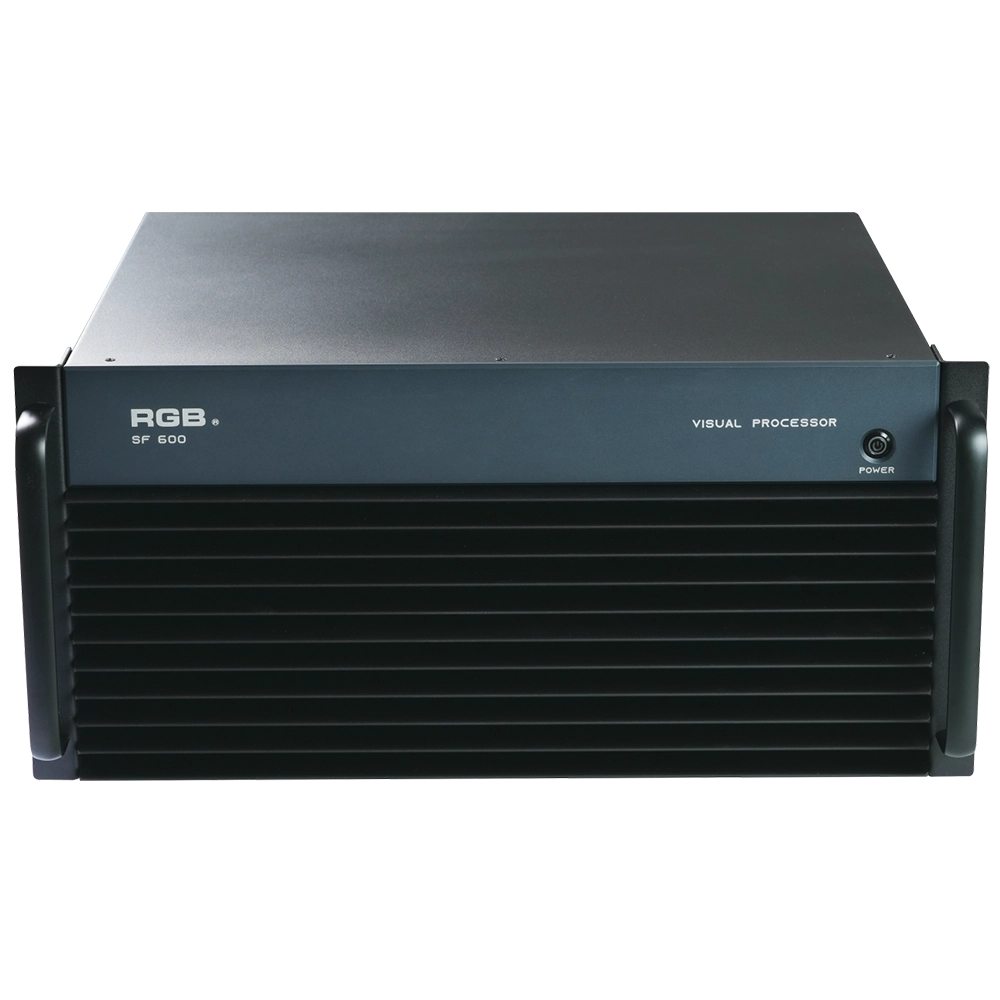
SF600 R-Net Visual Network Controller
RGB SF600 is an R-Net visual network controller for monitoring professional stage lighting systems. It displays connected Art-Net, sACN, RGB-Net and RDM devices in a network topology, with single- or dual-screen views for checking device status and parameters. Published interfaces include four Ethernet ports, dual fiber connections and four RDM interfaces, together with redundant power supply support. The SF600 is a system monitoring controller, not a generic corporate video processor.
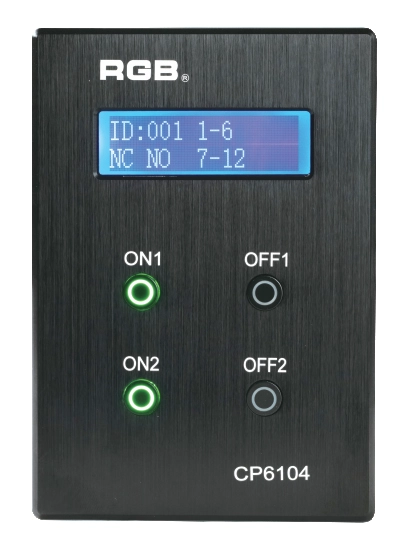
CP6104 Four-Key Stage Lighting Control Panel
RGB CP6104 is a four-key lighting control panel for stage and venue scenes within a CP6100 host-based system. The published design lists a local LCD, four backlit scene keys, panel status indication and an RJ45 interface powered by the main unit. Host-level circuit and scene capacities must be confirmed for the full system rather than attributed to the panel alone.
Expert Support
Interested in learning more or need expert guidance related to this article? Fill in your details, and our team will provide tailored support.
Intelligent Control. Brilliant Performance.
RGB specializes in stage lighting control systems, delivering intelligent, reliable, and high-performance solutions for theaters and performance spaces worldwide.
Contact
Email:
Tel:
+86 20 3928 0245
+86 20 3928 0247
Address:
No.3, Huashan Road, Shilou Town, Panyu, Guangzhou, China.
Whatsapp: +8615975520131