
How to choose the best 24 channel dimmer rack for your venue?
|
- 1. What are the key factors to consider when selecting a 24-channel dimmer rack for a live performance venue?
- 2. How do I determine the appropriate power rating for a 24-channel dimmer rack based on my venue's lighting setup?
- 3. What are the differences between forward phase and reverse phase dimming, and how do they affect compatibility with different lighting fixtures?
- 4. How can I ensure that a 24-channel dimmer rack will integrate seamlessly with my existing lighting control system?
- 5. What maintenance practices are recommended to prolong the lifespan and reliability of a 24-channel dimmer rack?
- 6. Are there any industry standards or certifications that a 24-channel dimmer rack should have to ensure safety and performance?
1. What are the key factors to consider when selecting a 24-channel dimmer rack for a live performance venue?
When choosing a 24-channel dimmer rack for a live performance venue, consider the following factors:
Power Capacity: Ensure the dimmer rack can handle the total wattage of all connected lighting fixtures. For instance, the VentiDrive 24-Channel Dimmer offers 1200W at 24VDC or 960W at 12VDC, suitable for demanding applications.
Control Compatibility: Verify that the dimmer rack supports your venue's control protocols, such as DMX512. The Doug Fleenor Design DMX24DIM is DMX512-A compliant, making it compatible with standard lighting control systems.
Mounting Options: Consider the physical installation requirements. The VentiDrive features a 2U chassis with versatile mounting options, including rack mounting, stacking, wall installation, or hanging.
Cooling and Noise Levels: Evaluate the cooling system and noise levels, especially for venues with sensitive acoustics. The VentiDrive operates with two ultra-quiet 16 dB fans, ensuring silent operation during performances.
Safety Features: Look for built-in protections like short circuit protection and circuit breakers. The Doug Fleenor Design DMX24DIM includes fast-acting magnetic circuit breakers for each channel, enhancing safety during events.
2. How do I determine the appropriate power rating for a 24-channel dimmer rack based on my venue's lighting setup?
To determine the appropriate power rating:
Calculate Total Wattage: Sum the wattage of all lighting fixtures to be controlled. For example, if each fixture is 100W and you have 24 fixtures, the total is 2400W.
Account for Voltage: Ensure the dimmer rack matches the voltage requirements of your fixtures. The VentiDrive offers options for both 24VDC and 12VDC outputs, providing flexibility for different setups.
Consider Future Expansion: Choose a dimmer rack with a power rating that accommodates potential future additions to your lighting system.
Check Manufacturer Specifications: Refer to the manufacturer's guidelines for maximum load capacities. For instance, the Doug Fleenor Design DMX24DIM is designed for high efficacy loads with minimal losses, suitable for various lighting applications.
3. What are the differences between forward phase and reverse phase dimming, and how do they affect compatibility with different lighting fixtures?
Forward Phase Dimming: Also known as leading-edge dimming, this method is compatible with most incandescent and halogen lamps. The Doug Fleenor Design DMX24DIM utilizes forward phase firing, making it suitable for these types of fixtures.
Reverse Phase Dimming: Also known as trailing-edge dimming, this method is ideal for electronic low-voltage (ELV) and LED fixtures. If your venue uses these types of fixtures, consider a dimmer rack that supports reverse phase dimming.
Compatibility Considerations: Ensure the dimmer rack's dimming type matches your fixtures to prevent flickering or damage. The Doug Fleenor Design DMX24DIM is not capable of reverse phase firing, so it's not suitable for ELV or LED fixtures requiring reverse phase dimming.
4. How can I ensure that a 24-channel dimmer rack will integrate seamlessly with my existing lighting control system?
To ensure seamless integration:
Verify Control Protocols: Confirm that the dimmer rack supports the same control protocols as your existing system, such as DMX512. The Doug Fleenor Design DMX24DIM is DMX512-A compliant, ensuring compatibility with standard lighting control systems.
Check Input and Output Connections: Ensure the dimmer rack has the appropriate connectors (e.g., XLR, terminal blocks) that match your system's wiring.
Consult Manufacturer Documentation: Review the manufacturer's manuals for integration guidelines and compatibility notes.
Test Integration: Before full deployment, conduct tests to verify that the dimmer rack responds correctly to control signals and operates as expected within your system.
5. What maintenance practices are recommended to prolong the lifespan and reliability of a 24-channel dimmer rack?
Recommended maintenance practices include:
Regular Cleaning: Periodically clean the dimmer rack to prevent dust buildup, which can affect performance and cooling efficiency.
Inspect Cooling Systems: Check fans and ventilation openings to ensure they are free from obstructions and functioning properly.
Monitor for Overheating: Ensure the dimmer rack operates within its specified temperature range to prevent overheating and potential damage.
Check Wiring and Connections: Regularly inspect all wiring and connections for signs of wear or damage.
Follow Manufacturer Guidelines: Adhere to the manufacturer's maintenance schedule and recommendations to ensure optimal performance and longevity.
6. Are there any industry standards or certifications that a 24-channel dimmer rack should have to ensure safety and performance?
Yes, industry standards and certifications to look for include:
UL Listing: Indicates compliance with safety standards. For example, the Doug Fleenor Design DMX24DIM is ETL listed to UL 508, ensuring it meets safety requirements.
CE Marking: Indicates compliance with European Union safety, health, and environmental protection standards.
RoHS Compliance: Ensures the product is free from hazardous substances.
EMC Compliance: Ensures the product meets electromagnetic compatibility standards to prevent interference with other electronic devices.
Manufacturer Certifications: Look for certifications from recognized industry bodies that attest to the product's quality and reliability.
In conclusion, selecting the right 24-channel dimmer rack involves careful consideration of power capacity, control compatibility, mounting options, cooling efficiency, safety features, and integration with existing systems. By addressing these factors, you can ensure optimal performance and longevity for your venue's lighting control system. For personalized recommendations and a quote tailored to your specific needs, please contact us at info@rgbsystem.com or visit our website at www.rgbsystem.com.
Latest News
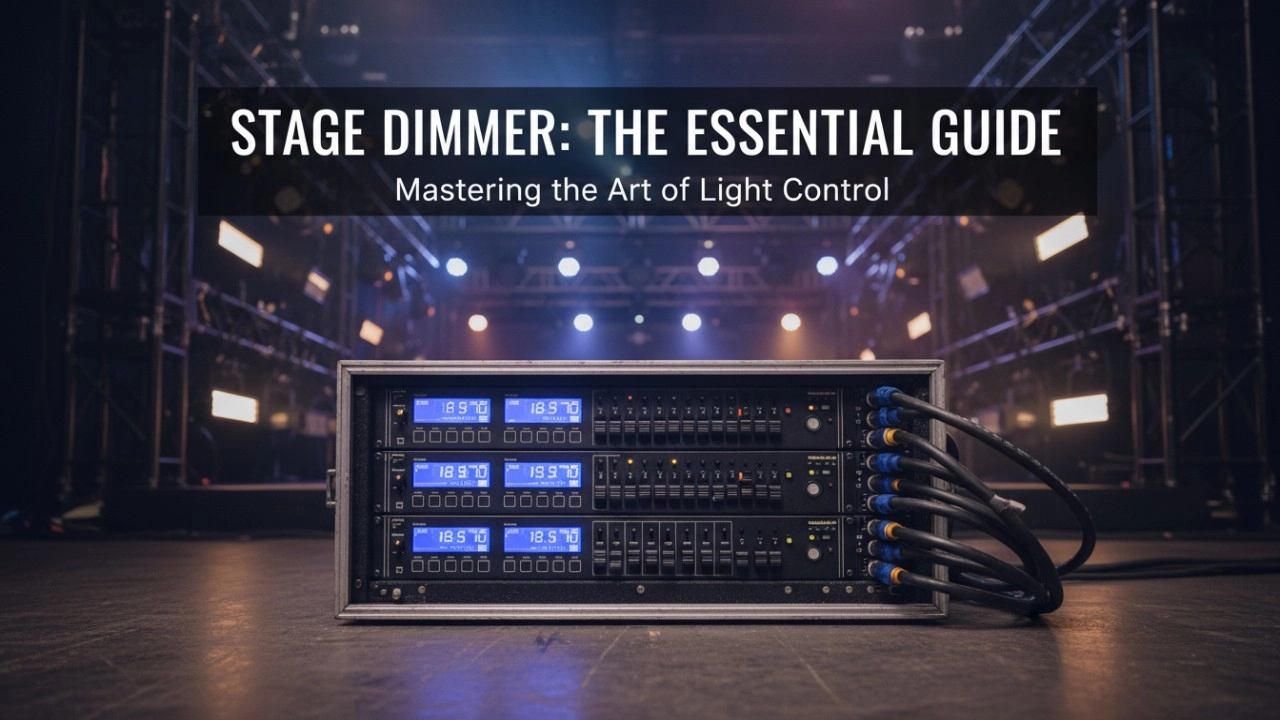
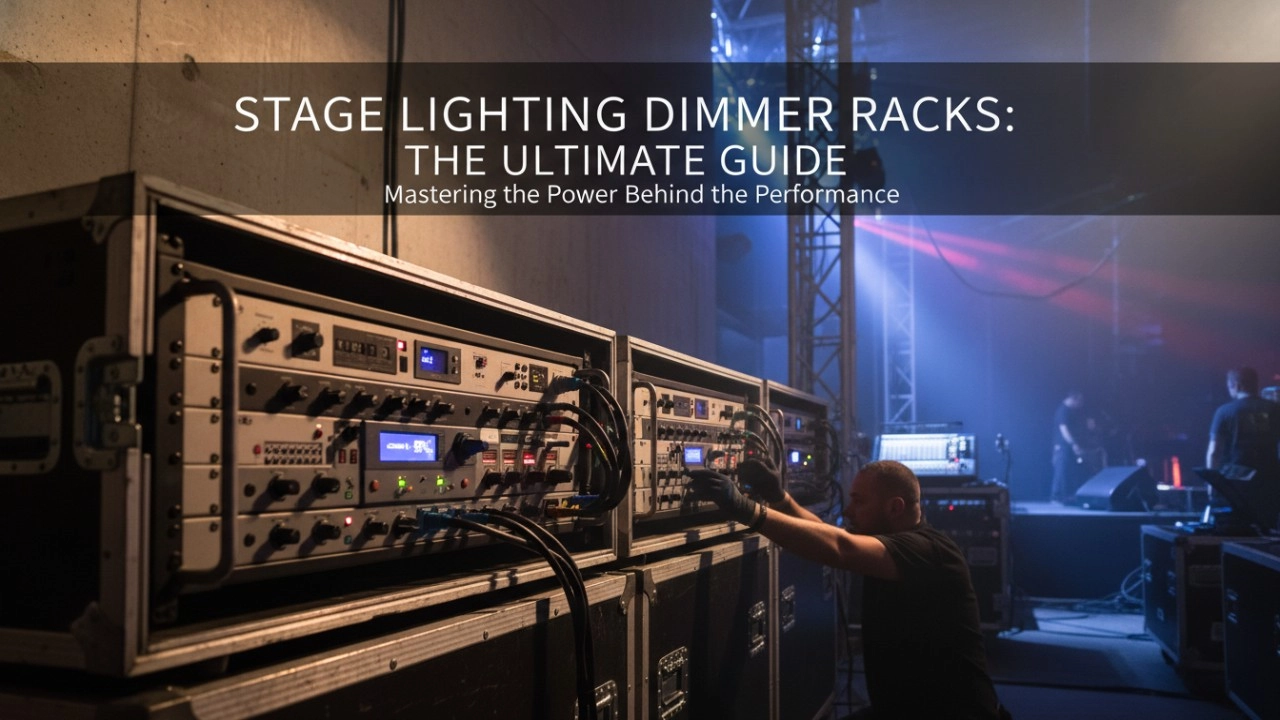
A comprehensive 2026 guide to selecting high-performance stage lighting dimmer racks. We review top hybrid systems, explore SCR vs sine wave technology, and analyze essential features like ThruPower for modern venues.
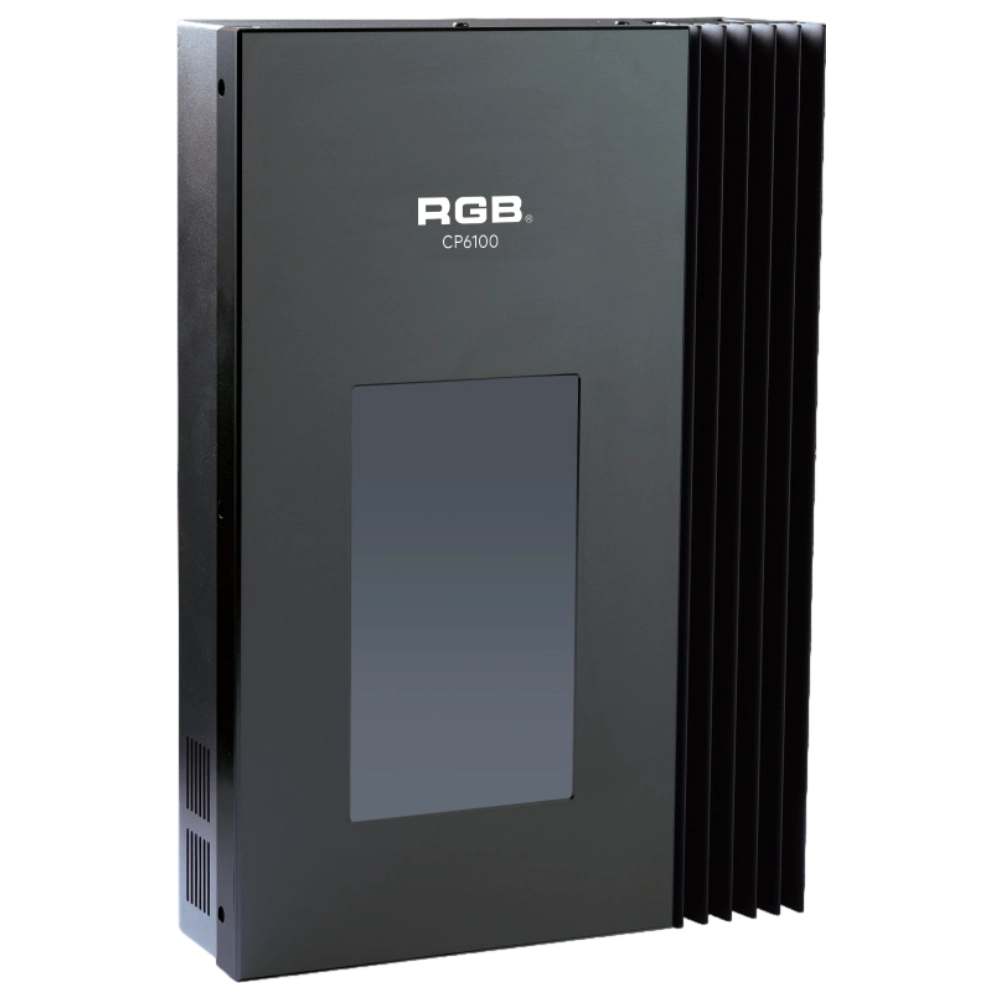
CP6100 Light Control System
The lighting control host is the main control device for theater stage lights, work lights, environmental lighting, commercial art lighting, sports venue lighting, and other places. By connecting the dedicated lighting control panels CP6104 and CP6108, it realizes the central control of the lighting system, supports a visual lighting control system, and intuitively displays the online and offline status of CP6100. Realize remote monitoring, editing, and setting of corresponding parameters.
It is widely applicable to theaters, cinemas, auditoriums, stadiums, museums, exhibition halls, cultural tourism performances, commercial art lighting, and other places.
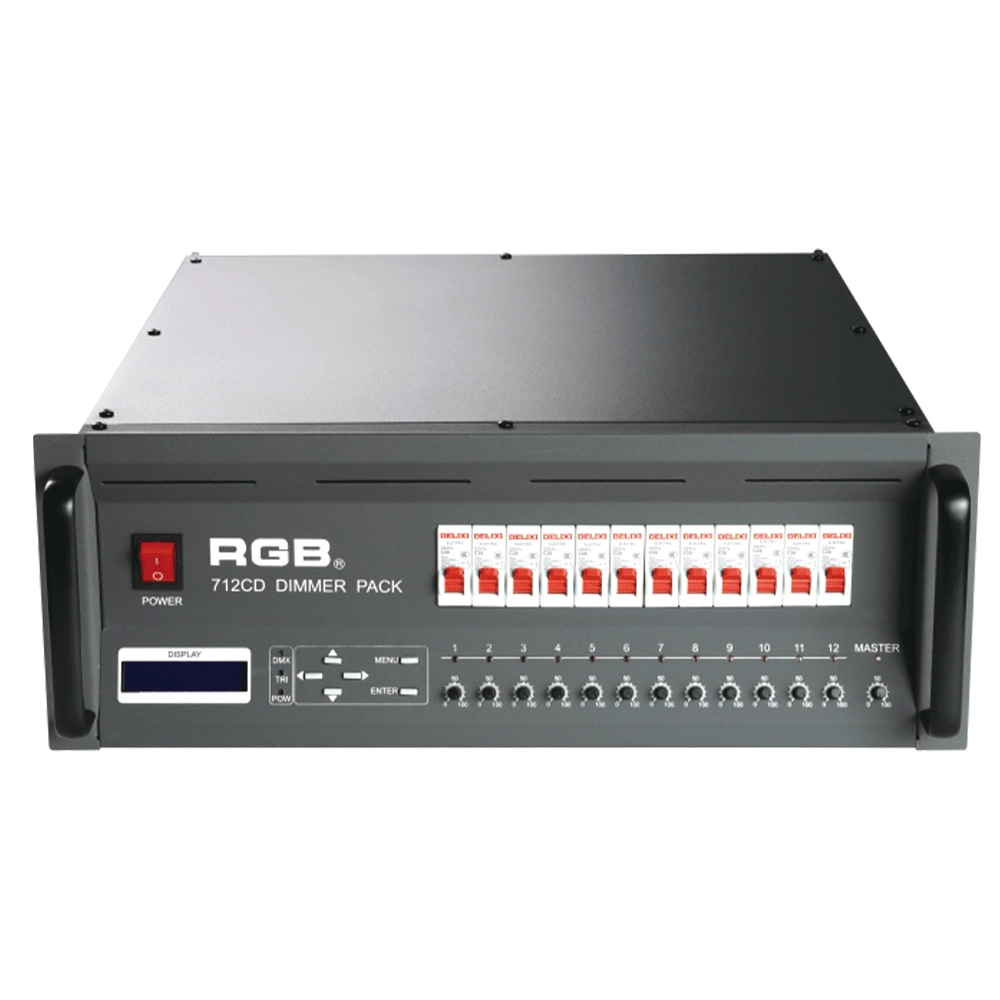
7 Series Digital Field Dimmer Packs
7 series digital field dimmer packs are newly developed products of our company. With DMX512 digital control signal input, they are compatible with other domestic and overseas digital lighting consoles. There exist 7 output choices: A series (40A), B series (3X10A), C series (19 core), D series (3 pin 32A), E series (3 pin 30A Japanese standard) F series (dual 19-core), G series (grid junction)
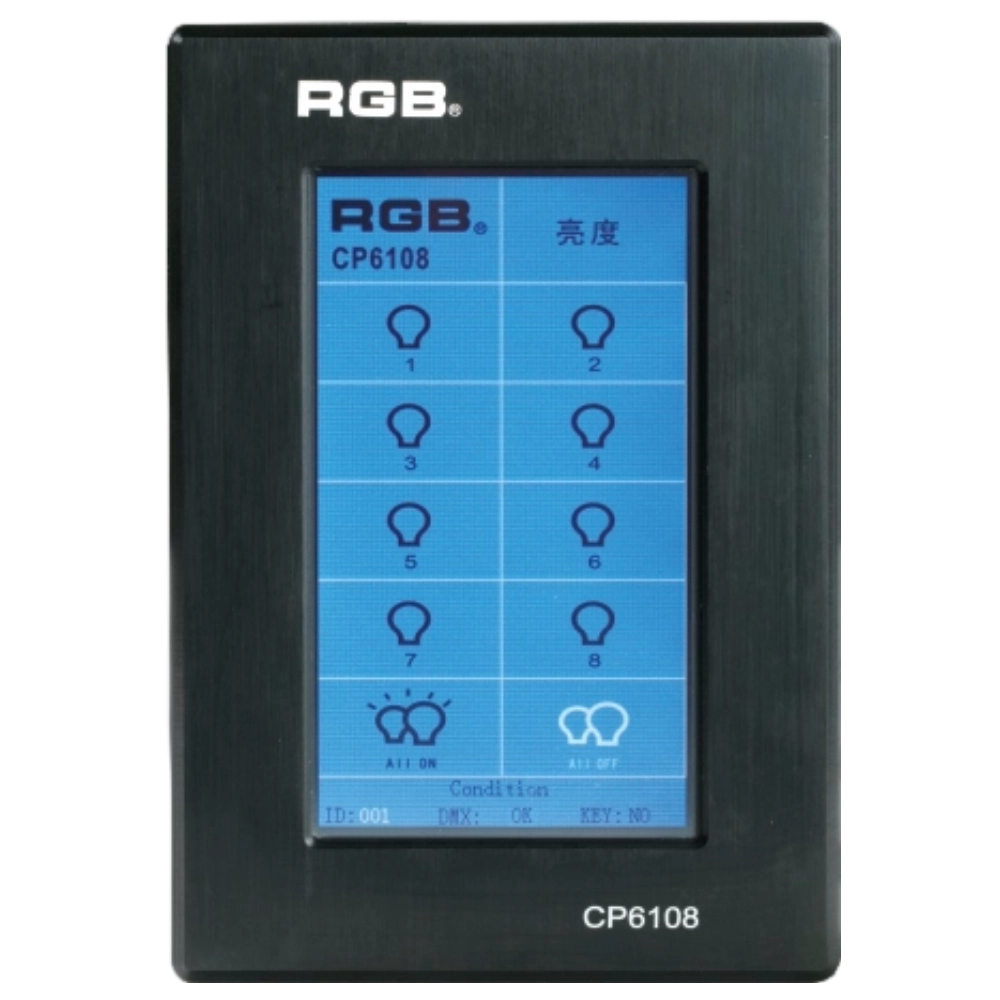
Site Light Controller CP6108
The CP6108 lighting control panel is a lighting control device for theater stage lights, work lights, environmental lighting, commercial art lighting, sports venue lighting, and other places. By connecting to the dedicated lighting control host CP6100, it realizes the central control of the lighting system, supports a visual lighting control system, and intuitively displays the online and offline status of CP6108. Realize remote monitoring, editing, and setting of corresponding parameters.
It is widely applicable to theaters, cinemas, auditoriums, stadiums, museums, exhibition halls, cultural tourism performances, commercial art lighting, and other places.
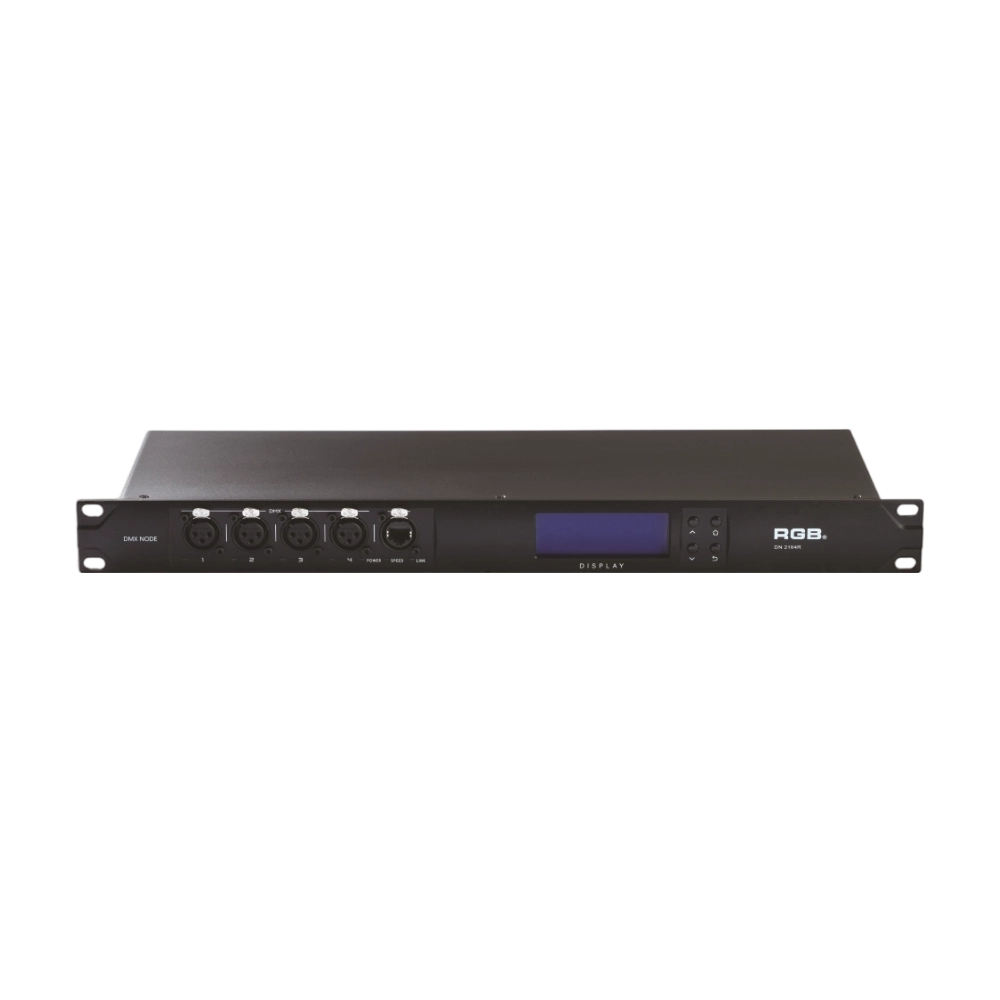
DMX, RDM Nodes
The DN series dual network port network decoder is a lighting control system product independently developed by RGB, featuring completely independent core technology and software copyright. It seamlessly connects and decodes the sACN and ART-Net network protocols based on TCP/IP with the DMX-512 and RDM communication protocols, achieving gigabit communication with dual independent physical address codes. Supports a visual lighting control system, intuitively displaying the online and offline status of the DN series network decoders, and enabling remote monitoring, editing, and setting of corresponding parameters.
It is widely applied in theaters, concert halls, multi-functional halls, cultural and tourism performances, TV stations, gymnasiums, auditoriums, commercial art lighting, and other performance and cultural venues.
Expert Support
Interested in learning more or need expert guidance related to this article? Fill in your details, and our team will provide tailored support.
Intelligent Control. Brilliant Performance.
RGB specializes in stage lighting control systems, delivering intelligent, reliable, and high-performance solutions for theaters and performance spaces worldwide.
Contact
Email:
Tel:
+86 20 3928 0245
+86 20 3928 0247
Address:
No.3, Huashan Road, Shilou Town, Panyu, Guangzhou, China.
Whatsapp: +8615975520131