
How to choose the right stage light dimmer for your venue?
|
- 1. What are the key factors to consider when selecting a stage light dimmer for a small venue?
- 2. How do I determine the appropriate dimmer capacity for my venue's lighting setup?
- 3. What are the differences between electronic and SCR/thyristor dimmers, and which is better for my venue?
- 4. How can I ensure the safety and compliance of my stage light dimmer installation?
- 5. What are the benefits of integrating a stage light dimmer with a lighting control system?
- 6. How do I maintain and troubleshoot my stage light dimmer to ensure optimal performance?
1. What are the key factors to consider when selecting a stage light dimmer for a small venue?
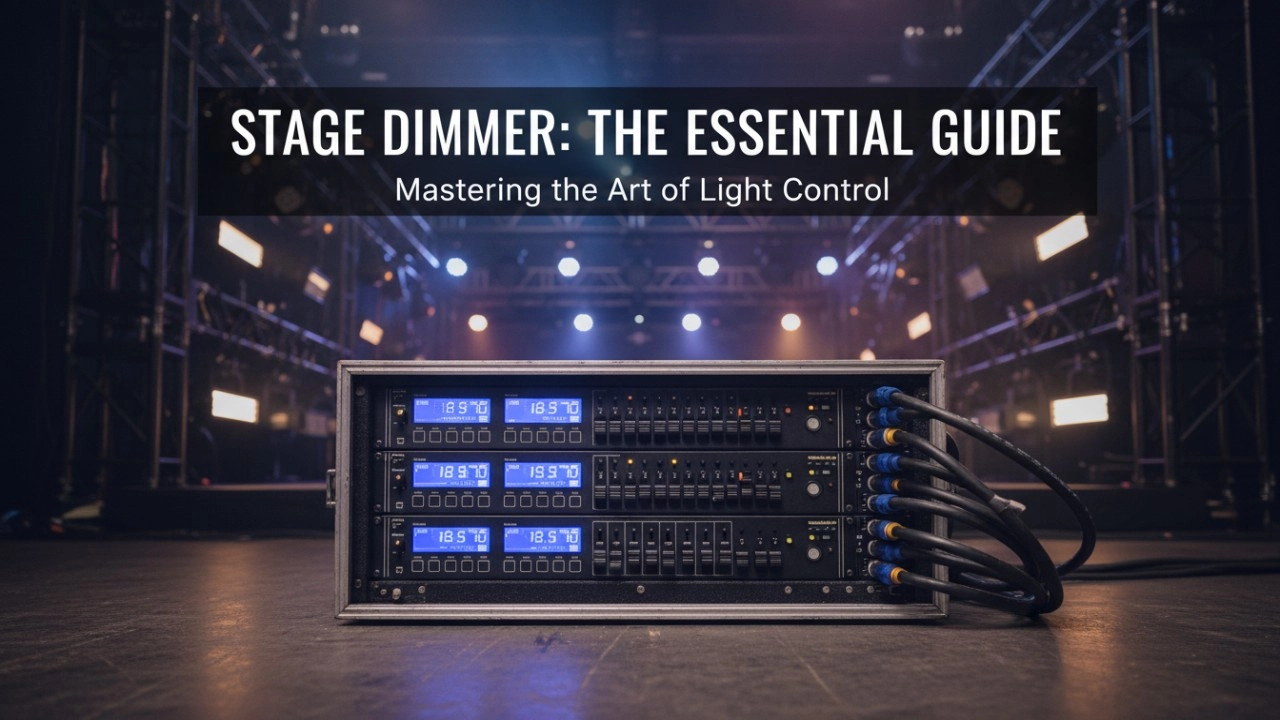
When choosing a stage light dimmer for a small venue, it's crucial to assess the venue's electrical capacity, the total wattage of your lighting fixtures, and the desired level of control. Ensure the dimmer can handle the combined load of all connected lights without overloading circuits. Opt for dimmers that offer precise control over light intensity to create the desired ambiance. Additionally, consider the dimmer's compatibility with your existing lighting control system, such as DMX512, to ensure seamless integration.
2. How do I determine the appropriate dimmer capacity for my venue's lighting setup?
To determine the appropriate dimmer capacity, calculate the total wattage of all lighting fixtures you plan to use. For instance, if you have ten 100-watt LED PAR lights, the total wattage is 1,000 watts. It's advisable to select a dimmer with a capacity that exceeds your total wattage by at least 20% to accommodate inrush currents and prevent overloading. Therefore, a dimmer rated for at least 1,200 watts would be suitable for this setup.
3. What are the differences between electronic and SCR/thyristor dimmers, and which is better for my venue?
Electronic dimmers, often using triac or thyristor technology, are suitable for resistive loads like incandescent bulbs and some LED fixtures. They provide smooth dimming and are generally more energy-efficient. SCR (Silicon-Controlled Rectifier) or thyristor dimmers are designed for inductive loads such as motors and transformers. For venues with a mix of lighting types, hybrid dimmer systems that combine relay racks and smooth dimming modules can offer versatility. Assess your venue's lighting inventory to choose the dimmer type that best matches your needs. ((https://www.rgbsystem.com/article/safety-regulations-stage-dimmers/))
4. How can I ensure the safety and compliance of my stage light dimmer installation?
To ensure safety and compliance, adhere to national and regional electrical codes, such as the National Electrical Code (NEC) in the United States. Install dimmers in ventilated, fire-rated equipment rooms away from public areas and egress routes. Provide dedicated cable trays for dimmer output feeders and separate low-voltage control cabling from high-current wiring to reduce interference. Implement built-in safety features like over-temperature shutdown, overcurrent protection, and earth-fault detection. Regularly inspect and maintain equipment to uphold safety standards. ((https://www.rgbsystem.com/article/safety-regulations-stage-dimmers/))
5. What are the benefits of integrating a stage light dimmer with a lighting control system?
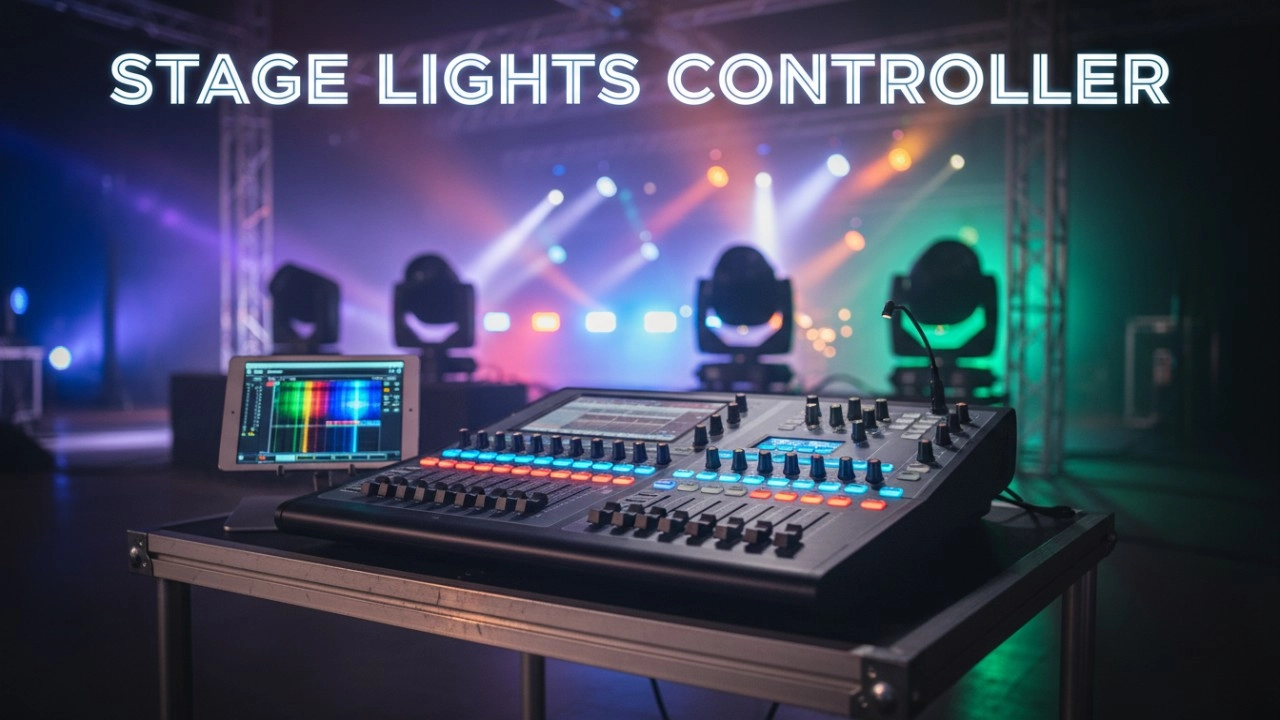
Integrating a stage light dimmer with a lighting control system, such as DMX512, allows for centralized control of all lighting fixtures, enabling precise adjustments of light intensity, color, and effects. This integration facilitates complex lighting designs, enhances show consistency, and simplifies operation, especially for venues hosting diverse events. Ensure compatibility between the dimmer and control system to achieve seamless integration.
6. How do I maintain and troubleshoot my stage light dimmer to ensure optimal performance?
Regular maintenance of your stage light dimmer involves cleaning dust from vents and components, checking for loose connections, and verifying that all safety features are functioning correctly. Monitor the dimmer's performance during events to identify any irregularities, such as flickering or unresponsive controls. Keep firmware updated to benefit from the latest features and security patches. Consult the manufacturer's guidelines for specific maintenance procedures and troubleshooting steps. ((https://www.rgbsystem.com/article/safety-regulations-stage-dimmers/))
By carefully considering these factors, you can select a stage light dimmer that meets your venue's specific needs, ensuring reliable and high-quality lighting control for your events.
For personalized assistance and a tailored quote, please contact us at info@rgbsystem.com or visit our website at www.rgbsystem.com.
Latest News
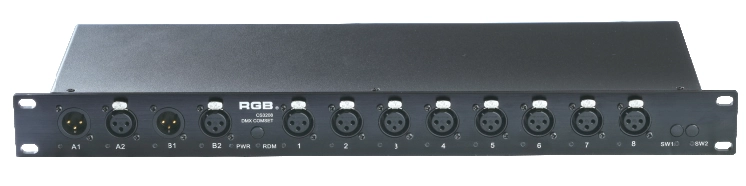
DMX&RDM Signal Mergers Amplifiers
The rack-mounted DMX signal amplifier complies with the DMX-512 standard protocol, improving the transmission quality of DMX-512 signals, ensuring the reliability of system control, and preventing faults such as reverse connection of AC high voltage in the lighting control system, high voltage intrusion due to lightning strikes, and line short circuits, which may affect the stability of the system.
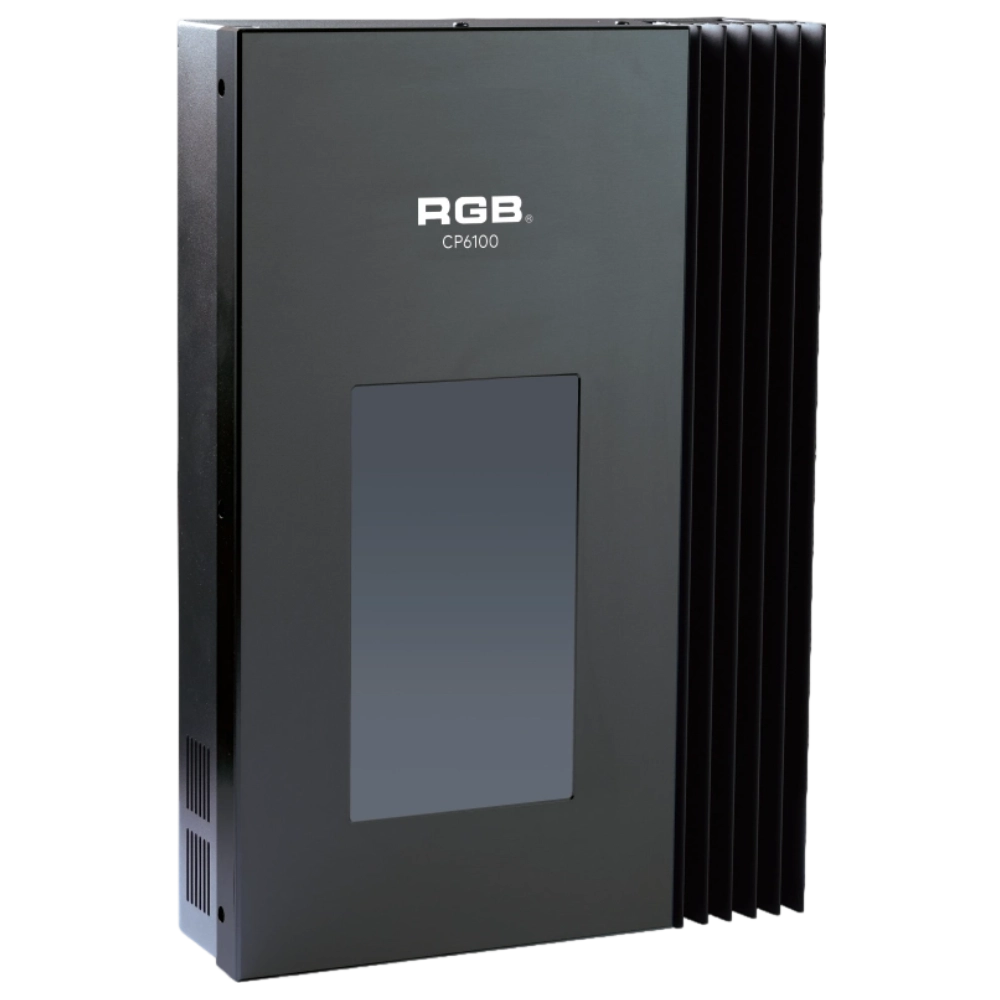
CP6100/CP6200 Stage Lighting Control Hosts
RGB CP6100/CP6200 is a stage and venue lighting control host family for coordinating lighting scenes and compatible CP6104/CP6108 control panels. The current product specification describes DMX512, Art-Net and sACN control, scene playback, network monitoring and RJ45 connections. CP6100 and CP6200 are listed together, but the current documentation does not establish model-specific differences or confirm which expansion capacities apply to each host.
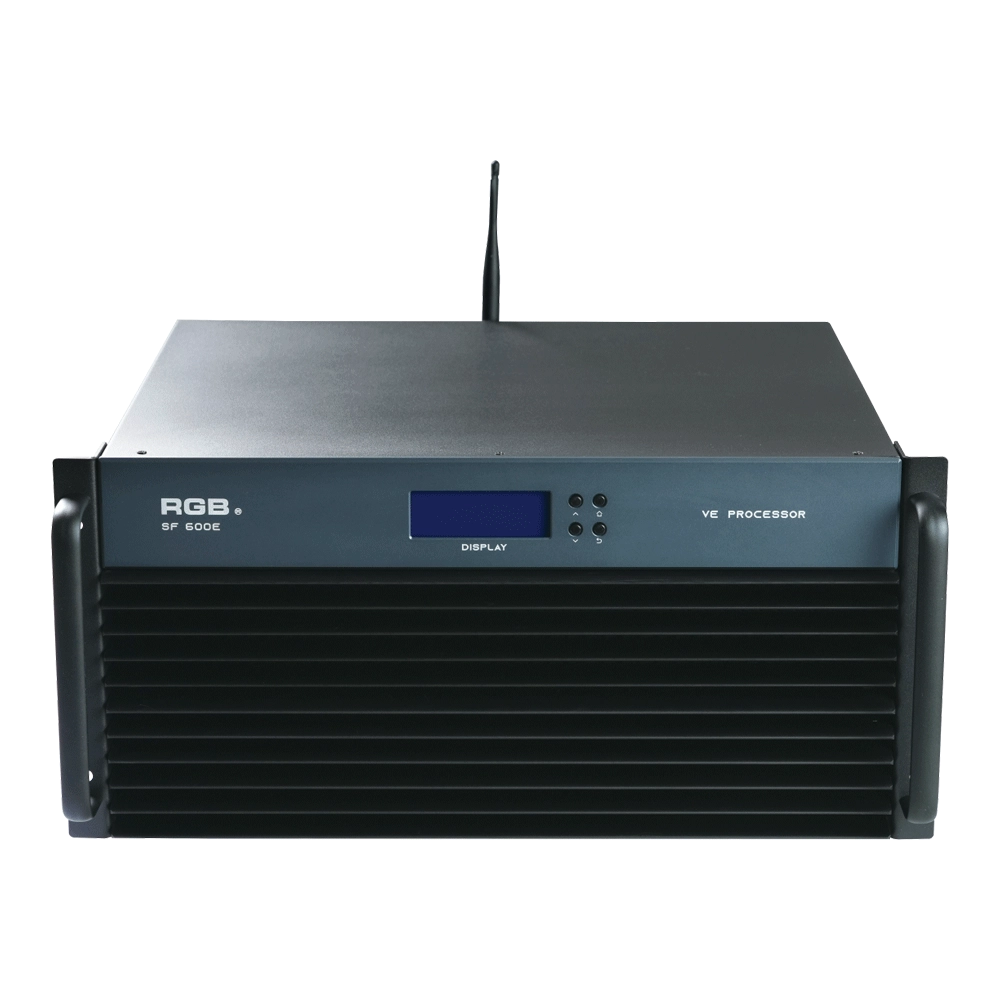
SF600E R-Net Environment Monitoring Processor
RGB SF600E is an R-Net environment and lighting-network monitoring processor for performance venues. Its published functions include four independent RDM interfaces, four universes, Art-Net and sACN network communication, device status monitoring and multi-point environmental readings. The listed environmental data types include temperature, humidity, PM2.5, carbon dioxide, ozone and formaldehyde. Confirm compatible field sensors and system configuration before specifying these monitoring functions.
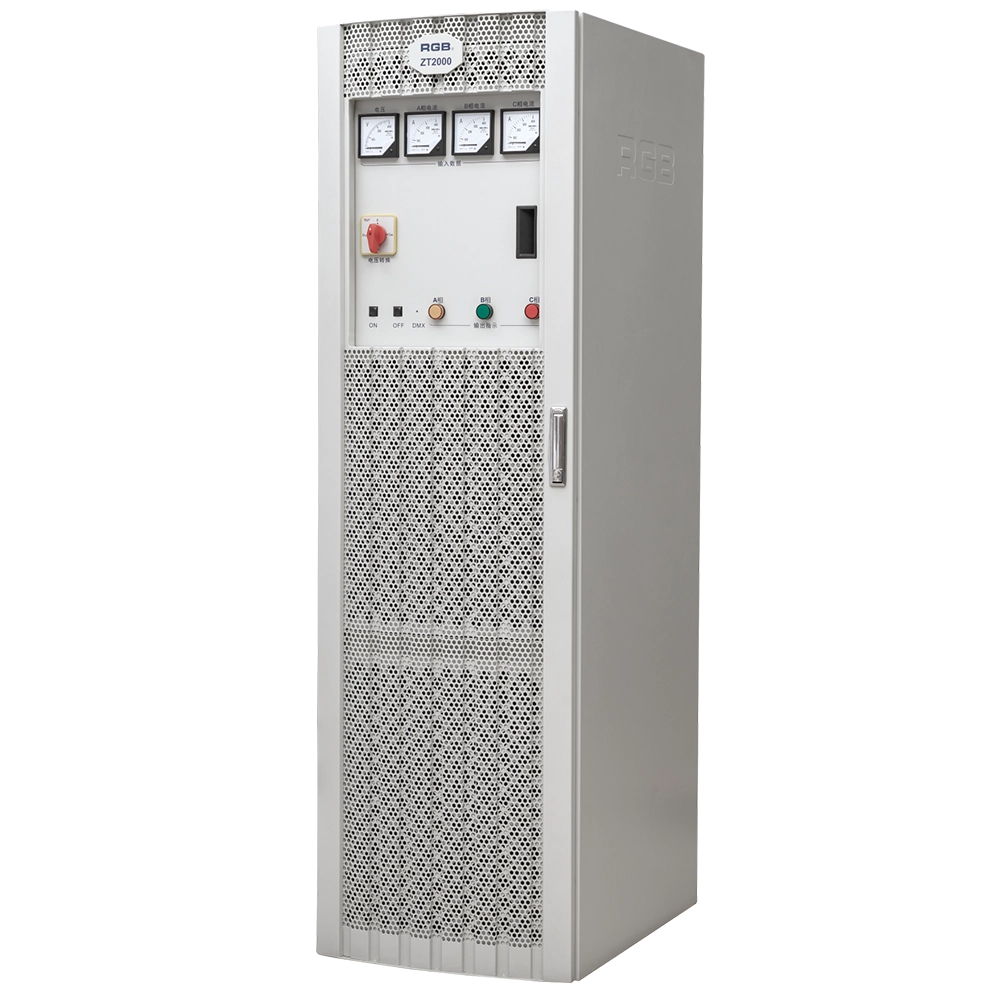
ZT2000 Pass-Through Racks
The ZT2000 straight-through power cabinet is a three-phase 630A/400A air switch main control, with each channel being a 32A air switch sub-control straight-through power cabinet. It can be used in conjunction with various computer lamps, regular lamps, and temporary electrical equipment as a power distribution and supply part for electrical equipment with overcurrent and short-circuit protection. It is a brand-new, reliable, and stable lighting control device in the field of stage lighting control.
It is widely applied in theaters, concert halls, multi-functional halls, cultural and tourism performances, TV stations, gymnasiums, auditoriums, commercial art lighting, and other performance and cultural venues.
Expert Support
Interested in learning more or need expert guidance related to this article? Fill in your details, and our team will provide tailored support.
Intelligent Control. Brilliant Performance.
RGB specializes in stage lighting control systems, delivering intelligent, reliable, and high-performance solutions for theaters and performance spaces worldwide.
Contact
Email:
Tel:
+86 20 3928 0245
+86 20 3928 0247
Address:
No.3, Huashan Road, Shilou Town, Panyu, Guangzhou, China.
Whatsapp: +8615975520131