
How to choose the right Pathport DMX Node for your venue?
|
- My small church venue needs to upgrade from a basic DMX splitter. Do I really need a Pathport DMX node, and which entry-level model offers the best value for basic sACN/Art-Net conversion without overcomplicating setup?
- We're planning a multi-room event space with varying DMX universe requirements. How do I accurately calculate the number of Pathport DMX outputs needed, and what's the most efficient way to distribute DMX without signal loss or latency issues across different rooms?
- I already have an older DMX console and some RDM-compatible fixtures. Can Pathport DMX nodes seamlessly integrate with my existing setup, and which features are crucial for advanced RDM management and DMX merging from multiple sources?
- What's the practical difference between a Pathport DMX node powered by PoE and one requiring an external power supply, especially for outdoor or temporary event setups where power access is limited?
- Our venue experiences occasional network congestion. How do Pathport DMX nodes handle network reliability and prioritize DMX data over other network traffic, and what specific network configuration tips can prevent DMX dropout during live shows?
- Beyond basic DMX conversion, what advanced features like DMX routing, universe merging, or custom patching capabilities do Pathport DMX nodes offer that can future-proof my lighting system as our needs evolve?
Choosing the Right Pathport DMX Node for Your Venue: A Beginner's In-Depth Guide
As the stage lighting industry rapidly evolves, transitioning from traditional DMX cabling to network-based DMX over Ethernet solutions like sACN and Art-Net has become a standard. For many venues, the ETC Pathport DMX node stands out as a robust and reliable choice for this conversion. However, for those new to network DMX, selecting the right Pathport DMX node can be complex. This guide aims to demystify the process by answering specific, frequently asked questions that often lack comprehensive or updated answers online, helping you make an informed decision for your venue's unique needs.
My small church venue needs to upgrade from a basic DMX splitter. Do I really need a Pathport DMX node, and which entry-level model offers the best value for basic sACN/Art-Net conversion without overcomplicating setup?
Yes, upgrading to a Pathport DMX node is a significant step forward from a basic DMX splitter, especially if you plan to use modern lighting consoles or software that output DMX over Ethernet (sACN or Art-Net). A DMX splitter simply replicates a single DMX universe, often without signal boosting or isolation. A Pathport DMX node, on the other hand, acts as a sophisticated DMX gateway, converting network protocols like sACN or Art-Net into traditional DMX512 signals, and vice-versa. This allows you to leverage the benefits of network cabling – longer runs, more universes over a single cable, and greater flexibility in distributing DMX signals.
For a small church venue with basic conversion needs, the Pathport UNO Mk2 or Pathport DUAL are excellent entry-level choices. The Pathport UNO Mk2 provides one DMX output, perfect for a single universe setup, while the Pathport DUAL offers two DMX outputs, allowing control of two separate DMX universes. These models are designed for straightforward setup and configuration, typically managed through ETC's intuitive Pathport Manager software or directly via a web interface. They offer robust performance for basic sACN/Art-Net conversion without the complexity or cost of higher-end models, providing excellent value as your initial step into networked DMX.
We're planning a multi-room event space with varying DMX universe requirements. How do I accurately calculate the number of Pathport DMX outputs needed, and what's the most efficient way to distribute DMX without signal loss or latency issues across different rooms?
Accurately calculating the number of Pathport DMX outputs requires a clear understanding of your DMX universe allocation. Each DMX universe controls up to 512 channels. For each distinct set of 512 channels (or fewer, if you group fixtures logically), you'll need one DMX output port. For a multi-room event space, map out each room's lighting fixtures and their channel counts. If Room A requires 300 channels and Room B requires 400 channels, you'll need one universe for Room A and one for Room B, totaling two DMX outputs. If Room C needs 600 channels, it will require two universes, thus two DMX outputs. Summing these up gives you the total DMX output ports needed across all rooms.
For efficient DMX distribution without signal loss or latency, a well-designed network infrastructure is crucial. Pathport DMX nodes are designed to handle DMX over Ethernet protocols (sACN, Art-Net) with minimal latency. Distribute your DMX nodes strategically in each room or zone where DMX fixtures are located. Connect these nodes back to a central network switch via standard Ethernet cabling. Utilizing a dedicated VLAN (Virtual Local Area Network) for your lighting control network can further isolate DMX traffic, preventing congestion from other network data and ensuring consistent performance. Pathport nodes support both unicast and multicast sACN, allowing for efficient data flow to specific or multiple nodes as needed. Models like the Pathport OCTO Mk2 or Pathport VIA offer a higher density of DMX outputs (up to 8 or 16 ports respectively) for areas with many universes, streamlining cabling and management.
I already have an older DMX console and some RDM-compatible fixtures. Can Pathport DMX nodes seamlessly integrate with my existing setup, and which features are crucial for advanced RDM management and DMX merging from multiple sources?
Absolutely, Pathport DMX nodes are designed for seamless integration with existing DMX infrastructure, including older DMX consoles and RDM-compatible fixtures. Many Pathport models feature DMX input ports, allowing you to bring traditional DMX512 signals from your legacy console onto the network as sACN or Art-Net. This effectively bridges your old console with a modern network-based system.
For advanced RDM (Remote Device Management) management, ensure your chosen Pathport DMX node explicitly supports RDM, which most current Pathport models do. RDM allows you to discover, address, configure, and monitor RDM-enabled fixtures directly from your RDM-compatible lighting console or software, without needing to physically access each fixture. This is a game-changer for troubleshooting and setup. Crucial features include: full RDM proxy functionality (where the node acts as an RDM gateway), RDM discovery, and the ability to pass RDM commands bi-directionally. For DMX merging from multiple sources (e.g., your old console and a new network-based backup console), Pathport nodes offer advanced merging capabilities like HTP (Highest Takes Precedence) and LTP (Latest Takes Precedence). This allows you to combine DMX signals intelligently, ensuring smooth transitions and reliable backup scenarios. The Pathport Manager software provides a robust interface for configuring these merging rules and RDM settings.
What's the practical difference between a Pathport DMX node powered by PoE and one requiring an external power supply, especially for outdoor or temporary event setups where power access is limited?
The practical difference between Power over Ethernet (PoE) and external power for a Pathport DMX node lies primarily in installation flexibility, cabling simplicity, and suitability for various environments. PoE-powered nodes (e.g., most Pathport UNO, DUAL, QUATTRO, OCTO Mk2 models) receive both data and electrical power through a single Ethernet cable from a PoE-enabled network switch or injector. This significantly simplifies cabling, as you don't need a separate power outlet near each node. For outdoor or temporary event setups where power access can be limited or cumbersome to run, PoE offers immense advantages. You can place nodes precisely where needed, often closer to fixtures, reducing DMX cable runs and potential signal degradation, with just one network cable.
Nodes requiring an external power supply (some older models or specific high-density nodes that might exceed standard PoE budgets) necessitate a dedicated power outlet. While this might be less convenient for remote or temporary installations, it can be advantageous in situations where PoE infrastructure isn't available, or for installations where the node might draw more power than a standard PoE port can provide. For critical applications, having an external power option can also provide redundancy if your PoE switch fails. For maximum flexibility in temporary or remote setups, PoE-powered Pathport DMX nodes are generally preferred due to their 'single-cable' convenience and ease of deployment.
Our venue experiences occasional network congestion. How do Pathport DMX nodes handle network reliability and prioritize DMX data over other network traffic, and what specific network configuration tips can prevent DMX dropout during live shows?
Pathport DMX nodes are engineered for high network reliability, crucial for live shows where DMX dropout is unacceptable. They primarily utilize sACN (Streaming ACN) and Art-Net protocols, which are specifically designed for efficient, low-latency transmission of DMX data over standard Ethernet networks. sACN, in particular, employs a robust streaming mechanism and can utilize multicast, which efficiently sends data to multiple receivers without overloading the sender. Pathport nodes also feature a resilient network stack that can recover quickly from minor network interruptions.
To prevent DMX dropout during live shows and ensure optimal network reliability, several network configuration tips are essential:
- Dedicated Lighting Network/VLAN: The most critical step is to isolate your lighting control network. Use a dedicated physical network or, at minimum, a dedicated VLAN (Virtual Local Area Network) for all your DMX over Ethernet traffic. This prevents general internet browsing, office traffic, or other bandwidth-heavy applications from interfering with time-sensitive DMX data.
- Quality of Service (QoS): Configure QoS on your network switches. Prioritize sACN and Art-Net traffic (often identified by specific UDP port numbers or DSCP values) to ensure DMX data gets preferential treatment over other network packets during periods of congestion.
- Managed Switches: Use enterprise-grade managed network switches. These switches offer advanced features like VLANs, QoS, IGMP snooping (for efficient multicast routing of sACN), and port monitoring, which are vital for a stable lighting network.
- Disable Unnecessary Services: On your lighting network, disable any unnecessary network services or protocols that could consume bandwidth or introduce latency.
- Static IP Addressing: Assign static IP addresses to your Pathport DMX nodes and lighting console to ensure consistent communication and avoid DHCP-related issues.
By implementing these strategies, you can significantly enhance the network reliability of your Pathport DMX node system and virtually eliminate DMX dropouts.
Beyond basic DMX conversion, what advanced features like DMX routing, universe merging, or custom patching capabilities do Pathport DMX nodes offer that can future-proof my lighting system as our needs evolve?
Beyond their core function as a DMX gateway, Pathport DMX nodes offer a suite of advanced features that are crucial for future-proofing your lighting system, providing unparalleled flexibility and adaptability as your venue's needs evolve. These capabilities move beyond simple DMX conversion to intelligent DMX management:
- DMX Routing: Pathport nodes excel at DMX routing. You can flexibly map any incoming sACN or Art-Net universe to any physical DMX output port on any Pathport node across your network. This means you're not tied to specific physical connections; you can reconfigure your DMX distribution entirely through software, ideal for multi-purpose venues or changing show requirements.
- Universe Merging (HTP/LTP): As discussed, Pathport nodes support robust DMX merging. This allows you to combine DMX signals from multiple sources (e.g., a main console, a backup console, an architectural controller, or even a media server) onto a single DMX output. With HTP (Highest Takes Precedence) and LTP (Latest Takes Precedence) merging options, you can define how these sources interact, creating sophisticated control hierarchies and seamless failover strategies.
- Custom Patching/Softpatching: While not a full console-level patch, Pathport nodes offer internal patching capabilities. You can re-map DMX channels within a universe at the node level. For instance, if a fixture's DMX address changes, you can adjust it in the node's configuration without needing to re-patch your entire console or re-cable. This is incredibly useful for quick adjustments or accommodating different fixture types.
- Profiles and Presets: Many Pathport nodes allow you to save and recall different configuration profiles. This is invaluable for venues that host various events or productions, enabling quick switching between different lighting setups without manual reconfiguration.
- Input/Output Flexibility: Higher-end nodes like the Pathport VIA or OCTO Mk2 offer multiple configurable ports that can act as either DMX inputs or outputs, maximizing hardware utility and adaptability.
These advanced features ensure that your investment in a Pathport DMX node system is not just for today's needs but provides a scalable, resilient, and reconfigurable foundation for your lighting control system for years to come, adapting to new technologies and evolving creative demands.
Choosing the right Pathport DMX node means investing in a flexible, reliable, and scalable foundation for your venue's lighting control system. From basic sACN/Art-Net conversion to advanced RDM management, DMX merging, and robust network reliability, Pathport nodes offer solutions that future-proof your setup against evolving demands. Their ability to integrate seamlessly with existing infrastructure while providing powerful network DMX capabilities makes them an industry standard for a reason. By understanding these key features and considerations, you can confidently select the Pathport DMX node that best fits your venue's current needs and future aspirations.
Ready to upgrade your lighting control system with Pathport DMX nodes? Contact us today for a personalized quote tailored to your venue's specific requirements. Visit www.rgbsystem.com or email us at info@rgbsystem.com.
Latest News
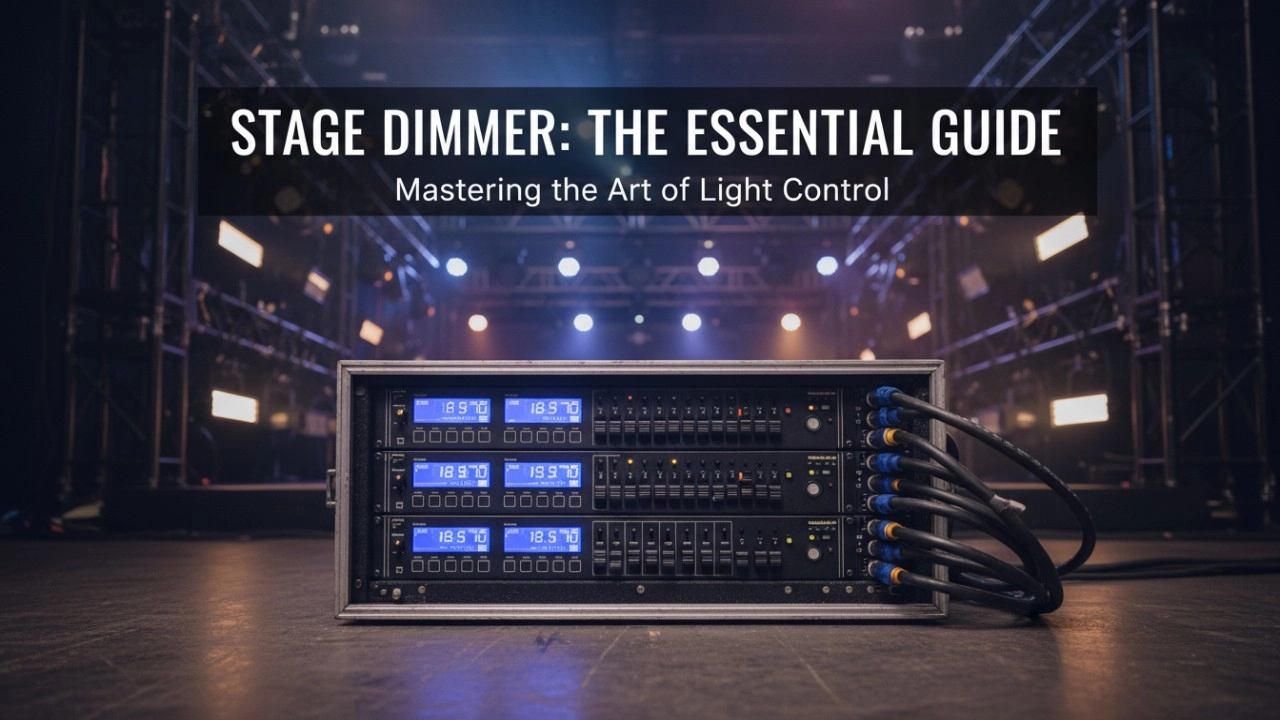
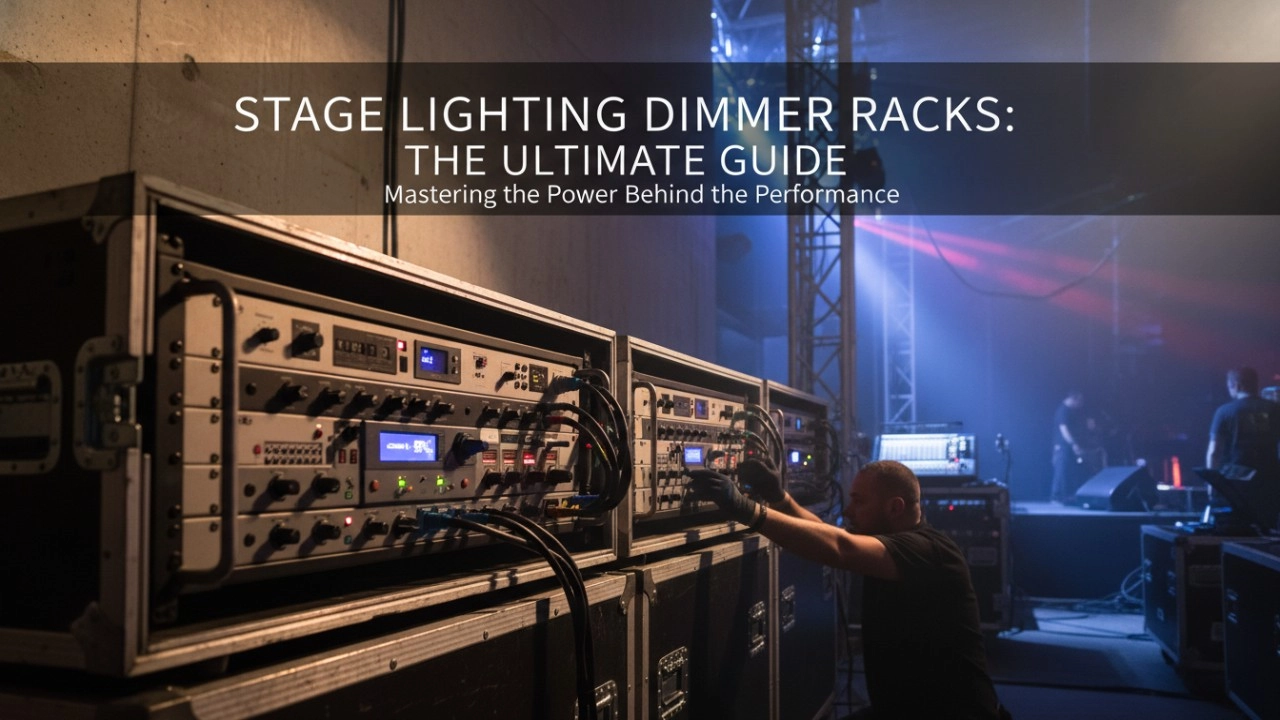
A comprehensive 2026 guide to selecting high-performance stage lighting dimmer racks. We review top hybrid systems, explore SCR vs sine wave technology, and analyze essential features like ThruPower for modern venues.
10i Visual Dimmer/Relay Racks
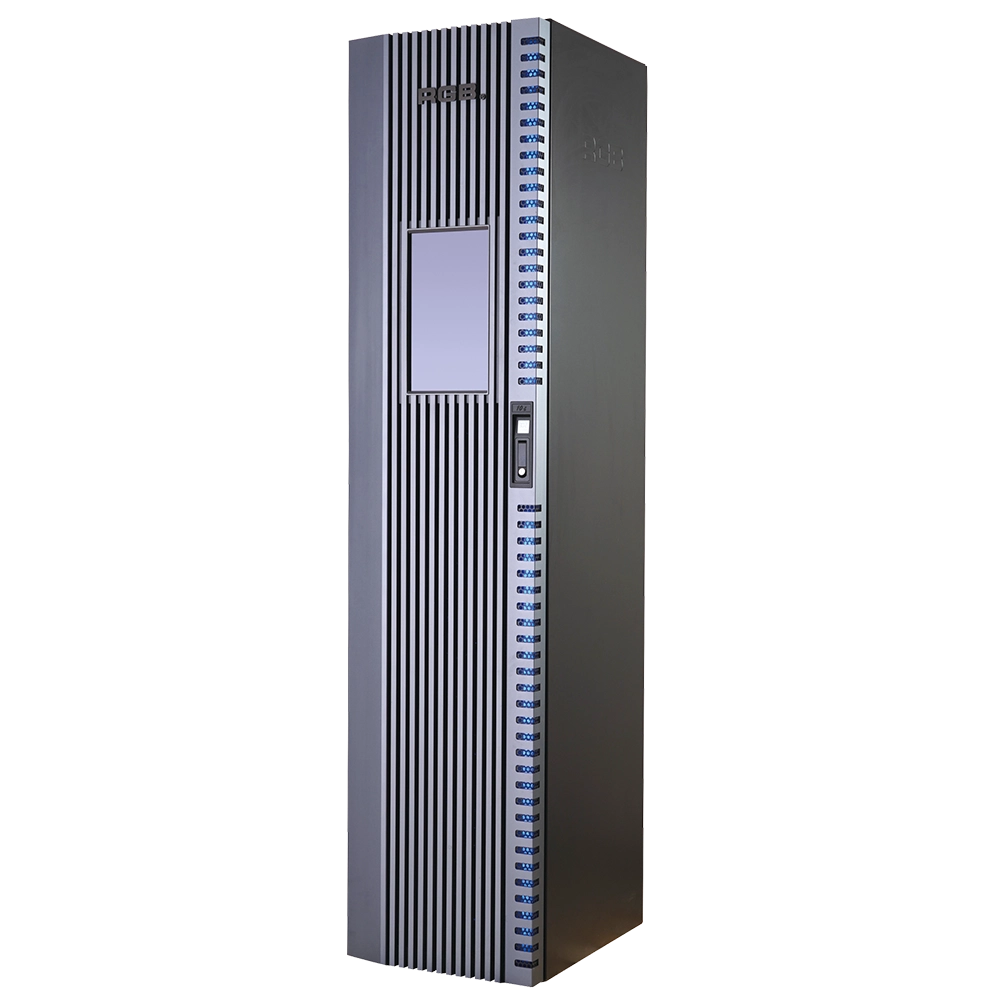
10i is the world's leading visual artificial intelligence dimming rack, integrated with 5G technology, a full digital trigger, sine wave, thyristors, relays, mixed thyristors and relays mixed sine wave and relays output configurations, a unique gold-plated plug-in process, a high-performance protection level, an industrial-grade aluminum alloy profile and other new technologies and advanced process designs and manufacturing.
It is suitable for the lighting control needs of different places such as high-standard grand theaters, TV stations, gymnasium and environmental intelligent lighting.
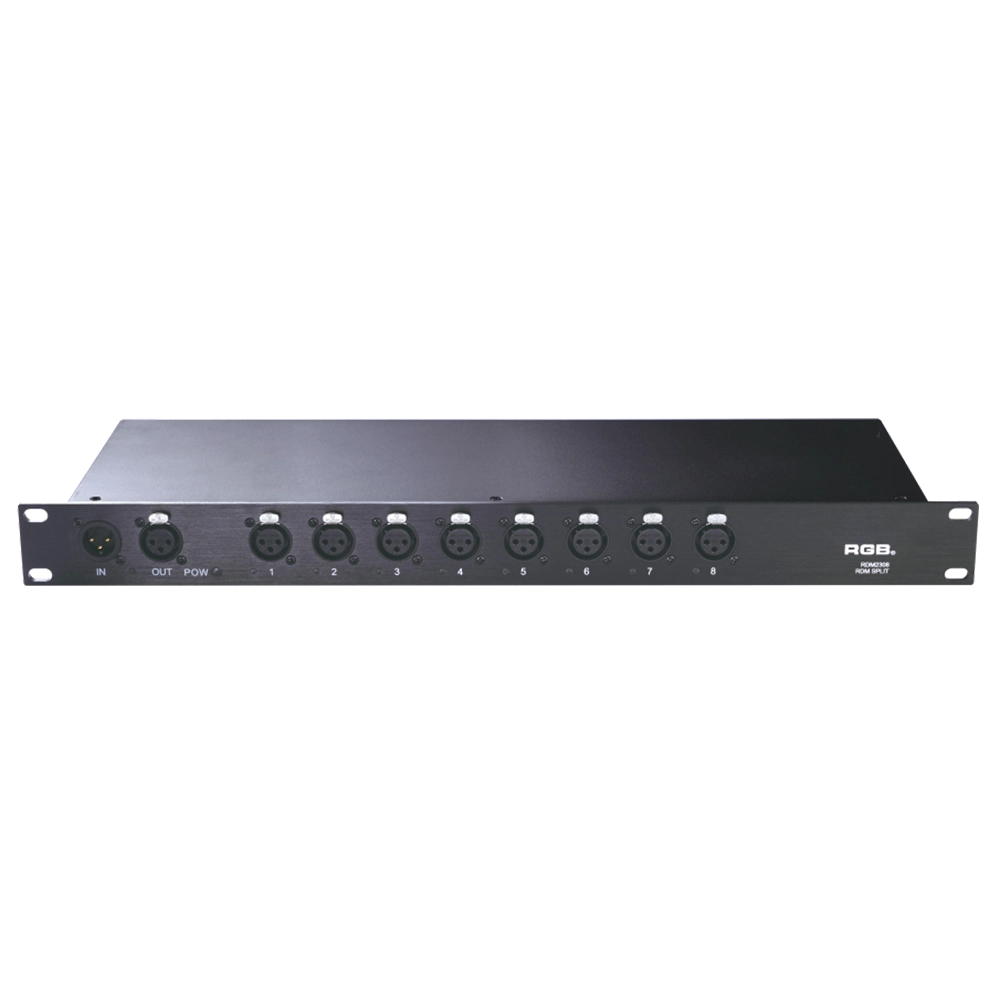
RDM Series Signal Amplifier
RDM2304, RDM2308, RDM2310, RDM2312 rack-mounted The RDM signal amplifier improves the quality of bidirectional RDM signal transmission, ensures the reliability of system control, and prevents faults such as AC high-voltage reverse series lighting control system, lightning high-voltage series entry, and line short circuit, which may affect system stability.
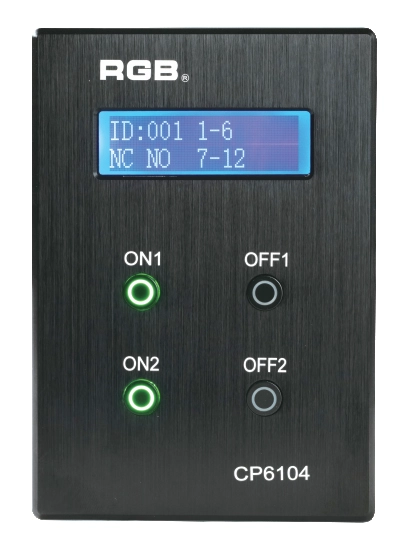
Site Light Controller CP6104
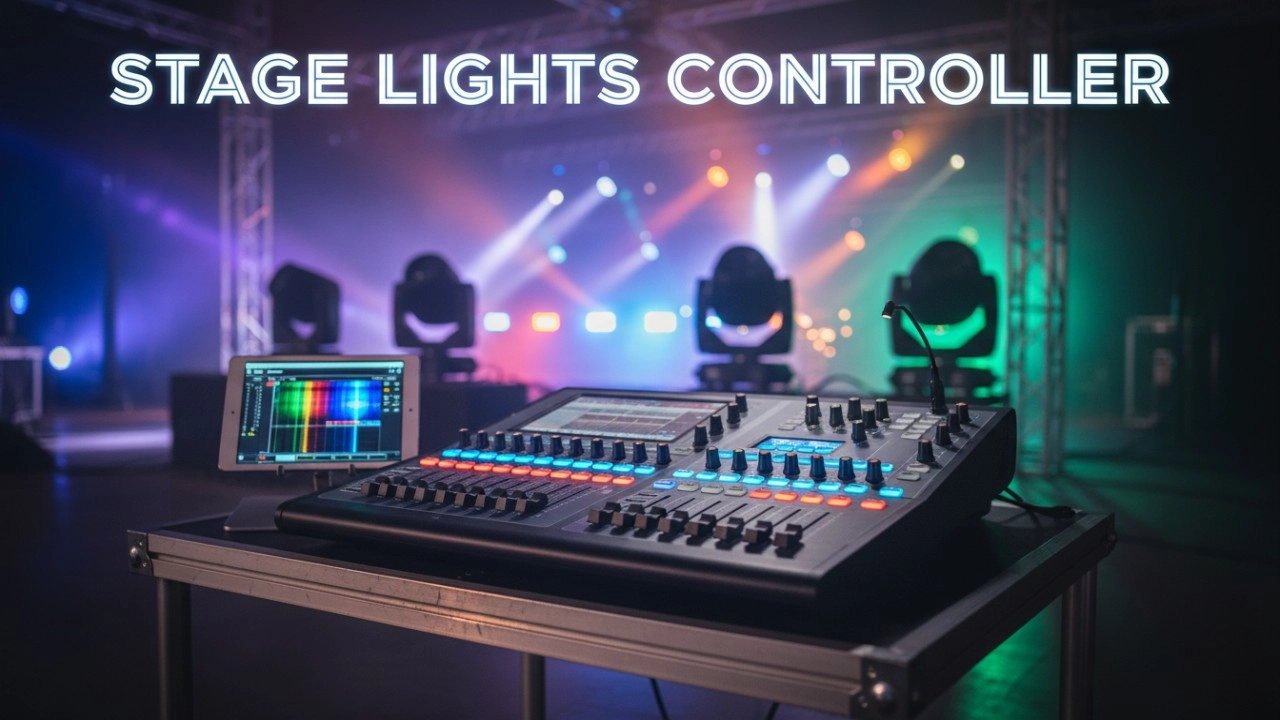
The CP6104 lighting control panel is a lighting control device for theater stage lights, work lights, environmental lighting, commercial art lighting, sports venue lighting and other places. By connecting to the dedicated lighting control host CP6100, it realizes the central control of the lighting system, supports a visual lighting control system, and intuitively displays the online and offline status of CP6104. Realize remote monitoring, editing and setting of corresponding parameters.
It is widely applicable to theaters, cinemas, auditoriums, stadiums, museums, exhibition halls, cultural tourism performances, commercial art lighting and other places.
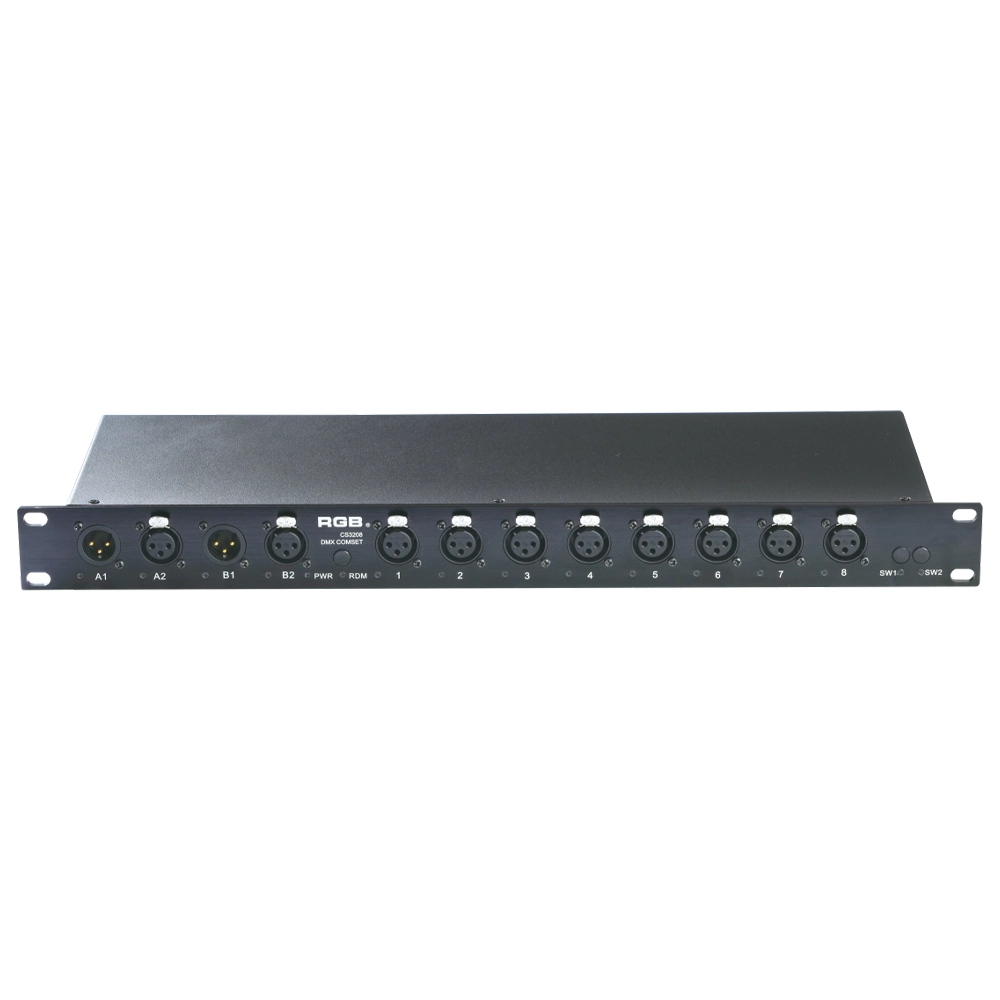
Multifunctional signal supercharger
The rack-mounted DMX signal amplifier complies with the DMX-512 standard protocol, improving DMX-512 signal transmission quality and ensuring reliable system control. It helps prevent issues such as AC high-voltage backflow into lighting control systems, lightning-induced surges, and signal interference caused by short circuits, thereby enhancing overall system stability.
Expert Support
Interested in learning more or need expert guidance related to this article? Fill in your details, and our team will provide tailored support.
Intelligent Control. Brilliant Performance.
RGB specializes in stage lighting control systems, delivering intelligent, reliable, and high-performance solutions for theaters and performance spaces worldwide.
Contact
Email:
Tel:
+86 20 3928 0245
+86 20 3928 0247
Address:
No.3, Huashan Road, Shilou Town, Panyu, Guangzhou, China.
Whatsapp: +8615975520131